Reviewed · ZANZIBAR TOURS
Jambiani Village Women at work and play
Local craft tells the real story. This private Jambiani tour brings you into village life through the women who make coconut rope, doormats, palm-leaf goods, and handmade kofia caps. I like the personal guide from Jambiani and the chance to see seaweed cultivation at the beach, not just shop for finished souvenirs. The small-scale setting feels personal, though the tour may last closer to 1.5 hours for some groups rather than the advertised three.
I also like that you can do more than watch. You may try weaving, learn how to wear a traditional kanga, and receive henna painting. The main consideration is transport: pickup from a Stone Town hotel costs extra, starting at $45, so the total price can rise quickly if you are not already near Jambiani.
In This Review
- Key points to know before you book
- Why Jambiani is a good place to meet local artisans
- Meeting the women and seeing craft made by hand
- At the beach, seaweed work becomes part of the story
- Learning the kanga and trying henna
- A private tour with room for questions
- Is $32.65 a fair price?
- Timing, walking, and practical planning
- Who will enjoy this Jambiani visit most?
- Should you book Jambiani Village Women at Work and Play?
- FAQ
- How much does the Jambiani village tour cost?
- How long does the experience last?
- Is the tour private?
- What is included in the price?
- Is hotel pickup included?
- Can lunch be added to the tour?
- Can dietary requirements be accommodated?
- How much walking is involved?
- What happens if bad weather cancels the tour?
- Can I cancel for a full refund?
Key points to know before you book
- The guide comes from Jambiani: You learn about village life from someone with a direct connection to the community. Ameir is one guide praised by name for his warm, educational approach.
- Women’s work is the heart of the visit: You see coconut husk rope, doormats, palm-leaf and makuti weaving, sewing, and other handmade crafts.
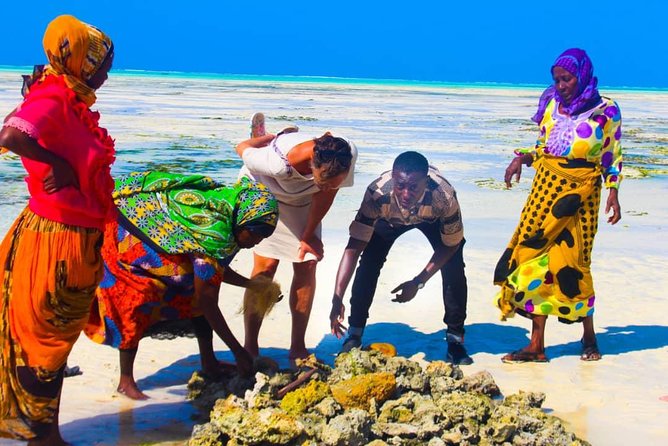
- The beach visit adds useful context: You see women collecting seaweed and learn how it is cultivated, connecting local work to the coast.
- You can take part, not just observe: The tour may include trying the weaving, kanga dressing, and henna painting.
- Lunch needs advance planning: A meal in one of the women’s homes can be arranged for an extra fee with at least 48 hours notice and details about dietary needs.
- The private format offers flexibility: Only your group participates, which makes it easier to ask questions and spend more time at the activities that interest you.
Why Jambiani is a good place to meet local artisans
Jambiani gives this experience a clear sense of place. The village sits along Zanzibar’s coast, and the tour links home-based craftwork with the seaweed work carried out on the beach. That connection matters because you are not looking at isolated demonstrations. You are seeing several parts of daily work in the same community.
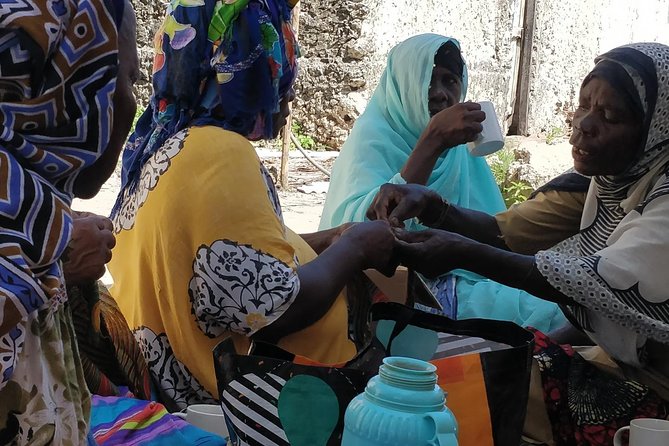
Your guide takes you to several women’s homes. These visits let you see where the craft is made and how ordinary spaces become small workshops. You may watch coconut husks collected from the beach turn into rope and doormats, then see other women working with palm leaves or makuti.
I like this format because it gives you a better idea of the time and skill behind simple-looking household goods. A doormat is not simply a souvenir on a table. It begins with natural material, manual preparation, and patient weaving. The process is the interesting part.
The village setting also means you should arrive with a respectful, open attitude. This is a community visit, not a staged cultural show with a large production team. Your guide helps connect the activities, but the women’s work remains the focus.
A few more trips of this kind worth comparing:
- From Zanzibar: Mikumi Safari Day Trip with Flights and Meal
★ 4.7 · 1,470 reviews - Zanzibar: Quad Bike Adventure departing from Kendwa or Nungwi
★ 4.9 · 1,233 reviews - Zanzibar: Stone Town, Spice Tour, Prison Island with Lunch
★ 4.4 · 1,219 reviews
Meeting the women and seeing craft made by hand
The craft portion includes several different activities, so the experience has more variety than a single workshop. You can watch coconut rope and doormat making, palm-leaf and makuti weaving, and traditional handmade kofia sewing.
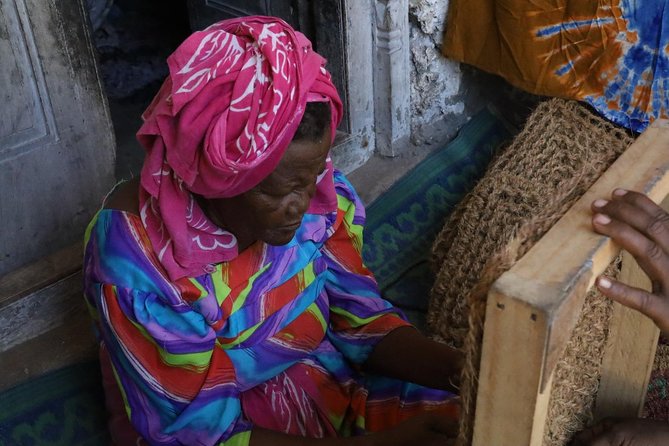
The coconut work is especially useful for understanding how beach materials are reused. The women collect coconut husks from the beach and turn them into useful objects. If you enjoy practical crafts, this may be the most memorable part because the raw material and finished item are easy to compare.
You may also get to try weaving yourself. That sounds simple until you handle the fibers and try to keep the pattern even. The opportunity to make an attempt gives you a little respect for the patience required. It also creates a more relaxed exchange than simply standing nearby with a camera.
The palm-leaf and makuti work adds another texture to the visit. Since the tour includes more than one type of material, you can compare the look and feel of each craft. The guide can explain the work as you move from one home to another.
Traditional kofia sewing gives the tour another useful detail. Handmade caps are a recognizable part of East African dress, and seeing them made by hand helps you understand the labor behind clothing that can look finely finished.
Some of the craftswomen may also sell pieces, though the supplied information does not state that buying is part of the tour. If you want to purchase something, ask your guide about the correct way to do so. Buying directly from the maker can be a good way to support the work, but do not treat the home visits as a shopping obligation.
At the beach, seaweed work becomes part of the story
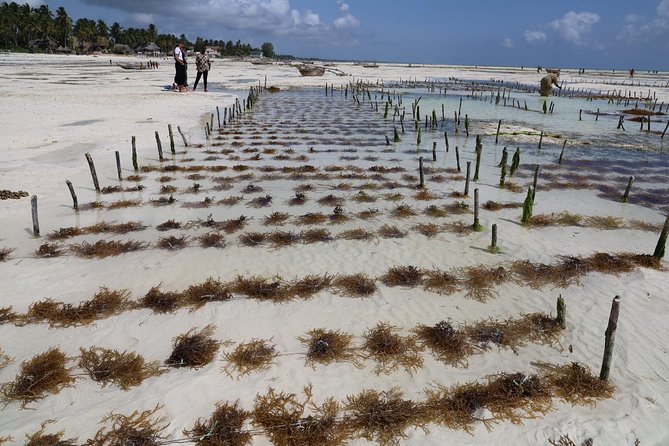
The walk to the beach is more than a change of scenery. You see women collecting seaweed and learn about its cultivation, one of the local activities tied closely to Jambiani’s coastal setting.
This part may be especially valuable if you want to understand how people earn a living beyond the craftwork inside the village. The tour gives you two related views: household production and work connected to the sea. That wider picture makes the visit feel grounded in daily life.
The beach stop also helps break up the home visits. You are not spending the full experience indoors or moving from one demonstration to the next. The change in setting gives the tour a natural rhythm.
Keep in mind that the total walking distance can reach around 2 kilometers. The experience is not recommended if you cannot walk more than that. The information does not specify the exact walking route or surface, so anyone with mobility concerns should ask Jambiani Tours before booking.
Learning the kanga and trying henna
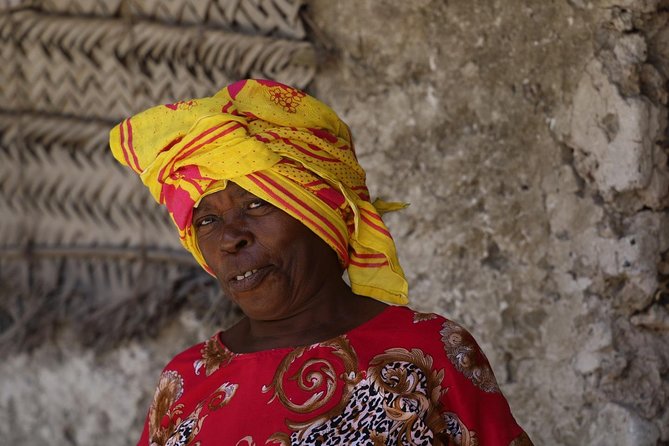
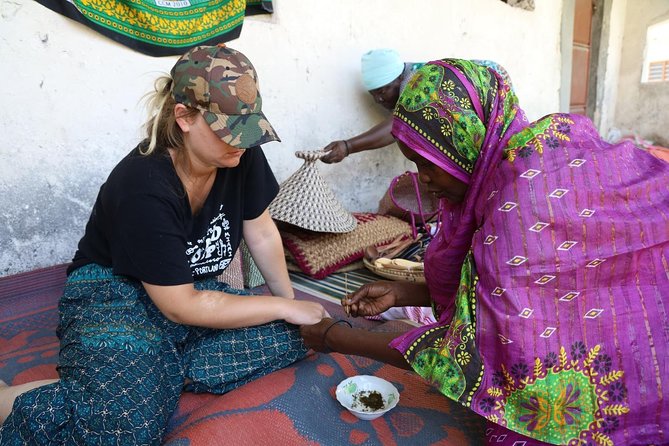
The cultural demonstrations give you a chance to participate in two forms of personal decoration and dress. You can learn how to wear a traditional kanga, a rectangular cloth commonly worn in East Africa, and experience henna painting.
The kanga demonstration is practical rather than purely visual. You see how the fabric is arranged and worn, which helps you understand why a simple piece of cloth can be so useful. If you are interested in clothing, customs, or photography, this is likely to be one of the more engaging moments.
Henna adds a playful touch. The supplied details do not state the design, placement, or how long the application takes, so you should ask on the day if those points matter to you. Still, the activity gives you something hands-on to remember rather than only a set of explanations.
One useful point comes from the way the experience is described by past participants: women may have the opportunity to try the activities directly. That does not mean men cannot participate in the tour, but the craft and clothing demonstrations may feel particularly relevant to women who want to try the work themselves.
A completely different kind of day out from Zanzibar:
- From Kendwa: Mnemba Boat Trip and Dolphin Snorkel Adventure
★ 4.8 · 1,043 reviews - From Zanzibar: Day Selous Game Reserve Safari with Flights
★ 4.7 · 1,025 reviews - Zanzibar: Prison Island and Nakupenda Boat Trip with Lunch
★ 4.1 · 882 reviews - Skydive Zanzibar | Tandem Skydive
★ 5.0 · 877 reviews
A private tour with room for questions
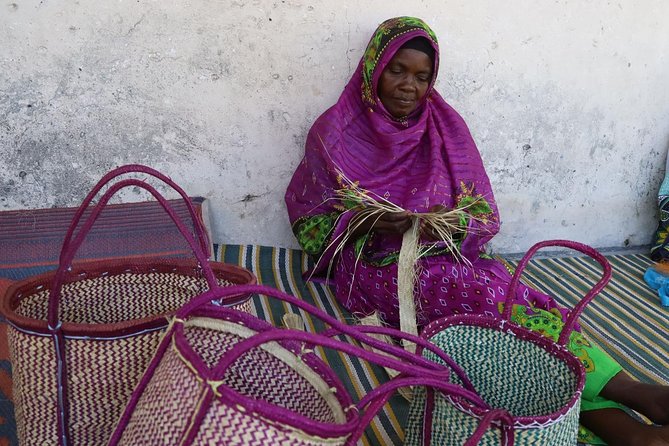
This is a private activity, so only your group participates. That changes the feel of the visit. You can ask your guide to explain a particular craft, spend more time with one artisan, or move along when you have seen enough.
A private format also helps with sensitive cultural visits. Smaller groups are less disruptive in homes and make conversation easier. You are not trying to hear a guide over a crowd or waiting for a large group to finish a demonstration.
The guide is from Jambiani, which is one of the strongest reasons to choose this experience. A local guide can explain the village in a way that a guide based elsewhere may not. Ameir is praised for showing the work of local women and supporting the community, and his approach is described as educational and interesting.
That said, the guide’s name may depend on availability. The confirmed guide is not guaranteed in the information provided, so book this for the village access and private format rather than for one specific person.
The experience is described as lasting about two to three hours, with the main visit listed at three hours. One participant found the actual tour lasted only 1.5 hours, with much of the day taken up by driving to and from Jambiani. If your schedule is tight, confirm the expected start, finish, and transport arrangement before paying.
Is $32.65 a fair price?
At $32.65 per person, the tour offers good value if you want direct access to several village activities in a private setting. You are paying for a local guide, introductions to multiple craftswomen, the beach visit, cultural demonstrations, and the chance to try some activities.
The value is strongest for a small group that wants personal attention. A private tour can cost more than a large shared outing, but you avoid a crowded schedule and can ask questions as you go. Group discounts are available, so larger parties should check the final rate.
The price does not include pickup from a Stone Town hotel. That service starts at $45 extra, which can make the total cost much higher for a solo visitor or couple. If you are staying near Jambiani, the base price is easier to justify. If you are staying in Stone Town, compare the transfer charge with arranging your own transport, while confirming that the meeting plan is accepted by the operator.
Lunch is also extra. You can eat in one of the women’s homes, but you must give at least 48 hours notice so the meal can be prepared. Tell the operator about dietary requirements at the same time. This is a worthwhile addition if you want to extend the community contact, but it is not part of the advertised base price.
Timing, walking, and practical planning
The experience is booked, on average, 41 days ahead, so it is wise to reserve early if your Zanzibar dates are fixed. Confirmation is sent within 48 hours of booking, subject to availability.
Bring comfortable footwear because the visit involves walking between homes and reaching the beach. The stated distance limit is important: this is not a seated craft presentation. You need to manage up to about 2 kilometers on foot.
The tour requires good weather. If poor weather causes cancellation, you are offered another date or a full refund. You can cancel for a full refund if you do so at least 24 hours before the start time. Cancellations or changes made within 24 hours are not refunded or accepted.
A mobile ticket is available, which keeps the check-in simple. Service animals are allowed, and most people can participate, but the walking requirement still deserves attention.
Who will enjoy this Jambiani visit most?
I would choose this experience if you want to meet local people through practical work rather than through a large cultural attraction. It suits anyone interested in textiles, weaving, handmade goods, coastal livelihoods, and everyday village life.
Families may like the hands-on nature, though adults should supervise children respectfully around homes and materials. One account mentions seeing children in the village and giving them candy, but I would not make that the purpose of your visit. Bring your attention to the women’s work, and follow your guide’s advice about appropriate interaction.
The tour also suits photographers who want details of hands working with natural materials. Ask before taking photos inside homes or of individuals. A respectful request takes only a moment and helps keep the visit comfortable for everyone.
It is less suitable if you want a long, highly structured excursion with guaranteed timing. The shorter experience reported by one participant is worth keeping in mind. It is also not the best choice if you dislike walking, prefer a large group with a fixed script, or need hotel pickup included in the price.
Should you book Jambiani Village Women at Work and Play?
Book it if you want a personal look at Jambiani through the women who make, sew, weave, and work along the coast. The combination of home visits, coconut crafts, seaweed cultivation, kanga dressing, and henna gives you a fuller picture than a single workshop.
I especially like the local guide, private format, and chance to try the crafts yourself. Before booking, confirm the expected duration and transport plan, particularly if you are coming from Stone Town. Add lunch only if you can give the required 48 hours notice.
With a 4.9 rating from 30 ratings and a 100 percent recommendation rate, the experience has made a strong impression. Its main weakness is not the content but the possible mismatch between the advertised three hours and a shorter visit. If you plan around that uncertainty and understand the added costs, this is a thoughtful, fairly priced way to spend part of a Zanzibar day.
FAQ
How much does the Jambiani village tour cost?
The tour costs $32.65 per person. Group discounts are available.
How long does the experience last?
It is described as lasting approximately two to three hours, with the main visit listed at three hours. One participant experienced a 1.5-hour tour, so confirm the expected timing before booking.
Is the tour private?
Yes. Only your group participates in the activity.
What is included in the price?
A private local guide from Jambiani is included.
Is hotel pickup included?
No. Pickup from a Stone Town hotel is available for an additional charge starting at $45.
Can lunch be added to the tour?
Yes. Lunch can be arranged in one of the women’s homes for an extra fee. You must provide at least 48 hours notice.
Can dietary requirements be accommodated?
Special dietary requirements can be considered if you tell the operator in advance when arranging lunch.
How much walking is involved?
The tour is not recommended for anyone who cannot walk more than 2 kilometers.
What happens if bad weather cancels the tour?
You will be offered a different date or a full refund if poor weather causes cancellation.
Can I cancel for a full refund?
Yes, provided you cancel at least 24 hours before the experience start time. Cancellations made less than 24 hours in advance are not refunded.
Just added around Zanzibar
- Spice Tour of Zanzibar★ 4.5 · 3 reviews
- Zanzibar : Stone Town Tour,history without transport★ 4.8 · 3 reviews
- Zanzibar: 3-Day Northern Safari with Flights Included★ 4.8 · 3 reviews
- Jozani Forest, kuza cave and mtende beach★ 5.0 · 3 reviews
- Starfish Beach; The Rock; Kuza Cave; Paje Beach; Salaam Cave Tour★ 4.5 · 3 reviews
- ZANZIBAR: Stone Town and Jozani Forest Guided Tour★ 4.0 · 3 reviews
- Zanzibar: African Sunset Boat Party in Zanzibar Music, Views★ 4.3 · 3 reviews
- Joazani forest & Spice farm with lunch★ 5.0 · 3 reviews
Zanzibar Tours, compared.

Mikumi Safari Day Trip with Flights and Meal
Read our review →
Quad Bike Adventure departing from Kendwa or Nungwi
Read our review →
Stone Town, Spice Tour, Prison Island with Lunch
Read our review →
Mnemba Boat Trip and Dolphin Snorkel Adventure
Read our review →
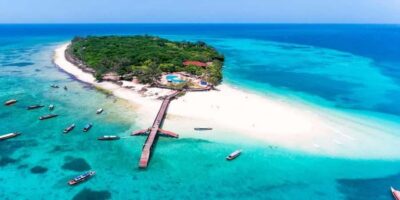
Prison Island and Nakupenda Boat Trip with Lunch
Read our review →