
Reviewed · STONE TOWN TOURS
Stone Town Guided Tour from Zanzibar
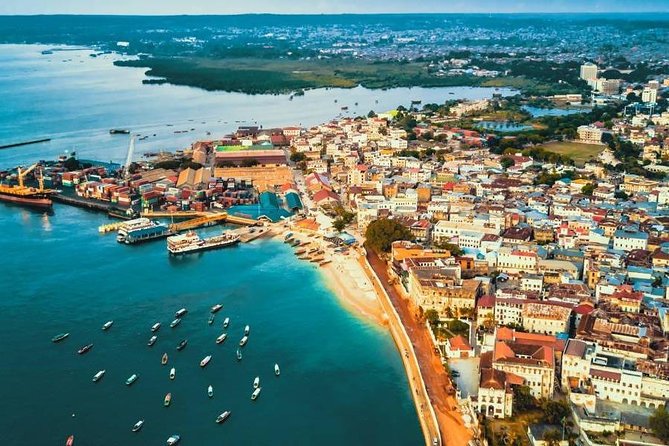
Stone Town rewards slow walking. This three-hour private tour gives you a useful first look at Zanzibar City’s old quarter, where African, Arab, Indian, Persian, and European influences meet in narrow lanes lined with carved doors, balconies, and shaded verandahs. I like the hotel pickup and drop-off, which removes the fuss of reaching the city, and I like that entrance fees are included. The main caution is time: three hours is enough for key sights, but not enough for a relaxed look at every corner.
I also like the choice of a morning or afternoon departure. That makes it easier to fit Stone Town around a beach stay or another Zanzibar activity. Still, the quality of the experience depends heavily on your guide. Some guides have given detailed history in clear English, while one poorly received tour was reduced to quick comments about a door, a market, and Freddie Mercury’s house.
In This Review
- Key points at a glance
- Why Stone Town deserves a walking tour
- Darajani Bazaar: a quick look at the working market
- The Old Fort: thick walls and a small cultural center
- The former slave market and Anglican Cathedral
- The carved doors and the details between stops
- The 30-minute shopping break
- What the $85 price really covers
- The guide can make or break the walk
- Timing, clothing, and practical preparation
- Who should book this Stone Town tour
- Final verdict: a useful first taste, with one clear condition
- FAQ
- How long does the Stone Town guided tour last?
- Is hotel pickup included?
- Is this a private tour?
- How many people are required to book?
- Are entrance fees included?
- Is food or drink included?
- What should women wear in Stone Town?
- Can I cancel for a full refund?
Key points at a glance
- Darajani Bazaar brings you close to daily life: Expect a short look at stalls selling seafood, meat, fruit, grains, spices, clothing, electronics, and other goods.
- The Old Fort combines history and shopping: Its Omani defensive walls now hold craft shops and an open-air performance space.
- The former slave market adds serious historical context: The Anglican Cathedral and underground chambers make this the most reflective stop.
- The tour is private for your group: You do not share the activity with a large group, though a minimum of two people is required to book.
- A 30-minute shopping break is built in: Bring room in your luggage for spices, fabrics, handicrafts, or other small souvenirs.
- The price is strongest when convenience matters: At $85 per person, hotel transport, a private guide, and entrance fees are included, but food and purchases are extra.
Why Stone Town deserves a walking tour
Stone Town is not best understood from a vehicle. Its character is in the details: a carved wooden doorway, a shaded passage, an old balcony, a market stall, or a building whose use changed with Zanzibar’s complicated past. A guided walk helps connect those pieces.
The old quarter reflects several cultures without presenting them in neat separate blocks. Swahili life developed alongside Arab and Indian trade, Persian influence, and European colonial power. That mixture appears in the architecture and in the goods sold around the market. You will not simply be looking at old buildings. You will be moving through a living part of Zanzibar City.
A guide matters most when the streets feel confusing or the history becomes difficult. Stone Town’s slave-trade past, the Sultanate, Omani rule, and later British influence need more than a quick photograph. A strong guide can explain how the sites fit together. A weak guide can turn an important place into a checklist.
That variation is the central issue with this tour. The itinerary is appealing, but your satisfaction will depend on how well the guide explains what you are seeing. The supplied experience allows for a multilingual guide, so if language is important to you, confirm your preference when booking.
More ways to see Stone Town:
- Zanzibar: Stone Town, Spice Tour, Prison Island with Lunch
★ 4.4 · 1,219 reviews - Zanzibar: Prison Island, Stone Town, & Spice Farm Tour
★ 4.5 · 579 reviews - Zanzibar; Prison Island, Nakupenda, StoneTown Tour with BBQ
★ 4.3 · 457 reviews
Darajani Bazaar: a quick look at the working market
The tour begins at Darajani Bazaar, also called Estella Market or Marikiti Kuu, meaning main market in Swahili. It occupies Darajani Road near the Anglican Cathedral of Christ and has served as Stone Town’s main market since the central structure was built in 1904.
This is primarily a food market. You might see seafood, meat, fruit, grains, and spices, along with stalls selling clothing, electronics, and other everyday goods. That mix gives you a better sense of present-day Stone Town than a row of souvenir shops alone.
The planned stop is about 15 minutes, and admission is free. That is enough to get your bearings, observe the trade, and take in the smells and movement, but it is not a long market visit. If you enjoy markets, you may wish the schedule allowed more time here.
Use this part of the tour carefully. Stay close to your guide, watch your belongings, and avoid blocking busy passageways while taking photographs. The market is a place of work, not only a sightseeing backdrop. Ask before photographing people, especially in food areas.
The market can also prepare you for the rest of the walk. Stone Town may look decorative at first, with its famous doors and old facades, but Darajani shows that this is still a commercial center. The contrast between ordinary shopping and grand historic buildings is one of the most useful parts of the visit.
The Old Fort: thick walls and a small cultural center
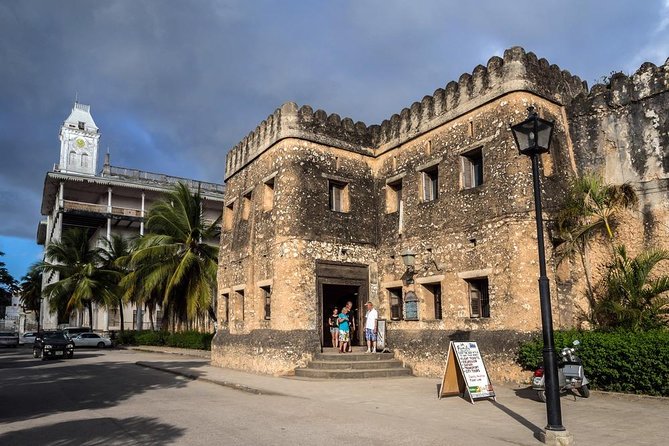
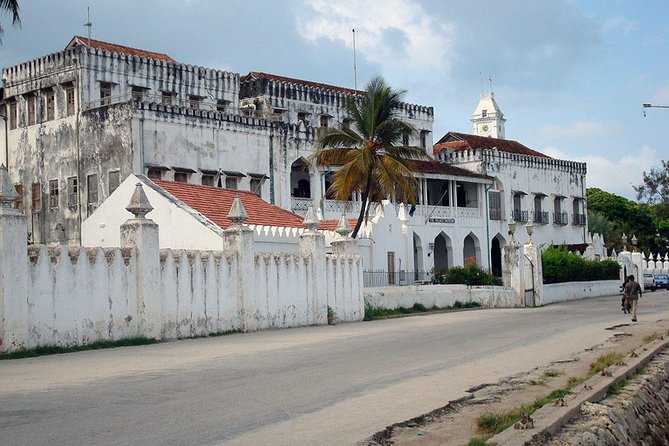
From the market, the tour continues to the Old Fort, known locally as Ngome Kongwe. Built by the Omanis as a defense against the Portuguese in the 17th century, it is described as the oldest standing structure in Stone Town.
The fort is easy to recognize. Its high brown walls include crenelated battlements, upright merlons, pointed-arch entrances, and several ways into the inner courtyard. The defensive design is plain and sturdy rather than elegant. That is part of its appeal. You can see how the building was meant to control movement and protect the town.
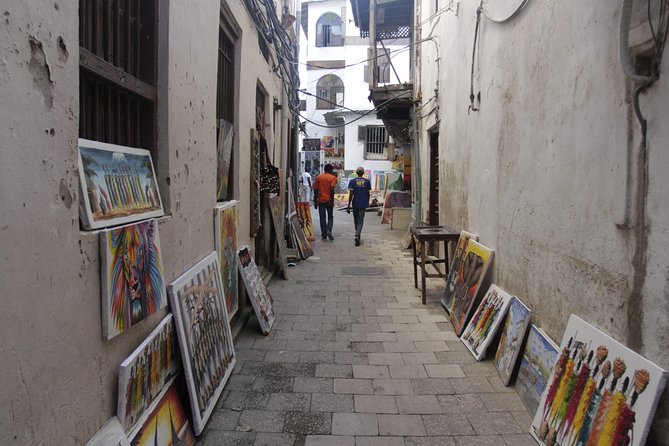
Today, the inner courtyard has been adapted into a cultural center. Small shops sell tingatinga paintings, traditional handicrafts, and other curios. An open-air amphitheater may host performances. The change from military stronghold to cultural space gives the fort two roles, but it also means the stop is not a preserved military site in the strict sense.
The scheduled visit is only about 10 minutes. Admission is included, which is helpful, but the short timing limits what you can do. You will have time to enter, look at the structure, and perhaps browse briefly. You will not have much time for a careful shopping session and a performance if both happen to be available.
This is also where your guide’s explanations can improve the stop. Without context, the fort may feel like a quick photo opportunity. With a clear explanation of Omani and Portuguese competition, the walls become easier to understand. I would listen first, then shop later during the dedicated break.
The former slave market and Anglican Cathedral
The most serious stop is the Old Slave Market and Anglican Cathedral of Christ. The coral-stone cathedral was built between 1873 and 1883 on the site of the former slave market, when Zanzibar was a major center in the slave trade under the Muscat and Oman Sultanate, with British support.
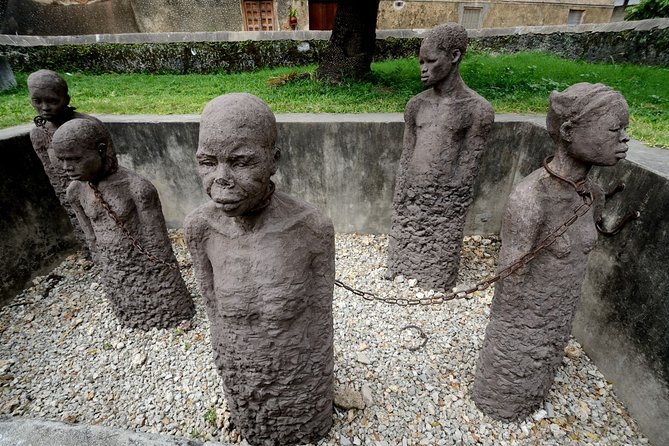
The site is not light sightseeing. It connects architecture to the suffering of people who were held and sold. Next to the church, you can enter former slave chambers in the cellars of the old Anglican Mission House, now used as a hostel. The spaces are a reminder of the cramped conditions faced by enslaved people before sale.
Inside the cathedral, the altar is believed to occupy the location of the old whipping post. That detail makes the building’s purpose especially striking. The church is active, so show respect if services or worship are taking place.
The church also contains a cross made from the tree under which David Livingstone’s heart was buried in 1873. In the churchyard, a concrete sculpture shows enslaved people leaving an underground holding cell. The bell tower is large and rectangular, with a clock that adds another recognizable feature to the site.
The formal visit lasts about 10 minutes, which feels short for such a weighty place. You may want to ask your guide focused questions rather than trying to absorb everything at once. This is the point where a good explanation matters most. If your guide rushes through the chambers or offers only a few labels, the visit will feel incomplete.
I would also prepare yourself emotionally. The site is valuable because it faces a painful part of Zanzibar’s past directly. It is not merely an attractive old church or another stop on a city walk.
A few more trips of this kind worth comparing:
- From Zanzibar: Mikumi Safari Day Trip with Flights and Meal
★ 4.7 · 1,470 reviews - Zanzibar: Quad Bike Adventure departing from Kendwa or Nungwi
★ 4.9 · 1,233 reviews - From Kendwa: Mnemba Boat Trip and Dolphin Snorkel Adventure
★ 4.8 · 1,043 reviews - From Zanzibar: Day Selous Game Reserve Safari with Flights
★ 4.7 · 1,025 reviews
The carved doors and the details between stops
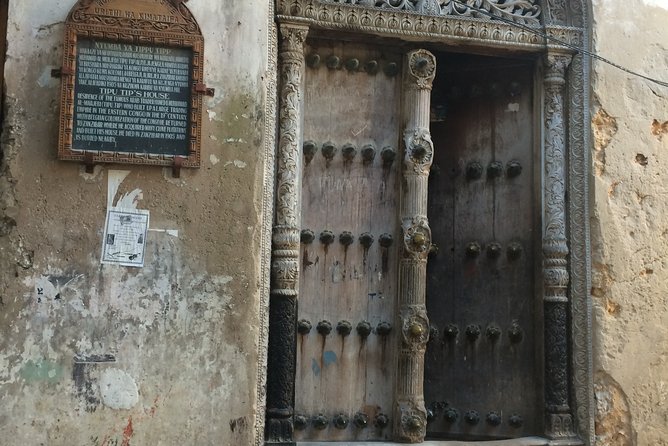
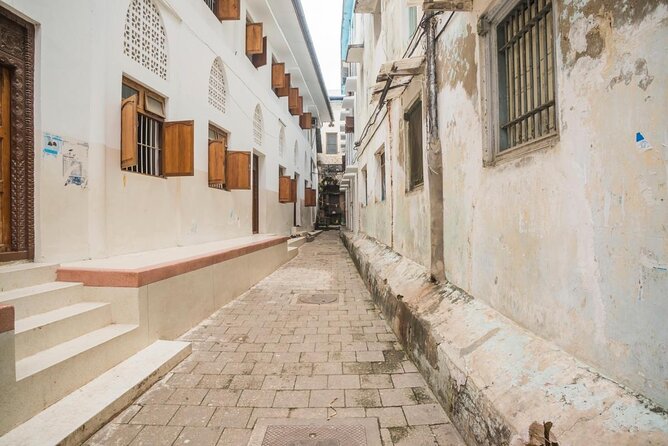
The official stops are only part of the experience. The walk between them is where you may notice Stone Town’s famous wooden doors, narrow lanes, verandahs, and balconies. The doors are known for their detailed carving and are among the most distinctive visual features of the old quarter.
Do not rush from one named attraction to the next. Look above shopfronts and along side streets. You might find a door with unusual metalwork, a balcony with a different style, or a small view into ordinary city life. The tour’s value increases when the guide explains what you are looking at rather than simply leading you from entrance to entrance.
One particularly useful piece of guide commentary is the identification of major homes and former residences. The supplied experiences include references to Freddie Mercury’s former house, a familiar Stone Town landmark for many people. Treat this as a brief point of interest, not the central purpose of the tour.
The old city can be hot, and the walking surface may be uneven. The tour requires a moderate level of physical fitness. Wear comfortable shoes, carry water, and choose clothing suitable for heat and conservative local customs.
The 30-minute shopping break

A half-hour shopping break gives you time to look for souvenirs without forcing every purchase into the walking route. Stone Town is known for distinctive handicrafts, fabrics, spices, paintings, and carved items, though the exact shops you visit will depend on the guide and the day’s route.
I recommend browsing before buying. Compare prices, check the quality of carved or painted goods, and ask what is included in the price. A relaxed shopping break is more useful than hurried purchases made at the first stall.
The Old Fort’s curio shops may be part of this browsing time, and the market area offers another setting. The two places feel different. Darajani is mainly an everyday food and goods market, while the fort is more directly aimed at cultural merchandise and souvenirs.
Food and drinks are not included. The tour description does not promise a meal or tasting, so eat beforehand or plan food separately. Souvenir photographs are also extra if offered.
What the $85 price really covers
The price is $85 per person. For that fee, you receive a professional guide, hotel pickup and drop-off, a private activity for your group, and entrance fees. That can be fair value if you are staying outside central Stone Town or want a simple half-day arrangement without organizing transport and admissions yourself.
The private format is important. You are not placed in a large shared group, so the guide can potentially adjust the pace and answer questions for your party. It also means the cost may feel more reasonable for two or more people sharing the experience than for one person traveling alone.
The value is weaker if you want a long, detailed museum-style visit at each site. The entire walk lasts about three hours, with only 15 minutes at Darajani Bazaar, 10 minutes at the Old Fort, and 10 minutes at the cathedral and former slave market listed as timed visits. Much of the remaining time is used for walking, explanations, transitions, and shopping.
Because food, drinks, and purchases are extra, budget beyond the tour price. The fee is mainly paying for convenience, transport, a private guide, and access to the principal sites. It is not an all-day cultural program.
The guide can make or break the walk
The strongest praise connected to this experience concerns individual guides. Seif Ali was singled out for excellent spoken English and useful historical information. Another person, Omar, was praised for being humble, clear in English, and able to cover the key areas in roughly two hours. Driver Said Faki also received especially warm praise for his help during a wider Zanzibar stay.
Those details offer a practical lesson: the human part of the tour matters as much as the route. A guide who explains the market, Sultanate, slave trade, doors, and buildings can turn a short walk into a coherent introduction to Zanzibar. A guide who only points at landmarks leaves you with photographs but little understanding.
The experience provider is ARP Travel Group, while the supplied experiences also refer to Fisherman Tours and Ranger Safaris in connection with arrangements. If your booking confirmation names a local operating partner or guide, check it carefully and confirm the pickup details. Since the tour may use a multilingual guide, ask in advance about your preferred language if that affects your decision.
Timing, clothing, and practical preparation
You can choose a morning or afternoon departure. Morning may suit you if you want cooler conditions and a free afternoon, while an afternoon tour can fit around a slower start or another morning plan. The available information does not promise a specific departure time, so confirm the exact pickup when booking.
Dress conservatively in Stone Town. Women should cover their shoulders and wear long skirts or trousers. Men should also avoid beachwear in the old city. This is a matter of respect as well as comfort, especially near the active Anglican Cathedral.
The tour requires moderate physical fitness. Plan on walking through narrow streets for about three hours, with time on your feet at the market, fort, and cathedral. Comfortable shoes are more useful than stylish ones here.
Bring water, sun protection, and a small bag for purchases. Keep your belongings secure in the market. If photography is important to you, ask the guide where it is appropriate, particularly at the former slave-market site and inside the cathedral.
Booking confirmation is issued within 48 hours, subject to availability. You must have at least two people for a booking. Cancellation is allowed for a full refund up to three full days before the experience begins. Changes or cancellations made later are not accepted for a refund.
Who should book this Stone Town tour
I would recommend it to you if you are staying at a Zanzibar hotel and want an easy introduction to the old city without arranging a taxi, guide, and entrance tickets separately. It suits first-time visitors who want the main historical landmarks, a market stop, and some shopping in one compact outing.
It also fits couples, families with older children, and small private groups who value their own guide. The morning and afternoon options make it easier to add around a beach holiday.
I would hesitate if you want long visits at each site, a food-focused market tour, or a specialist lesson in architecture and the slave trade. The schedule is brisk, and the guide’s ability to add context is crucial. If you book, ask for a guide who can explain Zanzibar’s history in your preferred language and give you time for questions.
Final verdict: a useful first taste, with one clear condition
This Stone Town tour offers a convenient route through three important parts of the old city: Darajani Bazaar, the Old Fort, and the former slave market beside the Anglican Cathedral. The private format, hotel transfers, included entrance fees, and shopping time make the $85 price easier to justify.
My main reservation is the short schedule. Stone Town deserves more than a string of brief stops, and the cathedral and slave-market site deserve thoughtful explanation. Book this tour if you want a practical first orientation and can accept a brisk pace. If authentic detail matters more than convenience, use the tour as an introduction and leave extra time to return to Stone Town on your own.
FAQ
How long does the Stone Town guided tour last?
The tour lasts approximately three hours.
Is hotel pickup included?
Yes. Hotel pickup and drop-off in Zanzibar are included.
Is this a private tour?
Yes. Only your group participates in the activity.
How many people are required to book?
A minimum of two people per booking is required.
Are entrance fees included?
Yes. Entrance fees for the included sites are covered.
Is food or drink included?
No. Food and drinks are not included in the tour price.
What should women wear in Stone Town?
Women should cover their shoulders and wear long skirts or trousers. The requested dress code is conservative.
Can I cancel for a full refund?
Yes, if you cancel at least three full days before the experience start time. Cancellations made later are not refunded, and changes made less than three full days before the start are not accepted.
Just added around Zanzibar
- Spice Tour of Zanzibar★ 4.5 · 3 reviews
- Zanzibar : Stone Town Tour,history without transport★ 4.8 · 3 reviews
- Zanzibar: 3-Day Northern Safari with Flights Included★ 4.8 · 3 reviews
- Starfish Beach; The Rock; Kuza Cave; Paje Beach; Salaam Cave Tour★ 4.5 · 3 reviews
- Jozani Forest, kuza cave and mtende beach★ 5.0 · 3 reviews
- ZANZIBAR: Stone Town and Jozani Forest Guided Tour★ 4.0 · 3 reviews
- Zanzibar: African Sunset Boat Party in Zanzibar Music, Views★ 4.3 · 3 reviews
- Joazani forest & Spice farm with lunch★ 5.0 · 3 reviews
Stone Town Tours, compared.

Stone Town, Spice Tour, Prison Island with Lunch
Read our review →

Prison Island, Nakupenda, StoneTown Tour with BBQ
Read our review →Stone Town, Spice tour & Prison Island with Lunch
Read our review →

3 Hours Private Stone Town walking Tour with Guide
Read our review →
Full-Day Private Stone Town +Spice Farm and Prison Island Tour
Read our review →
Stone Town Historical Cultural Walking Guided Tour
Read our review →Browse the lists this tour appears in