
Reviewed · SEA TURTLE SWIMS
Zanzibar: Baraka Turtle Aquarium Tour with Hotel Transfers
Turtles make charming swimming companions. This guided visit to Zanzibar’s Baraka Natural Aquarium gives you the chance to feed, photograph, and swim with native turtles in a turquoise lagoon, while your guide handles the drive from your hotel. I like the easy hotel pickup and the chance to support a sanctuary that buys turtles from fishermen and rehabilitates injured animals. I also like that you can choose your level of contact, from watching quietly to getting into the water.
The main caution is value and safety. At $80 per person, this can feel expensive for an outing that some people complete in roughly 1.5 to 2 hours, including transport. One serious account describes a turtle bite that required hospital treatment, so you should follow instructions carefully and avoid assuming these are harmless pets.
In This Review
- Key Things to Know Before You Go
- A Morning Drive to Zanzibar’s South Coast
- Entering the Baraka Natural Aquarium
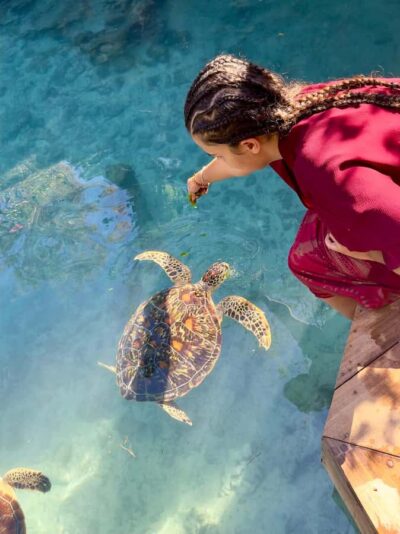
- Feeding the Turtles in the Lagoon
- Swimming With Turtles, With Some Important Cautions
- Understanding the Turtle Rescue Work
- Is $80 a Fair Price?
- Who Will Enjoy This Most?
- Practical Advice for a Better Visit
- Final Verdict: Book It If You Want a Short Turtle Encounter
- FAQ
- Where is the Baraka Turtle Aquarium Tour located?
- Does the price include hotel transportation?
- What else is included in the $80 price?
- Are food and drinks included?
- Can I swim with the turtles?
- Can I feed or touch the turtles?
- What should I bring?
- What languages are available for the tour?
- Does the tour operate in bad weather?
Key Things to Know Before You Go
- The turtles live in a natural lagoon: You are not standing beside a small tank. The sanctuary gives the turtles room to swim, hide, and approach you.
- Hotel transfers are included: A car collects you from your Zanzibar accommodation in the morning and returns you in the early afternoon.
- You can choose how much contact you want: Feed the turtles, touch them, take photographs, or stay at the edge and watch.
- The sanctuary rehabilitates rescued turtles: Turtles are purchased from fishermen or brought in after injuries, then cared for before possible release into the wild.
- Bring a towel and leave sunscreen off before swimming: Signs reportedly ask people not to wear suncream in the water, but this rule may not always be enforced.
- The price includes the essentials: Your $80 covers transport, a guide, and entry, but not food or drinks.
A Morning Drive to Zanzibar’s South Coast
The day begins with pickup at your accommodation in Zanzibar. You travel by car to the Baraka Natural Aquarium in the Unguja South Region, making this a fairly simple add-on to a Zanzibar holiday. You do not need to arrange a taxi, negotiate a fare, or find the sanctuary on your own.
That convenience matters more than it first appears. Zanzibar journeys can take time, and a hotel transfer lets you settle into the morning instead of watching the road and checking directions. One person reported being collected on time and having the car to themselves, which made the outing feel especially relaxed. Group arrangements can vary, but punctual pickup was a clear positive in that account.
The drive also shapes your expectations. This is not a full-day sightseeing circuit with several major stops. It is a focused turtle visit, with transport wrapped around it. The advertised schedule begins in the morning and returns you in the early afternoon, while some outings have taken closer to 1.5 or 2 hours in total. If you want a packed day of Zanzibar sightseeing, this will not fill it.
The guide is part of the package, and English, Italian, Spanish, and French are available. A French-speaking guide was praised for being pleasant, while another guide gave explanations about where the turtles came from and how rehabilitation works. That explanation is important because the sanctuary is more meaningful when you understand the rescue work rather than treating the lagoon as a photo prop.
More sea turtle swims:
- Zanzibar: Sea Turtle Swim at Salam Cave in Kizimkazi Village
★ 4.2 · 368 reviews - Zanzibar: Jozani Forest & Sea Tortoises Sanctuary Tour
★ 4.6 · 204 reviews - Zanzibar: Nungwi Turtle Aquarium Guided Half-Day Trip
★ 4.4 · 197 reviews
Entering the Baraka Natural Aquarium
Your included admission takes you into a sanctuary where turtles swim in a natural lagoon. The turquoise water gives the setting a much more open feel than a conventional aquarium, and the turtles can move away when they want space.
That freedom is one of the strongest features of the visit. You may see turtles swim toward you, particularly when food is offered, but you are not promised constant contact. Some can hide away, and that is a good sign from an animal welfare point of view. I prefer an encounter where the animal has room to choose than one where it is held in place for photographs.
The phrase natural aquarium can create a slightly misleading picture. This is not necessarily a polished visitor center with a clear, dramatic entrance. One person found the access to the sea difficult to see, so keep an eye out for directions and listen to your guide when you arrive. The setting may feel more practical than theatrical.
You should also prepare for a simple, wet activity rather than a formal museum visit. The focus is the lagoon and the turtles. You may receive explanations on site, but the main reward comes from being near the animals.
Feeding the Turtles in the Lagoon
Feeding time is usually the most active part of the visit. The turtles become excited when food appears, and they may swim toward you with surprising purpose. This gives you a close look at their shells, flippers, faces, and steady underwater movement.
You can feed them directly if you are comfortable doing so. Keep your hands controlled and follow the guide’s instructions. A turtle may look slow and gentle, but it has a strong mouth, and the reported bite makes clear that close contact carries a real risk.
The safest approach is to treat feeding as supervised wildlife contact, not as a chance to play with a domestic animal. Do not wave food around your face, crowd a turtle, or push another person aside for a photograph. If a turtle approaches on its own, let it set the pace.
Families may find this especially engaging because feeding turns the visit into an active lesson. A family outing was praised for allowing plenty of calm time with the turtles, including feeding and explanations from the guide. Children, however, should be watched closely around the water and animals. The supplied details do not describe specific child safety rules, so parental attention matters.
If you would rather keep your distance, you can simply photograph the turtles as they move through the lagoon. That option is useful if you are cautious about bites, dislike swimming, or want to protect a camera and phone from splashes.
Swimming With Turtles, With Some Important Cautions
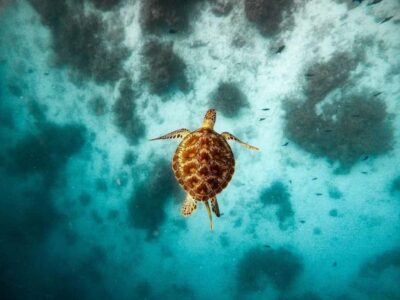
Swimming with turtles is the headline attraction, and the clear water makes it easy to understand the appeal. You can get into the lagoon and see the turtles moving around you, rather than observing them from behind glass. Some approach voluntarily, while others keep their distance.
The experience is not perfectly controlled. A turtle is a powerful wild animal, even if it has become accustomed to people and food. One account describes a bite during the swim, followed by a hospital visit. The same account says other people had scratches or bites, although there is no official injury rate or detailed safety procedure provided here.
That report should not be ignored. The guide supplied antiseptic after the incident, but the casual response was found unsettling. Before entering the water, ask the guide clearly how to feed and touch the turtles, where to stand, and what to do if one becomes too close. If you are uncomfortable, you can enjoy the lagoon from the edge instead.
There is also a water-quality issue to consider. One person found the water perfectly acceptable, while noting that suncream rules were not always enforced. Signs reportedly ask people not to wear suncream in the lagoon, presumably to limit contamination, but you should not assume every visitor follows the instruction.
Bring your towel. Avoid applying sunscreen immediately before swimming, and ask the guide about the sanctuary’s current rule. If you have an open cut, a strong fear of animal contact, or a medical concern, think carefully before getting into the lagoon.
A few more trips of this kind worth comparing:
- Zanzibar: Swim with Sea Turtles at Baraka or Salaam Aquarium
★ 4.5 · 65 reviews - 5-Hour Snorkeling, Swimming with Dolphins and Sea Turtles Aquarium
★ 4.0 · 48 reviews - Massai village & Baraka turtules aquarium
★ 4.7 · 42 reviews - Zanzibar: Baraka Aquarium Feed, Swim & Snorkel with Turtles
★ 4.2 · 27 reviews
Understanding the Turtle Rescue Work
The visit has a conservation angle that gives it more weight than a simple animal photo stop. The sanctuary purchases turtles from fishermen and cares for injured animals. The stated aim is rehabilitation and release back into the wild when possible, unless an injury prevents release.
That model also raises a useful question: how should a sanctuary balance close contact with animal welfare? The most encouraging detail is that the turtles have space to hide and are not forced to interact. If one swims away, you can let it go. A good visit should include watching as much as touching.
The guide’s explanation can help you understand the individual animals and the rehabilitation process. Do not rush through this part. Ask where the turtles came from, which ones may be released, and why some cannot return to the sea. The available information does not promise a formal lecture, but explanations are part of the guided experience.
Your admission fee helps support the sanctuary, though the exact portion directed to turtle care is not provided. I would view the $80 partly as payment for an animal encounter and partly as support for local rescue work, without assuming that every dollar goes directly to rehabilitation.
Is $80 a Fair Price?
The $80 price per person includes hotel pickup and drop-off, a guide, and the entry fee. That makes the cost easier to understand if your accommodation is far from the aquarium or if you value having transport arranged. A private or small-group transfer can also feel more comfortable than piecing together taxis.
Still, the price is high for the amount of time involved. One person found the full outing lasted no more than two hours, and possibly closer to 1.5 hours. If your visit follows that shorter pattern, the cost per hour is significant.
The value depends on what you want. If you are looking for one memorable animal encounter, want door-to-door transport, and care about supporting a turtle sanctuary, $80 may feel reasonable. If you are mainly seeking a low-cost swim or a full-day excursion, the price may disappoint.
The lack of included food and drinks is not a major problem for a short morning activity, but plan accordingly. You return in the early afternoon, so you may want breakfast before pickup and a meal ready for later. Nothing in the package suggests that refreshments are provided.
Who Will Enjoy This Most?
I would recommend the tour most strongly to families and animal lovers who want an easy, focused outing. The calm pace, feeding opportunity, and guide explanations give you something to do even if you do not swim.
It can also suit photographers. The turtles’ movement through the lagoon offers better pictures than a cramped indoor tank, and you can stay out of the water while capturing them. Bring waterproof protection for your phone or camera, since the activity takes place around water.
You should be more cautious if you want a tightly managed wildlife encounter. The reported bite and scratches make this less suitable for anyone expecting zero-contact risk. It may also disappoint you if you want a long excursion with several Zanzibar attractions.
The language choice is helpful for international visitors. Guides are available in English, Italian, Spanish, and French, though the exact language assigned to you can depend on the booking.
Practical Advice for a Better Visit
A few simple choices can improve the outing:
- Bring a towel, as swimming is optional but central to the experience.
- Wear clothing that you can get wet in and bring a way to protect your phone.
- Ask for feeding instructions before approaching the turtles.
- Do not force contact. Let the turtle swim away if it chooses.
- Follow the sanctuary’s suncream guidance and ask whether you should rinse before entering.
- Keep children close around the water and animals.
- Ask the guide about the turtle’s rescue background and chances of release.
- Allow for a short outing rather than planning your entire day around it.
- Have food and drinks before or after, since they are not included.
- If the water or animal behavior makes you uneasy, watch from the edge instead of swimming.
The tour runs rain or shine. That makes it easy to keep in a holiday plan, but it also means wet weather will not automatically cancel the activity. A towel and a flexible attitude are useful on a rainy Zanzibar morning.
Booking is flexible in another practical way. You can reserve your place and pay later, and cancellation is available up to 24 hours before departure for a full refund. Those terms can help if your Zanzibar schedule is still moving around.
Final Verdict: Book It If You Want a Short Turtle Encounter
Book the Baraka Turtle Aquarium Tour if you want a convenient, guided chance to see rescued turtles in a natural lagoon, and if hotel transport plus conservation support matter to you. The strongest points are the open swimming area, the ability to choose between watching and touching, and the chance to learn how turtles are rehabilitated.
Think twice if $80 feels steep for a short activity, or if you want strict control over animal contact. The bite report is a serious caution, and the sunscreen rule appears to depend partly on visitor cooperation. My practical choice would be to book it for a family morning or a special wildlife experience, but enter the water cautiously and treat the turtles with respect.
FAQ
Where is the Baraka Turtle Aquarium Tour located?
The tour takes place at the Baraka Natural Aquarium in Zanzibar’s Unguja South Region, Tanzania.
Does the price include hotel transportation?
Yes. The $80 price includes hotel pickup and drop-off in Zanzibar by car.
What else is included in the $80 price?
The price includes a guide and the entry fee to the sanctuary.
Are food and drinks included?
No. Food and drinks are not included, so plan to eat before or after the visit.
Can I swim with the turtles?
Yes. You have the option to enter the lagoon and swim with the turtles.
Can I feed or touch the turtles?
Yes. The experience allows you to feed and touch the turtles, or simply photograph and watch them from a distance.
What should I bring?
Bring a towel, especially if you plan to swim.
What languages are available for the tour?
The tour is available in English, Italian, Spanish, and French.
Does the tour operate in bad weather?
Yes. The tour takes place rain or shine.
Just added around Zanzibar
- Spice Tour of Zanzibar★ 4.5 · 3 reviews
- Zanzibar : Stone Town Tour,history without transport★ 4.8 · 3 reviews
- Zanzibar: 3-Day Northern Safari with Flights Included★ 4.8 · 3 reviews
- Jozani Forest, kuza cave and mtende beach★ 5.0 · 3 reviews
- Starfish Beach; The Rock; Kuza Cave; Paje Beach; Salaam Cave Tour★ 4.5 · 3 reviews
- ZANZIBAR: Stone Town and Jozani Forest Guided Tour★ 4.0 · 3 reviews
- Zanzibar: African Sunset Boat Party in Zanzibar Music, Views★ 4.3 · 3 reviews
- Joazani forest & Spice farm with lunch★ 5.0 · 3 reviews
Sea Turtle Swims, compared.
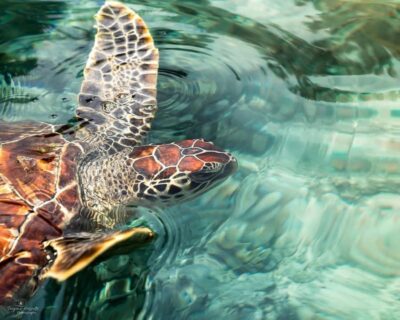
Sea Turtle Swim at Salam Cave in Kizimkazi Village
Read our review →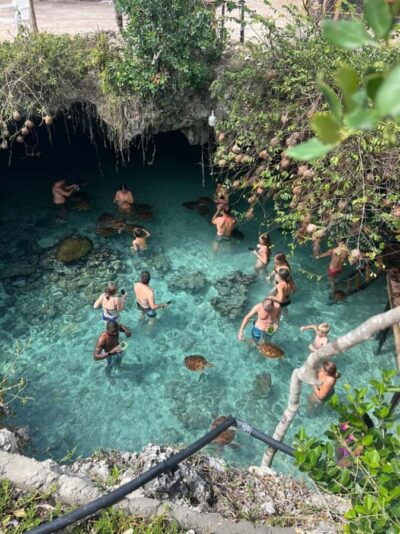
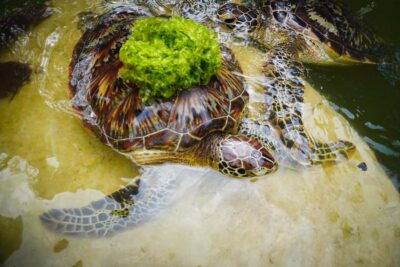
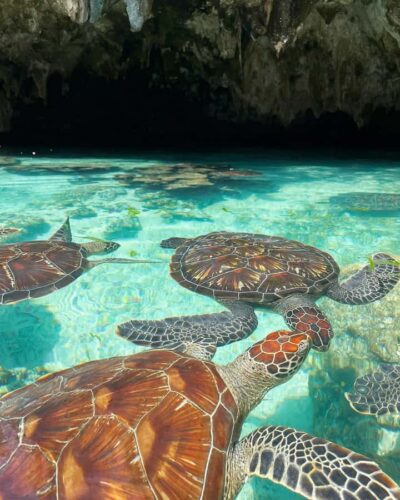
SWIMMING WITH TURTLES AT SALAAM CAVE AT KIZIMKAZI ZANZIBAR
Read our review →
Swim with Sea Turtles, Kuza Cave, Paje Beach, The Rock Lunch
Read our review →
Prison Island, Tortoise, Jozani Forest Guided Tour
Read our review →Browse the lists this tour appears in