
Reviewed · STONE TOWN TOURS
Zanzibar: Stone Town Guided Tour with Prison Island
The best Zanzibar days mix streets and sea. This six-hour tour pairs Stone Town’s layered past with a boat ride to Prison Island, where giant tortoises roam beneath the palms. I like the contrast: one half takes you through coral-stone lanes, old markets, and major historic sites, while the other gives you clear water, beach time, and enormous Seychelles tortoises.
I also like that the $90 price includes hotel transport, entry tickets, boat transfers, guides, and snorkeling gear. Guides such as Abu, Musa, and Abubakr have earned especially strong praise for their history knowledge, friendly manner, and ability to adjust the day. The main drawback is pace. Six hours is enough for a useful introduction, but Stone Town has more detail than you can reasonably absorb, and the Prison Island visit may feel short if you want a long snorkel.
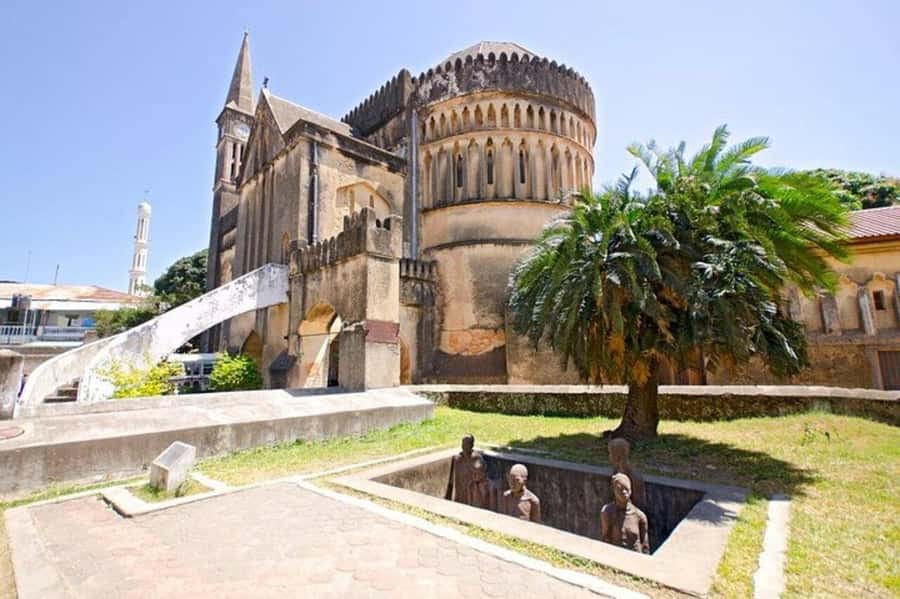
- The former slave market and Anglican Cathedral offer the tour’s most serious and moving history lesson.
- Prison Island’s giant tortoises can weigh about 200 kilograms, with some said to be more than 150 years old.
- Stone Town’s narrow coral-stone streets reveal Arabic, African, Indian, and European influences side by side.
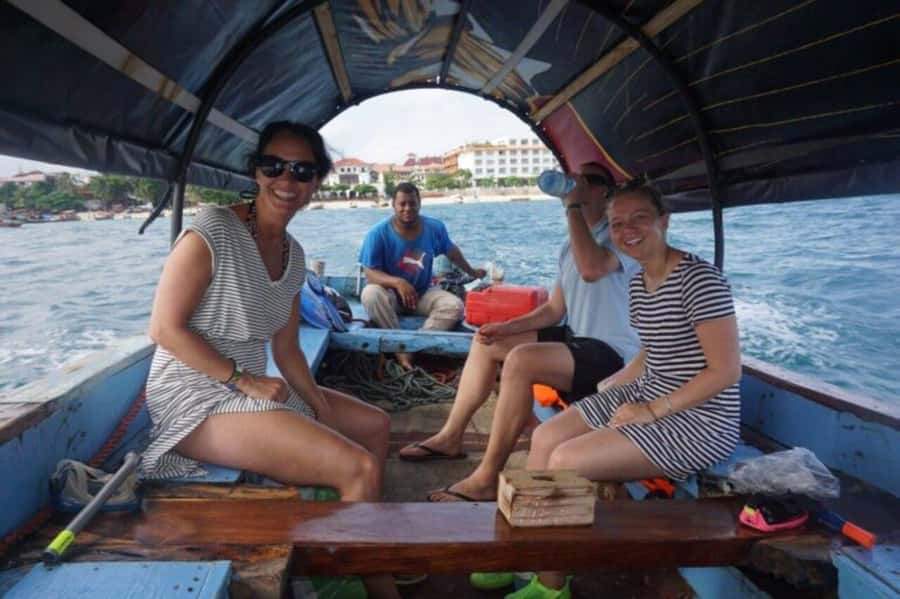
- A 30-minute speedboat crossing connects the old city with a small island for tortoises, peacocks, beach time, and snorkeling.
- Guides often shape the experience, with Abu praised for local stories, flexibility, and care for guests.
- Lunch is not included, so plan to eat before or after the tour, or ask your guide about food during the day.
In This Review
- Why Pair Stone Town With Prison Island?
- Pickup From Zanzibar’s Beach Resorts
- Speedboat Ride From Stone Town to Prison Island
- Prison Island’s 1893 Prison and Quarantine Past
- Meeting the Giant Seychelles Tortoises
- Snorkeling, Coral, or a Quiet Beach Break
- Walking Into Stone Town’s Coral-Stone Lanes
- The Former Slave Market and Stone Town’s Hardest Lesson
- Markets, Food, and Everyday Stone Town
- Guides Make the Difference
- Is $90 a Fair Price?
- Practical Advice Before You Go
- Should You Book This Stone Town and Prison Island Tour?
- FAQ
- How long does the Stone Town and Prison Island tour last?
- What is included in the $90 price?
- Can I touch the giant tortoises?
- How old are the tortoises on Prison Island?
- Is snorkeling included?
- Who should avoid this tour?
Why Pair Stone Town With Prison Island?
Stone Town alone can fill a morning. Prison Island alone can fill a few pleasant hours. Put them together and you get a sharper picture of Zanzibar: its trading past, its colonial buildings, its Swahili culture, and its warm Indian Ocean setting.
This is not a quiet museum tour. Stone Town is a working city. You will pass residents, shops, market stalls, mosques, churches, and temples in streets often too narrow for cars. The walking route brings history into everyday life rather than keeping it behind glass.
The island adds a lighter but still interesting second act. You can see the old prison buildings, learn how the island was used for prisoners and sick people, meet the giant tortoises, then choose between snorkeling and relaxing by the water. That variety makes the tour a good fit if you have only one day for Stone Town.
The trade-off is time. You are moving between several major places, and each stop receives a compact explanation rather than a long visit. If your main goal is serious historical study, book a longer Stone Town walk. If you want a well-packed first look, this combination works well.
Pickup From Zanzibar’s Beach Resorts

Hotel pickup and drop-off are part of the arrangement, with pickup options covering Zanzibar, Nungwi, Kendwa, Matemwe, Stone Town, Pwani Mchangani, and Kiwengwa. The driver is expected to meet you at your hotel reception, so give the hotel name and reception details clearly when arranging the trip.
This matters more than it may seem. A tour starting in Stone Town is simple if you are already staying there. From the north or east coast, though, the road transfer adds time around the six-hour core schedule. One guest staying in Kendwa praised the punctual taxi transfer and careful driving, while another described an accurate airport transfer arranged in advance.
I would confirm the pickup time and whether your booking includes the full hotel transfer before the day begins. The activity information describes pickup as optional in one place and included elsewhere, so this is worth settling early. If you have a flight later that day, ask directly about airport transfer timing rather than assuming the sightseeing schedule will fit.
More ways to see Stone Town:
- Zanzibar: Stone Town, Spice Tour, Prison Island with Lunch
★ 4.4 · 1,219 reviews - Zanzibar: Prison Island, Stone Town, & Spice Farm Tour
★ 4.5 · 579 reviews - Zanzibar; Prison Island, Nakupenda, StoneTown Tour with BBQ
★ 4.3 · 457 reviews
Speedboat Ride From Stone Town to Prison Island
The boat ride takes about 30 minutes each way in the stated itinerary. Some accounts describe the crossing as closer to 20 or 25 minutes, so sea conditions and the exact boat may affect the timing.
The crossing gives you a welcome change of scene. You leave Stone Town’s waterfront and head toward Prison Island, about five kilometers offshore. The trip itself can be part of the fun. On some departures, the guides have sung on the boat and served fresh fruit, details that add warmth without taking much time.
Expect an open-water ride, not a luxury cruise. Bring a camera, but protect it from spray. Comfortable shoes are listed as essential, and they will help on the island as well as during the Stone Town walk. Large bags and luggage are not suitable for this outing.
The return boat is also your link to the snorkeling area. If you are hoping to swim, bring swimwear under your clothes and ask how much time is available before leaving Stone Town. One strong account praised the snorkeling but noted that the water was not quite as warm as expected, so a light cover-up may be useful after swimming.
Prison Island’s 1893 Prison and Quarantine Past
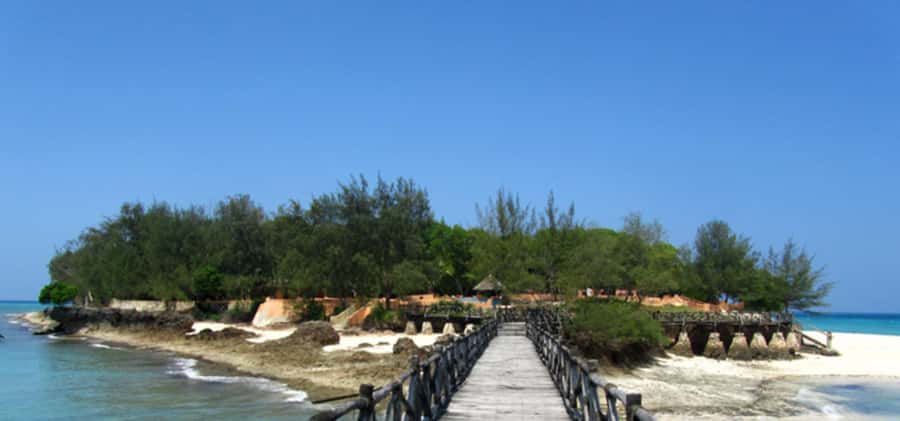
Prison Island has a misleading name. The prison was built in 1893, but its original purpose was to hold violent prisoners from the mainland and people with contagious illnesses. The island’s past is tied to confinement and quarantine, not just punishment.
The building is now owned by a hotel, but the historic site remains part of the visit. A guide leads you around the island, explaining the rooms and the way the island was used. This is a modest historic stop, not a vast complex, but its location gives the story a strong sense of place.
I find this part valuable because it prevents the island from becoming just a tortoise park. You see how Zanzibar’s colonial-era systems affected people, then walk through a setting that today feels calm and inviting. That contrast can feel strange, but it is part of what makes the stop worth understanding.
The tour does not treat Prison Island as a full-day historical site. Expect a guided walk and sightseeing, followed by time for the tortoise sanctuary and beach activities. If the island’s history interests you most, listen closely during the guide’s explanation and ask questions while you are there.
Meeting the Giant Seychelles Tortoises
The tortoise sanctuary is the island’s star attraction. The giant tortoises were brought from the Seychelles in the late 19th century. Many are said to be over 150 years old, and the average weight is given as about 200 kilograms.
You may see smaller tortoises as well as the huge adults. One family particularly enjoyed seeing the baby tortoises, while other visitors focused on Baboo, a famous tortoise described as around 200 years old. The ages are part of the island’s stories, but the animals themselves need no sales pitch. Standing beside one of these slow, heavy creatures makes the scale obvious.
The tour information says you may touch the tortoises and take photos. Local rules can change, and one account specifically noted that feeding was no longer allowed. Do not count on feeding, and follow the guide or sanctuary staff if touching is restricted on the day.
This is a good stop for families, photographers, and anyone who likes unusual wildlife. It is not a fast-moving animal encounter. The tortoises often sit or move slowly, so people expecting constant action may find the visit quiet. I would treat it as a close look at long-lived animals, not a show.
Prison Island is also home to peacocks. They add color and movement to the sanctuary area, though the tortoises remain the main reason to visit.
More Prison Island trips:
- Zanzibar: Prison Island and Nakupenda Boat Trip with Lunch
★ 4.1 · 882 reviews - Zanzibar: Prison Island & Nakupenda Boat Tour with BBQ Lunch
★ 4.4 · 554 reviews - Zanzibar: Stone Town, Spice tour & Prison Island with Lunch
★ 4.6 · 453 reviews - Zanzibar: Prison Island & Nakupenda Sandbank Tour with Lunch
★ 4.2 · 265 reviews
Snorkeling, Coral, or a Quiet Beach Break
After the guided island visit, you can snorkel around the coral that fringes Prison Island or relax in the sun. Snorkeling equipment is included, which saves you from renting a mask and fins separately.
The snorkeling has received especially warm praise, with one guest calling it a real highlight and another describing it as good fun. Still, conditions depend on the sea. Water temperature, visibility, and the amount of time available can vary. If snorkeling is important to you, tell the boat captain or guide early so the activity does not get squeezed by the walking tour.
You should also be realistic about the format. This is not a dedicated marine-life excursion with hours in the water. Prison Island is one part of a combined history and sightseeing day. You may get a pleasant swim over the reef, then return to the beach before heading back to Stone Town.
If you would rather not snorkel, the beach gives you a simple alternative. Sit in the sun, watch the water, and enjoy a slower pause before the busy streets of the old town.
Walking Into Stone Town’s Coral-Stone Lanes
The Stone Town portion is a guided walk through a historic district built largely from coral stone during the 19th and 20th centuries. UNESCO listed Stone Town as a World Heritage Site in 2000.
The city’s appeal comes from its mixture of cultures. Arabic, African, Indian, and European influences appear in the buildings, places of worship, food, markets, and street life. You may pass a mosque, church, and temple within the same general area. The narrow lanes are too tight for cars in many places, so expect to walk at a steady pace and watch your footing.
The famous carved doors deserve attention. They are one of the most memorable details in Stone Town, and a guide can explain what you are seeing rather than leaving you to photograph doors without context. Several guides also point out buildings represented on Tanzanian banknotes, as well as the oldest building in Stone Town.
The route can include the former slave market, House of Wonders, Old Fort, Sultan’s Palace, Darajani Market, Forodhani Gardens, Jaws Corner, and the Freddie Mercury Museum. Not every stop necessarily receives the same amount of time, so ask your guide which sites are open and which will be viewed from outside.
The Former Slave Market and Stone Town’s Hardest Lesson
The former slave market and Anglican Cathedral are likely to be the most affecting part of the walk. You can see the spaces where enslaved people were held and the original chains used there.
This is not easy sightseeing, and it should not be treated as a quick photo stop. The visit gives essential context for Zanzibar’s place in the East African and Indian Ocean trade. A strong guide will explain the history plainly and allow the seriousness of the site to register.
Several guides have been praised for bringing the subject to life while answering questions with care. Abu, in particular, is often singled out for explaining Zanzibar’s history, the slave trade, and local culture in a way that keeps people engaged. The quality of the guide matters most here. A rushed explanation would leave you with dates and buildings but little understanding.
Allow yourself a quiet moment at this stop. Stone Town is full of lively street scenes, but this part asks for a different mood.
Markets, Food, and Everyday Stone Town
Darajani Market gives you a look at local commerce, with the sights and smells of a working market rather than a polished attraction. The fish and spice market can be especially interesting if you want to see how the city functions beyond its historic façades.
Forodhani Gardens offers a different feel near the waterfront. Jaws Corner is another stop that helps you see Stone Town as a social place, not simply a collection of old buildings. The route may also include local food recommendations. One guide introduced a guest to Zanzibar Mix, a popular local dish that became the memorable meal of the day.
Lunch is not included in the $90 price. That keeps the package flexible, but it means you should budget for food. You might eat before the tour, after returning to Stone Town, or ask the guide where a suitable meal fits into the schedule. Do not assume a full restaurant lunch is built into the six hours.
The markets are also the place to handle shopping sensibly. A guest praised a guide for helping find particular items and for avoiding forced stops at friends’ shops. That kind of flexibility is useful, but you should still decide what you want to buy before the market visit.
Guides Make the Difference
The strongest part of this experience is the guiding. Abu appears repeatedly in praise for his English, historical knowledge, humor, flexibility, and personal care. Musa is also praised for making the day friendly and allowing extra time for snorkeling. Abubakr and Abdalla are noted for clear explanations and an easy manner.
That matters because Stone Town can feel confusing on your own. The lanes twist, major buildings can be easy to miss, and a plaque rarely explains how slavery, trade, religion, and architecture fit together. A good guide turns scattered sights into a story.
The experience can be private or arranged for a small group. Private touring gives you more say over walking speed, shopping, photo stops, and snorkeling time. Small groups may offer better value, but you will have less control over the pace.
Guides have also helped when plans changed. One assisted a sick companion with medicine and found a safe place while the other person continued the tour. Another accommodated older family members with limited mobility. This does not make the tour suitable for everyone, but it suggests that direct communication can help the team adjust the day.
Is $90 a Fair Price?
At $90 per person, this tour is not the cheapest way to walk around Stone Town or reach Prison Island. But the price covers several costs that can add up: hotel transfers, Stone Town and Prison Island entry tickets, two boat rides, a guide, and snorkeling equipment.
I see the value in the transport and structure. You avoid arranging a separate boat, finding the island entrance, hiring a city guide, and working out your return transfer. The package also protects a short holiday day from becoming a string of disconnected bookings.
The price makes less sense if you want only one activity. A dedicated Stone Town walk should suit you better if the old city is your main interest. A dedicated boat and snorkeling trip may be better if you care little about history. This tour earns its price by combining both.
The fact that lunch is extra is minor, but remember it when planning your budget. You should also check whether your hotel transfer is confirmed, especially if you are staying far from Stone Town.
Practical Advice Before You Go
Wear comfortable shoes. Stone Town means extended walking on narrow streets, while Prison Island may involve uneven ground and time outdoors.
Bring a camera, but keep it protected during the boat crossing. Large bags and luggage are not allowed, and explosive substances are specifically prohibited. Pack only what you need for a half-day outing.
The tour is not recommended for people with back or heart problems, babies under one year, or people over 95. If someone in your party has limited mobility, explain the situation before booking. The guides may be able to adjust the pace, but the experience still includes boat transfers and walking.
Live guiding is available in English, French, Italian, and German. Private and small-group options are available. You can cancel up to 24 hours before departure for a full refund, and the reserve-now, pay-later option helps if your schedule is still changing.
Should You Book This Stone Town and Prison Island Tour?
I would book it if you have one day for Zanzibar’s old city and want more than a standard walking tour. The combination of the former slave market, coral-stone lanes, local markets, a historic island, giant tortoises, and optional snorkeling gives you a useful first look at the island.
Book it especially if hotel pickup matters, you prefer a guide to handle the boat and entry arrangements, or you want a flexible private outing. Abu, Musa, and the other highly praised guides appear to add real value through stories, language help, local food suggestions, and practical care.
I would choose another plan if you want a slow, detailed study of Stone Town, a long snorkeling session, or a full meal included. The day is packed, and Prison Island can feel brief. For most first-time visitors who want history, wildlife, and sea time in one manageable outing, though, the $90 cost is reasonable.
FAQ
How long does the Stone Town and Prison Island tour last?
The activity lasts six hours. The stated itinerary includes about 30 minutes by speedboat to Prison Island and about 30 minutes back to Stone Town, along with the island visit and guided city walk.
What is included in the $90 price?
The price includes hotel pickup and drop-off, entry tickets for Stone Town and Prison Island, boat transfers, snorkeling equipment, and tour guides. Lunch is not included.
Can I touch the giant tortoises?
The tour information says there is a chance to touch the tortoises and take photos. Rules may vary on the day, and feeding should not be expected, so follow the instructions of the guide and sanctuary staff.
How old are the tortoises on Prison Island?
Many of the tortoises are said to be more than 150 years old. The sanctuary’s tortoises were imported from the Seychelles in the late 19th century, and some accounts describe an individual named Baboo as around 200 years old.
Is snorkeling included?
Yes. Snorkeling equipment and time to snorkel around the coral near Prison Island are included. You can also relax on the beach instead of snorkeling.
Who should avoid this tour?
The activity is not suitable for people with back problems, heart problems, babies under one year, or people over 95 years old. Comfortable shoes are recommended, and large bags or luggage are not allowed.
Just added around Zanzibar
- Spice Tour of Zanzibar★ 4.5 · 3 reviews
- Zanzibar : Stone Town Tour,history without transport★ 4.8 · 3 reviews
- Zanzibar: 3-Day Northern Safari with Flights Included★ 4.8 · 3 reviews
- Jozani Forest, kuza cave and mtende beach★ 5.0 · 3 reviews
- Starfish Beach; The Rock; Kuza Cave; Paje Beach; Salaam Cave Tour★ 4.5 · 3 reviews
- ZANZIBAR: Stone Town and Jozani Forest Guided Tour★ 4.0 · 3 reviews
- Zanzibar: African Sunset Boat Party in Zanzibar Music, Views★ 4.3 · 3 reviews
- Joazani forest & Spice farm with lunch★ 5.0 · 3 reviews
Stone Town Tours, compared.

Stone Town, Spice Tour, Prison Island with Lunch
Read our review →
Prison Island, Nakupenda, StoneTown Tour with BBQ
Read our review →Stone Town, Spice tour & Prison Island with Lunch
Read our review →

3 Hours Private Stone Town walking Tour with Guide
Read our review →
Full-Day Private Stone Town +Spice Farm and Prison Island Tour
Read our review →
Stone Town Historical Cultural Walking Guided Tour
Read our review →Browse the lists this tour appears in