Reviewed · ZANZIBAR TOURS
Zanzibar Tumbatu Island Cultural Experience
Tumbatu feels far from resort Zanzibar. This private island outing combines a short dhow ride with local markets, fishing traditions, boat building, old ruins, and a meeting with a spiritual healer. I like the personal pace and the chance to see ordinary island life, not just beaches. The main consideration is that village visits can feel direct and lively, especially when children ask for money.
I also like that the price includes hotel pickup, boat transport, entrance fees, and a hot lunch of rice, curry, seafood, and fruit. You get roughly six to seven hours with your own group and guide, which gives you room to ask questions about tides, the moon, fishing traps, and daily work. Still, this is not a polished resort excursion. Expect a small boat, village paths, and a moderate level of physical activity.
In This Review
- Key points to know before you go
- Why Tumbatu offers a different Zanzibar day
- Mkokoni harbor sets the tone
- The 30-minute crossing to Tumbatu
- Fishing traps, tides, and the island lagoon
- Dhow builders and fishermen at work
- Old baobabs and the Shiraz ruins
- Meeting a spiritual healer respectfully
- Lunch brings the day back to the table
- What the $200 price really covers
- Who will enjoy this private island visit
- Practical details that can shape the day
- Should you book the Tumbatu Island Cultural Experience?
- FAQ
- How long does the Tumbatu Island Cultural Experience last?
- What time does the tour start?
- Where does the tour meet?
- Does the tour include hotel pickup?
- How long is the boat trip to Tumbatu Island?
- Is lunch included?
- Is this a private tour?
- What places and activities are included?
- Does the tour require physical fitness?
- Can I cancel for a full refund?
Key points to know before you go
- Tumbatu is reached by a 30-minute small-boat ride: Your sea crossing begins at Mkokoni harbor and fishing village, not at a large cruise terminal.
- The day centers on local work: You see fish and furniture markets, cargo dhows, fishing boats, net repairs, and traditional fishing traps.
- A spiritual healer is part of the visit: This is a cultural encounter, so approach it with respect and an open mind.
- The Shiraz ruins add historical depth: The remains date to before the 12th century and give the island visit an older sense of place.
- Lunch is included: Expect rice, curry, seafood, and fruit, with all listed fees and taxes covered.
- The tour is private: Only your group takes part, and the guide can give you personal attention.
Why Tumbatu offers a different Zanzibar day
Many Zanzibar excursions focus on water sports, spice farms, or famous beaches. Tumbatu gives you something less packaged: a look at how an island community works and lives.
The day begins at 9:00 a.m. at Mkokoni local dhow harbor and fishing village. This opening stop matters. You are not whisked straight from a hotel to a sightseeing site. You first get your bearings around a working harbor, where fishing boats, cargo dhows, and local activity set the tone for the day.
From there, the boat trip to Tumbatu takes about 30 minutes. The crossing is short enough to avoid becoming an all-day sea journey, but long enough to make the island feel separate from Zanzibar’s main tourist areas. Since the tour depends on good weather, the sea conditions can affect the schedule or lead to a changed date.
The experience is private, which is one of its strongest features. If you want to stop and ask how a fishing trap works, or pause while a guide explains the relationship between tides and the moon, you do not have to compete with a large group. One published account praised guide Hamza for organizing the day well and adapting to changing plans. If Hamza is assigned to your group, his flexibility could be especially useful, but guide assignments should be confirmed when booking.
A few more trips of this kind worth comparing:
- From Zanzibar: Mikumi Safari Day Trip with Flights and Meal
★ 4.7 · 1,470 reviews - Zanzibar: Quad Bike Adventure departing from Kendwa or Nungwi
★ 4.9 · 1,233 reviews - Zanzibar: Stone Town, Spice Tour, Prison Island with Lunch
★ 4.4 · 1,219 reviews
Mkokoni harbor sets the tone
The first section takes place around Mkokoni, a local harbor and fishing village. You visit the fish and furniture market, then look at cargo dhows and fishing boats.
This is a useful introduction because it shows the practical side of island life. A fish market is not arranged for sightseeing, and a furniture market is not a staged cultural display. You may find the setting colorful and interesting, but it can also feel busy, informal, and less tidy than a tourist market.
The cargo dhows are another important detail. Dhow boats have long been tied to coastal trade and travel in the Indian Ocean, and here you see working boats rather than only decorative vessels. The tour also introduces you to dhow crafters, giving you a chance to see how local boats are made or maintained.
Do not expect a long technical workshop unless your guide provides one. The supplied schedule promises contact with dhow crafters and fishermen, not a guaranteed boat-building demonstration. Think of this part as an introduction to the people and work that support the island.
The 30-minute crossing to Tumbatu
The boat ride from the harbor to Tumbatu takes about half an hour. Transportation from the meeting point and hotel pickup are included, along with the other listed fees, so you are not left piecing together the day yourself.
The boat is described as small. That matters. You should be comfortable with a simple sea crossing and prepared for conditions to feel more basic than on a large sightseeing vessel. The tour requires good weather, and that is sensible for a small boat trip. If poor weather cancels the outing, you are offered another date or a full refund.
The meeting point is listed as Tembo House Hotel on Shangani Street, near Forodhani Street, in Zanzibar. The activity ends back at the meeting point. Pickup is offered, so confirm the exact pickup arrangement and timing before the morning of the tour.
Fishing traps, tides, and the island lagoon
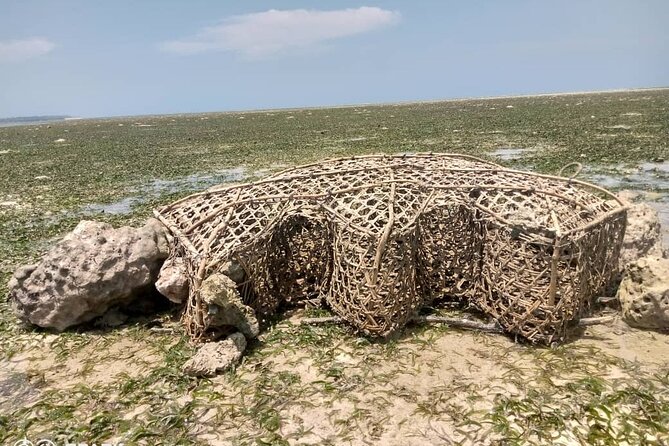
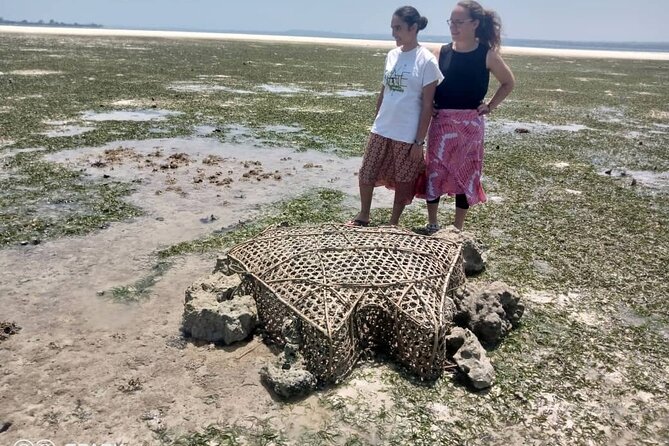
After reaching Tumbatu, the tour stops at the lagoon to explain local fishing methods and fishing traps. This is one of the day’s best educational moments because it links the food you see at lunch with the work required to catch it.
One account praised the guide’s explanation of tides and the moon. That detail gives you a good idea of the kind of conversation that can make this outing worthwhile. Fishing is not simply about putting a net in the water. Timing, tides, moon phases, and local knowledge all affect the result.
Your guide can help you understand how the traps are used, but the amount of detail may depend on the day and the people working there. Since this is a living village, conditions are not fixed. You might see fishermen repairing nets, working around boats, or carrying on with tasks that do not pause for a tour.
That unpredictability is part of the appeal, but it also means you should not expect a formal performance. Bring patience. Watch first, ask politely, and let your guide manage introductions.
A completely different kind of day out from Zanzibar:
- From Kendwa: Mnemba Boat Trip and Dolphin Snorkel Adventure
★ 4.8 · 1,043 reviews - From Zanzibar: Day Selous Game Reserve Safari with Flights
★ 4.7 · 1,025 reviews - Zanzibar: Prison Island and Nakupenda Boat Trip with Lunch
★ 4.1 · 882 reviews - Skydive Zanzibar | Tandem Skydive
★ 5.0 · 877 reviews
Dhow builders and fishermen at work
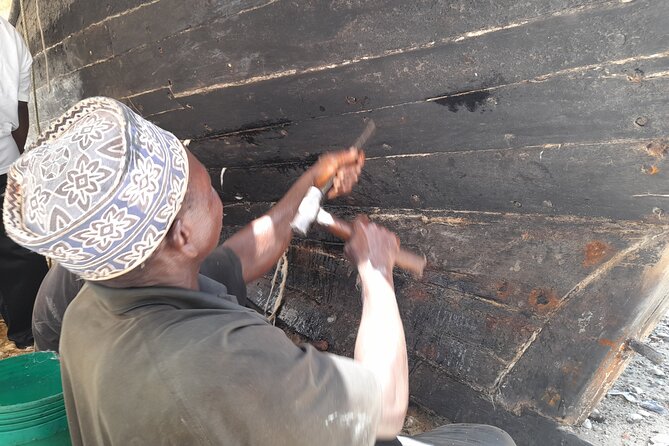
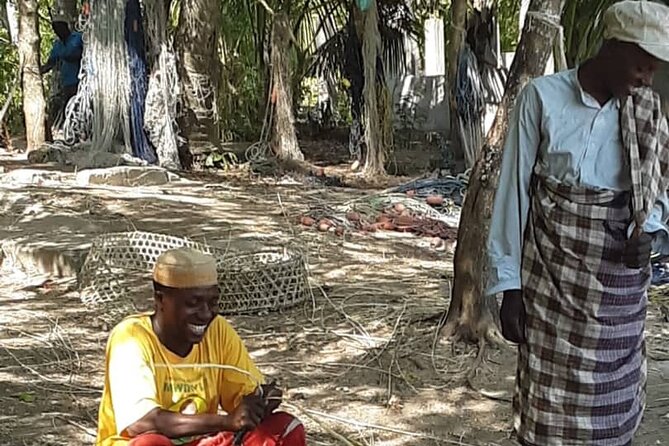
The visit continues through different parts of the island, including the harbor, areas where fishermen repair nets, and places where dhow crafters work.
For me, this is the heart of the outing. You are not just looking at an old building or taking a boat photo. You are seeing skills that remain part of everyday life. Net repair may seem simple at first glance, but it shows the care and labor behind local fishing.
The dhow crafters offer another view of island craftsmanship. The description does not promise that you will build anything yourself, so treat this as a chance to observe and ask questions. If you are interested in boats, trade, or coastal life, this section may be more rewarding than a standard beach stop.
Photography deserves a little care here. Ask before taking close-up pictures of people, especially workers and children. The point is to meet a community, not turn every activity into a photo prop.
Old baobabs and the Shiraz ruins

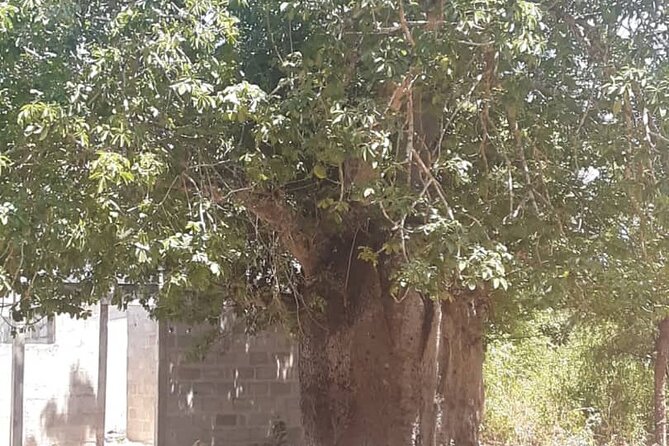
The tour also visits old baobab trees that once served as a school or classroom. This is a memorable detail because it connects the natural setting with local education. A tree used as a classroom suggests a practical, adaptable community history, and it gives the visit a human scale.
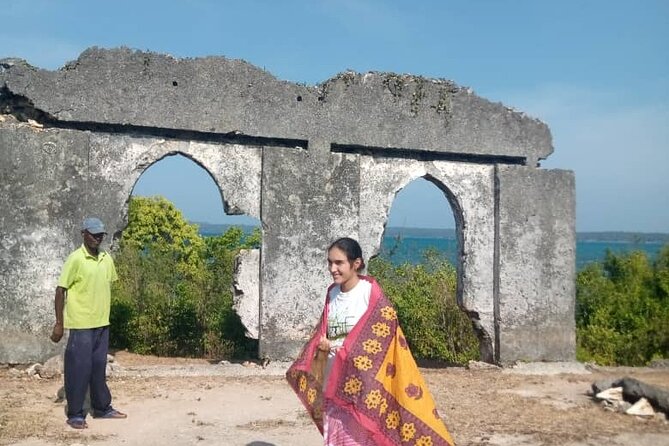
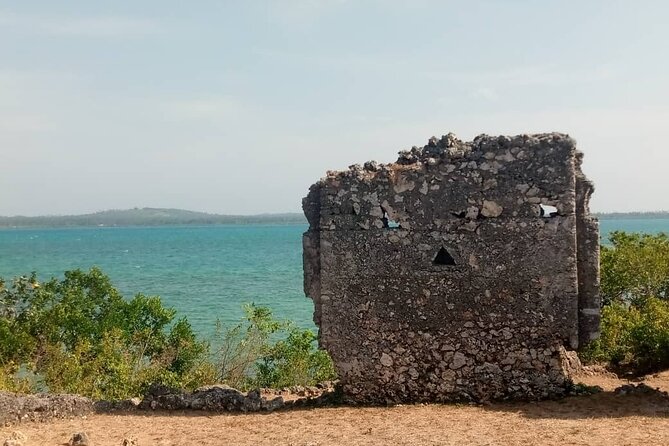
The Shiraz ruins provide the main historical stop. They date to before the 12th century, placing them among the oldest elements on the itinerary. The ruins are not presented as a large restored complex, so keep your expectations in check. You are visiting an old site within a living island community, not a fully developed archaeological park with extensive displays.
That simplicity can be an advantage. You have room to notice the setting and ask your guide what the remains mean. It also means the quality of the explanation matters. A private guide can make the difference between a quick look at stones and a useful conversation about the island’s past.
If ancient sites are your main reason for booking, this tour may feel too light on formal archaeology. If you enjoy combining history with present-day life, the Shiraz ruins fit the day well.
Meeting a spiritual healer respectfully
The tour includes a visit to a local witch doctor, described more respectfully in the experience details as a spiritual healer. Several aspects of this meeting deserve careful thought before you book.
The healer explains how he understands or works with natural signs and local beliefs. The exact discussion can vary, but this is intended as a cultural encounter, not a medical consultation. Do not treat the visit as a replacement for professional healthcare, and do not assume every practice will match your own ideas.
Approach this part with respect. Listen to the explanation, ask questions through the guide, and avoid treating the healer as a curiosity. You may find the meeting fascinating, especially if you want to learn how local spiritual traditions fit into island life. You may also find it outside your comfort zone. That is worth considering before paying for the tour.
The presence of a healer makes this outing different from a standard village walk. It also requires more cultural sensitivity than a simple market visit. A good guide should help set the tone and explain what is appropriate.
Lunch brings the day back to the table
Lunch is included and consists of rice, curry, seafood, and fruit. After a morning of walking, boat travel, and village visits, a hot meal is a practical benefit, not just a nice extra.
The menu reflects Zanzibar’s coastal setting. Seafood connects directly to the fishing communities you have just seen, while rice and curry suit the island’s wider food traditions. The supplied information does not specify a restaurant, house, menu choices, or dietary substitutions, so ask about food needs before booking.
Do not assume that included lunch means every drink or personal purchase is covered. The stated inclusions are lunch, all fees and taxes, and an air-conditioned vehicle. Tips are not included.
A meal also gives you time to slow down. This itinerary has several short encounters, and lunch helps keep the day from feeling like a race between stops.
What the $200 price really covers
At $200 per person, this is not the cheapest way to see Zanzibar. The value depends on what you want from a day out.
You are paying for a private guide, hotel pickup, transport, the boat ride, a six-to-seven-hour schedule, lunch, and listed fees and taxes. For a private experience, that package is easier to justify than the headline price alone suggests. You do not have to organize a harbor transfer, find a boat, arrange village introductions, or manage the return on your own.
The private format also matters for families and small groups. You can ask more questions, move at a comfortable pace, and discuss sensitive cultural subjects without a busload of strangers listening in.
The price is harder to justify if you mainly want swimming, a long beach stay, or a polished sightseeing program. Tumbatu is about local work, history, and conversation. You pay for access and guidance, not luxury facilities.
Group discounts are offered, so ask how the final cost changes with your party size. Since the tour is commonly booked well ahead, with an average booking lead time of about 35 days, do not leave it until the last minute if your dates are fixed.
Who will enjoy this private island visit
I would recommend Tumbatu to you if you want to see a less tourist-focused side of Zanzibar and are comfortable with a simple, active day.
It suits:
- Families who want a guided cultural experience, provided children can manage a boat ride and village walking
- Couples seeking something beyond beaches and resort excursions
- Visitors interested in fishing, dhow construction, local markets, and oral traditions
- People who prefer a private guide and the freedom to ask questions
- Anyone happy to meet local residents without expecting a staged show
It may not suit you if you need a highly structured schedule, formal museum displays, luxury transport at every stage, or a quiet beach day. The physical requirement is listed as moderate, and the small boat and village paths may be tiring for some people.
The Italian-language account of the village described it as colorful and still largely untouched by tourism, while also noting that many children ask for a dollar. That is useful preparation. Carry a respectful attitude, follow your guide’s advice, and think carefully about how you handle requests for money.
Practical details that can shape the day
The experience starts at 9:00 a.m. and lasts about six to seven hours. Hotel pickup is offered, with Tembo House Hotel listed as the meeting point. The activity returns there at the end.
Wear clothing and footwear suitable for moderate physical activity. The supplied details do not specify a dress code, but you will be moving through local communities and meeting a spiritual healer, so modest, respectful clothing is a sensible choice.
Bring only what you need for the day. A small bag, sun protection, water, and a way to protect valuables from splashes are practical choices for a small-boat outing. Those items are suggestions for comfort, not stated tour inclusions.
Confirmation is provided at booking. Free cancellation is available up to 24 hours before the start time for a full refund. Changes or cancellations made less than 24 hours before the start are not accepted for a refund. Bad weather is treated differently: you can choose a new date or receive a full refund if the operator cancels.
Should you book the Tumbatu Island Cultural Experience?
Book it if you want a personal, grounded look at Zanzibar’s coastal life. The strongest parts are the small-group format, the 30-minute crossing, the fishing and dhow-building stops, the old baobab classroom, the Shiraz ruins, and the chance to ask real questions throughout the day.
The main cautions are the $200 price, the basic boat transport, the moderate physical demands, and the direct nature of village encounters. This is not a glossy attraction. It is better suited to you if you value people, work, belief, and history as much as scenery.
For a private day that includes transport and lunch, the cost can be fair, especially for families or small groups using the discount option. If your idea of Zanzibar is only sand and warm water, choose another excursion. If you want to understand how an island community lives, Tumbatu is a strong choice.
FAQ
How long does the Tumbatu Island Cultural Experience last?
The experience lasts approximately six to seven hours.
What time does the tour start?
The tour starts at 9:00 a.m.
Where does the tour meet?
The listed meeting point is Tembo House Hotel on Shangani Street near Forodhani Street in Zanzibar.
Does the tour include hotel pickup?
Yes. Pickup is offered, and all transportation listed for the experience is included.
How long is the boat trip to Tumbatu Island?
The small-boat journey from Mkokoni harbor to Tumbatu Island takes about 30 minutes.
Is lunch included?
Yes. Lunch includes rice, curry, seafood, and fruit.
Is this a private tour?
Yes. Only your group participates, and the tour includes a private guide.
What places and activities are included?
You visit Mkokoni harbor, a fish and furniture market, cargo dhows, fishing boats, the lagoon, dhow crafters, fishermen repairing nets, old baobab trees, a spiritual healer, and the Shiraz ruins.
Does the tour require physical fitness?
A moderate level of physical fitness is recommended.
Can I cancel for a full refund?
Yes, if you cancel at least 24 hours before the experience starts. If bad weather causes the operator to cancel, you are offered another date or a full refund.
Just added around Zanzibar
- Spice Tour of Zanzibar★ 4.5 · 3 reviews
- Zanzibar : Stone Town Tour,history without transport★ 4.8 · 3 reviews
- Zanzibar: 3-Day Northern Safari with Flights Included★ 4.8 · 3 reviews
- Jozani Forest, kuza cave and mtende beach★ 5.0 · 3 reviews
- Starfish Beach; The Rock; Kuza Cave; Paje Beach; Salaam Cave Tour★ 4.5 · 3 reviews
- ZANZIBAR: Stone Town and Jozani Forest Guided Tour★ 4.0 · 3 reviews
- Zanzibar: African Sunset Boat Party in Zanzibar Music, Views★ 4.3 · 3 reviews
- Joazani forest & Spice farm with lunch★ 5.0 · 3 reviews
Zanzibar Tours, compared.

Mikumi Safari Day Trip with Flights and Meal
Read our review →
Quad Bike Adventure departing from Kendwa or Nungwi
Read our review →
Stone Town, Spice Tour, Prison Island with Lunch
Read our review →
Mnemba Boat Trip and Dolphin Snorkel Adventure
Read our review →
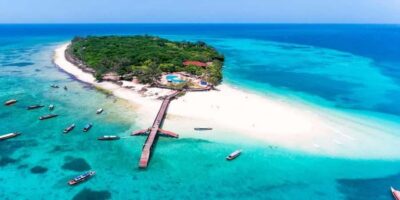
Prison Island and Nakupenda Boat Trip with Lunch
Read our review →