
Reviewed · STONE TOWN TOURS
Stone Town and Spice Tour in Zanzibar
Zanzibar’s story fits into one busy morning. I like the way this private tour joins Stone Town’s major landmarks with a hands-on spice-farm visit, so you get both the island’s difficult past and its everyday culture. I also like the local guiding, with Mohamed, Ali, and Sayafri praised for clear history, friendly service, and thoughtful attention. The main drawback is pace: five hours is enough for an introduction, but not enough for long museum visits or a slow exploration of every street.
The tour begins at the Old Fort at 8:30 a.m. and returns there after roughly five hours. Private transport connects Stone Town with Jambo Spice Farm in Kizimbani, about 6 or 7 kilometers away. The $68 price is reasonable for a private outing with transport, taxes, and the spice-farm entrance included, though you should budget another $8 if you want to enter the Old Slave Market.
In This Review
- Key points at a glance
- Why this five-hour combination works
- Meeting the past at the Old Slave Market
- Reading daily life at Darajani Bazaar
- Forodhani Gardens and the House of Wonders
- Freddie Mercury’s Zanzibar connection
- A short look at the Old Fort
- Two hours at Jambo Spice Farm
- Guide quality makes the difference
- Is $68 good value?
- Practical details before you book
- Who will enjoy this tour most?
- Should you book the Stone Town and Spice Tour?
- FAQ
- How long does the Stone Town and Spice Tour last?
- What time does the tour start?
- Where does the tour begin?
- Where does the tour end?
- Is transportation included?
- Is the Old Slave Market admission included?
- Is lunch included?
- Is this a private tour?
Key points at a glance
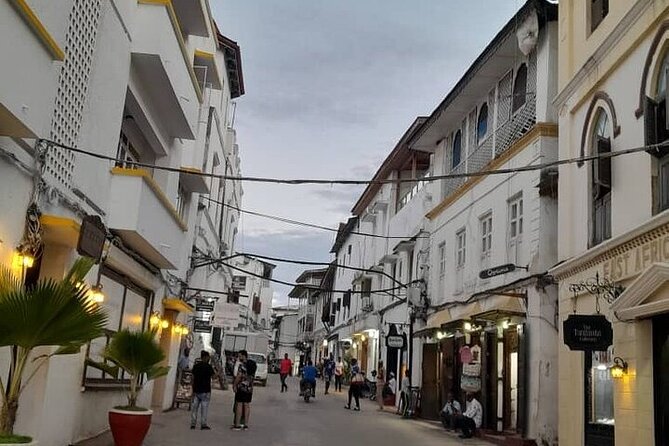
- Two very different sides of Zanzibar: Start with Stone Town’s architecture, trade, religion, and slave-trade history, then shift to the island’s agricultural traditions.
- A private half-day format: Your group travels together, with private transport between Stone Town and Kizimbani.
- Strong guide praise: Mohamed, Ali, and Sayafri are described as friendly, informative, modest, and considerate.
- A market with real daily purpose: Darajani Bazaar focuses on seafood, meat, grains, and spices rather than souvenir shopping alone.
- The spice farm is interactive: Expect to learn about spices during a two-hour visit, with local participation and demonstrations.
- Plan for extra costs: Lunch is optional, and the Old Slave Market admission costs $8.
Why this five-hour combination works
Stone Town and a spice farm tell different parts of Zanzibar’s story. In the city, you see the marks left by sultans, merchants, religious communities, colonial power, and the slave trade. At the farm, you shift to the plants and foodways that helped give Zanzibar its famous nickname as a spice island.
I like this pairing because it avoids making the morning only about old buildings. A walking tour through Stone Town can feel heavy, especially when the subject turns to slavery. The farm provides a change of setting and a more practical look at how cloves, spices, and other plants fit into local life.
The timing is efficient. The city portion covers six listed stops, followed by about two hours at Jambo Spice Farm. That means you will see many important places, but some visits are brief. The Old Fort receives about 20 minutes, Forodhani Gardens 30 minutes, and the Freddie Mercury Museum area 40 minutes. If you prefer long museum visits, independent wandering, or extended photography, this may feel tight.
The private format helps. You are not placed into a large shared group, and the outing is limited to your party. That gives you a better chance to ask questions about Swahili culture, coastal communities, and the buildings around you. The quality of the morning will depend heavily on your guide, but the feedback attached to this experience gives Mohamed, Ali, and Sayafri strong marks for historical explanation and hospitality.
More ways to see Stone Town:
- Zanzibar: Stone Town, Spice Tour, Prison Island with Lunch
★ 4.4 · 1,219 reviews - Zanzibar: Prison Island, Stone Town, & Spice Farm Tour
★ 4.5 · 579 reviews - Zanzibar; Prison Island, Nakupenda, StoneTown Tour with BBQ
★ 4.3 · 457 reviews
Meeting the past at the Old Slave Market
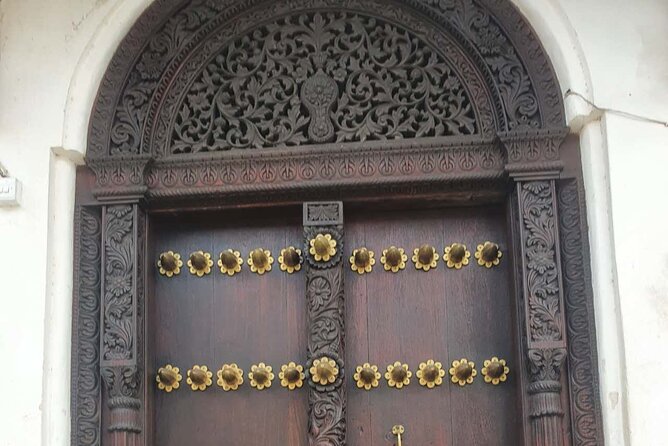
The first stop is the former slave market beside the Anglican Cathedral. This is one of the most important historical sites in Stone Town, and it is not a light introduction to the city. The market was once among the largest slave markets in the world, making this visit essential for understanding Zanzibar’s place in Indian Ocean trade and the history of coastal East Africa.
Admission is not included and costs $8. That extra fee is worth planning for, since the site gives the walking tour its moral and historical center. The listed visit lasts about 50 minutes, which should allow time for an explanation and a look at the cathedral and former market grounds, though not necessarily a long, unhurried visit.
Ask your guide to explain the connection between the market, the cathedral, and the wider trade routes. The supplied information specifically points to Swahili culture, Bantu history, and the people of the coastal zone as subjects guides explain well. This is where a good guide matters most. Mohamed, Ali, and Sayafri are each praised for making the historical material understandable and personal.
You should also know that this stop can be emotionally difficult. The site is valuable because it does not soften Zanzibar’s past, but some people may prefer to begin with the market or architecture and visit the slave market later in the morning.
Reading daily life at Darajani Bazaar
Darajani Bazaar gives you a different view of Stone Town. Built by Bomanjee for Sultan Ali, the market is mainly a place for food and basic trade. Seafood, meat, grains, and spices fill its role, making it more useful for understanding local routines than for collecting polished souvenirs.
The scheduled visit lasts about 40 minutes, and admission is free. That is enough time to walk through selected sections with a guide, look at the ingredients used in Zanzibar cooking, and ask questions about the spice trade.
The market may be crowded and sensory, though the available information does not promise any particular stalls or food tastings. Keep your expectations practical. This is not presented as a formal cooking class or shopping excursion. It is a short guided look at a working food market.
I would pay attention to the contrast between the market and the tourist streets. Darajani connects the city’s grand trade history with ordinary buying and selling. It also prepares you for the spice farm, where those familiar aromas are explained in more detail.
Forodhani Gardens and the House of Wonders
Forodhani Gardens is a historic open space on the Stone Town waterfront. The visit lasts around 30 minutes and includes views of the House of Wonders, one of the city’s best-known landmarks.
This stop is brief, so think of it as an orientation point rather than a full architectural tour. Your guide can place the gardens and the House of Wonders within Stone Town’s wider story, while you get a chance to pause after the market.
The site works well in the sequence because it changes the mood. After the tight lanes and serious history around the old slave market, the gardens offer open space and a view toward the waterfront. The information provided does not include a meal here, and lunch is not part of the tour price, so do not assume you will eat at Forodhani.
More spice farm visits:
- Zanzibar: Stone Town, Spice tour & Prison Island with Lunch
★ 4.6 · 453 reviews - Full-Day Private Stone Town +Spice Farm and Prison Island Tour
★ 4.5 · 216 reviews - Spice Tour + Stone Town Tour + Prison Island
★ 4.5 · 130 reviews - Zanzibar: Spice Tour & Stone Town Walking Tour
★ 4.8 · 115 reviews
Freddie Mercury’s Zanzibar connection
The tour then moves to the Freddie Mercury Museum and Shangani Street. Freddie Mercury, the singer associated with Queen, was born in Zanzibar, and this stop offers a modern cultural link to the island.
The listed time is 40 minutes, with admission described as free. The itinerary says you will have a chance to visit his house, but it does not specify which museum displays or rooms are included. Ask your guide what is open on the day and how much of the visit is devoted to the museum itself.
This stop adds variety. You move from slavery and sultanate-era buildings to twentieth-century music and a globally known person with a Zanzibar birthplace. If you are a Queen fan, this may be one of the morning’s highlights. If you are mainly interested in architecture or trade history, it may feel less important than the first stops.
Shangani Street also helps connect the museum visit with the city around it. You are not only checking off a famous name. You are continuing through the streets of Stone Town, where the guide can explain how the modern city grew around older districts.
A short look at the Old Fort
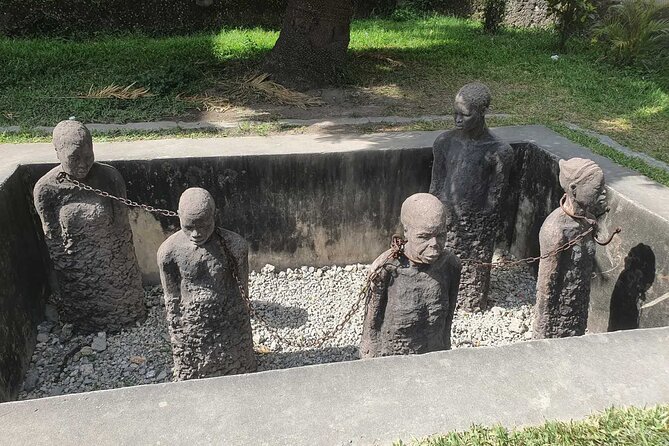
The Old Fort, also called Ngome Kongwe or the Arab Fort, is the final Stone Town stop before the farm. It is described as the oldest building in Zanzibar and remains a major attraction in the capital.
The scheduled visit is about 20 minutes, so expect a compact introduction. You may see the fort’s main areas and hear its place in Zanzibar’s history, but this is not a full fort tour with time to explore every corner.
Starting and ending at the Old Fort is practical. You have a clear meeting point on Mizingani Road, and the city portion forms a logical walking route through several central sights. After the fort, private transport takes you to Kizimbani for the rural portion of the tour.
If the Old Fort interests you most, you may want to return independently another day. The short stop gives you orientation, not a detailed archaeological visit.
Two hours at Jambo Spice Farm
The spice farm is the second major part of the experience. Jambo Spice Farm in Kizimbani is about 6 or 7 kilometers from Stone Town, and the visit lasts approximately two hours.
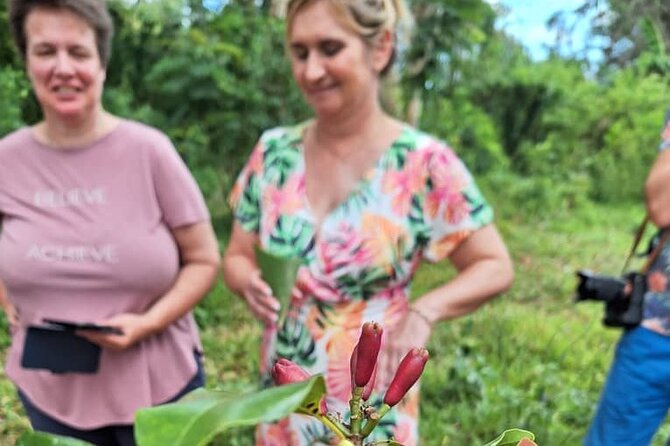
You will learn about spices during a local, interactive visit. The available comments describe the farm experience as entertaining and hands-on, with local people leading the activity. That matters because the farm is not simply a roadside stop where you look at labeled plants. The point is to connect the spices with their smell, use, and place in Zanzibar’s culture.
The exact plants and demonstrations are not listed, so I would avoid expecting a fixed menu of tastings or activities. Still, the two-hour allocation gives the farm enough time to be more than a quick photo stop. You can ask how the plants are used in cooking, how spices are prepared, and how agriculture fits into the island’s identity.
This is also where the tour becomes less formal. The Stone Town portion follows a set group of landmarks, while the farm is designed around explanation and interaction. Several comments praise this local element, along with the guides’ friendly approach.
Lunch is not included. You can arrange lunch at the spice farm before or after the tour, but the supplied details do not state the price or exact menu. Confirm the arrangement in advance if eating there matters to you. Otherwise, treat lunch as a separate plan rather than part of the $68 package.
Guide quality makes the difference
The strongest praise attached to this experience focuses on the guides. Mohamed is described as informative and professional, especially on history and the streets of Stone Town. Ali is praised for explaining Zanzibar’s history and the coastal zone. Sayafri is described as modest, kind, considerate, and willing to offer more than expected.
That pattern tells you what to value when booking. The tour is not only transportation between landmarks. It is an explanation-led experience, and the guide can make the difference between a list of old buildings and a connected story about Swahili culture, Bantu history, coastal communities, and the slave trade.
You should feel free to ask questions. The five-hour schedule has limits, but the private format gives you room to ask about subjects that interest you most. If you want a strong focus on architecture, music, food, or slavery, say so at the beginning.
The guides are praised for friendliness as well as information. That is useful in Stone Town, where a calm local guide can help you understand the city without making the walk feel like a rushed march from one photo stop to the next.
Is $68 good value?
At $68 per person, this is a fair price for a private five-hour experience that includes transportation, taxes, and admission to the spice farm. The value improves if your group has two or more people, since private transport and guiding are shared within your party.
The price does not cover the $8 Old Slave Market admission or lunch. Those are small additions, but they affect your actual budget. If you want the complete historical visit and a meal at the farm, plan for more than the advertised rate.
Compared with arranging separate rides and guides for Stone Town and Kizimbani, the package is convenient. You also avoid the trouble of finding transport to the farm after a city walk. The tradeoff is flexibility. You follow a planned sequence, and the city stops are short.
The tour is best value for someone with one morning in Zanzibar who wants a broad introduction. It is less suitable if you have several days in Stone Town and want to study each landmark at length.
Practical details before you book
The tour starts at 8:30 a.m. at the Old Fort on Mizingani Road and ends back at the same meeting point. Pickup is offered, but the supplied information does not specify the exact pickup area, so confirm that detail when booking.
Confirmation is provided at booking. The tour is private, and most people can participate. It is also near public transportation, which may help if you need to reach the meeting point independently.
Wear comfortable shoes for the Stone Town portion. The city segment is a walking tour through historic streets, followed by transport to the farm. You should also leave room in your schedule for the full five hours, since the return is back at the starting point.
Free cancellation is available if you cancel at least 24 hours before the local start time. Cancellations or changes made less than 24 hours ahead are not accepted for a refund.
Who will enjoy this tour most?
I would recommend it to first-time visitors who want context without giving up an entire day. The itinerary covers slavery, food markets, waterfront history, music, fortifications, and farming in one compact outing.
It also suits families and private groups who prefer to ask questions freely. The notes say most people can participate, but no specific accessibility details are provided, so ask the operator about walking requirements if that is important for your group.
History-minded visitors should appreciate the Old Slave Market, the cathedral, Darajani Bazaar, and the Old Fort. Food lovers and curious cooks will get more from the farm and market than from the Freddie Mercury stop.
You may want a different plan if your priority is a long visit inside the Freddie Mercury Museum, a detailed fort tour, or a full day of slow photography. The schedule is broad rather than deep, and that is its main strength and limitation.
Should you book the Stone Town and Spice Tour?
Book it if you want a well-rounded half-day introduction with private transport and a local guide. The combination makes sense, the cost is reasonable, and the guide praise is unusually consistent around history, friendliness, and hospitality.
Before confirming, set aside the $8 admission fee and decide if you want lunch at the farm. Also ask which guide will lead your group, especially if Mohamed, Ali, or Sayafri is available.
Skip it only if you want to explore Stone Town at a very slow pace or spend most of your time in one museum. For everyone else, this is a practical way to connect Zanzibar’s painful past, living food culture, famous landmarks, and spice-growing traditions in a single morning.
FAQ
How long does the Stone Town and Spice Tour last?
The experience lasts approximately five hours.
What time does the tour start?
The tour starts at 8:30 a.m.
Where does the tour begin?
The meeting point is the Old Fort on Mizingani Road in Zanzibar, Tanzania.
Where does the tour end?
The activity ends back at the meeting point at the Old Fort.
Is transportation included?
Yes. Private transportation is included, and pickup is offered.
Is the Old Slave Market admission included?
No. Admission to the Old Slave Market costs $8 and is not included in the tour price.
Is lunch included?
No. Lunch is not included, but lunch can be arranged at the spice farm before or after the tour.
Is this a private tour?
Yes. Only your group participates in the private tour.
Just added around Zanzibar
- Spice Tour of Zanzibar★ 4.5 · 3 reviews
- Zanzibar : Stone Town Tour,history without transport★ 4.8 · 3 reviews
- Zanzibar: 3-Day Northern Safari with Flights Included★ 4.8 · 3 reviews
- Jozani Forest, kuza cave and mtende beach★ 5.0 · 3 reviews
- Starfish Beach; The Rock; Kuza Cave; Paje Beach; Salaam Cave Tour★ 4.5 · 3 reviews
- ZANZIBAR: Stone Town and Jozani Forest Guided Tour★ 4.0 · 3 reviews
- Zanzibar: African Sunset Boat Party in Zanzibar Music, Views★ 4.3 · 3 reviews
- Joazani forest & Spice farm with lunch★ 5.0 · 3 reviews
Stone Town Tours, compared.

Stone Town, Spice Tour, Prison Island with Lunch
Read our review →

Prison Island, Nakupenda, StoneTown Tour with BBQ
Read our review →Stone Town, Spice tour & Prison Island with Lunch
Read our review →

3 Hours Private Stone Town walking Tour with Guide
Read our review →
Full-Day Private Stone Town +Spice Farm and Prison Island Tour
Read our review →
Stone Town Historical Cultural Walking Guided Tour
Read our review →Browse the lists this tour appears in