

Reviewed · QUAD BIKES
Zanzibar: Quad Bike Adventure Tour to a Local Village
Zanzibar’s back roads tell a different story. This four-hour quad bike tour leaves the main road behind for rice fields, village paths, spice plantations, and a short beach stop. I like the mix of off-road riding and local culture, and I especially like that the route includes time with village families rather than a quick photo stop.
I also like the practical range of the outing. You see inland farms, baobabs, cinnamon, cloves, lemongrass, and coastal life in one half-day. The main drawback is the heat and occasional rough organization at the start. Some departures have lost time at a fuel stop, although the operator has added that time back to the tour.
In This Review
- Key points before you book
- Why this quad tour is different from a standard Zanzibar excursion
- Starting at Zanzibar Quad Adventure
- Leaving the tarmac for rice fields and village country
- The village visit, children, fruit, and a rural home
- Cinnamon, cloves, lemongrass, and the smell of Zanzibar
- From inland village roads to Pwani Majangani
- What the $153 quad price really means
- Who should choose this ride?
- The strongest parts, and the limits
- My booking advice
- FAQ
- Where does the Zanzibar quad bike tour start?
- How long does the tour last?
- How many people can ride one quad?
- How many quads can the largest group use?
- Is hotel pickup included?
- Which languages do the guides speak?
- What should I bring?
- Can I wear sandals or flip flops?
- Who should not take this tour?
Key points before you book
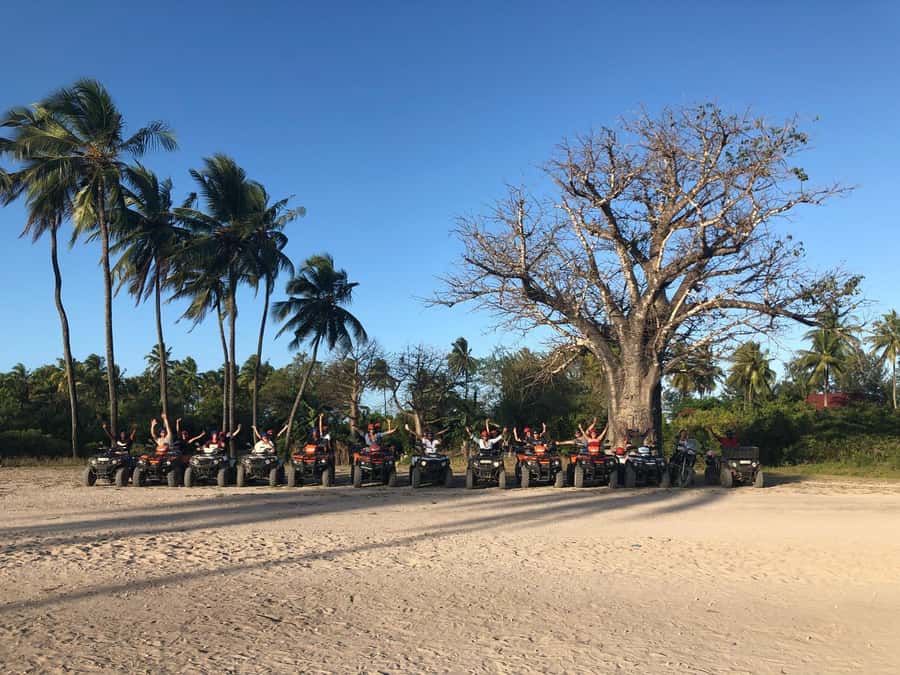
- Four hours on a quad: The route combines tarmac, dirt tracks, rice fields, plantations, village roads, and sand.
- A real village visit: You may spend about an hour with children and local residents, then visit a traditional rural home.
- Spice and fruit stops: Cinnamon, cloves, lemongrass, other crops, madafu, pineapple, and seasonal fruit give the ride a strong Zanzibar flavor.
- One quad carries up to two people: The $153 price is calculated per quad, not per individual.
- The beach comes last: The tour finishes near Pwani Majangani and a fishermen’s village before returning to base.
- Bring modest clothing and closed shoes: Sandals, flip flops, and bare feet are not allowed.
Why this quad tour is different from a standard Zanzibar excursion
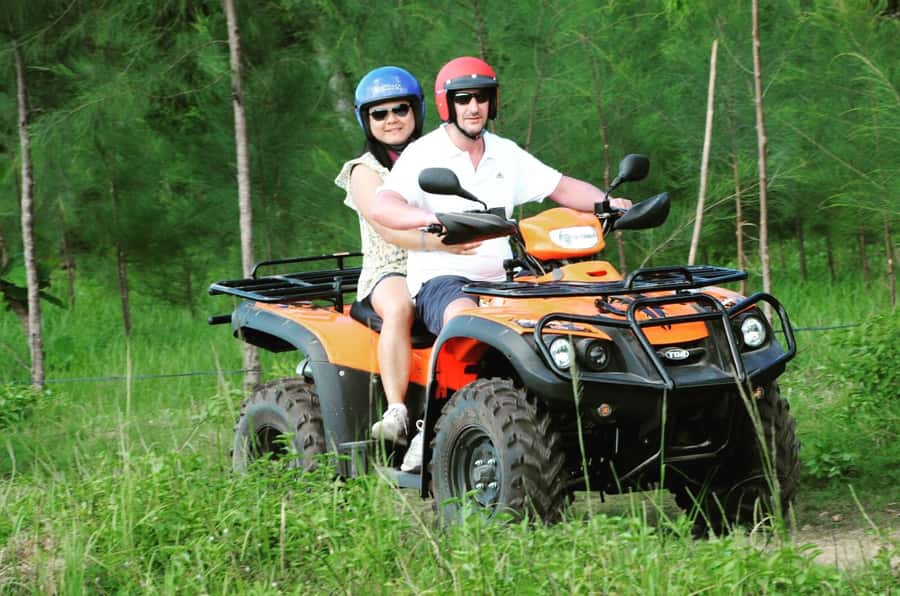
Many Zanzibar outings keep you near the coast. This one takes you inland, where the island feels quieter and more agricultural. You ride through places connected to farming, village trade, spice growing, and fishing, so the trip gives you more than a recreational motor ride.
The quad is the means of getting around, not the whole point. You get the fun of handling a four-wheeler, but the stops provide the substance. Guides explain how inland communities live, how coastal villages differ, and how crops such as cinnamon and cloves are grown.
I find that combination useful for a first visit. You get a broad look at Unguja South without committing a full day to several separate tours. The route also avoids feeling like a simple loop around one attraction.
The strongest part is the village visit. You are not merely told that rural life exists. You have time to meet people, see a typical home, speak with the guide about daily customs, and share local fruit. That contact can feel meaningful, but it also calls for good manners. Dress modestly, ask before taking close-up photographs, and treat the village as a community rather than a backdrop.
More quad and buggy rides:
- Zanzibar: Quad Bike Adventure departing from Kendwa or Nungwi
★ 4.9 · 1,233 reviews - Quad Adventures in Zanzibar: Nungwi / Kendwa
★ 4.9 · 640 reviews - 4h Quad Adventures in Zanzibar: Nungwi / Kendwa
★ 5.0 · 270 reviews
Starting at Zanzibar Quad Adventure
You meet the guide at the Zanzibar Quad Adventure office. The first section follows the main road toward Pwani Majangani for roughly four kilometers, giving you time to get used to the pace before the dirt riding begins.
The operator provides the quad, petrol, and helmet. A guide gives instructions before departure, and several guides have been praised for making the controls easy to understand. Names mentioned by visitors include Hussain, Musa, Ibrahim, Abib, Poonie, and Peno, but your assigned guide may be different.
One practical warning: the start has not always been perfectly smooth. A fuel stop has sometimes taken around 30 minutes in hot conditions. That is an unpleasant way to begin a four-hour outing, but the operator has assured people that lost time would be added to the end.
I would allow a little patience during the opening stage. Once the quads leave the road, the tour becomes much more scenic and varied.
Leaving the tarmac for rice fields and village country

The first proper off-road section cuts through rice fields and the rural center of the island. The guide usually stops for about 15 minutes to explain the economy, customs, and habits of villages in this part of Unguja.
This pause matters because the scenery is easy to misunderstand. A field, a plantation, or a cluster of homes may look simple from the quad, but the guide provides the local context. You learn how people use the land and how inland communities differ from the coast.
The riding itself is part of the appeal. You may pass farm plots, livestock areas, tropical vegetation, baobabs, and small roads that are far removed from Zanzibar’s main tourist centers. Conditions depend on the route and season, so expect dirt, uneven ground, and heat rather than a polished amusement-park track.
If your idea of a quad tour means nonstop speed, this may feel too stop-and-go. The guide needs to keep the group together, and the cultural stops are the reason to choose this route. If you want a mix of riding and sightseeing, the pace makes more sense.
The village visit, children, fruit, and a rural home
The main village stop lasts about an hour. This is the heart of the outing, and it is more involved than simply pulling over for pictures.
You have time to meet local residents and spend time with children. The supplied information specifically describes playing with them and making contact with the community. Several visitors found this deeply moving, while others wished they had known in advance to bring small gifts such as sweets, toys, or coloring books.
You do not need to turn the visit into a shopping trip. If you bring something, keep it simple and respectful, and follow your guide’s advice. Food or gifts should be offered appropriately rather than handed out in a way that creates a scramble among children.
The guide then serves fresh local fruit. Madafu is listed, along with seasonal fruit, and pineapple has been singled out as a favorite. The fruit stop is a small detail, but it gives the visit a social quality. You are sharing something grown in the same setting you have just been exploring.
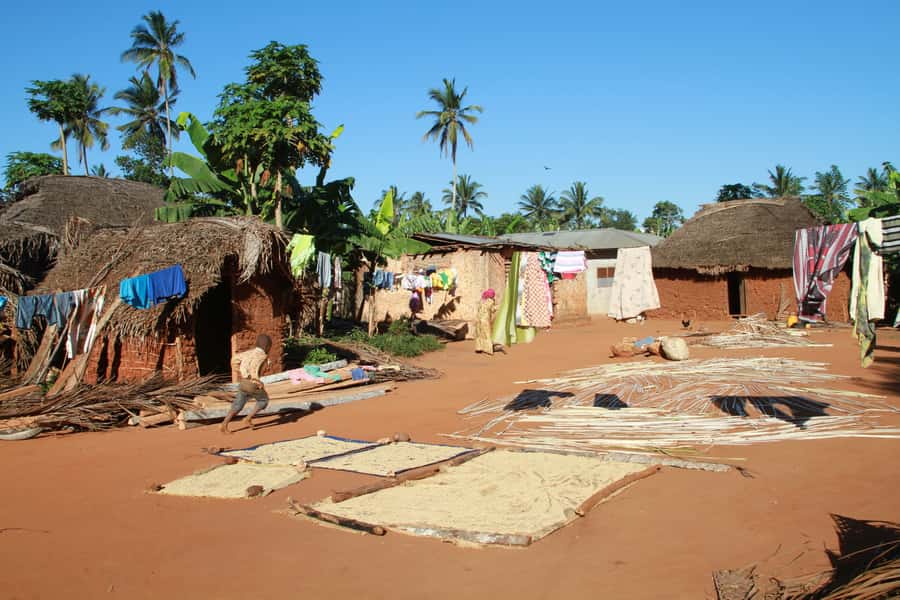
Next comes the House of Mad, described as a typical home in a rural village. The guide uses the house to explain Zanzibarian life and culture. This may be one of the most useful parts for anyone who wants to understand how ordinary homes differ from the hotel world along the coast.
Keep your expectations grounded. This is not a museum with polished displays or a staged cultural show. It is a direct look at rural living, and some people may find the poverty difficult to see. That discomfort is part of the ethical question surrounding village visits. Go with curiosity, humility, and a willingness to listen.
More bike tours:
- Spice Farm Bike Tour: Pedal Through Aromatic Adventures
★ 3.8 · 8 reviews - 3-hour quad bike tours in Nungwi and Kendwa along coastal paths and through villages
★ 4.1 · 7 reviews - Quad Bike Village Tour
★ 5.0 · 6 reviews - 1-Day Moshi Villages bike tour
★ 5.0 · 59 reviews
Cinnamon, cloves, lemongrass, and the smell of Zanzibar
Before leaving the village, you visit plantations where people grow cinnamon, cloves, lemongrass, and other crops. Zanzibar is widely associated with spices, but seeing the plants in the ground changes the experience from a label on a souvenir packet to something tangible.
The guide explains the crops as you move through the plantations. You may also have the chance to buy spices, although the supplied details do not promise a shopping stop or specify prices. Do not confuse this with a full spice-farm day tour. Here, the plantation visit is one section of a broader quad route.
This stop works well because it connects farming to the village economy. You have already heard about local life, and now you see some of the plants that support it. For me, that connection gives the ride more meaning than a generic scenic loop.
The island’s tropical growth also gives the route visual variety. Baobabs, spice trees, rice fields, and fruit plants create a changing view as you ride. The scenery is not dramatic in the mountain sense, but it is full of small details.
From inland village roads to Pwani Majangani
After the village and plantations, you ride toward Pwani Majangani. The route reaches a fishermen’s village, where the guide explains how coastal community life differs from that of the inland village.
That contrast is one of the smartest features of the itinerary. Inland communities depend more directly on fields, plantations, and farm work. Along the coast, fishing and the sea shape daily life. Seeing both settings in one trip helps you understand that Zanzibar is not one uniform place.
You follow a sandy road past fishermen’s houses before reaching the beach. The beach stop is short, usually just a few minutes, so it is best seen as a final breather rather than a swimming session or beach day.
Still, the timing works. After several hours on dirt tracks and village roads, a quick look at the shore gives the route a clean finish. You get the coast without losing the inland focus that makes the tour worthwhile.
The return follows the route back to the starting point. At times, the ride back has used a different way, allowing you to see more of the area. The full outing lasts about four hours, though an initial fuel delay may push the finish later.
What the $153 quad price really means

The advertised cost is $153 per group of up to two, but the important detail is that the price is calculated per quad bike. One quad can carry one or two people.
The capacity works like this:
- One quad: maximum two people
- Two quads: maximum four people
- Three quads: maximum six people
- Four quads: maximum eight people
The operator accepts up to eight quads, or 16 people, in a group. When booking for friends or family, enter the exact number of quads needed. Two people sharing one quad is not the same as two people booking two quads.
At $153 for one quad carrying two people, the value depends on what you want from a half-day. You are paying for the vehicle, fuel, helmet, guide, fruit, and a long route with several distinct stops. Compared with a short quad ride that stays on one track, this offers more variety and cultural content.
The price is less attractive if you want only fast riding. It is also worth remembering that accommodation pickup and drop-off from the Kiwengwa area are not included. You need to arrange your own way to the activity office unless your booking confirms another transfer arrangement.
Free cancellation up to 24 hours before the activity and the option to reserve now and pay later give you some flexibility. Starting times depend on availability, so check the schedule before building other plans around it.
Who should choose this ride?

I would recommend it most strongly to adults and older children who want active sightseeing. You should be comfortable riding a quad on uneven surfaces and spending several hours outdoors in the heat.
It suits couples especially well because two people can share one quad. It also works for small groups, provided you book the correct number of vehicles. Guides speak English and Italian.
The tour is not suitable for children under three, pregnant women, or people with mobility impairments. The activity also requires proper footwear. Sandals, flip flops, and bare feet are not allowed, so wear sturdy closed shoes.
Bring sunglasses, sunscreen, and a camera or video recorder. Modest clothing is important for the village visit, and it also makes sense for protection from the sun. I would choose clothes that can handle dust and do not need to stay pristine.
This is not the best pick if you need hotel pickup, want a quiet cultural walk with no driving, or hope to spend a long time swimming at the beach. It is also not ideal if you dislike heat, dirt, or the uncertainty that comes with rural roads.
The strongest parts, and the limits
The most praised feature is the guide team. Guides such as Hussain, Musa, Ibrahim, and Abib have been credited with clear explanations, friendly energy, and good organization. Poonie and Peno were also remembered for keeping the outing lively.
That matters on a quad tour. A good guide does more than lead the line. The guide explains the village and crops, answers questions, manages the pace, and helps make the community visit feel less awkward.
The second major strength is variety. In four hours, you can ride through fields, see village homes, visit spice plants, taste fruit, meet local people, compare inland and coastal life, and finish at a beach.
The main limitations are the heat, the possible fuel delay, and the short beach stop. The village visit can also stir mixed feelings. Seeing difficult living conditions may be uncomfortable, and the best response is respect rather than treating hardship as entertainment.
My booking advice
I would book this tour if you want Zanzibar beyond the resort strip and like the idea of combining a motor adventure with a village visit. The route gives you a broad look at island life in a manageable four-hour window, and the local guides appear to be a major part of its success.
Before paying, confirm the number of quads, not just the number of people. Arrange transport if you are staying in Kiwengwa, wear closed shoes, bring sunscreen and sunglasses, and consider packing small, appropriate items for the children only if your guide recommends it.
Choose it for the people, farms, spices, and changing scenery as much as for the quad itself. If that balance sounds right, the $153 cost for two people on one quad is a fair price for a lively and unusually varied half-day.
FAQ
Where does the Zanzibar quad bike tour start?
The tour starts at Zanzibar Quad Adventure. You meet the guide at the activity provider’s office before riding toward Pwani Majangani.
How long does the tour last?
The stated duration is four hours. A fuel stop can sometimes delay the start, but the operator has indicated that lost time will be added to the end.
How many people can ride one quad?
Each quad can carry a maximum of two passengers. The price is calculated per quad bike.
How many quads can the largest group use?
The maximum group size is eight quads, which allows up to 16 people when two people share each quad.
Is hotel pickup included?
Pickup and drop-off from accommodation in the Kiwengwa area are not included.
Which languages do the guides speak?
Live guides are available in English and Italian.
What should I bring?
Bring sunglasses, sunscreen, and a camera or video recorder. Modest clothing is recommended for the village visit.
Can I wear sandals or flip flops?
No. Sandals, flip flops, and bare feet are not allowed. Wear suitable closed footwear.
Who should not take this tour?
The activity is not suitable for children under three, pregnant women, or people with mobility impairments.
Just added around Zanzibar
- Spice Tour of Zanzibar★ 4.5 · 3 reviews
- Zanzibar : Stone Town Tour,history without transport★ 4.8 · 3 reviews
- Zanzibar: 3-Day Northern Safari with Flights Included★ 4.8 · 3 reviews
- Jozani Forest, kuza cave and mtende beach★ 5.0 · 3 reviews
- Starfish Beach; The Rock; Kuza Cave; Paje Beach; Salaam Cave Tour★ 4.5 · 3 reviews
- ZANZIBAR: Stone Town and Jozani Forest Guided Tour★ 4.0 · 3 reviews
- Zanzibar: African Sunset Boat Party in Zanzibar Music, Views★ 4.3 · 3 reviews
- Joazani forest & Spice farm with lunch★ 5.0 · 3 reviews
Quad Bikes, compared.

Quad Bike Adventure departing from Kendwa or Nungwi
Read our review →

4h Quad Adventures in Zanzibar: Nungwi / Kendwa
Read our review →
4h-Quad Explore the Heart and Culture of Nungwi and Kendwa
Read our review →

2h-Quad Zanzibar: Explore the heart of zanzibar by Quad
Read our review →
Browse the lists this tour appears in