
Reviewed · CYCLING TOURS
1-Day Moshi Villages bike tour
Trade traffic for rice fields. This Moshi bike tour takes you from forest paths and sugarcane plantations to Chagga villages, local markets, and old railway sites. I like the close-up view of rural life and the chance to spot colobus monkeys in Rau Forest. I also like that the $50 price includes a bicycle, guide, transport, water, soda, and lunch.
The main drawback is the rough ground. One rider with knee trouble had to slow down and skip the market and lunch, so this is not a gentle city ride. You should be comfortable cycling for four to five hours, including stretches on uneven paths.
- Rau Forest and colobus monkeys: Ride beneath the trees and watch the crowns for their long, fluffy tails.
- Rice, sugarcane, and village roads: See how farms shape daily life around Moshi.
- A working town with old corners: Visit Mbuyuni Market, Manyema fish market, the old railway station, and Clock Town.
- Kilimanjaro-region views: Open countryside gives you a chance to see Africa’s highest mountain from a distance.
- Traditional lunch included: Depending on the arrangement, you receive a lunch box or eat a hot meal in a restaurant.
- Small-group potential: The maximum group size is 20, though some departures may be much smaller.
In This Review
- Why This Moshi Ride Feels Different
- Rau Forest Begins With Rough Roads and Tall Trees
- Rice Fields, Sugarcane, and the Work of Farming
- Small Villages and Chagga Culture Along the Way
- Moshi Markets Bring the Ride Into Town
- A Distant Kilimanjaro View, Not a Mountain Climb
- Lunch, Water, and What the $50 Covers
- Fitness, Bikes, and Group Size
- Who Gets the Most From This Tour
- Should You Book the Moshi Villages Bike Tour?
- FAQ
- How long does the Moshi villages bike tour last?
- How much does the tour cost?
- What is included in the price?
- Where does the tour start and end?
- Does the tour include pickup?
- Will I see Mount Kilimanjaro?
- Is lunch included?
- Can I cancel for a full refund?
Why This Moshi Ride Feels Different
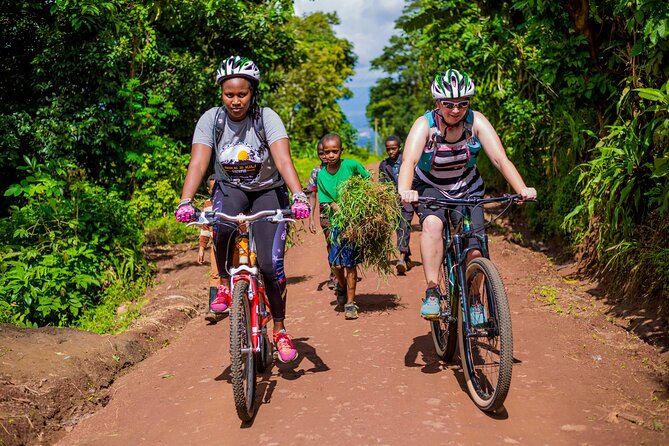
Many Moshi excursions keep you inside a vehicle. This one puts you at road level, where you can notice the turn of a rice plant, hear village activity, and stop when a guide wants to explain a farm or place of worship.
The ride links several settings that do not always appear together in one short outing: Rau Forest Reserve, sugarcane fields, rice paddies, small villages, central Moshi, and the old railway area. That variety is the main reason I think this tour offers good value.
It is also a useful choice if you have already seen the main streets of Moshi and want more contact with the countryside. You will not simply pedal through scenic farmland. You will pass homes, mosques, large Lutheran churches built during the German colonial period, rivers, markets, and agricultural plots.
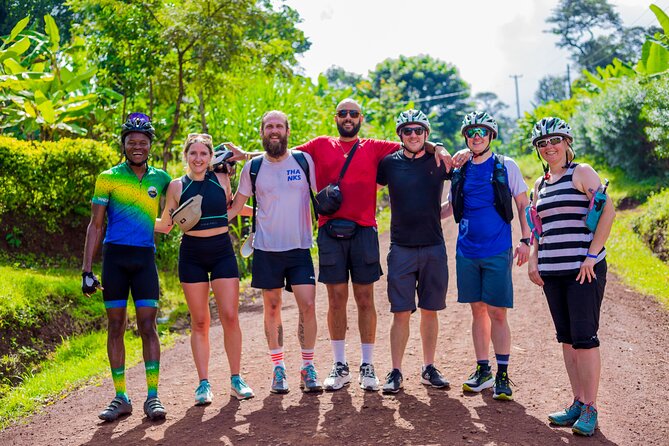
The experience is active but not presented as a race. The guides named for this activity include Alpha, Alfa, and Said. The strongest part of their role is helping you manage the route and explaining what you are seeing. One guide was praised for taking careful charge of a less confident rider, while another was noted for stopping along the way to add context.
Rau Forest Begins With Rough Roads and Tall Trees
The first major section leads toward Rau Forest Reserve. The route uses both paved roads and off-road tracks, with rough sections that can make the ride slower than the simple four-to-five-hour estimate suggests.
Inside or near the forest, keep your eyes above the road. The colobus monkeys are described as sitting in the tree crowns, where their long tails can be easier to notice than their bodies. Wildlife sightings are never guaranteed, but the forest itself gives this part of the ride its strongest sense of place.
I especially like this section because the bicycle allows you to move quietly. You are not sealed behind vehicle windows, and the pace gives you time to look around. The route also passes through sugarcane plantations and rice fields, so the forest is only one part of the picture.
The practical warning is simple: expect bumps. If your knees are sensitive, ask about the route and bike before setting off. A past rider found the uneven roads difficult enough to slow the tour and miss later stops. That is useful information, not a reason to avoid the trip, but it means you should not treat this as a flat, easy cycle around town.
More Bike Tours in Moshi
- Chagga Villages in Mount Kilimanjaro Cycling Day Trip
★ 5.0 · 42 reviews - Moshi city bike day trip
★ 5.0 · 17 reviews - Kilimanjaro bike park safari
★ 5.0 · 16 reviews
Rice Fields, Sugarcane, and the Work of Farming
The countryside near Moshi shows how much local life depends on cultivated land. You cycle past rice fields, sugarcane plantations, and smaller farming plots, with the route crossing or following the Karanga River and Rau River.
The agricultural views are valuable because they give you a clearer picture of the region than a mountain viewpoint alone. Kilimanjaro may be the famous sight, but the farms explain how communities use the land every day. Your guide can point out the crops and describe how fruit and rice are grown and harvested.
The sugarcane section includes the TPC sugarcane fields. Rice fields appear again as you pass small village houses, religious buildings, and open ground. Since the route combines off-road and paved surfaces, you get a more varied ride than a standard road cycle.
Do not expect every stretch to look polished. Some of the appeal comes from seeing ordinary working farmland rather than a prepared attraction. You may encounter rough tracks, modest homes, and unhurried village roads. Bring a relaxed attitude and allow the guide to set the pace.
Small Villages and Chagga Culture Along the Way
The ride takes you through areas associated with the Chagga people, one of the major cultural groups in the Kilimanjaro region. The tour does not present a formal cultural performance. Instead, you see homes, churches, mosques, fields, and the connections between village life and farming.
That makes the experience feel more grounded. You are not being shown a staged version of rural Tanzania. You are moving through places where people live and work, with the guide offering explanations at stops along the route.
A good guide matters here. Alpha was praised for explaining the area and its people, while Said was described as a clear communicator. You may be assigned one of these guides or another member of the Bike2kili Safaris team, but the activity clearly depends on a guide who can turn passing scenery into useful context.
It is worth remembering that this is a short bike tour, not a full cultural study. You will see aspects of village life, but the schedule also includes forest, town, markets, and the railway station. If you want long visits inside homes or extended conversations with residents, this may feel too quick.
Moshi Markets Bring the Ride Into Town
After the rural sections, the route heads into Moshi. The planned town portion includes Mbuyuni Market and Manyema fish market, along with the old railway station, Clock Town, a large Hindu temple, and the Africa Gift Shop, also called Mama Africa Shop.
This change of scene is one of the tour’s strengths. You begin with fields and forest, then reach the practical, commercial side of Moshi. The markets offer a look at local trade, while the religious buildings show some of the town’s cultural mix.
The old railway station adds another layer. It is described as feeling stuck in time, which makes it different from the more active market stops. You are not only pedaling past a landmark. You are seeing a reminder of the railway’s place in Moshi’s development.
Clock Town gives you a central city reference point. The stop should help you understand Moshi as more than a base for Kilimanjaro climbs. The town has its own streets, markets, religious buildings, and older transport history.
Timing can matter here. The complete ride is advertised at four to five hours, with about two hours assigned to the Moshi portion and another two hours around the Kilimanjaro countryside. If rough roads slow you down, the guide may need to shorten a stop. One rider specifically had to miss the market and lunch after knee problems affected the schedule.
More Day Trips in Moshi
- Best Kilimanjaro hiking day trip tour with Kilinge Adventures
★ 4.5 · 54 reviews - Day Trip Coffee Tour and Materuni Waterfalls
★ 5.0 · 35 reviews - Private Full-Day Trip to Materuni Waterfalls
★ 5.0 · 22 reviews - Kilimanjaro 1 Day Hike
★ 5.0 · 16 reviews
A Distant Kilimanjaro View, Not a Mountain Climb
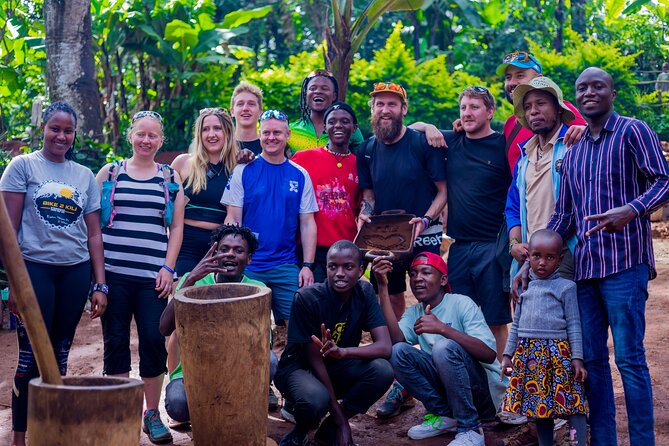
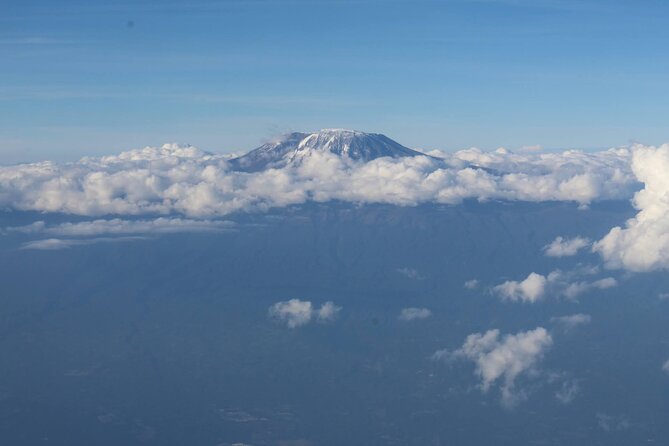
The Kilimanjaro portion is about seeing the mountain from the surrounding countryside. You are not climbing Kilimanjaro, and this tour does not take you into the mountain park.
The open savanna areas near Moshi can offer good long-distance views because there are fewer tall buildings and trees blocking the horizon. Clear weather is important. The mountain may appear dramatically, or it may be hidden by cloud. The tour requires good weather, and poor conditions can lead to a new date or a full refund.
The route passes through the Karanga River area, Rau River, TPC sugarcane fields, rice fields, and small settlements. Along the way, you may see mosques and large Lutheran churches built during the German colonial period. These details make the Kilimanjaro view part of a broader regional picture rather than a quick photo stop.
If your main goal is a guaranteed, close mountain photograph, this is not the safest choice. If you want to connect the mountain with the farms and communities around it, the ride makes more sense.
Lunch, Water, and What the $50 Covers
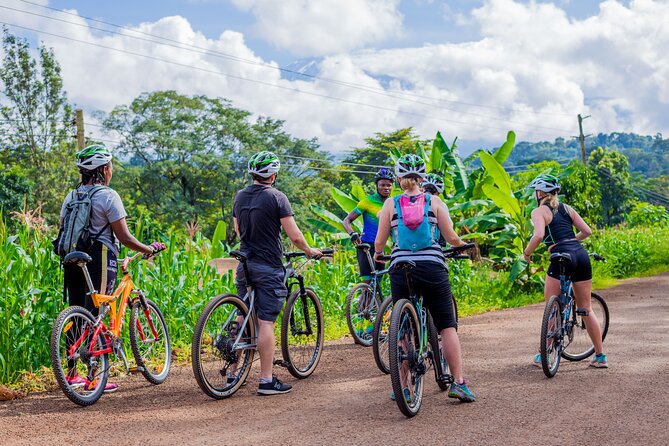
At $50 per person, this tour offers solid value because the price covers more than the ride itself. You receive the use of a bicycle, a cycling guide, private transportation, entry fees, mineral water, soda, and lunch.
Lunch may be provided as a box or as a traditional hot meal in a restaurant. A traditional lunch was praised as one of the pleasant finishing touches, and another rider specifically enjoyed the meal. The exact format may depend on the day’s arrangements, so ask when booking if the meal style matters to you.
The included transport is useful at the start and end of a physically active outing. Pickup is offered, while the stated meeting point is Bike2kili Safaris Tanzania on Market Street and Mission Street. The activity ends back at that meeting point.
The price does not include tips or personal items. Carry only what you need for the ride, plus money for anything you choose to buy at the market or gift shop. Tipping is not included, so plan for it if your guide gives you good care or adds helpful local detail.
Fitness, Bikes, and Group Size
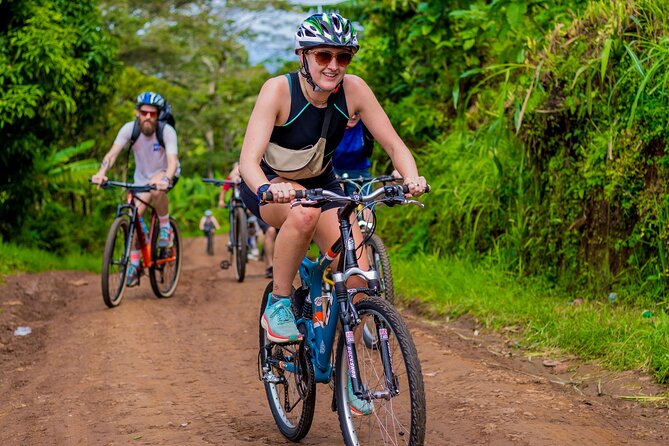
You do not need to be an expert cyclist, but you should be ready for a sustained ride on mixed surfaces. The route includes paved roads, forest paths, rough terrain, fields, and village roads. Most participants can take part, but the experience is not designed for someone who cannot comfortably handle bumps or several hours on a bicycle.
I would be cautious if you have bad knees or similar joint problems. The route may be manageable at a slower pace, but slowing down can mean missing the later market, town, or meal stops. Tell the operator about any concern before departure rather than hoping the road will be easier than expected.
The maximum group size is 20 people. That is small enough to remain practical, though the actual group can be much smaller. One booking became a one-to-one ride, which allowed the guide to give close attention and adjust the pace.
The activity operates Monday through Saturday, with listed hours from 7:00 a.m. to 6:30 p.m. A common departure pattern described for the ride runs roughly from 8:00 a.m. to 1:00 p.m., including lunch and pickup, but confirm your exact start time when booking.
Who Gets the Most From This Tour
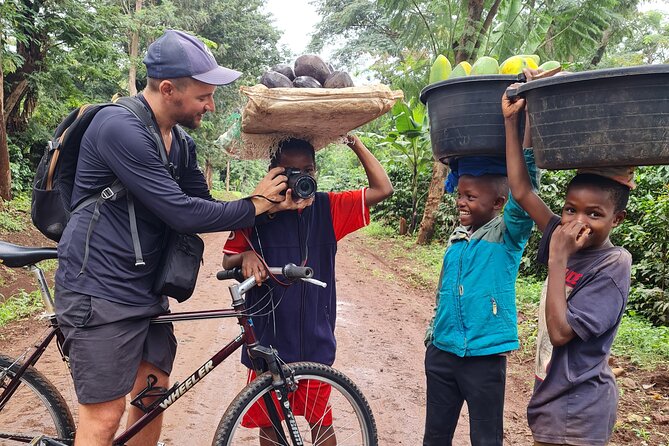
I would choose this ride if you want to see several sides of Moshi in one morning or early afternoon. It suits you if you enjoy physical activity, ordinary local scenes, farmland, and a guide who explains what is around you.
It is particularly useful for:
- You want rural views without committing to a full-day excursion.
- You are curious about Chagga areas and local farming.
- You like combining nature with town markets and historic sites.
- You want a possible Kilimanjaro view without climbing.
- You are comfortable on a bicycle and do not mind rough roads.
- You value lunch and transport being included in the price.
I would choose another activity if you need a smooth, easy cycle, guaranteed mountain visibility, or a highly structured cultural program. This ride is at its best when you accept a little dust, uneven ground, and changes in pace.
Book at least a few weeks ahead if your dates are fixed. The experience is booked about 25 days in advance on average. You can cancel for a full refund up to 24 hours before the start time. Within 24 hours, changes and refunds are not accepted.
Should You Book the Moshi Villages Bike Tour?
Yes, if you want a practical introduction to the area around Moshi and can handle rough cycling. The combination of Rau Forest, possible colobus monkeys, rice fields, sugarcane, village roads, markets, the old railway station, and distant Kilimanjaro views gives you far more variety than the price suggests.
My main advice is to judge the ride by your knees, not your enthusiasm. If you are comfortable on uneven ground, this is an active and rewarding way to see Moshi. If you need a gentle outing, ask about the surface and pace before paying.
FAQ
How long does the Moshi villages bike tour last?
The tour lasts approximately four to five hours. The listed route gives about one hour to Rau Forest, two hours in Moshi, and two hours around the Kilimanjaro countryside.
How much does the tour cost?
The listed price is $50 per person.
What is included in the price?
The price includes a bicycle, cycling guide, private transportation, all fees and taxes, lunch, soda, and mineral water.
Where does the tour start and end?
It starts at Bike2kili Safaris Tanzania on Market Street at Mission Street in Moshi. The activity ends back at the same meeting point.
Does the tour include pickup?
Yes. Pickup is offered, and private transportation is included.
Will I see Mount Kilimanjaro?
The tour provides sightseeing opportunities for Mount Kilimanjaro from the countryside. Visibility depends on conditions, and the activity can be canceled because of poor weather.
Is lunch included?
Yes. Lunch is included. It may be a lunch box or a traditional hot meal in a restaurant.
Can I cancel for a full refund?
Yes, if you cancel at least 24 hours before the experience start time. Cancellations made less than 24 hours before the start time are not refunded, and poor weather may lead to a different date or a full refund.
More Day Trips
- Private Day Trip to Tarangire National Park
★ 5.0 · 12 reviews - Materuni Waterfall E-Bike Day Trip
★ 5.0 · 9 reviews - 1 day tour hike mount kilimanjaro through marangu route
★ 4.5 · 7 reviews - Moshi town 1 day tour
★ 5.0 · 7 reviews
More Bike Tours
- Top 6 Days Mt. Kilimanjaro Bike trek Tour by Marangu-Kilema Route
★ 5.0 · 15 reviews - Rau Forest Bike tour
★ 5.0 · 12 reviews - Cycling through the TPC plantations
★ 5.0 · 10 reviews - Cycling from Kilimanjaro to Ngorongoro Crater
★ 5.0 · 10 reviews
Just added around Moshi
- Moshi: Lake Chala Tour: Hiking &/or Kayaking★ 4.5 · 3 reviews
- 3 Days Tanga Exclusive Beach Holiday★ 5.0 · 3 reviews
- Serengeti Wildebeest Migration.★ 5.0 · 3 reviews
- Chemka Hotpsrings E-Bike Day Trip★ 5.0 · 3 reviews
- Explore 1 day Ngorongoro Crater Budget Group Safari from Arusha★ 5.0 · 3 reviews
- Explore the 360° of Kilimanjaro★ 5.0 · 3 reviews
- Affordable Short Tanzania Safari (2 Days Camping Safari)★ 5.0 · 3 reviews
- Rongai Route 7 Days★ 5.0 · 3 reviews
Cycling Tours, compared.
Quad Bike Adventure departing from Kendwa or Nungwi
Read our review →
Chagga Villages in Mount Kilimanjaro Cycling Day Trip
Read our review →
Canoeing/Kayaking &/or Cycling Adventure (with Lunch)
Read our review →
Top 6 Days Mt. Kilimanjaro Bike trek Tour by Marangu-Kilema Route
Read our review →
Browse the lists this tour appears in