
Reviewed · SERENGETI SAFARIS
3 Days Safari Ngorongoro Crater and Serengeti National Park
Wild Africa fits into three busy days. This camping safari from Arusha gives you two of Tanzania’s great wildlife areas in one compact trip: the open plains of Serengeti National Park and the wildlife-filled bowl of Ngorongoro Crater. I especially like the small maximum group of six and the chance to see major wildlife while a guide handles the long park roads. The included meals and camping also help make the $810 price easier to understand.
The main thing to consider is the pace. You spend long hours in the vehicle, including a listed six-hour drive to southern Serengeti on the first morning, then continue with game drives and another long return journey. I also recommend confirming the exact pickup time, since the program mentions an 8 a.m. pickup after breakfast but separately gives a 3 p.m. start time.
In This Review
- Key points at a glance
- What $810 buys you on this safari
- Day one: the long road to southern Serengeti
- Day two: Moru Kopjes, elephants, and central Serengeti
- Day three: the Ngorongoro Crater game drive
- Camping, food, and the practical side of the trip
- The small-group advantage
- Communication and guide support
- Weather, seasons, and what you may see
- Who should book this three-day safari?
- Should you book it?
- FAQ
- Where does the safari begin?
- How long is the experience?
- What parks and protected areas are included?
- How many people can join the safari?
- Are meals included?
- Are tips and visas included in the price?
- What is the cancellation policy?
Key points at a glance
- Two famous parks in three days: You visit Serengeti National Park and Ngorongoro Conservation Area on one short northern Tanzania route.
- A six-person maximum: A small shared vehicle group can make wildlife viewing and communication with the guide easier.
- Camping is part of the experience: The basic camping option keeps the price lower and gives you a closer connection to the parks.
- Strong guide and staff support: Guides named in past feedback include Felix, Simon, Christian, Bulldozer, Mike, Heaven Light, and Lucky.
- Big Five potential: Lions, leopards, elephants, buffalo, and rhinos may all be seen, though no safari can promise every sighting.
- Meals are included: The price covers three lunches, two breakfasts, and two dinners, while tips and visas remain your responsibility.
What $810 buys you on this safari
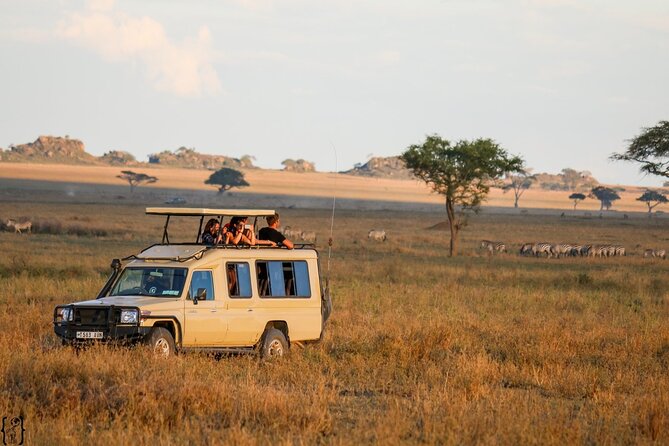
At $810 per person, this is not a simple park transfer with a quick animal stop. You are paying for a concentrated safari that includes transport from Arusha, park access within the planned route, game drives, camping, a safari cook, and six meals.
The value is strongest if you want to see both Serengeti and Ngorongoro but have only three days. Arranging these parks independently can be difficult because of the distances, park gates, vehicle needs, camping arrangements, and timing. Here, the operator puts those moving parts together.
The trade-off is that three days allows little spare time. The first day includes a roughly 335-kilometre drive and a listed six-hour journey before the main game drive. You get a famous park combination, but not a slow safari with long mornings at each location.
The experience is best viewed as a sampler of northern Tanzania. You get a taste of the endless Serengeti plains, the central Seronera area, the southern grazing zone, and the crater floor. If you want a more relaxed wildlife trip, a longer safari would give you more time and reduce the pressure to cover so much ground.
More National Park Tours in Arusha
- 7 Days Tanganyika Wilderness Safari
★ 5.0 · 159 reviews - 3 Day Serengeti National Park & Ngorongoro Crater Camping Safari
★ 5.0 · 142 reviews - Arusha National Park Private Safari
★ 5.0 · 59 reviews
Day one: the long road to southern Serengeti
Your morning begins with breakfast at 7 a.m., followed by a planned pickup at 8 a.m. from your accommodation in Arusha. The drive toward southern Serengeti takes about six hours and covers approximately 335 kilometres, entering through the Ngorongoro gate.
That road journey is a major part of the day, so set your expectations before you go. This is not a short ride from Arusha to a nearby reserve. You will be crossing a large part of northern Tanzania, and the reward is access to the southern, central, and Seronera Valley areas of Serengeti.
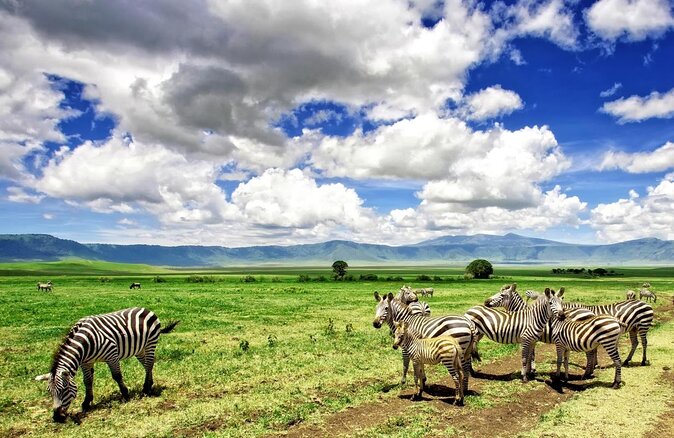
The Maasai name for this region, Serengit, refers to endless plains. The description fits the southern zone, where wide savannah supports wildebeest, zebra, Coke’s hartebeest, waterbuck, Grant’s gazelle, Thomson’s gazelle, impala, and other grazing animals.
I like this opening because you begin with the scale of the country itself. The view changes from town and road to open grassland, and the size of the Serengeti becomes clear before you even start searching for predators.
Once inside the park, the planned game drive lasts about seven hours. That gives your guide time to work through several areas rather than stopping at one viewpoint. The southern zone is especially useful for seeing grazing herds, while the central and Seronera areas offer a stronger chance of finding predators.
The itinerary also refers to a hippo habitat. Ask your guide exactly where this stop fits into the day, since the supplied schedule does not name the location. A hippo stop adds variety to a day otherwise focused on grassland mammals.
The weakness is fatigue. A six-hour approach followed by a seven-hour game drive is a full day. You will spend much of it seated in a safari vehicle, so this trip suits you best if long road days feel like part of the adventure rather than an inconvenience.
Day two: Moru Kopjes, elephants, and central Serengeti
The second day keeps you in Serengeti National Park for another listed six-hour game drive. This is a welcome change from the first day because there is no long approach from Arusha. You can focus more fully on wildlife and the character of the park.
The central region includes Moru Kopjes, rock formations rising from the grassland. Their shape and position make them memorable photo stops, but they also matter to the animals. Predators can use the higher ground to scan for prey, while lions and other wildlife may rest among the rocks.
The area has more than one type of scenery. You might see candelabra trees, short-lived flowers, wide golden-green grass, elephants, and, with good fortune, the rare black rhino. The itinerary also notes Gong Rock and Maasai cave paintings showing elephants, shields, and abstract patterns.
That mix gives the day more depth than a simple checklist of animals. You are seeing geology, plants, wildlife behavior, and traces of human culture in the same protected area. A good guide can help connect those details, so guide quality matters greatly here.
Past feedback gives you several names to look for when communicating with the operator. Felix is repeatedly praised for friendly support and safari leadership. Simon is described as both warm and well informed about the parks and animals. Christian is also praised for explaining what you were seeing and helping make a first safari easier to follow. Bulldozer is another guide mentioned for strong wildlife knowledge and practical judgment.
You may not receive one of these specific guides, but the repeated praise points to what you should expect from a good trip: clear explanations, calm driving, fast communication, and someone who can turn a distant animal into a meaningful sighting.
Central Serengeti is also where patience pays. The plains can look empty for a while, then a kopje, a line of elephants, or a predator appears. Do not judge the park by the first quiet hour. The open setting is part of its character, and your guide’s ability to read the area can shape the day.
Day three: the Ngorongoro Crater game drive
The final wildlife day takes you to Ngorongoro Conservation Area, with about six hours scheduled for exploration before returning toward Arusha. The crater is one of the most dramatic settings in this part of Tanzania: a large enclosed area where many animals live close together.
Ngorongoro is known for the possibility of seeing the Big Five in a single day. That means elephant, lion, leopard, buffalo, and rhinoceros. The opportunity is real, but you should treat it as a possibility rather than a promise. Wildlife moves freely, and even a strong guide cannot control the animals.
The crater also offers a different type of safari from Serengeti. Serengeti gives you distance, open horizons, and moving herds. Ngorongoro gives you a more contained wildlife area, with a greater sense that several habitats are gathered into one huge natural bowl.
Possible sightings listed for the conservation area include wildebeest, gazelle, golden jackal, bat-eared fox, hippopotamus, African wild dog, leopard, buffalo, waterbuck, eland, and other hoofed animals. Giraffe, oribi, topi, spotted hyena, cheetah, and impala are described as uncommon there, so do not assume that every well-known African animal belongs on your checklist.
The Maasai presence adds another important part to the area. Maasai families live in circular homesteads known as bomas, and the conservation area is also linked with early human evolution research associated with Mary and Louis Leakey. The trip therefore offers more than animal viewing, although the three-day schedule leaves little time for a detailed cultural or archaeological visit.
You then return to Arusha. The schedule does not provide an exact arrival time, so avoid booking a tight evening connection or other fixed plans unless the operator confirms the timing directly.
More Safaris in Arusha
- Serengeti Balloon Safari and authentic bush breakfast
★ 5.0 · 2,480 reviews - Balloon Safari & Bush Breakfast in Serengeti – Miracle Experience
★ 5.0 · 1,646 reviews - 4 Days Group Camping Safari
★ 5.0 · 1,101 reviews - 5 Days Group Camping Safari
★ 5.0 · 730 reviews
Camping, food, and the practical side of the trip
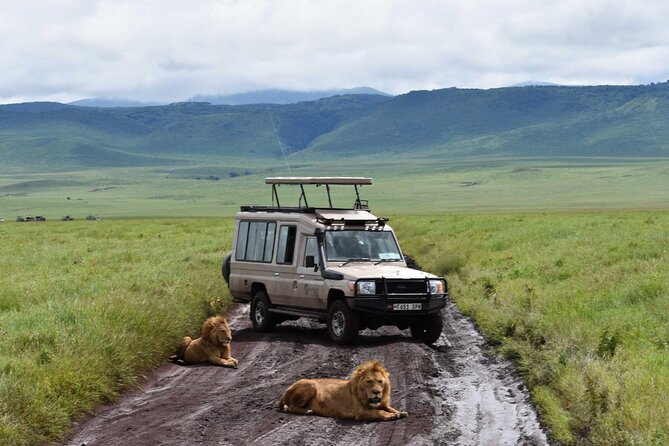
The basic camping format is central to the price. Past feedback describes two nights in tents as the least expensive option, with some people finding the tents suitable for a short safari. The exact camp style and facilities are not specified, so ask what equipment is supplied and what you need to bring before departure.
Camping can make the trip feel more connected to the parks, but it is not the right choice for everyone. You should be comfortable with simple accommodation after long days in a vehicle. If you need a polished room, private bathroom, or more rest between drives, ask whether an upgrade is available before booking.
Food receives some of the warmest praise. The package includes:
- Three lunches
- Two breakfasts
- Two dinners
A safari cook is part of the operating team, and past feedback specifically praises the quality of the meals. Picnic lunches are also mentioned, which makes sense during full game-drive days when returning to a camp would waste valuable time.
The menu details are not provided, so tell the operator about dietary needs in advance. The cook’s role matters more than it may first appear. After a long day on rough roads, a reliable meal and an organized camp routine can make the difference between enjoying the next morning and simply enduring it.
Tips for the driver-guide and safari cook are not included. Carry money for those gratuities and treat them as a separate part of the total cost. Visas are also excluded.
The small-group advantage
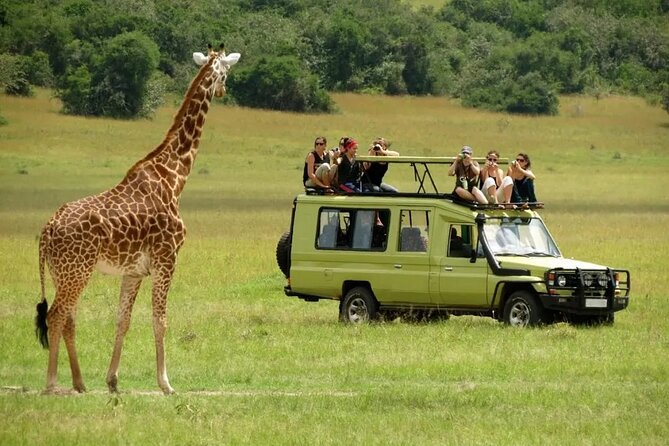
The vehicle group has a maximum of six participants. That is a useful limit for a safari because a crowded vehicle can make every stop harder. With six or fewer, you have a better chance of hearing the guide, sharing window space, and positioning yourself for photographs without constant negotiation.
Small groups also help with the human side of the journey. You will spend many hours with the same people, including during the long first-day drive and shared camping nights. A group of six is still a shared experience, but it is less unwieldy than a large coach.
The trade-off is that the exact group size may vary below the six-person maximum. You should not assume the safari is private unless the operator confirms it in writing.
Communication and guide support
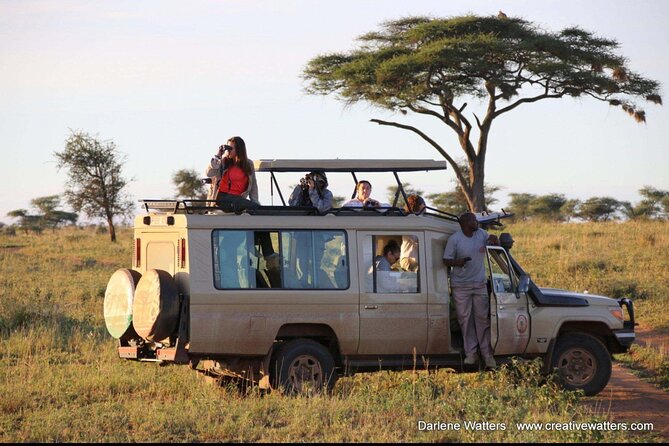
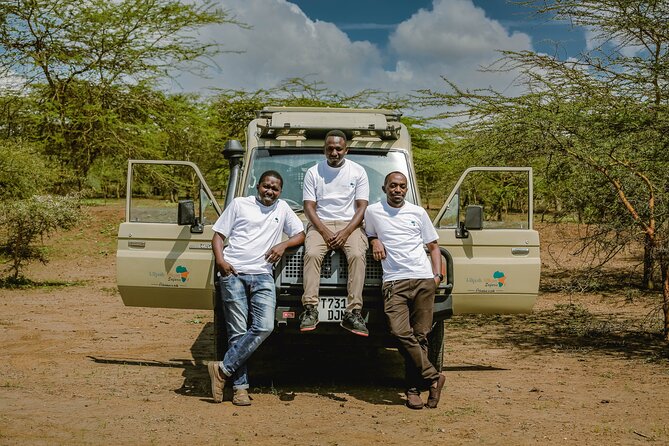
The operator, Kilipath African Safaris, receives especially strong praise for communication before and during the trip. WhatsApp and email are used to answer questions, help with bookings, and check that plans are moving properly.
Heaven Light is repeatedly singled out for quick, kind support. Lucky is also mentioned for helping arrange a memorable trip. Felix is praised for being responsive before departure, and one account describes him personally collecting the group from the airport. Airport pickup is not listed as a standard feature here, so confirm that separately if you need it.
The most useful lesson is simple: ask precise questions before you leave Arusha. Confirm your pickup time, camping arrangements, guide details if available, vehicle plan, and the point where the final day ends.
There is a small timing inconsistency in the supplied information. The day-one plan says breakfast at 7 a.m. and pickup at 8 a.m., while the meeting details give a 3 p.m. start time. Do not guess. Have the operator confirm the correct local time in writing.
Weather, seasons, and what you may see
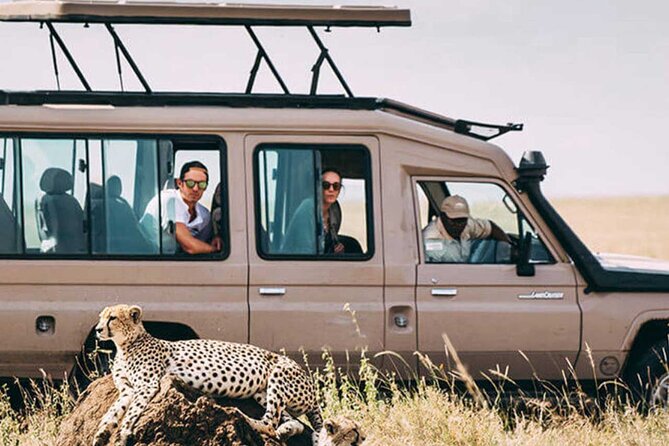
Wildlife sightings change with season and recent rainfall. One account describes October in Serengeti as dry, with lots of dry grass and somewhat less satisfying animal viewing, while Ngorongoro felt more rewarding at that time.
That does not make October a bad choice. Dry conditions can make animals easier to spot in some areas, and the scenery has its own beauty. Still, the timing matters if your main goal is lush scenery or a particular stage of the wildebeest and zebra movement.
Other feedback describes seeing the Big Five and witnessing zebra and wildebeest migration. Those are outstanding possibilities, not guaranteed inclusions. Ask the operator about current conditions and the likely wildlife pattern for your dates.
Serengeti’s weather can also change across the park. Pack for warm days, cool mornings, and changing conditions rather than assuming one steady temperature. The operator’s own advice for your travel dates will be more useful than a general promise.
Who should book this three-day safari?
I would recommend this trip if you want a short, organized introduction to northern Tanzania and you are happy with basic camping. It suits first-time safari visitors who want the major names, Serengeti and Ngorongoro, without planning every road, gate, meal, and campsite themselves.
It also works well for you if wildlife variety matters more than a slow pace. In three days, you may see elephants, big cats, rhinos, hippos, grazing herds, and many smaller animals, while also visiting Moru Kopjes and learning about the Maasai and early human research.
I would hesitate if you dislike long drives, shared accommodation, or uncertain arrival times. The program is tightly packed, and the first day is particularly demanding. You should also consider a longer itinerary if you want time for photography, cultural visits, or repeated attempts to find a specific animal.
The 100 percent recommendation rate and five-star overall rating from 21 recorded ratings point to a strong operating record, especially for organization, food, communication, and guide service. Still, the schedule itself calls for realistic expectations. Good service cannot remove the distances between Arusha, Serengeti, Ngorongoro, and back again.
Should you book it?
Book this safari if you want maximum park coverage in minimum time, appreciate a small group, and are comfortable with camping and long road days. The combination of Serengeti’s wide plains and Ngorongoro’s concentrated wildlife makes strong use of three days.
I would book only after confirming the pickup time, exact camping setup, and final return timing. If those details work for you, $810 is a fair price for a guided, meal-supported safari covering two of Tanzania’s best-known wildlife areas. If you want comfort or a gentler pace, spend more time and consider a longer or upgraded trip instead.
FAQ
Where does the safari begin?
The safari begins in Arusha, Tanzania, with pickup offered from your accommodation.
How long is the experience?
The safari lasts approximately three days.
What parks and protected areas are included?
The route includes Serengeti National Park and the Ngorongoro Conservation Area.
How many people can join the safari?
The maximum group size is six participants.
Are meals included?
Yes. The package includes three lunches, two breakfasts, and two dinners.
Are tips and visas included in the price?
No. Tips for the driver-guide and safari cook are not included, and visas are also excluded.
What is the cancellation policy?
You can cancel at least 24 hours before the experience for a full refund. Cancellations or changes made within 24 hours are not accepted for a refund.
More Serengeti Safaris
- 5-Day Highlights mid-Range Crater, Serengeti, Tarangire
★ 5.0 · 296 reviews - 3-Day Classic Serengeti Safari
★ 5.0 · 263 reviews - Private 6-Day Tarangire Manyara Crater and Serengeti with Mid-Range Lodges
★ 5.0 · 238 reviews - 10-Day Serengeti Wildebeest Migration Safari from Arusha
★ 5.0 · 218 reviews
More Ngorongoro Crater Tours
- 3 Days Serengeti & Ngorongoro Group Camping Safari
★ 5.0 · 574 reviews - 5 Days Camping Tarangire, Serengeti & Ngorongoro crater & Visiting Maasai
★ 5.0 · 229 reviews - 4 Days Join Group tour Tarangire Serengeti and Ngorongoro crater
★ 5.0 · 219 reviews - 4-Day Safari from Arusha: Tarangire, Serengeti and Ngorongoro
★ 5.0 · 173 reviews
Just added around Arusha
- 5 Days Safari Tarangire, Serengeti, and Ngorongoro Crater★ 5.0 · 3 reviews
- 5 Days of Safari, Culture & Hot Springs – Tour from Arusha★ 5.0 · 3 reviews
- Love lives in Africa★ 5.0 · 3 reviews
- Arusha National Park Safari by Jeep★ 4.5 · 3 reviews
- 5Days Family _Group Tour Lodging Mid-Range in the Jungle★ 5.0 · 3 reviews
- 2 Days Tarangire and Ngorongoro Crater Tour★ 5.0 · 3 reviews
- Serengeti & Ngorongoro 3 Days Budget Safari★ 5.0 · 3 reviews
- 7 Days PRIVATE Best of Tanzania Safari *Departing everyday*★ 5.0 · 3 reviews
Serengeti Safaris, compared.

Serengeti Balloon Safari and authentic bush breakfast
Read our review →
Balloon Safari & Bush Breakfast in Serengeti – Miracle Experience
Read our review →
3 Days Serengeti & Ngorongoro Group Camping Safari
Read our review →
5-Day Highlights mid-Range Crater, Serengeti, Tarangire
Read our review →


Private 6-Day Tarangire Manyara Crater and Serengeti with Mid-Range Lodges
Read our review →
5 Days Camping Tarangire, Serengeti & Ngorongoro crater & Visiting Maasai
Read our review →Browse the lists this tour appears in