
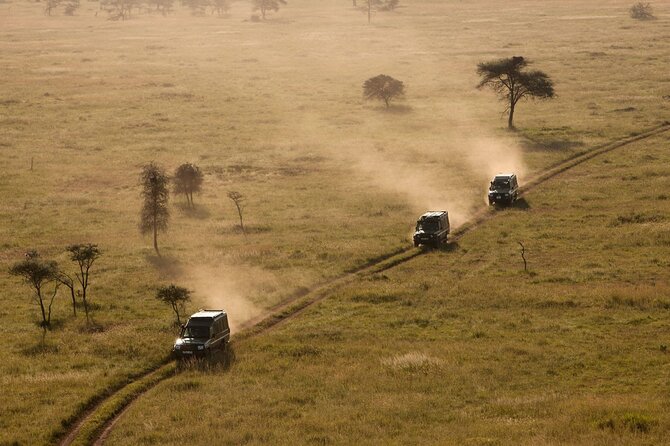
Reviewed · SERENGETI SAFARIS
5 Days Safari Tarangire, Serengeti, and Ngorongoro Crater
Africa starts with elephants. This five-day private safari links Tarangire, the Serengeti, and Ngorongoro Crater in a compact Northern Tanzania route. I like the personal setup, with your own driver-guide and safari vehicle, and I like the mix of huge animal herds, crater scenery, and comfortable tented lodging. The main catch is the pace: long drives and early starts leave little room for rest.
I also appreciate the practical overnight plan. You begin in Arusha, sleep near the Serengeti, stay outside the Ngorongoro rim, and finish with a crater game drive. Still, at $2,300, you should confirm exactly what the price covers, especially park fees, transfers after the final day, and the standard of each camp or lodge.
In This Review
- Key points to know before booking
- Why this five-day route works
- Day 1: Arusha is a useful soft landing
- Day 2: Tarangire brings the elephants
- Day 3: The Serengeti earns its reputation
- Day 4: From the Serengeti toward Ngorongoro
- Day 5: Ngorongoro Crater packs a lot into one place
- What the private guide and vehicle add
- Food, lodging, and the meaning of $2,300
- Who will enjoy this safari most
- Booking details worth knowing
- Should you book the five-day safari?
- FAQ
- Where does the safari begin?
- How long is the safari?
- Is the safari private?
- Which parks and conservation areas are included?
- Does the tour include airport pickup?
- What meals are included?
- Is a visa included?
- Are tips included?
- What is the accommodation like?
- Can I cancel for a full refund?
Key points to know before booking
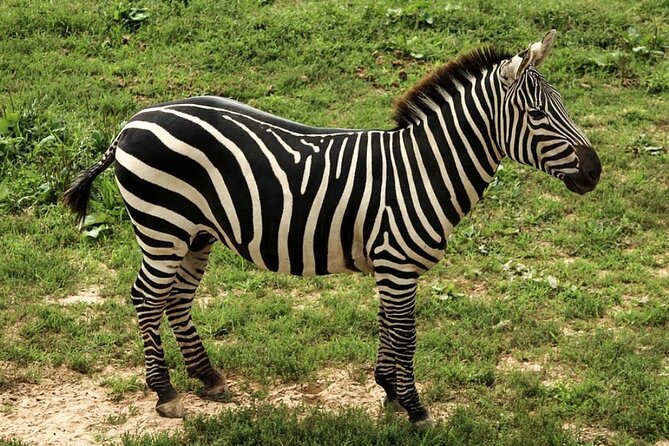
- Tarangire’s permanent river draws elephants, zebra, buffalo, wildebeest, and gazelles, especially from June through November.
- The private vehicle has six or eight window seats, a lift-up roof, and usually charging points for phones and batteries.
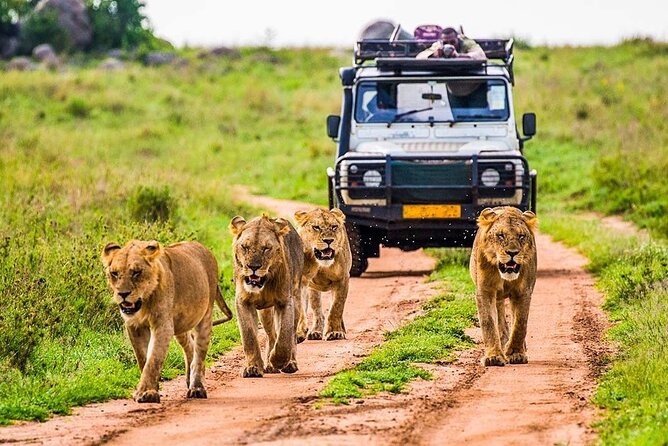
- The Serengeti day combines famous open plains with the chance to see lions, elephants, giraffes, gazelles, and possibly migration herds.
- Ngorongoro Crater offers one of Tanzania’s strongest chances to see a wide range of animals in a compact setting, including the rare black rhino.
- Tented camps are not basic camping, with real beds, private toilets, and showers, though nighttime animal sounds are part of the setting.
- The schedule is demanding, with stated touring days of about eight to ten hours and a 6:30 a.m. start.
Why this five-day route works
This safari gives you three very different views of Northern Tanzania without stretching the trip into a week or more. Tarangire is known for baobabs and elephants, the Serengeti delivers the classic open grassland experience, and Ngorongoro brings animals together inside an old volcanic caldera.
That variety is the main reason I find the route appealing. You are not seeing the same type of scenery each day. The trade-off is that the parks are spread out, so some of your time goes to road travel rather than game viewing.
The tour is private, which matters here. You can ask your driver-guide to pause, explain animal behavior, or spend longer at a sighting when conditions allow. You also avoid sharing the vehicle with a large mixed group, making it easier to manage camera equipment and personal space.
The vehicle has six or eight window seats, including the driver’s seat. When you enter a park, the roof rises so you can look out above the sides of the vehicle. That simple feature makes a real difference when you are trying to spot animals or take photographs.
More Safaris in Arusha
- Serengeti Balloon Safari and authentic bush breakfast
★ 5.0 · 2,480 reviews - Balloon Safari & Bush Breakfast in Serengeti – Miracle Experience
★ 5.0 · 1,646 reviews - 4 Days Group Camping Safari
★ 5.0 · 1,101 reviews
Day 1: Arusha is a useful soft landing
Your arrival transfer from Kilimanjaro International Airport to Arusha takes about one hour. The overnight stay is at The Charity Hotel International, about three kilometers from the city center and roughly 15 minutes from Arusha Airport.
This first night is not meant to be a sightseeing day. It gives you time to recover from a flight, organize your luggage, and prepare for an early safari departure. The hotel rooms are described with a flat-screen satellite television, tea and coffee facilities, and a bathroom with a bath or shower.
I like this arrangement because it avoids adding a park visit immediately after an international arrival. You can get some sleep and meet the private driver the next morning without rushing from the airport straight into a full game drive.
The limitation is that Arusha itself receives little attention in this schedule. If you want markets, museums, or a longer look at the town, you would need to add extra nights before or after the safari.
Day 2: Tarangire brings the elephants
The safari begins with Tarangire National Park, a scenic area known for broad grasslands and baobab trees. The Tarangire River remains a dependable water source, and that helps explain why animal numbers can be especially strong during the dry season from June through November.
You may see large groups of elephant, wildebeest, buffalo, zebra, and Grant’s gazelle. The river is not just a pretty feature. Water changes animal movement, so a permanent source can make this park particularly rewarding when other parts of the region are drier.
Tarangire is a good first park because it gives you a strong chance to see large mammals without waiting for the Serengeti to provide the headline moment. The baobabs also give the day a distinct sense of place. This is not simply a warm-up drive before the famous parks.
The planned park time is about eight hours. That is a full day in a vehicle, but the raised roof and open window positions help. Bring a light layer, sun protection, and a way to keep your phone charged. The supplied information says most vehicles have charging points, but it is sensible to bring your own cable.
Day 3: The Serengeti earns its reputation
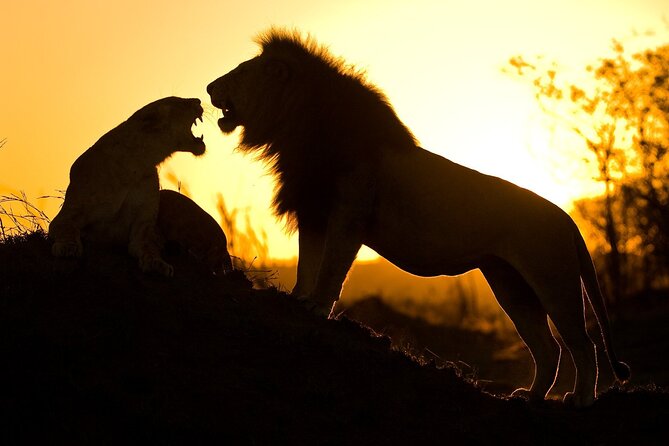
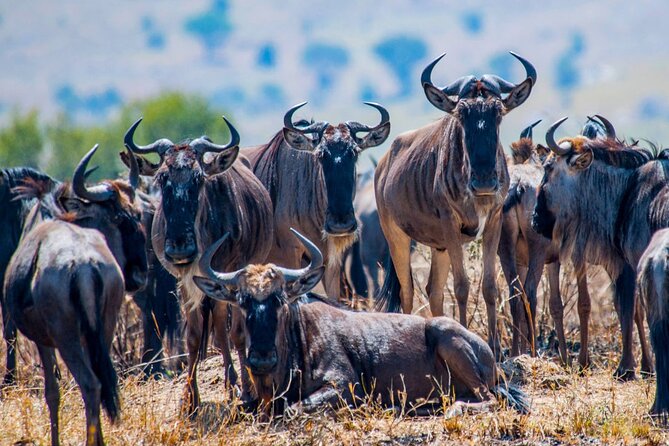
The Serengeti is the emotional center of this safari. Its name is tied to endless grass plains, acacia trees, and the annual movement of more than a million wildebeest following the rains between the Serengeti and Kenya’s Masai Mara.
The migration is a natural event, not a fixed attraction. Your exact sightings depend on the season and the animals’ position, so you should not book this trip on the assumption that a particular herd will be waiting beside the vehicle. Even without the migration, the park is known for lions, elephants, giraffes, gazelles, and eland.
The stated touring time is about ten hours. That long day can be tiring, but it gives your guide more time to cover open areas and respond to recent animal sightings. This is one place where a private vehicle is especially useful because your group can discuss how long to stay at a sighting.
The Serengeti portion may be the most memorable part of the trip, but it also brings the biggest expectation problem. People arrive with a picture of lions under acacia trees and giant herds crossing the plains. Those scenes are possible, not guaranteed. The value is in the broad setting and the range of possible wildlife, not one promised photograph.
More ways to see the Ngorongoro Crater:
- 3 Days Serengeti & Ngorongoro Group Camping Safari
★ 5.0 · 574 reviews - 5 Days Camping Tarangire, Serengeti & Ngorongoro crater & Visiting Maasai
★ 5.0 · 229 reviews - 4 Days Join Group tour Tarangire Serengeti and Ngorongoro crater
★ 5.0 · 219 reviews - 4-Day Safari from Arusha: Tarangire, Serengeti and Ngorongoro
★ 5.0 · 173 reviews
Day 4: From the Serengeti toward Ngorongoro
After breakfast, you take a morning game drive and an early lunch before continuing toward the Ngorongoro Conservation Area. The driver-guide explains wildlife and natural features along the way, turning the transfer into part of the safari rather than a simple ride between hotels.
You sleep outside the crater rim at Rhino Hotel. This location is practical for the next morning’s descent, though the day remains long at about ten hours. The route from the Serengeti to Ngorongoro means you should expect road time, not nonstop animal viewing.
I like the timing of the morning game drive. It gives you one more chance to see Serengeti wildlife before leaving the park, while the early lunch helps keep the transfer moving. The drawback is that there is no relaxed afternoon built into this day.
The accommodation plan also deserves a clear explanation before you pay. The general description refers to well-located tented camps and lodges with en-suite facilities, while this night names Rhino Hotel. Ask for the full accommodation list, since the phrase tented camp can mean a comfortable canvas room with a bed, toilet, and real shower, not a sleeping bag under a thin sheet.
At night, you might hear hyenas or other animal sounds. The camps are described as safe, with a watchman escorting you from dinner to your tent after dark. A whistle is provided in each tent to call the watchman if needed.
Day 5: Ngorongoro Crater packs a lot into one place
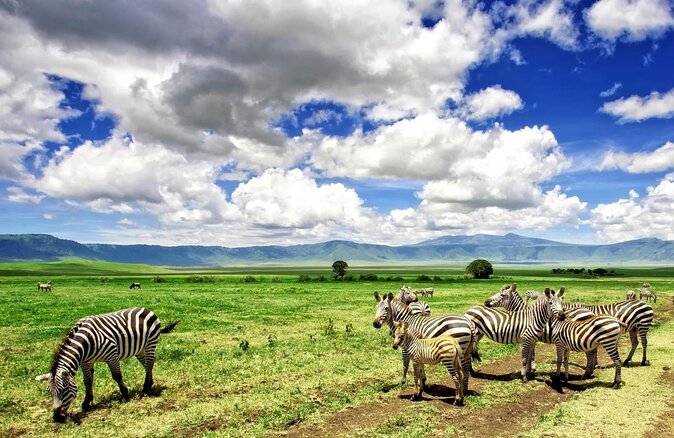
The final major stop is Ngorongoro Crater, the world’s largest intact caldera. Before descending, you get a view from the crater rim. Then the road drops to the crater floor, where the enclosed setting supports a striking range of animals and plant life.
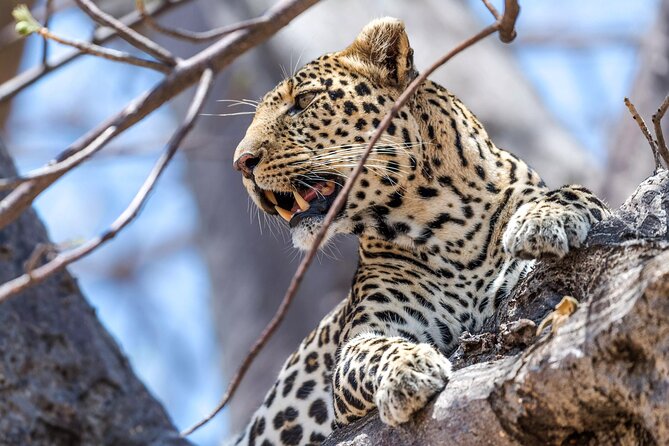
The crater is a non-active volcano. Its walls create a compact wildlife area, which can make sightings feel more concentrated than in the wide Serengeti. The Big Five are all listed as possible here: elephant, black rhino, buffalo, leopard, and lion.
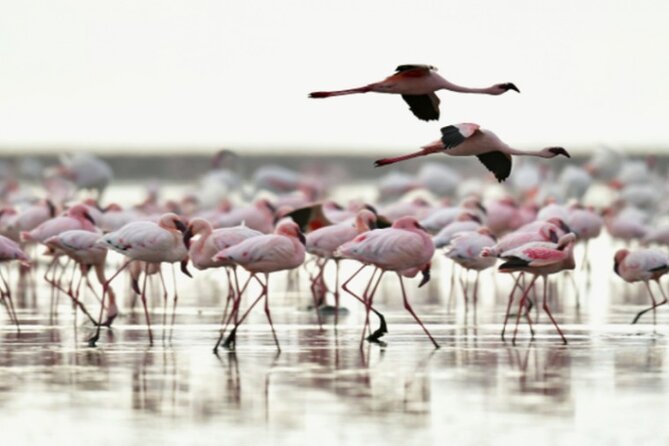
The black rhino is one of the most sought-after possibilities. You should treat it as a chance rather than a promise, since animals move freely and sightings depend on conditions. Lake Magadi adds another point of interest, with flamingos feeding around its alkaline water. Hippos use freshwater pools after their nighttime grazing.
The day includes a game drive and lunch, with about eight hours scheduled. That is a fitting finale, but it is another early and active day. The supplied details do not spell out the exact post-lunch route or final drop-off, so confirm where the safari ends and how onward transport is handled.
What the private guide and vehicle add
The guide is described as local, professional, well educated about the country, animals, and nature, and passionate about the work. That combination matters more than a polished speech. On safari, you want someone who can help you understand what you are seeing and adjust the day when wildlife appears.
The private format also helps with simple comforts. You have your own group space, six or eight window seats, a roof that opens inside the parks, and possible charging access. If you are on honeymoon, with family, or traveling with a small group of friends, that privacy can be worth more than a small saving on a shared departure.
The available feedback gives strong emphasis to wildlife encounters, friendly service, and professional guiding. One couple used the operator for a private safari and later a beach stay on Mafia Island. That beach extension is not part of this five-day package, but it suggests the company can handle a broader Tanzania plan if you want to add time by the sea.
No individual guide name is provided, so I would ask for the assigned guide’s name and experience before departure. That is also a good moment to discuss your priorities, such as elephants, big cats, photography, or the migration.
Food, lodging, and the meaning of $2,300
The package includes four lunches, three dinners, and five breakfasts. That covers the listed five days, though you should check whether the first breakfast depends on your arrival time and whether drinks or snacks are included.
At $2,300, the price can make sense for a private five-day safari across three major areas, particularly if it covers the vehicle, driver-guide, lodging, meals, transfers, and required park costs. The supplied details do not clearly break down every inclusion, and the park sections show admission tickets as free, so do not assume all fees are included without written confirmation.
You should ask these questions before booking:
- Is the $2,300 price per person or for the whole private group?
- Are park entry fees and conservation charges included?
- Are airport transfers included on both arrival and departure?
- Which nights use tented camps, and which use hotels?
- Are drinks, snacks, and charging facilities included?
- Where do you go after the final crater drive?
The price is easier to judge once those answers are clear. A private vehicle and guide add real value, but the quality of accommodation and the handling of park fees can change the overall deal.
Who will enjoy this safari most
This trip suits you if you want the main Northern Tanzania highlights in five days and prefer a private arrangement. It is also a good fit if you value wildlife variety over long stays in one park.
You should be comfortable with early mornings, eight to ten-hour touring days, and road transfers between parks. If you need slow mornings, long walks, or several free afternoons, this route will feel rushed.
It may work well for couples, families, or friends who want their own vehicle. The tented accommodation can add excitement without giving up a real bed, private bathroom, or shower. Still, ask about room arrangements if you have special sleeping needs.
The experience is also suited to first-time safari visitors. Tarangire gives you elephants and baobabs, the Serengeti supplies the iconic open plains, and Ngorongoro offers a concentrated final wildlife day. You get a clear introduction to the region without having to plan each transfer yourself.
Booking details worth knowing
Pickup is offered, and the stated start time is 6:30 a.m. Confirmation is provided at booking. The activity is private, and only your group participates.
Most people can take part, and the meeting information notes access near public transportation. A visa is not included, and tips are not included. Free cancellation applies if you cancel at least 24 hours before the local start time. Cancellations inside that window are not refunded, and late changes are not accepted.
Because the schedule begins early and includes long drives, I would arrange your arrival in Arusha with enough time to reach The Charity Hotel and rest before the safari morning. The supplied plan does not state the exact final return point, so settle that detail before you leave home.
Should you book the five-day safari?
Book it if you want a private, high-impact introduction to Tarangire, Serengeti, and Ngorongoro, and you accept that the days will be long. The strongest reasons are the private guide, flexible vehicle setup, varied wildlife, and comfortable tented or lodge accommodation.
Think twice if your priority is a slow safari with several nights in each park. Five days gives you the famous places, but it also means moving on just as each area begins to feel familiar.
For most first-time visitors with limited time, I see good value here, provided the $2,300 price includes the major park and transport costs. Get the accommodation list and final transfer details in writing, then book with realistic expectations: extraordinary wildlife is possible, but nature keeps its own schedule.
FAQ
Where does the safari begin?
The safari begins in Arusha, Tanzania. Pickup is offered, and the stated start time is 6:30 a.m.
How long is the safari?
The experience lasts approximately five days.
Is the safari private?
Yes. Only your group participates in the private tour or activity.
Which parks and conservation areas are included?
The route includes Tarangire National Park, Serengeti National Park, and the Ngorongoro Conservation Area, including Ngorongoro Crater.
Does the tour include airport pickup?
The plan includes a transfer from Kilimanjaro International Airport to Arusha on arrival. The information does not confirm the arrangements for departure after the safari.
What meals are included?
The package includes five breakfasts, four lunches, and three dinners.
Is a visa included?
No. A visa is not included in the tour price.
Are tips included?
No. Tips are not included.
What is the accommodation like?
The stay includes The Charity Hotel International in Arusha and Rhino Hotel outside the Ngorongoro rim. The general accommodation description also refers to tented camps and lodges with en-suite facilities, including beds, toilets, and real showers.
Can I cancel for a full refund?
Yes, if you cancel at least 24 hours before the experience start time. Cancellations made within 24 hours are not refunded, and changes made within that period are not accepted.
More Tarangire Safaris
- 2 Days Tarangire and Ngorongoro Group Camping Safari
★ 5.0 · 146 reviews - 4 Days Tarangire Serengeti Ngorongoro Crater
★ 5.0 · 117 reviews - 3 Days Tarangire, Ngorongoro & Lake Manyara Group Camping Safari
★ 5.0 · 102 reviews - Tarangire Day Tour
★ 5.0 · 95 reviews
More Serengeti Safaris
- 5-Day Highlights mid-Range Crater, Serengeti, Tarangire
★ 5.0 · 296 reviews - 3-Day Classic Serengeti Safari
★ 5.0 · 263 reviews - Private 6-Day Tarangire Manyara Crater and Serengeti with Mid-Range Lodges
★ 5.0 · 238 reviews - 10-Day Serengeti Wildebeest Migration Safari from Arusha
★ 5.0 · 218 reviews
Just added around Arusha
- Love lives in Africa★ 5.0 · 3 reviews
- 5 Days of Safari, Culture & Hot Springs – Tour from Arusha★ 5.0 · 3 reviews
- Arusha National Park Safari by Jeep★ 4.5 · 3 reviews
- 5Days Family _Group Tour Lodging Mid-Range in the Jungle★ 5.0 · 3 reviews
- Serengeti & Ngorongoro 3 Days Budget Safari★ 5.0 · 3 reviews
- 2 Days Tarangire and Ngorongoro Crater Tour★ 5.0 · 3 reviews
- 7 Days PRIVATE Best of Tanzania Safari *Departing everyday*★ 5.0 · 3 reviews
- 5-Day Private Safari Tour in Tanzania’s Wildlife★ 5.0 · 3 reviews
Serengeti Safaris, compared.

Serengeti Balloon Safari and authentic bush breakfast
Read our review →
Balloon Safari & Bush Breakfast in Serengeti – Miracle Experience
Read our review →
3 Days Serengeti & Ngorongoro Group Camping Safari
Read our review →
5-Day Highlights mid-Range Crater, Serengeti, Tarangire
Read our review →


Private 6-Day Tarangire Manyara Crater and Serengeti with Mid-Range Lodges
Read our review →
5 Days Camping Tarangire, Serengeti & Ngorongoro crater & Visiting Maasai
Read our review →Browse the lists this tour appears in