
Reviewed · CAMPING SAFARIS
4 Days Group Camping Safari
Wild animals, short schedule, big payoff. This four-day camping safari links Tarangire, Serengeti, and Ngorongoro Crater, giving you three very different wildlife settings in one trip. I like the excellent park combination and the chance to see elephants, lions, zebras, hippos, and possibly all of the Big Five.
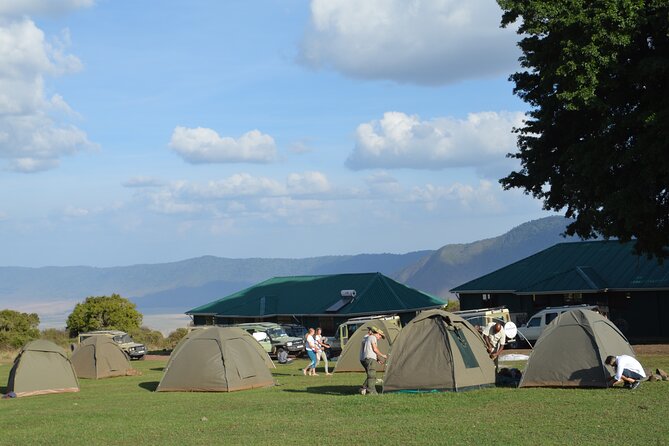
I also like that camping equipment, meals, pickup, and a small group of no more than six people are included. The main caution is comfort: the camps are basic, and the sleeping tents may feel tight, especially if you are used to lodge-based safaris.
In This Review
- What makes this safari worth considering
- Three parks, three different safari experiences
- Day 1: Tarangire’s elephants and baobab trees
- Day 2: Entering the Serengeti through the highlands
- Day 3: An early Serengeti start and the road to Ngorongoro
- Day 4: Descending 600 meters into Ngorongoro Crater
- What $900 per person really buys you
- Guides, cooks, and the human side of the trip
- How hard is the camping?
- Who should book this four-day safari?
- FAQ
- Where does the safari begin?
- How long does the safari last?
- Which parks and protected areas are included?
- How many people can join the tour?
- Is camping equipment included?
- How many meals are included?
- Which animals might I see?
- Are any UNESCO World Heritage sites included?
- Can I cancel for a full refund?
What makes this safari worth considering
- Three major wildlife areas in four days: You visit Tarangire, the Serengeti, and Ngorongoro Crater without committing to a longer safari.
- Strong guiding matters here: Guides such as Amir and Mandela received special praise for spotting animals and positioning the vehicle well.
- Camping keeps the price down: At $900 per person, the trip offers several game drives, park access, meals, transport, and camping gear in one package.
- A small group improves the ride: With a maximum of six people, you should have more room and more opportunity to ask questions than on a large coach tour.
- Meals are part of the plan: Four breakfasts, four lunches, and four dinners are listed, which helps keep spending predictable.
- The trip is active, not polished: Basic camps, early starts, long drives, and packed days are part of the deal.
Three parks, three different safari experiences
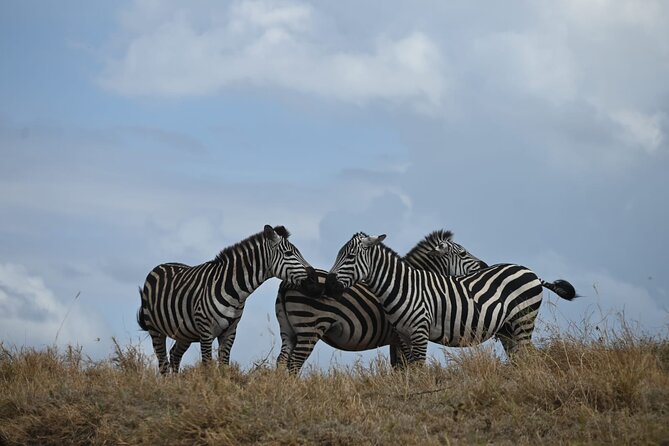
I like this route because it does not treat Tanzania as one endless game drive. Tarangire has its elephants and baobabs. Serengeti gives you wide open plains and a strong chance of seeing many species. Ngorongoro brings you into a compact crater where animals gather around permanent water and grazing areas.
That variety is the central reason to choose this tour. You are not simply repeating the same view for four days. You move from wooded river country to open grasslands, then into one of Africa’s most famous wildlife settings.
The tradeoff is time. Four days sounds generous on paper, but the route covers a lot of ground. You will spend long stretches in the safari vehicle, with early breakfasts and tightly packed game drives. I would choose this schedule if you want a concentrated wildlife trip, not a slow holiday with long afternoons at camp.
More Safaris in Arusha
- Serengeti Balloon Safari and authentic bush breakfast
★ 5.0 · 2,480 reviews - Balloon Safari & Bush Breakfast in Serengeti – Miracle Experience
★ 5.0 · 1,646 reviews - 5 Days Group Camping Safari
★ 5.0 · 730 reviews
Day 1: Tarangire’s elephants and baobab trees
Your first morning begins after breakfast, with pickup scheduled between 8:30 and 9:00. The route heads toward Tarangire National Park, where lunch is followed by an afternoon game drive.
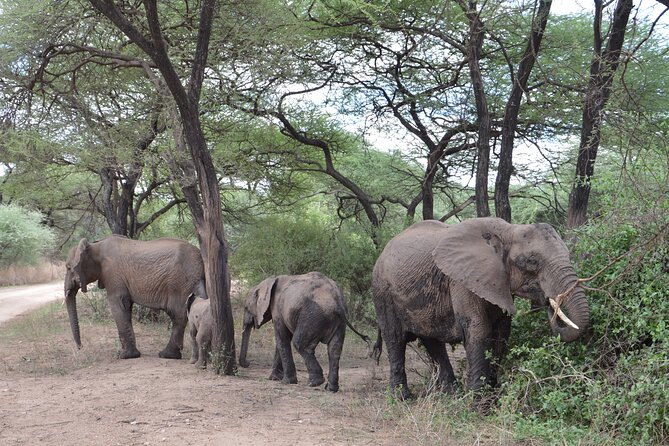
Tarangire is a fine opening act. The park is especially known for its high elephant numbers and distinctive baobab trees. During the June to November dry season, large groups of zebra, wildebeest, and Cape buffalo may gather near available water. That seasonal detail matters, since wildlife sightings can change greatly depending on rainfall and water sources.
You may also see giraffes, impala, waterbuck, dik-dik, eland, baboons, vervet monkeys, banded mongooses, and Grant’s gazelles. Lions are present, along with leopard, cheetah, caracal, honey badger, and African wild dog, though predator sightings are never guaranteed.
I like the afternoon timing because it gives you a gentle start after the morning transfer. You can settle into the vehicle, learn how your guide works, and begin watching for movement rather than rushing from the first mile. The stated stop lasts about six hours, so expect a proper park visit rather than a quick photo stop.
Tarangire also sets expectations for the rest of the trip. You will be looking through a safari vehicle, not walking through the bush. Your guide’s skill in reading animal behavior and choosing a good position can make a large difference. Amir received particular praise for finding the Big Five and maneuvering the vehicle for better views, while Mandela was praised for driving and guiding. If either guide is assigned to your trip, you may be in especially good hands, but staff assignments can vary.
Day 2: Entering the Serengeti through the highlands
Day two begins after breakfast, with the route passing through the farmland around Karatu and the Ngorongoro Conservation Area before dropping toward the Serengeti. This drive is part of the experience, but it is also one of the trip’s demanding stretches.
The change in scenery is memorable. You leave the higher farmland behind and enter the broad plains associated with the Serengeti. The central Seronera area is the main focus, and its river provides a dependable water source that draws animals from across the surrounding grasslands.
You should arrive in time for lunch, followed by an afternoon game drive. Seronera is a sensible choice for a short safari because it supports many of the Serengeti’s major species. Lions, elephants, buffalo, zebra, giraffe, and hippos are among the animals you may seek, along with other plains wildlife.
This is also where the small group helps. With a maximum of six people, it should be easier to share sightings and adjust positions in the vehicle. Nobody wants to spot a lion just as the person in front blocks the view, and a smaller vehicle group makes those moments less frustrating.
The Serengeti is famous, but fame can create unrealistic expectations. You may see remarkable animal gatherings, or you may spend time patiently scanning the grass. Your guide can improve your odds, but no safari can promise a particular animal at a particular hour.
Day 3: An early Serengeti start and the road to Ngorongoro
Day three begins with coffee, tea, and a biscuit before an early game drive. You carry packed lunch and continue viewing wildlife between roughly 8:00 and 14:30.
This is one of the busiest days, but also one of the most useful. Early hours can offer good conditions for wildlife viewing, and the extended drive gives you more time in the Serengeti before leaving for the Ngorongoro Conservation Area. You continue watching animals en route rather than treating the transfer as dead time.
After the game drive, you travel toward Ngorongoro for dinner and overnight camping. The shift in setting prepares you for the final day, when you descend into the crater.
I would bring patience and practical gear for this day. The schedule includes a long vehicle period, and the provided advice includes packing items such as a towel and sunscreen. The camps are described as basic but sufficient, so you should pack for function rather than style.
The camping is clearly the rough-and-ready part of the experience. You receive the equipment and meals, but this is not a luxury safari with spacious rooms and private bathrooms. One person specifically wished for larger sleeping tents, so I would not choose this trip if personal space at night is a major concern.
Still, simple camping has real value. It keeps the cost below many lodge-based safaris and puts the focus on wildlife rather than room amenities. The camps have also been praised for good views, which can make the basic setup feel worthwhile after a full day on the road.
More camping safaris:
- 3 Days Serengeti & Ngorongoro Group Camping Safari
★ 5.0 · 574 reviews - 5 Days Camping Tarangire, Serengeti & Ngorongoro crater & Visiting Maasai
★ 5.0 · 229 reviews - 2 Days Tarangire and Ngorongoro Group Camping Safari
★ 5.0 · 146 reviews - 6 Days Tanzania Budget Camping Safari
★ 5.0 · 145 reviews
Day 4: Descending 600 meters into Ngorongoro Crater
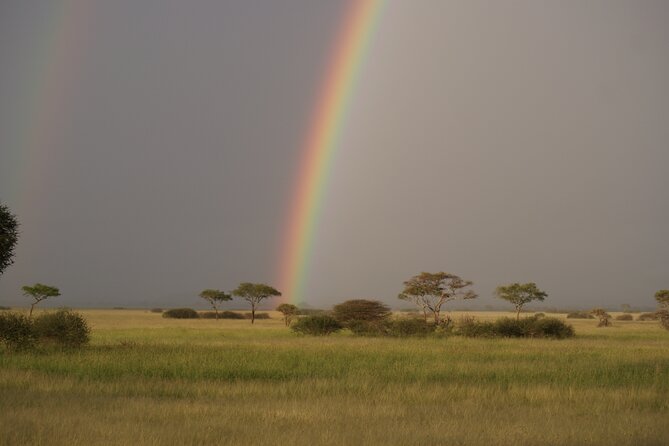
The last day starts with an early breakfast and a descent of more than 600 meters into Ngorongoro Crater. The crater’s enclosed setting and year-round water supply support a large range of animals in a relatively compact area.
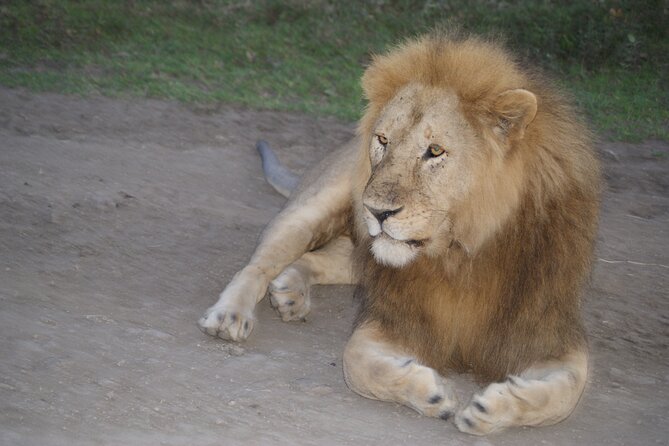
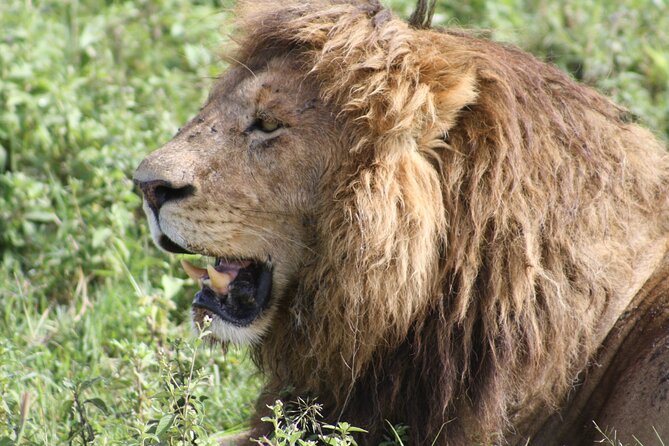
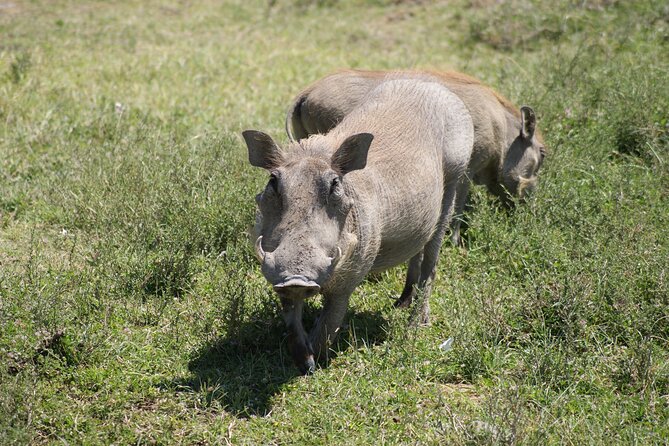
You may see wildebeest, zebra, buffalo, eland, warthog, hippo, and large African elephants. Predators include lions, hyenas, jackals, cheetahs, and the elusive leopard. A trained guide’s sharp eyes are valuable here, particularly when an animal is partly hidden or resting among vegetation.
Lake Magadi, a large shallow alkaline lake in the crater’s southwest, is another key stop. The lake is one of the crater’s major features and may attract wildlife, including hippos and groups of birds. The exact animal activity can vary, but the lake gives the game drive a clear focal point.
Ngorongoro is one of the trip’s strongest wildlife opportunities because animals are concentrated within the crater. That does not mean every sighting is automatic, but you spend the day in a setting where many species live close together.
It is also one of the two UNESCO World Heritage sites included in the route. Serengeti National Park is the other. Those designations add context, but the real appeal is being able to compare two very different protected areas in a single short safari.
What $900 per person really buys you
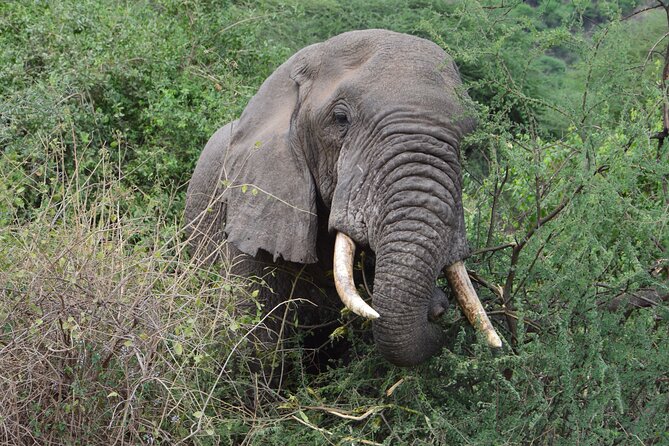
At $900 per person, this safari is not cheap in absolute terms, but it can be good value for a four-day Tanzania route. The package includes pickup, safari transport, park visits, camping equipment, and meals. Four breakfasts, four lunches, and four dinners are listed, which reduces the number of extra costs you need to manage.
The price is especially appealing if you want to visit all three parks without arranging separate transfers, permits, food, and camping equipment. A skilled guide and cook also take much of the work off your shoulders. Tito, the cook, received praise for the meals, and another account described the food as consistently good. One more balanced assessment called the meals adequate, so I would expect practical safari food rather than restaurant dining.
The biggest value question is comfort. If you compare this with a lodge safari, you are saving money partly by accepting smaller tents and simpler camp facilities. If you compare it with arranging the same route independently, the included logistics may make the price look more attractive.
The tour is listed as a group experience with a maximum of six, while parts of the daily plan describe a private guide and private 4×4 vehicle. I would confirm the exact vehicle and group arrangement before paying, especially if you are booking as a couple or family and expect a fully private safari.
Guides, cooks, and the human side of the trip
A safari vehicle is only as good as the people running it. The strongest praise for this experience focuses on the guide, driver, and cook rather than on luxury facilities.
Amir was praised for finding the Big Five and placing the vehicle well for sightings. Mandela was singled out as a good driver, and Tito earned praise for the food. Those details matter because your guide controls the pace, explains the ecosystem, watches animal behavior, and helps you understand what you are seeing.
I also like the educational side of the trip. Learning about the local ecosystem is one of the stated highlights, and that can turn a list of animal sightings into a clearer picture of how water, grass, predators, and migration shape the parks.
A small group should give you more time to ask questions. You can ask why elephants gather in one area, how the crater supports so many animals, or what makes the Serengeti’s Seronera region important. That personal attention is harder to get in a large group.
How hard is the camping?
You should think of this as an adventure with camping, not a camping-themed lodge holiday. Equipment is included, but the facilities are basic. The tents may feel small, and you should be comfortable with early mornings, long drives, and simple overnight arrangements.
The practical packing advice includes a towel and sunscreen. I would also treat light, useful clothing and personal comfort items as important, though the supplied information does not specify a full packing list.
Meals are included throughout the trip, and the cook is part of the safari team. That is a major convenience. You do not need to search for restaurants after a long game drive, and the meal plan makes the $900 price easier to understand.
The good news is that basic does not mean useless. Reports describe the camps as sufficient, with some offering appealing views. If you care more about wildlife access than polished rooms, the camping standard should be manageable.
Who should book this four-day safari?
I would recommend this tour to you if you want to see several major parks in a short period and are happy to trade comfort for access and value. It suits first-time safari visitors, couples on a budget, families seeking a structured adventure, and anyone who wants a concentrated introduction to northern Tanzania.
The route also works well if you are already in Arusha and want a ready-made package with pickup. Confirmation is provided at booking, and the activity is listed as suitable for most people. The operator offers free cancellation when you cancel at least 24 hours before the start time, which gives you some useful flexibility.
I would hesitate if you want leisurely mornings, large private tents, or lodge comforts. You may also prefer a longer safari if you want more time in each park instead of covering three major areas in four days.
Book this trip if your priority is wildlife variety, capable guiding, and a contained price. Skip it if your priority is comfort and a slow pace. For the right kind of safari guest, the route offers a lot: elephants beneath baobabs, open Serengeti plains, a crater full of possibility, and meals and equipment handled along the way.
FAQ
Where does the safari begin?
The experience is based in Arusha, Tanzania, and pickup is offered.
How long does the safari last?
The safari lasts approximately four days.
Which parks and protected areas are included?
The route includes Tarangire National Park, Serengeti National Park, the Ngorongoro Conservation Area, and Ngorongoro Crater.
How many people can join the tour?
The maximum group size is six people.
Is camping equipment included?
Yes. The experience includes camping equipment and meals.
How many meals are included?
The package lists four breakfasts, four lunches, and four dinners.
Which animals might I see?
Possible sightings include lions, elephants, zebras, giraffes, buffalo, hippos, wildebeest, cheetahs, leopards, hyenas, warthogs, and many other species.
Are any UNESCO World Heritage sites included?
Yes. The route includes two UNESCO World Heritage sites, Serengeti National Park and the Ngorongoro area.
Can I cancel for a full refund?
Yes, if you cancel at least 24 hours before the experience starts. Cancellations made less than 24 hours in advance are not refunded, and changes within that period are not accepted.
More 4-Day Experiences
- 4 Days Join Group tour Tarangire Serengeti and Ngorongoro crater
★ 5.0 · 219 reviews - 4-Day Safari from Arusha: Tarangire, Serengeti and Ngorongoro
★ 5.0 · 173 reviews - 4 Days safari Tour Tanzania
★ 5.0 · 159 reviews - 4 Days Tarangire Serengeti Ngorongoro Crater
★ 5.0 · 117 reviews
More Safaris
- 7-Day Premium Luxury Tanzania Safari All-Inclusive
★ 5.0 · 426 reviews - 3-Day Classic Serengeti Safari
★ 5.0 · 263 reviews - 8 Days Great Wildebeest Calving Migration Safari from Arusha
★ 5.0 · 254 reviews - Group Safari 7 Days in Tanzania’s Main Parks
★ 5.0 · 240 reviews
Just added around Arusha
- 5 Days Safari Tarangire, Serengeti, and Ngorongoro Crater★ 5.0 · 3 reviews
- Love lives in Africa★ 5.0 · 3 reviews
- 5 Days of Safari, Culture & Hot Springs – Tour from Arusha★ 5.0 · 3 reviews
- Arusha National Park Safari by Jeep★ 4.5 · 3 reviews
- 5Days Family _Group Tour Lodging Mid-Range in the Jungle★ 5.0 · 3 reviews
- Serengeti & Ngorongoro 3 Days Budget Safari★ 5.0 · 3 reviews
- 2 Days Tarangire and Ngorongoro Crater Tour★ 5.0 · 3 reviews
- 7 Days PRIVATE Best of Tanzania Safari *Departing everyday*★ 5.0 · 3 reviews
Camping Safaris, compared.


3 Days Serengeti & Ngorongoro Group Camping Safari
Read our review →
5 Days Camping Tarangire, Serengeti & Ngorongoro crater & Visiting Maasai
Read our review →
2 Days Tarangire and Ngorongoro Group Camping Safari
Read our review →
3 Day Serengeti National Park & Ngorongoro Crater Camping Safari
Read our review →
3 Days Tarangire, Ngorongoro & Lake Manyara Group Camping Safari
Read our review →
5-Day private Camping Safari Tour in Tanzania
Read our review →Browse the lists this tour appears in