Reviewed · ARUSHA TOURS
5 Days_Haking_Mount_Kilimanjaro by_Using_Marangu Route
The mountain rewards steady steps. This five-day Marangu Route climb gives you a direct path up Kilimanjaro, with sleeping huts, meals, park fees, transfers, and professional mountain guides included. I like the hut accommodation and the fact that you do not need to carry camping gear. I also like the lively dining huts, where climbing groups share meals and trade stories from around the world.
The route is called the Coca Cola Route for good reason: it is the shortest and easiest standard route to the summit. That also creates the main concern. Five days is a tight schedule for acclimatization, and altitude can affect even fit people. If you can add a rest day at Horombo, your chances of handling the summit climb may improve.
In This Review
- Key points before you book
- Why the Marangu Route feels different
- Day one: forest trails to Mandara Hut
- Day two: Mandara to Horombo and the first altitude test
- Day three: across the saddle to Kibo Hut
- Day four: the 2:00 a.m. push to Uhuru Peak
- Day five: the long descent through forest
- What the $1,809.50 price covers
- Guides, food, and the human side of the climb
- Who should choose this five-day climb
- Practical details that make the climb easier
- Should you book this Marangu Route climb?
- FAQ
- How long is the Mount Kilimanjaro climb?
- Where does the experience begin?
- Is pickup available?
- Where do you sleep during the climb?
- How many beds are in the huts?
- Are bathrooms and running water available?
- What time does the summit climb begin?
- What is included in the price?
- Are tips and international flights included?
- Can you cancel for a full refund?
Key points before you book
- Huts replace tents: You sleep in communal huts with bunks, sponge mattresses, pillows, and solar lighting at Mandara, Horombo, and Kibo.
- The summit night starts at 2:00 a.m.: Expect a steep climb through scree or snow to Gilman’s Point, then onward to Uhuru Peak.
- Maundi Crater adds value on day one: This short side trip offers views toward northern Tanzania and Kenya.
- Altitude becomes serious at Horombo: Giant lobelias and grounsels mark the high moorland, but so do the first signs of thin air.
- The price covers major costs: At $1,809.50 per person, the package includes park fees, rescue fees, guides, food, water, transfers, and two hotel nights.
- Small cash is useful: Soft drinks, bottled water, and beer may be sold at huts, with prices rising as you climb.
Why the Marangu Route feels different
Marangu is the only Kilimanjaro route in this package with sleeping huts at every overnight camp. That changes the character of the climb. You still face long walking days, cold, steep slopes, and altitude, but you are not sleeping in a tent or sitting in a wet dining shelter after a hard day.
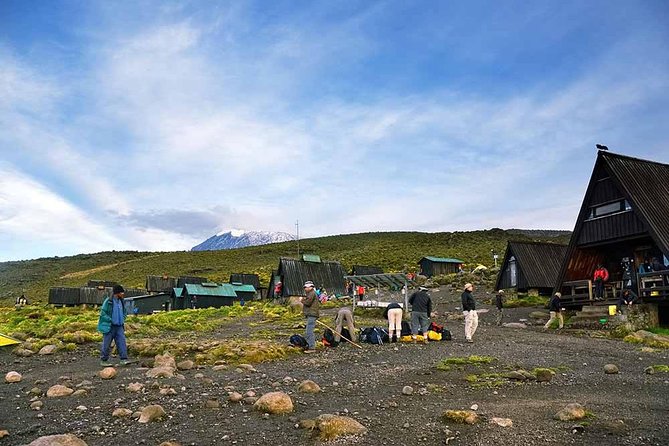
The huts are communal. Mandara and Kibo each have 60 beds, while Horombo has 120. Bunks come with sponge mattresses and pillows, and solar lights provide basic illumination. Do not expect privacy or hotel-style comfort. You share sleeping space with other climbing groups, and the atmosphere can be busy.
The shared dining huts are part of the appeal. Groups from different countries eat together, and the mood is often lively. Soft drinks, bottled water, and beer may be available for purchase. Carry small Tanzanian bills, since prices increase with elevation and card payment is not mentioned.
Marangu is shorter than other route options, but shorter does not mean easy. The quick ascent gives your body less time to adjust to altitude. The itinerary includes no extra acclimatization day, though you can request one at Horombo for an additional night of rest or a walk toward Mawenzi.
A few more trips of this kind worth comparing:
- Serengeti Balloon Safari and authentic bush breakfast
★ 5.0 · 2,480 reviews - Balloon Safari & Bush Breakfast in Serengeti – Miracle Experience
★ 5.0 · 1,646 reviews - Tanzania Classic – 7 Days
★ 5.0 · 1,151 reviews
Day one: forest trails to Mandara Hut
Your day begins with breakfast and a briefing before the roughly 45-minute drive to Kilimanjaro National Park Gate. Registration takes place there, followed by the first walking section through rainforest.
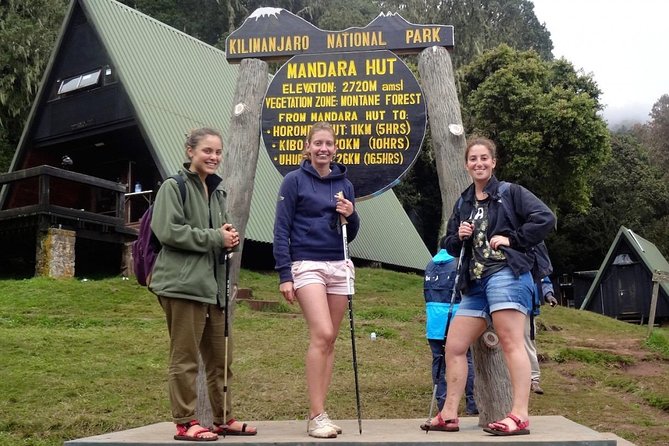
The trail reaches Mandara campsite at about 9,000 feet, or 2,740 meters. This first day is a good introduction to the mountain because the forest feels cool, green, and shaded. Look for tall eucalyptus trees, bird life, and colobus monkeys. The path may feel manageable, but you are already gaining altitude.
A side trip to Maundi Crater is a smart use of time if your guide feels the group is ready. It gives you broader views of northern Tanzania and Kenya, and it helps you see how quickly the forest gives way to open high country.
The first night is in a communal hut. Bathrooms and running water are available at Mandara. That is a real advantage after the drive and the first climb, although the facilities remain basic.
Day two: Mandara to Horombo and the first altitude test
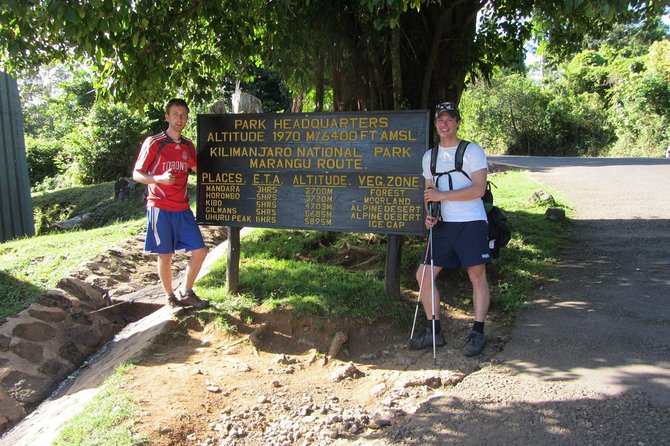
The route leaves the rainforest and climbs through open moorland toward Horombo Hut. The walking time is listed at about five hours, with the trail gradually opening to views of Mawenzi and Kibo.
This is one of the most scenic parts of the climb. Giant lobelias and grounsels give the moorland an unusual, almost prehistoric look. The two volcanic peaks also begin to feel much closer, though the summit is still far above you.
Horombo sits at roughly 12,205 feet, or 3,720 meters. This is where altitude may first become obvious. You might notice a headache, unusual tiredness, shortness of breath, or a slower pace. Take those signs seriously and tell your guide. Walking slowly is not a weakness here. It is part of climbing well.
Horombo has 120 beds, making it the largest and potentially busiest hut stop on the route. Bathrooms and running water are available at the lower huts, including Horombo. You should still treat water carefully and use the clean, purified drinking water provided by the operator.
The schedule allows an optional extra day here. I consider that one of the most useful choices available on this trip. A rest day can also include a walk toward Mawenzi, the jagged secondary peak, giving you more time at altitude before summit night.
Day three: across the saddle to Kibo Hut
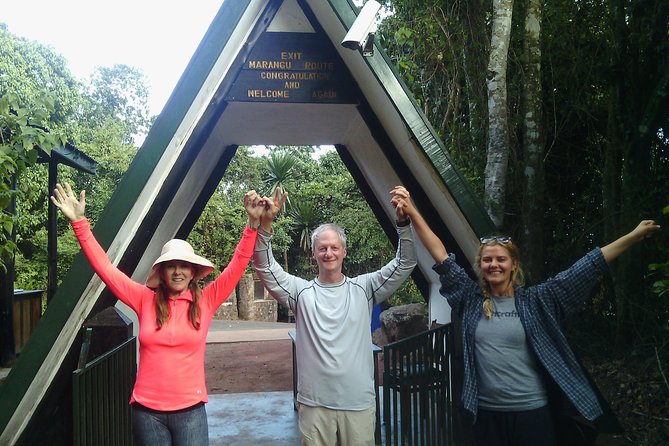
The third day takes you through the last water point and onto the broad saddle between Mawenzi and Kibo. The listed walking time is about six hours.
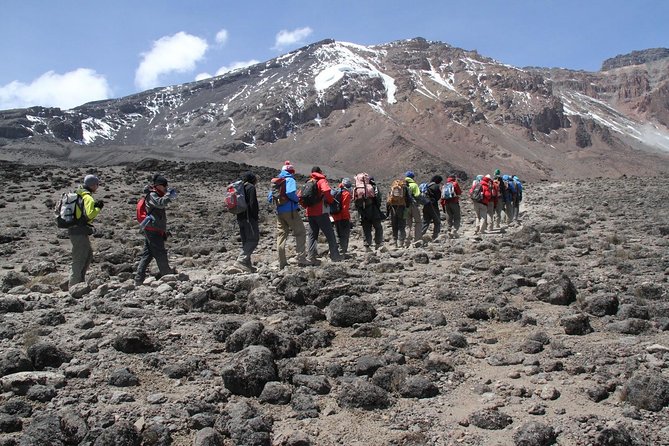
At first, the trail passes through upper heathland. Then most vegetation disappears, leaving a stark moonscape of rock and open ground. This change is memorable, but it also signals that you are entering a harsher part of the mountain.
Kibo Hut is the final overnight camp before the summit attempt. You eat dinner, rest, and prepare for a 2:00 a.m. start. The hut has 60 beds, and you share the space with other climbing groups. Rest may be difficult because of nerves, altitude, and the early departure, so organize your clothing and equipment before lying down.
This is the point where the short route becomes demanding. You have climbed from forest to high volcanic terrain in only three days. Keep your pace slow, drink the purified water provided, and follow your guide’s instructions closely.
A completely different kind of day out from Arusha:
- 4 Days Group Camping Safari
★ 5.0 · 1,101 reviews - 5 Days Group Camping Safari
★ 5.0 · 730 reviews - Materuni Waterfalls, coffee tour & Kikuletwa Hot Springs
★ 5.0 · 643 reviews - 3 Days Serengeti & Ngorongoro Group Camping Safari
★ 5.0 · 574 reviews
Day four: the 2:00 a.m. push to Uhuru Peak
Summit day is the hardest and most emotional part of the climb. You leave Kibo at about 2:00 a.m. and climb steep ground covered with heavy scree, or possibly snow, toward Gilman’s Point.
The ascent to Gilman’s Point at about 18,640 feet, or 5,681 meters, is listed at four to seven hours. The footing can be tiring because scree shifts under your boots. Your guide will set the pace, and the key is to keep moving steadily rather than racing.
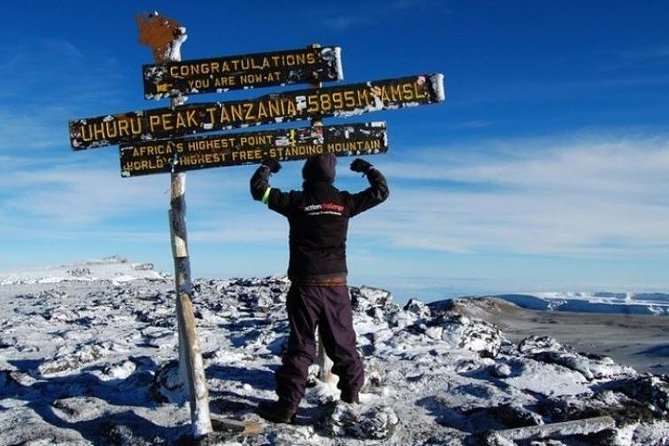
From Gilman’s Point, you continue along the crater rim toward Uhuru Peak. This final section takes another one to two hours. Uhuru Peak reaches 19,340 feet, or 5,895 meters, the highest point in Africa.
The views are the reward, but the summit may not feel comfortable. Cold, fatigue, and altitude can make even a short stop feel long. Take your summit photograph, enjoy the achievement, and descend when your guide advises. Reaching Gilman’s Point is already a major accomplishment, but this itinerary continues to Uhuru if conditions and your health allow.
After descending to Kibo for lunch and rest, you continue to Horombo for dinner and the night. That makes day four especially long. The listed time is six hours, but the summit schedule itself includes several hours before the descent, so you should prepare for a very demanding day.
Day five: the long descent through forest
After breakfast at Horombo, you descend through moorland to Mandara Hut at about 8,858 feet, or 2,700 meters. From there, the trail continues through lush forest to Marangu Gate at roughly 6,004 feet, or 1,830 meters.
The walking time is listed at about five hours. Descending often feels easier than climbing, but tired legs and loose footing can still cause problems. The lower trail may be wet and muddy, so gaiters and trekking poles are useful. Keep rain gear and warm clothing handy even if shorts and a T-shirt feel comfortable at lower elevations.
A vehicle meets you at Marangu village and returns you to your hotel in Moshi or Arusha. The trip ends with the sensible Kilimanjaro tradition of celebration, though you should remember that tips for guides and porters are not included.
What the $1,809.50 price covers
At $1,809.50 per person, this is not a budget day hike. It is a serious mountain package, and much of the cost goes toward required park charges, support staff, mountain logistics, food, water, and transport.
The included items are:
- Park fees
- Rescue fees
- Arrival and departure transfers
- Professional mountain guides
- Meals listed as five breakfasts, five lunches, and five dinners
- Clean, purified drinking water
- Two nights of hotel accommodation
The inclusion of rescue fees is important on a high-altitude climb. The park fees and guide services also represent costs you would face with any properly arranged Kilimanjaro ascent.
There is one detail I would clarify before paying: the schedule describes five days on the mountain, while the package also lists two hotel nights and five meals of each type. Ask exactly which nights are at the hotel, how meal counts match the daily schedule, and where the arrival and departure transfers begin and end.
The price does not include international flights or tips. Set aside money for gratuities, especially because the porters and guides carry much of the practical burden of the climb. Small Tanzanian notes are also useful for hut purchases.
Guides, food, and the human side of the climb
The strongest praise for this operator centers on the support team. Chief Gabriel received specific recognition for professionalism during the summit hike. Rafael was described as kind, patient, positive, funny, and attentive, with food that was plentiful and well received.
Those details matter on Kilimanjaro. A guide’s patience is useful when the group slows at altitude, and a positive attitude can help during the long summit night. The operator also presents the trip as personal and supportive, with a small private group rather than a mixed booking shared with strangers.
Mary is named in connection with a warm airport pickup and welcome. That suggests the service begins before the trail, although you should confirm your pickup arrangements and arrival details directly.
Food is included throughout the climbing schedule, along with purified water. The meals are described as nutritious and generous. Still, bring any snacks you rely on personally, since the only food details provided are the meal inclusions rather than specific menus.
Who should choose this five-day climb
This route suits you if you want the shortest standard way to attempt Kilimanjaro and prefer huts to tents. It also works well if the comforts of a bed, communal dining rooms, solar lights, and running water at lower camps matter to you.
You should have a moderate level of physical fitness. The route involves several hours of walking each day, a steep summit night, and a long descent after reaching Uhuru Peak. Fitness helps, but it does not remove the risk of altitude sickness.
I would be cautious about choosing the five-day version if you are new to high-altitude trekking or worried about acclimatization. The optional extra day at Horombo is worth serious thought. It adds time and likely cost, but it gives your body a better chance to adjust before Kibo and summit night.
This is a private activity, so only your group participates. That can make the pace and support feel more personal. It also means the quality of your experience will depend heavily on your group’s fitness, communication, and willingness to follow the guide’s pace.
Practical details that make the climb easier
Pack for changing conditions. The lower forest can be wet and muddy, while the upper mountain may involve snow, scree, cold, and thin air. Keep rain gear and warmer clothing available even during the warm descent.
Use trekking poles on the final descent. Gaiters are particularly useful below Mandara when the trail is wet. You should also plan clothing in layers, since temperatures and effort change sharply from the forest to the summit rim.
Do not spend all your cash before leaving the lower camps. Drinks may be available at the huts, but prices rise with elevation. Carry small Tanzanian bills for these purchases and keep tip money separate.
The cancellation policy is flexible if your plans change early: cancel at least 24 hours before the start time for a full refund. Cancellations or changes inside that 24-hour window are not refunded or accepted.
Should you book this Marangu Route climb?
I would book this tour if you want a supported Kilimanjaro attempt with hut sleeping, included meals, purified water, transfers, park charges, rescue fees, and a private group. The route is direct, the huts are a useful comfort, and the support team has received strong praise for kindness, patience, professionalism, and food.
I would not choose it blindly just because it is called the easiest route. Five days gives you less time to acclimatize, and the summit day is tough. Before booking, ask about adding a Horombo acclimatization night and clarify the two hotel nights and meal schedule.
For a fit walker who accepts basic communal facilities and wants a practical route to Uhuru Peak, this is a solid package. For anyone unsure about altitude, the extra day at Horombo may be the best money you spend.
FAQ
How long is the Mount Kilimanjaro climb?
The climb is scheduled for approximately five days using the Marangu Route.
Where does the experience begin?
The experience is based in Arusha, Tanzania. After breakfast and a briefing, transport takes you to Kilimanjaro National Park Gate in about 45 minutes.
Is pickup available?
Yes. Pickup is offered, and arrival and departure transfers are included.
Where do you sleep during the climb?
You sleep in communal huts at Mandara, Horombo, and Kibo. The huts have bunks, sponge mattresses, pillows, and solar lights.
How many beds are in the huts?
Mandara and Kibo Huts each have 60 beds. Horombo Hut has 120 beds.
Are bathrooms and running water available?
Bathrooms and running water are available at Mandara and Horombo. Facilities at the last camp are very basic latrines for men and women.
What time does the summit climb begin?
The summit climb begins at approximately 2:00 a.m. on day four.
What is included in the price?
The price includes park fees, rescue fees, arrival and departure transfers, guides, meals, purified drinking water, and two nights of hotel accommodation.
Are tips and international flights included?
No. Tips and international flights are not included.
Can you cancel for a full refund?
Yes. You can receive a full refund if you cancel at least 24 hours before the experience start time. Cancellations within 24 hours are not refunded.
Just added around Arusha
- 5 Days Safari Tarangire, Serengeti, and Ngorongoro Crater★ 5.0 · 3 reviews
- Love lives in Africa★ 5.0 · 3 reviews
- 5 Days of Safari, Culture & Hot Springs – Tour from Arusha★ 5.0 · 3 reviews
- Arusha National Park Safari by Jeep★ 4.5 · 3 reviews
- 5Days Family _Group Tour Lodging Mid-Range in the Jungle★ 5.0 · 3 reviews
- Serengeti & Ngorongoro 3 Days Budget Safari★ 5.0 · 3 reviews
- 2 Days Tarangire and Ngorongoro Crater Tour★ 5.0 · 3 reviews
- 7 Days PRIVATE Best of Tanzania Safari *Departing everyday*★ 5.0 · 3 reviews
Arusha Tours, compared.

Serengeti Balloon Safari and authentic bush breakfast
Read our review →
Balloon Safari & Bush Breakfast in Serengeti – Miracle Experience
Read our review →


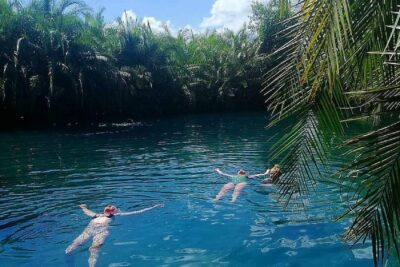
Materuni Waterfalls, coffee tour & Kikuletwa Hot Springs
Read our review →
3 Days Serengeti & Ngorongoro Group Camping Safari
Read our review →