

Reviewed · SPICE FARM TOURS
Private Spice Tour in Zanzibar with Pick Up
Spices make Zanzibar come alive. This private walk at Jambo Spice Farm gives you a close look at cinnamon, vanilla, cloves, black pepper, and other plants, with a guide turning each one into a small guessing game. I like the hands-on tastings and the chance to try fresh rose apple and guava. I also like the private format, which lets your group keep its own pace. The main consideration is that this is a working garden rather than a neat field of labeled rows.
Guide choice can shape the outing. Ibrahim, known as Latutu, is praised for his humor, while Abdi is described as attentive and professional, and Seif, pronounced Safe, receives special praise for his experience and lighthearted style. The coconut-tree demonstration and craft-making add color, though they may feel less important if your main interest is botany.
In This Review
- Key points at a glance
- Why Zanzibar’s spice farms matter
- Walking through Jambo Spice Farm
- Tasting cinnamon, vanilla, and black pepper
- Fruits, cosmetics, and the coconut demonstration
- What the private format changes
- The guides and transport service
- Is $81 a fair price?
- Small drawbacks to keep in mind
- Who should book this spice farm visit?
- Booking and cancellation details
- Should you book the Jambo Spice Farm tour?
- FAQ
- Where does the private spice tour take place?
- How long does the experience last?
- What time does the tour start?
- Is pickup available?
- Is this a private activity?
- Which spices can I see or taste?
- Are food and drinks included?
- Which fruits might be available?
- Is the tour offered in English?
- Can I cancel for a full refund?
Key points at a glance

- A private 2 to 3-hour walk: Your group joins no one else, making this a good fit for couples, families, or friends who prefer a flexible pace.
- A hands-on spice lesson: You may smell or taste freshly picked leaves, fruits, and twigs while guessing the spice before the guide explains it.
- More than a spice rack: The farm includes fruits, vegetables, medicinal plants, henna, perfume tree, and lipstick tree.
- Local food and fruit are included: Water, local food, fresh fruit, entrance fees, and transport fees are part of the $81 price.
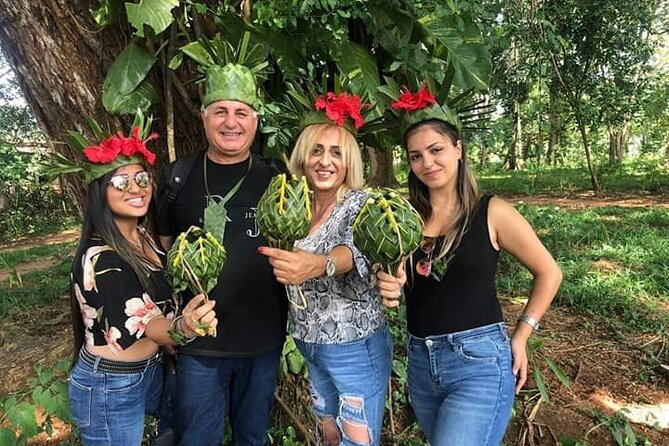
- A playful cultural touch: A helper may make a palm-and-flower crown, purse, ring, or necklace during the visit.
- Strong guide feedback: Ibrahim, Abdi, Hussein, and Seif are singled out for friendliness, good communication, or professional service.
Why Zanzibar’s spice farms matter
Zanzibar is often called Spice Island, and this tour shows you why the name stuck. The visit is not simply a stop at a shop with jars of powder. You walk among living plants and see the leaves, bark, pods, roots, and fruit before they become cooking ingredients or cosmetic products.
That change in scale is the best reason to go. Cinnamon is not just something you shake into a dessert, and vanilla does not begin life as a small brown bottle. A guide picks parts of plants for you to smell and taste, then explains what you are holding. The guessing element keeps the walk active and gives children and curious adults a reason to pay attention.
The farm also shows how useful these plants can be. Several are used locally for medicinal purposes, while henna, the perfume tree, and the lipstick tree connect the garden to traditional cosmetics. You get a broader picture of plant use instead of a narrow lesson focused only on food.
More Private Tours in Zanzibar
- Stone Town Private Walking Tour
★ 5.0 · 371 reviews - Zanzibar: 3 Hours Private Stone Town walking Tour with Guide
★ 4.6 · 301 reviews - Full-Day Private Stone Town +Spice Farm and Prison Island Tour
★ 4.5 · 216 reviews
Walking through Jambo Spice Farm
The main stop is Jambo Spice Farm, in the Kizimbani or Kidichi area. The walk lasts about three hours, although the overall experience is described as roughly two to three hours. The exact pace depends on how much time your private group spends tasting, asking questions, and looking at the plants.
Do not expect long, perfectly ordered rows like a commercial plantation. The garden contains a mix of aromatic spices, fruit trees, vegetables, and less familiar plants. One review specifically appreciated this more mixed arrangement, since it felt different from a field built only for easy viewing.
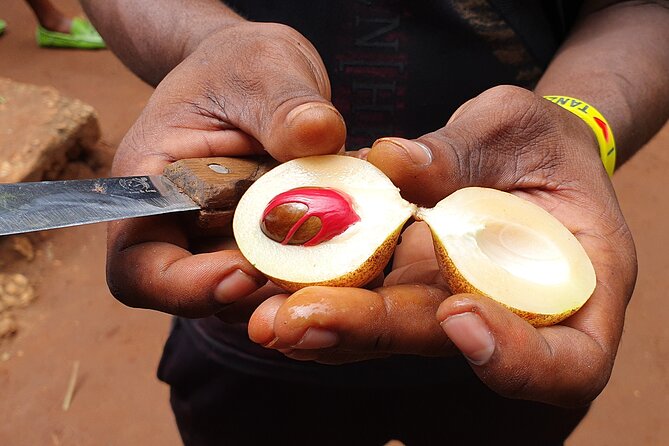
Your guide takes you from plant to plant, breaking off leaves, twigs, or fruit and asking you to identify the scent. Cinnamon, cardamom, nutmeg, vanilla, and black pepper are among the main examples. You may also see turmeric, garlic, ginger, chilies, cloves, and other kitchen staples.
This approach is much better than hearing a long speech while standing in one place. You use your nose and mouth, not just your camera. Still, the experience depends heavily on the guide’s style. Seif is praised for making the walk memorable with a relaxed manner, while Ibrahim, or Latutu, is described as kind and entertaining. If you can request a guide, those names may be useful, though availability is not guaranteed.
Tasting cinnamon, vanilla, and black pepper
The tasting is the heart of the experience. You may handle a plant before learning its name, then compare the fresh scent with the dried spice you already know from home. That simple exercise helps you remember the visit long after the farm walk ends.
Vanilla and cinnamon are familiar names, but seeing their plant forms gives them new meaning. Cardamom, nutmeg, and black pepper also become easier to place when you encounter them as growing plants rather than packaged seasonings.
The tour includes local food, water, and fruit. The food gives the visit a practical finish, since spices make the most sense when you connect them to eating. Fresh fruit is another welcome feature, especially rose apple and guava. Depending on the farm’s offerings that day, you may also encounter other fruit grown on the property.
There is an opportunity to buy spices and fruit. That can be useful if you want a tangible reminder of the visit, but keep personal spending separate from the tour price. Personal expenses are not included, and tipping the guide is also left to you.
Fruits, cosmetics, and the coconut demonstration

The plants outside the kitchen spice list add variety. Henna, perfume tree, and lipstick tree are highlighted for their use in cosmetics, giving you a look at how local plant knowledge reaches beyond cooking.
A coconut-tree demonstration may also form part of the visit. One person climbs the tree, and the group drinks from individual coconuts. It is a cheerful moment and a fresh drink on a warm day, although it may not be the main reason to book the tour.
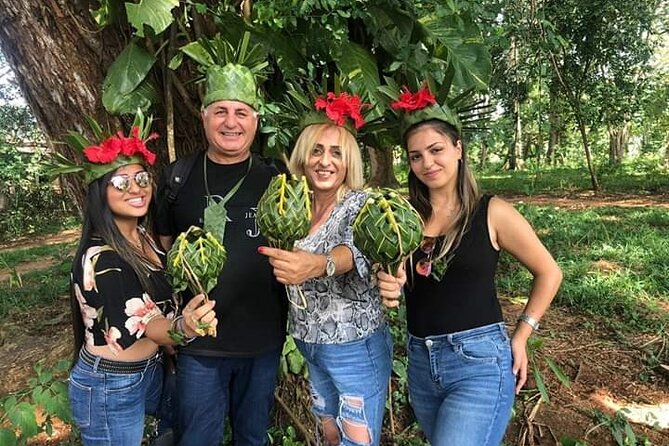
A helper may make small items from palm leaves and flowers, including a purse, ring, necklace, or crown. This is especially appealing for families and anyone who enjoys a bit of local craft. It is an extra flourish rather than a major craft workshop, so I would treat it as a pleasant surprise, not the central activity.
Monkeys have also been seen playing in the forest area. That is an enjoyable possibility, but it should not be treated as a guaranteed wildlife stop. The farm’s real focus is plants, food, and the guide’s explanation.
More spice farm visits:
- Zanzibar: Stone Town, Spice Tour, Prison Island with Lunch
★ 4.4 · 1,219 reviews - Zanzibar: Prison Island, Stone Town, & Spice Farm Tour
★ 4.5 · 579 reviews - Zanzibar: Stone Town, Spice tour & Prison Island with Lunch
★ 4.6 · 453 reviews - Spice Tour + Stone Town Tour + Prison Island
★ 4.5 · 130 reviews
What the private format changes
The tour is private, so only your group takes part. That matters more here than it might on a simple sightseeing drive. The walk involves repeated stopping, smelling, tasting, and asking questions, and a private group can avoid being tied to strangers’ interests or pace.
For a family, the guide can spend more time on easy guessing games. For a couple, the walk can feel less rushed. For friends, it is easier to pause for photos or spend extra time at the fruit and spice stalls.
The private arrangement does not mean the entire farm is exclusively yours. It means your booked activity is limited to your group. You still visit a working farm with its own routines, helpers, and other activity around it.
Transport fees are included, and pickup is offered. The listed start time is 9:30 a.m., so this fits well into a morning plan. The total length is short enough to combine with other Zanzibar sightseeing, but I would avoid packing the day too tightly. A farm walk in warm weather is more enjoyable when you allow a little breathing room.
The guides and transport service
Good guiding is the strongest theme in the available feedback. Ibrahim, called Latutu, is described as funny and kind. Abdi is praised for being attentive and professional, while Seif is singled out for his knowledge, experience, and lighthearted approach.
Transport also receives positive attention. Hussein is described as a friendly driver, and the pickup was reported as on time. That is useful in Zanzibar, where reliable transport can make a short excursion feel easy instead of complicated.
Communication with Abdi was also described as good enough for one group to arrange another tour directly afterward. That does not guarantee the same experience for every booking, but it suggests that asking questions before the trip may be worthwhile.
The tour is offered in English. If your group has special language needs, confirm that before booking, since no other languages are listed.
Is $81 a fair price?

At $81 per person, this is not the cheapest possible farm visit, but the price includes several practical items: transport fees, entrance fees, water, fruit, local food, and a professional guide. Because the tour is private, you are paying for more than entry to a garden. You are also paying for the vehicle and for a guide who can adapt the walk to your group.
The value is strongest when you want convenience. Pickup removes the need to arrange separate transport, and the private structure gives you a more personal lesson than a large group walk. If you only want to see a few spice plants and buy a packet to take home, the price may feel high.
I see better value for visitors who enjoy food, plants, and local explanations. Families can get a playful outing from the tastings and palm crafts. Couples can fit the morning visit into a wider Zanzibar schedule. Anyone with limited time may appreciate seeing many plants in one organized stop.
The included local food and fruit help, but do not expect a full restaurant meal based on the information provided. Think of it as food connected to the farm visit, not a separate dining experience.
Small drawbacks to keep in mind

The mixed garden layout is part of the charm, but it can also make the visit feel less polished than a formal agricultural exhibit. You may not find every spice displayed in a clearly marked row. Much depends on how well your guide points out each plant and explains its use.
The coconut climb and palm crafts may appeal strongly to some people and only mildly to others. If you want a focused botany lesson, these extras can feel like a distraction. If you prefer a relaxed cultural outing with a few playful moments, they add welcome variety.
The tour lasts only two to three hours, so it offers an introduction rather than a full study of Zanzibar’s spice trade or farming methods. The strongest experience comes from paying attention to the plants you can smell and taste, not expecting a long historical lecture.
Finally, gratuity and personal purchases are not included. Bring extra money if you want to buy spices, fruit, or crafts, and plan to tip if the guide and driver provide good service.
Who should book this spice farm visit?
I would suggest it to anyone who likes food with a story behind it. You will get the most from the tour if you enjoy identifying scents, tasting unfamiliar fruit, and asking why a plant is used in cooking, medicine, or cosmetics.
It also suits families. The guide’s guessing game is easier for children to follow than a long talk, and the palm-leaf crafts give them something to watch and take part in. The private setup helps if your group needs a slower pace or extra explanations.
Couples and small groups who value easy transport should also consider it. The 9:30 a.m. start leaves much of the day open, and pickup is included.
I would be less likely to recommend it if you want a formal plantation tour with strict rows, detailed agricultural data, or a long academic discussion. This is a lively walking visit built around senses, conversation, local food, and the charm of a working garden.
Booking and cancellation details
Confirmation is provided at booking, mobile tickets are accepted, and the experience is near public transportation. Most people can take part, and the activity is private.
You can cancel up to 24 hours before the 9:30 a.m. start for a full refund. Cancellations or changes made within 24 hours are not accepted for a refund, with cut-off times based on local Zanzibar time.
Should you book the Jambo Spice Farm tour?
Book it if you want an easy, private introduction to Zanzibar’s plant life, with pickup, tastings, fresh fruit, local food, and guides who bring humor to the walk. I especially like the direct contact with leaves, bark, fruit, and twigs. That makes the experience more memorable than simply looking at spice jars.
Go in with the right expectation. You are not signing up for a perfectly arranged plantation or a major historical tour. You are visiting a mixed farm where a good guide helps you notice the plants, smell the differences, and understand how spices and cosmetics begin.
At $81 per person, the package makes the most sense when you value private transport and personal guiding. If that matches your travel style, this is a well-liked and useful half-day addition to a Zanzibar itinerary.
FAQ
Where does the private spice tour take place?
The tour visits Jambo Spice Farm in the Kizimbani or Kidichi area of Zanzibar.
How long does the experience last?
The tour lasts approximately two to three hours. The farm walking portion is listed as three hours.
What time does the tour start?
The listed start time is 9:30 a.m.
Is pickup available?
Yes. Pickup is offered, and transport fees are included.
Is this a private activity?
Yes. Only your group participates in the private tour.
Which spices can I see or taste?
The experience includes cinnamon, cardamom, nutmeg, vanilla, and black pepper. You may also see turmeric, garlic, ginger, chilies, and cloves.
Are food and drinks included?
Yes. Water, local food, and fruit are included.
Which fruits might be available?
The tour specifically mentions rose apple and guava, along with a range of fresh fruits.
Is the tour offered in English?
Yes. English is the listed language.
Can I cancel for a full refund?
Yes. You can cancel at least 24 hours before the experience start time for a full refund. Cancellations within 24 hours are not refunded.
Just added around Zanzibar
- Spice Tour of Zanzibar★ 4.5 · 3 reviews
- Zanzibar : Stone Town Tour,history without transport★ 4.8 · 3 reviews
- Zanzibar: 3-Day Northern Safari with Flights Included★ 4.8 · 3 reviews
- Jozani Forest, kuza cave and mtende beach★ 5.0 · 3 reviews
- Starfish Beach; The Rock; Kuza Cave; Paje Beach; Salaam Cave Tour★ 4.5 · 3 reviews
- ZANZIBAR: Stone Town and Jozani Forest Guided Tour★ 4.0 · 3 reviews
- Zanzibar: African Sunset Boat Party in Zanzibar Music, Views★ 4.3 · 3 reviews
- Joazani forest & Spice farm with lunch★ 5.0 · 3 reviews
Spice Farm Tours, compared.

Stone Town, Spice Tour, Prison Island with Lunch
Read our review →
Stone Town, Spice tour & Prison Island with Lunch
Read our review →
Full-Day Private Stone Town +Spice Farm and Prison Island Tour
Read our review →


The Swahili Spice Experience – Spice Tour + Culinary Journey
Read our review →Browse the lists this tour appears in