

Reviewed · STONE TOWN TOURS
Zanzibar: Stone Town & Spice Farm Tour with Lunch
Stone Town and spices make a smart pairing. This five-hour private tour gives you two very different views of Zanzibar: the tight lanes and layered past of Stone Town, followed by the hands-on pleasures of an organic spice farm. I especially like the chance to taste spices and fruit straight from the source, and the farm lunch adds real value to the $73 price. The main drawback is pacing: with a full town tour and two to three hours at the farm, some stops in Stone Town may feel brisk.
The day also involves several people, including a driver and separate guides at the farm and in town. That usually works well, but English ability can vary. Take cash for spice purchases and tips, and do not expect a slow, deeply detailed visit to every Stone Town museum.
In This Review
- What makes this Zanzibar tour worth your time
- Starting at the Old Fort in Stone Town
- The Old Slave Market and Anglican Church
- City Market and the fish auction
- Palace Museum, House of Wonder and the Old Fort
- Guides who shape the walking tour
- The spice farm: Zanzibar’s most enjoyable stop
- Coconuts, cassava and a farm lunch
- Buying spices and handling tips
- Is $73 a fair price?
- Timing, transport and comfort
- Who should book this experience?
- My verdict: book it for the farm, keep expectations clear
- FAQ
- How long does the Stone Town and spice farm tour last?
- What is included in the price?
- Where is the meeting point?
- Is hotel pickup available?
- What language is the tour offered in?
- What can I see at the spice farm?
- Is lunch included?
- Should I bring cash?
- Is the tour suitable for wheelchair users?
What makes this Zanzibar tour worth your time
- Fresh spices as living plants: See vanilla, cardamom, nutmeg, cinnamon, cloves and black pepper growing, then touch, smell and taste them.
- A real local market: Walk through the City Market and watch the fish auction, where buying and selling happens in plain view.
- Stone Town’s mixed identity: Arab, Persian, Indian and European influences appear in the streets, buildings and trading history.
- Coconut straight from the tree: A climber picks young coconuts for you to try, one of the tour’s most memorable small moments.
- Lunch at the farm: Your meal comes after demonstrations of cassava harvesting, coconut milk making and local cooking.
- A useful five-hour format: You get a broad introduction to two major Zanzibar sights without giving up an entire day.
Starting at the Old Fort in Stone Town
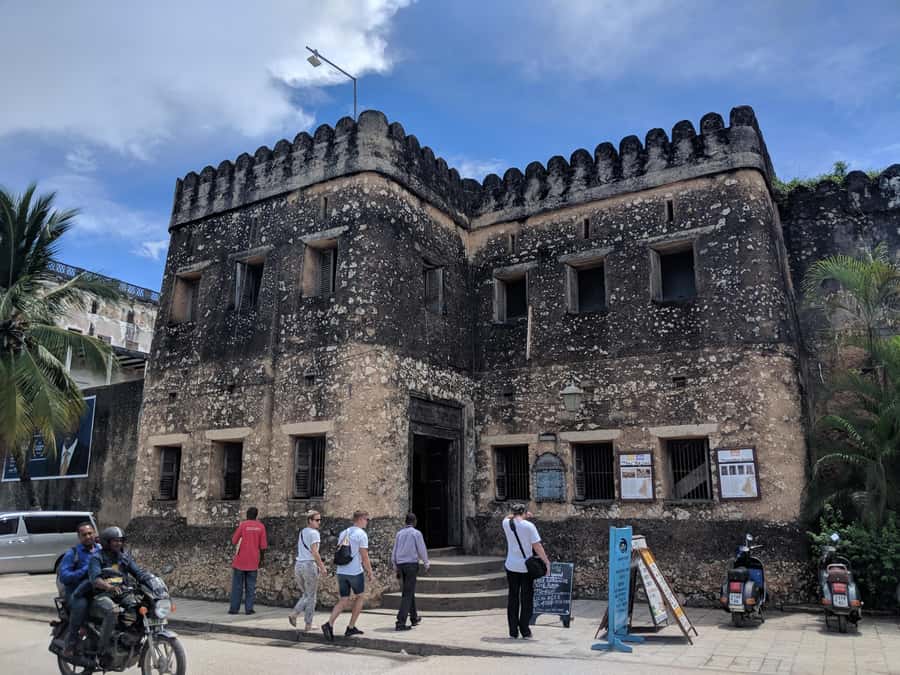
The meeting point is in front of the Old Fort on Mizingani Road at 9 a.m. If you choose hotel pickup, the tour can begin from your accommodation instead. The Old Fort is a practical meeting place because it is one of Stone Town’s easiest landmarks to recognize, but give yourself time to find the correct representative if you arrive independently.
The tour is private, which matters in Stone Town. Its lanes are narrow, and a private guide can adjust the pace when you want to pause, ask questions or take photographs. You are not locked into the rhythm of a large group.
Wear comfortable shoes. Stone Town walking involves uneven streets, and the day also includes time outdoors at the farm. Sunscreen and drinking water are sensible, even though water is included.
Do not bring luggage or a large bag. This is a walking and sightseeing day, not a transfer service designed for storing baggage.
More ways to see Stone Town:
- Zanzibar: Stone Town, Spice Tour, Prison Island with Lunch
★ 4.4 · 1,219 reviews - Zanzibar: Prison Island, Stone Town, & Spice Farm Tour
★ 4.5 · 579 reviews - Zanzibar; Prison Island, Nakupenda, StoneTown Tour with BBQ
★ 4.3 · 457 reviews
The Old Slave Market and Anglican Church
The opening stop deals with one of Zanzibar’s hardest subjects: the slave trade. The Old Slave Market site and Anglican Church place that history in a physical setting rather than leaving it as a distant date in a textbook.
This part can be emotionally heavy, but it gives the rest of the tour more meaning. Zanzibar’s wealth, trade routes and connections with Arabia, Persia, India and Europe were not built only on spices and sea commerce. Human exploitation was part of the island’s past.
Your guide is important here. A good explanation can connect the site to the wider Swahili world without turning the visit into a long lecture. The tour then moves into the streets, where the history becomes less formal and more visible in doors, balconies, walls and old commercial buildings.
City Market and the fish auction

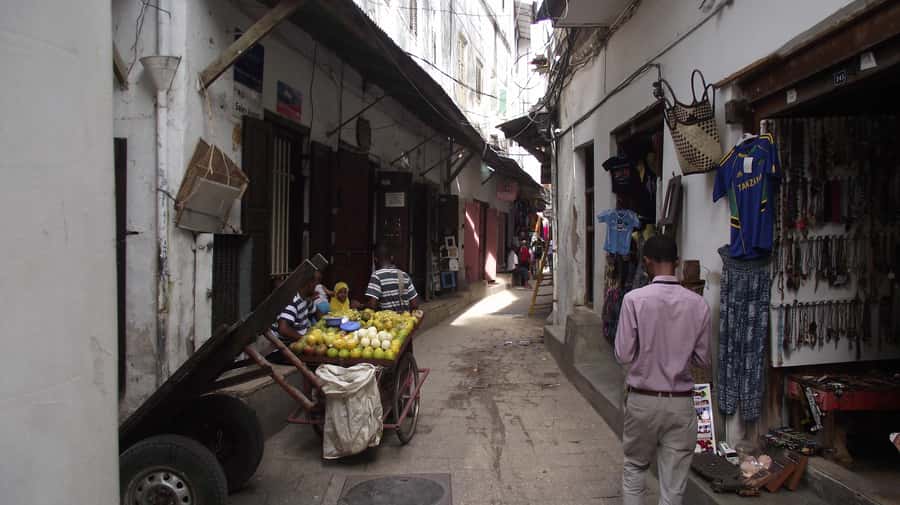
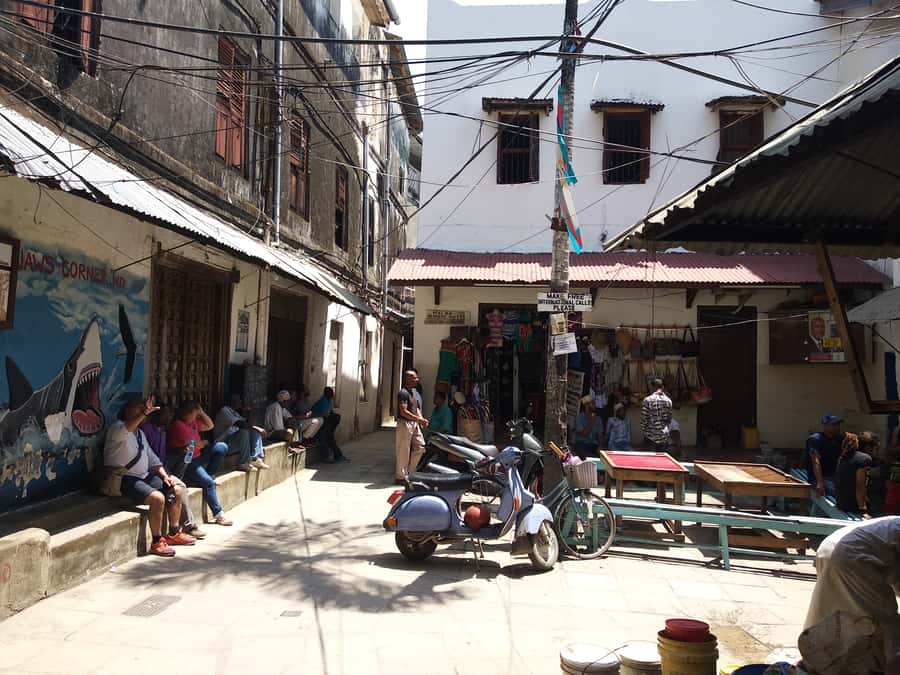
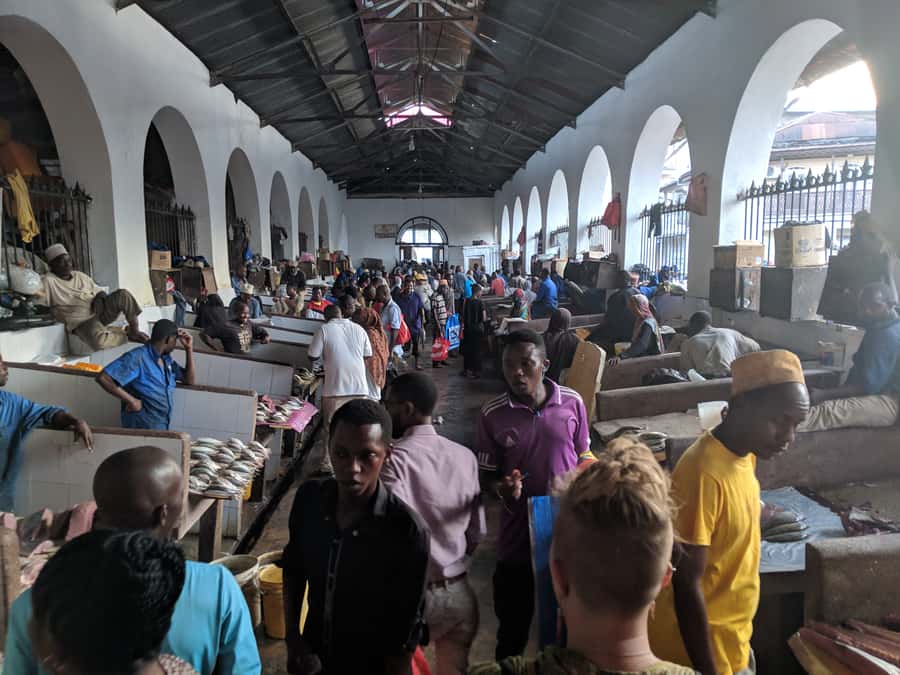
The walk continues to the City Market, one of the most useful stops for seeing everyday Stone Town life. You will find fresh produce and fruit, and you can watch people buying and selling rather than simply looking at objects arranged for tourists.
The fish auction is the most distinctive part. It gives you a glimpse of the working city, with sellers and buyers handling business in a direct, public setting. This is not a polished food demonstration. It is a real market scene, so you should be ready for noise, close quarters and the less tidy side of food commerce.
Photography calls for judgment. Ask before taking close pictures of people, particularly during the auction. The point is to observe respectfully, not to treat the market like a stage.
Palace Museum, House of Wonder and the Old Fort
After the market, the tour covers Stone Town’s main landmarks. The Palace Museum helps explain Zanzibar’s royal past, while the House of Wonder, also called Bait-al-ajab, is known as the town’s largest and tallest building.
The House of Wonder is a major visual reference point in Stone Town, though the experience here is about seeing the building and understanding its place in the town rather than expecting a long museum visit. The itinerary includes the Old Fort too, which gives you another important marker of Stone Town’s political and defensive past.
You will also see Tippu Tip, the Peace Memorial and Natural History Museum. The range is useful because it shows that Stone Town is not one single story. Royal power, commerce, religion, colonial influence, local culture and modern memory all sit close together.
The Freddie Mercury connection adds a lighter, more familiar stop. Seeing the house associated with the singer gives the walking tour a pop-culture detail amid the older architecture. It is a quick photo opportunity, not a substitute for the town’s deeper history.
More spice farm visits:
- Zanzibar: Stone Town, Spice tour & Prison Island with Lunch
★ 4.6 · 453 reviews - Full-Day Private Stone Town +Spice Farm and Prison Island Tour
★ 4.5 · 216 reviews - Spice Tour + Stone Town Tour + Prison Island
★ 4.5 · 130 reviews - Zanzibar: Spice Tour & Stone Town Walking Tour
★ 4.8 · 115 reviews
Guides who shape the walking tour
The quality of this experience rests heavily on the guides. Several guide combinations have worked well, including driver Ahmed, farm guide Beka and Stone Town guide Juma. Names are not guaranteed, but these examples show how the tour may be organized: transport, spice interpretation and city history can be handled by different people.
Juma has been praised for a relaxed and engaging style, while other city guides have helped explain Zanzibar’s past clearly. One booking found the Stone Town guide’s English limited, which made questions harder. That is worth keeping in mind if detailed conversation is central to your plans.
At its best, the walking portion is not just a checklist of buildings. Your guide can explain why Swahili culture carries Arab, Persian, Indian and European influences, and why Stone Town became a UNESCO World Heritage Site in 2000. I would still treat the town segment as a broad introduction, not a specialist architectural tour.
The spice farm: Zanzibar’s most enjoyable stop
The spice farm is where this tour earns much of its appeal. Zanzibar is often called part of the Spice Islands, along with Tanzania’s Mafia Island, because cloves, nutmeg, cinnamon and black pepper have long been important to the region.
You do not only see jars of dried products. The farm guide shows you spices and herbs as growing plants. You can touch, smell and taste them, which makes it easier to understand the difference between the seed, bark, fruit and pod used in cooking.
You might see vanilla, cardamom, nutmeg and other plants, with explanations of how they are grown and used. The guide also discusses medicinal purposes and cooking, linking the farm to ordinary household life rather than presenting spices as decorative souvenirs.
Allow two to three hours for this section if the schedule follows the pattern described by previous bookings. That is a good amount of time for people who enjoy food, plants and practical demonstrations. If you mainly want Stone Town, however, the farm will take up a large share of your day.
The farm visit has a pleasant sense of discovery because you can smell the plants at close range and taste fresh fruit. Several parts are interactive, so you are doing more than walking behind a guide.
Coconuts, cassava and a farm lunch
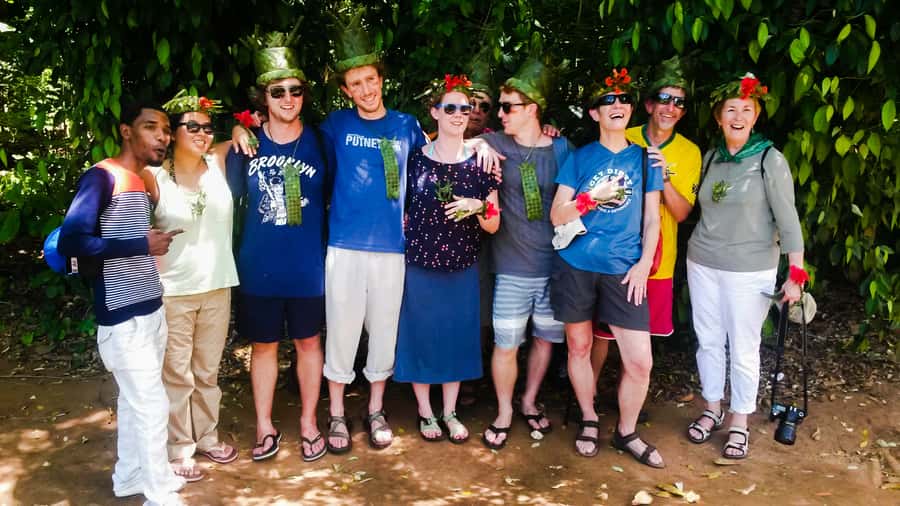
The most playful part of the farm visit involves coconuts. A climber picks young coconuts from the tree, and you can drink or taste the fresh fruit. It is a simple experience, but it connects the meal to the place where the ingredients grow.
You may also join a cassava leaf harvest, learn how coconut milk is made and try some local cooking. These activities help explain the work behind familiar ingredients. They also give the farm visit a human scale: you see preparation, not just finished products in a shop.
Lunch is included and served at the farm. The food has been a major strength of the experience, with previous bookings describing it as surprisingly good and plentiful. Do not expect a formal restaurant meal. The appeal is a traditional lunch in the same setting where you have just learned about local crops and cooking.
The timing works well: after the walking, smelling and tasting, you sit down to eat. Drinking water is included, but bring sunscreen and use the cash you carry for anything extra.
Buying spices and handling tips
The farm shop gives you the chance to buy spices and local products. Cash is required, so do not rely on a card. You can simply enjoy the tour without buying anything, but the shop is convenient if you want to take home cinnamon, cloves, pepper or other products you have just seen growing.
Carry small notes if possible. Tips may be expected for several people during the day, including the driver, farm guide and city guide. One useful way to think about this is to budget for separate small tips rather than arriving with one large amount for a single person.
The number of staff involved can feel surprising. It is not necessarily a problem, but you should know in advance that the private tour may include multiple handoffs. Clear communication at the start about the order of the day can help.
Is $73 a fair price?

At $73 per person, the tour offers decent value if you want both Stone Town and a spice farm in one outing. The price includes entrance fees, a private guide, drinking water and lunch. Hotel transfer is included only if you select that option, so check the booking choice before assuming transport is covered.
The value is strongest for couples, families or small private groups who would otherwise need to arrange a guide, transport, market visit and farm trip separately. Lunch and entry costs also reduce the number of small expenses you need to manage.
The value is weaker if you want a slow, museum-focused Stone Town day. The itinerary covers many landmarks, but five hours is not enough for long visits at every site and a relaxed farm session at the same time.
A private tour gives you flexibility, but it does not remove the limits of the clock. If you have only one short day in Zanzibar, this is an efficient choice. If you have several days, you may prefer to explore Stone Town separately and give the farm its own half-day.
Timing, transport and comfort
The stated duration is five hours, beginning around 9 a.m. The order can vary, but the day combines driving with walking. One arrangement begins at the farm, followed by the Stone Town walk, while the written itinerary describes Stone Town first. Confirm the order with the operator when you meet.
Previous bookings describe clean, cool vans and straightforward hotel transfers. Pickup is optional, and the listed meeting point is in front of the Old Fort if you do not choose it.
The tour is offered in English. Several guides have been praised for clear explanations and friendly service, but the level of spoken English may differ between guides. If you have detailed questions about architecture, religion or trade, ask early and give your guide time to explain.
The accessibility information needs care. The activity details describe it as wheelchair accessible, but the same information says it is not suitable for wheelchair users. Stone Town’s narrow and uneven streets also make comfort a practical concern. If you use a wheelchair, contact the provider before booking and get a clear answer about the exact route and transport.
Who should book this experience?
I would choose this tour if you want a first look at Zanzibar’s two best-known cultural experiences: Stone Town and the spice farms. It suits people who enjoy food, markets, short walks, local stories and hands-on demonstrations.
Families may like the fruit tasting, coconut picking and cooking activities. Food lovers will get the most from the farm, especially if you want to understand how spices grow rather than simply buy them in a shop.
This is also a good choice if you prefer a planned day with transport and lunch included. The private format means you can ask questions and avoid being tied to a large group.
I would hesitate if your priority is a slow Stone Town exploration. One booking found the spice farm far stronger than the town portion, and that is a fair warning. You may enjoy Stone Town more by arranging a separate walking tour and giving it more time.
My verdict: book it for the farm, keep expectations clear
This is a well-rounded introduction to Zanzibar, with the spice farm as the clear highlight. You get fresh fruit, live plants, coconut tasting, local cooking and lunch, then a useful circuit of Stone Town landmarks.
Book it if you want convenience and variety for $73. Bring comfortable shoes, sunscreen and cash, and expect to tip several people. If you care most about detailed Stone Town history, book the tour for the farm and treat the city walk as an overview, or explore the old town separately on another day.
FAQ
How long does the Stone Town and spice farm tour last?
The tour lasts five hours. Starting times should be confirmed when you check availability, with the listed meeting time at the Old Fort being 9 a.m.
What is included in the price?
Entrance fees, a private guide, drinking water and lunch are included. Hotel transfers are included only when you select the pickup option.
Where is the meeting point?
Meet in front of the Old Fort on Mizingani Road in Stone Town at 9 a.m. A tour representative will be waiting there.
Is hotel pickup available?
Yes. Hotel pickup is available as an option, while the standard meeting point is in front of the Old Fort.
What language is the tour offered in?
The live tour guide service is offered in English.
What can I see at the spice farm?
You can see and taste spices and herbs such as vanilla, cardamom, nutmeg, cinnamon, cloves and black pepper. The visit also includes explanations of growing methods, medicinal uses and cooking.
Is lunch included?
Yes. Lunch at the spice farm is included in the tour.
Should I bring cash?
Yes. Bring cash for the spice shop and for tips. The shop accepts cash only.
Is the tour suitable for wheelchair users?
The activity information gives conflicting details, describing it as wheelchair accessible while also saying it is not suitable for wheelchair users. Contact the provider before booking to confirm whether the route and transport meet your needs.
More Farms
- Zanzibar:Stone Town & Spice Farm Private Tour Lunch Included
★ 4.2 · 94 reviews - Zanzibar full day Jozani forest + Spice farm and stone town
★ 4.7 · 90 reviews - Zanzibar: Spice Farm & Stone Town Tour with Lunch
★ 4.5 · 80 reviews - Zanzibar: Spice Farm Tour with Traditional Cooking Lesson
★ 4.8 · 77 reviews
More Lunch Experiences
- Zanzibar: Prison Island and Nakupenda Boat Trip with Lunch
★ 4.1 · 882 reviews - Mnemba Island: Dolphin Swim & Snorkeling with Optional Lunch
★ 4.3 · 591 reviews - Zanzibar: Prison Island & Nakupenda Boat Tour with BBQ Lunch
★ 4.4 · 554 reviews - Zanzibar: Safari Blue Lagoon Trip with Snorkeling and Lunch
★ 4.5 · 336 reviews
Just added around Zanzibar
- Spice Tour of Zanzibar★ 4.5 · 3 reviews
- Zanzibar : Stone Town Tour,history without transport★ 4.8 · 3 reviews
- Zanzibar: 3-Day Northern Safari with Flights Included★ 4.8 · 3 reviews
- Jozani Forest, kuza cave and mtende beach★ 5.0 · 3 reviews
- Starfish Beach; The Rock; Kuza Cave; Paje Beach; Salaam Cave Tour★ 4.5 · 3 reviews
- ZANZIBAR: Stone Town and Jozani Forest Guided Tour★ 4.0 · 3 reviews
- Zanzibar: African Sunset Boat Party in Zanzibar Music, Views★ 4.3 · 3 reviews
- Joazani forest & Spice farm with lunch★ 5.0 · 3 reviews
Stone Town Tours, compared.

Stone Town, Spice Tour, Prison Island with Lunch
Read our review →

Prison Island, Nakupenda, StoneTown Tour with BBQ
Read our review →Stone Town, Spice tour & Prison Island with Lunch
Read our review →

3 Hours Private Stone Town walking Tour with Guide
Read our review →
Full-Day Private Stone Town +Spice Farm and Prison Island Tour
Read our review →
Stone Town Historical Cultural Walking Guided Tour
Read our review →Browse the lists this tour appears in