
Reviewed · SERENGETI SAFARIS
3 Days Small Group Safari to Serengeti NP and Ngorongoro Crater Tour in Tanzania
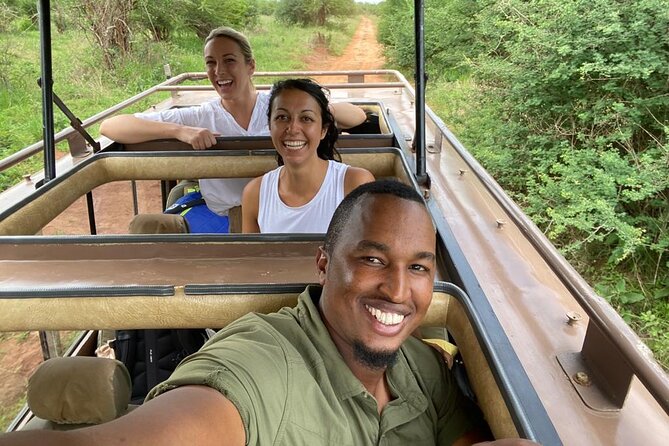
Wildlife comes first here. This three-day camping safari from Arusha gives you a compact route through two of Tanzania’s biggest names: Serengeti National Park and Ngorongoro Crater. I like the way the trip combines broad Serengeti plains with the enclosed wildlife haven of Ngorongoro, and I like that park fees, meals, camping equipment, and an English-speaking guide are included. The main trade-off is the amount of time spent on the road, plus the basic nature of budget camping.
The tour costs $815 per person and keeps the group to a maximum of six people, which helps you get more personal attention than you would on a large coach safari. Guides such as Omary and George have earned especially warm praise for their effort and friendly manner. Still, you should be ready for long drives, early starts, simple facilities, and a first night where camping conditions may be less comfortable than expected.
In This Review
- Key points before you book
- What $815 buys you in Tanzania
- Day one: the long road to the Serengeti
- The camping question: adventure or inconvenience?
- Day two: another Serengeti drive, then Ngorongoro
- Day three: entering Ngorongoro Crater
- Guides, group size, and the human side of the safari
- Meals, timing, and what to prepare for
- Who should book this safari?
- Should you book it?
- FAQ
- Where does the safari start?
- Where does the safari end?
- What time does the safari start?
- How many people can join the group?
- Are park fees included?
- Are meals included?
- Is camping equipment included?
- Is a guide included?
- What is not included?
Key points before you book
- Two famous wildlife areas in three days: You visit the Serengeti and Ngorongoro Crater without committing to a week-long safari.
- A maximum of six people: The small group can make it easier to ask questions and spend time watching animals.
- Camping equipment and meals are included: The price covers two breakfasts, three lunches, two dinners, and the basic camping setup.
- Day one is a long transfer: The drive from Arusha to the southern Serengeti is listed as about six hours and 335 kilometers, followed by game viewing.
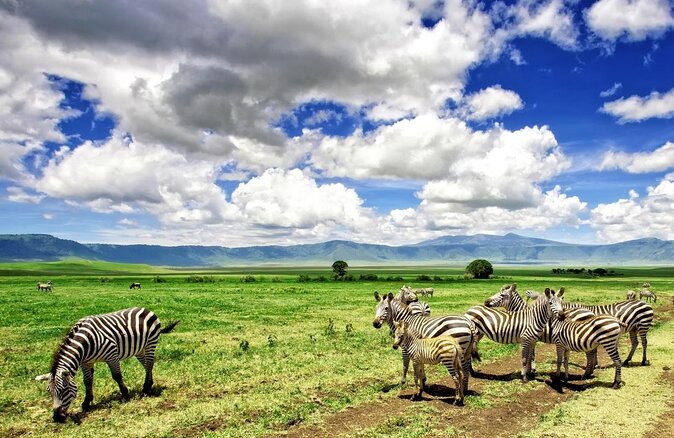
- Seronera and the southern plains offer different scenery: Expect open grassland, acacia trees, kopjes, and a chance to look for big cats.
- Ngorongoro is the final wildlife payoff: The half-day crater visit includes a descent, picnic lunch, and a return drive to Arusha later that day.
What $815 buys you in Tanzania
At $815, this is a budget-minded way to reach two major safari areas in a short period. The value comes from what is bundled into the price: park fees, an English-speaking professional driver-guide, camping gear, breakfasts, lunches, and dinners. You are not paying extra for every meal or for entry to each park, which makes planning easier.
The small group matters here. With no more than six people, you should have a better chance of hearing the guide clearly and getting answers to questions about animal behavior, vegetation, and the route. It also gives you more practical space than a large group vehicle, though the supplied information does not specify the vehicle model or seating arrangement.
This is not a luxury safari. You are choosing access and wildlife over polished accommodation. Camping can be part of the fun, but you need to accept that standards may vary. One particularly poor experience involved a Serengeti campsite with no shower, no lights, and unclean conditions. That is a serious concern, not a minor quibble. Before departure, I would ask the operator to confirm the exact campsite, sleeping arrangement, washing facilities, and lighting.
The strongest positive feedback focuses on the value of seeing many animals in only three days. One visitor paid about 750 euros and considered the experience well worth the money, especially with guide Omary. That gives you a useful picture of the tour’s appeal: it can deliver a memorable safari at a relatively controlled price, but the savings may show up in comfort.
More Safaris in Arusha
- Serengeti Balloon Safari and authentic bush breakfast
★ 5.0 · 2,480 reviews - Balloon Safari & Bush Breakfast in Serengeti – Miracle Experience
★ 5.0 · 1,646 reviews - 4 Days Group Camping Safari
★ 5.0 · 1,101 reviews
Day one: the long road to the Serengeti
The published plan begins with breakfast at about 7 a.m., followed by pickup at 8 a.m. Elsewhere, the start time is listed as 7 a.m., so confirm the exact pickup hour with Travel Africa Safari Agency. Pickup is offered from Arusha Tourist Inn on Sokoine Road, and the activity ends back at the same meeting point.
From Arusha, you drive roughly 335 kilometers toward the southern Serengeti through the Ngorongoro gate. The listed driving time is about six hours, though road conditions and stops can affect the day. That is a substantial transfer, so you should treat the journey as part of the safari rather than expecting a full morning of wildlife viewing.
The route takes you toward the southern, central, and Seronera areas of Serengeti National Park. The southern zone is known here for wide savannah grasslands that support grazing animals throughout the year. You might see wildebeest, zebra, Coke’s hartebeest, waterbuck, Grant’s gazelle, Thomson’s gazelle, impala, and other antelope.
This variety matters because the prey base attracts predators. In the Seronera Valley, scattered acacia trees and rocky kopjes break up the open grass. Kopjes can give predators a high point from which to watch for prey, while also providing shelter for hyrax, pythons, lizards, and other reptiles.
The route is especially appealing if you want a chance of seeing leopard. The description identifies African leopards as commonly seen in the Seronera area, though no safari can promise a particular animal. You will begin game viewing after reaching the park, then spend the night at a campsite.
The first day can feel rushed. You have a long road transfer, an entry route through Ngorongoro, and a game drive in the Serengeti. The reward is that you reach one of Africa’s best-known wildlife areas on the opening day, but you should not expect a relaxed arrival.
The camping question: adventure or inconvenience?
Camping changes the character of this safari. You are closer to the basic rhythms of a park trip, and the price stays lower than it would with lodge accommodation. For many people, that is a fair exchange, especially when the main goal is time in the national parks.
The supplied details confirm that camping equipment is included, but they do not spell out every item. Ask what is provided before you arrive. It is also wise to confirm whether you need to bring a sleeping bag, towel, toiletries, or extra warm layers, since those details are not specified.
The first Serengeti night deserves particular attention. One poor account describes a site without a shower or lights and with serious cleanliness problems. I would not assume every departure has the same conditions, but I would ask for a current description of the campsite rather than relying on a general promise of camping.
You will spend the second night at Simba Campsite in the Ngorongoro Conservation Area. The schedule lists dinner and an overnight stay there. Again, expect a practical base rather than hotel comforts. If you sleep lightly or strongly prefer private bathrooms, this may not be the right format for you.
Day two: another Serengeti drive, then Ngorongoro
Day two begins with a packed lunch and a half-day game drive in the Serengeti until the afternoon. This gives you another chance to search the plains and Seronera Valley, with the guide adjusting the route according to animal sightings and available time.
The plan then continues toward Ngorongoro Conservation Area, with wildlife viewing along the way. This en route game drive is valuable because you are not simply crossing empty ground between two parks. You may continue to see animals as the scenery changes, though the exact sightings cannot be guaranteed.
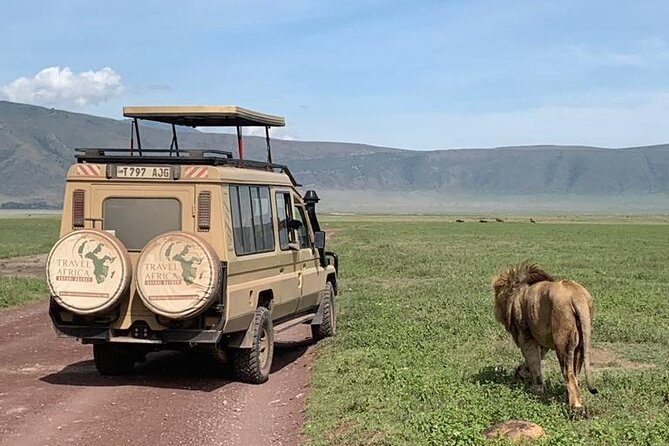
The Ngorongoro section introduces a different setting from the Serengeti’s open grassland. The area includes sweeping plains, rocky Moru Kopjes, unusual candelabra trees, and seasonal flowers. Elephants are noted as plentiful on the plains, and the area is also associated with the rare black rhinoceros.
Moru Kopjes are more than scenic rocks. They offer high viewpoints for predators and shelter for wildlife, much like the kopjes around Seronera. The supplied plan also refers to a gong rock and Maasai cave paintings showing elephants, shields, and abstract patterns. These details add cultural and archaeological interest to a route that is otherwise focused mainly on animals.
You spend the night at Simba Campsite after dinner. By this point, the day will have included a game drive, a transfer, and changing elevations around the conservation area. I would keep the evening simple and save your energy for the crater descent the next morning.
More ways to see the Ngorongoro Crater:
- 3 Days Serengeti & Ngorongoro Group Camping Safari
★ 5.0 · 574 reviews - 5 Days Camping Tarangire, Serengeti & Ngorongoro crater & Visiting Maasai
★ 5.0 · 229 reviews - 4 Days Join Group tour Tarangire Serengeti and Ngorongoro crater
★ 5.0 · 219 reviews - 4-Day Safari from Arusha: Tarangire, Serengeti and Ngorongoro
★ 5.0 · 173 reviews
Day three: entering Ngorongoro Crater
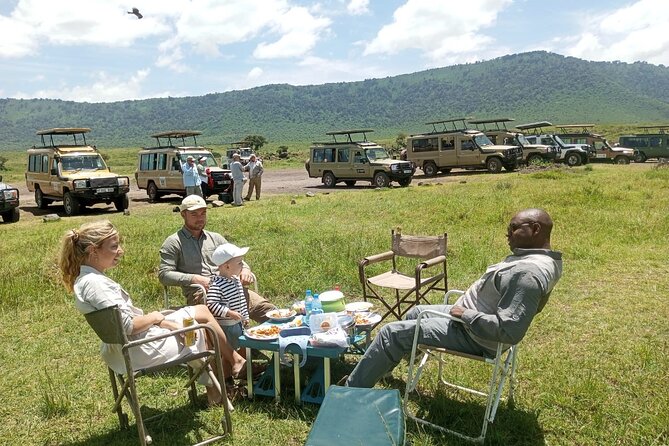
Breakfast is scheduled for 7 a.m., with the crater descent at 9 a.m. The plan calls for a half-day tour until about 3 p.m., with a picnic lunch. This is the clearest wildlife-focused block of the trip, and it is the part most likely to feel distinct from the Serengeti.
Ngorongoro Crater is described as a year-round place to look for the Big Five, with the possibility of seeing them in one day. That is an attractive prospect, but it should be treated as a strong possibility rather than a guarantee. Animal movements, weather, and luck still shape every game drive.
The crater’s enclosed setting can make wildlife easier to find than on the wider Serengeti plains. The area may offer wildebeest, gazelle, golden jackal, bat-eared fox, hippopotamus, wild dog, leopard, waterbuck, buffalo, eland, serval, and other hoofed animals.
The supplied wildlife notes also list several animals as absent or rarely seen in the crater, including giraffe, oribi, topi, spotted hyena, cheetah, and impala. That is useful context. Ngorongoro is not a place where every safari animal appears in equal numbers, so the experience depends on what you most want to see.
The conservation area also has cultural importance. Maasai families live in circular homesteads known as bomas, and the area is linked to research into early human evolution by Mary and Louis Leakey. The schedule does not promise a dedicated cultural visit or archaeological stop, so you should not assume those subjects receive more than an explanation from the guide.
After the crater visit, the schedule gives a late return to Arusha at about 7 p.m. That makes day three long. The stated end point is Arusha Tourist Inn, the same meeting point used at the start.
Guides, group size, and the human side of the safari
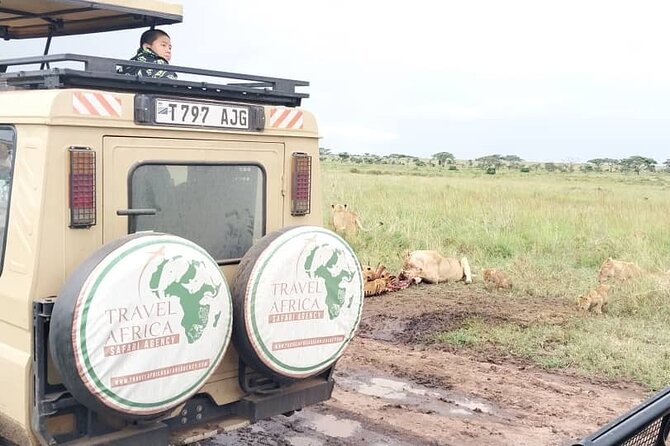
Your driver-guide is central to the quality of this trip. The guide handles the long route, explains what you are seeing, answers questions, and searches for wildlife. A good guide can turn a distant animal into a memorable sight by explaining where to look and why the animal is behaving that way.
Omary receives especially strong personal praise for his work on the safari. George is also described as friendly and hard-working, with a clear effort to help people see animals they hoped to find, including lions, monkeys, and elephants. Guide quality can vary by departure, so you cannot assume you will receive one of those specific guides, but you can request Omary if the operator allows it.
The maximum group size is six. That is a useful middle ground. You get the social feel of a shared safari and help keep the cost down, without the crowd of a large vehicle. A small group also means that patience and courtesy matter. If one person wants to watch a lion for twenty minutes and another wants to move on, the guide must balance those wishes.
The guide’s English is listed as the working language. If you have special interests, such as birds, geology, Maasai culture, or predator behavior, tell the guide early. The more clearly you explain what you want, the more useful the commentary can be.
Meals, timing, and what to prepare for
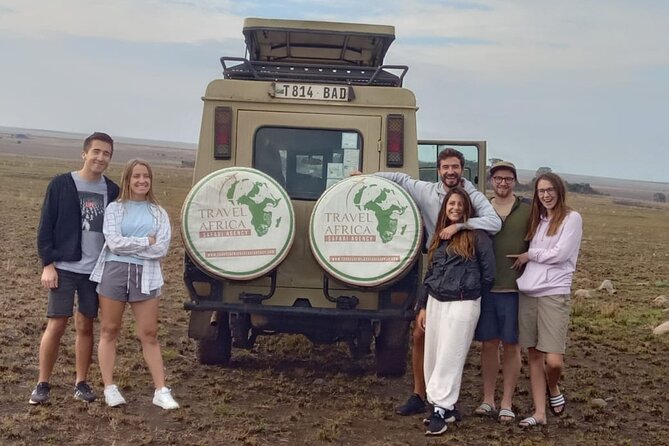
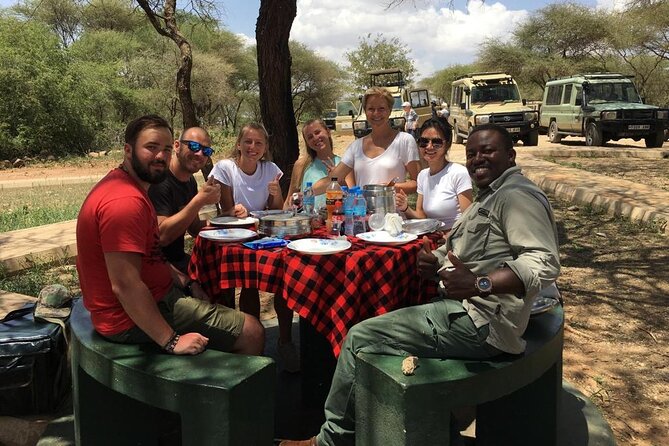
The price includes two breakfasts, three lunches, and two dinners. Lunches are listed as picnic or packed meals during the driving and game-drive days. You will not need to arrange your main food separately, which is helpful when moving through remote park areas.
The exact menus are not provided, so bring any snacks or drinks you personally need. Do not assume that every dietary requirement can be handled unless you confirm it before booking. The supplied information confirms meals, but not special diet arrangements.
The timing is demanding:
- Day one includes an early breakfast, morning pickup, a six-hour transfer, and a Serengeti game drive.
- Day two includes a half-day Serengeti drive, lunch, a transfer to Ngorongoro, and an overnight campsite.
- Day three includes breakfast, a 9 a.m. crater descent, a half-day visit, picnic lunch, and a return to Arusha around 7 p.m.
That schedule suits you if you have limited time in Tanzania and want maximum park access. It is less suitable if you want leisurely mornings, long stays at one campsite, or several nights in the same area.
Who should book this safari?
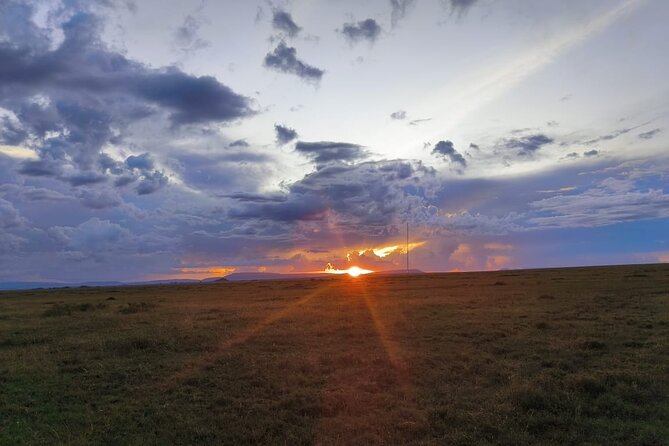
I would recommend this tour to a first-time safari visitor who wants to see both Serengeti and Ngorongoro without paying for a longer private itinerary. It also suits people who value wildlife time more than hotel comfort and who are comfortable with long drives and basic camping.
The trip works well for solo visitors, couples, and small groups who like sharing a vehicle. The six-person limit keeps the experience personal, while included meals and park fees simplify the budget.
I would hesitate to recommend it to anyone who needs reliable showers, electricity, clean lodge rooms, or a slow pace. The campsite complaint is specific and serious enough that comfort-focused visitors should ask detailed questions before paying. You should also allow for a very long final day before any important evening plans in Arusha.
Cancellation is free if you cancel at least 24 hours before the start time. Changes or cancellations inside that window are not accepted for a refund, and the operator may offer another date or a full refund if the minimum group size is not reached.
Should you book it?
Book this safari if your priority is seeing two major Tanzanian wildlife areas in three days at a controlled price. The combination of Serengeti plains, Seronera kopjes, Ngorongoro Crater, included meals, park fees, and a six-person group gives you a lot for $815.
Before booking, confirm the pickup time, campsite facilities, included camping gear, and your dietary needs. If the operator can place you with a strong guide such as Omary or George, that may improve an already promising trip. Go in ready for long drives and simple nights, and this can be an excellent introduction to Tanzania’s safari country.
FAQ
Where does the safari start?
The safari starts at Arusha Tourist Inn on Sokoine Road in Arusha, Tanzania.
Where does the safari end?
The activity ends back at the starting meeting point, Arusha Tourist Inn.
What time does the safari start?
The listed start time is 7 a.m., while the day one schedule says breakfast is at 7 a.m. and pickup is at 8 a.m. Confirm the exact pickup time with the operator.
How many people can join the group?
The maximum group size is six travelers.
Are park fees included?
Yes. All park fees are included in the price.
Are meals included?
Yes. The package includes two dinners, three lunches, and two breakfasts.
Is camping equipment included?
Yes. Camping gear is included, although the specific items supplied are not listed.
Is a guide included?
Yes. An English-speaking professional driver-guide is included.
What is not included?
Tips and gratitude for the driver-guide and safari cook are not included. Travel insurance is also not included.
More Safaris
- 5 Days Group Camping Safari
★ 5.0 · 730 reviews - 7-Day Premium Luxury Tanzania Safari All-Inclusive
★ 5.0 · 426 reviews - 8 Days Great Wildebeest Calving Migration Safari from Arusha
★ 5.0 · 254 reviews - Group Safari 7 Days in Tanzania’s Main Parks
★ 5.0 · 240 reviews
More Serengeti Safaris
- 5-Day Highlights mid-Range Crater, Serengeti, Tarangire
★ 5.0 · 296 reviews - 3-Day Classic Serengeti Safari
★ 5.0 · 263 reviews - Private 6-Day Tarangire Manyara Crater and Serengeti with Mid-Range Lodges
★ 5.0 · 238 reviews - 10-Day Serengeti Wildebeest Migration Safari from Arusha
★ 5.0 · 218 reviews
Just added around Arusha
- 5 Days Safari Tarangire, Serengeti, and Ngorongoro Crater★ 5.0 · 3 reviews
- Love lives in Africa★ 5.0 · 3 reviews
- 5 Days of Safari, Culture & Hot Springs – Tour from Arusha★ 5.0 · 3 reviews
- Arusha National Park Safari by Jeep★ 4.5 · 3 reviews
- 5Days Family _Group Tour Lodging Mid-Range in the Jungle★ 5.0 · 3 reviews
- Serengeti & Ngorongoro 3 Days Budget Safari★ 5.0 · 3 reviews
- 2 Days Tarangire and Ngorongoro Crater Tour★ 5.0 · 3 reviews
- 7 Days PRIVATE Best of Tanzania Safari *Departing everyday*★ 5.0 · 3 reviews
Serengeti Safaris, compared.

Serengeti Balloon Safari and authentic bush breakfast
Read our review →
Balloon Safari & Bush Breakfast in Serengeti – Miracle Experience
Read our review →
3 Days Serengeti & Ngorongoro Group Camping Safari
Read our review →
5-Day Highlights mid-Range Crater, Serengeti, Tarangire
Read our review →


Private 6-Day Tarangire Manyara Crater and Serengeti with Mid-Range Lodges
Read our review →
5 Days Camping Tarangire, Serengeti & Ngorongoro crater & Visiting Maasai
Read our review →Browse the lists this tour appears in