
Reviewed · SERENGETI SAFARIS
4-Day Tour to Tarangire, Serengeti and Ngorongoro
Wildlife takes center stage here. This four-day safari links three of northern Tanzania’s biggest names: elephant country in Tarangire, open plains in the Serengeti, and the wildlife-filled Ngorongoro Crater. I like the small group limit of six and the fact that the price includes lodging, transport, a professional guide, and all listed meals. The main drawback is the pace: four days covers a lot of ground, so you should expect long days and limited time to slow down.
I also like the strong praise for the guide service, especially the reports of excellent animal spotting and clear explanations of wildlife and the environment. Assad is singled out as friendly and well informed, while another review praises a guide called excellent at finding animals. Keep in mind that the $900 price excludes tips, flights, personal items, and extra nights, and the booking is non-refundable.
In This Review
- Five things to know before you book
- Why this four-day route works
- Day one: elephants beneath Tarangire’s baobabs
- Day two: crossing into the Serengeti
- Day three: a second chance on the Serengeti plains
- Day four: the Ngorongoro Crater finale
- What the $900 price really covers
- Guides, transport, and the daily rhythm
- Who should book this safari
- Final verdict: a strong short safari with a fast pace
- FAQ
- Where does the tour start?
- What time does the tour start?
- Where does the tour end?
- How many people can join the tour?
- Are meals included?
- Is accommodation included?
- What parks does the tour visit?
- Can I cancel for a refund?
Five things to know before you book
- Elephants and baobabs set the tone in Tarangire: The first day gives you both game drives and time for photographs, nature walks, and a Maasai cultural encounter.
- The Serengeti receives two full days: This is the heart of the trip, with repeated chances to search for lions, cheetahs, elephants, giraffes, and the Great Migration.
- Ngorongoro offers a dramatic final safari: The crater’s walls create a natural amphitheater of grassland, acacia woodland, and wildlife.
- The group is capped at six people: That is a useful size for a safari vehicle, especially when everyone wants a view or a chance to stop for photographs.
- Meals and lodging are built into the price: Breakfast, lunch, and dinner are included across the four days, along with all accommodation and transport.
- The 6:00 am start matters: You meet at Clocktower Roundabout in Arusha, and the activity returns there at the end.
Why this four-day route works
This route is designed for someone who wants a concentrated introduction to Tanzania’s northern safari circuit. You move from Tarangire to the Serengeti, spend two days there, then finish at Ngorongoro. The order gives the Serengeti the most time, which makes sense because it is the largest and most varied part of the trip.
I like that the program does not treat each park as a quick photo stop. Tarangire receives attention for wildlife, scenery, photography, culture, and short guided walks. The Serengeti gets two separate days of game drives. Ngorongoro then provides a final change of setting, with a compact crater floor framed by steep walls.
That said, the schedule is full. You should be ready for early starts, long drives between parks, and a routine shaped by wildlife sightings rather than a fixed timetable. Safari days rarely follow the clock in a neat way. An animal near the road can change the plan, and that flexibility is part of the appeal.
More ways to see the Ngorongoro Crater:
- 3 Days Serengeti & Ngorongoro Group Camping Safari
★ 5.0 · 574 reviews - 5 Days Camping Tarangire, Serengeti & Ngorongoro crater & Visiting Maasai
★ 5.0 · 229 reviews - 4 Days Join Group tour Tarangire Serengeti and Ngorongoro crater
★ 5.0 · 219 reviews
Day one: elephants beneath Tarangire’s baobabs
Tarangire opens the trip with one of Tanzania’s most recognizable scenes: large elephant groups moving among old baobab trees. The park is also presented as a good place to search for lions, giraffes, and other wildlife around the Tarangire River.
The river matters because water draws animals, making it a useful place for patient viewing. Your guide can help explain what you are seeing and why animals gather in particular areas. The supplied schedule gives six hours to the first Tarangire stop and another six hours to the second, though you should treat those blocks as a guide rather than a promise of twelve separate hours in one location.
The second part of the day shifts toward photography, a Maasai cultural encounter, and guided nature walks. That variety is welcome. A safari can become tiring if every hour is spent scanning from a vehicle, so a walk or cultural visit can give the day a different rhythm.
The Maasai visit is described as a chance to learn about traditional ways of life. The available details do not specify the village, activities, or whether any purchases are expected, so it is sensible to ask your operator for the exact plan before departure. The same applies to nature walks, since the information does not state where they take place or how long they last.
Tarangire is a strong opening because it gives you big animals, distinctive scenery, and smaller details in one day. If elephants are high on your list, this is one of the most promising parts of the route. If your priority is the Great Migration, you may find yourself eager to reach the Serengeti on day two.
Day two: crossing into the Serengeti
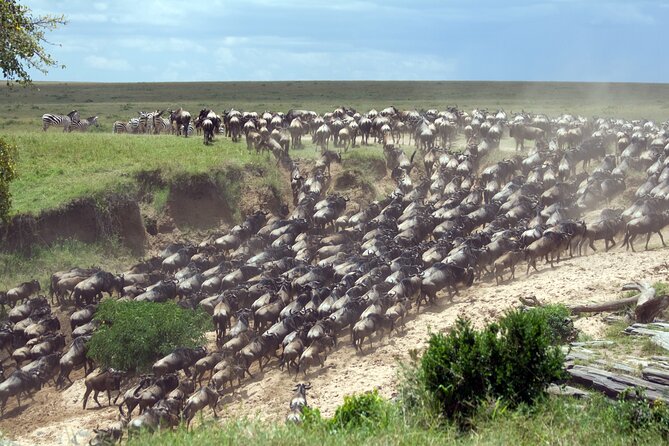
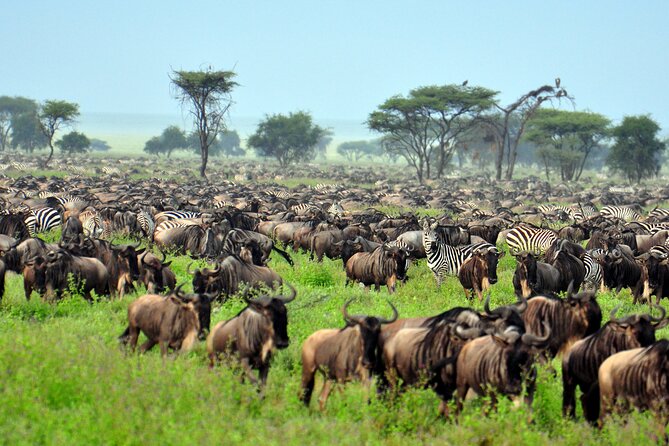
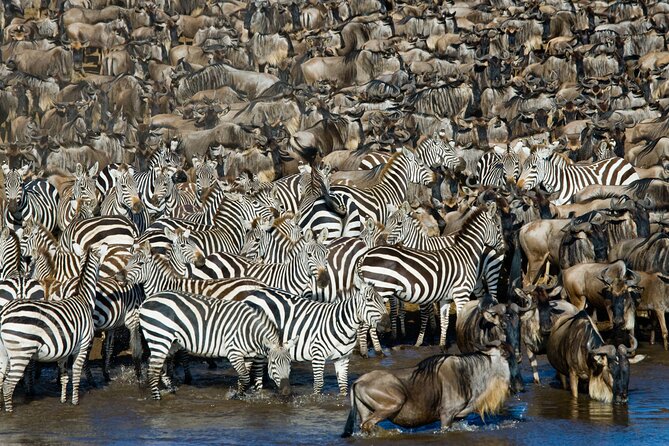
The second day turns toward the Serengeti, where the focus shifts to broad plains and large herds. The program highlights wildebeest, zebras, and gazelles moving in search of fresh grazing, along with lions, cheetahs, elephants, giraffes, and many bird species.
The Great Migration is a major draw, but timing is crucial. The tour description presents it as a central experience without giving travel dates or promising a particular crossing or herd location. You should not book this trip expecting a guaranteed river crossing. Nature sets the schedule, and the location of the herds changes.
The Seronera Valley receives special attention. It is described as a place where lions, cheetahs, and elephants may be found, with game drives continuing into the golden evening light. The combination of open country and concentrated wildlife is what makes this part of the Serengeti so compelling.
The main tradeoff is travel time. Reaching the Serengeti from the Arusha area takes time, and the day may feel like a blend of road travel and safari rather than six uninterrupted hours of animal viewing. Still, the route earns its place because the Serengeti is the centerpiece of the trip, not a brief add-on.
A good guide makes a real difference here. Feedback about this company repeatedly praises animal spotting, clear explanations, friendly service, and reliable communication. One named guide, Assad, is described as especially friendly and well informed. Since guide assignment can vary, you should not assume he will lead your group, but the praise gives you a useful standard to expect.
Day three: a second chance on the Serengeti plains
The third day stays in the Serengeti, which is the smartest scheduling choice in the program. Two days give you more time to look for wildlife and less pressure to regard one sighting as your only chance.
The schedule again highlights the Great Migration, the Big Five, the Seronera River, and sunset over acacia-dotted plains. The Big Five are listed as lion, elephant, buffalo, leopard, and rhinoceros. You might also see cheetahs, giraffes, hippos, crocodiles, and a wide range of birds, but no safari can promise every species.
The Seronera River offers a different setting from the open grassland. Water can attract wildlife, and the river area may give your guide another place to search when the plains are quiet. The important word is search. Safari success depends on conditions, animal movement, weather, and the skill of the guide.
I would use this day to ask questions and pay attention to the smaller details, not just the famous animals. The supplied experience places value on explanations of the environment, and that can turn a series of sightings into a better understanding of how the park works.
Two Serengeti days also make the trip more forgiving. If day two involves long driving or sparse sightings, day three gives you another full opportunity. The downside is that you do not get a spare day elsewhere. If you want more cultural time, more walking, or a slower lodge-based holiday, this itinerary may feel too focused on game drives.
More Serengeti safaris to compare:
- Serengeti Balloon Safari and authentic bush breakfast
★ 5.0 · 2,480 reviews - Balloon Safari & Bush Breakfast in Serengeti – Miracle Experience
★ 5.0 · 1,646 reviews - 5-Day Highlights mid-Range Crater, Serengeti, Tarangire
★ 5.0 · 296 reviews - 3-Day Classic Serengeti Safari
★ 5.0 · 263 reviews
Day four: the Ngorongoro Crater finale
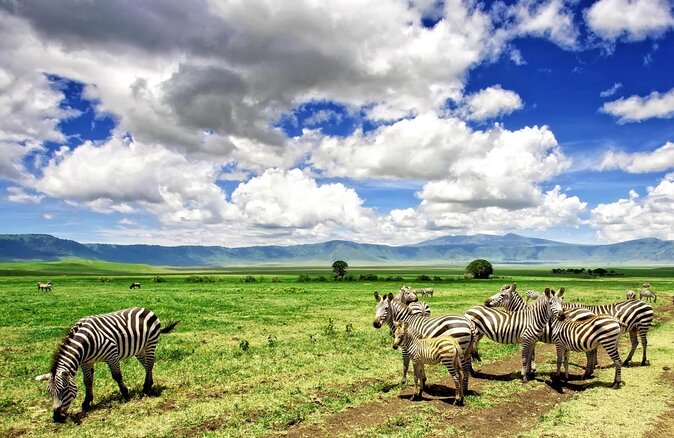
Ngorongoro brings a dramatic change of scenery. The crater is described as the world’s largest intact caldera, created when a volcanic mountain collapsed. Its walls form a natural amphitheater, with grassy plains and acacia woodland supporting a wide range of animals.
The final day includes a crater game drive and a possible Maasai village visit. The Big Five are again a major goal, though sightings are never guaranteed. The compact shape of the crater gives the day a strong sense of place: instead of scanning an apparently endless plain, you are viewing wildlife inside a huge natural bowl.
The crater is often a satisfying final stop because it brings together several types of scenery in one area. You may see open grassland, woodland, and other habitats during the same outing. The description also points to the crater’s scenic value, so make time to look beyond the animals and notice the scale of the caldera walls.
The cultural visit deserves the same practical question as the Tarangire encounter. Ask what is included, how long it lasts, and whether it is optional. The tour information confirms a Maasai cultural component, but it does not provide a detailed schedule.
With only one day in Ngorongoro, you get a strong introduction rather than an extended stay. That is enough for a first safari, but people who prefer slow mornings or several crater drives should consider adding nights before or after the tour. Extra accommodation is not included.
What the $900 price really covers
At $900 per person, the package offers a useful set of inclusions. You receive all accommodation, transportation, a professional guide, parking fees, three breakfasts, three dinners, and four lunches. For a four-day safari across three major parks, that can represent good value, particularly if you want one organized price instead of arranging each part yourself.
The six-person maximum also helps explain the value. A small group can make it easier to share a vehicle, coordinate stops, and hear the guide. It is not a private safari, so you still share the experience with other people, but the limit is more appealing than a large coach-style group.
The wording about accommodation refers to luxury lodges, while one detailed review describes the lodging as good value for money. Because no lodge names or room categories are supplied, do not assume a specific property or level of luxury. Ask for the accommodation list before paying if sleeping arrangements matter to you.
You should budget separately for tips, personal items, international flights, and extra nights in Arusha. The package does not cover accommodation before or after the four-day program. Meals are included as listed, but the information does not say how drinks, snacks, or special dietary requests are handled.
The non-refundable rule is important. You cannot change or cancel for a refund, so confirm your dates, airport plans, and pre-tour accommodation before booking.
Guides, transport, and the daily rhythm
The guide is one of the strongest reasons to consider this tour. The feedback describes excellent animal spotting, good explanations of wildlife and the environment, friendly service, and clear communication. Those qualities matter more than fancy wording on a safari because your guide helps decide where to search and how long to watch.
You begin at 6:00 am at Clocktower Roundabout in Arusha. Pickup is offered, but the stated meeting point is the roundabout, so confirm the exact pickup arrangement and time when you book. The activity ends back at the same meeting point.
All transportation is included. The itinerary does not specify the vehicle type, luggage limits, or drive times, so ask those questions if you are carrying large bags or connecting with another tour. The long route between Arusha, Tarangire, Serengeti, and Ngorongoro makes transport a central part of the experience, not a minor detail.
The early start and long days suit people who want to make the most of limited time. They may be harder for anyone who needs a relaxed schedule. Most people can participate according to the supplied information, but the program does not give detailed mobility guidance, so ask the operator about vehicle access and walking requirements if needed.
Who should book this safari
I would recommend this trip to a first-time safari visitor who wants the classic northern Tanzania route in four days. You get elephants, baobabs, the Serengeti, the possibility of the Great Migration, and Ngorongoro’s crater in one compact package.
It also suits people who value organization. Transport, lodging, meals, parking fees, and a guide are arranged for you, while the six-person limit keeps the group relatively small. The strongest praise is aimed at the company’s organization, staff, chef, communication, and guide service.
You may want a longer or different trip if you dislike long drives, need unscheduled rest time, or want a very specific migration event. You should also consider another option if you want guaranteed accommodation standards, since lodge names and room details are not provided.
Final verdict: a strong short safari with a fast pace
I like the structure of this four-day tour. Tarangire gives you elephants and distinctive trees, the Serengeti receives two days, and Ngorongoro finishes the trip with a powerful natural setting. The guide service receives the most consistent praise, especially for spotting animals and explaining what you see.
The $900 cost looks reasonable for the listed inclusions, but you need to add tips, flights, personal spending, and any extra nights. I would book it if you want a compact, well-organized introduction to Tanzania and accept early starts and long road days. I would first ask for the lodge names, vehicle details, guide confirmation, and seasonal migration expectations before making the non-refundable payment.
FAQ
Where does the tour start?
The tour starts at Clocktower Roundabout in Arusha, Tanzania.
What time does the tour start?
The stated start time is 6:00 am.
Where does the tour end?
The activity ends back at the meeting point in Arusha.
How many people can join the tour?
The group is limited to a maximum of six people.
Are meals included?
Yes. The package includes three breakfasts, three dinners, and four lunches.
Is accommodation included?
Yes. All accommodation is included. Extra accommodation before or after the tour is not included.
What parks does the tour visit?
The route visits Tarangire National Park, Serengeti National Park, and the Ngorongoro Conservation Area.
Can I cancel for a refund?
No. The experience is non-refundable and cannot be changed for any reason.
More 4-Day Experiences
- 4 Days Group Camping Safari
★ 5.0 · 1,101 reviews - 4 Days safari Tour Tanzania
★ 5.0 · 159 reviews - 4 Days Tarangire, Serengeti and Ngorongoro Mid-Range Group Safari
★ 5.0 · 84 reviews - 4 Days Tanzania Lodge Safari With Two Nights at Serengeti
★ 5.0 · 62 reviews
More Tarangire Safaris
- Private 6-Day Tarangire Manyara Crater and Serengeti with Mid-Range Lodges
★ 5.0 · 238 reviews - 4-Day Safari from Arusha: Tarangire, Serengeti and Ngorongoro
★ 5.0 · 173 reviews - 2 Days Tarangire and Ngorongoro Group Camping Safari
★ 5.0 · 146 reviews - 4 Days Tarangire Serengeti Ngorongoro Crater
★ 5.0 · 117 reviews
Just added around Arusha
- 5 Days Safari Tarangire, Serengeti, and Ngorongoro Crater★ 5.0 · 3 reviews
- Love lives in Africa★ 5.0 · 3 reviews
- 5 Days of Safari, Culture & Hot Springs – Tour from Arusha★ 5.0 · 3 reviews
- Arusha National Park Safari by Jeep★ 4.5 · 3 reviews
- 5Days Family _Group Tour Lodging Mid-Range in the Jungle★ 5.0 · 3 reviews
- Serengeti & Ngorongoro 3 Days Budget Safari★ 5.0 · 3 reviews
- 2 Days Tarangire and Ngorongoro Crater Tour★ 5.0 · 3 reviews
- 7 Days PRIVATE Best of Tanzania Safari *Departing everyday*★ 5.0 · 3 reviews
Serengeti Safaris, compared.

Serengeti Balloon Safari and authentic bush breakfast
Read our review →
Balloon Safari & Bush Breakfast in Serengeti – Miracle Experience
Read our review →
3 Days Serengeti & Ngorongoro Group Camping Safari
Read our review →
5-Day Highlights mid-Range Crater, Serengeti, Tarangire
Read our review →


Private 6-Day Tarangire Manyara Crater and Serengeti with Mid-Range Lodges
Read our review →
5 Days Camping Tarangire, Serengeti & Ngorongoro crater & Visiting Maasai
Read our review →Browse the lists this tour appears in