
Reviewed · SERENGETI SAFARIS
4 Days Tarangire Serengeti Ngorongoro Crater
Safari time is short, but the wildlife list is long. This four-day trip from Arusha packs Tarangire, Serengeti, and Ngorongoro Crater into one fast-moving route, with camping, meals, park fees, transport, and water included. I like the strong Big Five potential and the small group limit of seven people.
I also like the value. At $900 per person, the price covers three major protected areas and four lunches, along with camping transport and meals. The main caution is the pace: long drives and early starts leave little spare time, so this suits you best if wildlife matters more than slow mornings or polished lodge comfort.
In This Review
- Key points to know before booking
- Three famous parks in four busy days
- Day one: elephants and evening light in Tarangire
- Day two: the road to Serengeti
- Day three: sunrise in Serengeti and a move to the crater
- Day four: the 650-meter descent into Ngorongoro Crater
- What the $900 price really covers
- The people behind the vehicle
- What to pack and how to pace yourself
- Who should book this four-day safari?
- Should you book it?
- FAQ
- Where does the safari start and end?
- How long is the experience?
- Which national parks and protected areas are included?
- What is included in the price?
- Are tips and visas included?
- How many people can join the group?
- Is a Maasai village visit included?
- Can I cancel for a full refund?
Key points to know before booking
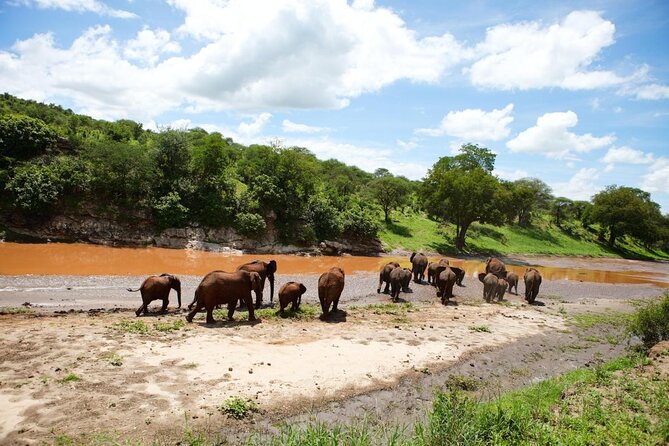
- Elephants are a major Tarangire draw: Herds of 10 to 20 animals are common, and groups of up to 30 may appear.
- The Serengeti is reached on day two: You get an evening game drive near Seronera, followed by an early morning outing on day three.
- Ngorongoro Crater gives you a concentrated final safari: The crater floor is reached by a 650-meter descent, with a chance to see rhinoceros.
- The group is capped at seven people: That is small enough to make the safari vehicle more manageable than a large coach tour.
- Camping keeps the cost down: You trade lodge comfort for a lower price and a closer connection to the route.
- The guide and cook matter: David is named as a driver and Richard as the chef in the available feedback, with both praised for making the group feel at home.
Three famous parks in four busy days
This is a short Northern Circuit safari with a clear purpose: put as much wildlife as possible into four days without moving into luxury pricing. You start and finish in Arusha, which makes the trip practical if you are building a Tanzania visit around the city.
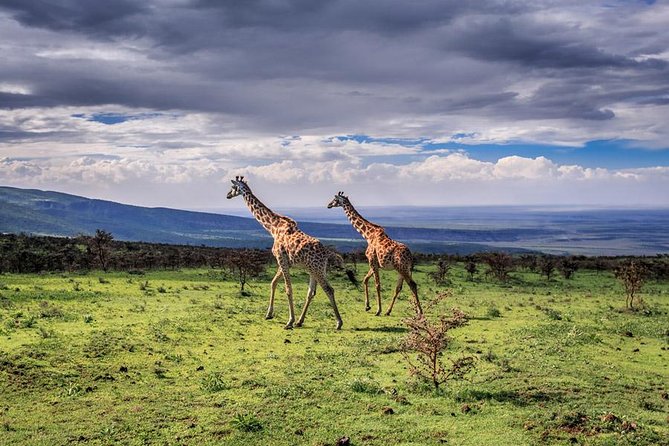
The route covers Tarangire National Park, Serengeti National Park, and the Ngorongoro Conservation Area. These parks offer different kinds of safari scenery and animal viewing. Tarangire is known here for elephant sightings, the Serengeti brings the wide-open game-viewing experience, and Ngorongoro offers a compact crater setting where animals gather around permanent water.
I like that the route does not spend all four days in one place. You get variety, but the cost is a fairly demanding schedule. The first two days involve significant road time, while days three and four begin early. If you want relaxed camp mornings, this is not that kind of trip.
The tour accepts a maximum of seven people. That number matters. A smaller vehicle group generally gives you more room to look out, less crowding at stops, and a better chance to hear the guide clearly. The available rating is 4.9 from 117 reviews, with 97 percent recommending the experience, which points to a strong overall level of satisfaction.
More ways to see the Ngorongoro Crater:
- 3 Days Serengeti & Ngorongoro Group Camping Safari
★ 5.0 · 574 reviews - 5 Days Camping Tarangire, Serengeti & Ngorongoro crater & Visiting Maasai
★ 5.0 · 229 reviews - 4 Days Join Group tour Tarangire Serengeti and Ngorongoro crater
★ 5.0 · 219 reviews
Day one: elephants and evening light in Tarangire
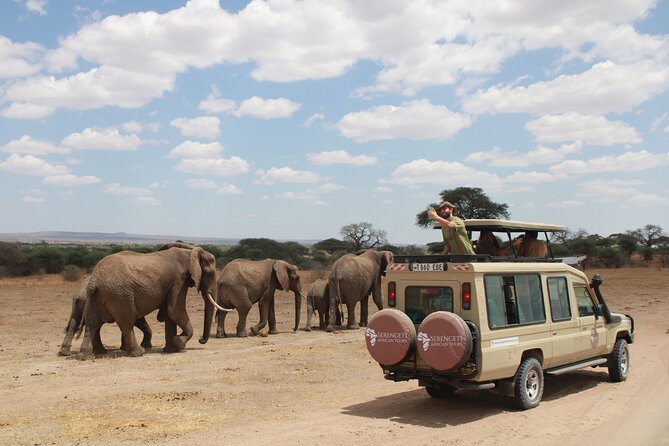
After breakfast, pickup takes place at your Arusha hotel. You then make the drive to Tarangire National Park, carrying a picnic lunch and continuing into the park for a game drive. The stated driving and touring time is about six hours, so this is a full opening day rather than a gentle introduction.
Tarangire is the first place where the safari earns its keep. The itinerary specifically highlights elephant herds of 10 to 20 animals, sometimes reaching 30. That is an excellent reason to begin here, especially if elephants are high on your list. You may also see buffalo, impala, zebra, warthogs, giraffe, and other animals.
Keep your eyes above ground, too. The guidance specifically warns you to watch the tops of trees for leopard. A sighting is never promised, but the reminder is useful. Safari viewing is not just about scanning the road ahead. Animals can be low in the grass, crossing open ground, or sitting almost invisibly in a tree.
The game drive continues until late afternoon or evening before you go to a campsite for dinner and overnight accommodation. Since the trip uses camping, you should expect a simpler setup than a lodge safari. That is part of the reason the price stays at $900, but it also means this trip is better for someone comfortable with basic camp living.
The practical issue is time. Arusha to Tarangire and then a full game drive makes day one long. You should be ready for a full vehicle day, with wildlife viewing breaking up the road time. The reward is that you get into a major park immediately, rather than losing your first day to a transfer.
Day two: the road to Serengeti
Day two starts with an early breakfast and packing the camping equipment into the safari vehicle. You then leave camp for Serengeti National Park, passing through the Manyara area and along the Rift Valley escarpment. The route itself is part of the experience, but it is also one of the trip’s harder stretches.
There is an optional Maasai village visit on the way to Serengeti. Because it is optional, you should treat it as an extra choice rather than a guaranteed central part of the program. If you want more cultural contact, this may add interest to a long transfer day. If your priority is reaching the Serengeti with as much daylight as possible, you may prefer to keep moving.
The itinerary allows around six hours for this portion, with arrival in the Serengeti by evening. You then have an evening game drive toward Seronera Campsite, where dinner and overnight camping follow.
That evening drive is valuable because it gives you your first proper look at the Serengeti rather than simply arriving after dark. Still, the combination of packing, driving, and game viewing makes this another demanding day. I would not choose this route expecting long stops, leisurely meals, or a great deal of personal time.
Serengeti is the emotional center of the safari for many people because the name carries such weight. Here, the practical benefit is simple: you get both an evening drive on arrival and a morning drive the next day. That gives you two different viewing periods in a short stay.
Day three: sunrise in Serengeti and a move to the crater
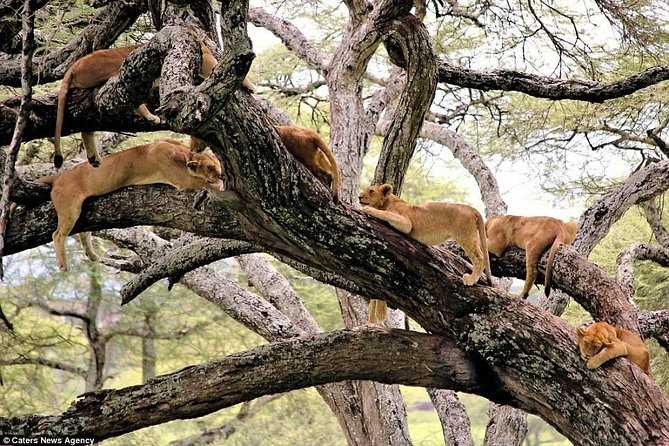
The third day begins around 6 a.m. with a hot cup of coffee before an early morning game drive in the Serengeti. The timing is important. Morning is cooler, the light changes quickly, and the route gives you a chance to see the park before the heat of the day builds.
Bring warm clothing. The provided advice specifically notes that mornings can be chilly, even though Tanzania is generally associated with heat. A jacket or warm layer is a small item that can make an open-vehicle morning much more pleasant.
The game drive continues until midday. You then return to camp for a full breakfast and lunch, described as a brunch-style meal, before leaving for the Ngorongoro Conservation Area. The shift from wildlife viewing to a road transfer comes fairly quickly, so you should expect the day to feel split between safari and relocation.
The route continues with game viewing on the way to Simba Campsite near Ngorongoro. Dinner and overnight camping take place there. This is a useful overnight position for the final crater visit, but it also means you are changing camp again after only one night in the Serengeti.
I like the early Serengeti outing because it protects one of the best available wildlife windows on this short schedule. The drawback is that you do not get a full, unhurried Serengeti day. If the Serengeti is your main reason for coming to Tanzania, a longer itinerary would give you more time there.
More Serengeti safaris to compare:
- Serengeti Balloon Safari and authentic bush breakfast
★ 5.0 · 2,480 reviews - Balloon Safari & Bush Breakfast in Serengeti – Miracle Experience
★ 5.0 · 1,646 reviews - 5-Day Highlights mid-Range Crater, Serengeti, Tarangire
★ 5.0 · 296 reviews - 3-Day Classic Serengeti Safari
★ 5.0 · 263 reviews
Day four: the 650-meter descent into Ngorongoro Crater
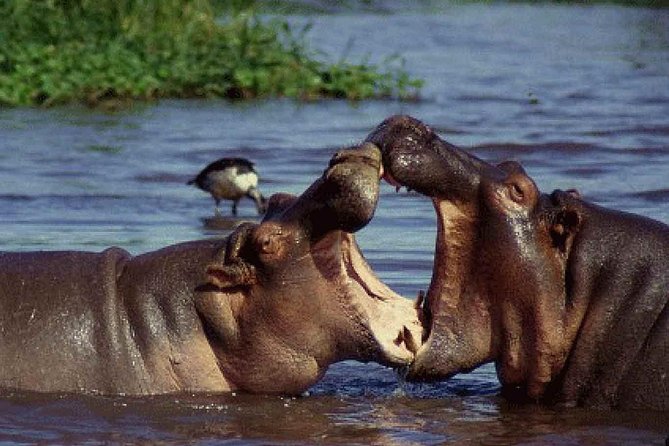
After breakfast, you make a short drive to the descent gate and then drive 650 meters down to the crater floor. The final day includes a half-day crater game drive, followed by an ascent to the rim, lunch at camp, and the drive back to Arusha.
Ngorongoro Crater is a strong finish because the viewing area is compact compared with the broad Serengeti. The crater has permanent water, so many animals remain in the area throughout the year, although they are free to leave and return. That water source improves the chance of seeing a good range of wildlife during a limited visit.
Rhinoceros are specifically mentioned as a possible sighting. No honest safari operator can guarantee one, but the crater is presented as the place where luck may deliver that memorable final sighting. You may also see animals that stay in the crater because of its year-round water.
The half-day format is sensible for a four-day route. It gives you enough time for a proper look around without adding another night. On the other hand, the climb back to the rim and the return drive to Arusha make this another long day. Your arrival time is not stated, so do not build a tight onward connection around the end of the safari.
For me, the crater is what makes this route feel complete. Tarangire gives you elephants, Serengeti gives you the broad safari setting, and Ngorongoro provides a final concentrated game drive. You see three distinct protected areas rather than repeating the same type of outing.
What the $900 price really covers
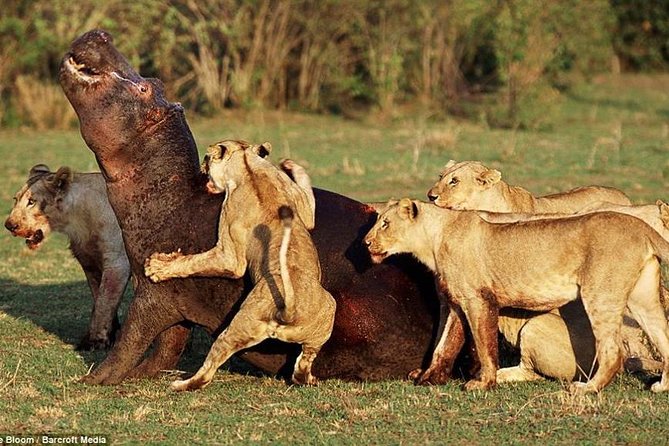
The $900 price includes transport, all park fees, all meals, mineral water, and camping arrangements implied by the itinerary. It also includes four breakfasts, four lunches, and three dinners. That is a substantial package for a four-day safari visiting three major parks.
The value becomes clearer when you separate the costs. Park fees can make Northern Circuit safaris expensive before transport, food, and guiding are counted. Here, those major charges are bundled into one price. You are not paying a low headline rate and then discovering that park admission or meals cost extra.
The trade-off is comfort. This is a camping safari, not a lodge-based escape. The description does not specify tent style, beds, bathrooms, or shower arrangements, so you should ask the operator for those details before paying. The same applies to the exact safari vehicle and what camping equipment is supplied.
Meals are included, which helps keep your daily spending predictable. Mineral water is also supplied. Tips and visas are not included, so you need to budget separately for those. The listed price is per person, and group discounts are available, though the amount of any discount is not stated.
I think the price is particularly attractive for a first safari with limited time. You get three headline destinations and a small group cap without moving into a premium price bracket. If you already know you want private guiding, high-end accommodation, or extra time in the Serengeti, you may prefer to spend more on a longer or more comfortable plan.
The people behind the vehicle
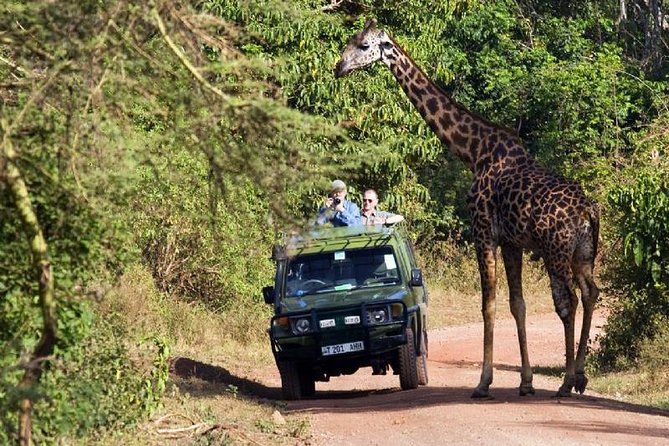
The quality of a budget safari often comes down to the people running it. David is identified as the driver and Richard as the chef in the available feedback. The strongest praise focuses on their ability to make the group feel at home despite the complicated work of a four-day camping trip.
That detail matters. You spend many hours in the vehicle, at camps, and around meals. A steady driver can make long transfers easier, while a good cook has a large effect on how comfortable the whole trip feels. The available comments describe the days as fun, with good food and meaningful interaction.
I would ask for confirmation that David and Richard will be on your departure if those names matter to you. Staff assignments can change, and the supplied information does not promise that they lead every trip. Still, their names give you useful points of contact when asking the company about guiding and meals.
The group limit of seven is another practical advantage. It is not a private safari, but it is small enough to avoid the feel of a large bus tour. Group dynamics still matter, so this works best if you are comfortable sharing the vehicle and following a common schedule.
What to pack and how to pace yourself
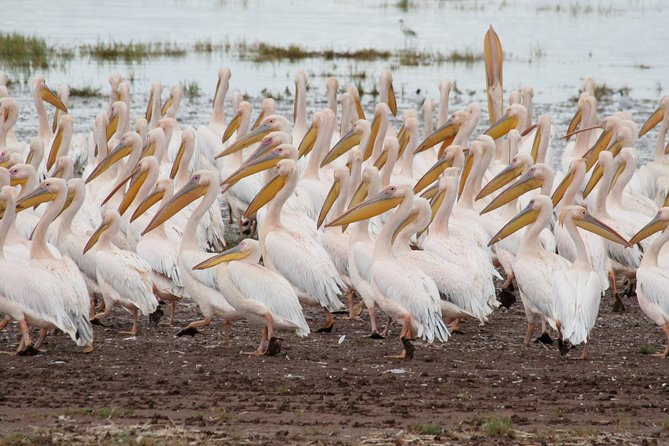
The morning Serengeti drive can be chilly, so pack warm clothes even if your general expectation is hot weather. You should also be prepared for long vehicle days, early breakfasts, picnic meals, and repeated camp changes.
A useful short-safari packing list includes:
- Warm layers for early drives
- Comfortable clothes for long periods in the vehicle
- Personal items needed for camping
- Any required visa documents
- Money for tips, since tips are excluded
The water supply is a helpful inclusion, but the exact amount is not stated. If you have specific hydration needs, ask how much mineral water is provided each day.
This trip is physically manageable for most people, since the operator states that most participants can take part. Still, the schedule demands patience. You will be sitting in a safari vehicle for long stretches, waking early, and moving between camps. The activity is not presented as a walking safari or a physically strenuous trek.
Pickup is offered in Arusha, and the activity ends back at the meeting point. That start and finish make it useful for an Arusha-based trip, but you should allow breathing room before a flight or another fixed booking because the final return time is not given.
Who should book this four-day safari?
I would recommend it to you if your Tanzania visit is short, your main goal is wildlife, and you want to control costs. It is also a good fit if you like the idea of camping and prefer seeing three major parks instead of spending all your time in one area.
It suits first-time safari visitors who want a broad introduction. Tarangire offers a strong elephant focus, the Serengeti supplies classic game-drive appeal, and Ngorongoro gives you a final chance at concentrated viewing, including the possibility of rhinoceros.
I would hesitate if you dislike early starts, long drives, shared transport, or basic accommodation. I would also hesitate if you want deep cultural programming, since the Maasai village visit is optional and only briefly described.
Free cancellation is available if you cancel at least 24 hours before the experience starts. Cancellations made less than 24 hours ahead are not refunded, and late changes are not accepted. Cutoff times use local time.
Should you book it?
Book this safari if three famous parks in four days matter more to you than comfort and spare time. At $900, the included park fees, transport, meals, water, and small group size make it a strong budget option.
Choose a longer safari if you want more time in the Serengeti or a slower rhythm. For a compact first look at Tanzania’s Northern Circuit, though, this plan is well judged. Go in ready for early mornings, long drives, camping, and a packed schedule, and you will be set up to appreciate the wildlife rather than worry about the pace.
FAQ
Where does the safari start and end?
The safari starts in Arusha, Tanzania, with pickup offered. It ends back at the meeting point in Arusha.
How long is the experience?
The safari lasts approximately four days.
Which national parks and protected areas are included?
The route visits Tarangire National Park, Serengeti National Park, and the Ngorongoro Conservation Area, including Ngorongoro Crater.
What is included in the price?
Transport, all park fees, all meals, mineral water, four breakfasts, four lunches, and three dinners are included.
Are tips and visas included?
No. Tips and visas are not included in the tour price.
How many people can join the group?
The activity has a maximum of seven participants.
Is a Maasai village visit included?
A Maasai village visit is offered as an optional activity on the way to Serengeti. It is not described as a required part of the main route.
Can I cancel for a full refund?
Yes, if you cancel at least 24 hours before the experience starts. Cancellations made less than 24 hours before the start time are not refunded.
More 4-Day Experiences
- 4 Days Group Camping Safari
★ 5.0 · 1,101 reviews - 4 Days safari Tour Tanzania
★ 5.0 · 159 reviews - 4 Days Tarangire, Serengeti and Ngorongoro Mid-Range Group Safari
★ 5.0 · 84 reviews - 4 Days Tanzania Lodge Safari With Two Nights at Serengeti
★ 5.0 · 62 reviews
More Tarangire Safaris
- Private 6-Day Tarangire Manyara Crater and Serengeti with Mid-Range Lodges
★ 5.0 · 238 reviews - 4-Day Safari from Arusha: Tarangire, Serengeti and Ngorongoro
★ 5.0 · 173 reviews - 2 Days Tarangire and Ngorongoro Group Camping Safari
★ 5.0 · 146 reviews - 3 Days Tarangire, Ngorongoro & Lake Manyara Group Camping Safari
★ 5.0 · 102 reviews
Just added around Arusha
- 5 Days Safari Tarangire, Serengeti, and Ngorongoro Crater★ 5.0 · 3 reviews
- Love lives in Africa★ 5.0 · 3 reviews
- 5 Days of Safari, Culture & Hot Springs – Tour from Arusha★ 5.0 · 3 reviews
- Arusha National Park Safari by Jeep★ 4.5 · 3 reviews
- 5Days Family _Group Tour Lodging Mid-Range in the Jungle★ 5.0 · 3 reviews
- Serengeti & Ngorongoro 3 Days Budget Safari★ 5.0 · 3 reviews
- 2 Days Tarangire and Ngorongoro Crater Tour★ 5.0 · 3 reviews
- 7 Days PRIVATE Best of Tanzania Safari *Departing everyday*★ 5.0 · 3 reviews
Serengeti Safaris, compared.

Serengeti Balloon Safari and authentic bush breakfast
Read our review →
Balloon Safari & Bush Breakfast in Serengeti – Miracle Experience
Read our review →
3 Days Serengeti & Ngorongoro Group Camping Safari
Read our review →
5-Day Highlights mid-Range Crater, Serengeti, Tarangire
Read our review →


Private 6-Day Tarangire Manyara Crater and Serengeti with Mid-Range Lodges
Read our review →
5 Days Camping Tarangire, Serengeti & Ngorongoro crater & Visiting Maasai
Read our review →Browse the lists this tour appears in