
Reviewed · SERENGETI SAFARIS
6-Day Essence of Serengeti & Ngorongoro Migration Safari
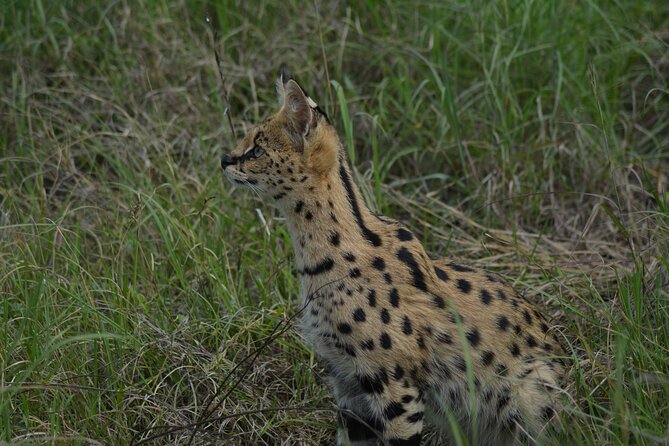
The plains keep moving, and so should you. This six-day safari pairs Serengeti game drives with the remarkable Ngorongoro Crater, giving you several full days to look for migrating wildebeest, zebra, lions, cheetahs, and other East African wildlife. I like the generous time in the Serengeti, and I like having a private guide and vehicle for your group. The main drawback is that the advertised overview names Tarangire and Lake Manyara, while the detailed six-day route focuses on the Serengeti and Ngorongoro.
I also like the early starts, which put you out during the cooler hours when animals are often active. Guides praised in the feedback include Amani and Abouh, with Innocent and Kanje Grand Tours also receiving warm mentions for communication and service. You should confirm your exact guide, lodging, and final route before paying, since those details are not fully specified.
In This Review
- Key points to know before booking
- What $3,713 buys you in northern Tanzania
- Day 1: Leaving Arusha for the Serengeti
- Day 2: Six to seven hours among the herds
- Day 3: Following the Serengeti’s seasonal rhythm
- Day 4: Central Serengeti and the calving season
- Day 5: Sunrise, then the road to Ngorongoro
- Day 6: Descending into the Ngorongoro Crater
- The Tarangire and Lake Manyara question
- Guides, vehicle time, and service
- Meals, water, and what you still pay yourself
- Cancellation and booking checks
- Should you book this six-day safari?
- FAQ
- How long is the safari?
- Where does the safari start?
- What is the listed price?
- Is this a private tour?
- Which parks are included in the detailed route?
- Are Tarangire and Lake Manyara included?
- What is included in the price?
Key points to know before booking
- Four days in or around the Serengeti: The schedule gives you repeated game drives rather than a quick one-night visit.
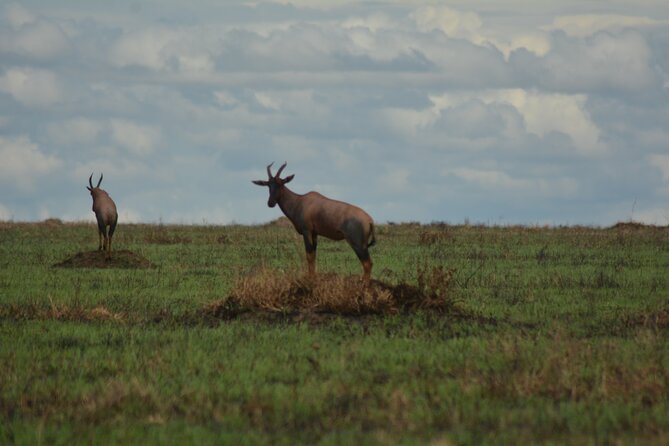
- The migration is seasonal: Animal movements follow rain, so no operator can promise a particular crossing or herd location.
- Ngorongoro offers compact wildlife viewing: The crater holds a dense animal population in a dramatic setting and is one of the few places in Tanzania where you might see black rhino.
- Private touring matters: Only your group participates, allowing more flexibility than a large shared vehicle.
- Meals and water are included: Six breakfasts, six lunches, five dinners, and unlimited drinking water are covered.
- The route needs clarification: Tarangire and Lake Manyara appear in the overview, but the day-by-day plan does not include them.
What $3,713 buys you in northern Tanzania
At $3,713 per person, this is a serious purchase, but the price reflects the scope of a six-day safari rather than a short park outing. Park fees, a professional guide and driver, activities, meals, and drinking water are included. That removes several major costs that can quickly add up on a self-planned safari.
The value rests heavily on what is included for accommodation and transport. The supplied details do not name the camps, lodges, or vehicle type, and lodging is not clearly listed among the inclusions. Ask for the full accommodation plan in writing. A comfortable camp, a basic tented setup, and a lodge room can produce very different values at the same headline price.
The private format is another important part of the calculation. Your group participates alone, so you are not automatically tied to strangers or their preferred pace. That can help when you want to stay longer near a lion, pause for photographs, or leave early for a sunrise drive.
The schedule is also more generous than a rushed northern Tanzania circuit. You spend the first four safari days focused on the Serengeti, then reach Ngorongoro for the final major wildlife experience. If your goal is the migration, that repeated time in one ecosystem is useful because animal sightings are never guaranteed at a particular stop.
More Migration Safaris in Arusha
- 8 Days Great Wildebeest Calving Migration Safari from Arusha
★ 5.0 · 254 reviews - 10-Day Serengeti Wildebeest Migration Safari from Arusha
★ 5.0 · 218 reviews - 8 Day Spectacular Migration Serengeti mid -Range Tanzania Safari
★ 5.0 · 161 reviews
Day 1: Leaving Arusha for the Serengeti
The first day begins with pickup from your hotel or airport at about 8:00 a.m., although the meeting information also shows a start time of 12:00 a.m. That mismatch deserves a quick email before departure. Confirm the pickup hour and whether the first night begins in the park or elsewhere.
You travel through the Ngorongoro Conservation Area toward Serengeti National Park, carrying a picnic lunch and making game-viewing stops along the way. The route leaves Tanzania’s highlands behind and opens into the broad Serengeti plains, where the sense of distance is part of the experience.
A short stop at a viewpoint on the Ngorongoro Crater rim adds a fine first look at the crater. It is a useful orientation point, though it is not the same as descending into the crater for a game drive later in the trip.
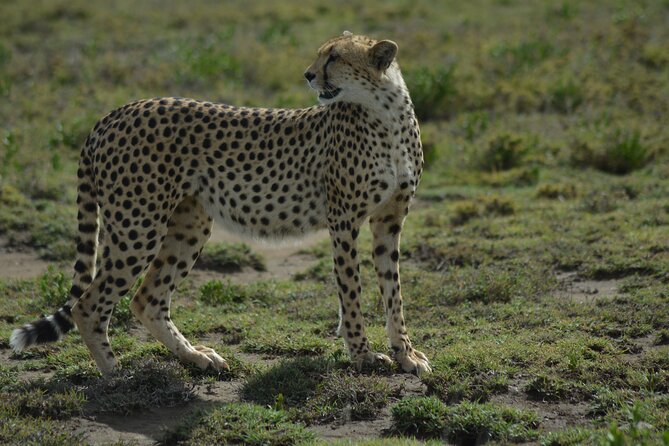
The first Serengeti drive can produce sightings of lions, hyenas, leopards, cheetahs, jackals, and giraffes, along with many other species. You stop for a picnic lunch inside the park, then continue into the evening.
The day is listed at roughly 15 hours, so it is a long opening run. That is the price of reaching the Serengeti from the Arusha area in one day. You will want to be ready for a full day in the vehicle, with practical clothing, sun protection, and patience for the long transfer.
Day 2: Six to seven hours among the herds
The second day starts with breakfast and a game drive at about 6:30 a.m. You spend six to seven hours exploring the park, with the afternoon schedule including a stop at roughly 2:00 p.m.
This is the kind of day that gives the safari its value. Instead of driving through the Serengeti once and moving on, you have time to search different areas for wildlife. The park supports impala, buffalo, crocodiles, hippos, and a long list of predators and smaller animals.
The Great Migration is the headline attraction. The stated figures are huge: about 1.5 million wildebeest, 250,000 zebra, and 500,000 antelope moving through the wider Serengeti-Mara ecosystem. Those numbers explain the scale of the event, but they do not guarantee that you will see a river crossing or a wall of animals during your six days.
Rain controls the movement, and the timing changes from year to year. That is why you should treat the migration as a natural process, not a scheduled performance. Your guide can search for herds, but the animals decide where the day’s best sighting will be.
Leopards, cheetahs, and lions are resident predators, so the safari still has plenty to offer if the migrating herds are in another part of the ecosystem. I consider this one of the strongest parts of the plan: the trip does not rely on a single animal sighting to feel worthwhile.
Day 3: Following the Serengeti’s seasonal rhythm
Day three is set aside for more Serengeti game drives. The published timing explains the broad seasonal pattern: in November and December, animals move from the northern woodlands and hills toward the southern grasslands. During the longer rains from April to June, they return north.
That seasonal information is useful when choosing your dates. It also shows why the word migration can be misleading if you picture one enormous herd moving in a straight line. This is a circular, rain-driven movement across a very large ecosystem.
You may see wildebeest, zebra, antelope, impala, buffalo, crocodile, hippo, and the predators that follow them. The drive may feel less dramatic if herds are scattered, but the extra day gives your guide more chances to locate activity.
The day is listed at around 10 hours. That is still a substantial outing, but it leaves more room than the first day for unhurried wildlife viewing. If you prefer a slower safari, ask how much of the day is spent driving between areas and how much is spent stopped at sightings.
More Safaris in Arusha
- Serengeti Balloon Safari and authentic bush breakfast
★ 5.0 · 2,480 reviews - Balloon Safari & Bush Breakfast in Serengeti – Miracle Experience
★ 5.0 · 1,646 reviews - 4 Days Group Camping Safari
★ 5.0 · 1,101 reviews - 5 Days Group Camping Safari
★ 5.0 · 730 reviews
Day 4: Central Serengeti and the calving season
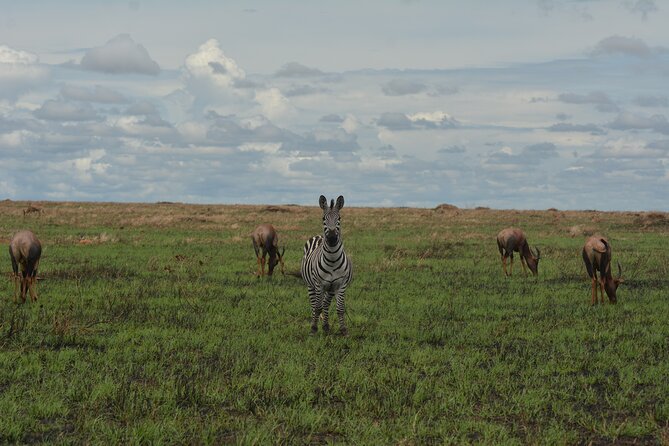
After breakfast, you spend a full day around Central Serengeti. This area includes the famous short-grass plains, where large herds of wildebeest and zebra can spread across open ground.
January is especially notable for calving. For a short period, usually about three weeks, roughly half a million wildebeest calves may be born. The open grass gives newborns little cover, but calves can run within minutes and become much stronger within a few days.
That spectacle also brings predator activity. Lions, cheetahs, and leopards follow the herds, so calving season can offer both tenderness and the hard edges of nature. You should be prepared for an emotional, unscripted experience rather than a neat parade of animals.
The day lasts about 10 hours. Four consecutive days connected to the Serengeti is a real advantage for anyone who wants more than a checklist of species. It gives you time to appreciate the park’s changing habitats and the way wildlife uses open plains, water, and cover.
Day 5: Sunrise, then the road to Ngorongoro
The fifth day begins with an optional or suggested very early wake-up for a morning game drive. The reward is cooler air, more active animals, and a sunrise over the Serengeti. You return to camp for brunch before continuing toward the Ngorongoro area.
The schedule lists about seven hours, which makes this day feel like a transition rather than another full Serengeti circuit. It still combines a final wildlife chance with a major change in scenery.
Ngorongoro Crater is about 610 meters deep and covers roughly 260 square kilometers. Its steep walls hold grassland, a river, swamps, and a soda lake. The setting is visually striking, but the crater is not simply a viewpoint. It is a concentrated wildlife area where many species live within a relatively compact space.
The crater is one of the few places in Africa where you might see black rhino. You may also find wildebeest, zebra, gazelle, elephant, and a large number of bird species. That density makes Ngorongoro a strong complement to the wide-open Serengeti.
Day 6: Descending into the Ngorongoro Crater
Early risers get a view of sunrise over the crater rim before breakfast and the descent into the crater. The day is listed at about eight hours, enough for a substantial visit before the trip ends.
Ngorongoro formed about three million years ago. It is a UNESCO World Heritage site and is often described as one of Africa’s great natural wonders. The crater floor supports approximately 25,000 ungulates, which helps explain why game viewing can be productive in a relatively short time.
You may see wildebeest, zebra, gazelle, elephant, and more than 500 bird species. With luck, you may also find black rhino. The word may matters here: wildlife is free to move, and even a dense area cannot promise every species.
This final day gives the itinerary a strong finish. The Serengeti offers distance and movement, while Ngorongoro gives you a contained natural setting with high animal density. The contrast is more valuable than visiting two parks that feel much the same.
The Tarangire and Lake Manyara question
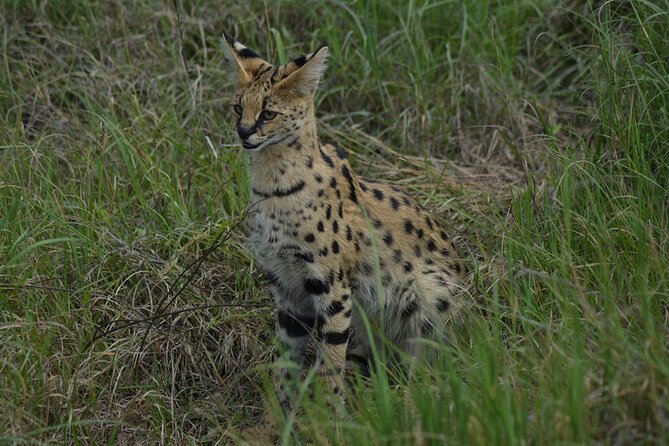
The overview says the safari includes Tarangire National Park and Lake Manyara National Park. Tarangire is associated with ancient baobab trees, while Lake Manyara is known for tree-climbing lions.
However, the detailed six-day schedule lists Serengeti National Park and the Ngorongoro Conservation Area, not separate visits to Tarangire or Lake Manyara. That is the clearest issue to resolve before booking.
If Tarangire and Lake Manyara matter to you, ask the operator to confirm the exact route, park nights, and drive order. Adding two parks to the stated Serengeti and Ngorongoro schedule could change the amount of time available for game drives and increase driving time.
If the actual plan is Serengeti plus Ngorongoro, that is not a weak alternative. It is a focused migration safari with more time in the ecosystem most central to the trip. Just make sure the title, overview, and final itinerary all describe the same experience.
Guides, vehicle time, and service
The guide can make or break a safari. Amani is praised for accompanying a group from Kilimanjaro Airport through the full six-day journey, while Abouh is praised for friendliness, effort, organization, and teaching about Tanzanian culture. Innocent is also mentioned for active email replies.
Those names give you useful examples, but they do not guarantee which guide you will receive. Ask whether your driver is also the wildlife guide, how many people fit in the vehicle, and how the operator handles route changes during migration season.
The long drives are part of the deal. Day one may run to 15 hours, while the other listed days range from seven to 12 hours. The private format gives you some control, but it cannot remove the distances between Arusha, Serengeti, and Ngorongoro.
Camping and lodge arrangements need special attention. One account describes large, comfortable tents and good food on a group camping safari, while another praises excellent facilities and friendly staff at the places used during the trip. Since the accommodation level is not clearly stated here, ask for names and photographs before you decide if the price fits your expectations.
Meals, water, and what you still pay yourself
The package includes six breakfasts, six lunches, five dinners, unlimited drinking water, all activities, and park-related fees and taxes. That is practical coverage on a route where meals in remote areas can be difficult to arrange independently.
Tips are not included, so budget separately for your guide and other service staff. The visa and international flights are also your responsibility.
Food quality may vary by camp or lodge, but the available feedback describes delicious meals and a good range of choices. Treat that as encouraging rather than a promise of the same menu throughout the trip.
The private nature of the safari may suit couples, families, or friends who want control over the pace. Most people can participate, and the activity is near public transportation, with pickup offered from a hotel or airport. The supplied details do not describe special accessibility arrangements, so ask specific questions if you need them.
Cancellation and booking checks
You can cancel up to 24 hours before the local start time for a full refund. Changes made less than 24 hours before departure are not accepted, and cancellations inside that window are not refunded.
Before booking, confirm four items in writing: the pickup time, the exact parks, the accommodation, and the group size or vehicle setup. Those details affect comfort and value more than a polished description of the migration itself.
Should you book this six-day safari?
Book it if you want a private northern Tanzania safari with several days devoted to the Serengeti and a final wildlife visit to Ngorongoro. The repeated game drives, early starts, included meals, water, and park costs make the package attractive for someone who wants the major safari pieces handled in one booking.
Think twice if you require luxury lodging, a guaranteed migration crossing, or a fixed visit to Tarangire and Lake Manyara. The price is high enough that you should have clear answers about accommodation and the route.
My practical verdict is positive, with one condition: confirm the itinerary before you pay. If the real route is the Serengeti and Ngorongoro, you are getting a focused and wildlife-heavy six-day experience. If all four parks are promised, ask how the operator can fit them in without turning the safari into a long series of road transfers.
FAQ
How long is the safari?
The safari lasts approximately six days.
Where does the safari start?
The experience is based in Arusha, Tanzania, and pickup is offered from your hotel or airport.
What is the listed price?
The listed price is $3,713 per person.
Is this a private tour?
Yes. Only your group participates in the private tour or activity.
Which parks are included in the detailed route?
The detailed schedule covers Serengeti National Park and the Ngorongoro Conservation Area, including a visit to the Ngorongoro Crater.
Are Tarangire and Lake Manyara included?
They are named in the overview, but they do not appear as separate stops in the detailed six-day schedule. Confirm this point with Kanje Grand Tours before booking.
What is included in the price?
The price includes fees and taxes, a professional guide and driver, unlimited drinking water, all activities, six breakfasts, six lunches, and five dinners. Tips, a visa, and international flights are not included.
More Serengeti Safaris
- 5-Day Highlights mid-Range Crater, Serengeti, Tarangire
★ 5.0 · 296 reviews - 3-Day Classic Serengeti Safari
★ 5.0 · 263 reviews - Private 6-Day Tarangire Manyara Crater and Serengeti with Mid-Range Lodges
★ 5.0 · 238 reviews - 3 Day Serengeti National Park & Ngorongoro Crater Camping Safari
★ 5.0 · 142 reviews
More Ngorongoro Crater Tours
- 3 Days Serengeti & Ngorongoro Group Camping Safari
★ 5.0 · 574 reviews - 5 Days Camping Tarangire, Serengeti & Ngorongoro crater & Visiting Maasai
★ 5.0 · 229 reviews - 4 Days Join Group tour Tarangire Serengeti and Ngorongoro crater
★ 5.0 · 219 reviews - 4-Day Safari from Arusha: Tarangire, Serengeti and Ngorongoro
★ 5.0 · 173 reviews
Just added around Arusha
- 5 Days Safari Tarangire, Serengeti, and Ngorongoro Crater★ 5.0 · 3 reviews
- Love lives in Africa★ 5.0 · 3 reviews
- 5 Days of Safari, Culture & Hot Springs – Tour from Arusha★ 5.0 · 3 reviews
- Arusha National Park Safari by Jeep★ 4.5 · 3 reviews
- 5Days Family _Group Tour Lodging Mid-Range in the Jungle★ 5.0 · 3 reviews
- Serengeti & Ngorongoro 3 Days Budget Safari★ 5.0 · 3 reviews
- 2 Days Tarangire and Ngorongoro Crater Tour★ 5.0 · 3 reviews
- 7 Days PRIVATE Best of Tanzania Safari *Departing everyday*★ 5.0 · 3 reviews
Serengeti Safaris, compared.

Serengeti Balloon Safari and authentic bush breakfast
Read our review →
Balloon Safari & Bush Breakfast in Serengeti – Miracle Experience
Read our review →
3 Days Serengeti & Ngorongoro Group Camping Safari
Read our review →
5-Day Highlights mid-Range Crater, Serengeti, Tarangire
Read our review →


Private 6-Day Tarangire Manyara Crater and Serengeti with Mid-Range Lodges
Read our review →
5 Days Camping Tarangire, Serengeti & Ngorongoro crater & Visiting Maasai
Read our review →Browse the lists this tour appears in