
Reviewed · BIG FIVE SAFARIS
7-Day Midrange Tanzania Safari Adventures (Big 5)
Africa gets under your skin fast. This seven-day private safari packs four of northern Tanzania’s best wildlife areas into one clear route, from elephant country in Tarangire to the open plains of Serengeti and the wildlife-filled Ngorongoro Crater. I especially like the mix of habitats and the fact that only your own group takes part.
I also like the strong guide focus. Guides such as Denis, Justin, Gasper, and Rapha are praised for sharp animal spotting, safe driving, local contacts, and lively explanations. The main drawback is the amount of time spent on the road, especially on the long transfer into Serengeti and the return to Arusha.
In This Review
- Key points to know before booking
- Why this route works so well in seven days
- Day one: a gentle start in Arusha
- Day two: elephants and baobabs in Tarangire
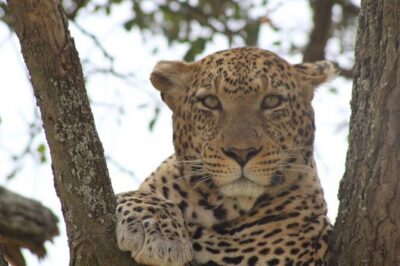
- Day three: birds, monkeys, and tree-climbing lions at Lake Manyara
- Day four: crossing the highlands into Serengeti
- Day five: a full day on the endless plains
- Day six: wildlife inside Ngorongoro Crater
- Day seven: back to Arusha and onward
- The guide can make or break the safari
- Who will get the most from this trip?
- Should you book this Tanzania safari?
- FAQ
- Where does the safari begin?
- How long is the safari?
- Is this a private tour?
- What time does the tour start?
- Which parks and protected areas are visited?
- Where do you stay in Serengeti?
- Can the safari end at Zanzibar or the airport?
Key points to know before booking
- Private touring for your group: You do not share the safari vehicle with unrelated passengers, which makes it easier to pause for photos and shape the pace around your group.
- Four major wildlife settings: Tarangire, Lake Manyara, Serengeti, and Ngorongoro each offer a different type of scenery and animal viewing.
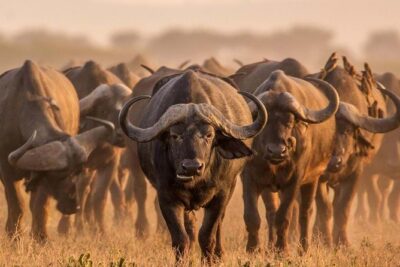
- A real Big Five chance: Lions, leopards, elephants, buffalo, and rhinos may all be seen, but no safari can promise every animal.
- Serengeti gets a full game-drive day: Day five gives you the best chance to search widely for predators and migrating herds.
- Guides matter greatly: Denis, Justin, Gasper, Rapha, and Bonny receive especially warm praise for animal knowledge, driving skill, and personal service. You can ask whether one is available, but guide assignments are not guaranteed.
- The price reflects a private, park-heavy trip: At $2,924 per person, the value depends on what accommodation, meals, park fees, and transport are included in your final booking details.
Why this route works so well in seven days
Northern Tanzania gives you a remarkable range of wildlife in a relatively compact safari circuit. You begin around Arusha, head to Tarangire, continue to Lake Manyara, then cross the Ngorongoro Conservation Area to reach Serengeti. The return route brings you into Ngorongoro Crater before taking you back to Arusha.
I like this order because each stop adds something different. Tarangire is famous for elephants and baobabs. Lake Manyara brings forest, birds, and the chance to see tree-climbing lions. Serengeti provides the biggest sense of space, while Ngorongoro offers dense animal viewing inside an ancient volcanic crater.
This is not a slow, single-park safari. You will change scenery often, and some days involve long drives. That tradeoff is worth it if you want a first look at several famous parks rather than spending a week in one area.
The tour is listed at $2,924 per person. That is a serious sum, but private safaris in Tanzania carry high costs because of park access, vehicle use, fuel, accommodation, guiding, and long distances. Before paying, ask for a written list of what the price covers. The supplied details confirm a lodge-style safari, a private group, airport or border pickup, and park admission at several stops, but they do not spell out every lodging and meal arrangement.
More Big Five Safaris in Arusha
- Big Five Luxury Safari in Tanzania
★ 5.0 · 68 reviews - Big Five Classic Safari in Tanzania **Sustainable Travel approach
★ 5.0 · 31 reviews - 2 days Mid Range Safari in Ngorongoro and Tarangire Big 5 Parks
★ 5.0 · 27 reviews
Day one: a gentle start in Arusha
Your safari begins with pickup from Kilimanjaro International Airport, Arusha Airport, or the Namanga border. A company representative drives you to accommodation in Arusha, with the transfer described as about one hour.
This first day is useful rather than flashy. You get a chance to arrive, settle in, and meet the team before the early park days begin. If your flight lands at Kilimanjaro International Airport, the transfer to Arusha also gives you your first look at the area around Tanzania’s safari capital.
The listed start time is 8:30 am, but airport pickup timing will depend on your arrival plan. Send the operator your flight or border details in advance so the handoff is clear.
Day two: elephants and baobabs in Tarangire
After breakfast, you drive about two hours from Arusha to Tarangire National Park. This is one of the strongest openings to a northern Tanzania safari because Tarangire has a clear visual identity: enormous baobabs, open grassland, seasonal swamps, and the Tarangire River.
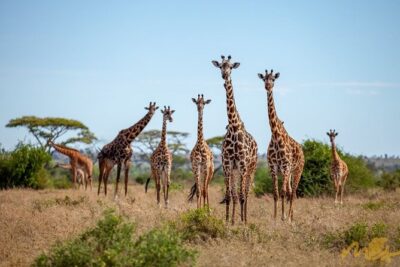
Elephants are the park’s great attraction. You may see family groups moving among the trees or gathering near water. Giraffes, bushbuck, hartebeest, buffalo, zebra, and wildebeest are also part of the expected mix, while lions, leopards, and the less common cheetah may be found with good timing.
The open-roof safari vehicle is a major part of the day. You can watch from the truck without the barrier of closed windows, which makes it easier to follow animals and take photographs. Your lunch is described as a picnic, so expect a full day outdoors rather than a quick park visit.
Tarangire is not simply a warm-up for Serengeti. Its baobab-dotted scenery and elephant viewing can be among the most memorable parts of the trip. The main limitation is that animal concentrations shift with the seasons, so the river and swamps may be more or less important during your visit.
Day three: birds, monkeys, and tree-climbing lions at Lake Manyara
The next morning takes you to Lake Manyara National Park, about 120 kilometers west of Arusha. You collect a lunch box from your accommodation and spend the day in a smaller park with an impressive mix of habitats.
The shallow salt lake expands and contracts with the seasons. When conditions are right, thousands of flamingos gather along its edges, and the park records more than 500 bird species. Even if birdwatching is not your main goal, the sheer number of shapes and colors around the water can make this a welcome change from the larger savannah parks.
On land, look for monkeys in the woodlands, along with giraffes, zebras, wildebeest, buffalo, and elephants. Lake Manyara is also associated with lions resting in trees. That sight is not guaranteed, but the possibility gives the park extra character.
The scenery changes quickly here. You may pass through forest, open grassy areas, baobab-dotted cliffs, and lake country in one day. I like Lake Manyara for its variety, though visitors focused only on large mammals may find it less dramatic than Serengeti. It works best when you appreciate birds and primates as much as lions and elephants.
More Safaris in Arusha
- Serengeti Balloon Safari and authentic bush breakfast
★ 5.0 · 2,480 reviews - Balloon Safari & Bush Breakfast in Serengeti – Miracle Experience
★ 5.0 · 1,646 reviews - 4 Days Group Camping Safari
★ 5.0 · 1,101 reviews - 5 Days Group Camping Safari
★ 5.0 · 730 reviews
Day four: crossing the highlands into Serengeti
Day four is the long transition to Serengeti, but it is far more interesting than a simple highway transfer. You pass through fertile highlands where the Iraqw people grow wheat, coffee, and corn. The route then enters the Ngorongoro Conservation Area, where you can see the broad Ngorongoro Crater before continuing toward Serengeti.
A picnic lunch is taken along the way, and you reach Serengeti in the afternoon. The park is Tanzania’s largest, with grassy plains, swamps, lakes, savannah, and mountain areas. That size explains both its appeal and its challenge: there is a huge amount to search, but animals may be spread across wide distances.
An afternoon game drive gives you an immediate introduction to the park before dinner and the overnight stay at Serengeti Heritage Tented Camp. The word tented should not make you picture rough camping. The supplied information describes this as the main overnight base in Serengeti, but you should confirm the exact room style and facilities before booking.
This is one of the days when a good guide makes a real difference. Justin is praised for using contact with other guides to learn where animals have been spotted, while Denis is praised for knowing the roads and finding animals that were hard for others to see. Those skills matter in a park this large.
Day five: a full day on the endless plains
Day five is the centerpiece. You spend up to 12 hours exploring Serengeti, with dinner and another night at Serengeti Heritage Tented Camp.
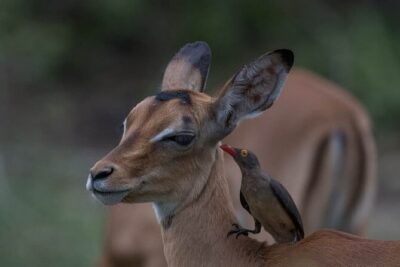
The park is home to impalas, buffalo, crocodiles, hippos, and many other species. Its most famous event is the movement of wildebeest and zebra. The herds follow rainfall, so their location changes from year to year and from month to month. A safari sold around the migration can offer a thrilling chance, but you should never treat a river crossing or a particular herd location as guaranteed.
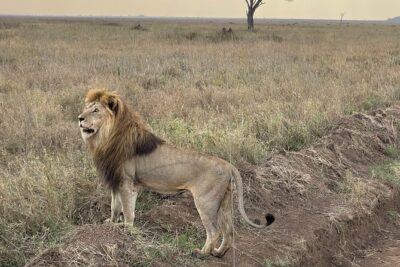
Predator viewing is another reason to value the full day. Lions are the more common hope, while leopards and cheetahs require sharper eyes and favorable conditions. The Big Five label is useful as a broad description of the trip, but it is not a promise. Rhinos are particularly uncertain, and even experienced guides cannot control wildlife.
The long day is a plus for serious wildlife watchers, but it can be tiring. Families with young children should discuss the daily rhythm before booking. On the other hand, a full Serengeti day gives you time to wait, watch, and adjust the route instead of rushing back after a few hours.
Gasper receives especially warm praise for turning drives into lively lessons about nature, while Justin is praised for helping a family find lions, leopards, cheetahs, and wildebeest activity. The strongest pattern is clear: the guide is not just a driver. Good animal judgment and communication can shape the entire day.
Day six: wildlife inside Ngorongoro Crater
After an early breakfast, you leave on an en-route game drive through Serengeti. Early hours can be useful because animals may still be active, though sightings remain unpredictable.
You then head toward Ngorongoro Crater, a UNESCO World Heritage Site formed millions of years ago. The crater is about 600 meters deep and covers roughly 260 square kilometers. Its enclosed setting supports a dense animal population, estimated in the supplied details at about 25,000 animals.
You arrive at the crater rim before lunch, then descend for game viewing. Within a short time, you may see wildebeest, zebras, gazelles, elephants, and many bird species. The crater is often considered one of Tanzania’s most reliable places for concentrated viewing, but it is still a wild area, not an open-air zoo.
The contrast with Serengeti is excellent. Serengeti gives you distance and motion, while Ngorongoro gives you a contained setting where animals can be easier to find. The drawback is that this is another long and busy day after the full Serengeti schedule.
The crater also offers one of the trip’s best visual moments. From the rim, you look down into a vast volcanic bowl before descending into it. That change in scale is powerful, and it helps explain why this stop remains central to many northern Tanzania routes.
Day seven: back to Arusha and onward
After breakfast, you drive back to Arusha for your onward journey, either to Zanzibar or home. The operator says the final arrangements can be adapted to your updated plans.
The return takes about four hours according to the schedule, though road conditions and stops can affect timing. Build in breathing room before a flight. If you are using a KLM flight home, the company says it offers a hot lunch and airport drop-off. Shopping time for gratuities is also mentioned, which is a practical touch at the end of a trip filled with long drives and close service.
Airport and border pickup is offered at the beginning, and mobile ticketing and group discounts are listed. Confirmation is received at booking, and most people can take part. Since this is a private activity, only your group participates.
The cancellation rule is strict: the booking is non-refundable and cannot be changed for any reason. That makes travel insurance and careful flight planning sensible.
The guide can make or break the safari
The strongest praise goes to the guiding team. Denis is described as an excellent spotter and a highly capable driver, including in muddy rainy-season conditions. Justin is praised for finding difficult sightings and using guide-to-guide communication to track animals.
Gasper is repeatedly valued for his friendly manner, clear answers, and ability to turn the trip into a lesson about wildlife. Rapha is praised for working hard to find animals, while Bonny is noted for his strong French.
You cannot assume a particular guide will be assigned. Still, it is worth asking the company about guide availability when you book. If you have special needs, such as French-language guiding, young children, photography interests, or a wish to focus on migration, say so early.
Who will get the most from this trip?
I would choose this safari if you want a private first visit to northern Tanzania and want several major parks in one week. It suits couples, families, and small groups who value personal attention and do not mind long drives.
It is also a good fit for anyone who wants variety. You get elephants, flamingos, monkeys, big cats, open plains, crater scenery, and a chance at the migrating herds.
I would hesitate if you want a slow holiday with short transfers and long afternoons at one lodge. The schedule is active, and the combination of Tarangire, Lake Manyara, Serengeti, Ngorongoro, and Arusha leaves little spare time.
Should you book this Tanzania safari?
Book it if private touring, strong guiding, and broad wildlife coverage matter more to you than a relaxed pace. The route is well chosen, the full Serengeti day adds real value, and the guide praise is unusually consistent across several names.
Before committing $2,924 per person, get the final details in writing: every accommodation, meal, park fee, airport transfer, and any optional activity. Ask about the guide assigned to your group, and remember that Big Five sightings and migration crossings depend on nature.
For a compact northern Tanzania introduction, this is an appealing choice. Just arrive ready for long road days, early starts, and the possibility that the most exciting animal may appear when you least expect it.
FAQ
Where does the safari begin?
The safari begins with pickup from Kilimanjaro International Airport, Arusha Airport, or the Namanga border. You are then driven to accommodation in Arusha.
How long is the safari?
The safari lasts seven days, approximately. The itinerary begins in Arusha and ends with a return to Arusha.
Is this a private tour?
Yes. Only your own group participates in the activity.
What time does the tour start?
The listed meeting start time is 8:30 am. Airport and border pickup details should be coordinated with the operator.
Which parks and protected areas are visited?
The route includes Tarangire National Park, Lake Manyara National Park, Serengeti National Park, and the Ngorongoro Conservation Area, including Ngorongoro Crater.
Where do you stay in Serengeti?
The listed Serengeti accommodation is Serengeti Heritage Tented Camp. The other accommodation details should be confirmed before booking.
Can the safari end at Zanzibar or the airport?
Yes. On day seven, the operator says it can work with your onward plan, including travel to Zanzibar or back home. A KLM airport drop-off and hot lunch are also offered according to the provided details.
More Safaris
- 3 Days Serengeti & Ngorongoro Group Camping Safari
★ 5.0 · 574 reviews - 7-Day Premium Luxury Tanzania Safari All-Inclusive
★ 5.0 · 426 reviews - 3-Day Classic Serengeti Safari
★ 5.0 · 263 reviews - 8 Days Great Wildebeest Calving Migration Safari from Arusha
★ 5.0 · 254 reviews
More Big Five Safaris
- Arusha: 3-Day Serengeti & Ngorongoro Crater Big Five Safari
★ 4.6 · 20 reviews - Big Five Luxury 7 Days Safari Tour in Arusha
★ 5.0 · 20 reviews - Big Five Dream Safari
★ 5.0 · 19 reviews - 4 Days Experience big five in Tarangire, Serengeti & Ngorongoro Safari
★ 5.0 · 16 reviews
Just added around Arusha
- 5 Days Safari Tarangire, Serengeti, and Ngorongoro Crater★ 5.0 · 3 reviews
- Love lives in Africa★ 5.0 · 3 reviews
- 5 Days of Safari, Culture & Hot Springs – Tour from Arusha★ 5.0 · 3 reviews
- Arusha National Park Safari by Jeep★ 4.5 · 3 reviews
- 5Days Family _Group Tour Lodging Mid-Range in the Jungle★ 5.0 · 3 reviews
- 2 Days Tarangire and Ngorongoro Crater Tour★ 5.0 · 3 reviews
- Serengeti & Ngorongoro 3 Days Budget Safari★ 5.0 · 3 reviews
- 7 Days PRIVATE Best of Tanzania Safari *Departing everyday*★ 5.0 · 3 reviews
Big Five Safaris, compared.
Big Five Classic Safari in Tanzania **Sustainable Travel approach
Read our review →
2 days Mid Range Safari in Ngorongoro and Tarangire Big 5 Parks
Read our review →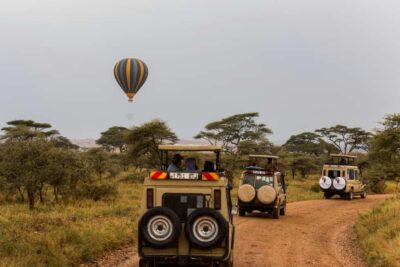
3-Day Serengeti & Ngorongoro Crater Big Five Safari
Read our review →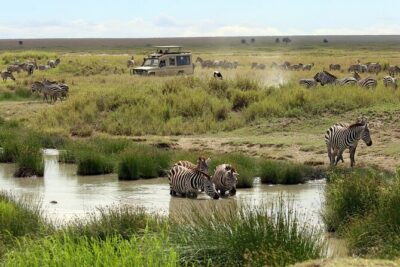
Browse the lists this tour appears in