Reviewed · SAFARIS IN ARUSHA
8 Day Safari The Best of Tanzania & Lake Eyasi
Africa rewards patience. This 8-day Tanzania safari gives you a strong mix of wildlife, scenery, and cultural encounters, moving from Arusha through Tarangire, the Serengeti, Ngorongoro Crater, Lake Eyasi, and Lake Manyara. I like the way it combines major safari areas with time among the Maasai, Hadzabe, and Datoga people. I also like that you travel in a private group, with an open-roof 4WD Land Cruiser, drinks during game drives, and park fees built into the price.
The main drawback is the pace. You cover a lot of ground in eight days, and several days involve long drives as well as game viewing. The $3,834 per-person price is substantial, but it includes accommodation, meals, airport transfers, a driver-guide, vehicle costs, park entry, and unlimited game drives, so the value depends heavily on how much you want handled for you.
In This Review
- Key reasons this safari is worth considering
- Arriving in Arusha and settling into safari time
- Tarangire: elephants beneath baobab trees
- Crossing the Ngorongoro Highlands toward the Serengeti
- Two days in the Serengeti
- Descending 610 meters into Ngorongoro Crater
- Lake Eyasi and the Hadzabe way of life
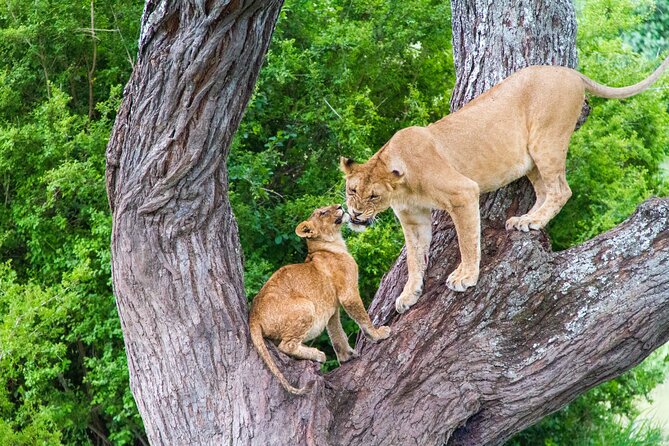
- Lake Manyara and the search for tree-climbing lions
- What the $3,834 price includes
- Comfort, guides, and the realities of the road
- Who should book this safari?
- Should you book the 8-day Tanzania route?
- FAQ
- Where does the safari begin?
- How long does the safari last?
- Is this a private safari?
- What type of vehicle is used?
- Is a guide included?
- Which national parks and areas are visited?
- What is the cancellation policy?
Key reasons this safari is worth considering
- Tarangire brings elephants and ancient baobabs together: This quieter park offers a different feel from the Serengeti, with the Tarangire River drawing animals in the dry season.
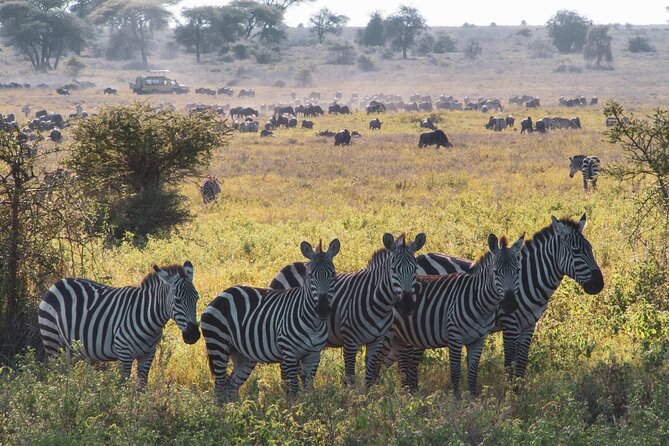
- The Serengeti gets two full days: You have enough time to search for lions, elephants, buffalo, giraffes, and other wildlife without treating the park as a quick stop.
- Ngorongoro Crater is a concentrated wildlife experience: The permanent water supply on the crater floor supports a remarkable variety of animals, including the endangered black rhino.
- Lake Eyasi adds human encounters: Meeting the Hadzabe and Datoga people gives the trip a cultural side that many wildlife-only safaris miss.
- Lake Manyara offers varied scenery: Forest, flood plains, escarpment views, a soda lake, and the chance to spot tree-climbing lions all appear in one park.
- Private touring gives you flexibility: Only your group takes part, and guides such as Obi, Zablon, Michael, Kessy, and Benson have been praised for their service and communication.
Arriving in Arusha and settling into safari time
Your safari begins with pickup at Kilimanjaro International Airport and a transfer to your lodge in Arusha. A Benson Safaris Tanzania driver meets you at the airport, and the rest of the first day is left open for rest, swimming, time in the gardens, or an optional visit around Arusha.
That free day is useful. International flights into Tanzania can leave you tired, and a quiet first afternoon is better than forcing another major activity into the schedule. You can unpack, adjust to the climate, and prepare for several early starts.
The published meeting time is 8:30 am, although airport pickup naturally depends on your arrival. Confirm the exact transfer details before flying, especially if your international arrival and safari start are on different days.
The tour is private, so you travel only with your own party. That matters in a safari vehicle. You avoid being paired with strangers, and your guide can respond to your group’s pace and interests. The experience is still structured, but it should feel more personal than a large coach trip.
More Safaris in Arusha
- Serengeti Balloon Safari and authentic bush breakfast
★ 5.0 · 2,480 reviews - Balloon Safari & Bush Breakfast in Serengeti – Miracle Experience
★ 5.0 · 1,646 reviews - 4 Days Group Camping Safari
★ 5.0 · 1,101 reviews
Tarangire: elephants beneath baobab trees
After breakfast on day two, you head to Tarangire National Park for a full day of game viewing. The park takes its name from the Tarangire River, which becomes especially important in the dry season when it is the main water source in the area.
Tarangire is a fine early introduction to Tanzania because it does not look like the Serengeti. You see ancient baobabs, termite mounds, acacia trees, open areas, and dry ground shaped by the seasonal water supply. The Maasai regard the baobab as the first tree created, adding a small cultural detail to what might otherwise seem like a simple wildlife drive.
Elephants are one of Tarangire’s major attractions. Large herds may gather near water, and the combination of elephants and baobabs makes for some of the most memorable photographs of the trip. You may also search for buffalo, giraffes, zebras, antelope, and birdlife during the day.
The practical catch is that a full-day game drive can be tiring. You spend many hours in the vehicle, often on rough roads, so bring a hat, sunscreen, a light layer, and a camera with spare battery power. The open-roof 4WD helps with viewing and photography, while the fridge and inverter add comfort during a long day away from the lodge.
Crossing the Ngorongoro Highlands toward the Serengeti
Day three takes you toward the Serengeti through the Ngorongoro Conservation Area. The drive itself is part of the experience. As you leave more settled areas behind, the scale of northern Tanzania becomes clearer, with acacia-dotted savannah and broad views that make the journey feel much larger than a simple transfer.
An optional Maasai village visit is included in this section of the journey. You meet elders, warriors, women, and children, and learn about Maasai beliefs, customs, and nomadic life. This is one of the trip’s most valuable additions, especially if you want more than animal sightings.
You should approach this visit with respect and curiosity. It is a planned cultural encounter, not an unfiltered view of daily life, but it can still give you useful context for the communities living around the protected areas. Ask your guide how the visit works, what is included, and whether any additional payment is expected at the village.
The drive to the Serengeti can be long. That is the tradeoff for reaching one of Africa’s great national parks by road rather than adding a flight. You gain changing scenery and a sense of the distances involved, but you lose some leisure time.
Two days in the Serengeti
The Serengeti is the trip’s centerpiece. It is Tanzania’s oldest and most popular national park, a UNESCO World Heritage site, and the place where the phrase African safari feels fully justified.
You get a travel day with game viewing on day three, followed by a full-day drive on day four. That extra day is important. Wildlife does not perform on a schedule, and two days give you better odds of seeing a range of animals in different parts of the park.
Your guide’s skill matters most here. Guides such as Obi and Zablon have received especially strong praise for making the safari feel organized while using their local contacts and experience to locate wildlife. Michael and Kessy have also been praised for language ability and for helping groups find less common animals. Guide assignments can vary, so treat these names as examples rather than a guarantee.
The Serengeti is not only about checking off the Big 5. You may spend time watching the behavior of a single animal, following movement across the grassland, or waiting for a good view through the vehicle. The two full days make room for that slower rhythm.
Still, you should keep expectations sensible. The trip promises searches for the Big 5, not guaranteed sightings. Lions, elephants, buffalo, and leopards may be found, while black rhino sightings are never certain. The right guide improves your chances, but wildlife remains wildlife.
Accommodation is in lodges in the Tanzanian bush. That gives you more comfort than basic camping, with a proper room and time to relax after long drives. The package also includes meals as specified, with five dinners, six lunches, and six breakfasts listed, so check the final accommodation and meal plan before booking.
More safaris to compare:
- 5 Days Group Camping Safari
★ 5.0 · 730 reviews - 3 Days Serengeti & Ngorongoro Group Camping Safari
★ 5.0 · 574 reviews - 7-Day Premium Luxury Tanzania Safari All-Inclusive
★ 5.0 · 426 reviews - 3-Day Classic Serengeti Safari
★ 5.0 · 263 reviews
Descending 610 meters into Ngorongoro Crater
On day five, you descend about 610 meters from the crater rim to the Ngorongoro Crater floor for a full-day game drive. The descent is dramatic, and the view from the rim helps you understand why this area is one of Tanzania’s most famous wildlife destinations.
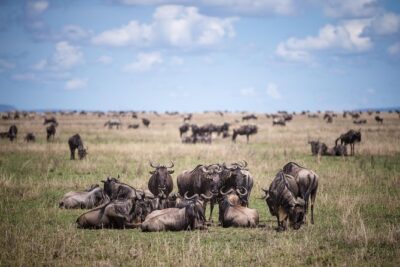
The crater floor has a permanent water supply, which supports a steady concentration of animals. You may search for wildebeest, buffalo, zebra, eland, Grant’s gazelle, Thomson’s gazelle, elephants, and the endangered black rhino.
This is one of the strongest days for people who want a broad wildlife experience in a relatively compact area. Compared with the Serengeti, the crater can feel more concentrated. You are not crossing such enormous open distances to find animals, although the number of safari vehicles in this popular area can affect the sense of solitude.
The crater’s cultural importance also matters. People and wildlife share the wider conservation area, making this more than a fenced-off park detached from local life. Your guide can help explain the relationship between the protected area, the Maasai communities, and safari tourism.
Because you spend much of the day below the rim, carry water, sun protection, and a warm layer for the morning. Temperatures can change quickly between the rim and crater floor.
Lake Eyasi and the Hadzabe way of life
Day six shifts the focus from wildlife to people. After an early breakfast, you meet a local guide and visit the Hadzabe Bush People and Datoga Tribe near Lake Eyasi.
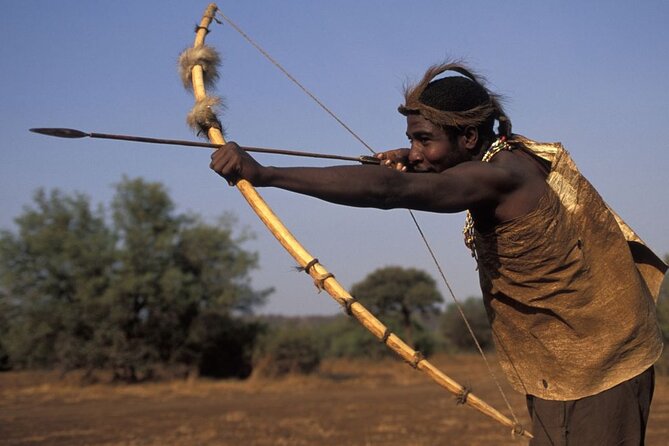
The Hadzabe encounter centers on daily activities such as hunting and gathering. You may see the area where fruit, roots, and water are collected during the dry season, as well as caves used as homes. The Datoga visit adds another perspective on life in the region.
This is a valuable contrast after several days of game drives. You are not simply looking at Tanzania through a vehicle window. You are learning how people use the land and adapt to dry conditions. The experience is particularly suitable for families, and one large family group praised the ability to include tribal visits for children and teenagers.
After lunch, you return to the lodge for free time. A pool, bar, and private balcony overlooking the lake offer an easy afternoon after an early start. That pause is welcome because the safari has already included several long days.
Cultural visits require good manners. Listen first, ask before photographing people, and let your guide explain local customs. The aim is contact and understanding, not treating a community as a performance.
Lake Manyara and the search for tree-climbing lions
Your final full safari day takes you to Lake Manyara National Park. The park stretches along the base of the Rift Valley escarpment and packs strikingly different settings into a relatively small area.
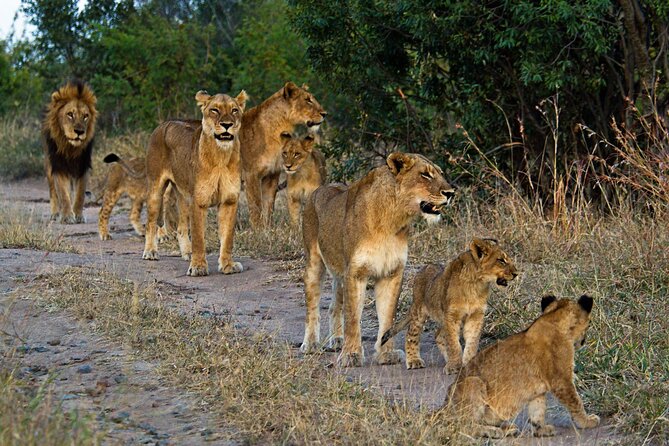
You may pass giant fig trees, acacia woodland, mahogany trees, grassy flood plains, a soda lake, open plains, and distant volcanic peaks. Buffalo, wildebeest, giraffes, mongoose, dik-dik, and zebra may gather on the grassy areas, while the woodland offers a chance to search for monkeys, birds, and the park’s famous tree-climbing lions.
The lions are never guaranteed, but they are the special target here. Keep your eyes on the branches, not just the grass. The park’s mix of forest and open ground also makes this a good final day because it feels different from both the Serengeti and Ngorongoro.
Lake Manyara is another full day in the vehicle, so some fatigue is likely by this point. You will have seen a wide range of habitats, but the schedule leaves little room for an unplanned rest day. If you know you need more downtime, ask whether the route can be adjusted before paying.
What the $3,834 price includes
At $3,834 per person, this is not a budget safari. It is also not a bare-bones price once you count the included services.
The package covers:
- Arrival and departure airport transfers
- Accommodation
- An English-speaking driver-guide
- Other guide languages upon request
- A custom-built, open-roof 4WD Land Cruiser
- Fridge and inverter in the vehicle
- Meals as specified
- Park and vehicle entry fees
- Unlimited game drives
- A Maasai village visit
- Government fees and taxes
- One bottle of water and two sodas per person per safari day
That bundle makes the price easier to understand. Tanzania’s park fees and vehicle costs add up quickly, and private transport gives you control that a shared group safari does not. You are paying for a managed route through several major parks, not simply a room and a ride.
The value is strongest if you want one company to arrange the major moving parts. It is less compelling if you prefer independent travel, short transfers, or a simple itinerary based around one park.
The included drinks are modest, but helpful. Bring extra water if you prefer to drink more than the listed amount, and ask the operator for a final list of what is included in each lodge stay.
Comfort, guides, and the realities of the road
The open-roof Land Cruiser is the right tool for this trip. You get a clear view while searching for animals, and the vehicle includes a fridge and inverter. Air conditioning is also mentioned in connection with the vehicle in one detailed account, though you should confirm the exact vehicle specification for your departure.
The strongest praise has focused on the guides and organization. Obi was described as outstanding, Zablon as a guide with strong local connections, and Michael as fluent in both German and English. Kessy has also guided German-speaking groups. If language is important to you, request your preferred guide language early.
Communication before departure has also been praised as clear and quick. That matters when you are arranging airport transfers, accommodation, park fees, meals, and perhaps additional activities such as a Mount Kilimanjaro trek.
The route is private, but not leisurely. Expect early breakfasts, long drives, dusty roads, and full days outside. In exchange, you see five distinct parts of northern Tanzania in one trip.
Who should book this safari?
I would recommend it to first-time safari visitors who want a broad introduction to northern Tanzania and prefer having the practical work arranged. It suits families particularly well because the route includes animals, scenery, and cultural encounters rather than eight days of game drives alone.
It is also a good fit for small private groups, photographers, and anyone who values a guide’s ability to adjust the search for wildlife. German-speaking travelers should ask about Michael, Kessy, or another German-speaking guide, while English is the standard guide language listed.
I would hesitate if you dislike long road journeys or need frequent rest days. The route is ambitious, and the final two full safari days come after several demanding drives. I would also ask for the exact lodge names, room details, guide language, and confirmed meal schedule before making a final decision.
Should you book the 8-day Tanzania route?
Book it if you want the classic northern Tanzania highlights plus meaningful time at Lake Eyasi and a Maasai village. The Serengeti gets the attention, but Tarangire’s elephants and baobabs, Ngorongoro’s crater floor, and Lake Manyara’s varied scenery give the trip its full shape.
The strongest reason to choose it is the balance of wildlife and people. The best practical reason is that major costs, transfers, park fees, meals, and private transport are bundled together. The main warning is simple: eight days is enough to see a lot, but not enough to see it slowly.
Free cancellation is available if you cancel at least 24 hours before the experience begins. If the route, price, and long driving days suit you, this is a well-rounded way to meet Tanzania on its own ground.
FAQ
Where does the safari begin?
The safari begins in Arusha, with arrival pickup offered from Kilimanjaro International Airport or Arusha Airport.
How long does the safari last?
The experience lasts approximately eight days, ending with an airport transfer on day eight.
Is this a private safari?
Yes. Only your group takes part in the activity.
What type of vehicle is used?
The safari uses a custom-built, extended, open-roof 4WD Land Cruiser with a fridge and inverter.
Is a guide included?
Yes. An English-speaking driver-guide is included, and other languages are available upon request.
Which national parks and areas are visited?
The route includes Tarangire National Park, Serengeti National Park, Ngorongoro Crater, Lake Eyasi, and Lake Manyara National Park, with time in Arusha at the beginning and end.
What is the cancellation policy?
You can cancel up to 24 hours before the experience start time for a full refund. Changes or cancellations made less than 24 hours before the start time are not accepted.
Just added around Arusha
- 5 Days Safari Tarangire, Serengeti, and Ngorongoro Crater★ 5.0 · 3 reviews
- Love lives in Africa★ 5.0 · 3 reviews
- 5 Days of Safari, Culture & Hot Springs – Tour from Arusha★ 5.0 · 3 reviews
- Arusha National Park Safari by Jeep★ 4.5 · 3 reviews
- 5Days Family _Group Tour Lodging Mid-Range in the Jungle★ 5.0 · 3 reviews
- Serengeti & Ngorongoro 3 Days Budget Safari★ 5.0 · 3 reviews
- 2 Days Tarangire and Ngorongoro Crater Tour★ 5.0 · 3 reviews
- 7 Days PRIVATE Best of Tanzania Safari *Departing everyday*★ 5.0 · 3 reviews
Safaris in Arusha, compared.

Serengeti Balloon Safari and authentic bush breakfast
Read our review →
Balloon Safari & Bush Breakfast in Serengeti – Miracle Experience
Read our review →


3 Days Serengeti & Ngorongoro Group Camping Safari
Read our review →
7-Day Premium Luxury Tanzania Safari All-Inclusive
Read our review →