Reviewed · SAFARIS IN ARUSHA
8 Days, Migrations Safari-River crossing -(July to October)
The river crossing is nature at its most nerve-racking. This eight-day private safari links Tarangire, the Serengeti, the Mara River, Ngorongoro Crater, Olduvai Gorge, and Lake Manyara in one long northern Tanzania circuit. I like the generous time in the northern Serengeti, where two full days are set aside for the migration, and I like that the price includes lodges, luxury camps, meals, drinks during game drives, park fees, and airport transfers. The main caution is simple: a Mara River crossing is never guaranteed, even when you spend several days waiting nearby.
This is a serious wildlife trip, not a quick park sampler. You will spend long hours in a safari vehicle, often around eight to ten hours on game-drive days, and the route covers a lot of ground. That effort pays off with varied scenery and strong chances for classic African wildlife, but you should be comfortable with early starts, dusty roads, and changing plans when animals have other ideas.
In This Review
- Key points at a glance
- The big question: can you really see the Mara River crossing?
- Day 1: Tarangire’s elephants and baobabs
- Day 2: Central Serengeti and classic big-game country
- Day 3: Following the migration through Serengeti
- Days 4 and 5: Two chances at the Mara River
- Day 6: Olduvai Gorge and the road to Ngorongoro
- Day 7: Early wildlife viewing in Ngorongoro Crater
- Day 8: Lake Manyara before Arusha or the airport
- What the $5,600 price includes
- The guide can make or break a safari
- Who should book this safari?
- Final verdict: book it for time in the wild, not a guarantee
- FAQ
- Where does the safari start?
- How long does the safari last?
- Is this a private tour?
- When is the safari available?
- Is a Mara River crossing guaranteed?
- Which parks and sites are included?
- What meals are included?
- Are airport transfers included?
Key points at a glance
- Two full days near the Mara River: The itinerary gives you repeated chances to find wildebeest herds gathering at the water.
- A private safari for your group: You are not sharing the activity with strangers, and the tour begins with pickup at 8:30 a.m.
- A broad northern Tanzania route: Tarangire, central and northern Serengeti, Ngorongoro, Olduvai Gorge, and Lake Manyara all make the program.
- A guide-led wildlife education: English-speaking driver-guides explain animal behavior, identification, and the Great Migration.
- Good-value inclusions: Lodges or luxury camps, seven breakfasts, seven dinners, eight lunches, park fees, airport transfers, and selected drinks are included.
- A strong record for personal service: Company guide names praised in past feedback include Tiger, Dullah, Joseph, and Anuary, while Damas has handled trip arrangements for some visitors.
The big question: can you really see the Mara River crossing?
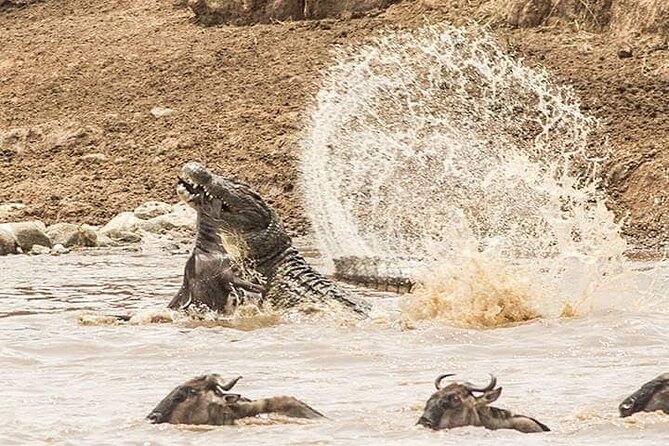
The short answer is yes, but nobody can promise it. Wildebeest may gather beside the river for hours or days, then turn away. They may cross while your vehicle is elsewhere. They may cross in a rushed, chaotic wave, or not cross during your stay at all.
That uncertainty is not a flaw in the natural event. It is the reason this part of the safari requires patience. The itinerary wisely gives you two full days in the Mara area, plus time in northern Serengeti on the surrounding days. Your guide can search for herds, watch their movement, and adjust the day around what is happening on the ground.
The Mara River area itself is worth seeing even without the famous crossing. You can expect open grassland, woodland, river vegetation, and rocky kopjes. Resident wildlife is strong here, so the drive is not reduced to a single all-or-nothing sighting.
The best way to think about this safari is not two guaranteed crossing days. Think of it as several opportunities to witness migration behavior in one of Tanzania’s most dramatic wildlife regions.
More Safaris in Arusha
- Serengeti Balloon Safari and authentic bush breakfast
★ 5.0 · 2,480 reviews - Balloon Safari & Bush Breakfast in Serengeti – Miracle Experience
★ 5.0 · 1,646 reviews - 4 Days Group Camping Safari
★ 5.0 · 1,101 reviews
Day 1: Tarangire’s elephants and baobabs
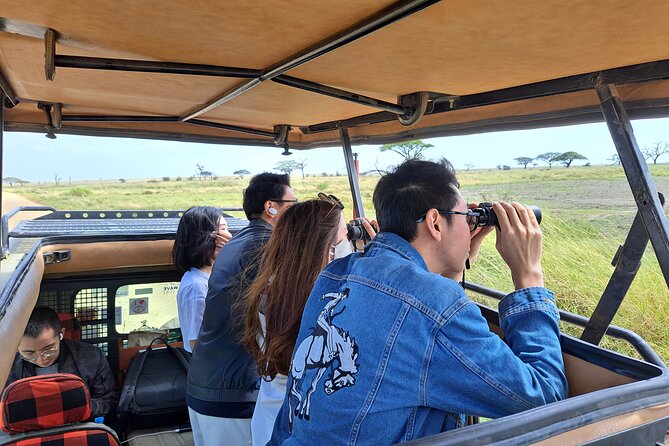
The safari begins from Arusha with a drive to Tarangire National Park. The first game drive lasts about eight hours, giving you a full introduction to Tanzania’s wildlife and to the rhythm of a road safari.
Tarangire is known for large elephant herds, baobab trees, tree-climbing lions, and the Tarangire River. The river flows throughout the year and becomes especially important during dry periods, when it serves as a key water source for wildlife.
I like this opening because Tarangire has its own character. The baobabs give the park a striking silhouette, while elephant sightings can be especially rewarding. The mention of tree-climbing lions adds a special possibility, though you should treat it as a chance rather than a promise.
This is also a long first day. You will be moving from Arusha into the park, then spending hours on a game drive before reaching your accommodation. Pickup is offered, and the listed start time is 8:30 a.m., but confirm the exact pickup place and timing before departure.
Day 2: Central Serengeti and classic big-game country
After breakfast, you head toward central Serengeti. This region is known for resident wildlife, including the big five: lion, leopard, elephant, buffalo, and rhino.
The central Serengeti is an important part of the route because it is not dependent only on the migration. Animals live here year-round, so you have a good reason to keep watching even when the moving herds are farther north.
Expect another day of roughly eight hours in the field. Your driver-guide will be responsible for finding animals, explaining what you are seeing, and judging how much time to spend at each sighting. The company places strong emphasis on English and Spanish communication, along with animal identification and behavior.
The trip’s feedback has repeatedly highlighted guide skill, patience, humor, and careful handling. Names associated with that praise include Tiger, Dullah, Joseph, and Anuary. If one of those guides is assigned to your group, you will have a useful point of personal continuity. Still, ask in advance who your actual guide will be, since the information does not guarantee a particular person.
Day 3: Following the migration through Serengeti
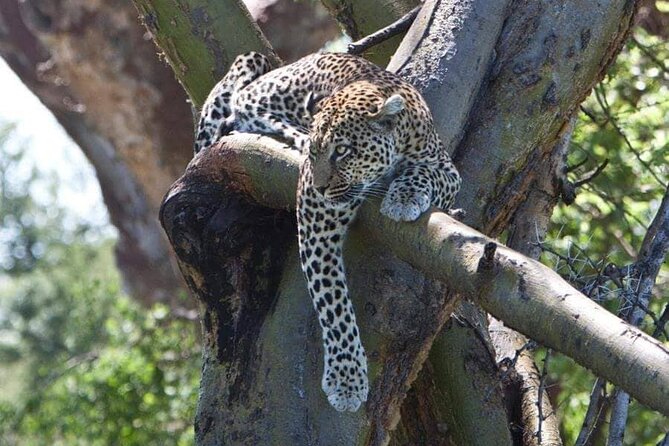
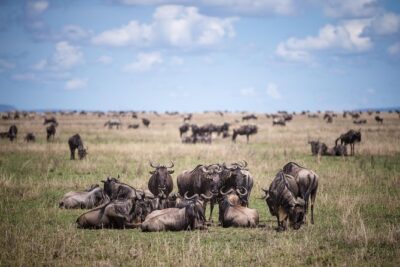
Day three is a full ten-hour game drive following the Great Migration trails. The Serengeti is a UNESCO World Heritage site and supports huge numbers of wildebeest, zebra, Thomson’s gazelle, predators, and other wildlife.
The wildebeest do not travel alone. About 200,000 zebras and 300,000 Thomson’s gazelles are noted as joining the movement toward fresh grazing. That mix creates more than a single animal spectacle. It is a moving food chain, with prey, predators, scavengers, and birds all responding to the herds.
This is one of the safari’s strongest days for people who want time rather than a quick look. Ten hours sounds demanding, and it is, but the long day gives your guide room to search across a broad area. Wildlife does not follow a timetable, and the extra hours matter.
You should also know that the migration is not a neat parade. The location of the herds changes, and conditions can alter the plan. A flexible attitude is essential. The best moments may involve a large herd moving across open plains, but they may also come from a quiet predator sighting or a close look at ordinary resident wildlife.
More safaris to compare:
- 5 Days Group Camping Safari
★ 5.0 · 730 reviews - 3 Days Serengeti & Ngorongoro Group Camping Safari
★ 5.0 · 574 reviews - 7-Day Premium Luxury Tanzania Safari All-Inclusive
★ 5.0 · 426 reviews - 3-Day Classic Serengeti Safari
★ 5.0 · 263 reviews
Days 4 and 5: Two chances at the Mara River
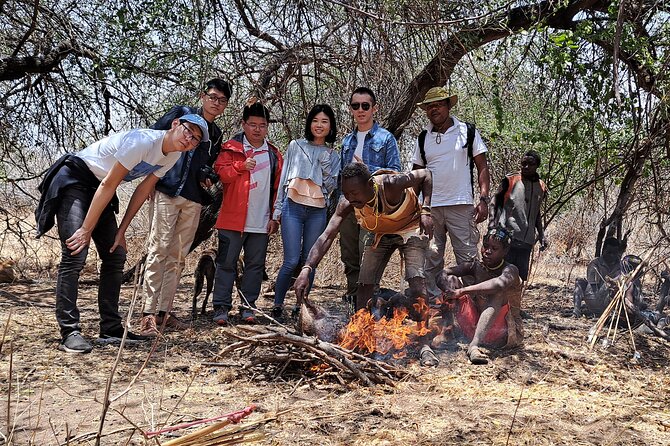
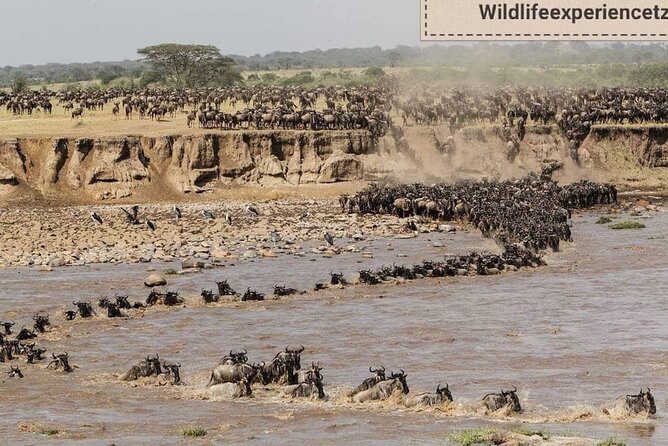
These are the heart of the itinerary. After breakfast, you spend two full days in the northern Serengeti and Mara River area, with about ten hours of game viewing on each day.
The route is designed around the chance of seeing wildebeest cross north toward Kenya and later return south. In practice, the river crossing can be difficult to find. Herds may stand near the water without committing, and the crossing may occur days later.
That is why two days is better than one. You are not guaranteed success, but you have more time to observe herd movement and respond to fresh information. Your guide’s patience and local knowledge matter greatly here.
The Mara area also gives you scenery that differs from the central Serengeti. Expect kopjes, woodland, riverine vegetation, and open plains. Even if the crossing never happens, these habitats can produce sightings of resident wildlife.
One practical point deserves emphasis: ten hours in a safari vehicle can be tiring. The reward is more time in the field, but you should bring sun protection, a hat, water for personal use, and patience for slow periods. The supplied package includes soft drinks, house wine, and premium beer during game drives, but personal items and hard liquor are not included.
Day 6: Olduvai Gorge and the road to Ngorongoro
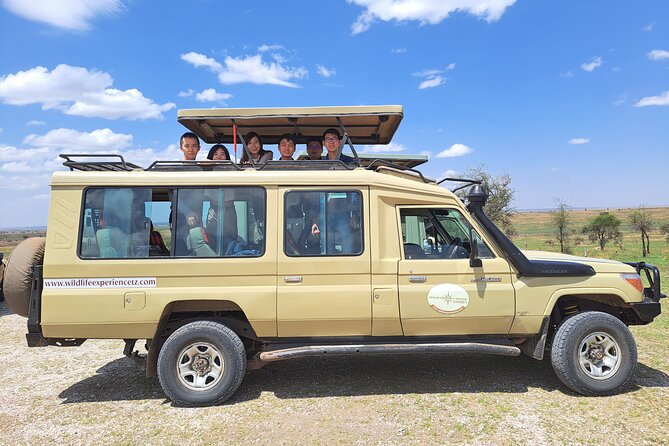
Day six begins with another Serengeti game drive before you travel toward the Ngorongoro Conservation Area. The route includes the Olduvai Gorge museum, one of East Africa’s best-known archaeological sites.
Olduvai adds a human story to a safari that otherwise focuses on animals. Nearby Laetoli is associated with hominid footprints preserved in volcanic rock dating back about 3.6 million years. Those traces connect the modern visitor with some of the earliest known evidence of human ancestors.
The schedule shown for this day lists only ten minutes at the Ngorongoro Conservation Area, which is clearly not a useful guide to the whole day. In reality, this is a transition day with a morning game drive, a cultural and archaeological stop, and a drive to the crater rim for the night. Confirm the exact Olduvai visit, museum access, and driving times when you book.
Sleeping at the rim positions you well for the early crater drive the next morning. The tradeoff is another long transfer after several demanding days in the Serengeti.
Day 7: Early wildlife viewing in Ngorongoro Crater
An early breakfast is followed by a game drive inside Ngorongoro Crater, with about eight hours listed for the day. The Ngorongoro Conservation Area protects wildlife and natural resources while also recognizing the interests of Indigenous people and supporting tourism.
The crater is the visual centerpiece of this section of the safari. Its enclosed setting can make wildlife viewing feel concentrated, and the itinerary specifically notes the possibility of seeing black rhino, though only very few remain.
An early start is important here. You get more time in the crater and a better chance to enjoy the area before the day’s heat and traffic build. The crater is not a guaranteed wildlife theater, but the setting itself makes the drive special.
After the game drive, you return to your lodge. By this point, the program has packed in several full days of wildlife viewing, so this is a good moment to slow down, review photographs, and appreciate the trip’s variety.
Day 8: Lake Manyara before Arusha or the airport
The final day takes you to Lake Manyara National Park after breakfast. The itinerary lists the remainder of the day for game viewing, followed by transfer to Arusha for an overnight stay or to the airport for your flight home.
Lake Manyara is known here for lush groundwater forest, baboons, blue monkeys, and tree-climbing lions. This makes a pleasant contrast with the open plains of Serengeti and the crater’s enclosed setting.
The listed stop duration is six minutes, which cannot represent the planned park visit. Treat it as a display error and confirm your departure timing carefully. An airport transfer after a game drive requires a clear flight schedule and enough buffer for the drive back.
If you are staying overnight in Arusha, the final day is less rushed. If you are flying out, ask the operator to confirm the exact transfer plan before you commit to a same-day departure.
What the $5,600 price includes
At $5,600 per person, this is an expensive safari, but the price covers a substantial package. You receive all fees and taxes, lodges and luxury camps, a professional English-speaking guide, game drives, airport transfers, a Maasai village visit, and meals for most of the trip.
The meal inclusions are specific: seven dinners, eight lunches, and seven breakfasts. Selected drinks during game drives include house wine, soft drinks, and premium beer. Tips, hard drinks, and personal items are extra, as are accommodation and meals in Arusha before and after the safari.
The private format improves the value for couples, families, or a small group that wants its own vehicle and schedule. You are not joining a larger shared activity. That can make a difference during a long wildlife day, when you may want to linger at a sighting or move on quickly.
The value depends heavily on your accommodation standard and group size. Luxury camps and long park access help justify the price, but you should ask for the names and locations of the lodges, the number of people in your vehicle, and the exact vehicle standard before paying. Those details are not fully specified here.
The guide can make or break a safari
A safari guide is more than a driver. You depend on that person to read animal behavior, spot distant wildlife, explain the migration, and keep the day comfortable.
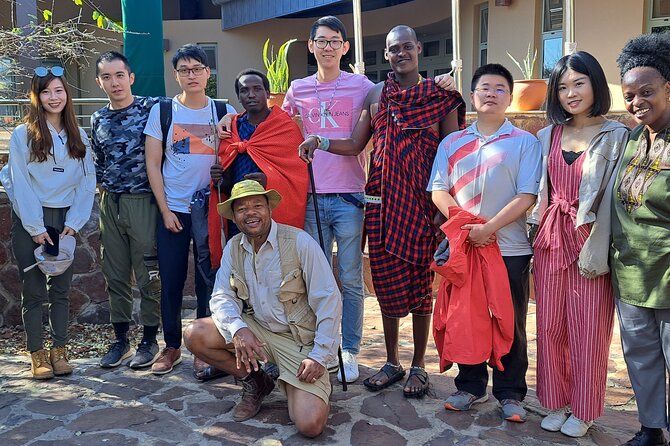
The company has operated since 2010 and uses guides who speak English and Spanish. Feedback connected with the company gives particular credit to patient, careful, friendly guides, including Tiger, Dullah, Joseph, and Anuary. Damas is also named for arranging complex trips and helping coordinate hotel stays, transfers, and extra activities.
Ask who will guide your safari and what languages are available. If you have strong interests in birds, predators, photography, or archaeology, say so before departure. The itinerary is private, so your preferences may be easier to accommodate than on a fixed group trip.
Who should book this safari?
I would recommend it to you if the Mara River crossing is your main goal and you are willing to accept uncertainty. The two-day Mara focus is the program’s clearest strength.
It also suits first-time safari visitors who want the major northern Tanzania parks in one trip. You see elephants and baobabs in Tarangire, resident wildlife in central Serengeti, migration country in the north, archaeological sites near Olduvai, the Ngorongoro Crater, and Lake Manyara.
I would hesitate if you dislike long road days or want a slow, lodge-centered holiday. The route is ambitious, and several days run eight to ten hours. I would also hesitate if seeing a river crossing is non-negotiable. Nature does not honor a booking confirmation.
The free cancellation policy allows cancellation up to 24 hours before the start time for a full refund. Changes or cancellations inside that window are not accepted or refunded, so keep the local cut-off time in mind.
Final verdict: book it for time in the wild, not a guarantee
This is a well-loaded northern Tanzania safari with a clear focus on the Great Migration and unusually useful time near the Mara River. I like the private format, the broad park selection, the included meals and transfers, and the strong emphasis on guide quality.
Book it if you want a full wildlife circuit and can handle long days, uncertain sightings, and a high price. Before paying, confirm your guide, vehicle, accommodations, group size, the questionable time entries on days six and eight, and your airport transfer. If those details are clear, this safari offers a serious chance to see Tanzania at its wildest, with enough time for the animals to set the schedule.
FAQ
Where does the safari start?
The safari starts in Arusha, Tanzania, with pickup offered. The listed start time is 8:30 a.m.
How long does the safari last?
The experience lasts approximately eight days.
Is this a private tour?
Yes. Only your group participates in the activity.
When is the safari available?
The migration river-crossing safari is described as operating from July through October.
Is a Mara River crossing guaranteed?
No. Finding a crossing can be difficult, and herds may remain beside the river for days before crossing or may not cross while you are there.
Which parks and sites are included?
The route includes Tarangire National Park, Serengeti National Park, the Mara River area, Ngorongoro Conservation Area, Olduvai Gorge museum, Ngorongoro Crater, and Lake Manyara National Park.
What meals are included?
The package includes seven dinners, eight lunches, and seven breakfasts.
Are airport transfers included?
Yes. Airport transfers are included, and on the final day you can be transferred to Arusha for an overnight stay or to the airport for your flight home.
Just added around Arusha
- 5 Days Safari Tarangire, Serengeti, and Ngorongoro Crater★ 5.0 · 3 reviews
- Love lives in Africa★ 5.0 · 3 reviews
- 5 Days of Safari, Culture & Hot Springs – Tour from Arusha★ 5.0 · 3 reviews
- Arusha National Park Safari by Jeep★ 4.5 · 3 reviews
- 5Days Family _Group Tour Lodging Mid-Range in the Jungle★ 5.0 · 3 reviews
- Serengeti & Ngorongoro 3 Days Budget Safari★ 5.0 · 3 reviews
- 2 Days Tarangire and Ngorongoro Crater Tour★ 5.0 · 3 reviews
- 7 Days PRIVATE Best of Tanzania Safari *Departing everyday*★ 5.0 · 3 reviews
Safaris in Arusha, compared.

Serengeti Balloon Safari and authentic bush breakfast
Read our review →
Balloon Safari & Bush Breakfast in Serengeti – Miracle Experience
Read our review →


3 Days Serengeti & Ngorongoro Group Camping Safari
Read our review →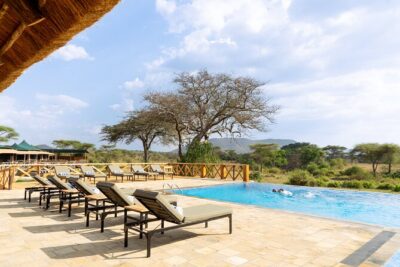
7-Day Premium Luxury Tanzania Safari All-Inclusive
Read our review →