
Reviewed · MAASAI VILLAGE TOURS
Maasai Boma Cultural Experience (maasai village tour)
Meet culture at ground level. This Maasai boma visit gives you a close look at daily life, from making fire and milking cows to dancing with Maasai men. I like the warm welcome from the women and the chance to ask direct questions, and I also like that guides such as Johnson and Arthur keep the day clear and friendly. The main drawback is timing: the full outing is advertised at 7 to 10 hours, yet one recent visit finished two to three hours earlier than expected.
You leave Arusha or Moshi by road, spend about 3.5 hours at the boma, eat lunch, and return to your accommodation. I especially like the practical activities, since they give you more than a short performance. Still, this is a cultural introduction, not a full study of Maasai life, so bring curiosity and respect rather than expecting every custom to be explained in detail.
In This Review
- Key points to know before you go
- What the Maasai boma visit is really about
- Arriving from Arusha or Moshi
- The first welcome: songs, clothing, and introductions
- Walking through the compound and learning daily work
- The adumu dance and your chance to join
- Lunch at the boma
- The guides make a major difference
- Is $90 good value?
- Who should book this experience?
- Booking details worth keeping in mind
- Should you book the Maasai Boma Cultural Experience?
- FAQ
- Where does the Maasai Boma Cultural Experience take place?
- Can I be picked up in Arusha?
- Can I be picked up in Moshi?
- How long does the experience last?
- What language does the guide speak?
- Is lunch included?
- What activities can I learn about?
- Can I join the Maasai jumping dance?
- Is a private group available?
- Can I cancel for a refund?
Key points to know before you go
- A welcoming song starts the visit: Maasai women greet you with singing and dancing when you arrive at the boma.
- Daily tasks become hands-on lessons: You may learn how to make fire, milk cows, fetch water, or check beehives.
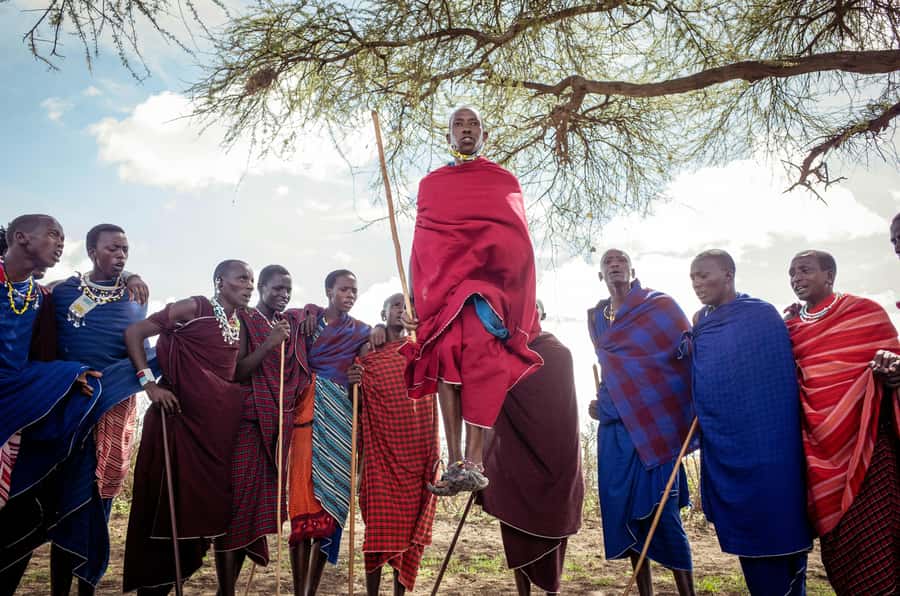
- The adumu dance is participatory: Maasai men perform the famous jumping dance, and you can join in.
- Johnson and Arthur receive strong praise: Both guides are described as punctual, friendly, clear in English, and happy to answer questions.
- Lunch is included: The meal is served at the boma, with food and drinks covered in the price.
- The schedule can vary: Plan for a long day, but understand that the actual duration may be shorter.
What the Maasai boma visit is really about
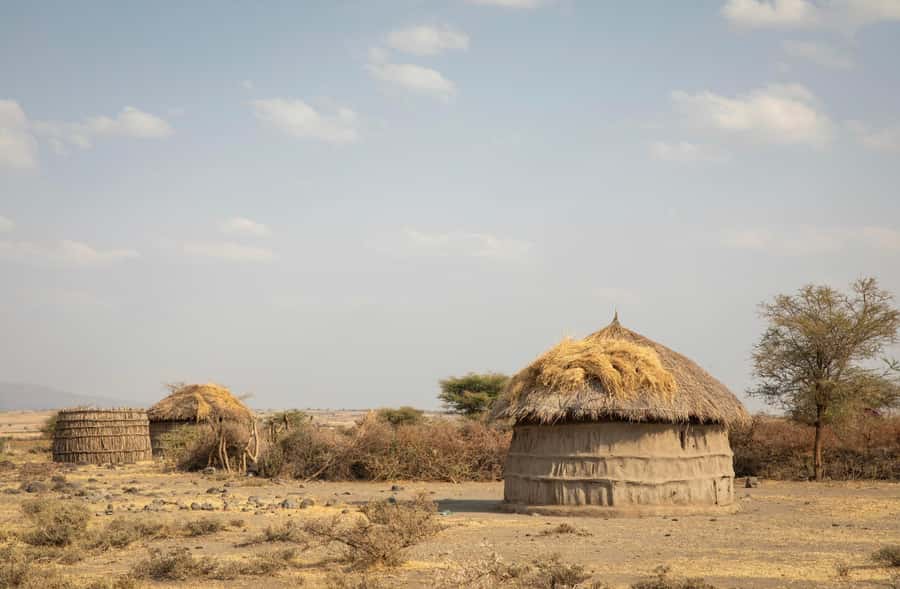
A boma is a compound where several families live together. The visit is built around seeing how the compound works and learning about Maasai customs, food, work, clothing, family life, and traditions.
That focus matters. You are not simply driven to watch a dance and buy a souvenir. You walk through the compound and hear explanations about daily tasks. The activities may change slightly, but the planned subjects include fire-making, cow milking, water collection, and beehives.
I find this format more useful than a talk delivered from a distance. When you see the work involved in getting water or lighting a fire, ordinary routines become easier to understand. You also have a chance to ask questions through an English-speaking guide.
The experience is described as an authentic cultural visit, but it is still arranged for visitors. That is not a criticism. A cultural tour needs structure, and the welcome songs, clothing, dance, demonstrations, and lunch give the day a clear shape. You should simply keep your expectations sensible. You are receiving an introduction to Maasai life, not spending several days living in a boma.
More Maasai Village Tours in Arusha
- 5 Days Camping Tarangire, Serengeti & Ngorongoro crater & Visiting Maasai
★ 5.0 · 229 reviews - Maasai village visit, Materuni waterfalls & coffee experience
★ 4.5 · 95 reviews - 7-Day Private Tanzania Safari with Sunset Walking on the Crater Rim and Maasai
★ 5.0 · 40 reviews
Arriving from Arusha or Moshi
Pick-up and drop-off are available in both Arusha and Moshi. The transfer is included, along with the guide fee, food, drinks, and other fees.
This makes the $90 price easier to judge. You are paying for transport, a guided cultural visit, activities, lunch, and a full day out, rather than only admission to a village. If you are staying in Arusha, the outing fits naturally into a northern Tanzania schedule. Moshi is also possible, though the total time on the road may matter more to you.
The advertised duration is 7 to 10 hours, with the boma portion listed at about 3.5 hours. That leaves a good part of the day for driving and the meal. One Danish participant found the day two to three hours shorter than the stated range, while another report said the timing matched the plan exactly. In plain terms, allow most of a day, but confirm the start time and expected return when you book.
The drive itself may offer a little extra interest. One participant saw the first giraffes along the route, though wildlife sightings are not part of the promised program. Do not book this as a safari. Any animals you see on the road are a bonus.
The first welcome: songs, clothing, and introductions
On arrival, Maasai women welcome you with songs and dancing. This gives the opening a lively feel, but it also sets the tone for the rest of the visit: you are being invited into a public cultural presentation as well as a working compound.
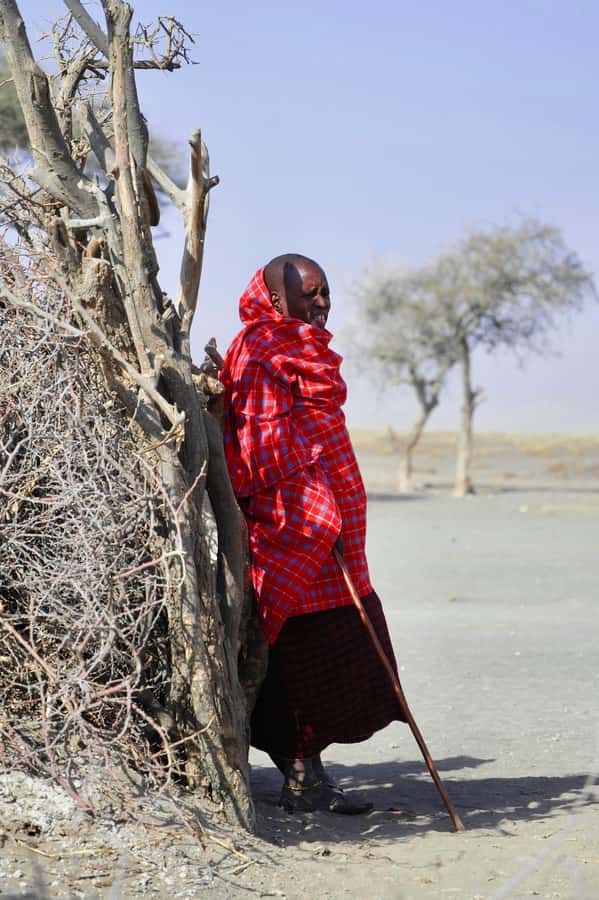
You may be dressed in a shuka, the familiar Maasai cloth, and adorned with traditional jewellery. This is a simple way to connect you with the visual side of the culture. It also makes for memorable photographs, though you should ask before taking close-up pictures and follow the guide’s advice about respectful behavior.
The welcome is not meant to replace conversation. Your guide helps explain what you are seeing and gives you room to ask questions. English is the stated tour language, and the guides have received especially strong praise for communication. Alexander described the English of the guides as excellent, while Sadie singled out Arthur and Johnson for being friendly and punctual.
That support matters. Cultural details can be easy to misunderstand when you only watch from the edge. A guide who explains the sequence and translates questions helps you take part without guessing.
Walking through the compound and learning daily work
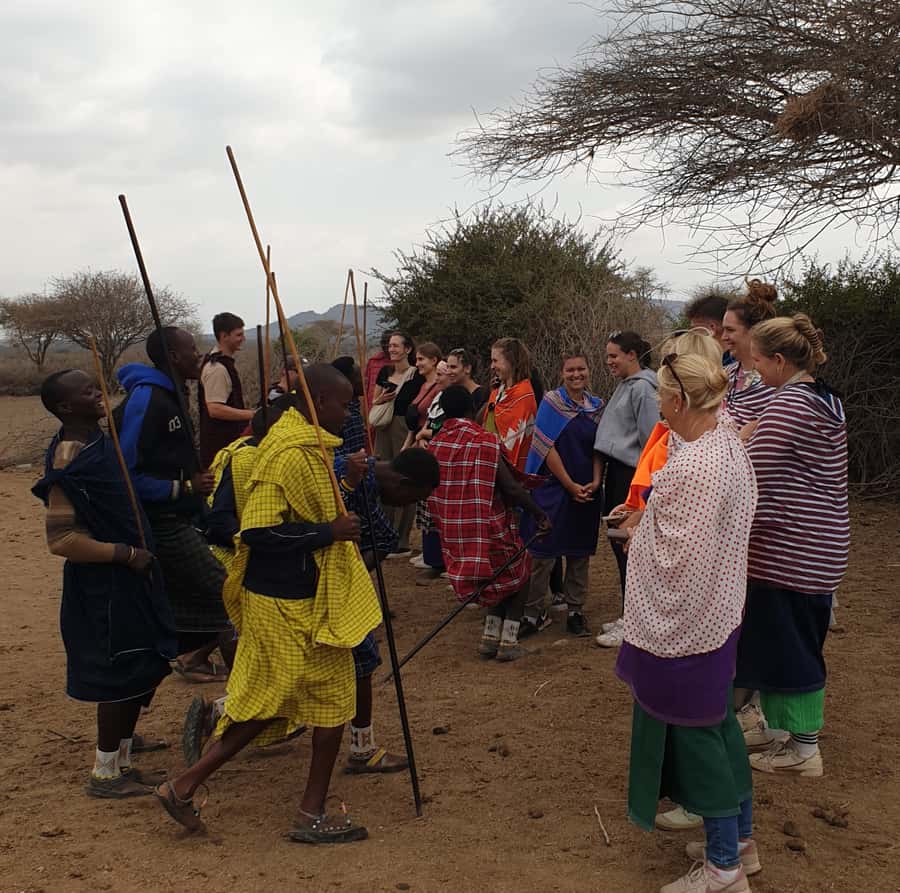
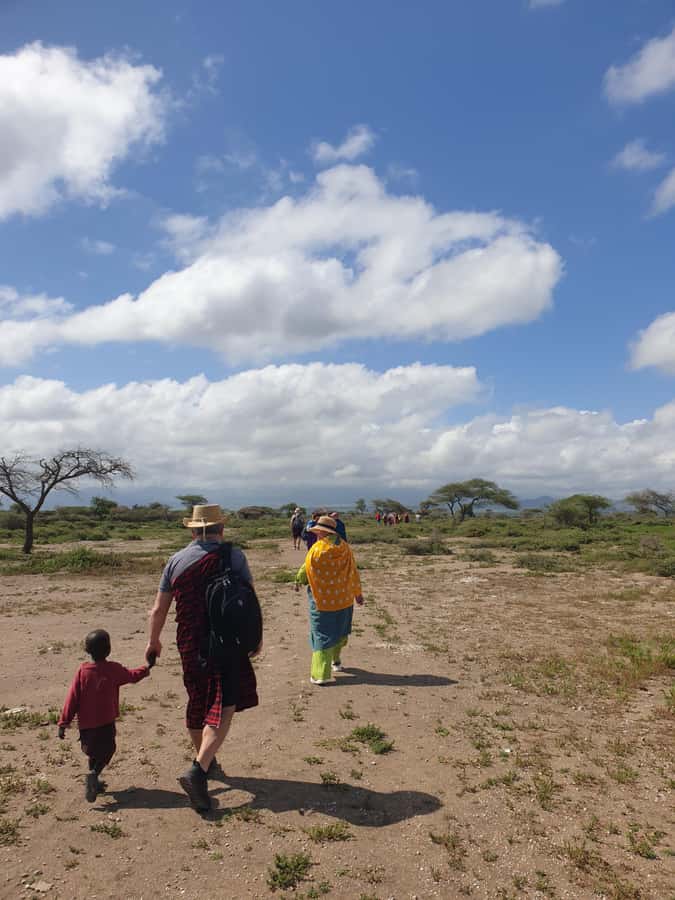
After the welcome, you tour the boma on foot. The walk covers the ordinary tasks that keep family life moving.
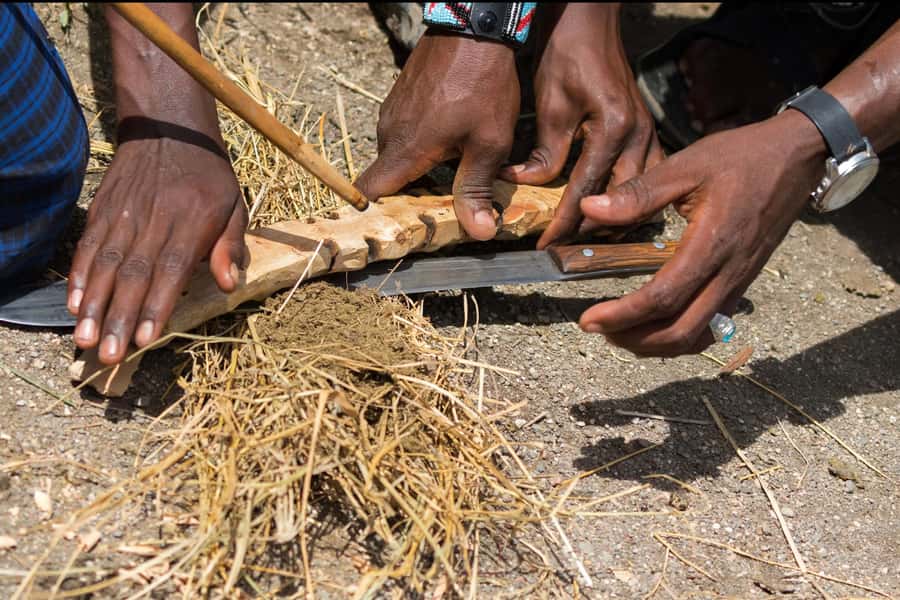
You may see or try to learn:
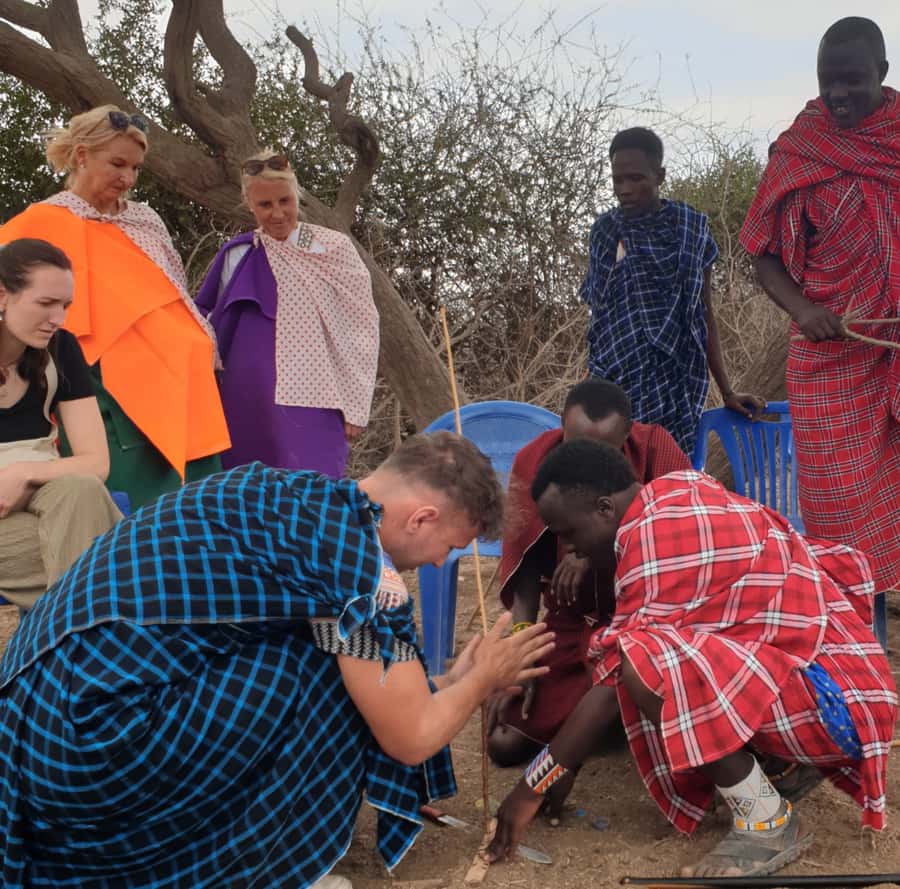
- Making a fire
- Milking cows
- Fetching water
- Checking the progress of beehives
- Learning about food and household habits
- Hearing about Maasai history and traditions
The word may is important here. The description gives a list of possible activities, not a guarantee that every one will happen on every visit. Conditions at the boma and the day’s schedule can affect what you see.
The value is in the contrast between familiar modern routines and the work required here. Fetching water, for example, is not just a quick demonstration. It helps you understand how a basic household need can shape the rhythm of a day. Milking cows connects directly with livestock, food, and family work.
You might also learn about beehives, an unusual detail that adds variety to the visit. It is easy for a cultural tour to focus only on clothing and dancing. A look at food production and household tasks gives the experience more substance.
A walk to a waterhole is mentioned in one account, along with views of Mount Kilimanjaro and the surrounding natural setting. Those features may depend on the exact location and visibility on the day, so treat them as possible additions rather than guaranteed highlights.
More Maasai village tours:
- Kilimanjaro: Maasai Village Visit, Waterfalls, & Coffee Tour
★ 4.9 · 27 reviews - Arusha: Maasai Village Tour
★ 4.8 · 22 reviews - 5- Days Best Mid-range Safari and Maasai Village experience
★ 5.0 · 20 reviews - 1 Day Olpopongi Real Maasai Cultural adventurous Trip | BURIGI CHATO SAFARIS LTD
★ 4.5 · 13 reviews
The adumu dance and your chance to join
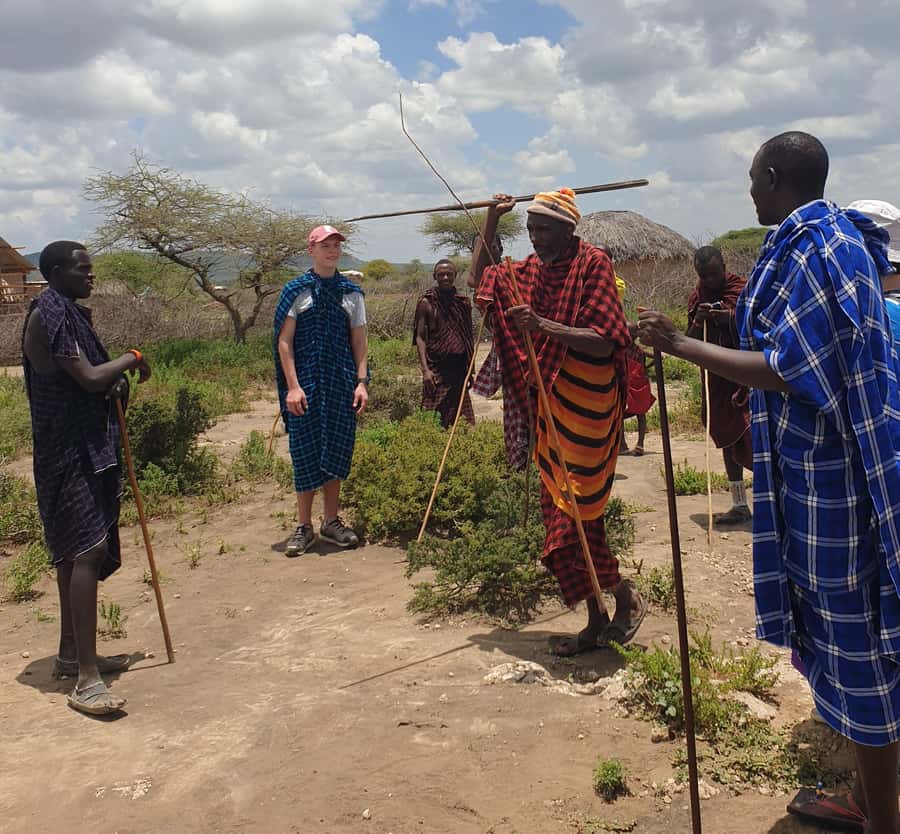
The Maasai men perform adumu, the famous jumping dance often linked with displays of strength among young men. The performance is one of the best-known parts of Maasai culture, so it can feel familiar before you even arrive.
The useful difference here is that you are welcome to participate. You do not have to be a skilled dancer, and the point is not to compete with the performers. Join if it feels comfortable, follow the rhythm, and let the moment be a shared exchange rather than a test.
One German participant found the men’s stick dance unusual but impressive. That reaction is understandable. The dance may look simple at first, but the height and control of the jumps make it striking in person.
A respectful attitude helps. Do not treat the dance as a costume show detached from meaning. Ask your guide what it represents, who performs it, and when it is traditionally used. The tour is strongest when you treat the performance as a doorway into a culture, not as the whole culture itself.
Lunch at the boma
The visit ends with lunch at the boma. Food and drinks are included, so you do not need to budget separately for the midday meal.
Lunch also gives you time to pause after the walking, demonstrations, and dancing. One participant described the lunch packet as very tasty, and another called the meal large and enjoyable. Since the exact menu is not specified, do not plan around a particular dish. If you have dietary needs, ask ahead of time rather than assuming the included meal can be changed.
Eating at the boma keeps the experience connected to the place you came to understand. You are not rushed straight back to town after the final activity. The meal becomes part of the cultural visit, though you should remember that it is prepared as part of a tour and may not represent every Maasai meal.
The guides make a major difference
The strongest personal praise goes to the guides. Johnson is described as warm, competent, and good at explaining the schedule as the day unfolds. Arthur and Johnson were also praised for being friendly, punctual, and willing to take photographs.
That practical care can make or break a cultural tour. You want someone who tells you what will happen next, translates questions clearly, and helps you feel at ease without taking over every interaction. Johnson’s habit of keeping participants informed is especially useful on a long day with driving and several activities.
The tour is offered with a live English-speaking guide. A private group is available, which may suit you if you want more freedom to ask questions or prefer a quieter pace. The supplied information does not give a fixed maximum group size, so ask about the group arrangement if that matters to you.
Is $90 good value?
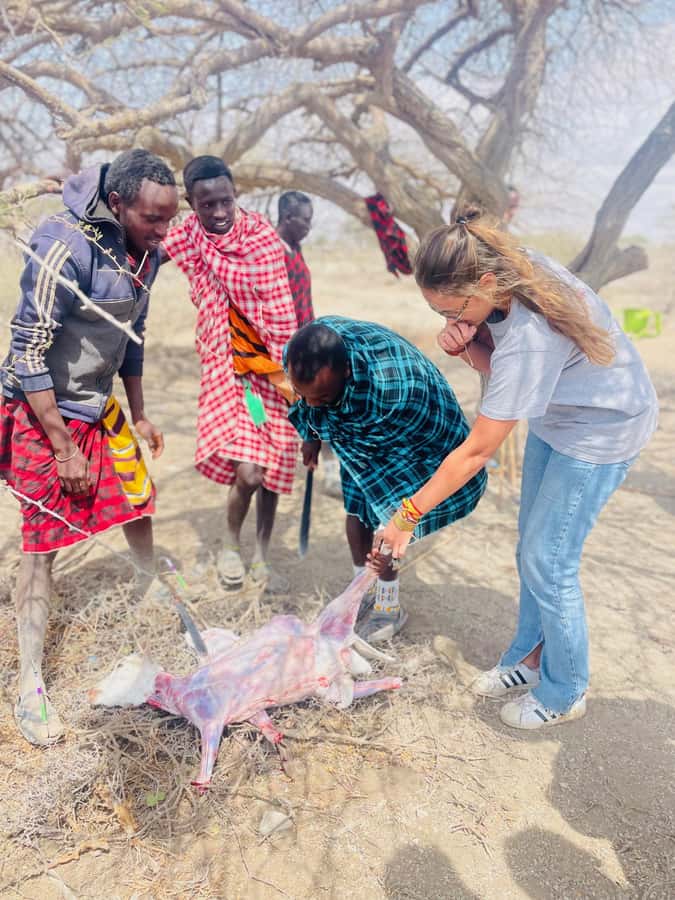
At $90 per person, this is not the cheapest short activity in the Arusha area. It can still be good value if you want transport, a guide, food, drinks, entry fees, and a structured cultural program in one payment.
The value is strongest for someone who would otherwise need to arrange a driver and find a cultural visit independently. You also gain an English-speaking guide who can explain the customs and manage the day. Positive comments about punctual pick-up, comfortable driving, and a generous lunch support that assessment.
The price is less attractive if you only want a quick photo stop or a short dance performance. The main benefit comes from the wider visit: walking through the compound, learning about work, asking questions, and sharing lunch.
Because the actual day may finish earlier than the maximum advertised duration, think of the price as payment for the included services and quality of the visit, not for a guaranteed ten-hour outing.
Who should book this experience?
I would recommend it to you if you want to add cultural context to a safari or Kilimanjaro trip. It suits curious visitors who enjoy asking questions, trying simple activities, and listening to explanations about how people organize daily life.
Families may also appreciate the clear mix of music, clothing, walking, demonstrations, and dancing. The program has enough variety to keep the day moving without relying on one long lecture.
It is less suitable if you want a quiet nature outing, a full wildlife drive, or a highly academic study of Maasai society. It may also disappoint you if you expect an unplanned visit with no performance elements. The songs, clothing, and adumu dance are arranged parts of the welcome.
Bring comfortable walking shoes and a willingness to participate, though those items are practical suggestions rather than stated requirements. Keep your camera ready, but let conversation come before photography. The guides are happy to help with photos, yet the best part of the visit is understanding what you are seeing.
Booking details worth keeping in mind
You can cancel up to 24 hours before the activity for a full refund. You can also reserve now and pay later, which helps if your Tanzania schedule may change.
Pick-up and drop-off are available in Arusha and Moshi. The guide language is English, and private groups can be arranged. Starting times depend on availability, so check the date carefully and ask for the expected return time, especially after the mixed timing reports.
The overall rating is 4.5 from 14 reviews, with repeated praise for the welcome, guides, lunch, and educational value. The only clear caution is that the length of the day may not match the upper end of the advertised range.
Should you book the Maasai Boma Cultural Experience?
Book it if you want a friendly, organized introduction to Maasai culture with real attention to daily work. The combination of compound walk, practical demonstrations, adumu dancing, and lunch gives you more to think about than a quick staged greeting.
I would choose it as a cultural day around an Arusha or Moshi itinerary, especially if Johnson or another strong English-speaking guide is assigned. Ask about timing before you commit, and approach the boma with respect. If that sounds like your kind of day, $90 is a fair price for the transport, guide, activities, and meal included.
FAQ
Where does the Maasai Boma Cultural Experience take place?
The experience takes place in the Arusha region of Tanzania, at a Maasai boma where several families live together.
Can I be picked up in Arusha?
Yes. Pick-up and drop-off are available in Arusha.
Can I be picked up in Moshi?
Yes. Moshi is also listed as a pick-up and drop-off location.
How long does the experience last?
The advertised duration is 7 to 10 hours. About 3.5 hours is scheduled at the boma, with the remaining time covering transport and the meal.
What language does the guide speak?
The live tour guide speaks English.
Is lunch included?
Yes. Food and drinks are included, and lunch is served at the boma.
What activities can I learn about?
You may learn about making fire, milking cows, fetching water, checking beehives, food, habits, history, and other parts of Maasai daily life.
Can I join the Maasai jumping dance?
Yes. You are welcome to participate in the adumu dance performed by Maasai men.
Is a private group available?
Yes. A private group option is available.
Can I cancel for a refund?
You can cancel up to 24 hours in advance for a full refund.
Just added around Arusha
- 5 Days Safari Tarangire, Serengeti, and Ngorongoro Crater★ 5.0 · 3 reviews
- 5 Days of Safari, Culture & Hot Springs – Tour from Arusha★ 5.0 · 3 reviews
- Love lives in Africa★ 5.0 · 3 reviews
- Arusha National Park Safari by Jeep★ 4.5 · 3 reviews
- 5Days Family _Group Tour Lodging Mid-Range in the Jungle★ 5.0 · 3 reviews
- Serengeti & Ngorongoro 3 Days Budget Safari★ 5.0 · 3 reviews
- 2 Days Tarangire and Ngorongoro Crater Tour★ 5.0 · 3 reviews
- 7 Days PRIVATE Best of Tanzania Safari *Departing everyday*★ 5.0 · 3 reviews
Maasai Village Tours, compared.

5 Days Camping Tarangire, Serengeti & Ngorongoro crater & Visiting Maasai
Read our review →
Maasai village visit, Materuni waterfalls & coffee experience
Read our review →5 Days Camping Tarangire, Serengeti & Ngorongoro crater & Visiting Maasai
Read our review →
7-Day Private Tanzania Safari with Sunset Walking on the Crater Rim and Maasai
Read our review →
Maasai village visit and Chemka hot-springs with hot lunch.
Read our review →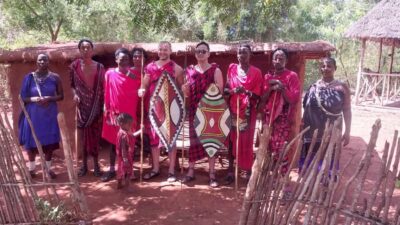
Maasai Village Visit, Waterfalls, & Coffee Tour
Read our review →Browse the lists this tour appears in