
Reviewed · SERENGETI SAFARIS
5 Days Camping Tarangire, Serengeti & Ngorongoro crater & Visiting Maasai
Africa gets no bigger than this. This five-day safari links Tarangire, Serengeti, and Ngorongoro Crater, three of Tanzania’s best-known wildlife areas, with camping, meals, private transport, and a small group capped at six people. I like the strong mix of wildlife and scenery, especially Tarangire’s elephants and baobabs, plus two full days in the Serengeti. I also like that guides such as Jacob, Mohammed, Patrick, Saleh, and Nuru have been praised for sharp animal spotting, patience, and good humor.
The main trade-off is pace. You spend long hours on rough park roads, and the route includes early starts, a three-hour drive to Tarangire, and a demanding transfer from the Serengeti to Ngorongoro. Camping is basic, so bring toilet paper and expect practicality rather than comfort. Also, the title promises a Maasai visit, but the detailed schedule names Mto wa Mbu village instead, so confirm that point before paying.
In This Review
- Key points to know before booking
- Three famous parks in five demanding days
- Tarangire: elephants, baobabs, and the first game drive
- Serengeti: two days where the action has room to unfold
- Moving from the Serengeti to Ngorongoro
- Ngorongoro Crater: a compact wildlife finale
- Mto wa Mbu and the question of the Maasai visit
- What the $1,280 price really covers
- Who should choose this safari?
- Should you book the Tarangire, Serengeti, and Ngorongoro safari?
- FAQ
- How long is the safari?
- Where does the safari start?
- How many people can join the safari?
- Which national parks are included?
- Is camping included?
- Are meals included?
- Is drinking water provided?
- Is WiFi available during the safari?
- Is a Maasai visit included?
Key points to know before booking
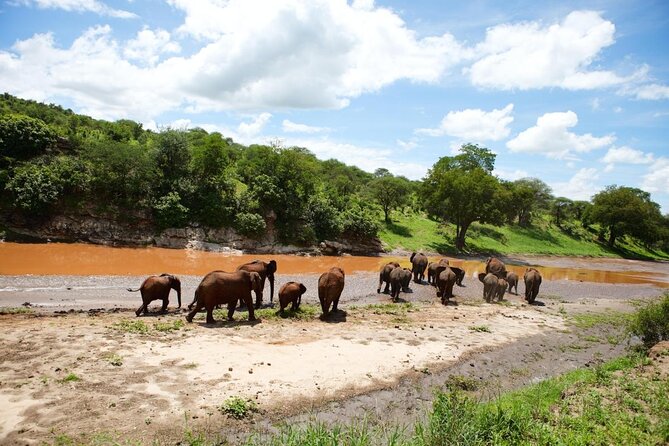
- Two full days in the Serengeti: This gives you time to search for lions, cheetahs, leopards, elephants, and the annual wildebeest movement rather than rushing through in a few hours.
- Tarangire’s elephant and baobab country: The park is known for large elephant groups, the Tarangire River, tree-climbing pythons, and huge baobab trees.
- Ngorongoro Crater game viewing: The 610-meter-deep crater contains a dense concentration of wildlife within about 260 square kilometers.
- Camping with useful inclusions: Meals, drinking water, WiFi in the safari vehicle, private transport, park fees, and AMREF Flying Doctors emergency rescue are included.
- Small group format: The maximum is six people, which matters when you are sharing a vehicle and trying to see animals from every side.
- Mto wa Mbu village visit: The final stop includes banana plantations, local guiding, and an introduction to community life, but it is not clearly described as a Maasai visit.
Three famous parks in five demanding days
This is a classic northern Tanzania route, built around the country’s biggest wildlife names. The order begins with Tarangire, moves west to the Serengeti, returns through the Ngorongoro Conservation Area, and ends with a crater visit before the drive back toward Arusha.
At $1,280 per person, the price is not a bargain-basement outing, but it covers a lot: private transportation, all listed fees and taxes, five lunches, five dinners, four breakfasts, unlimited drinking water, vehicle WiFi, and emergency rescue cover through AMREF Flying Doctors. The value improves if you want a compact safari with the main costs bundled together.
The schedule is full. You will not spend much time sitting at a pool or sleeping late. You will spend it looking through a vehicle window, following tracks, stopping for wildlife, and moving between camps. That is a fair exchange for the amount of ground covered, but you should be comfortable with early mornings and long drives.
The group limit of six is a useful middle ground. A larger vehicle can feel crowded when everyone wants the same view. A six-person maximum gives you a better chance of hearing the guide and getting a clear look, though your exact group size is not promised.
More Camping Safaris in Moshi
- 4 Days Group Joining Camping Safari to Tarangire Serengeti Ngorongoro Crater
★ 5.0 · 50 reviews - 4 days adventure camping safari
★ 5.0 · 44 reviews - 6 Days Tanzania Budget Camping Safari with Migration
★ 5.0 · 31 reviews
Tarangire: elephants, baobabs, and the first game drive
The first day begins with pickup at about 8:00 a.m. from an Arusha hotel, followed by roughly three hours on the road to Tarangire National Park. The stated airport meeting point is Kilimanjaro Airport at 7:30 a.m., so you should settle the pickup location and time before departure if you are not staying in Arusha.
Tarangire covers about 2,800 square kilometers and takes its name from the Tarangire River. Water draws animals to the river, making it a key part of the park’s appeal. The park is especially associated with elephants, and this is where the safari begins with a strong chance to see them in open country.
The baobabs are just as memorable. Their thick trunks can store hundreds of liters of water, and some can live for centuries. The trees give Tarangire a look that is quite different from the Serengeti’s open grasslands. They also make the first day feel like more than a simple animal checklist.
A full-day game drive is planned, lasting about seven hours. You may see lions, leopards, and other wildlife, while tree-climbing pythons are another unusual feature of the park. The exact sightings are never guaranteed, but the mix of animals and plant life gives your guide several good subjects to seek.
After the drive, you go to Jambo Lodge for dinner and the night. The first day is long because of the road time from Arusha, but it gives you a full introduction to Tanzania’s safari country instead of using Tarangire as a quick stop.
Serengeti: two days where the action has room to unfold
After breakfast on day two, the route heads toward the Serengeti through the high farmland around Karatu and the Ngorongoro Conservation Area. The road then drops toward the park’s broad plains, a change that is central to the experience.
The itinerary aims for the Seronera area in central Serengeti. The Seronera River provides water and attracts a wide range of animals, so this part of the park is a sensible base for a first afternoon search. You are scheduled to arrive around lunchtime, then take an afternoon game drive until sunset.
That timing gives you a useful first look at the park. The Serengeti is famous for its scale, and the wide views can be as striking as the animals. You may see the classic species associated with the area, but you should not expect every hour to produce a dramatic sighting. Some of the best safari moments are quiet ones: a distant herd, a bird of prey, or a line of animals moving across the plain.
Day three is the strongest wildlife day on paper. You begin with breakfast, then spend the full day on game drives in important parts of the Serengeti. The guide will choose areas based on current animal movements and the season.
The wildebeest migration is a major reason many people choose this route. Around 1.5 million wildebeest move through the wider Serengeti and Maasai Mara ecosystem, accompanied by large numbers of zebra and smaller numbers of gazelles, eland, and impala. The pattern is fairly predictable, but the precise location changes from year to year.
June through September offers the best chance of seeing the migration, according to the schedule. January through March is associated with wildebeest calving. In July through September, the northern Serengeti and Mara River crossings may be possible, but a river crossing is never something a guide can promise on demand.
That seasonal detail matters. If your main goal is the migration, ask where the vehicle is expected to go during your dates. Central Serengeti is practical for general wildlife, while the far north can require a different route and more driving. A strong guide can adjust the search, but nature does not follow a tour timetable.
Early morning and sunset are valuable times in the park. The itinerary specifically includes sunrise and sunset viewing in the Serengeti, which adds a sense of time and place that a midday-only drive misses. You should still expect a full day in the vehicle, with rough roads and limited personal space.
The people guiding this safari have received especially warm praise for their animal spotting and care. Jacob was described as tireless and focused, while Mohammed was praised for patience, humor, and attention to small requests. Saleh was noted for strong wildlife knowledge, and Nuru for an informed and funny approach. Those qualities matter because a good guide does more than point at animals. The guide reads the road, watches other vehicles, listens for updates, and explains what you are seeing.
Moving from the Serengeti to Ngorongoro
Day four starts at about 5:45 a.m. with an early breakfast and sunrise inside the Serengeti. You then take an early game drive until roughly 11:30 a.m., return to camp for a hot lunch, pack your belongings, and continue through the park toward Ngorongoro.
The schedule lists about ten hours for this day. That is the clearest warning in the program: it is a very long travel and wildlife day. You get another chance to see the Serengeti in the morning, but the afternoon transfer means you will spend many hours moving rather than stopping for extended viewing.
The overnight is at Simba Campsite near Ngorongoro. The camping setup is part of the price and helps keep this safari below the cost of a lodge-based trip. It also means you should prepare for simple facilities. One practical tip is to pack toilet paper. The camp experience can feel authentic and close to the setting, but it is not the right choice if you need hotel-level comfort each night.
Food is one of the highly praised parts of the operation. The package includes five lunches, five dinners, and four breakfasts, and several accounts praised the cooks and meals. Gideon and Dula were singled out for good cooking and care. Since meal quality matters more than people expect on a camping safari, having a dedicated cook is a real benefit.
There is a small inconsistency in the meal count and the five-day schedule, so confirm exactly which meals are provided on your arrival and departure days. The stated inclusion is generous, but the timing should be clear.
More Maasai Village Tours in Moshi
- Maasai village visit and Chemka hot-springs with hot lunch.
★ 5.0 · 33 reviews - 4-Day Tarangire Serengeti, Ngorongoro & Maasai Guided group tour
★ 5.0 · 16 reviews - Maasai village visit and chemka hot-springs with hot lunch
★ 4.7 · 13 reviews - Private Full-Day Tour Maasai Village and Kikuletwa Hot Spring
★ 5.0 · 12 reviews
Ngorongoro Crater: a compact wildlife finale
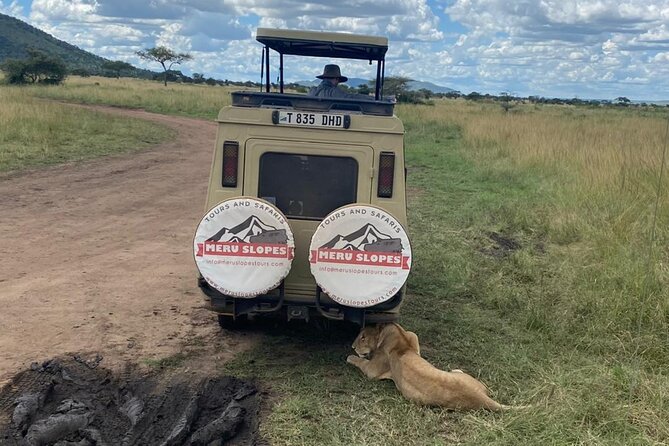
The final morning begins early, with breakfast and views of the rising sun over the crater rim. You then take the steep, adventurous track down into Ngorongoro Crater for a full game drive.
The crater is about 610 meters deep and covers roughly 260 square kilometers. Its enclosed setting supports a dense animal population, estimated in the schedule at about 25,000 animals. In practical terms, this means you have a strong chance of seeing several species during one concentrated drive.
The crater can produce sightings of wildebeest, zebra, gazelles, elephants, and more than 500 bird species. The experience differs from the Serengeti. There, the scale and movement of animals define the day. Here, the crater walls create a contained setting where wildlife may be easier to find, though the road conditions and number of vehicles can affect the feel of the visit.
The crater drive lasts about eight hours. You should keep expectations realistic: the promise is a strong setting for game viewing, not a guaranteed list of the Big Five. Still, several people on similar departures saw all five, along with cheetahs and leopards. That reflects the ability of the guide and the luck of the day, not a certainty built into the route.
An early start is worth it here. Morning light gives the crater rim and floor a memorable quality, and animals are often easier to find before the heat of the day. You will want warm layers for the early hours, though the tour details do not specify a packing list.
Mto wa Mbu and the question of the Maasai visit
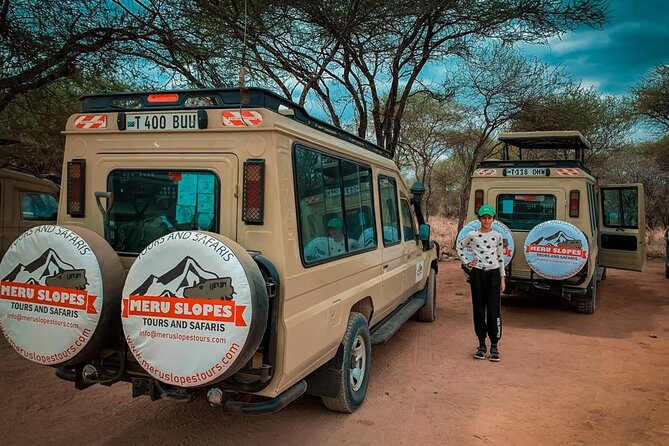
After the crater, the program includes about one hour in Mto wa Mbu village before driving to Arusha for the night. A local guide leads the visit and explains social and economic life in the community.
The village experience includes banana plantations, where you may see more than 30 types of bananas grown by local residents. You are encouraged to ask questions and take photographs along the way. This is a useful change of pace after several days focused on wildlife, because it connects the safari to ordinary work and community life.
But the advertised title includes visiting Maasai, while the detailed plan names Mto wa Mbu and does not clearly list a Maasai community visit. Those are not automatically the same experience. If meeting Maasai families or visiting a Maasai village is important to you, ask the operator to confirm the exact activity, location, duration, and any extra cost in writing.
The return to Arusha comes after the village stop. Since the final day already includes an early crater visit, an eight-hour game drive, a community stop, and a drive back, expect a tiring finish.
What the $1,280 price really covers
The price works best for you if you want a packaged safari and do not want to arrange every park fee, vehicle, meal, and transfer separately. Private transportation and a maximum of six people give the trip a more personal shape than a large coach excursion.
The included WiFi in the safari vehicle is a practical extra, though signal strength can vary across remote park areas. Unlimited drinking water is more important. You will spend long hours in a vehicle, so having water supplied removes one chore.
AMREF Flying Doctors emergency rescue cover is also included. That does not replace ordinary travel insurance, but it adds a useful layer of support for a remote safari route. Flights, visas, and tips are not included, so you need to budget for those separately.
The strongest value comes from the combination of three major parks, two Serengeti days, camping, a cook, and a small group. The weakest value would be for someone who dislikes road travel or expects luxury lodging. You can upgrade to lodge accommodation for an additional charge, based on the arrangements offered on some departures.
Who should choose this safari?
I would point you toward this trip if you want the main northern Tanzania parks in five days and care more about wildlife time than polished accommodation. It suits first-time safari visitors who want a clear route, a guide-driver, meals, and a compact group.
It is also a good match if you want a chance at the migration but can accept nature’s timing. June through September is the stronger period for movement, while January through March is better for calving. Ask about the route before booking if the Mara River crossing is your central goal.
I would think twice if you need leisurely mornings, short drives, or private bathrooms every night. The ten-hour fourth day and basic camping require stamina. Families and older visitors may still enjoy it, but everyone should be comfortable with early starts and rough roads.
The booking terms are simple: cancellation is free up to 24 hours before the start time for a full refund. Changes made less than 24 hours before departure are not accepted, based on local time.
Should you book the Tarangire, Serengeti, and Ngorongoro safari?
Book it if your priority is variety and wildlife value in a short window. Tarangire gives you elephants and baobabs, the Serengeti gives you two days of open-country searching and possible migration viewing, and Ngorongoro provides a concentrated final game drive.
Before you commit, confirm three details: the exact pickup point, the camping facilities, and whether the Maasai visit is genuinely included. If those points match your expectations, $1,280 is a fair package price for a five-day northern Tanzania safari with food, transport, park access, water, and a group no larger than six.
FAQ
How long is the safari?
The safari lasts approximately five days.
Where does the safari start?
The listed meeting point is Kilimanjaro Airport, Tanzania, with a stated start time of 7:30 a.m. The first-day schedule also describes pickup from an Arusha hotel at about 8:00 a.m., so confirm the correct pickup arrangement before departure.
How many people can join the safari?
The maximum group size is six people.
Which national parks are included?
The route includes Tarangire National Park, Serengeti National Park, and the Ngorongoro Conservation Area, including a game drive in Ngorongoro Crater.
Is camping included?
Yes. The schedule includes overnight stays at Jambo Lodge and campsites, including Simba Campsite near Ngorongoro. The exact camping facilities are not specified.
Are meals included?
Yes. The package lists five lunches, five dinners, and four breakfasts.
Is drinking water provided?
Yes. Unlimited drinking water is included.
Is WiFi available during the safari?
Yes. Free WiFi is listed inside the safari vehicle during the tour.
Is a Maasai visit included?
The title refers to visiting Maasai, but the detailed schedule specifies a visit to Mto wa Mbu village and banana plantations. Confirm the exact Maasai activity with the operator before booking.
More Serengeti Safaris
- 7 Days Safari. Serengeti, Tarangire, Lake Manyara & Ngorongoro Crater.
★ 5.0 · 34 reviews - Safari in Tanzania 5 days: Manyara, Ngorongoro, Serengeti
★ 5.0 · 29 reviews - 5-Day Lake Manyara, Serengeti, Ngorongoro Crater and Tarangire
★ 5.0 · 28 reviews - 4-Day Private Guided Tanzania Safari Tarangire, Serengeti, Manyara
★ 5.0 · 28 reviews
More Ngorongoro Crater Tours
- Safari Serengeti And Ngorongoro
★ 5.0 · 288 reviews - Serengeti, Ngorongoro and Tarangire 4 Days Safari
★ 5.0 · 59 reviews - 3-Day Ngorongoro Crater Manyara and Tarangire Safari from Arusha
★ 5.0 · 49 reviews - 4 Day Private Tour Throughout Tarangire, Serengeti and Ngorongoro
★ 5.0 · 42 reviews
Just added around Moshi
- Moshi: Lake Chala Tour: Hiking &/or Kayaking★ 4.5 · 3 reviews
- 3 Days Tanga Exclusive Beach Holiday★ 5.0 · 3 reviews
- Serengeti Wildebeest Migration.★ 5.0 · 3 reviews
- Chemka Hotpsrings E-Bike Day Trip★ 5.0 · 3 reviews
- Explore 1 day Ngorongoro Crater Budget Group Safari from Arusha★ 5.0 · 3 reviews
- Explore the 360° of Kilimanjaro★ 5.0 · 3 reviews
- Affordable Short Tanzania Safari (2 Days Camping Safari)★ 5.0 · 3 reviews
- Rongai Route 7 Days★ 5.0 · 3 reviews
Serengeti Safaris, compared.

Serengeti Balloon Safari and authentic bush breakfast
Read our review →
Balloon Safari & Bush Breakfast in Serengeti – Miracle Experience
Read our review →
3 Days Serengeti & Ngorongoro Group Camping Safari
Read our review →
5-Day Highlights mid-Range Crater, Serengeti, Tarangire
Read our review →


Private 6-Day Tarangire Manyara Crater and Serengeti with Mid-Range Lodges
Read our review →