
Reviewed · MAASAI VILLAGE TOURS
7-Day Private Tanzania Safari with Sunset Walking on the Crater Rim and Maasai
Seven days can pack in a lot. This private Tanzania safari links Tarangire, Serengeti, Ngorongoro Crater, and Lake Manyara with two memorable extras: a Maasai village visit and sunset walking along the crater rim. I especially like the range of scenery, from acacia-dotted plains and forest to a collapsed volcano filled with animals. I also like the private format, which gives your group a guide and vehicle rather than placing you with strangers.
The main consideration is the pace. Several days involve long drives and early starts, and the program keeps moving from park to park. At $3,731 per person, the price is substantial, though it covers six dinners, seven breakfasts, six lunches, park fees, taxes, and private touring. It makes the most sense if you want a well-organized northern Tanzania safari without having to arrange each piece yourself.
In This Review
- Key points at a glance
- Starting in Arusha with the safari ahead
- Day 2: Tarangire’s elephants and open plains
- Day 3: Crossing the highlands into Serengeti
- Day 4: A full Serengeti game-drive day
- Day 5: From Serengeti wildlife to Maasai traditions
- Day 6: Down into the Ngorongoro Crater
- Day 7: Lake Manyara’s forest and tree-climbing lions
- What $3,731 per person buys you
- The guide can shape the whole experience
- Who should book this safari?
- Should you book the 7-Day Tanzania Safari?
- FAQ
- How long is the safari?
- What is the price?
- Is airport pickup available?
- What meals are included?
- Are park admission fees included?
- Is this a private tour?
- What is the scheduled start time?
- What is not included in the price?
Key points at a glance
- Four major wildlife areas: See Tarangire, Serengeti, Ngorongoro Crater, and Lake Manyara in one seven-day journey.
- Sunset on the crater rim: Walk along the Ngorongoro rim as daylight fades, an experience that offers a quieter contrast to vehicle-based game drives.
- A private safari vehicle: Only your group participates, so the day can be shaped around your interests and animal sightings.
- A direct cultural encounter: Visit a Maasai village to learn about fire-making, beadwork, homes, and customary practices.
- Strong guide feedback: Guides including Shafino, Gilbert, Mwita, Benjamin, Frederick, Salehe, Leonard, Joseph, Shebi, and Aziz receive repeated praise for driving, animal spotting, and personal service.
- Food and park costs included: Most daily meals and admission fees are covered, but tips, international flights, and extra nights are not.
Starting in Arusha with the safari ahead
Your first day is deliberately light. A Lion King Adventures representative picks you up at Arusha or Kilimanjaro airport and takes you to your Arusha accommodation. You spend the night resting and preparing for the days ahead.
That overnight matters. A safari can be tiring even before the first game drive, especially if you have arrived on an overnight flight. This first evening gives you time to settle in rather than rushing straight toward Tarangire.
The listed start time is 8:30 a.m. Pickup is offered, and confirmation comes at booking. Since the accommodation details are not specified, check exactly where your first night is booked and whether you need to arrange any extra night before or after the seven-day program.
The private setup is one of the strongest features here. Your group travels together, without a larger mixed party setting the pace. That can be especially helpful when you want to linger near an animal, ask many questions, or take a quieter break between drives.
More Maasai Village Tours in Arusha
- 5 Days Camping Tarangire, Serengeti & Ngorongoro crater & Visiting Maasai
★ 5.0 · 229 reviews - Maasai village visit, Materuni waterfalls & coffee experience
★ 4.5 · 95 reviews - Kilimanjaro: Maasai Village Visit, Waterfalls, & Coffee Tour
★ 4.9 · 27 reviews
Day 2: Tarangire’s elephants and open plains
The safari proper begins with a morning collection from your Arusha lodging. The road crosses gently rolling Maasai plains, with scattered acacia trees and people in colorful dress walking, cycling, herding cattle, or driving donkey carts.
This approach gives you a first look at life outside the parks. The scenery changes gradually, and the drive helps you understand that northern Tanzania is not just a series of fenced wildlife areas. People, livestock, roads, farms, and protected land all sit close together.
Tarangire National Park is best known for its large elephant herds. The park also includes seasonal swamps, open savanna, and the Tarangire River, which helps draw animals when water is scarce. From the open roof of the safari vehicle, you may see zebra, wildebeest, buffalo, and other wildlife.
The listed park visit lasts about eight hours, with admission included. That is a good length for a first game drive, but you should expect a full day once road time is added. Tarangire is a strong opening park because it offers both large mammals and striking scenery without asking you to wait until the Serengeti for your first major sightings.
I would pay close attention to how your guide handles the day. The best guides on this trip have been praised for calm driving, clean vehicles, clear explanations, and a knack for finding good viewing angles. Benjamin, Frederick, Shafino, Mwita, and Salehe are among the guides singled out for those qualities.
Day 3: Crossing the highlands into Serengeti
After breakfast, you travel through fertile highlands where wheat, coffee, and corn are grown by the Iraqw people. The route passes through the Ngorongoro Conservation Area, giving you a view of the famous crater before continuing toward Serengeti National Park.
You are expected to reach the Serengeti around midday, followed by a game drive. The listed touring time is about seven hours, but this is another day when the road itself is part of the experience.
The Serengeti is Tanzania’s largest national park, with grassy plains, swamps, lakes, savanna, and hills. Its name is linked with open plains, and those wide views are a major reason people choose this route. The sheer scale changes how you watch wildlife. Instead of seeing one small section of a park, you may look across open country where herds and predators are spread out over long distances.
The great wildebeest and zebra migration changes with rainfall, so no schedule can promise a particular sighting. In November and December, herds move from the northern woodlands and hills toward the southern grassy plains. During the longer rainy period from April through June, they return north.
That seasonal movement is important when you decide if this trip fits your priorities. If migration is your main goal, ask about current animal locations before booking. If your main goal is a broad safari with resident wildlife, the Serengeti still offers opportunities to see lion, leopard, cheetah, impala, buffalo, crocodile, and hippo.
Day 4: A full Serengeti game-drive day
Day four gives you the most time in one park. The program sets aside roughly 12 hours for game drives, so this is the day to settle into the safari rhythm: early start, long hours outside, frequent stops, and patient watching.
The Serengeti is famous for migrating zebra, antelope, and wildebeest, but the resident predators provide much of the drama. You may have chances to see lion, leopard, and cheetah, along with impala, buffalo, crocodile, and hippo.
The phrase may have chances matters. Wildlife is wild, and even a skilled guide cannot guarantee a leopard or a successful hunt. Still, the guide can make a real difference. Multiple guide reports praise the team’s animal knowledge, careful driving, patience, and ability to position the vehicle for photographs.
Shafino is described as especially strong on animals, plants, birds, and local species. Gilbert is praised for smooth driving and a confident approach. Mwita is repeatedly described as attentive and engaging, while Frederick is noted for tailoring the day and helping locate less common animals.
A 12-hour drive can be tiring. You should be comfortable spending most of a day in a safari vehicle. The reward is more time for patient sightings, which often matter more than rushing through several short stops. If you prefer a slower holiday with fewer transfers, this middle section may feel intense.
More Private Tours in Arusha
- Private 6-Day Tarangire Manyara Crater and Serengeti with Mid-Range Lodges
★ 5.0 · 238 reviews - 5 Days Budget Private Safari, Tanzania
★ 5.0 · 191 reviews - 5-Day Private Northern Tanzania Safari from Arusha
★ 5.0 · 182 reviews - 6 Days Private Budget Safari
★ 5.0 · 163 reviews
Day 5: From Serengeti wildlife to Maasai traditions
Day five begins with another early Serengeti game drive. This gives you one more chance to look for the Big Five, meaning lion, elephant, buffalo, rhino, and leopard, before the journey toward the Ngorongoro Conservation Area.
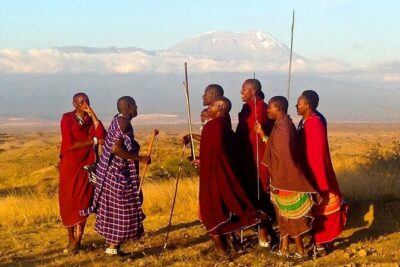
The route includes a stop at a Maasai village. The visit lasts about one hour and focuses on customary practices such as making fire and beadwork. You may also meet villagers and see their homes, with your guide interpreting when needed.
This is a valuable change of pace. After several hours of watching animals from a vehicle, you get to learn from people whose traditions and daily life are closely tied to the surrounding area. The visit is brief, so it should not be treated as a full cultural study. It is a short introduction, best approached with respect and curiosity.
Afterward, you continue toward the crater rim. The day is listed at about 12 hours, combining an early drive, the village visit, and a long transfer. That makes it one of the more demanding days.
The special feature is the sunset walk along the crater rim. Walking at day’s end lets you experience Ngorongoro without viewing it only through a vehicle window. The rim offers a memorable outlook over the vast volcanic bowl, and the changing light gives the scenery a different feel from the morning crater descent.
Because the walking activity is a key reason to choose this program, confirm the exact walking route, pace, and meeting arrangements when you book. The supplied details describe sunset walking on the rim, but do not give a distance or difficulty level.
Day 6: Down into the Ngorongoro Crater
Early risers get the best chance to see sunrise over the crater edge. After breakfast, you take the steep track down into Ngorongoro Crater for a game drive.
The crater formed about three million years ago. It is around 610 meters deep and covers roughly 260 square kilometers. As a UNESCO World Heritage site and one of Africa’s best-known natural sights, it combines geological scale with concentrated wildlife.
The crater supports about 25,000 ungulates, including wildebeest, zebra, and gazelle. You may also see elephant, and more than 500 bird species are recorded in the area. The compact setting can make game viewing feel especially rewarding, since many animals live within the crater walls.
The day lasts about eight hours, and admission is included. The crater is not simply a smaller Serengeti. Its enclosed shape, grasslands, water sources, and high animal density create a different kind of safari experience.
The early start is worth keeping. Morning light is beautiful, and animals are often easier to watch before the day becomes hot. You will need to accept a rough, adventurous descent and a full day of looking for wildlife. The payoff is one of the clearest chances on the northern circuit to see several major species in one place.
Day 7: Lake Manyara’s forest and tree-climbing lions
The final park is Lake Manyara National Park, about 120 kilometers west of Arusha. The park is named for its shallow salt lake, which covers around 70 percent of the area and expands or shrinks with the seasons.
The lake attracts thousands of flamingos and more than 500 bird species. Away from the water, the park includes open grassy plains, woodland filled with monkeys, and cliffs dotted with baobabs.
You may see giraffe, zebra, wildebeest, buffalo, elephant, and monkeys. With luck, you may also see lions resting in trees, one of Lake Manyara’s best-known sights.
The eight-hour visit gives you a final game drive in a park that feels quite different from both the Serengeti and Ngorongoro. It is smaller, but the mix of forest, lake, grassland, and cliffs creates a lot of variety in a limited area.
The available details do not specify the exact end-of-tour transfer or final accommodation. If you are flying out after the park visit, ask how the schedule connects with your onward plans. You may need to arrange an additional night before or after the tour.
What $3,731 per person buys you
At $3,731 per person, this is not a budget safari. The price needs to be judged against what is included: private touring, park admission fees, taxes, seven breakfasts, six lunches, and six dinners.
Accommodation is part of the arranged program, and the quality of the lodging and food has received strong praise. However, individual properties are not named in the supplied details, so you should ask for the full accommodation list before paying.
The biggest value comes from the route and organization. Four major wildlife areas, a Maasai village visit, and a crater-rim walk would take considerable planning if arranged independently. A private guide also gives you a better chance of shaping the day around animal sightings rather than following a fixed group schedule.
Not included are international flights, extra accommodation before or after the program, and tips. Build those costs into your total budget. The booking is non-refundable and cannot be changed for any reason, so make sure your dates, flights, and group size are settled before committing.
The guide can shape the whole experience
The most praised part of this safari is the guiding. Names that come up repeatedly include Shafino, Gilbert, Mwita, Benjamin, Frederick, Salehe, Leonard, Joseph, Shebi, and Aziz.
The strengths are consistent: calm driving, strong animal spotting, useful explanations, patience, friendly service, and attention to camera angles. One guide is praised for knowing plants and birds as well as mammals. Another is valued for adjusting the pace to suit the group.
That matters more than a glossy vehicle description. A good guide helps you understand animal behavior, avoids needless rushing, and makes long road days feel worthwhile. When you communicate with Lion King Adventures, ask if you can request a guide or share your interests in advance, especially if birds, photography, predators, or cultural visits matter most to you.
The private format also helps families and small groups. You can ask questions freely and discuss how much time you want to spend at a sighting. The tradeoff is that private tours often cost more per person than shared vehicles, which is reflected in this price.
Who should book this safari?
I would recommend this trip to someone who wants a classic northern Tanzania route in one organized package. It suits first-time safari visitors who want several famous parks, strong guide support, and a mix of wildlife, scenery, geology, and culture.
It is also a good fit if you value privacy. Only your group participates, so you avoid the uncertainty of being paired with strangers who may have different schedules or interests.
You should think twice if you dislike long drives, early mornings, or packed days. Days five and six are especially full, and the Serengeti schedule asks you to spend up to 12 hours on game drives.
You should also confirm the exact lodges, walking arrangements, final transfer, and seasonal wildlife expectations before booking. Those details can affect comfort and value as much as the headline route.
Should you book the 7-Day Tanzania Safari?
Book it if you want a strong first safari with the northern circuit’s biggest names, a private guide, and two experiences beyond standard game drives. Tarangire’s elephants, Serengeti predators, Ngorongoro’s concentrated wildlife, Lake Manyara’s forest, the Maasai visit, and sunset on the crater rim give the week real variety.
I would not choose it for a slow, luxury-focused holiday unless the accommodation details meet your expectations. The program is active and sometimes demanding, but that pace is also why it fits so much into seven days.
For the right person, the value lies in having Lion King Adventures handle the moving parts while a skilled guide concentrates on wildlife and your group’s interests. Confirm the practical details, accept the non-refundable terms, and this can be a powerful introduction to Tanzania.
FAQ
How long is the safari?
The experience lasts approximately seven days, beginning with arrival and an overnight stay in Arusha and continuing through Tarangire, Serengeti, Ngorongoro, and Lake Manyara.
What is the price?
The listed price is $3,731 per person.
Is airport pickup available?
Yes. Pickup is offered from Arusha or Kilimanjaro airport, with transportation to your Arusha accommodation on the first day.
What meals are included?
The package includes seven breakfasts, six lunches, and six dinners.
Are park admission fees included?
Yes. Admission fees, along with all listed fees and taxes, are included.
Is this a private tour?
Yes. Only your group participates in the activity.
What is the scheduled start time?
The listed start time is 8:30 a.m.
What is not included in the price?
International flights, additional accommodation before or after the tour, and tips are not included.
More Walking Tours in Arusha
- Arusha Guided Walking City Tour, Culture, Lifestyle & History
★ 5.0 · 150 reviews - 4 Days lodge safari Tarangire , Ngorongoro crater & Walking
★ 5.0 · 39 reviews - Tanzania – Arusha NP – Private Guided 4×4 Safari – Game Drive & Walking
★ 5.0 · 30 reviews - Private Walking Tour with Giraffes
★ 5.0 · 18 reviews
More Safaris in Arusha
- Serengeti Balloon Safari and authentic bush breakfast
★ 5.0 · 2,480 reviews - Balloon Safari & Bush Breakfast in Serengeti – Miracle Experience
★ 5.0 · 1,646 reviews - 4 Days Group Camping Safari
★ 5.0 · 1,101 reviews - 5 Days Group Camping Safari
★ 5.0 · 730 reviews
Just added around Arusha
- 5 Days Safari Tarangire, Serengeti, and Ngorongoro Crater★ 5.0 · 3 reviews
- Love lives in Africa★ 5.0 · 3 reviews
- 5 Days of Safari, Culture & Hot Springs – Tour from Arusha★ 5.0 · 3 reviews
- Arusha National Park Safari by Jeep★ 4.5 · 3 reviews
- 5Days Family _Group Tour Lodging Mid-Range in the Jungle★ 5.0 · 3 reviews
- Serengeti & Ngorongoro 3 Days Budget Safari★ 5.0 · 3 reviews
- 2 Days Tarangire and Ngorongoro Crater Tour★ 5.0 · 3 reviews
- 7 Days PRIVATE Best of Tanzania Safari *Departing everyday*★ 5.0 · 3 reviews
Maasai Village Tours, compared.

5 Days Camping Tarangire, Serengeti & Ngorongoro crater & Visiting Maasai
Read our review →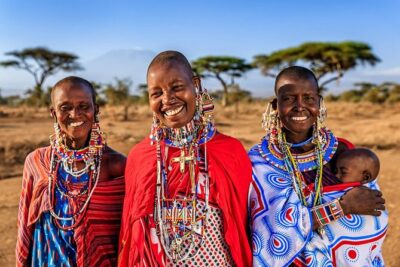
Maasai village visit, Materuni waterfalls & coffee experience
Read our review →5 Days Camping Tarangire, Serengeti & Ngorongoro crater & Visiting Maasai
Read our review →
Maasai village visit and Chemka hot-springs with hot lunch.
Read our review →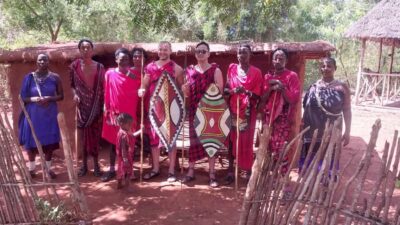
Maasai Village Visit, Waterfalls, & Coffee Tour
Read our review →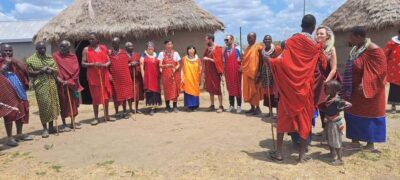
Browse the lists this tour appears in