
Reviewed · SERENGETI SAFARIS
Private 6-Day Great Migration Ndutu Serengeti Safari Tour
Fresh calves, hungry predators, wide-open plains. This private 6-day Tanzania safari links four major wildlife areas, with its main prize at Lake Ndutu from December through April. I especially like the focus on the southern Serengeti during calving season, and the fact that you also get Tarangire, Ngorongoro Crater, and Lake Manyara rather than spending the entire trip in one park. The main consideration is the amount of time spent on the road, with several long game-drive and transfer days.
I also like the private format, since your group travels with its own guide and vehicle rather than sharing every decision with strangers. Guides such as Shafino Dominick, Gilbert, Ozzie, Evans, Meck, and Goodluck have been praised for animal spotting, driving, and personal attention. Still, wildlife is never guaranteed, and the spectacular migration changes location with rain and grass conditions.
In This Review
- Key points to know before booking
- Why the Ndutu calving season matters
- Day 1: Arriving in Arusha and getting ready
- Day 2: Tarangire’s elephants and seasonal swamps
- Day 3: Moving into the Ndutu region
- Day 4: A full day among the migrating herds
- Day 5: From the Serengeti toward Ngorongoro Crater
- Day 6: Lake Manyara’s birds, forest, and cliffs
- What the $2,827 price represents
- The guide can make or break the safari
- Comfort, pace, and practical expectations
- Should you book this Ndutu safari?
- FAQ
- Where does the safari begin?
- Where does the safari end?
- How long is the tour?
- Is this a private safari?
- When is the best time to see the Ndutu migration?
- How long does the calving period last?
- Which national parks and areas are included?
- How long is the drive from the Serengeti area to Ndutu?
- Is airport pickup available?
- Can the booking be cancelled for a refund?
Key points to know before booking
- Ndutu is the main event from December through April: This is the southern Serengeti’s key migration period, with January often offering the best chance of seeing newborn wildebeest.
- The trip covers four very different wildlife areas: You visit Tarangire National Park, the Ndutu region, Ngorongoro Crater, and Lake Manyara National Park.
- Calving season creates high-stakes wildlife viewing: For roughly three weeks around January, huge numbers of wildebeest calves are born, while predators wait nearby.
- Your safari is private: Only your own group takes part, giving you more control over viewing time and daily rhythm.
- The $2,827 price buys a concentrated northern Tanzania circuit: It is most useful for someone who wants several famous parks in one trip, not a slow, single-region safari.
- The driving is part of the experience: Roads and tracks connect large areas, so you should expect early starts, rough sections, and long days in the vehicle.
Why the Ndutu calving season matters
The Ndutu region sits inside the Ngorongoro Conservation Area but forms part of the wider Serengeti ecosystem. That distinction matters. You are not simply visiting a small lake. You are entering a seasonal grazing zone where the great herds gather when conditions are right.
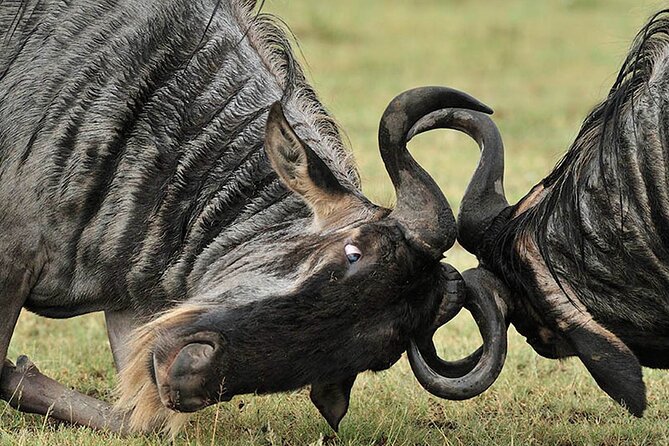
From December to April, wildebeest and zebra usually spread across the southern Serengeti’s short-grass plains. The timing is tied to rain and fresh grass, so no calendar can promise the exact location of the herds. January is usually the strongest month for calving, with the main birthing period often lasting about three weeks.
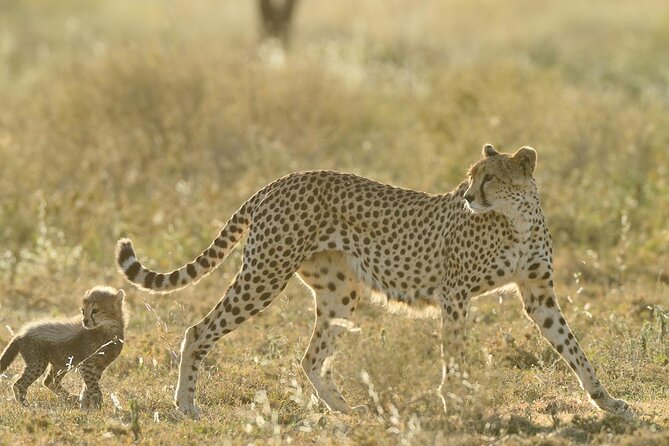
This is one of nature’s most dramatic scenes because newborn wildebeest can run within minutes and become much more mobile within a few days. The open grass offers little cover, and predators are close by. You might see lions, cheetahs, or other hunters testing the edges of a herd, though a successful hunt is never something a guide can guarantee.
I would choose this tour for the seasonal event, not simply for a checklist of animals. The chance to see large herds, tiny calves, predator activity, and changing weather on the plains gives the safari a clear purpose.
More Migration Safaris in Arusha
- 8 Days Great Wildebeest Calving Migration Safari from Arusha
★ 5.0 · 254 reviews - 10-Day Serengeti Wildebeest Migration Safari from Arusha
★ 5.0 · 218 reviews - 8 Day Spectacular Migration Serengeti mid -Range Tanzania Safari
★ 5.0 · 161 reviews
Day 1: Arriving in Arusha and getting ready
Your airport pickup is handled by a Lion King Adventures representative, followed by transport to your Arusha accommodation. The listed overnight base is Arusha Planet Lodge, described as being in the heart of Arusha and surrounded by Tanzanian scenery.
This first night is useful rather than flashy. You can rest, sort your bags, and prepare for several full days in a safari vehicle. If your flight arrives late or your luggage is delayed, having a local representative meet you can remove a lot of stress. One guest described guide George helping with delayed baggage, which is a reminder to keep essential medication, documents, and a change of clothes in your hand luggage.
The stated meeting point is Mount Meru Hotel on Arusha-Taveta Road in the Sekei area of Arusha. Confirm the exact pickup plan before arrival, particularly if you are being collected from the airport or from a different hotel. The tour ends back at the meeting point.
Day 2: Tarangire’s elephants and seasonal swamps
The safari begins with a morning collection from your Arusha lodging and a drive toward Tarangire National Park. The route crosses Maasai country, with acacia trees, rolling plains, and roadside scenes of people walking, cycling, herding cattle, and using donkey carts.
That drive gives you an early look at life beyond the parks. It is not dead time, but you should understand that this day includes a considerable road journey as well as game viewing. Once inside Tarangire, the scenery changes to seasonal swamps, open grass, and the Tarangire River.
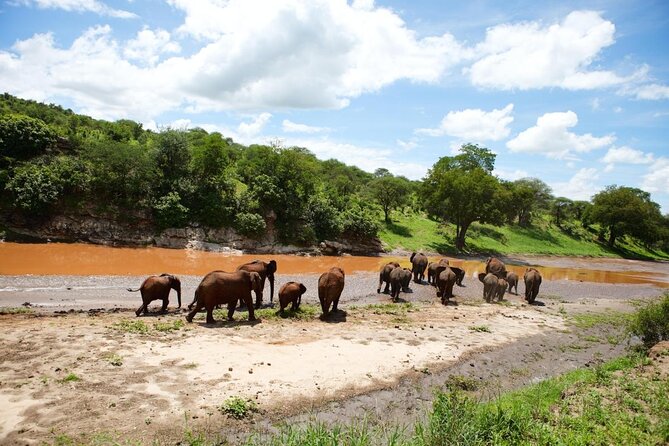
Tarangire is especially known for its large elephant herds. You might also see zebra and many other animals around water and feeding areas. The open-roof safari jeep is a major advantage here, letting you look above the vehicle and take photographs with fewer obstructions.
The day is listed at about eight hours. That means Tarangire is an introduction to the safari rather than a slow, multi-night exploration. I like its place in the plan because it gives you elephants and a different setting before the migration focus at Ndutu. If elephants are your top priority, ask how much time will be devoted to the park’s best viewing areas.
Day 3: Moving into the Ndutu region
After breakfast, you drive for roughly three hours toward Lake Ndutu. The route crosses the Rift Valley and reaches the southern Serengeti ecosystem, where the scenery becomes more open and the migration story takes center stage.
Lake Ndutu is alkaline, like several Rift Valley lakes, and attracts a wide range of wildlife. After arrival, you take a game drive in the region before continuing to your accommodation for dinner and the night.
This is an important transition day. The drive may feel long after the Tarangire outing, but it places you in the right zone for the next full day. Your chances depend heavily on timing, rain, and where the herds have moved. A private guide can adjust the search based on fresh sightings and local conditions, which is more useful than following a rigid group schedule.
Do not expect the lake itself to be the sole attraction. Ndutu includes short-grass plains, swamps, woodland, and soda-lake habitats. The appeal is the mix of these areas and the animals that gather around them.
More Private Tours in Arusha
- Private 6-Day Tarangire Manyara Crater and Serengeti with Mid-Range Lodges
★ 5.0 · 238 reviews - 5 Days Budget Private Safari, Tanzania
★ 5.0 · 191 reviews - 5-Day Private Northern Tanzania Safari from Arusha
★ 5.0 · 182 reviews - 6 Days Private Budget Safari
★ 5.0 · 163 reviews
Day 4: A full day among the migrating herds
This is the tour’s most important day. After breakfast, you spend a full day exploring the Ndutu region, moving through wetlands, woodland, soda lakes, and the short-grass plains where wildebeest and zebra may gather.
A full day matters because the herds are spread out. You have more time to search, watch animal behavior, and wait when something interesting develops. In a private vehicle, you can also discuss whether to stay longer at a sighting or continue looking for another species.
Around January, the calving spectacle can be extraordinary. Roughly half a million young wildebeest may be born across the wider event, with the main birth period concentrated into a short window. The calves’ ability to stand and run quickly helps them survive, but predators remain close.
I would bring patience into this day. You may see an enormous herd but no dramatic chase. You might instead watch adults gather, calves follow their mothers, zebra move through the grass, or predators rest nearby. Those quieter scenes are valuable because they show how the migration works, not just its most dramatic moments.
One particularly useful detail from the guest experiences is that Gilbert reportedly found wildebeest crossing in Ndutu in February. That is a good reminder that the migration is not limited to January and that unusual sightings can occur outside the headline calving window.
Day 5: From the Serengeti toward Ngorongoro Crater
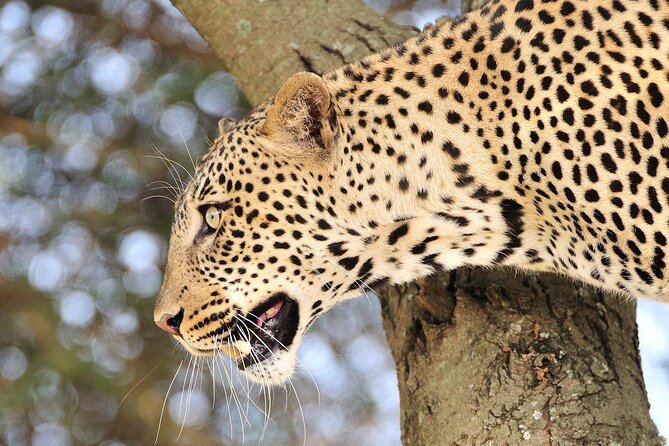
After breakfast, the route continues with an en-route game drive through the Serengeti before heading toward the Ngorongoro Conservation Area. If luck cooperates, you may still see major predators and other large animals during the crossing.
The Ngorongoro Crater was formed by the collapse of a huge volcano millions of years ago. It is about 610 meters deep and covers roughly 304 square kilometers. The enclosed floor supports a dense animal population, estimated in the tour details at about 25,000 ungulates.
You reach the crater rim before lunch, where the view down into the caldera is one of the trip’s great visual moments. The scale is hard to grasp from photographs. From above, the crater appears contained and almost self-contained, though it remains a working ecosystem with changing conditions.
The tour description suggests a crater game drive after reaching the rim, but the exact timing and length should be confirmed before booking. The stated day runs about eight hours, and this is one of the trip’s more demanding stretches. You combine a Serengeti transfer, an en-route game drive, a major viewpoint, and crater wildlife viewing in a single day.
Ngorongoro is valuable because it offers a strong chance of seeing many species in one place. It is also a UNESCO World Heritage site, so the visit adds geological and conservation context to the safari. The tradeoff is that the crater can feel busy and scheduled compared with the more open Ndutu plains.
Day 6: Lake Manyara’s birds, forest, and cliffs
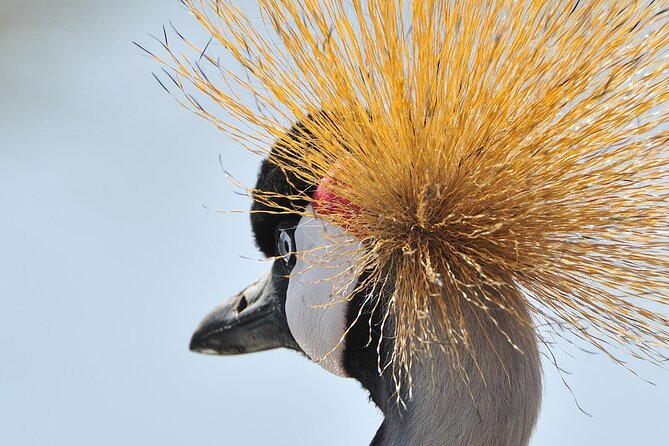
The final park is Lake Manyara National Park, about 120 kilometers west of Arusha. The shallow, seasonal alkaline lake covers around 70 percent of the park’s surface at certain times and attracts thousands of flamingos along with an extraordinary range of birdlife.
The park is small compared with the Serengeti, but its habitats change quickly. You may pass through open grassland, woodland filled with primates, and cliffs dotted with baobabs. Possible wildlife includes monkey, giraffe, zebra, wildebeest, buffalo, elephant, and lions resting in trees if conditions are right.
Lake Manyara is a smart final stop because it changes the rhythm of the safari. After broad plains and crater walls, you get birdlife, forest, and a compact park with a different feel. The listed day lasts about eight hours and includes lunch before the return toward Arusha.
I would not book this tour solely for tree-climbing lions. They are a possibility, not a promise. The real strength of Manyara is its mix of birds, primates, large mammals, and varied scenery within a relatively small area.
What the $2,827 price represents
At $2,827 per person, this is a major holiday expense. Its value depends on what you want from six days. You are paying for a private safari format, airport or local pickup, a professional guide, a safari vehicle, and access to several of northern Tanzania’s best-known wildlife zones. Group discounts are also offered, which may improve the per-person cost for larger parties.
The strongest value comes from the route. Tarangire gives you elephants and riverine wildlife. Ndutu provides the migration focus. Ngorongoro offers concentrated game viewing and geology. Manyara adds birds, forest, and a final change of scenery.
The price is less attractive if you prefer slow travel with several nights in each park. This plan covers a lot of ground in six days, and the vehicle time is unavoidable. Ask for a clear breakdown of accommodation, meals, park fees, crater fees, and any internal transfers before paying, since those details are not fully set out here.
The accommodation feedback is generally positive, with particular praise for comfort and for Nyoto Luxury Camp. Because the named lodging varies in the available details, confirm exactly where you will sleep in Tarangire, Ndutu, Ngorongoro, and Manyara.
The guide can make or break the safari
The private setup gives the guide an unusually important role. You are spending long hours together, often on rough tracks, and the quality of animal spotting can shape the whole trip.
Several guides have been praised for finding difficult species, explaining animal behavior, and handling challenging roads. Names connected with especially strong experiences include Shafino Dominick, Gilbert, Ozzie, Evans, Meck, Goodluck, David, Gama, Luther, Sahele, and Naurey in guiding or support roles. Your assigned guide may be different, so treat these names as examples rather than a guarantee.
The most useful qualities are not just animal facts. You want a guide who listens to your priorities, positions the vehicle carefully, drives safely, and knows when to wait. One account gave special credit to David’s handling of rocky, muddy tracks, while others praised Shafino for locating elusive animals and Evans for photography-friendly positioning.
Before departure, tell the company your priorities. If you care most about cheetahs, rhinos, leopards, elephants, birds, or calving behavior, say so early. A good guide cannot control nature, but your preferences help shape the search.
Comfort, pace, and practical expectations
This is an active safari. Day 2, Day 5, and Day 6 are each listed at about eight hours, while Day 3 includes a roughly three-hour drive before game viewing. You should be comfortable spending much of the day seated in a safari vehicle.
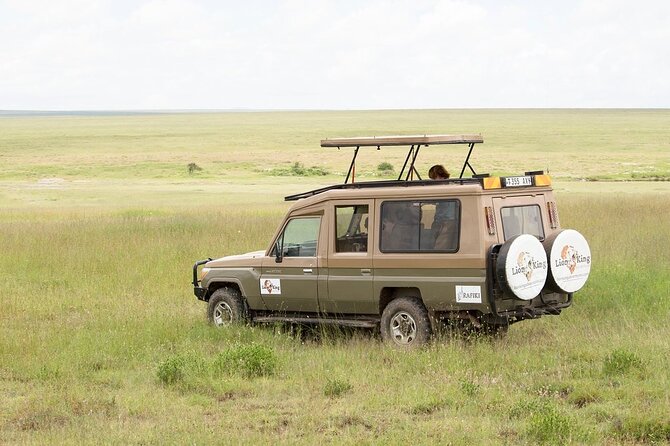
The open-roof jeep is useful for viewing and photography, but it also means exposure to sun, dust, and changing weather. Pack practical layers, sun protection, and any personal items you need during a long day. Keep your camera ready, but do not let the search for a perfect photograph distract you from watching animal behavior.
The private format is best for couples, families, and small groups who want a more personal schedule. It also suits first-time safari visitors who want one company handling the route and transfers. Most people can participate, according to the provided information, but you should consider your own comfort with long drives and uneven tracks.
The tour has a 100 percent recommendation rate and a listed five-star score from 47 ratings, which signals very strong satisfaction. The repeated praise centers on communication, caring support, well-kept vehicles, guides who work hard to find animals, and comfortable accommodation.
Should you book this Ndutu safari?
I would book it if your main goal is to see the southern Serengeti during migration season and you also want a first taste of Tarangire, Ngorongoro, and Manyara. The private vehicle, full day at Ndutu, and chance of seeing calving activity give this route a clear purpose.
I would hesitate if you want a relaxed schedule, dislike long drives, or plan to visit outside December through April. The migration may be elsewhere, and the tour cannot promise a specific animal sighting or a dramatic hunt.
For the best match, aim for the January calving period if your dates allow, then confirm the exact accommodation, inclusions, pickup point, and assigned guide. Book only when you accept the non-refundable terms, since cancellations or amendments do not qualify for a refund.
FAQ
Where does the safari begin?
The listed meeting point is Mount Meru Hotel on Arusha-Taveta Road in the Sekei area of Arusha, Tanzania. Airport pickup is also offered.
Where does the safari end?
The activity ends back at the meeting point in Arusha.
How long is the tour?
The tour lasts approximately six days.
Is this a private safari?
Yes. Only your own group participates in the activity.
When is the best time to see the Ndutu migration?
The main migration period in the Ndutu region is normally from December through April. January is described as the best time for calving.
How long does the calving period last?
The main calving period around January normally lasts about three weeks.
Which national parks and areas are included?
The route includes Tarangire National Park, the Lake Ndutu region, Ngorongoro Conservation Area including Ngorongoro Crater, and Lake Manyara National Park.
How long is the drive from the Serengeti area to Ndutu?
The drive to the Lake Ndutu region on Day 3 takes approximately three hours.
Is airport pickup available?
Yes. Pickup is offered, and a Lion King Adventures representative collects arriving customers from the airport.
Can the booking be cancelled for a refund?
No. The experience is non-refundable and cannot be changed for any reason. If you cancel or request an amendment, the amount paid will not be refunded.
More Serengeti Safaris
- 3 Days Serengeti & Ngorongoro Group Camping Safari
★ 5.0 · 574 reviews - 5-Day Highlights mid-Range Crater, Serengeti, Tarangire
★ 5.0 · 296 reviews - 3-Day Classic Serengeti Safari
★ 5.0 · 263 reviews - 5 Days Camping Tarangire, Serengeti & Ngorongoro crater & Visiting Maasai
★ 5.0 · 229 reviews
More Safaris in Arusha
- Serengeti Balloon Safari and authentic bush breakfast
★ 5.0 · 2,480 reviews - Balloon Safari & Bush Breakfast in Serengeti – Miracle Experience
★ 5.0 · 1,646 reviews - 4 Days Group Camping Safari
★ 5.0 · 1,101 reviews - 5 Days Group Camping Safari
★ 5.0 · 730 reviews
Just added around Arusha
- 5 Days Safari Tarangire, Serengeti, and Ngorongoro Crater★ 5.0 · 3 reviews
- Love lives in Africa★ 5.0 · 3 reviews
- 5 Days of Safari, Culture & Hot Springs – Tour from Arusha★ 5.0 · 3 reviews
- Arusha National Park Safari by Jeep★ 4.5 · 3 reviews
- 5Days Family _Group Tour Lodging Mid-Range in the Jungle★ 5.0 · 3 reviews
- Serengeti & Ngorongoro 3 Days Budget Safari★ 5.0 · 3 reviews
- 2 Days Tarangire and Ngorongoro Crater Tour★ 5.0 · 3 reviews
- 7 Days PRIVATE Best of Tanzania Safari *Departing everyday*★ 5.0 · 3 reviews
Serengeti Safaris, compared.

Serengeti Balloon Safari and authentic bush breakfast
Read our review →
Balloon Safari & Bush Breakfast in Serengeti – Miracle Experience
Read our review →
3 Days Serengeti & Ngorongoro Group Camping Safari
Read our review →
5-Day Highlights mid-Range Crater, Serengeti, Tarangire
Read our review →


Private 6-Day Tarangire Manyara Crater and Serengeti with Mid-Range Lodges
Read our review →
5 Days Camping Tarangire, Serengeti & Ngorongoro crater & Visiting Maasai
Read our review →Browse the lists this tour appears in