Reviewed · SAFARIS IN ARUSHA
Safari & Culture
Wildlife meets daily life. This six-day private safari from Arusha packs Tanzania’s major northern sights into a short trip, then adds something many wildlife tours miss: time with Hadzabe bushmen and the Datoga people. I especially like the chance to see Tarangire’s elephants and spend a full day in the Serengeti, and I like that your group travels privately rather than sharing every decision with strangers.
The main trade-off is time on the road. Several days run eight to ten hours, and the itinerary includes long drives between parks. You should also confirm exactly what is included in the $2,572.31 price, since the Ngorongoro admission ticket is listed separately and the overnight arrangements vary between a campsite and a tented camp.
In This Review
- Six details that shape this safari
- Why this six-day route works
- Day 1: Tarangire’s elephants and giant baobabs
- Day 2: The long road into the Serengeti
- Day 3: A full Serengeti game drive
- Day 4: Down into Ngorongoro Crater
- Day 5: Lake Eyasi, Hadzabe life, and Datoga craft
- Day 6: Returning to Arusha
- Is $2,572.31 good value?
- The guides and the human side of the safari
- Who should book this safari?
- Final call: a strong short safari with one important check
- FAQ
- How long is the Safari & Culture tour?
- Where does the tour begin and end?
- Is pickup available?
- Is this a private tour?
- Which parks and cultural areas are included?
- Can I cancel for a full refund?
Six details that shape this safari
- Tarangire begins the wildlife story with baobabs and elephants, not just a quick park stop.
- Two Serengeti days give you a better chance at the Big Five, with a full game-drive day after the long transfer.
- Ngorongoro Crater puts wildlife in a dramatic enclosed setting, with a 600-meter rim above the crater floor.
- Lake Eyasi adds real cultural contact, including a bushmen experience and a visit with Datoga metalworkers.
- The private format keeps the trip flexible, with only your own group participating.
- Experienced guides are a major strength, including Joseph and Roussagé, both praised for wildlife spotting and park knowledge.
Why this six-day route works
Northern Tanzania can easily fill two weeks. This trip makes a sensible attempt to cover the main circuit in six days: Tarangire, Serengeti, Ngorongoro, and Lake Eyasi. You get large mammals, changing scenery, crater wildlife, and direct cultural encounters without adding a separate extension.
That variety is the real appeal. A standard short safari can become a sequence of animal sightings from a vehicle. Here, the Lake Eyasi visit changes the rhythm. You spend time learning about hunting and local craftwork, then return to Arusha with a better sense of the people who live around these famous parks.
The private setup matters, too. Only your group participates, so you can ask questions, adjust the pace when practical, and spend more time at a sighting that interests you. The guides connected with this operation receive especially strong praise for finding animals and positioning the vehicle well for photographs. Joseph is described as having about 20 years of experience driving in Tanzania’s parks, while Roussagé is praised for his understanding of animals, birds, plants, and the country itself.
Still, this is not a relaxed lodge holiday. The days start early, the drives are long, and some meals are packed or taken between activities. You need to be comfortable with rough safari roads and full days outside.
More Safaris in Arusha
- Serengeti Balloon Safari and authentic bush breakfast
★ 5.0 · 2,480 reviews - Balloon Safari & Bush Breakfast in Serengeti – Miracle Experience
★ 5.0 · 1,646 reviews - 4 Days Group Camping Safari
★ 5.0 · 1,101 reviews
Day 1: Tarangire’s elephants and giant baobabs
The first drive from Arusha to Tarangire takes about two to three hours. The park day lasts around eight hours, so you get a proper introduction rather than a brief afternoon look.
Tarangire is named for the Tarangire River, described as the only water source available to animals in the area. That helps explain why wildlife gathers here, particularly during dry periods. The park is especially well known for elephants, including some of the largest elephants found in Tanzania.
I like Tarangire because the scenery can be as memorable as the animals. Nine growth zones create a varied setting of savannah, acacia trees, and large baobabs. Those thick, sculptural trees can pull your attention away from the road for a moment, which is saying something when elephants are nearby.
Your first day also gives the guide a chance to learn what you most want from the safari. Tell the guide early if photography, birds, elephants, or the Big Five matter most to you. Guides such as Joseph and Roussagé have been praised for locating animals and placing the vehicle in a good viewing position, but clear communication helps turn that skill into the kind of day you want.
Day 2: The long road into the Serengeti
After breakfast and check-out, you head toward Serengeti National Park through the Ngorongoro highlands. This is a long day, roughly ten hours, including the drive and sightseeing. A packed lunch is part of the rhythm.
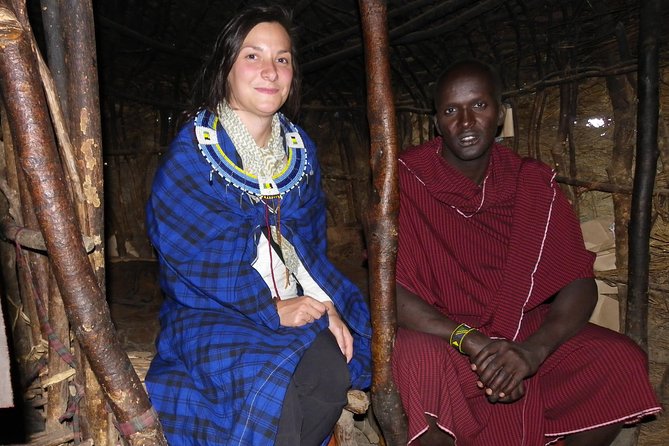
The route offers a useful change from Tarangire. You pass hilly plateaus, see Maasai communities, and may notice red clothing, round homes, and cattle sharing open country with zebras, wildebeest, and giraffes. The scenery is not just a backdrop here. It shows how wildlife areas and human communities exist close together.
Serengeti comes from the Maasai word siringet, meaning a place where the land runs on forever. That name fits the huge open spaces. The park covers about 14,750 square kilometers, with grasslands, savannah, riverine forest, and woodland.
The drawback is simple: you spend much of this day in the vehicle. The reward is reaching one of Africa’s great wildlife areas by road, with the approach itself becoming part of the experience. You overnight at Dik-dik Campsite, so ask before booking what the camping setup includes and what level of comfort you should expect.
Day 3: A full Serengeti game drive
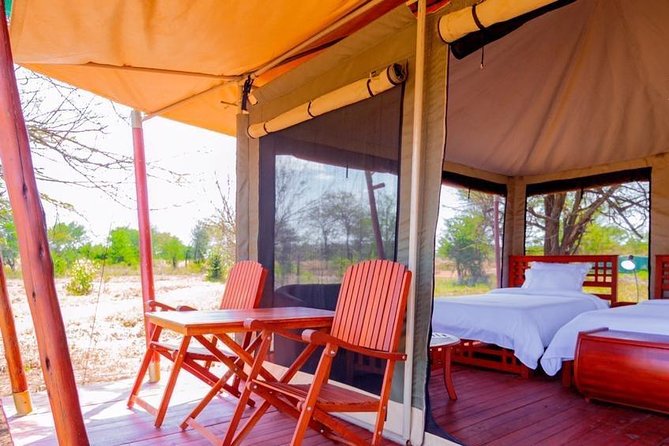
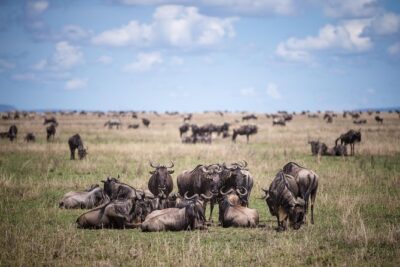
Day three is the wildlife centerpiece. You spend about ten hours on a full-day game drive, looking for lions, leopards, elephants, rhinos, and buffalo. The open Serengeti can make even an ordinary stretch of road feel important because animals may appear far out across the grasslands.
The animal list extends well beyond the famous five. You might see Thompson’s gazelles, Grant’s gazelles, topi, eland, warthogs, ostriches, eagles, and other birds. Hippo pools add another kind of sighting. You may see and smell hippos crowded into the water, a reminder that safari is not always a quiet, polished affair.
A full day improves your chances because you are not rushing through one short game drive. Your guide can spend more time tracking or waiting at a promising sighting. That is where the praised experience of Joseph and Roussagé becomes especially useful. Their ability to read the parks and locate animals has helped previous clients see all five of the Big Five, though no guide can promise every animal on every departure.
The Serengeti also rewards patience. You may spend time scanning an empty-looking plain before a predator, herd, or bird of prey changes the whole scene. The setting is one of the oldest ecosystems in the world, and it can make you feel small in a good way.
The listed overnight is Embalakai Tented Camp. Because the itinerary names both Dik-dik Campsite and Embalakai Tented Camp, ask for the exact accommodation plan, room type, and meal details before paying. That is a small but important step when the price is more than $2,500 per person.
More safaris to compare:
- 5 Days Group Camping Safari
★ 5.0 · 730 reviews - 3 Days Serengeti & Ngorongoro Group Camping Safari
★ 5.0 · 574 reviews - 7-Day Premium Luxury Tanzania Safari All-Inclusive
★ 5.0 · 426 reviews - 3-Day Classic Serengeti Safari
★ 5.0 · 263 reviews
Day 4: Down into Ngorongoro Crater
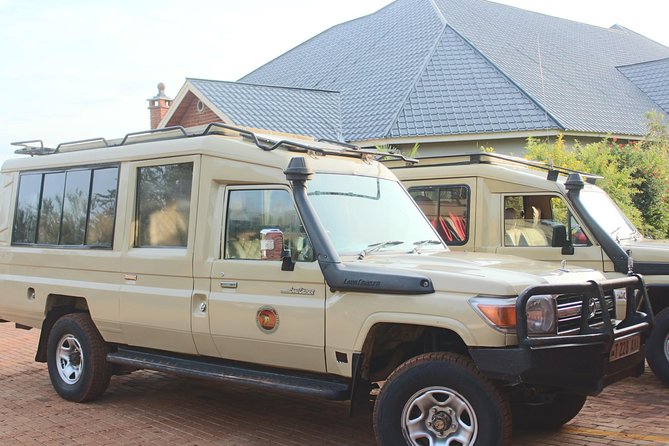
After breakfast, the drive to Ngorongoro takes about two hours, followed by a roughly ten-hour crater day. The route moves through rainforest before the descent begins. Then the walls open around you and the crater floor appears below.
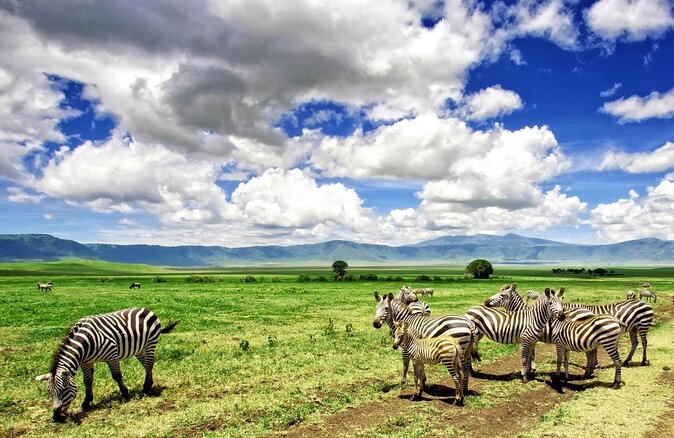
Ngorongoro is the world’s largest intact volcanic caldera. Its walls rise about 600 meters above the floor, while the rim reaches roughly 2,200 meters above sea level. The crater floor covers about 260 square kilometers and supports around 25,000 animals and 350 bird species, with water available throughout the year.
That permanent water is what makes the crater such a strong stop on a short safari. You have a concentrated wildlife area rather than another enormous park requiring long searches between sightings. The enclosed setting also gives the day a distinct visual character. You are looking at animals below the rim, with the high crater walls framing the whole scene.
The Ngorongoro admission ticket is not included according to the tour details, so budget for that separately or ask the operator how it will be handled. Also ask what time the crater drive ends and where you sleep that night, since the schedule describes the crater visit clearly but gives less detail about the overnight arrangement.
Day 5: Lake Eyasi, Hadzabe life, and Datoga craft
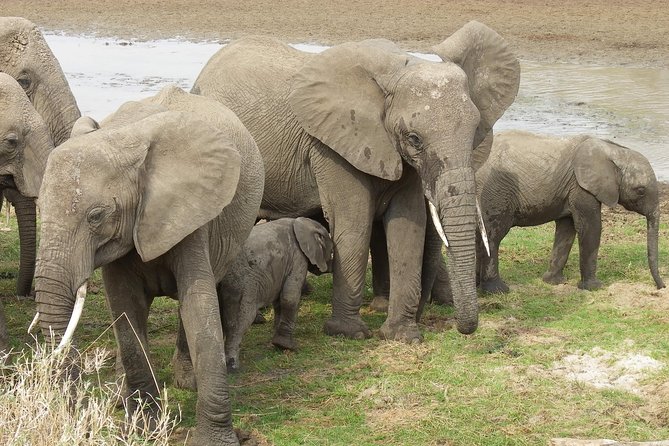
Day five is the most unusual part of the route. You leave very early with a breakfast box and drive about one hour to Lake Eyasi in the Ngorongoro Conservation Area.
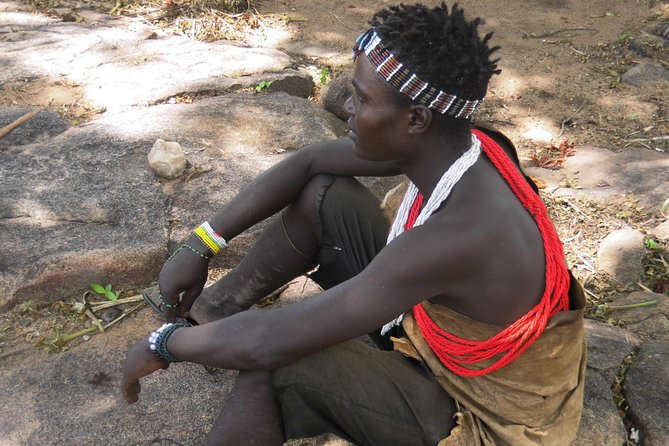
The visit includes time with bushmen, identified in the itinerary as the Hadzabe, and an opportunity to see hunting practices. The experience then continues with the Datoga people, where you can watch local jewel-making using traditional tools.
This is valuable because it moves the safari beyond viewing people from a passing vehicle. You have time to meet communities and see specific skills at work. Hunting and metal or jewelry craft offer a direct look at daily life, work, and tradition. The contrast with the previous days is sharp: instead of searching for wildlife, you are learning how people use the resources and skills around them.
Cultural visits need care and respect. Listen closely to your guide, ask before taking photographs, and treat the encounter as a meeting rather than a performance arranged only for your camera. The supplied details do not explain the exact activities, photography rules, or community fees, so ask those questions before departure.
After the visit, you drive back for a hot lunch in Karatu. The day lasts about eight hours. This is still an early and active day, but the shorter driving time and different focus make it a welcome change after the Serengeti and crater drives.
Day 6: Returning to Arusha
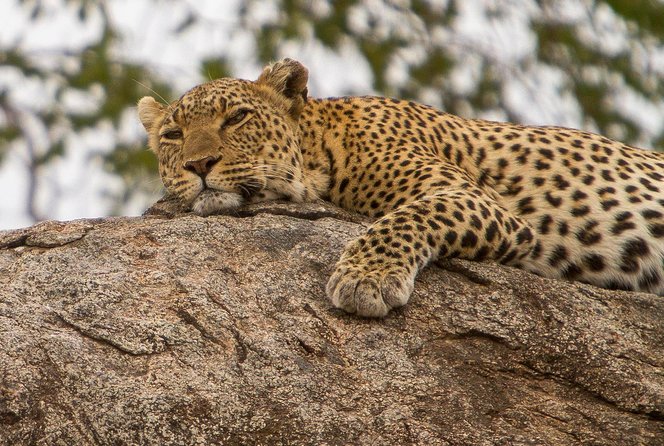
The final morning begins after breakfast with a drive of about three hours back to Arusha. Shopping is planned along the way, followed by the end of the trip and your journey home.
This day is useful for travelers with an evening departure, but you should not assume a specific airport drop-off time because the details only say Arusha and shopping on the route. Confirm the final drop-off point and schedule if you have a flight to catch.
The shopping stop also gives you a last chance to buy a small reminder of the trip. After several days of parks and rural roads, returning to Arusha helps bring the journey back to ordinary Tanzanian life.
Is $2,572.31 good value?
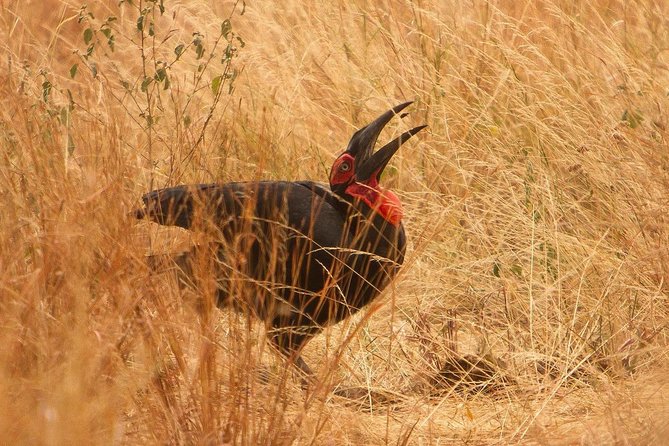
At $2,572.31 per person, this is a substantial purchase. Its value depends heavily on what the price covers, since the supplied details do not spell out every inclusion. The route includes six days, private participation, pickup, four major wildlife and cultural areas, guided transport, and overnight stays. That is a lot of ground in a compact schedule.
The strongest value comes from the range of experiences. You are not paying only for Serengeti game drives. Tarangire adds elephants and baobabs, Ngorongoro adds a concentrated wildlife setting, and Lake Eyasi brings the cultural element that makes the trip different from a standard park circuit.
I would ask for a written list covering park fees, meals, camping or tented accommodation, transfers, and the Ngorongoro admission ticket. The ticket is specifically marked as not included, while other admission entries are marked free. That wording may reflect how the fees are charged rather than the full cost of the tour, so clarify it before booking.
The private format can also justify a higher price if you value flexibility and personal attention. A private vehicle and guide mean your group does not have to follow the wishes of a larger mixed party. This matters during a long animal sighting, especially for photographers.
The guides and the human side of the safari
The guide can make or break a safari, and the praise for this operation focuses on exactly the right things: animal spotting, park experience, patience, kindness, and photography positions.
Joseph is described as a driver with about 20 years of experience in Tanzania’s national parks. Roussagé is praised for his ability to identify animals, birds, and plants, as well as for his friendly approach. Another detailed account describes Roussagé as someone who shares a strong personal passion for Tanzania.
Photographers should pay attention here. One repeat client had taken three safaris with Joseph over seven years and valued his ability to find animals and position the vehicle for photographs. That does not guarantee ideal light or a perfect sighting, but it suggests the company has experience with people who want more than a quick look.
Ask who your assigned guide will be, especially if you have a strong preference. The published information names Joseph and Roussagé, but it does not promise that either person will lead every departure.
Who should book this safari?
I would recommend it most strongly to you if you want a compact northern Tanzania route with a serious wildlife focus and a cultural day. It suits first-time safari visitors who want to cover the major parks without spending two weeks on the road.
It is also a good match for photographers, couples, and private groups who value an experienced guide. The honeymoon feedback gives the trip a positive sign for couples, while the comments from a wildlife photographer point to strong guide support for careful viewing.
You may want a different plan if you dislike long drives, early starts, basic camping, or an itinerary that packs several major stops into six days. A longer safari would give you more time in each area and reduce the pressure of transfer days.
The culture day also deserves serious consideration. If you want to meet local communities and see traditional work, it adds real value. If your priority is wildlife photography every day, you may prefer to replace it with another Serengeti or Ngorongoro day.
Booking includes free cancellation up to 24 hours before the start time for a full refund. Changes made inside that window are not accepted, and poor weather may lead to a new date or full refund. The tour operates daily, with listed hours from 6:00 AM to 7:00 PM, and confirmation is provided at booking.
Final call: a strong short safari with one important check
I would book this safari if you want the classic northern Tanzania parks plus a meaningful cultural visit, and if you are comfortable with long road days. The full Serengeti day, private format, elephant-rich Tarangire stop, and Lake Eyasi visit give it more range than a basic three-park circuit.
Before paying, get the accommodation plan and all fee inclusions in writing. Once that is clear, this is a promising choice for a short, active safari led by guides with a strong reputation for finding animals and helping you see Tanzania beyond the usual postcard view.
FAQ
How long is the Safari & Culture tour?
The tour lasts approximately six days.
Where does the tour begin and end?
It begins in Arusha and returns to Arusha on the final day.
Is pickup available?
Yes, pickup is offered.
Is this a private tour?
Yes. Only your group participates in the activity.
Which parks and cultural areas are included?
The route visits Tarangire National Park, Serengeti National Park, Ngorongoro Crater, and the Ngorongoro Conservation Area near Lake Eyasi. The Lake Eyasi visit includes contact with Hadzabe bushmen and the Datoga people.
Can I cancel for a full refund?
Yes, if you cancel at least 24 hours before the experience start time. Cancellations made less than 24 hours before the start time are not refunded. If poor weather cancels the tour, you are offered another date or a full refund.
Just added around Arusha
- 5 Days Safari Tarangire, Serengeti, and Ngorongoro Crater★ 5.0 · 3 reviews
- Love lives in Africa★ 5.0 · 3 reviews
- 5 Days of Safari, Culture & Hot Springs – Tour from Arusha★ 5.0 · 3 reviews
- Arusha National Park Safari by Jeep★ 4.5 · 3 reviews
- 5Days Family _Group Tour Lodging Mid-Range in the Jungle★ 5.0 · 3 reviews
- Serengeti & Ngorongoro 3 Days Budget Safari★ 5.0 · 3 reviews
- 2 Days Tarangire and Ngorongoro Crater Tour★ 5.0 · 3 reviews
- 7 Days PRIVATE Best of Tanzania Safari *Departing everyday*★ 5.0 · 3 reviews
Safaris in Arusha, compared.

Serengeti Balloon Safari and authentic bush breakfast
Read our review →
Balloon Safari & Bush Breakfast in Serengeti – Miracle Experience
Read our review →


3 Days Serengeti & Ngorongoro Group Camping Safari
Read our review →
7-Day Premium Luxury Tanzania Safari All-Inclusive
Read our review →