
Reviewed · SERENGETI SAFARIS
Tanzania 4 Days 3 Nights Budget camping safari to Serengeti and Ngorongoro
The wild starts before breakfast. This four-day safari gives you a practical way to reach Serengeti National Park and Ngorongoro Crater for $740 per person, with transport, tents, meals, and an English-speaking guide included. I like the open-roof 4×4, which gives you a clear view of animals, and I like that the camp chef prepares full meals, even for special diets. The main catch is simple: the $740 price does not include the $210 conservation fee, and public campsites can be very basic.
I also like the chance to spend two nights near Seronera, the Serengeti’s central wildlife area, instead of rushing through it in a single afternoon. Guides such as Thomas, Ely, and Good Luck have earned praise for spotting distant animals and caring about the quality of the experience. Still, you need to be ready for long drives, early starts, little camp lighting, and no hot water at some sites.
In This Review
- Key points to know before booking
- What this four-day safari really offers
- Day one: the long road from Arusha to Seronera
- Two nights near Seronera and why they matter
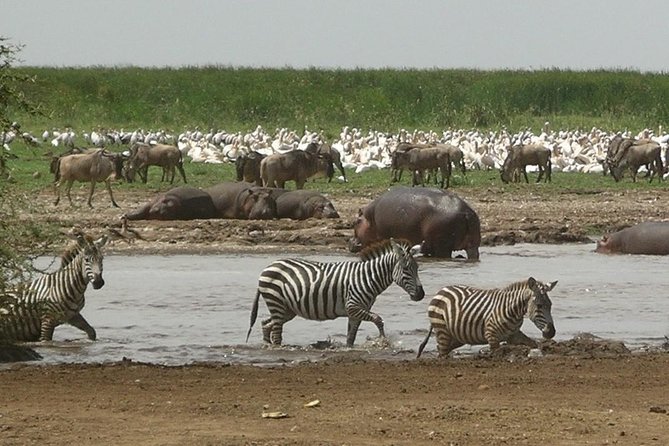
- The Serengeti Hippo Pool stop
- Camping at Seronera: the price-saving tradeoff
- Day three: leaving Serengeti for Ngorongoro
- Day four: the crater floor and the return to Arusha
- Guides, drivers, and the human side of the trip
- What to pack for this particular safari
- Who gets the best value from this safari?
- Should you book this Serengeti and Ngorongoro safari?
- FAQ
- Where does the safari begin and end?
- How much does the safari cost?
- Are park and conservation fees included?
- What type of vehicle is used?
- Are meals included?
- Is the accommodation in lodges or campsites?
- Can I request a guide who speaks another language?
- Can I cancel for a full refund?
Key points to know before booking
- Two nights in Serengeti: The extra time gives your guide more chances to locate moving wildebeest, zebra, predators, and other wildlife.
- $740 is not the full price: Add the stated $210 conservation charge for Serengeti and Ngorongoro, paid in cash on the morning of the safari.
- Public camping keeps costs down: Expect practical facilities, with reports of no electricity, no hot water, and limited comfort at Seronera.
- Meals are a real strength: Breakfast, lunch, and dinner are included, and the cooking team can cater for vegan diets.
- The safari vehicle matters: Transport is by a Land Rover 4×4 with a pop-up roof for animal viewing and photography.
- The schedule is demanding: Pickup is at 8:00 a.m. on day one, followed by long drives and several early-morning game drives.
What this four-day safari really offers
This is a budget safari built around the two biggest names in northern Tanzania. Serengeti National Park covers about 14,763 square kilometers, while Ngorongoro Crater gives you a much smaller, enclosed area where many animals live year-round.
You are not paying lodge prices, but you are still getting the essential safari pieces: park drives, a 4×4 vehicle, a driver-guide, a cook, camping, and three days of meals. That makes the package appealing if your priority is time among wildlife rather than polished accommodation.
At $740 per person, the value needs a little careful reading. The published price excludes $210 in conservation fees, so your starting total is effectively $950 per person before tips or optional extras. A French, Spanish, or German guide costs an additional $25 per day if requested early. The optional Olduvai Gorge museum visit also costs extra.
That final price is still attractive for a four-day safari with transport between Arusha, Serengeti, and Ngorongoro. Just do not compare the $740 figure directly with an all-inclusive lodge safari. Ask for the exact total before departure, especially if you want upgraded accommodation.
More Safaris in Arusha
- Serengeti Balloon Safari and authentic bush breakfast
★ 5.0 · 2,480 reviews - Balloon Safari & Bush Breakfast in Serengeti – Miracle Experience
★ 5.0 · 1,646 reviews - 4 Days Group Camping Safari
★ 5.0 · 1,101 reviews
Day one: the long road from Arusha to Seronera
Pickup is scheduled for 8:00 a.m. in Arusha. The first day is mostly about reaching the Serengeti, with a picnic lunch carried for the drive.
The journey is long, but it serves a purpose. Serengeti is enormous, so a short package must spend real time on the road to reach its central area. You should expect roughly ten hours of activity, including driving and game viewing, and arrival around 3:00 p.m.
Once inside the park, the game drive begins en route to Seronera campsite. This is a good use of the afternoon because you start looking for animals before reaching camp, rather than treating the drive as dead time.
The central Serengeti is known for lions, leopards, elephants, cheetahs, buffalo, zebra, wildebeest, eland, wild dogs, gazelles, crocodiles, and many bird species. You might see several of these on the first afternoon, but wildlife sightings are never guaranteed. The guide’s skill and the location of the herds matter greatly.
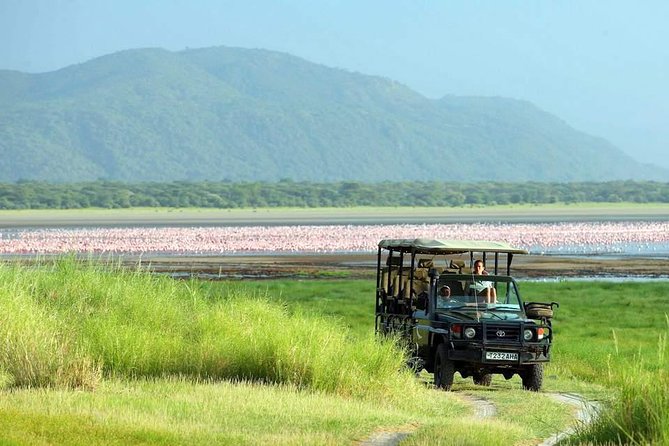
Your transport is a safari Land Rover 4×4 with a pop-up roof. That roof is useful for more than photographs. It lets you look up, scan the plains, and watch animals from a standing position while keeping the vehicle around you.
Dinner and overnight accommodation are at Seronera campsite. The budget price means basic camping rather than a private lodge room. You can request a mid-range or luxury upgrade in advance, but you should confirm the added price and exactly where you will sleep.
Two nights near Seronera and why they matter
Day two is the heart of the safari. You have morning and afternoon game drives in central Serengeti, with time at camp for breakfast and a break between outings.
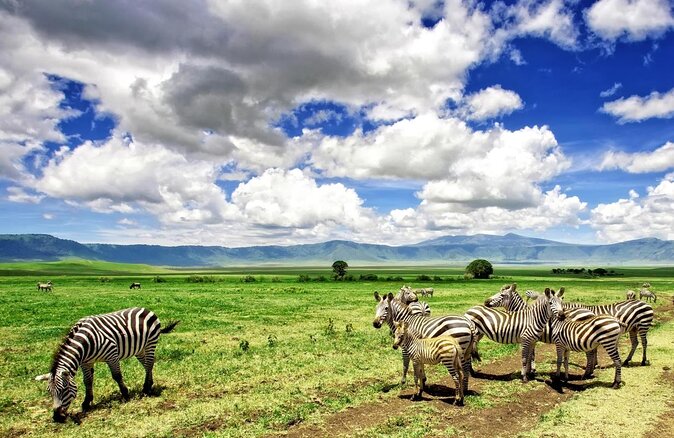
The word Serengeti means endless plains in the Maasai language, and the scale explains why two nights help. The wildebeest and zebra migration changes position, so your guide must follow the animals rather than drive to one fixed viewing point.
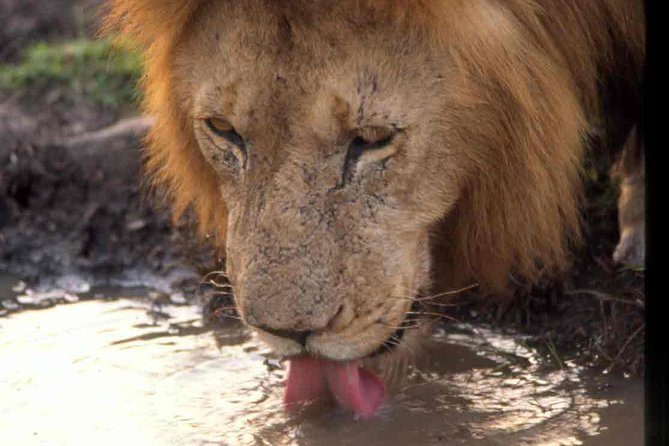
This is also prime country for predators. Lions, leopards, hyenas, and cheetahs hunt around the central plains, often near the large grazing herds. The appeal is not only finding the famous animals. It is watching how the open grassland connects grazers, predators, water, and birdlife.
Guides are a major part of the value here. Thomas is praised for spotting the Big Five, including an elusive rhino, and for following responsible viewing practices. Ely and Good Luck also receive strong praise for guiding and cooking. If you are assigned one of these guides, expect the experience to benefit from sharp eyes and a good feel for animal locations, though every sighting still depends on nature.
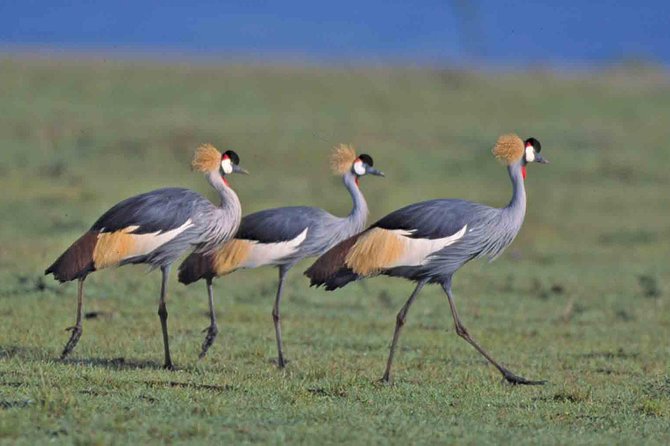
The bird list is long: eagles, ducks, geese, egrets, vultures, secretary birds, ibis, storks, herons, kites, pelicans, cranes, and guinea fowl are among the possibilities. You do not need to be a serious bird watcher to enjoy this part. Large raptors and vultures are easy to notice, and the birdlife adds interest when mammals are temporarily out of view.
The Serengeti Hippo Pool stop
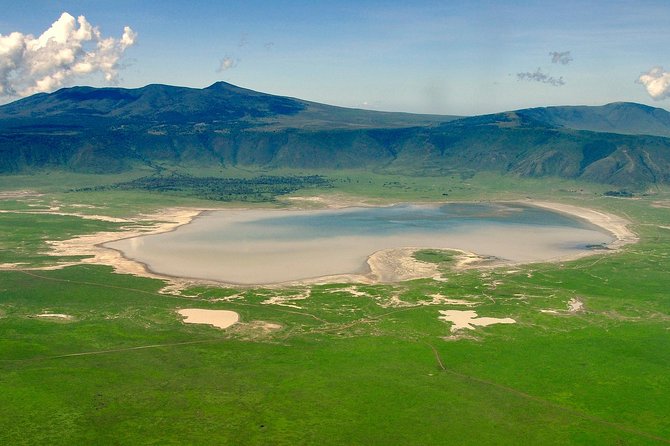
The hippo pool is scheduled as a separate one-hour stop on day two. Fed by the Seronera River, it is one of the area’s notable watering places and is most easily reached through the Ikoma entrance.
This stop changes the rhythm of the day. Instead of searching across wide plains, you focus on a concentrated water site where hippos gather. It can be a useful chance to see a different animal in a different setting, while also giving you a break from constant vehicle movement.
The schedule describes the stop as part of the Serengeti portion, but access can depend on the route, park conditions, and the day’s animal movements. Ask your guide how the hippo pool fits into the actual drive plan.
More ways to see the Ngorongoro Crater:
- 3 Days Serengeti & Ngorongoro Group Camping Safari
★ 5.0 · 574 reviews - 5 Days Camping Tarangire, Serengeti & Ngorongoro crater & Visiting Maasai
★ 5.0 · 229 reviews - 4 Days Join Group tour Tarangire Serengeti and Ngorongoro crater
★ 5.0 · 219 reviews - 4-Day Safari from Arusha: Tarangire, Serengeti and Ngorongoro
★ 5.0 · 173 reviews
Camping at Seronera: the price-saving tradeoff
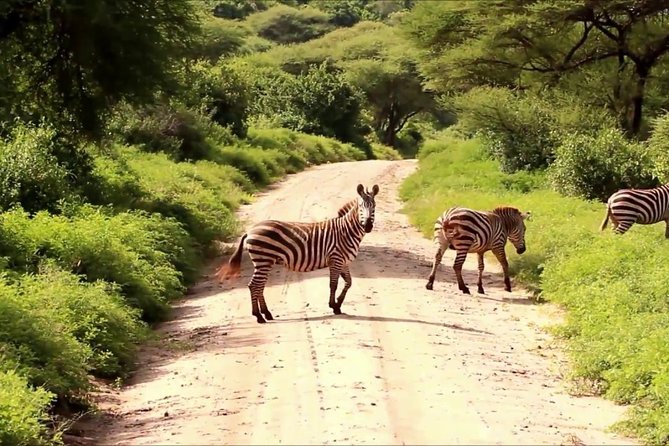
Camping is the reason this safari costs less than a lodge-based trip, but you need to know what basic means here. The Seronera public campsite has been described as having no light and no hot water, with very limited facilities.
That is not a minor detail. After a long day in a dusty vehicle, washing and changing in a simple camp takes patience. Bring a headlamp, keep your toiletries organized, and do not expect the comforts of a hotel. The supplied information confirms bottled water, but it does not promise hot showers, electricity, or charging facilities.
The food appears to be one of the strongest parts of the setup. Michael, the cook, is praised for producing delicious meals in a camping environment, and vegan meals were prepared successfully for one couple. Good Luck also receives praise for his cooking. Tell the operator about dietary needs before the trip so the kitchen team has time to plan.
You will have three nights of camping, with breakfast, lunch, and dinner included. Lunches are carried for the road or served during the day’s route, so the included meals reduce both cost and the need to arrange food independently.
Day three: leaving Serengeti for Ngorongoro
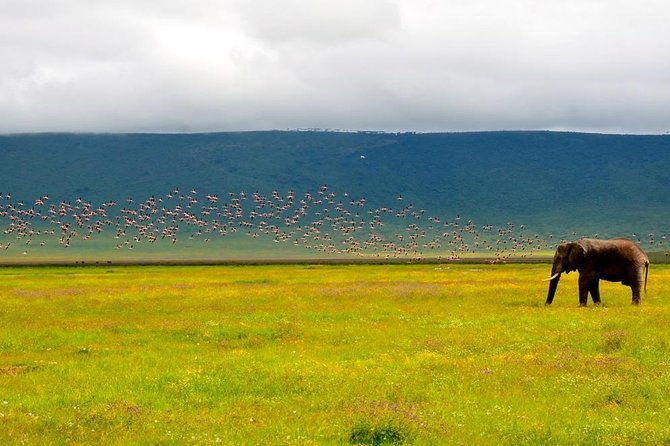
Day three begins early, with a 6:00 a.m. game drive in Serengeti. You return to camp around 9:00 a.m. for breakfast, check out, and continue toward Ngorongoro with lunch and game viewing along the way.
This early start gives you a final chance to see active animals before the heat of the day. It also makes sense for the route, since the journey from Serengeti toward Ngorongoro takes a large part of the day.
The schedule describes Ngorongoro Crater in detail on day three and then schedules another crater descent on day four. In practical terms, the plan appears to use day three for the transfer toward the crater rim and day four for the main crater-floor drive. Confirm this point with African Beast Tours and Safaris before booking, because the written timing is not fully consistent.
Ngorongoro Crater is the world’s largest unbroken caldera, measuring about 260 square kilometers and reaching a depth of 610 meters. Its enclosed shape gives you a strong chance of seeing many animals in one day, although the crater is not a guarantee of every species.
The crater floor can hold lions, hyenas, wildebeest, zebra, black rhinoceros, and smaller antelopes. Flamingos may appear on the soda lake, while geese, storks, vultures, and other birds add movement above the grass.
An optional visit to Olduvai Gorge and its museum is available for an extra fee. If human origins and archaeology interest you, ask how much time the stop adds and what the museum charge is before agreeing to it.
Day four: the crater floor and the return to Arusha
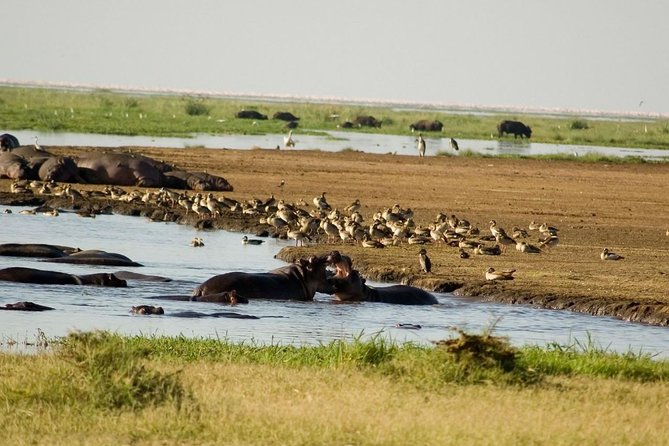
The final day starts early again. Breakfast comes first, followed by a 7:30 a.m. drive to Ngorongoro Crater and a descent to the floor for game viewing.
The crater is the most compact wildlife setting on this route. The listed Big Five are rhino, lion, leopard, buffalo, and elephant, along with zebra, hippo, wildebeest, and hyena. Seeing all five is possible, but you should treat it as a fortunate result rather than a promise.
Lunch is scheduled at the Ngoitoktok Spring picnic site. A break beside water can be memorable, but you should follow the guide’s instructions closely and keep food secured. This is still a wildlife area, not a normal picnic park.
After lunch, you continue game viewing and then ascend the crater before returning to Arusha. The day is listed at about seven hours, ending with drop-off at a hotel or residence in Arusha.
This final route works well if you need to return to Arusha after the safari. It may feel tiring after several early starts, but the schedule gives you a final concentrated wildlife session instead of ending with a simple transfer.
Guides, drivers, and the human side of the trip
The guide can make or break a safari, especially in Serengeti, where finding animals requires patience and good observation. Thomas is specifically praised for locating a rhino and for following ethical guiding practices. That combination matters. A guide who respects animal space gives you a better experience than one who treats every sighting as a race.
Ely and Good Luck are praised for guiding and cooking, while Fazeel receives warm praise as a Spanish translator who was attentive and eager to help. If you need a non-English guide, arrange it early. French, Spanish, and German guiding is listed at $25 extra per day.
The operator can host up to 100 people, but that is a maximum for the activity, not a promise that your vehicle will hold 100 people. Ask about the expected vehicle size and group arrangement if personal space matters to you. The supplied details confirm the safari vehicle and pickup service, but not the exact number of people per jeep.
What to pack for this particular safari
Your packing should reflect public camping, not lodge living. A headlamp is especially useful because the Seronera camp has been described as lacking light. Keep a small bag accessible in the vehicle for water, sun protection, warm layers, and personal items.
You should also bring:
- Comfortable clothes for dusty game drives
- A warm layer for early mornings
- Sun protection
- Camera equipment with spare batteries or charging plans
- Personal toiletries suited to basic camping
- Cash for the $210 conservation fee and optional expenses
Bottled water is included, as are all listed breakfasts, lunches, and dinners. You should still clarify how much personal drinking water is supplied and how you will handle charging electronic devices, since electricity is not promised at the public campsite.
Who gets the best value from this safari?
I would recommend this trip to you if you want the major northern Tanzania wildlife areas but do not want to pay for lodge accommodation. It suits people who accept long drives, early mornings, shared or basic camping conditions, and a schedule built around animals rather than comfort.
It is also a good match for anyone who wants two full Serengeti game-drive days rather than a rushed one-night visit. The chance to follow migrating herds, search for predators, visit the hippo pool, and then explore Ngorongoro gives the trip a strong wildlife focus.
I would be cautious about booking it if you need hot showers, reliable electricity, private rooms, or a slow pace. The published schedule is busy, and the public camp facilities may feel rough after a full day outdoors.
The $210 conservation fee deserves special attention. Since it is paid separately in cash, your real budget should begin at $950 per person, before tips, the Olduvai Gorge museum, or a language-guide supplement. That is still a fair price for the route and inclusions, but only if you understand the additional charge.
Should you book this Serengeti and Ngorongoro safari?
Book it if your main goal is wildlife and your budget favors camping over comfort. The strongest reasons are the two nights near Seronera, the open-roof 4×4, included meals, and guides who have shown strong animal-spotting skills. The cooking also sounds unusually dependable for a basic camp, including support for vegan food.
Before paying, confirm the full cost, the exact crater schedule, the expected group size, and the facilities at each campsite. If you can handle simple conditions and keep your expectations realistic, this is a good-value route to two of Tanzania’s great wildlife areas. If camping comfort is central to your trip, pay for the accommodation upgrade or choose a lodge safari instead.
FAQ
Where does the safari begin and end?
Pickup is offered in Arusha at 8:00 a.m. on day one. After the final Ngorongoro game drive, you are dropped at a hotel or residence in Arusha.
How much does the safari cost?
The listed price is $740 per person. A separate $210 total conservation fee for Serengeti and Ngorongoro is not included and is paid in cash on the morning of the tour.
Are park and conservation fees included?
No. The stated conservation fees for Serengeti and Ngorongoro are excluded from the listed price.
What type of vehicle is used?
Transport is provided in a safari Land Rover 4×4 with a pop-up roof for viewing animals.
Are meals included?
Yes. The package includes three breakfasts, four lunches, and three dinners, along with bottled water.
Is the accommodation in lodges or campsites?
The standard package includes three nights of camping accommodation. A mid-range or luxury accommodation upgrade may be arranged in advance.
Can I request a guide who speaks another language?
Yes. French, Spanish, or German guiding is available for an additional $25 per day when requested early.
Can I cancel for a full refund?
You can cancel at least 24 hours before the experience starts for a full refund. Cancellations or changes made less than 24 hours before the start time are not accepted for a refund.
More Camping Safaris
- 5 Days Group Camping Safari
★ 5.0 · 730 reviews - 2 Days Tarangire and Ngorongoro Group Camping Safari
★ 5.0 · 146 reviews - 6 Days Tanzania Budget Camping Safari
★ 5.0 · 145 reviews - 3 Day Serengeti National Park & Ngorongoro Crater Camping Safari
★ 5.0 · 142 reviews
More Serengeti Safaris
- 5-Day Highlights mid-Range Crater, Serengeti, Tarangire
★ 5.0 · 296 reviews - 3-Day Classic Serengeti Safari
★ 5.0 · 263 reviews - Private 6-Day Tarangire Manyara Crater and Serengeti with Mid-Range Lodges
★ 5.0 · 238 reviews - 10-Day Serengeti Wildebeest Migration Safari from Arusha
★ 5.0 · 218 reviews
Just added around Arusha
- 5 Days Safari Tarangire, Serengeti, and Ngorongoro Crater★ 5.0 · 3 reviews
- Love lives in Africa★ 5.0 · 3 reviews
- 5 Days of Safari, Culture & Hot Springs – Tour from Arusha★ 5.0 · 3 reviews
- Arusha National Park Safari by Jeep★ 4.5 · 3 reviews
- 5Days Family _Group Tour Lodging Mid-Range in the Jungle★ 5.0 · 3 reviews
- Serengeti & Ngorongoro 3 Days Budget Safari★ 5.0 · 3 reviews
- 2 Days Tarangire and Ngorongoro Crater Tour★ 5.0 · 3 reviews
- 7 Days PRIVATE Best of Tanzania Safari *Departing everyday*★ 5.0 · 3 reviews
Serengeti Safaris, compared.

Serengeti Balloon Safari and authentic bush breakfast
Read our review →
Balloon Safari & Bush Breakfast in Serengeti – Miracle Experience
Read our review →
3 Days Serengeti & Ngorongoro Group Camping Safari
Read our review →
5-Day Highlights mid-Range Crater, Serengeti, Tarangire
Read our review →


Private 6-Day Tarangire Manyara Crater and Serengeti with Mid-Range Lodges
Read our review →
5 Days Camping Tarangire, Serengeti & Ngorongoro crater & Visiting Maasai
Read our review →Browse the lists this tour appears in