
Reviewed · CAMPING SAFARIS
6 Days Tanzania Budget Camping Safari
Africa rewards patience. This six-day safari links Tarangire, Serengeti, Ngorongoro Crater, and Lake Manyara in one busy circuit from Arusha. I like the chance to see several of Tanzania’s best-known parks, and I especially like the Mto wa Mbu village visit, where you taste local food and see banana plantations rather than spending every hour in a vehicle. The main trade-off is time: some days involve long drives, early breakfasts, and basic camping.
The price is $1,600 per person, with meals, transport, park visits, a guide, camping or lodge accommodation, water, Wi-Fi in the safari vehicle, and emergency rescue cover included. Strong praise centers on the guides, including Nuru, Robert, Mohamed, Florian, and others, but you should confirm the exact sleeping arrangements because the program describes both camping and lodge nights in slightly different ways.
In This Review
- Key points before you book
- What $1,600 buys you in Tanzania
- Day 1: Elephants and baobabs in Tarangire
- Day 2: The long road to the Serengeti
- Day 3: A full Serengeti game drive
- Day 4: Sunrise departure and the road to Ngorongoro
- Day 5: Ngorongoro Crater and Mto wa Mbu
- Day 6: Lake Manyara and the return to Arusha
- Guides, vehicles, and the camping setup
- Meals, timing, and practical comfort
- Who should choose this safari?
- Should you book the six-day safari?
- FAQ
- Where does the safari start and finish?
- How many people can join the safari?
- Are meals included?
- Is accommodation included?
- When is the best chance of seeing the wildebeest migration?
- Can I cancel for a full refund?
Key points before you book
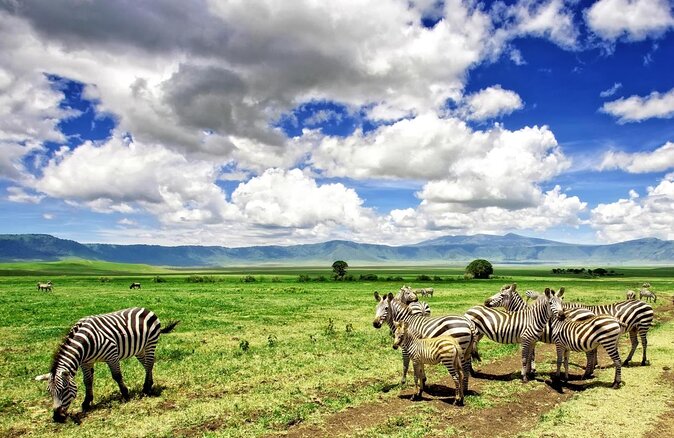
- Four major wildlife areas in six days: You visit Tarangire, Serengeti, Ngorongoro Crater, and Lake Manyara.
- A real camping component: Nights are supplied, but the trip is marketed as budget camping and should not be mistaken for a luxury lodge safari.
- Mto wa Mbu adds a human side: The village walk includes local food, banana plantations, community projects, and a look at daily life.
- The Serengeti receives the most time: Day 2 brings an afternoon game drive, while Day 3 gives you a full day in the park.
- A small group keeps the vehicle manageable: The maximum is six people, useful when everyone wants a window and a clear view.
- The guide matters enormously: Strong field guides such as Nuru, Robert, Mohamed, and Florian have been praised for finding animals and explaining what you are seeing.
What $1,600 buys you in Tanzania
At $1,600, this is not simply a transport package with a few park stops. The price includes a driver-guide, accommodation, meals listed in the schedule, hotel pickup and return, taxes and handling charges, coffee and tea, unlimited mineral water, Wi-Fi in the safari jeep, and AMREF Flying Doctors emergency rescue cover.
That collection of inclusions gives the trip solid value. Park fees and long-distance fuel are major parts of any northern Tanzania safari, so an apparently cheap price can rise quickly when meals, water, transfers, and accommodation are added separately. Here, much of the daily spending is already covered.
Still, budget means budget. The trip includes camping, and one description places you in a campsite inside the Serengeti while another program detail mentions lodge nights. Some people who took a similar six-day version slept two nights at Fanaka Lodge and three nights in tents. Ask the operator to confirm your exact accommodation before paying, especially if you care about private bathrooms, tent style, or the number of lodge nights.
Alcohol is extra, flights are not included, and anything not listed comes from your own pocket. The tour begins and ends at Arusha Tourist Inn on Sokoine Road, although hotel pickup and drop-off are also offered.
More Safaris in Arusha
- Serengeti Balloon Safari and authentic bush breakfast
★ 5.0 · 2,480 reviews - Balloon Safari & Bush Breakfast in Serengeti – Miracle Experience
★ 5.0 · 1,646 reviews - 4 Days Group Camping Safari
★ 5.0 · 1,101 reviews
Day 1: Elephants and baobabs in Tarangire
Pickup is scheduled for 8 a.m. from your Arusha hotel. Tarangire National Park is about 115 kilometers from Arusha, with roughly three hours of driving before the game drive begins.
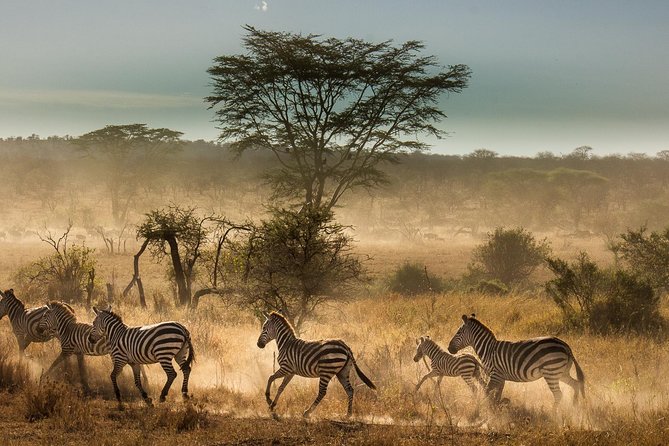
Tarangire covers about 2,800 square kilometers and takes its name from the Tarangire River. That river is the park’s practical heart, drawing wildlife to water and making the first day a strong introduction to safari viewing. Large elephant groups are a major attraction, and the unusual baobab trees give the park a look unlike the open plains of the Serengeti.
You may also see lions, leopards, pythons, and other animals. The schedule calls for a full-day game drive, followed by dinner and an overnight stay at Jambo Lodge.
I like the shape of this opening day. You get into wildlife country quickly, and Tarangire offers more than a warm-up stop. Elephants, giant trees, and the chance of seeing tree-climbing pythons give the park its own character.
The drawback is the early loss of time to the drive from Arusha. Eight hours in a safari vehicle is a realistic description of the day, and the roads and repeated stops can leave you tired by dinner. Bring a hat, sunscreen, and a small bag with the things you need during the drive, rather than opening your main luggage repeatedly.
Day 2: The long road to the Serengeti
After breakfast, you pack your luggage into the safari jeep and begin the drive toward Serengeti National Park. Lunch is carried in the vehicle, and the route includes views of the Rift Valley and Ngorongoro Crater.
This is one of the tour’s longest days, listed at about ten hours. The schedule expects arrival in central Serengeti around 3 p.m., followed by an evening game drive and sunset before dinner and an overnight stay at Seronera campsite inside the park.
The long transfer is not dead time. You cross from the greener, more enclosed northern parks toward the Serengeti’s famous open plains. The first sight of that wide grassland can be memorable simply because the space feels so different from Tarangire.
Serengeti means endless plains, and the area is famous for the annual movement of roughly 1.5 million wildebeest and other grazing animals, followed by predators. The exact location of the herds changes during the year, so no responsible guide can promise a river crossing or a particular animal.
This is also the day when a good guide earns his keep. Guides such as Nuru and Mohamed have been praised for using radio contacts and their field experience to locate wildlife. You still need to accept that nature sets the timetable. A long drive does not guarantee a dramatic sighting that afternoon.
Day 3: A full Serengeti game drive
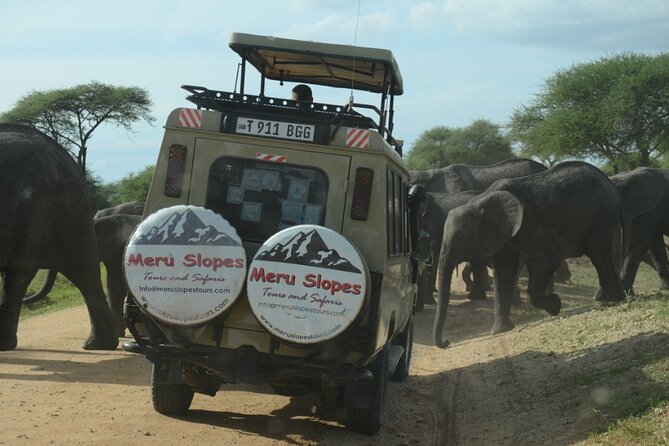
Day 3 is the safari’s best chance for unhurried wildlife viewing. You eat breakfast early and spend the full day driving through the Serengeti, with the guide choosing key areas according to current animal activity.
The schedule says the team will try to follow the wildebeest migration. That wording matters. The migration changes from year to year, and the best chance of seeing calving is usually January through March. June through September is presented as the strongest period for migration viewing, with northern Serengeti and Mara River crossings possible from July to September.
Those dates are useful, but they are not guarantees. The herds may be ahead of schedule, behind it, or spread across a large area. Your experience depends on weather, recent movements, road conditions, and the skill of the guide.
A full day here gives you time to wait and watch, rather than racing from one famous sight to the next. You may see lions, cheetahs, leopards, rhinos, and other species. The strongest animal reports from this safari include leopard, cheetah, and rhino sightings, along with the Big Five.
Camping inside the Serengeti adds a clear sense of place. It also means you should be comfortable with basic conditions and a day built around the rhythms of the park. If you need a soft bed and a quiet indoor evening, ask about a lodge upgrade or a different accommodation plan.
More camping safaris:
- 5 Days Group Camping Safari
★ 5.0 · 730 reviews - 3 Days Serengeti & Ngorongoro Group Camping Safari
★ 5.0 · 574 reviews - 5 Days Camping Tarangire, Serengeti & Ngorongoro crater & Visiting Maasai
★ 5.0 · 229 reviews - 2 Days Tarangire and Ngorongoro Group Camping Safari
★ 5.0 · 146 reviews
Day 4: Sunrise departure and the road to Ngorongoro
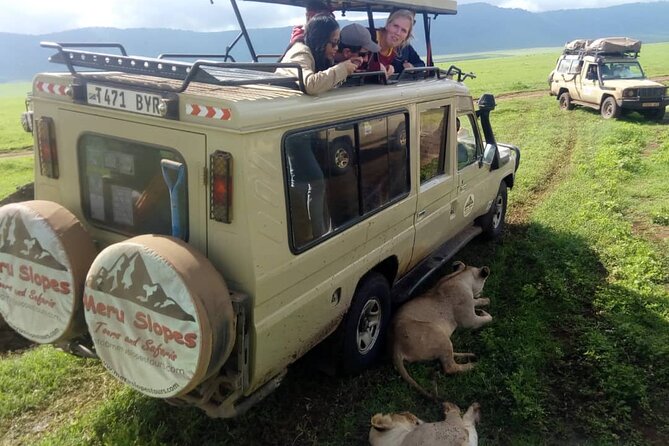
The fourth day begins early. Breakfast is scheduled for 5:45 a.m., allowing you to see sunrise inside the Serengeti and take an early game drive until about 11:30 a.m.
You then return to camp for a hot lunch, pack the vehicle, and continue with more game viewing while heading toward the Ngorongoro area. Dinner and the night are at Simba campsite.
This arrangement gives you two useful kinds of safari time. The first is early morning, when the changing light can make the plains feel entirely different from the previous afternoon. The second is the gradual movement toward Ngorongoro, so the day is not just a transfer between camps.
The cost is another early start and a long day, listed at about ten hours. That pattern repeats across the safari. You should be ready for dusty roads, vehicle time, and a schedule that favors wildlife over sleep.
Day 5: Ngorongoro Crater and Mto wa Mbu
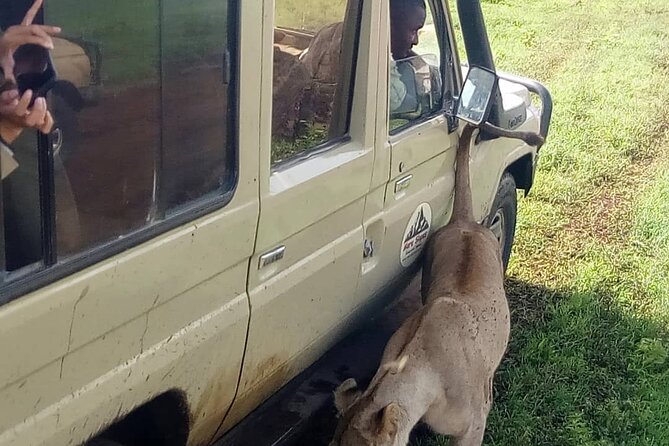
Breakfast is around 5:30 a.m., followed by a descent into Ngorongoro Crater. You spend six to seven hours on the crater floor, with lunch inside the crater while watching wildlife.
Ngorongoro is one of the most concentrated wildlife areas on this route. The program highlights the Big Five, many bird species, black rhino, and flamingos. The crater walls create a dramatic setting, and the variety of animals in a relatively compact area can make this one of the most rewarding game drives of the week.
Do not treat this as a guaranteed checklist. The schedule says you can see these animals, not that every person will see all of them. A black rhino sighting, in particular, depends on distance, timing, and luck. The guide’s skill helps, but wildlife remains wildlife.
After the crater, you pass the campsite to collect your luggage and drive back toward Jambo Lodge. The day also includes a walking tour in Mto wa Mbu village. This is an important change of pace after several days spent watching from a vehicle.
Mto wa Mbu has an active cultural program built around traditional life and community projects. You may see banana plantations, walk through parts of the area, taste Tanzanian food, and learn how local people live. I like this addition because it gives you contact with a working community, not just a succession of park gates and viewpoints.
The cultural visit is listed as about one hour, so keep your expectations sensible. It is an introduction rather than a full day of study. You should also listen carefully to the guide and follow local etiquette during the walk.
Day 6: Lake Manyara and the return to Arusha
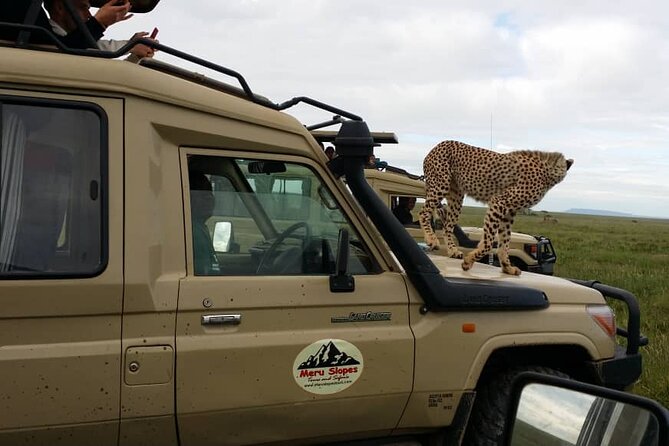
After breakfast, you drive to Lake Manyara National Park for a full-day game drive. The park is known here for tree-climbing lions, flamingos attracted by algae in the lake, and a hot spring.
Lake Manyara offers a different setting from Serengeti and Tarangire. Instead of endless open plains, you get water, birdlife, and the possibility of seeing lions resting in trees. The hot spring provides another short natural attraction, though the wildlife remains the main reason for the stop.
The program also includes a visit to a Maasai boma, where you learn about local life, traditions, and culture. This gives the final day more variety, but it also makes for a full schedule. After the park and cultural visit, you drive back to Arusha, with dinner and an overnight stay mentioned in the plan.
There is a small scheduling point to clarify here. The experience is sold as six days, yet the included benefits describe six nights of accommodation and two nights in Arusha. The day-by-day plan also uses different wording about the final overnight stay. Before booking, ask exactly when the safari ends, where the last night is spent, and whether the Arusha nights are before, after, or split around the park circuit.
Guides, vehicles, and the camping setup
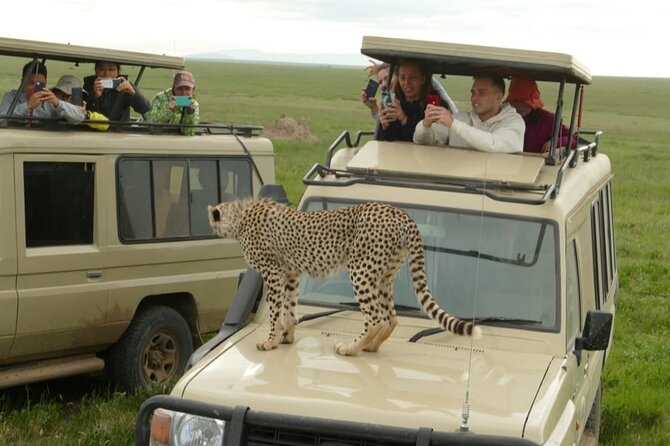
The guide is the person who can make a long drive feel worthwhile. Names connected with especially strong experiences include Nuru, Robert, Mohamed, Florian, and others. Specific praise centers on animal-finding ability, patience when people want to stop for photographs, and clear explanations of what is happening.
One guide, Mohamed, was especially valued for staying in contact with other guides and tracking where wildlife activity was taking place. Florian was paired with a cook named Saleem, while other trips mention cooks called Gideon or Gadi. The exact crew depends on your departure, so do not assume you will receive a particular guide by name.
The vehicle includes free Wi-Fi and unlimited mineral water. The maximum group size is six, which is a sensible limit for a shared safari jeep. A smaller group means fewer competing requests for stops and a better chance of getting a useful view from your seat.
The accommodation needs more careful attention. This is a budget camping safari, but the supplied details also refer to Jambo Lodge, Simba campsite, Seronera campsite, and two hotel nights in Arusha. Some versions include a mix of lodges and tents. Ask about the tent arrangement, bathroom access, bedding, and whether a cook travels with the group.
Meals, timing, and practical comfort
Breakfast, lunch, and dinner are included according to the schedule, with seven breakfasts and seven lunches listed, plus six dinners. Coffee and tea are included, while alcoholic drinks cost extra.
The days begin early, often around 5:30 or 5:45 a.m., and several are listed at eight to ten hours. You will appreciate having lunch supplied because there is little reason to break away from the game drive for a restaurant stop.
Pack light but bring layers, a sun hat, sturdy walking shoes, insect repellent, and a small day bag. A camera or phone with spare power is useful, and a scarf or face covering can help on dusty roads. These are practical suggestions for the long vehicle days, not promises about specific equipment supplied.
The experience is offered in multiple languages, but confirm your preferred language when booking. Children must be accompanied by an adult, and most people can participate. Pickup from accommodation is available, and the activity returns to the Arusha meeting point.
Free cancellation is available if you cancel at least 24 hours before the start time. Changes or cancellations inside that window are not accepted for a refund, and poor weather may lead to a different date or a full refund.
Who should choose this safari?
I would choose this trip if you want to cover Tanzania’s northern circuit without paying lodge-safari prices. It suits you if you value seeing several parks, can handle long drives, and regard camping as part of the adventure rather than an inconvenience.
It is also a good choice for first-time safari visitors who want a guide to handle park routes, meals, transfers, and wildlife timing. The combination of Serengeti, Ngorongoro, Tarangire, and Lake Manyara gives you a broad sample of northern Tanzania in less than a week.
I would hesitate if your main goal is a specific migration event. The itinerary offers a chance to follow the herds, but six days cannot control their movements. I would also think twice if you dislike early mornings, shared vehicles, basic campsites, or changing accommodation details.
Should you book the six-day safari?
For $1,600, this is a strong-value way to see Tanzania’s major northern parks, especially with food, water, transport, guide services, park access, and emergency cover included. The best parts are the full Serengeti day, the concentrated wildlife of Ngorongoro, and the human connection offered by Mto wa Mbu.
Before you commit, get the accommodation plan in writing and confirm the final overnight arrangement. If those details suit you, and you can accept long days in a shared vehicle, I would book this safari for its breadth, capable guiding, and sensible budget. If you want slower pacing or guaranteed luxury, choose a longer or lodge-focused itinerary instead.
FAQ
Where does the safari start and finish?
The stated meeting point is Arusha Tourist Inn on Sokoine Road in Arusha, Tanzania. The activity ends back at the meeting point, and hotel pickup and drop-off are available.
How many people can join the safari?
The maximum group size is six people.
Are meals included?
Yes. Breakfast, lunch, and dinner are included according to the itinerary. Coffee and tea are also included. Alcoholic drinks are not included.
Is accommodation included?
Yes. The package includes accommodation, with six nights stated in the included services. The program refers to campsites, Jambo Lodge, Simba campsite, Seronera campsite, and two Arusha hotel nights, so you should confirm the exact mix before booking.
When is the best chance of seeing the wildebeest migration?
The strongest general chance is stated as June through September. Wildebeest calving is usually from January through March, while July through September may offer a chance to see crossings in northern Serengeti near the Mara River. The timing changes each year.
Can I cancel for a full refund?
You can cancel for a full refund up to 24 hours before the experience starts. Cancellations or changes made less than 24 hours before the start time are not accepted for a refund.
More 6-Day Experiences
- Tanzania Wildlife Encounters – 6 Days
★ 5.0 · 277 reviews - Private 6-Day Tarangire Manyara Crater and Serengeti with Mid-Range Lodges
★ 5.0 · 238 reviews - 6 Days Private Budget Safari
★ 5.0 · 163 reviews - Tanzania Enticing Explorations – 6 Days
★ 5.0 · 106 reviews
More Safaris
- 7-Day Premium Luxury Tanzania Safari All-Inclusive
★ 5.0 · 426 reviews - 3-Day Classic Serengeti Safari
★ 5.0 · 263 reviews - 8 Days Great Wildebeest Calving Migration Safari from Arusha
★ 5.0 · 254 reviews - Group Safari 7 Days in Tanzania’s Main Parks
★ 5.0 · 240 reviews
Just added around Arusha
- 5 Days Safari Tarangire, Serengeti, and Ngorongoro Crater★ 5.0 · 3 reviews
- Love lives in Africa★ 5.0 · 3 reviews
- 5 Days of Safari, Culture & Hot Springs – Tour from Arusha★ 5.0 · 3 reviews
- Arusha National Park Safari by Jeep★ 4.5 · 3 reviews
- 5Days Family _Group Tour Lodging Mid-Range in the Jungle★ 5.0 · 3 reviews
- 2 Days Tarangire and Ngorongoro Crater Tour★ 5.0 · 3 reviews
- Serengeti & Ngorongoro 3 Days Budget Safari★ 5.0 · 3 reviews
- 7 Days PRIVATE Best of Tanzania Safari *Departing everyday*★ 5.0 · 3 reviews
Camping Safaris, compared.



3 Days Serengeti & Ngorongoro Group Camping Safari
Read our review →
5 Days Camping Tarangire, Serengeti & Ngorongoro crater & Visiting Maasai
Read our review →
2 Days Tarangire and Ngorongoro Group Camping Safari
Read our review →3 Day Serengeti National Park & Ngorongoro Crater Camping Safari
Read our review →
3 Days Tarangire, Ngorongoro & Lake Manyara Group Camping Safari
Read our review →
5-Day private Camping Safari Tour in Tanzania
Read our review →Browse the lists this tour appears in