
Reviewed · CAMPING SAFARIS
6-Day Tanzania Adventures Safaris – Group Joining Camping Safaris
Wildlife starts early here. This six-day safari links four major Northern Tanzania parks with camping, meals, park fees, and an English-speaking guide included in the price. I like the route because it gives you a real spread of Tanzania: elephant country in Tarangire, open plains in the Serengeti, a crater packed with animals, and bird-filled Lake Manyara.
I also like the small group limit of seven people, which matters when everyone wants a clear view from the 4×4. The main caution is the pace. Long drives, early starts, basic camping, and several full game-drive days require stamina. This is an excellent value for an active safari, but it is not a soft-edged lodge holiday.
In This Review
- Six details that shape the safari
- Why this six-day route works
- Day 1: Tarangire brings the elephants close
- Day 2: The road to the Serengeti
- Day 3: A full day in the Seronera area
- Day 4: One more Serengeti morning, then the crater rim
- Day 5: Down into Ngorongoro Crater
- Day 6: Lake Manyara adds birds and forest
- Camping, food, and the small-group setup
- The value of the $1,904.77 price
- Who should choose this safari
- Should you book the six-day Tanzania safari?
- FAQ
- Where does the safari start?
- What time does the safari start?
- Where does the safari end?
- How many people can join the safari?
- Which national parks are included?
- Is camping equipment provided?
- Are meals included?
- Is the Ngorongoro Crater admission included?
- Is a guide provided?
- What is not included in the price?
- Can I cancel for a full refund?
Six details that shape the safari
- Tarangire opens the trip with elephants and baobabs, a strong first look at Northern Tanzania’s wildlife.
- Two full days and part of a third in the Serengeti give you more than a quick drive-through.
- Ngorongoro Crater offers concentrated game viewing in a 610-meter-deep UNESCO site.
- Lake Manyara finishes the route, adding forest, cliffs, hippos, birds, and possible tree-climbing lions.
- Camping equipment, park fees, fuel, and all listed meals are included, keeping the $1,904.77 price easier to judge.
- The group can include no more than seven people, with pickup in Arusha at 7:30 a.m.
Why this six-day route works
Northern Tanzania is at its best when you combine several parks instead of putting all your hopes on one. Each stop has a different feel, and the order makes practical sense: Tarangire first, then the Serengeti, Ngorongoro, and Lake Manyara before returning to Arusha.
You spend the first day among baobabs and elephants, then move into the wide plains of the Serengeti. After several game drives there, you sleep near the crater rim and descend into Ngorongoro the next morning. Lake Manyara then provides a shorter final safari before the drive back to Arusha.
At $1,904.77 per person, the price includes much of what makes a Tanzania safari expensive: national park fees, fuel, a custom-built 4×4, camping gear, a driver-guide, and 11 listed meals. International flights, a Tanzanian visa, tips, communication, laundry, and souvenirs remain yours to pay.
That makes the price reasonable for a six-day route, especially if you want the classic parks without paying lodge rates. The tradeoff is comfort. Camping equipment includes tents, sleeping mats, chairs, and tables, but this is still a camping safari. You should choose it for access to the parks and the long hours outside, not for private-room comfort.
More camping safaris:
- 4 Days Group Camping Safari
★ 5.0 · 1,101 reviews - 5 Days Group Camping Safari
★ 5.0 · 730 reviews - 3 Days Serengeti & Ngorongoro Group Camping Safari
★ 5.0 · 574 reviews
Day 1: Tarangire brings the elephants close
The safari begins from Arusha at 7:30 a.m. The drive to Tarangire takes much of the day, with about seven hours listed for the stop and travel. You receive lunch and dinner, then spend the night at a campsite outside the park.
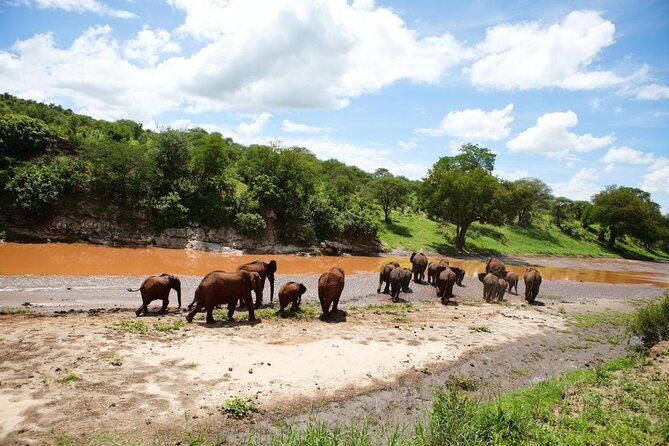
Tarangire is a fine opening act. Seasonal swamps draw animals when water is scarce, while baobabs give the park its unmistakable shape. The park is known for large elephant groups, and the animals are accustomed to safari vehicles, which can allow close observation.
You might also see hartebeests, buffaloes, zebras, giraffes, and other antelopes. Birdwatchers have a good reason to pay attention, since more than 550 bird species are recorded in the park.
The day is not just about ticking off animals. Tarangire teaches you to look at water, shade, and grazing areas. A herd gathered near a seasonal swamp tells you as much about the park as a lion sighting does.
The drawback is that this first day can feel long. You begin in the morning, spend hours on the road and in the park, then settle into camp after an already full day. Still, starting here gives you a strong chance of seeing elephants before the bigger distances of the Serengeti.
Day 2: The road to the Serengeti
Day two takes you through Tanzania’s northern highlands, where corn, coffee, and wheat are grown, before reaching Serengeti National Park. The journey is listed at about eight hours, so you should expect a substantial amount of time in the vehicle.
The reward is one of Africa’s most famous settings: broad grass plains broken by kopjes, the strange rock outcrops that provide lookout points for predators. The Maasai name Serengeti means endless plains, and you understand it quickly when the grassland seems to run beyond the horizon.
This is also your first chance to see the region’s great migration. The timing depends on rainfall, not a fixed calendar. Wildebeest and zebras may be moving through the park in huge numbers, but no safari company can promise that the herds will be beside your vehicle on a particular date.
You may see the Serengeti changing as you drive. Woodland, hills, grassland, and kopjes each support different animals. Keep your eyes open even during the transfer, because the first sight of the plains can be as memorable as a scheduled game drive.
The included lunch helps on this long day, and dinner is also covered. Your overnight location is part of the camping plan, with the itinerary moving toward the central Seronera area on the following night.
Day 3: A full day in the Seronera area
Day three is the safari’s main wildlife day. About nine hours are set aside for game drives in the Serengeti, with breakfast, lunch, and dinner included.
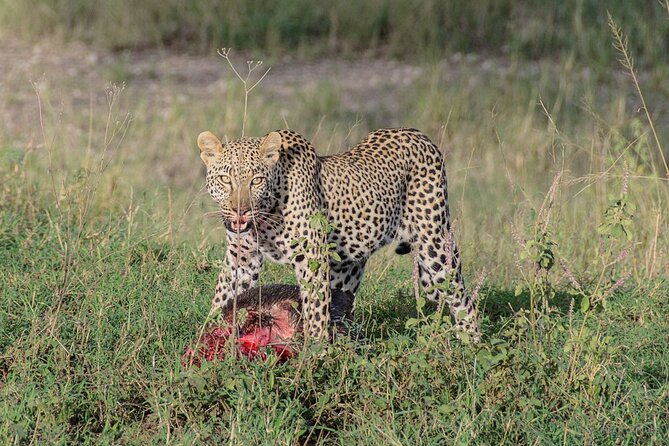
Seronera sits in a part of the park known for a broad mix of animals. You might see impalas, buffaloes, crocodiles, hippos, and the migrating zebra and wildebeest herds. Lions, leopards, and cheetahs may be nearby, since predators follow the animals that provide food.
The migration schedule is shaped by rain. In November and December, herds generally move toward the southern grasslands. During the longer rains from April to June, many return north. These are useful patterns, but they are not guarantees. Weather can shift the timing from year to year.
A full day matters because wildlife does not keep office hours. One drive may produce little, while a later turn reveals a pride of lions or a leopard resting near a kopje. The guide’s skill in reading tracks, vehicle behavior, and animal movement can make a real difference.
The team has included guides such as Giovanni and Elias on past departures. Giovanni was praised for continuing to search for animal sightings until the final moments of the day. Elias was described as quiet but highly experienced, answering questions carefully when asked. Guide assignments can change, so treat those names as examples, not a promise.
You spend the night at a campsite in the Seronera area. That location reduces the need to leave the Serengeti immediately after the game drive, but camping still means you should be comfortable with simple facilities and a full day outdoors.
A few more trips of this kind worth comparing:
- Tanzania Wildlife Encounters – 6 Days
★ 5.0 · 277 reviews - Private 6-Day Tarangire Manyara Crater and Serengeti with Mid-Range Lodges
★ 5.0 · 238 reviews - 6 Days Private Budget Safari
★ 5.0 · 163 reviews - 6 Days Tanzania Budget Camping Safari
★ 5.0 · 145 reviews
Day 4: One more Serengeti morning, then the crater rim
An early breakfast leads into another Serengeti game drive before you travel toward Ngorongoro. The day is listed at about eight hours, with all three meals included.
This is a useful final chance to look for the Big Five: lion, elephant, buffalo, rhino, and leopard. Seeing all five is never assured, and the Serengeti is not a wildlife checklist. The value lies in the chance to watch animals moving freely through unfenced country.
The drive to Ngorongoro changes the mood. You leave the open plains and approach the crater highlands, with the first view from the rim offering streams, grassland, and animals far below. The campsite is directly on the crater edge, so sunset can be a memorable part of the evening.
This night also highlights the difference between camping and lodge travel. The setting may be extraordinary, but your sleeping arrangements remain practical rather than luxurious. You are paying for the location and access, not polished rooms and a long list of hotel services.
Day 5: Down into Ngorongoro Crater
An early start gives you a chance to see sunrise over the crater rim. After breakfast, you take the steep track down into Ngorongoro Crater for about six hours of game viewing.
The crater is roughly 610 meters deep and covers about 260 square kilometers. Its enclosed shape supports a high concentration of animals, including wildebeest, zebras, gazelles, elephants, and more than 500 bird species.
This is often the most efficient wildlife day of the route. Within a relatively compact area, you might see several large mammals without covering the same distances required in the Serengeti. The crater can be especially rewarding if you want a strong chance of seeing a wide variety of species in one morning.
Black rhino sightings are possible, though the animals are endangered and not easy to find. You may also notice how quickly the scenery changes from open grass to streams and wet areas.
The crater has one practical weakness: many vehicles can be drawn to the same well-known sightings. Your experience depends partly on timing and partly on how your guide handles the day. Even so, the scale of the crater and the concentration of wildlife make it a powerful part of the itinerary.
Day 6: Lake Manyara adds birds and forest
The final park is Lake Manyara National Park, followed by a return to Arusha in the early evening. The day is listed at about seven hours, with breakfast and lunch included.
Lake Manyara is smaller than Tarangire and Serengeti, but it is not simply a shortened version of either. A shallow alkaline lake covers about 200 square kilometers of the park, while the surrounding area includes grassy plains, woodland full of primates, and cliffs dotted with baobabs.
You might see hippos, elephants, baboons, wildebeest, and more than 400 bird species. Flamingos can gather near the lake, adding a striking final scene before you leave.
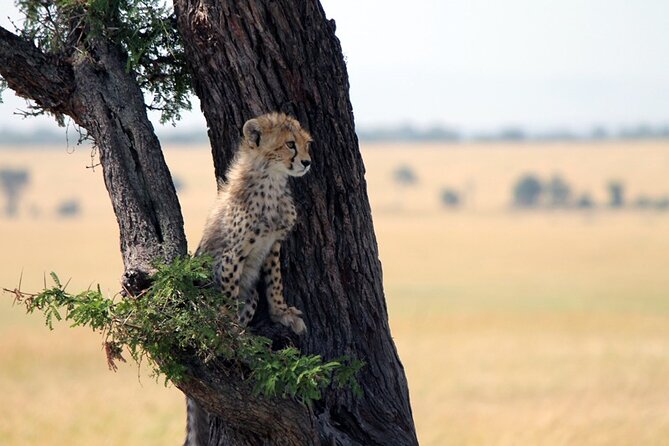
The park is also known for tree-climbing lions. The wording matters: you may see them, but there is no guarantee. Wildlife is free to move, and a safari route cannot control where an animal spends the day.
Lake Manyara works well at the end because it brings variety without requiring another overnight in the park. The return to Arusha is still a long final stretch, so you should not plan an important evening flight or tight connection after the safari.
Camping, food, and the small-group setup
The tour uses a private 4×4 custom safari vehicle with fuel and a driver-guide. In a group-joining format, private vehicle usually means the vehicle is reserved for your safari group, not that you receive a vehicle alone. With a maximum of seven people, you should have a more manageable setup than a large bus safari, though space can still feel limited on long drives.
Camping equipment includes tents, sleeping mats, chairs, and tables. A cook is part of the operating team, and past trips included cooks named Joaquin and Prospe. Food was praised, including meals that were substantial enough to keep people going through long days.
The included meal count is clear:
- Five breakfasts
- Five dinners
- Six lunches
Personal snacks, drinks not covered by the operator, and spending money are not listed as included, so bring a budget for your own extras. Tips are also separate. Communication, laundry, souvenirs, international flights, and the Tanzanian visa are not included.
The group atmosphere can be a real benefit if you are traveling alone. One solo woman described the setup as especially suitable for her, with a friendly group and supportive staff. The same account noted that some camping nights unexpectedly became private-room nights in Serengeti and Manyara. That is a pleasant possibility, but it should not be treated as part of the guaranteed package.
The value of the $1,904.77 price
The price makes the most sense when you count the large costs already handled. Park admission in Tanzania is significant, and this trip includes national park fees for four major destinations. Fuel, a safari vehicle, camping equipment, a guide, a cook, and most meals are also covered.
You are getting five nights of organized safari travel across a route that would be difficult to arrange cheaply on your own. The fee is less attractive if your priority is a private bathroom, lodge dining, or a slow schedule.
The group cap helps protect the value. Seven people is not the same as a private couple’s safari, but it is small enough to make shared viewing more practical. I would ask before booking how many people are confirmed for your departure and what camping facilities will be used, since those details affect comfort.
Who should choose this safari
I would point this trip toward you if you want the classic Tanzania parks, have six days available, and are happy to trade hotel comfort for more time in the parks. It also suits solo visitors who want company without joining a very large group.
You should be ready for early breakfasts, long transfers, basic camping, and repeated hours in a vehicle. The route is not ideal if you need a gentle pace or dislike moving camps.
The strongest fit is someone who values wildlife access, a small group, and a guide who keeps looking when the day’s obvious sightings are over. The main question is simple: do you want a practical safari with four major parks, or a slower and more comfortable holiday focused on fewer places?
Should you book the six-day Tanzania safari?
I would book this if your priority is variety and value. Tarangire’s elephants, the Serengeti’s open plains, Ngorongoro’s concentrated wildlife, and Lake Manyara’s birds and forest create a well-rounded first safari.
Before paying, confirm the exact pickup arrangement, group size, camping conditions, and guide assignment. Also leave room in your schedule for the final drive back to Arusha.
If you can handle the long days and simple camps, this is a strong way to see Northern Tanzania in less than a week. If you want guaranteed sightings, private rooms, or a relaxed timetable, choose a more comfortable safari with fewer transfers.
FAQ
Where does the safari start?
The safari starts in Arusha, Tanzania, with pickup offered at the meeting point.
What time does the safari start?
The stated start time is 7:30 a.m.
Where does the safari end?
The experience ends back at the meeting point in Arusha.
How many people can join the safari?
The group can have a maximum of seven travelers.
Which national parks are included?
The route includes Tarangire National Park, Serengeti National Park, Ngorongoro Crater, and Lake Manyara National Park.
Is camping equipment provided?
Yes. The package includes tents, sleeping mats, chairs, tables, and other listed camping equipment.
Are meals included?
Yes. The package includes five breakfasts, five dinners, and six lunches.
Is the Ngorongoro Crater admission included?
Yes. The admission ticket for Ngorongoro Crater is included.
Is a guide provided?
Yes. The safari includes a professional English-speaking guide, driver, and custom-built 4×4 vehicle with fuel.
What is not included in the price?
International flights, a Tanzanian visa, tips, laundry, communication, and personal spending such as souvenirs are not included.
Can I cancel for a full refund?
You can cancel for a full refund up to 24 hours before the experience starts. Cancellations or changes made less than 24 hours before the start time are not accepted for a refund.
Just added around Arusha
- 5 Days Safari Tarangire, Serengeti, and Ngorongoro Crater★ 5.0 · 3 reviews
- Love lives in Africa★ 5.0 · 3 reviews
- 5 Days of Safari, Culture & Hot Springs – Tour from Arusha★ 5.0 · 3 reviews
- Arusha National Park Safari by Jeep★ 4.5 · 3 reviews
- 5Days Family _Group Tour Lodging Mid-Range in the Jungle★ 5.0 · 3 reviews
- Serengeti & Ngorongoro 3 Days Budget Safari★ 5.0 · 3 reviews
- 2 Days Tarangire and Ngorongoro Crater Tour★ 5.0 · 3 reviews
- 7 Days PRIVATE Best of Tanzania Safari *Departing everyday*★ 5.0 · 3 reviews
Camping Safaris, compared.



3 Days Serengeti & Ngorongoro Group Camping Safari
Read our review →
5 Days Camping Tarangire, Serengeti & Ngorongoro crater & Visiting Maasai
Read our review →
2 Days Tarangire and Ngorongoro Group Camping Safari
Read our review →
3 Day Serengeti National Park & Ngorongoro Crater Camping Safari
Read our review →
3 Days Tarangire, Ngorongoro & Lake Manyara Group Camping Safari
Read our review →Browse the lists this tour appears in