
Reviewed · HISTORICAL TOURS
Arusha; Walking City Tour History, Culture & Lifestyle
Arusha rewards slow walking. This tour makes the city easier to understand by linking its museums, markets, landmarks, and ordinary streets with local stories. I especially like the Central Food Market and the chance to walk through town with guides such as Israel, Daudi, and Innocent. I also like that pickup near central Arusha is included. The main consideration is the walking: this is a half-day on your feet, and museum entry, food, drinks, and some transport costs are extra.
At $28 per person, the tour offers good value if you want more than a quick look from a safari vehicle. It gives you a useful first or final day in Arusha, with time for questions, shopping, local food suggestions, and help with small travel tasks such as getting a SIM card. Just confirm your pickup charge if your hotel is outside the central area.
In This Review
- Key points to know before you go
- Why Arusha makes a good walking day
- Starting inside a German fortress
- Government buildings and the city’s public landmarks
- The Clock Tower and the Tanzanite story
- The Maasai Market, where shopping takes over
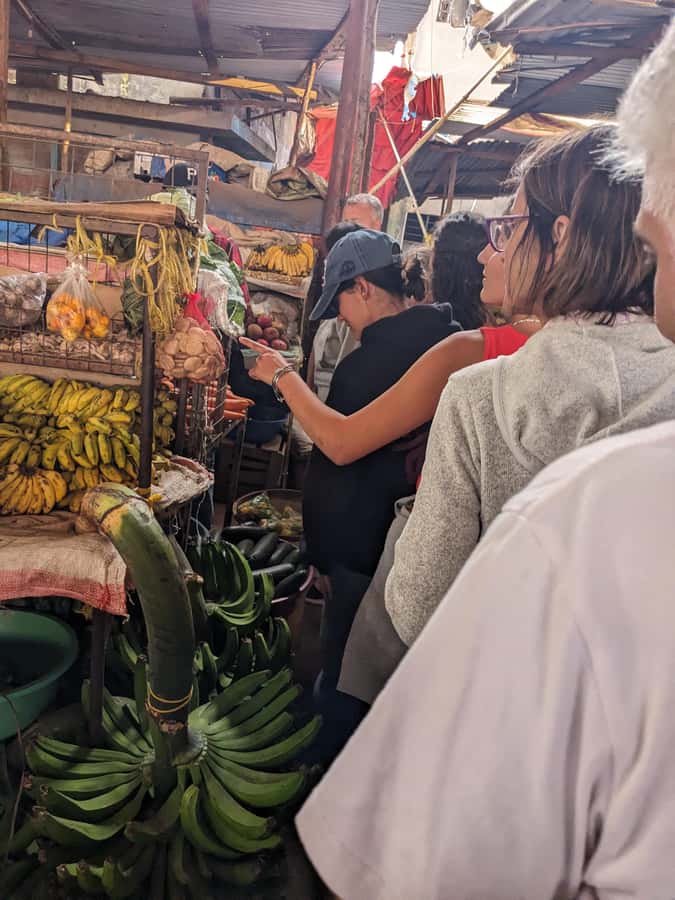
- The Central Food Market is the heart of the walk
- African art after the street markets
- What the guides add to the experience
- Price, pickup, and the small extras
- Who should book this Arusha walk?
- Should you book it?
- FAQ
- How long does the Arusha walking city tour last?
- What is included in the $28 price?
- Is the Natural History Museum entrance included?
- Is hotel pickup included?
- What should I bring?
- Is the tour suitable for people with mobility impairments?
Key points to know before you go
- The Natural History Museum begins the story: A former German fortress introduces human evolution, wildlife, and Arusha’s colonial past.
- The Central Food Market is the liveliest stop: You can see produce, spices, food stalls, and the daily trade that keeps the city moving.
- Guides make the difference: Israel, Daudi, Innocent, John, Jackson, and other guides are praised for humor, patience, local contacts, and flexible pacing.
- Tanzanite is part of the tour: The Tanzanite Experience Museum explains the famous blue stone, with time to shop if you choose.
- This is a real walking tour: Expect moderate walking on city streets, so wear solid shoes, carry water, and protect yourself from the sun.
- The price is strong, with a few extras: The tour costs $28, but the Natural History Museum charges $6 per adult, and food, drinks, and distant pickup cost more.
Why Arusha makes a good walking day
Arusha is often treated as a place to sleep before a safari. That is a mistake if you have half a day to spare. The city is a meeting point for tourism, government, commerce, art, and everyday Tanzanian life, and you can see those layers more clearly on foot.
The route moves between formal landmarks and ordinary streets. You may pass government offices, hospitals, conference buildings, shops, food stalls, and market lanes in one outing. That mix is useful because it shows Arusha as a working city, not just a base for visiting national parks.
The tour is advertised as lasting four to eight hours, while the main city walk is described as about four and a half hours. That range likely reflects your pace, museum time, shopping, food stops, and pickup arrangements. I would plan on a half-day and keep the rest of your schedule loose.
A live English-speaking guide accompanies you. The strongest part of the experience is not simply getting from one attraction to another. It is having someone explain what you are seeing, answer questions, introduce local context, and adjust the day to your interests.
More historical tours:
- Zanzibar: Stone Town Historical Cultural Walking Guided Tour
★ 4.5 · 179 reviews - Arusha Guided Walking City Tour, Culture, Lifestyle & History
★ 5.0 · 150 reviews - Stone Town Historical Walking Tour
★ 5.0 · 143 reviews
Starting inside a German fortress
The Natural History Museum is a sensible first stop because it gives the city a historical frame. It occupies a colonial-era German fortress, an immediate reminder that Arusha’s story includes German rule, later British influence, independence, and the modern country.
Inside, exhibits cover human evolution, local wildlife, and the area’s past. This is not just a room full of objects to pass quickly. It helps you place Tanzania’s people, animals, and political story in one setting before you head into the streets.
The entrance fee is not included. Budget $6 per adult, and bring cash for other personal expenses as well. The museum is one of the clearest differences between this tour and a basic orientation walk, but you should know that the advertised $28 does not cover every admission.
Your guide can add value here by explaining details that might otherwise pass unnoticed. Daudi has been praised for answering questions clearly, while Israel is often noted for linking history, culture, wildlife, and daily life. The quality of the commentary is likely to matter more than the length of time you spend reading displays.
Government buildings and the city’s public landmarks
After the museum, the walk continues through Arusha’s governmental district. You pass the East African Community Headquarters, Mount Meru Hospital, and the Arusha International Conference Centre, usually called AICC.
These places show Arusha’s regional role. The East African Community Headquarters connects the city to cooperation among East African countries. AICC is a major conference venue and a symbol of diplomacy and regional business. Mount Meru Hospital brings the route back to a more practical part of city life.
The tour also includes the Torch of Freedom, a landmark singled out as worthwhile. It connects the city to Tanzania’s national story and gives your guide a natural opening to discuss independence, identity, and public memory.
This section is not built around grand sightseeing in the European sense. Some buildings may be more meaningful than beautiful. That is part of the point. You are learning how the city functions and why it matters, not collecting postcard views.
The Clock Tower and the Tanzanite story
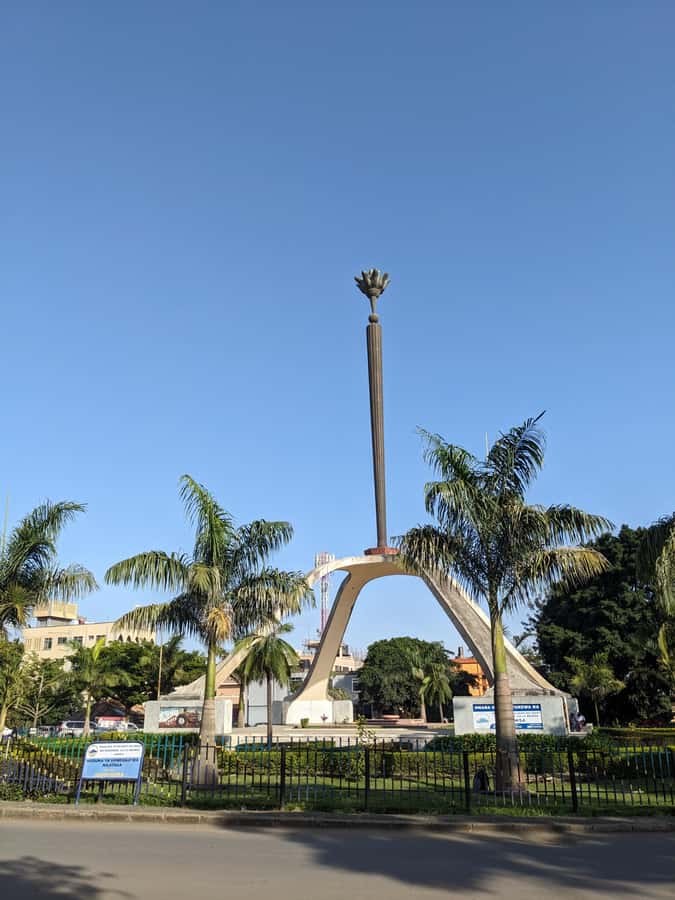
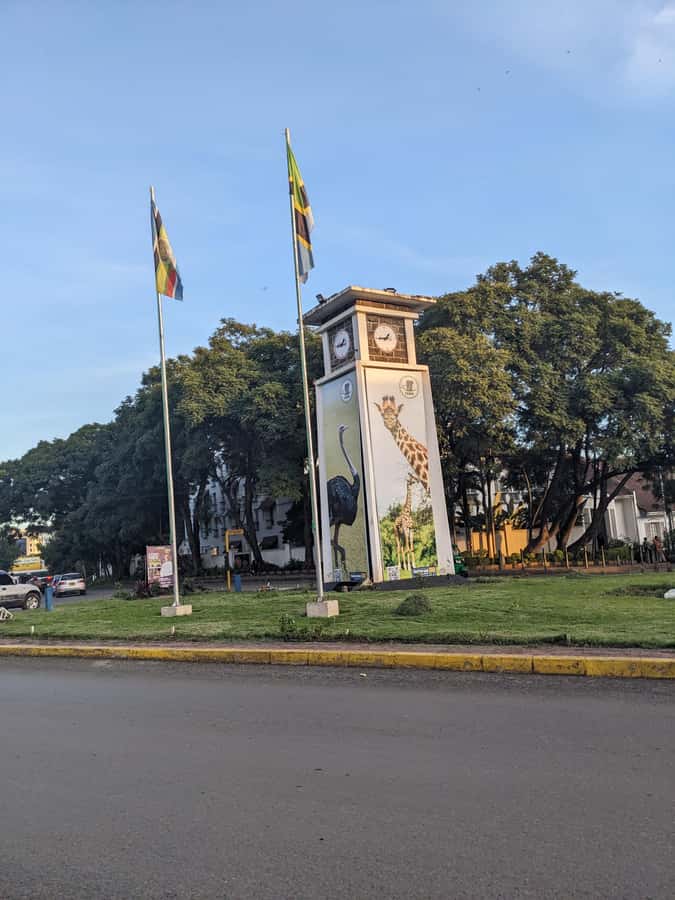
The Arusha Clock Tower is one of the city’s best-known landmarks. It is commonly described on the tour as the midpoint between Cairo and Cape Town, a memorable detail that explains why the clock tower has become such a strong symbol of Arusha.
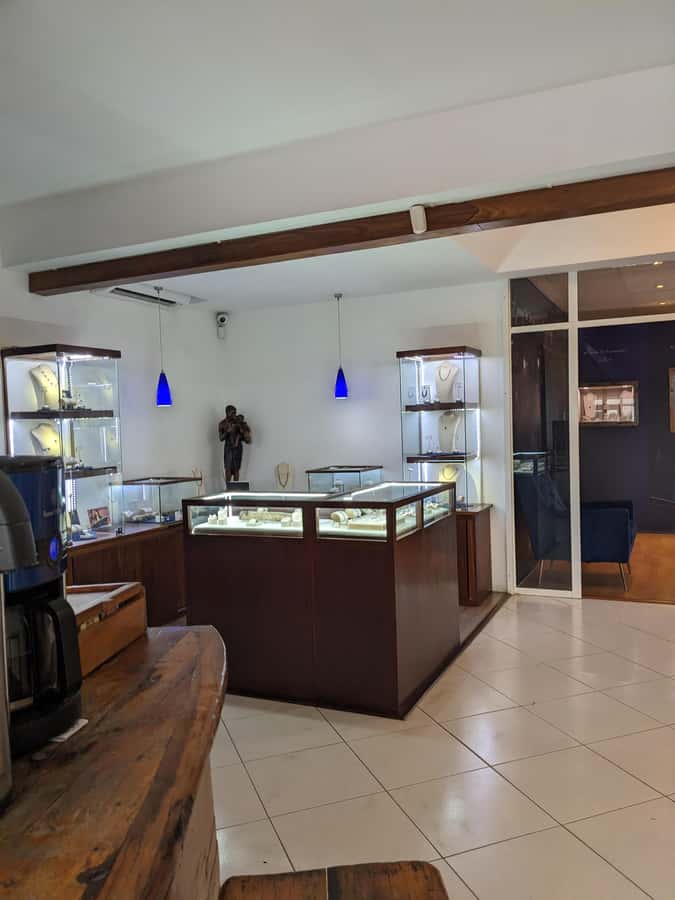
From there, you visit the Tanzanite Experience Museum. Tanzanite is associated with Tanzania and is prized for its blue color, so this stop adds a local connection to a familiar shopping subject.
The museum explains the stone’s history and the stories surrounding it. You can also shop if you want to buy Tanzanite or another souvenir. You are not required to purchase anything, and I would treat the shopping portion as optional rather than part of the core sightseeing value.
One past visitor felt the gift-shop stops were not really their style, though they still considered the overall day excellent. That is useful advice. If you dislike shopping stops, tell your guide early. The guides are described as flexible, and the tour can include time for purchases without letting shopping take over the day.
If you are considering Tanzanite, avoid rushing into a purchase. Use the museum visit to learn first, then decide if you want to shop. The included time for souvenir buying is convenient, but your personal budget and comfort should guide that decision.
More walking tours:
- Stone Town Private Walking Tour
★ 5.0 · 371 reviews - Zanzibar: 3 Hours Private Stone Town walking Tour with Guide
★ 4.6 · 301 reviews - Stonetown: Food Markets and Street Food Walking Tour
★ 4.7 · 151 reviews - Zanzibar Stone Town Walking Tour
★ 5.0 · 145 reviews
The Maasai Market, where shopping takes over
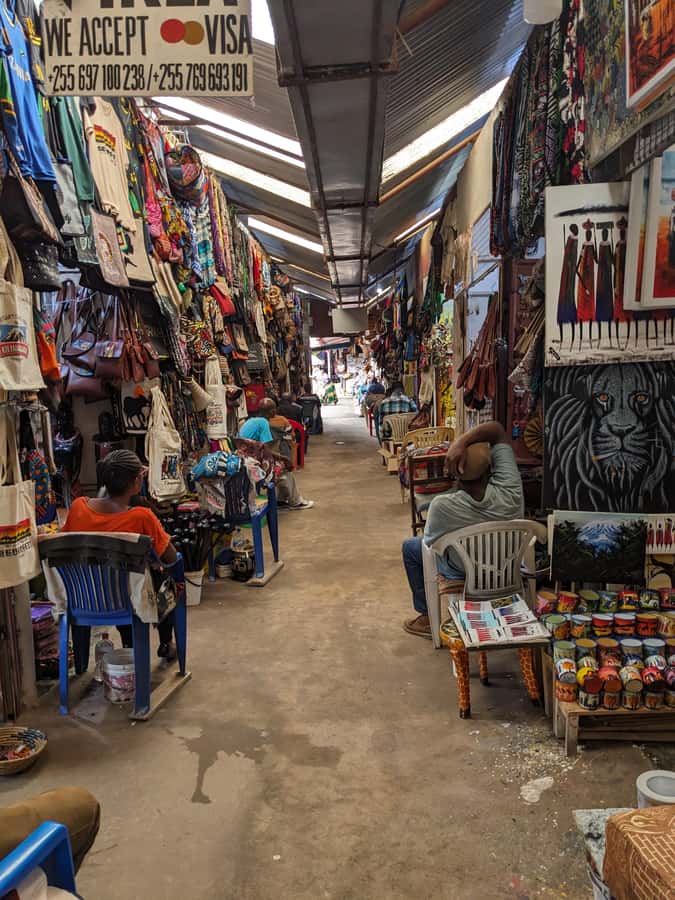
The Maasai Market is the tour’s main craft and souvenir stop. You can browse traditional crafts, jewelry, and textiles, with the guide nearby to help if you want advice or translation.
This is a good place to practice friendly bargaining and compare items before buying. It is also a place where the shopping energy can feel stronger than the sightseeing. You may find carved objects, fabric, beadwork, or jewelry, but exact products and prices will vary.
The guide’s role matters here. Someone who understands local buying customs can help you move through the market without feeling lost. You can also ask the guide to hold time for a purchase, since the tour specifically allows pauses for souvenirs.
Keep your spending separate from the tour price. Personal purchases are not included, and the tour provider does not promise a fixed shopping budget. If you are not shopping, say so and focus on the colors, craft methods, and conversations around you.
The Central Food Market is the heart of the walk
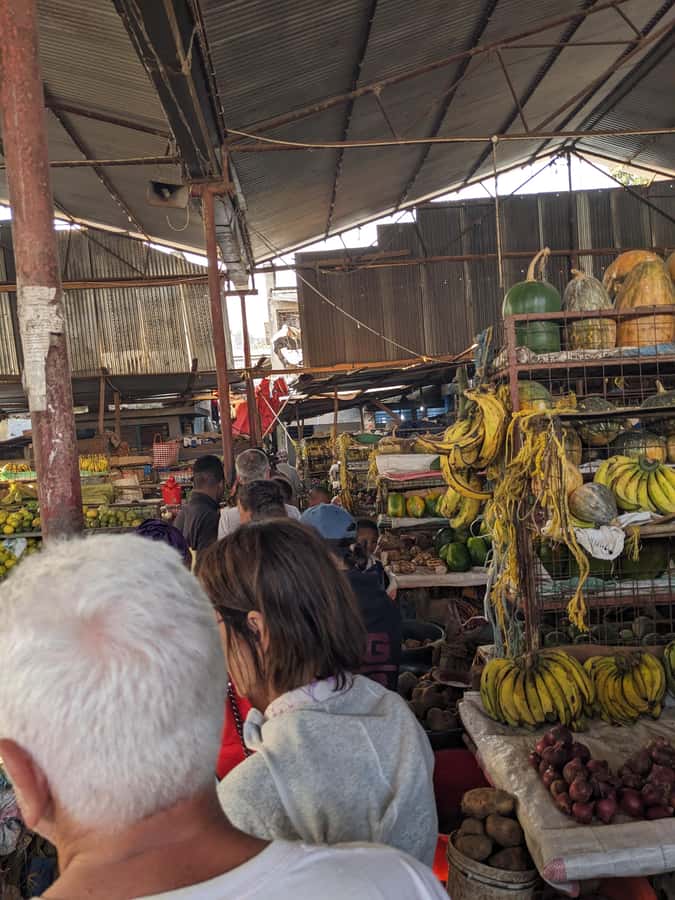
For many people, the Central Food Market will be the strongest stop. It brings you close to Arusha’s daily routine through produce, spices, aromas, and street food.
This is where the city feels most immediate. You may see local buying and selling, learn the names of fruits, and notice how much work goes into feeding a large city. A guide can explain foods and customs in ways that are hard to pick up by walking alone.
Several guides have taken time to point out different foods and smells, and one guide helped arrange an authentic local lunch when a visitor asked to try local cooking. That meal was not part of the standard price, so budget separately if you want to eat. Drinks and food are not included.
You should also keep your expectations practical. A food market is not a polished tasting tour. Conditions can be crowded, noisy, or warm, and you need to watch your footing. Bring water, use hand hygiene, and ask your guide before trying anything unfamiliar.
The market is particularly useful at the start of a Tanzania trip. It gives you food vocabulary and local context before a safari or longer journey. It can also be a fitting final day activity after returning from the Serengeti, when you want a human-scale ending rather than another vehicle excursion.
African art after the street markets
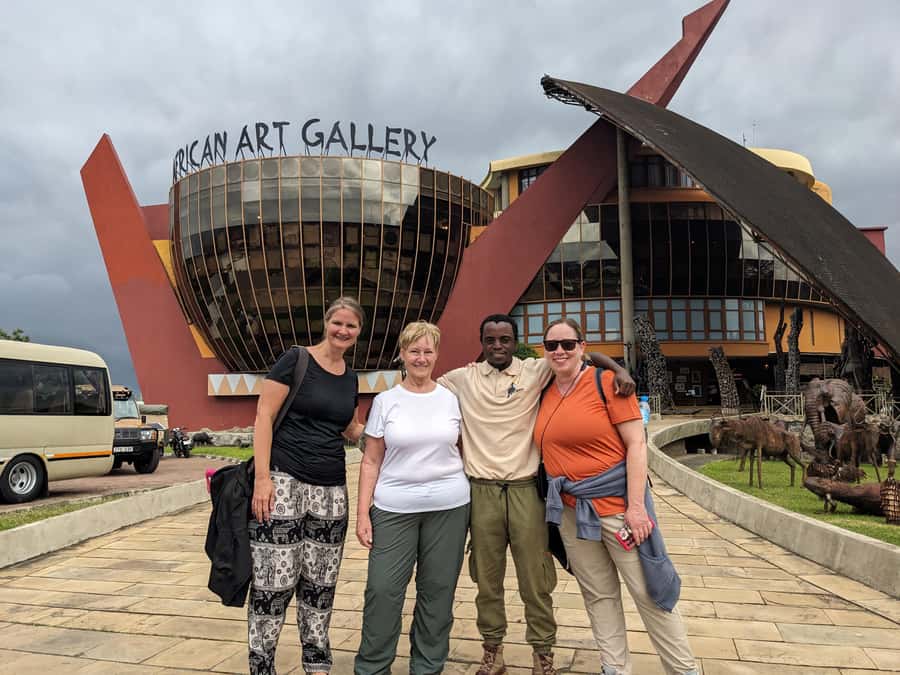
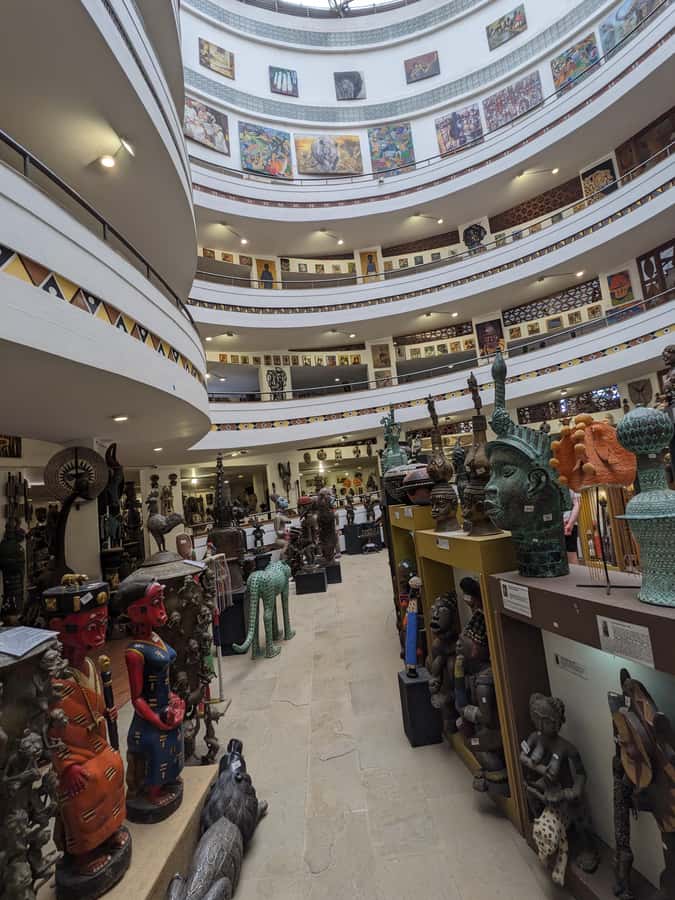
The route finishes with the African Art Gallery and Cultural Heritage Centre. The collection is described as one of the largest African art collections on the continent, so allow enough time to look rather than treating it as a quick final stop.
The scale may feel overwhelming. One visitor found the amount of Tanzanian and African art almost too much to take in during one visit. That is not necessarily a weakness, but it means you may want to ask your guide to point out sections that fit your interests.
This stop pairs well with the markets. The Maasai Market shows craft as part of everyday buying and selling, while the gallery presents art in a more formal setting. Together, they offer a broader view of design, materials, culture, and commerce.
If museums are not your favorite part of a trip, the gallery may be less important to you than the market walk. If you enjoy art, history, or regional cultures, it adds real substance to the day.
What the guides add to the experience
The tour has several named guides in its recent feedback, including Israel, Daudi, Innocent, John, Jackson, and others. The praise is strikingly consistent: visitors describe the guides as warm, funny, patient, flexible, and well informed about Arusha and Tanzania.
That does not mean every guide will lead the day in exactly the same way. It does mean the provider has a strong record of personal guiding rather than simply leading a fixed script.
Israel is praised for connecting history, politics, economics, sociology, food, biology, and daily life. Daudi is described as friendly, clear, and willing to answer questions. Innocent is noted for shaping the route around personal interests. John is praised for interacting comfortably with local people, while Jackson is described as showing everyday Arusha rather than only the famous stops.
The guides also appear willing to help beyond the formal route. One helped with a SIM card, and another assisted with a later travel problem. You should not assume extra help is guaranteed, but it is worth asking politely if a small practical issue comes up.
Solo women may appreciate the sense of support. One solo woman felt safe throughout the walk, and other visitors described feeling comfortable on the streets with their guide. Still, use normal city awareness, keep valuables secure, and follow your guide’s advice.
Price, pickup, and the small extras
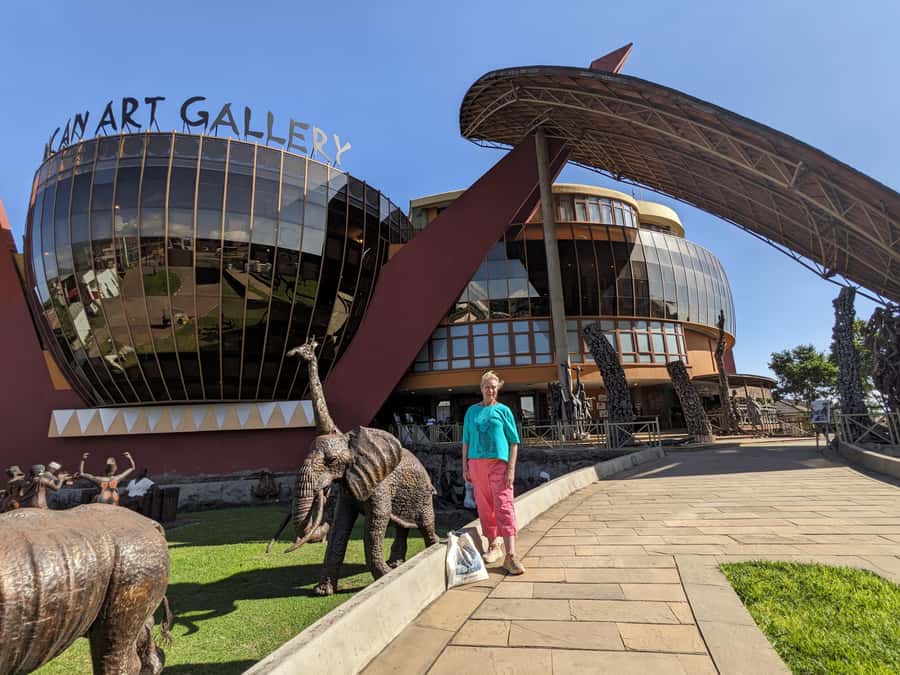
The $28 price is fair for a guided half-day that includes the city walk, guide, Tanzanite Experience Museum, Central Food Market, Maasai Market, and African art visit. It also includes pickup and drop-off for hotels near the city center.
The value is strongest if you use the guide actively. Ask questions, request food explanations, discuss Tanzanite before shopping, and tell the guide what interests you. A silent walk would waste much of what you are paying for.
The extra costs are easy to manage if you know about them:
- Natural History Museum entry costs $6 per adult.
- Food and drinks are not included.
- Personal purchases are extra.
- Private transport can be arranged for an additional cost.
- Pickup and drop-off outside the central area cost extra.
The pickup wording gives different distance markers, including three, four, and five kilometers from the center. Because of that, confirm your hotel location and exact transfer price after booking. Near-central pickup is free, but a hotel farther out may need an affordable paid transfer.
Free cancellation up to 24 hours before the activity and reserve-now, pay-later booking make the arrangement flexible. Starting times vary, so check availability before you build the rest of your day around it.
Who should book this Arusha walk?
I would recommend it to you if this is your first time in Arusha, if you have a spare half-day, or if you want local context before or after a safari. It is also a good choice for solo visitors who prefer having a guide in the city and for families whose children can manage several hours of walking.
The tour suits curious people more than checklist sightseers. You will get more from it if you enjoy markets, conversations, food, history, and ordinary streets. It is less suitable if you want a short ride between attractions or a quiet museum-only outing.
It is not suitable for wheelchair users, people with mobility impairments, or pregnant women. The route involves a moderate amount of walking, so comfortable shoes, a hat, sunscreen, water, a camera, and some cash are sensible. Light clothing suited to the weather will make the day easier.
Should you book it?
Yes, if you want Arusha to be part of your Tanzania trip rather than just a place between airport, hotel, and safari. The strongest reasons are the market time, the useful city context, and guides such as Israel and Daudi, who appear to make the route personal rather than mechanical.
Book it early in your stay if you want help getting oriented, learning food and shopping basics, or sorting out a SIM card. Book it on your final day if you are returning from safari and want a relaxed way to understand the city before leaving.
Skip it if several hours of walking sound tiring, you dislike markets and optional shopping stops, or your mobility makes the route difficult. For most able-bodied visitors with half a day available, the combination of museums, landmarks, food, art, and local guidance makes $28 a solid buy.
FAQ
How long does the Arusha walking city tour last?
The experience is listed as lasting four to eight hours, with the main city tour described as about four and a half hours. The exact length can depend on the starting time, walking pace, museum visits, food stops, and shopping.
What is included in the $28 price?
The price includes a guided walking city tour, an English-speaking local guide, the Tanzanite Experience Museum, the Central Food Market, the Maasai Market, the African art and cultural heritage visit, and pickup and drop-off for hotels near central Arusha.
Is the Natural History Museum entrance included?
No. Entry to the Natural History Museum costs $6 per adult and is paid separately.
Is hotel pickup included?
Pickup and drop-off are included for hotels near the city center. Hotels farther away may require an additional charge. Confirm the exact cost after booking, especially if your hotel is more than a few kilometers from central Arusha.
What should I bring?
Bring comfortable walking shoes, a sun hat, sunscreen, water, a camera, and cash. Clothing should suit the weather, and you should be ready for a moderate amount of walking.
Is the tour suitable for people with mobility impairments?
No. The experience is not suitable for pregnant women, people with mobility impairments, or wheelchair users.
Just added around Tanzania
- Moshi: Lake Chala Tour: Hiking &/or Kayaking★ 4.5 · 3 reviews
- 5 Days Safari Tarangire, Serengeti, and Ngorongoro Crater★ 5.0 · 3 reviews
- 3 Days Tanga Exclusive Beach Holiday★ 5.0 · 3 reviews
- Spice Tour of Zanzibar★ 4.5 · 3 reviews
- Serengeti Wildebeest Migration.★ 5.0 · 3 reviews
- Zanzibar : Stone Town Tour,history without transport★ 4.8 · 3 reviews
- 5 Days of Safari, Culture & Hot Springs – Tour from Arusha★ 5.0 · 3 reviews
- Love lives in Africa★ 5.0 · 3 reviews
Historical Tours, compared.

Stone Town Historical Cultural Walking Guided Tour
Read our review →
Arusha Guided Walking City Tour, Culture, Lifestyle & History
Read our review →
Stone Town’s Hidden History: Private Guided Walking Tour
Read our review →

Zanzibar Stone Town Tour: Explore Rich History and Hidden Wonders
Read our review →Browse the lists this tour appears in