
Reviewed · HISTORICAL TOURS
Dar es Salaam History and Architectural Tours
Dar reveals itself through its buildings and markets. This private seven-hour outing gives you a broad look at Dar es Salaam, from the 1903 St. Joseph’s Cathedral and Azania Front Lutheran Church to the National Museum, Kariakoo Market, and local art spaces. I like the way it joins architecture with daily life, rather than treating the city as a string of monuments. I also like that guide Bernard brings in stories about religion, music, society, and the people who shaped Dar.
You get private transport, bottled water, snacks, lunch, and entrance fees for $150 per person. That is a fair price if you want a full day with a personal guide and many stops, though the schedule is busy. Nine stops in about seven hours means some visits are introductions rather than slow, unhurried explorations.
The strongest feature is the range. You will move from colonial-era churches to traditional homes, carved ebony, seafood, shopping, national history, and modern art. The main consideration is that Mlimani City Mall may feel less distinctive than the cultural sites, and traffic could make the day feel even tighter.
In This Review
- Key points to know before booking
- Why this tour works for a first day in Dar es Salaam
- St. Joseph’s Cathedral and Dar’s layered religious past
- Azania Front Lutheran Church and Bavarian design by the coast
- Village Museum: traditional homes you can see from the inside
- Mwenge Woodcarvers Market and choosing an authentic keepsake
- Kivukoni Fish Market and Dar’s working waterfront
- The National Museum of Tanzania in one focused hour
- Kariakoo Market and the commercial heart of the city
- Mlimani City Mall: a modern pause in the schedule
- Tingatinga art and the final look at Tanzanian creativity
- Lunch, water, snacks, and the real value of $150
- Timing, comfort, and who will enjoy this day
- Should you book Dar es Salaam History and Architectural Tours?
- FAQ
- What time does the tour start?
- How long does the tour last?
- Is transportation included?
- Is lunch included?
- Are entrance fees included?
- Is this a private tour?
- What is the cancellation policy?
Key points to know before booking
- Bernard gives the day a personal voice: He explains Dar es Salaam’s architecture, religion, society, music, and past in a friendly, engaging way.
- The route covers old and modern Dar: Churches, markets, museums, a woodcarvers’ center, a shopping mall, and the Tingatinga art scene all appear in one day.
- Lunch is included: The day includes a local lunch, and the experience can include lunch at Akemi, a revolving restaurant with wide city views.
- You travel privately: Only your group takes part, with private transport, bottled water, snacks, and fees included.
- The day is active and full: Expect about seven hours, beginning at 9:00 am, with several one-hour stops and shorter visits at the churches and markets.
- It is easy to book with little risk: Free cancellation is available up to 24 hours before the local start time.
Why this tour works for a first day in Dar es Salaam
Dar es Salaam can be hard to read from a car window. Modern roads, older buildings, markets, religious sites, and busy commercial districts all sit within a city that has changed quickly. This tour gives you a guide to those changes.
I like the broad theme: architecture is the doorway, but the day is really about how people live. You see places of worship, public markets, museums, traditional homes, craft workshops, and shopping centers. That mix helps you understand the city beyond its postcard images.
The private format matters. You are not tied to a large group’s pace, and Bernard can focus on your interests. If you want more background on religion, art, or urban development, this setup gives you a better chance to ask questions. The tour has a five-star rating from 36 reviews, with every reviewer recommending it, and the praise centers on Bernard’s enthusiasm, clear explanations, and friendly manner.
Still, you should expect a quick-moving day. The listed visits add up to about six hours, before driving and lunch. You will see a lot, but you should not expect a detailed museum visit at every stop.
More historical tours:
- Bagamoyo Historical Tour – Everyday
★ 5.0 · 13 reviews - Bagamoyo Historical Tour – Everyday
★ 4.4 · 8 reviews - Private Tour in Historical Dar es Salaam with Lunch
★ 4.5 · 6 reviews
St. Joseph’s Cathedral and Dar’s layered religious past
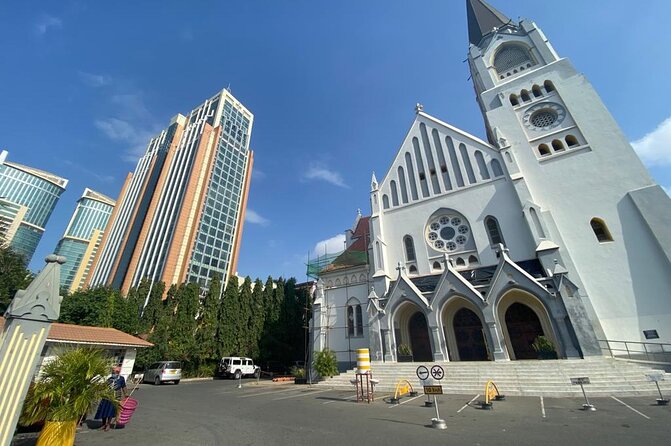
The first stop is St. Joseph’s Cathedral of the Archdiocese of Dar es Salaam, with about 30 minutes inside. Built in 1903, the cathedral occupies the same spot as the city’s first mosque, a detail that gives the visit more weight than its short timing suggests.
The building introduces the religious and architectural layers of Dar. Your guide can connect the cathedral to the city’s earlier development and explain how one location can hold several chapters of the city’s past. I would pay attention here to the contrast between the church’s age and the busy city around it.
Thirty minutes is enough for an introduction and some photographs, but not a long architectural study. If church interiors are your main interest, you may wish the stop were longer. Its real value comes from the story of the site and its place in Dar’s development.
Azania Front Lutheran Church and Bavarian design by the coast
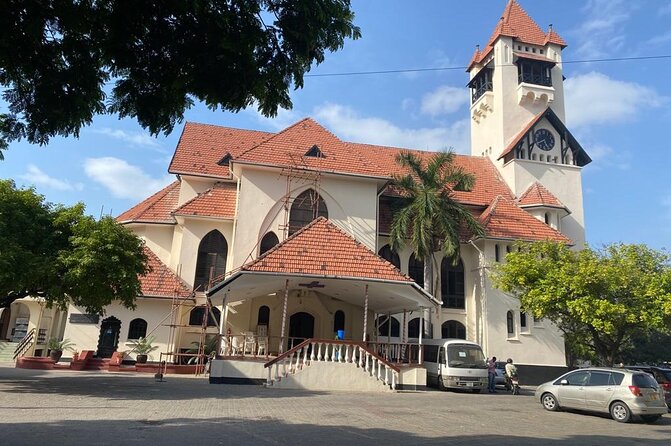
Next comes Azania Front Lutheran Church, another 30-minute stop. Its Bavarian style is an unexpected sight in Dar es Salaam, especially with palm trees around it. The design also draws inspiration from churches in Latin America and India, giving you a clear example of how outside influences reached this coastal city.
This is a useful counterpoint to St. Joseph’s Cathedral. Instead of seeing one religious building and moving on, you get two different architectural traditions close together in the same city tour. I like that the schedule treats churches as part of Dar’s social story, not just as old structures.
Again, the short visit means you will likely get the main points rather than a long examination of every feature. Bring respectful clothing for religious sites and listen closely to the guide’s explanation, since the context is more interesting than a quick photograph alone.
Village Museum: traditional homes you can see from the inside
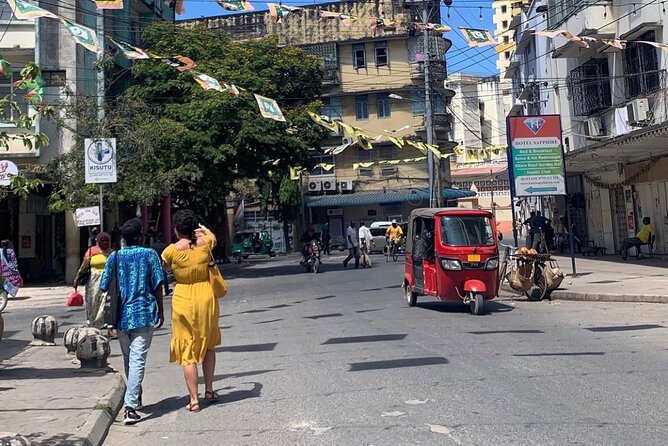
The Village Museum receives about an hour, making it one of the better-paced stops. It presents traditional homes and living conditions connected to several Tanzanian tribes. This is a hands-on setting, so you can move beyond general statements about local culture and look at the types of structures people built and used.
For me, this stop helps balance the city’s churches, markets, and commercial districts. It gives you a way to think about rural traditions and domestic life while staying in Dar es Salaam. You can also ask Bernard how different building styles relate to climate, materials, and local customs, although the exact amount of discussion will depend on your group.
The museum is especially useful if you have limited time in Tanzania. You will not visit the communities represented by the displays, but you will gain a compact introduction to the variety of homes and living conditions found across the country.
A few more trips of this kind worth comparing:
- Dar es Salaam: City Tour
★ 4.7 · 159 reviews - Dar es Salaam City Center: Walking Tour
★ 4.8 · 102 reviews - Dar es Salaam City Tour – Everyday
★ 5.0 · 64 reviews - MIKUMI NATIONAL PARK – 3 Days
★ 4.5 · 63 reviews
Mwenge Woodcarvers Market and choosing an authentic keepsake
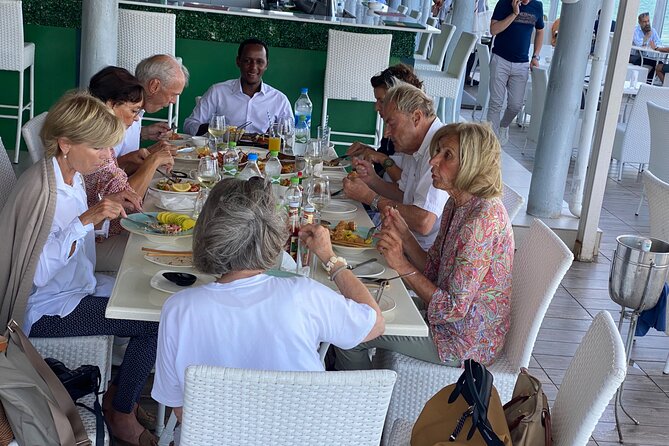
At Mwenge Woodcarvers Market, you get an hour among carved statues, masks, and chests made from strong black ebony wood. This is one of the most practical stops on the day because it combines craft, culture, and shopping.
You can look closely at the carving process and compare different objects before deciding if you want to buy something. Ebony pieces can be heavy, so think about luggage space before making a purchase. You should also ask about prices and take your time rather than buying the first item you see.
The market gives the tour a more human pace after the churches and museum. It is not only a place to collect souvenirs. It shows how artistic skills become part of local commerce and how Tanzanian imagery reaches people taking objects home.
Kivukoni Fish Market and Dar’s working waterfront

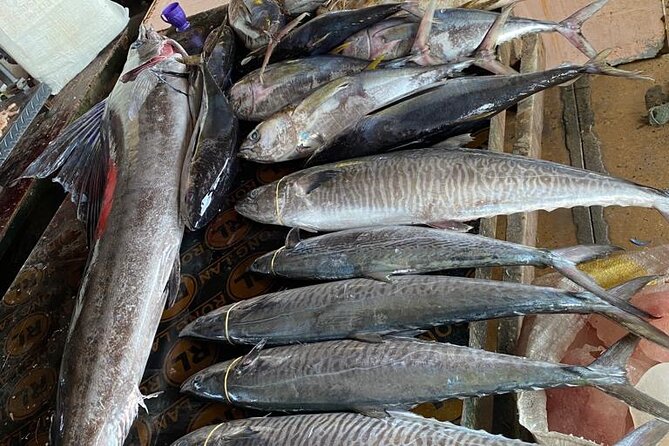
Kivukoni Fish Market offers a short, 30-minute look at one of Dar es Salaam’s most active food and trade centers. The market is known for freshly caught seafood and its role in the city’s fishing economy.
This stop is about atmosphere and everyday work rather than polished architecture. You will see a side of Dar tied to the water, food supply, and local business. The market may feel crowded, noisy, or strongly scented, so it is worth approaching with an open mind and sensible expectations.
The short time is probably suitable for a first look. If you love markets and seafood, you may want longer. If you prefer quiet galleries and formal sights, this could be one of the more demanding parts of the day. Its value lies in showing how the city functions, not just how it looks.
The National Museum of Tanzania in one focused hour

The National Museum of Tanzania is scheduled for one hour. It belongs to a group of five Tanzanian museums and presents material on the country’s history and natural environment.
This is an important stop because it gives national context to everything else you see. The churches make more sense when you understand outside influences. The Village Museum gains depth when you place traditional homes within Tanzania’s wider cultural story. The art markets also benefit from a broader view of the country’s past.
One hour will not cover every display in detail. I would ask Bernard to help you focus on the exhibits most relevant to Dar es Salaam and Tanzania’s development. The museum is a good place to connect the day’s separate subjects instead of treating each stop as an isolated attraction.
Kariakoo Market and the commercial heart of the city
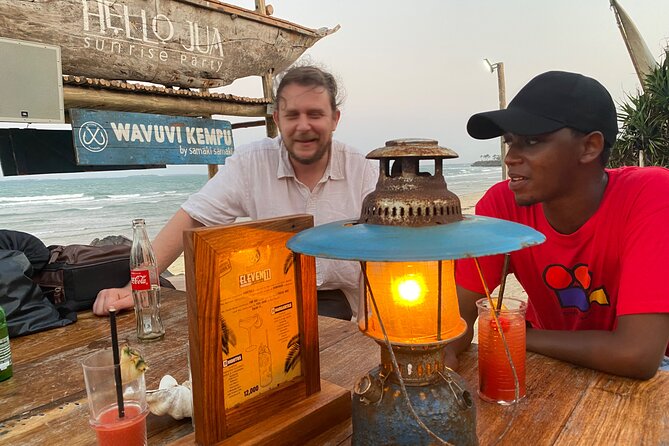
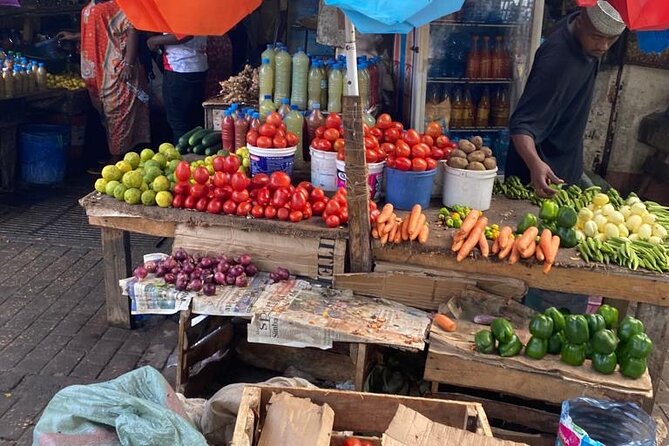
Kariakoo Market gets about an hour and spreads across many city blocks. It is known for its wide range of markets and its major role in Dar es Salaam’s commercial life.
This is a strong choice for anyone who wants to see the city as residents use it. You will not be looking at a preserved old quarter. You will be seeing trade, shopping, movement, and the practical energy of a large city. The experience may be crowded, and you should keep your belongings secure and stay with your guide.
Kariakoo also helps explain why a history and architecture tour needs markets on its route. A city’s identity is not only stored in churches or museums. It is also visible in the places where people buy, sell, work, and meet.
Mlimani City Mall: a modern pause in the schedule
Mlimani City Mall sits on Sam Nujoma Road in Ubungo and covers about 30,000 square meters. It is one of Tanzania’s largest malls, so this stop shows a newer side of Dar es Salaam.
I see why it is included. After traditional homes, open markets, and older religious buildings, the mall gives you a clear contrast. It reflects modern retail, changing habits, and the city’s connection to contemporary commercial life.
The drawback is simple: you may find it less memorable than Kariakoo Market, the Village Museum, or the art stops. If shopping malls are not part of your travel interests, one hour may feel generous. If you want snacks, familiar shops, or a break from the heat, it can be useful.
Tingatinga art and the final look at Tanzanian creativity
The last stop is the Tingatinga Arts Cooperative Society, with about 30 minutes. Tingatinga painting developed in Tanzania during the second half of the 20th century. The works are known for strong colors and are often painted on masonite, a practical material that makes them easier to carry home.
This is a fitting finish because the tour moves from architecture and history into a living art form. You can look at the bold animal scenes and other subjects while learning how this recognizable style developed. The cooperative setting also gives you another chance to consider how art supports local makers and the tourist economy.
Thirty minutes is enough to browse and learn the basics. If you want to buy a painting, ask about size, packing, and transport before committing. The compact material is convenient, but you still need to think about how you will carry artwork during the rest of your trip.
Lunch, water, snacks, and the real value of $150
The price is $150 per person. That includes private transport, entrance fees, bottled water, snacks before lunch, and a local lunch. The tour can also include lunch at Akemi, a revolving restaurant with impressive city views, which adds a memorable setting to the middle of a long day.
I judge the price mainly by the private format and the number of included stops. Nine locations would require planning, driving, admissions, and local knowledge if you arranged the day alone. With Bernard handling the route and explaining the city, the fee can be good value for first-time visitors who want a structured introduction.
The value is weaker if you prefer spending half a day at one museum or exploring markets without a schedule. You are paying for range, transport, interpretation, and convenience, not for long visits at each attraction.
Dar es Salaam can be hot, so the included bottled water matters. Snacks before lunch are also useful because the day begins at 9:00 am and does not end until evening. Alcohol and dinner are not included. The guide can take you to bars or sports bars, with drinks costing about $30 to $50 per person, while dinner at a good restaurant is estimated at $30 to $50.
Timing, comfort, and who will enjoy this day
Pickup is offered, and the tour uses private transportation. The start time is 9:00 am, and the total duration is about seven hours. Since the group is private, you can travel only with your own party rather than joining strangers.
I would choose this tour if you want a strong first orientation to Dar es Salaam. It suits people who enjoy switching between museums, markets, architecture, shopping, and art. It is also a good fit if you want a guide who can connect facts to stories about society, music, religion, and city life.
You may prefer another plan if you want a slow architectural study, a food-only outing, or a relaxed shopping day. The route is ambitious, and traffic could reduce the time available at some stops. Most people can participate, service animals are allowed, and the tour is near public transportation, but the day is still best for someone comfortable with several stops and market settings.
Confirmation arrives at booking. You can cancel for a full refund up to 24 hours before the local start time. Changes or cancellations made inside that period are not accepted.
Should you book Dar es Salaam History and Architectural Tours?
I would book this tour if you have one day to make sense of Dar es Salaam and want more than a standard sightseeing loop. Bernard’s personal, well-informed guiding is the main reason to choose it, while the churches, Village Museum, Kariakoo Market, National Museum, and Tingatinga cooperative give the day real variety.
Book with realistic expectations. You will sample many parts of the city rather than master one. At $150, the combination of private transport, lunch, water, snacks, fees, and a full day of guiding makes sense for visitors who value ease and context. If you want an active introduction to Dar’s past and present, this is a strong choice.
FAQ
What time does the tour start?
The tour starts at 9:00 am.
How long does the tour last?
The experience lasts approximately seven hours.
Is transportation included?
Yes. Private transportation is included, and pickup is offered.
Is lunch included?
Yes. A local lunch is included. Lunch at Akemi, a revolving restaurant with city views, is also noted as part of the experience.
Are entrance fees included?
Yes. All fees and taxes are included, along with admission to the listed attractions.
Is this a private tour?
Yes. Only your group will participate in the private activity.
What is the cancellation policy?
You can cancel up to 24 hours before the start time for a full refund. Cancellations or changes made less than 24 hours before the start time are not accepted.
Just added around Dar es Salaam
- Ruaha National Park And Mikumi National Park Budget Safari 6 Days 5 Nights★ 5.0 · 3 reviews
- 3 Days Nyerere National Park Safari (Selous Game Reserve)★ 5.0 · 3 reviews
- Saadani National Park Day Tour★ 5.0 · 3 reviews
- Private Mikumi Adventure★ 4.5 · 3 reviews
- Dar es Salaam City tour and Beach Leisure – 9 hours★ 5.0 · 3 reviews
- Mbudya island from Dar es salaam safari.★ 4.2 · 3 reviews
- Day Trip To Bagamoyo From Dar Es Salaam ..historical town★ 4.5 · 3 reviews
- 3 Days Mikumi National Park Private Tour★ 5.0 · 3 reviews
Historical Tours, compared.

Stone Town Historical Cultural Walking Guided Tour
Read our review →
Arusha Guided Walking City Tour, Culture, Lifestyle & History
Read our review →
Stone Town’s Hidden History: Private Guided Walking Tour
Read our review →

Zanzibar Stone Town Tour: Explore Rich History and Hidden Wonders
Read our review →Browse the lists this tour appears in