
Reviewed · SERENGETI SAFARIS
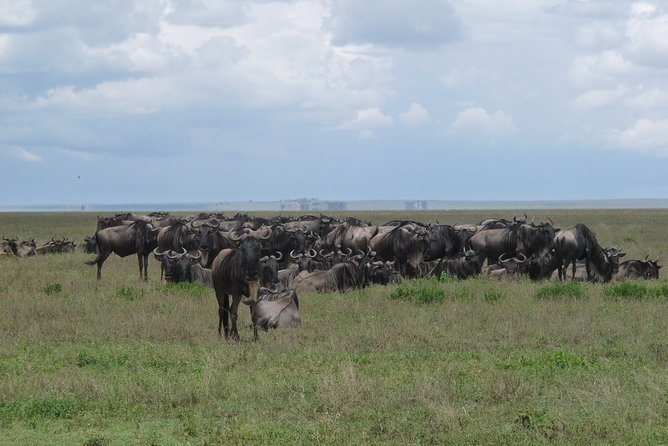
Serengeti Wildebeest Migration.
The river crossing is nature at full volume. This 8-day private safari from Moshi or Arusha combines Tarangire, the Serengeti, the Mara River region, and Ngorongoro Crater for $4,185 per person. I like the route’s variety, especially the chance to trade Tarangire’s baobabs and elephants for Serengeti predators and possible wildebeest crossings. I also like the private 4×4, which includes a refrigerator, charging stations, and a pop-up roof.
The main caution is timing. A Mara River crossing is never guaranteed, even in the best months, and several long drives make parts of the trip feel rushed. The schedule is also described as both seven days and eight days, so confirm the exact number of nights, lodging style, and final return details before paying.
In This Review
- Key points at a glance
- What the $4,185 price really buys
- Day 1: Tarangire’s baobabs and elephant families
- Day 2: Entering the endless Serengeti
- Day 3: The long road north to Kogatende
- Day 4: The Mara River and the limits of luck
- Day 5: Returning through Lobo to Seronera
- Day 6: From Serengeti grasslands to Ngorongoro rim
- Day 7: Ngorongoro Crater’s compact wildlife world
- How the private Jeep shapes the safari
- Meals, accommodation, and comfort
- Who should book this Serengeti route?
- Practical booking advice before you pay
- Should you book it?
- FAQ
- Where does the safari start?
- How long is the safari?
- When is the best chance to see a Mara River crossing?
- Is this a private tour?
- What is included in the price?
- What is not included?
- Can I cancel for a full refund?
Key points at a glance
- Mara River timing matters: Mid-June through September offers the best stated chance of seeing wildebeest near the northern Serengeti and Mara River.
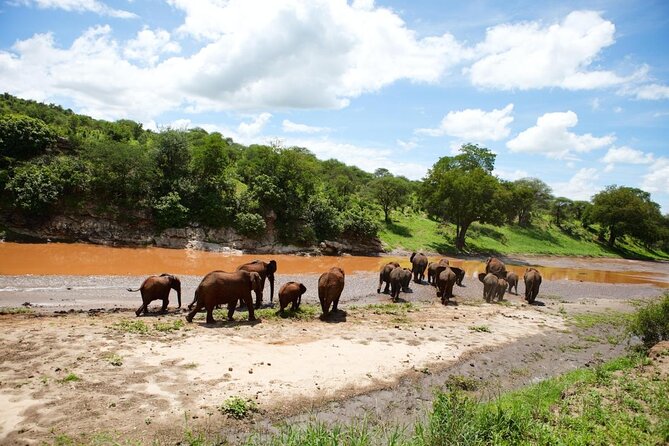
- Tarangire adds a strong opening: Ancient baobabs, large elephant families, and varied vegetation make the first game drive more than a simple transfer.
- The route covers major northern Tanzania highlights: You visit Tarangire, central and northern Serengeti, and Ngorongoro Crater.
- This is a private safari: Only your group participates, with pickup offered from a hotel in Moshi or Arusha.
- Guide Fredy receives especially warm praise: His care and ability to make the trip feel easy are important advantages.
- The price includes key safari costs: Meals, mineral water, a private vehicle, and emergency evacuation cover are included, but not flights, visas, drinks, tips, or personal spending.
What the $4,185 price really buys
At $4,185 per person, this is not a low-cost safari. But the value depends heavily on how many people share the private vehicle and what accommodation is actually arranged. The price includes all listed safari activities, six breakfasts, seven lunches, six dinners, mineral water each day, a private 4×4, and AMREF Flying Doctors emergency evacuation insurance during the safari.
That package removes several costs that can add up quickly in Tanzania. You are not paying separately for every game drive, picnic lunch, or bottle of water. The refrigerator is useful in the heat, while portable charging stations help protect your camera and phone batteries during long days away from town.
The private format is another real benefit. You do not have to wait for an unrelated group that wants to stop for a different animal or spend less time at a viewpoint. You can talk through the day with your guide and shape the pace within the limits of park rules, road conditions, and the migration itself.
Still, ask for a detailed price breakdown. The supplied information calls this a lodge safari, but one account describes an eight-day budget camping trip with a personal chef. That could reflect a different accommodation choice, but it is enough reason to confirm whether your $4,185 package includes lodges, tented camps, or camping. Also ask how many people will share the Jeep, since group size affects the value of a private safari.
The price does not include international flights, alcoholic or soft drinks, tips for the guide, souvenirs, other personal expenses, travel insurance, or visa fees. The stated visa cost is $100 for American passport holders and $50 for non-American passport holders. AMREF evacuation cover is included, but that is not the same as full trip insurance.
More Migration Safaris in Moshi
- Great Migration Safari In Tanzania
★ 5.0 · 71 reviews - 6 Days Tanzania Budget Camping Safari with Migration
★ 5.0 · 31 reviews - 10-Day Wildebeest Migration Calving Safari -All Inclusive
★ 5.0 · 30 reviews
Day 1: Tarangire’s baobabs and elephant families
Pickup is scheduled for 8 a.m. from a hotel in Moshi or Arusha. From Arusha, the drive to Tarangire is about 150 kilometers and takes roughly three hours. That means your first day includes a substantial road journey, but the reward is a park with a distinct character.
Tarangire is known for its nine vegetation zones and its concentration of elephants. The Tarangire River gives the park its name and helps draw animals to the area. The enormous baobabs are the visual highlight. Their thick trunks and strange branches make even a giraffe look modest, which is no small feat.
The first game drive lasts until late afternoon, with a picnic lunch during the day. I like this opening because it eases you into safari viewing without sending you straight into the huge Serengeti. Elephant family groups are a particular focus, and you may have the chance to watch them interact at close range from the vehicle.
The drawback is the long first day. After pickup, road travel, a game drive, and the return to camp or lodge, you will probably want an early night. Treat Tarangire as a proper park visit, not just a stop on the way to the Serengeti.
Day 2: Entering the endless Serengeti
After breakfast, you head toward Serengeti National Park. The stated travel time for the day’s Serengeti sections is about four hours, though the full day will be longer once stops and game viewing are added. The first sight of open grass stretching toward the horizon is one of the great pleasures of this route.
The Serengeti covers about 14,763 square kilometers. That scale changes how you understand distance. A herd may appear close, yet take time to reach. A line of kopjes can remain in view for much of the drive without seeming to get closer.
The route reaches the central Seronera region, one of the park’s strongest areas for general wildlife viewing. The Seronera River provides a dependable water source, which helps draw a wide mix of animals. Lions are a major attraction here, and the area is also known for leopards and other big cats.
Watch for Serengeti kopjes, large granite boulders rising from the grass. They offer shelter for animals and create excellent points of contrast in photographs. The central zone can be busy with safari vehicles, but its dependable wildlife makes it a sensible part of a migration itinerary.
Day 3: The long road north to Kogatende
Day three begins at about 8 a.m. with a drive from central Serengeti toward Kogatende in the north. This is one of the longer days, lasting about eight hours. Lunch is a picnic taken during the drive, and the route itself becomes part of the safari.
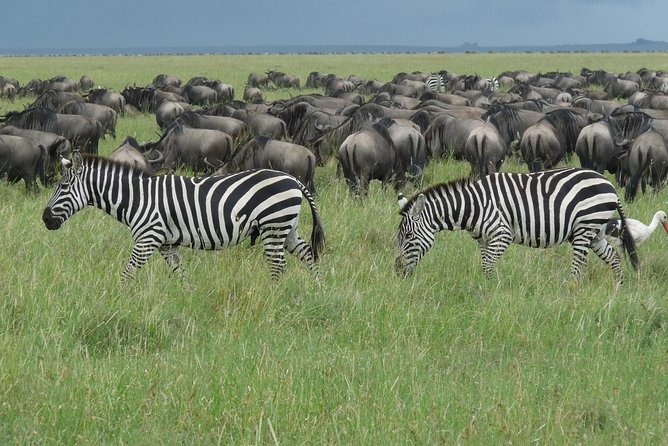
The scenery changes as the flat grasslands give way to hillier, more broken ground. You may see zebra, topi, gazelle, buffalo, leopard, and lion along the way. The northern Serengeti has its own resident wildlife, so the day is not dependent entirely on finding the migrating herds.
The aim is to reach the Mara River area, with a few hours there if arrival time allows. That wording matters. A full day on the road can leave limited time beside the river, especially if animal sightings slow the journey or the route proves rough.
Pack patience for this day. A picnic lunch is practical, but you will spend many hours in the vehicle. The benefit is that you are repositioning into the region most closely linked with the dramatic northern migration scenes.
More Serengeti safaris to compare:
- Safari Serengeti And Ngorongoro
★ 5.0 · 288 reviews - Serengeti, Ngorongoro and Tarangire 4 Days Safari
★ 5.0 · 59 reviews - 5 Days Camping Tarangire, Serengeti & Ngorongoro crater & Visiting Maasai
★ 5.0 · 58 reviews - 4 Days Group Joining Camping Safari to Tarangire Serengeti Ngorongoro Crater
★ 5.0 · 50 reviews
Day 4: The Mara River and the limits of luck
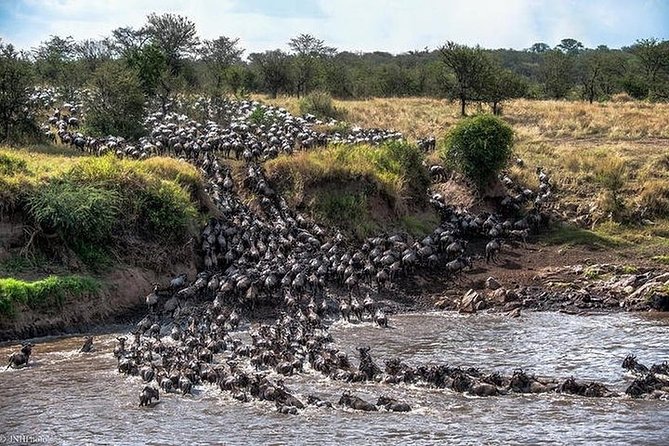
This is the day built around the great spectacle. From mid-June to September, wildebeest may be found in the northern Serengeti, and the Mara River can offer crossings during this period. July and August are described as the strongest months for a crossing as herds move toward Kenya’s Masai Mara. September and October can bring movement in the other direction.
The key word is may. No safari company can order a river crossing. Herds gather, hesitate, split apart, and sometimes walk away from the water. Even when thousands of animals are nearby, you may spend hours watching them wait.
If a crossing happens, it can be rough and unsettling. Wildebeest surge into a fast, rain-fed river. Some animals drown, while crocodiles may take others. This is not a tidy wildlife show. It is a powerful natural event, and you should be prepared for scenes that are difficult to watch.
The day also includes a full game drive and picnic lunch. The Mara River region offers more than migration. Lions, leopards, and cheetahs are found in the area, and permanent water sources can attract many resident animals during the dry season.
I would choose this safari for the chance to see the migration, not for a promise of a crossing. That distinction protects your expectations. A crossing is a bonus. The Serengeti itself remains worthwhile if the herds are elsewhere.
Day 5: Returning through Lobo to Seronera
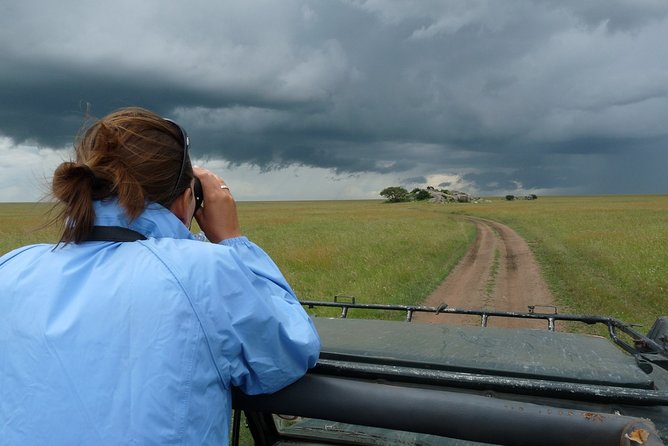
After breakfast, the route heads south toward central Serengeti. The drive from the Mara River valley to Seronera takes about four hours, with game viewing along the way. You pass through hill country and the Lobo area before the terrain shifts back toward the central grasslands.
This change of scenery gives the route a pleasing rhythm. Northern Serengeti feels more broken and hilly, while Seronera returns to open plains and river-fed wildlife areas. The drive also gives you another chance to see animals you missed earlier.
Back in Seronera, the focus returns to lion prides, leopards, and the wider mix of wildlife around the river. A picnic lunch is taken during the day, followed by dinner and rest at your accommodation.
The possible weakness is repetition. You have already visited central Serengeti, and this day is partly a return journey. Still, Seronera is included for good reason: wildlife shifts constantly, and a second visit can produce sightings you did not get on day two.
Day 6: From Serengeti grasslands to Ngorongoro rim
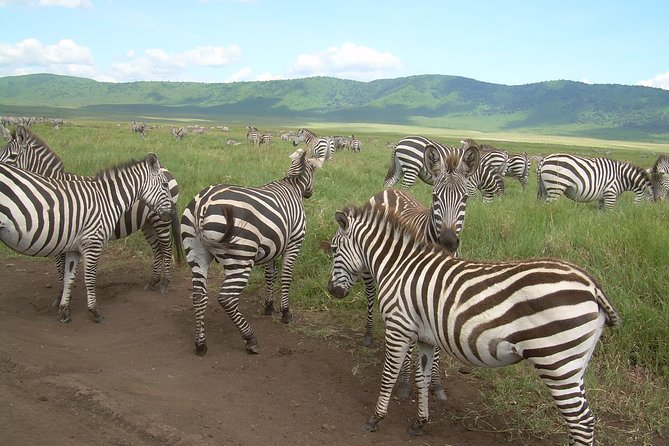
The morning begins later, at about 9 a.m. You take a short Serengeti game drive, stop for a picnic lunch, and then travel toward the Ngorongoro Crater rim. The stated 75-kilometer drive takes about two and a half hours, with some game viewing along the route.
This is a transition day, but it is not wasted time. You move from the open Serengeti to one of Tanzania’s most striking geological settings. The crater is an inactive, intact, unfilled volcanic caldera, and the rim gives you a strong sense of its vast scale.
The schedule includes about eight hours of activity, so you should not expect a quiet transfer. The next morning begins early, with a planned 6:30 a.m. descent into the crater. Use the evening to rest and prepare for the final major game drive.
Day 7: Ngorongoro Crater’s compact wildlife world
The final full day starts early. After a quick breakfast, you descend to the crater floor at about 6:30 a.m. The crater covers roughly 260 square kilometers and reaches more than 2,000 feet in depth. Its enclosed setting gives the day a different feel from the wide-open Serengeti.
A five-hour game drive is planned. Possible sightings include elephant, buffalo, black rhino, hippo, hyena, cheetah, and lion. The variety is impressive, but wildlife is still wild. No list of possible animals is a guarantee.
Lunch is served at the Hippo Pool before the steep ascent to the crater rim. The stop gives you a clear pause in a busy day, but keep your camera and belongings secure around water and animals. The crater’s concentrated wildlife makes it a strong final chapter, especially after several days of searching across much larger areas.
The supplied schedule ends after the crater visit, but the overall tour is described elsewhere as eight days while the summary says seven days. You should ask exactly what happens after the crater: where you sleep, when you return to Moshi or Arusha, and whether an eighth day is included.
How the private Jeep shapes the safari
The 4×4 is central to the quality of this trip. It has a pop-up roof, refrigerator, and portable charging stations. The roof allows open views during game drives, while the refrigerator is useful for keeping water cool during long hours in the sun.
Pickup is offered, and the start time is 8 a.m. on most days, with a 9 a.m. start on day six and a 6:30 a.m. crater descent on day seven. Those early starts and long drives are normal for a route covering this much ground, but they can be tiring.
The private arrangement is especially helpful for photography. You can keep your camera ready without working around a large mixed group. The guide can also explain why the vehicle is stopping, rather than treating every pause as a quick photo break.
Guide Fredy receives particularly strong praise for making the trip feel easy from start to finish. One detailed account also highlights a personal chef on a budget camping version. Those details suggest a high level of hands-on care, but you should confirm who your guide and chef will be and which accommodation plan applies to your booking.
Meals, accommodation, and comfort
Breakfast, lunch, and dinner are included on the stated schedule, along with mineral water. Lunch is often a picnic during the game drive, so the days are designed around wildlife viewing rather than returning to a lodge at midday.
The accommodation description needs clarification. The main package is presented as a lodge safari, yet a separate account describes budget camping. These are very different comfort levels. Ask for the names of the lodges or camps, whether bathrooms are private, and whether the price includes the same standard shown in the package you are buying.
The same question applies to the number of nights. The itinerary lists seven days, while the tour summary calls it an eight-day safari. This is a small detail with a large effect on value.
Who should book this Serengeti route?
I would recommend it to you if the migration is your main goal and you want a private vehicle with a route that also includes Tanzania’s major northern parks. It suits people who are comfortable with long drives, picnic lunches, early starts, and uncertain wildlife timing.
It is also a good fit if you want more than one park. Tarangire provides elephants and baobabs, central Serengeti offers reliable big-cat viewing, northern Serengeti gives you a chance at the Mara River, and Ngorongoro adds a compact final game drive.
I would hesitate if you want a relaxed holiday with short transfers and fixed daily outcomes. The journey to Kogatende takes much of a day, the return to Seronera takes another four hours, and a river crossing may not happen despite perfect planning.
Practical booking advice before you pay
Confirm these points in writing:
- Is the trip seven days or eight days?
- Which lodges, camps, or tented camps are included?
- How many people will share the private Jeep?
- Is the final transfer back to Moshi or Arusha included?
- Who will guide the trip, and is Fredy available?
- Does the price include park fees and all listed meals?
- What happens if the wildebeest are not near the Mara River?
Confirmation is provided at booking, and most people can participate. The activity is private, so only your group joins. You can cancel for a full refund up to 24 hours before the local start time, but cancellations or changes inside that window are not refunded or accepted.
Should you book it?
Book this safari if you value a private vehicle, want the best stated chance of reaching the northern Serengeti during migration season, and accept that nature does not follow a timetable. The strongest reasons are the varied route, Fredy’s praised personal care, and the useful 4×4 setup.
I would book only after confirming the seven-day versus eight-day wording and the accommodation level. If those details match your expectations, $4,185 can be fair for a private, meal-inclusive safari covering Tarangire, Serengeti, and Ngorongoro. If you need guaranteed river crossings or a slow, easy pace, choose a plan built around fewer areas and more nights in one region.
FAQ
Where does the safari start?
Pickup is offered from a hotel in Moshi or Arusha. The stated start time is 8 a.m., although day six begins at 9 a.m.
How long is the safari?
The itinerary describes seven days, while the tour summary calls it an eight-day safari. Confirm the exact duration and number of nights before booking.
When is the best chance to see a Mara River crossing?
The stated period is mid-June through September, with July and August offering the strongest chance as wildebeest move toward Kenya’s Masai Mara. Crossings are not guaranteed.
Is this a private tour?
Yes. Only your group participates in the activity.
What is included in the price?
The package includes all listed activities, AMREF Flying Doctors emergency evacuation insurance, mineral water, a private 4×4 with a refrigerator, charging stations and pop-up roof, six breakfasts, seven lunches, and six dinners.
What is not included?
International flights, alcoholic and soft drinks, guide tips, souvenirs, personal expenses, travel insurance, and visa fees are not included. The stated visa fee is $100 for American passport holders and $50 for non-American passport holders.
Can I cancel for a full refund?
Yes, if you cancel at least 24 hours before the experience starts. Cancellations or changes made less than 24 hours before the local start time are not accepted or refunded.
More Migration Safaris
- 8 Days Great Wildebeest Migration – Mara River Crossing
★ 5.0 · 28 reviews - Tanzania Safari – The Great Migration in the North of the Serengeti and Lake Natron
★ 5.0 · 25 reviews - 7 Days Wildebeest Migration – Ndutu Calving Season
★ 5.0 · 18 reviews - 5 Days Tanzania Safari – Migration and Big 5 Safaris
★ 5.0 · 14 reviews
Just added around Moshi
- Moshi: Lake Chala Tour: Hiking &/or Kayaking★ 4.5 · 3 reviews
- 3 Days Tanga Exclusive Beach Holiday★ 5.0 · 3 reviews
- Chemka Hotpsrings E-Bike Day Trip★ 5.0 · 3 reviews
- Explore 1 day Ngorongoro Crater Budget Group Safari from Arusha★ 5.0 · 3 reviews
- Explore the 360° of Kilimanjaro★ 5.0 · 3 reviews
- Affordable Short Tanzania Safari (2 Days Camping Safari)★ 5.0 · 3 reviews
- Rongai Route 7 Days★ 5.0 · 3 reviews
- 6 Days Kilimanjaro climb – Marangu route★ 4.5 · 3 reviews
Serengeti Safaris, compared.

Serengeti Balloon Safari and authentic bush breakfast
Read our review →
Balloon Safari & Bush Breakfast in Serengeti – Miracle Experience
Read our review →
3 Days Serengeti & Ngorongoro Group Camping Safari
Read our review →
5-Day Highlights mid-Range Crater, Serengeti, Tarangire
Read our review →


Private 6-Day Tarangire Manyara Crater and Serengeti with Mid-Range Lodges
Read our review →
5 Days Camping Tarangire, Serengeti & Ngorongoro crater & Visiting Maasai
Read our review →Browse the lists this tour appears in