
Reviewed · NORTHERN CIRCUIT SAFARIS
Private 8 day Northern Circuit Kilimanjaro Climb
Kilimanjaro rewards patience more than speed. Duma Explorer’s private 8-day Northern Circuit climb gives you the mountain’s quietest approach, broad views from west to east, and extra time to adjust to high altitude. I especially like the low-traffic route and the gradual climb profile, which can be a real help before summit night. I also like that your tent is ready when you arrive at camp, a small comfort after a long day on rough ground. The main drawback is the cost, $2,999 per person, and the demanding summit night, which requires strong fitness and a very early start.
This is a serious trek, not a sightseeing walk with a nice mountain in the background. You will sleep at camps as high as 4,717 meters, cross rough volcanic ground, and climb to Uhuru Peak at 5,895 meters. The private format gives your group more control, but you should confirm exactly what the price covers beyond the listed meals, park access, and pickup option.
In This Review
- Key points to know before you book
- Why the Northern Circuit route is worth eight days
- Day 1: Londorossi Gate to Mti Mkubwa Camp
- Day 2: Shira Ridge and the open moorland
- Day 3: Lava, Moir Hut, and an acclimatization climb
- Day 4: Around Kibo’s northern face to Pofu Camp
- Day 5: Third Cave Camp and views toward Mawenzi
- Day 6: Third Cave Camp to School Hut
- Day 7: Hans Meyer Cave, Gilman’s Point, and Uhuru Peak
- Day 8: Mweka Trail and the return to Arusha
- Food, camp comfort, and the private format
- Is $2,999 a fair price?
- Who should choose this climb?
- Small details that make planning easier
- Should you book the Northern Circuit climb?
- FAQ
- Where does the Kilimanjaro climb begin?
- How long is the climb?
- What time does the experience start?
- Is this a private tour?
- Which route does the climb use?
- How high is Uhuru Peak?
- What is Gilman’s Point?
- Where do you sleep before the summit attempt?
- What meals are included?
- Can you cancel for a full refund?
Key points to know before you book
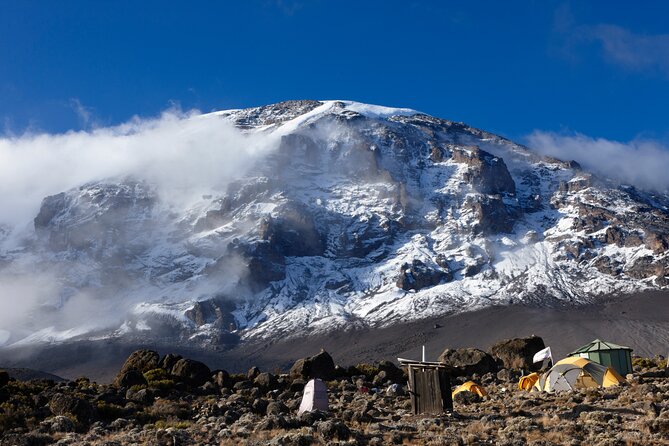
- The Northern Circuit takes the long way around Kili: You approach from the west, circle the northern slopes, reach the summit from the east, and descend on the south side.
- Eight days gives your body more time: The itinerary includes several gradual altitude gains and an acclimatization walk above Moir Hut.
- The route is quieter than most options: You pass or connect with parts of the Lemosho, Rongai, Marangu, and Mweka routes without following one trail all the way up.
- Summit night is the real test: You leave School Hut around midnight, climb through the crater rim to Uhuru Peak, then descend for many more hours.
- The views keep changing: Forest, heather, moorland, lava fields, northern valleys, Kibo, Mawenzi, and the southern descent all feel different.
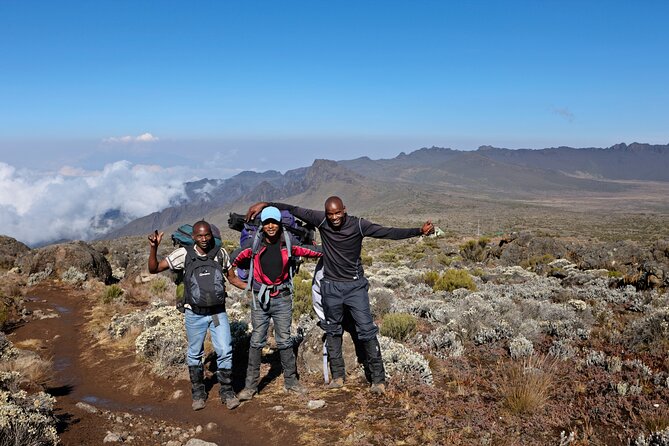
- The crew matters: Guides, porters, cooks, and tent staff support the climb, with past trips specifically praising Emmanuel, Imran, Humphrey, Colman, Dickson, and Mariam.
Why the Northern Circuit route is worth eight days
Kilimanjaro has several routes, but the Northern Circuit is the slow, scenic choice. You begin at Londorossi Gate in the west, use the Lemosho approach, cross the Shira Plateau, circle around Kibo’s northern side, and reach the summit by way of the eastern approach near Marangu. Your descent uses the southern Mweka route.
That route design matters. You see more of the mountain instead of walking up and down the same corridor. The western forest feels remote and green, the northern side is open and quiet, and the summit approach gives you views toward Mawenzi, Kibo’s striking secondary peak. By the end, you have seen nearly every major side of Kilimanjaro.
The extra day also helps with altitude. You still gain height quickly, but the schedule includes shorter stages, an acclimatization climb, and time to sleep at several camps before the summit attempt. No itinerary can promise that you will reach the top. Still, the longer schedule gives you a better chance than a rushed climb.
The tradeoff is simple: eight days means more time, more nights in a tent, and a higher price. If your only goal is to reach Uhuru Peak as quickly as possible, this route may feel slow. If you want the mountain experience itself, I think the added days are money well spent.
More Private Tours in Arusha
- Private 6-Day Tarangire Manyara Crater and Serengeti with Mid-Range Lodges
★ 5.0 · 238 reviews - 5 Days Budget Private Safari, Tanzania
★ 5.0 · 191 reviews - 5-Day Private Northern Tanzania Safari from Arusha
★ 5.0 · 182 reviews
Day 1: Londorossi Gate to Mti Mkubwa Camp
Your day begins with a drive to Londorossi Gate, where you complete registration formalities. From there, the vehicle continues about 12 kilometers to the trailhead. That final section can take 45 minutes to 1 hour and 30 minutes, depending on road conditions, so do not expect a quick transfer.
The first walking stage runs about 5 kilometers, from roughly 2,389 meters to 2,785 meters. The elevation gain is modest, and the walk takes around four hours. You begin in some of the finest forest found on the mountain, with a gradual introduction to the rhythm of walking, resting, eating, and drinking.
Your first night is at Mti Mkubwa, also called Big Tree Camp. The setup is practical: your tent is already erected when you arrive, and a snack is waiting. That arrangement takes away one unpleasant chore at the end of the day, especially if rain or fatigue sets in.
This first stage is not the hardest, but it is your first chance to watch how your body responds. Walk slowly from the start. There is no prize for reaching camp early and exhausted.
Day 2: Shira Ridge and the open moorland
Day two is one of the most varied parts of the route. You begin in the forest, then move into heather and moorland as the trees thin out. The change is gradual but clear, and the open ground gives you your first broad views.
The route circles the northern slopes of Shira Ridge, a lesser-known high point of Kilimanjaro. You may catch your first sight of the snow-covered Kibo summit, your final destination. That view is useful as well as dramatic. It gives you a sense of scale and reminds you that the summit is still several days away.
You finish at Shira One Camp, around 3,504 meters, after about seven hours of walking. The camp sits on the western side of the Shira Plateau, with views across the plateau toward Kibo.
A mild headache can appear at this height. Take it seriously, but do not panic. The best habits are the plain ones: walk pole pole, the Swahili phrase for slowly, drink plenty, eat what you can, and tell your guide if symptoms worsen.
Day 3: Lava, Moir Hut, and an acclimatization climb
The third day takes you farther into high, dry country. Within an hour of leaving camp, you pass Simba Camp and a junction with the four-wheel-drive emergency track leading down toward Shira 2.
The path then moves between boulders, petrified lava flows, and grassy patches. This is rougher walking than day one, and the volcanic ground demands attention. You cover about 9.7 kilometers and gain around 657 meters before reaching Moir Hut at approximately 4,161 meters.
The camp sits near an impressive cave and low cliffs. It is a stark setting, with fewer plants and more exposed rock. The sense of isolation is a major part of the Northern Circuit appeal.
There is also an optional sunset acclimatization walk to a ridgeline around 4,300 meters. This adds about 1.9 kilometers and 139 meters of climbing. I like this feature because it lets you go high and return lower to sleep, a useful pattern for adjusting to altitude. It does, however, make an already tiring day longer. Follow your guide’s advice and do not treat the extra climb as a competition.
More Kilimanjaro routes and climbs:
- 8-Day Small-group Lemosho Kilimanjaro Summit Trekking
★ 5.0 · 186 reviews - 7-Day Machame Kilimanjaro Summit Tour from Arusha
★ 5.0 · 125 reviews - Mountain Kilimanjaro Day Hike
★ 5.0 · 102 reviews - Private Full Day Hiking Experience to Marangu Route
★ 5.0 · 61 reviews
Day 4: Around Kibo’s northern face to Pofu Camp
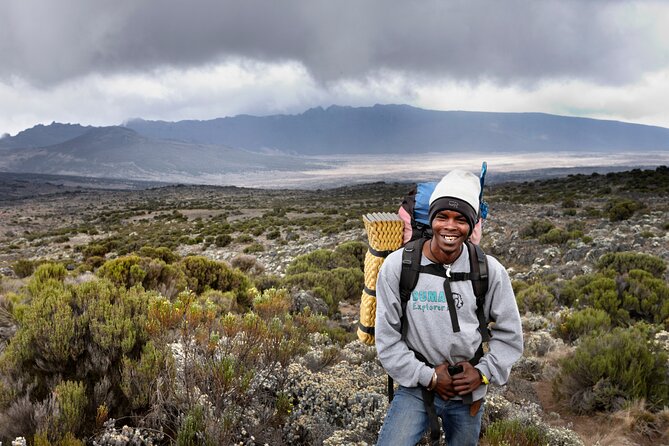
Day four brings the route’s quietest stretch. You reach about 4,402 meters before dropping to Second Pofu Camp at roughly 4,033 meters. This rise and fall can feel strange. You work hard to gain height, then lose some of it before camp.
The first climb is a steady push up a barren slope to about 4,300 meters. After that, the trail works around Kibo’s northern face, passing through several valleys. You climb out of one valley, descend into another, and repeat the pattern.
The walking distance is not huge, but the altitude makes every slope more demanding. Headaches are common at this point. Keep your pace slow, drink often, and speak up early if you feel unwell. High-altitude illness is not something to hide in the name of toughness.
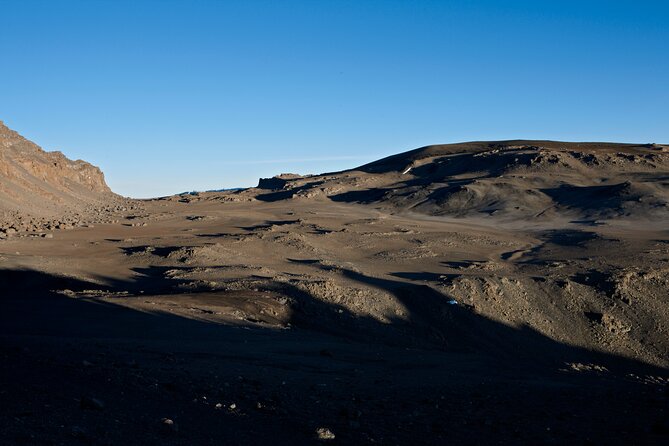
The northern face has a spare, almost lunar feel. There are fewer people, fewer obvious landmarks, and plenty of open rock. For many climbers, this is the day that confirms why they chose the Northern Circuit rather than a busier route.
Day 5: Third Cave Camp and views toward Mawenzi
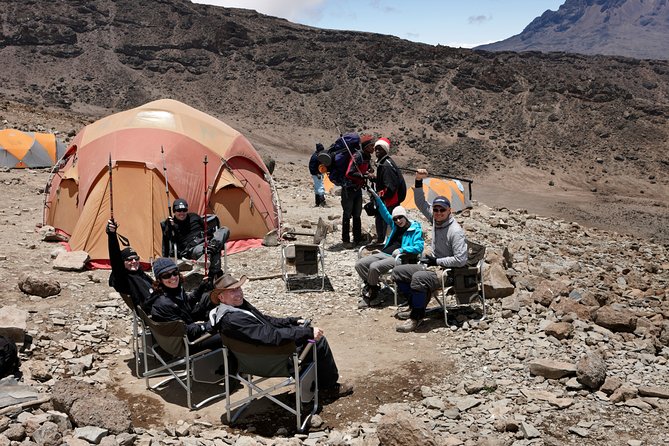
The next stage continues the up-and-down pattern across the northern slopes. It covers about 6.8 kilometers and takes around four hours, though the short distance can fool you. Repeated climbs and descents leave you more tired than the numbers suggest.
Kibo remains to your right, while Mawenzi grows larger ahead. Mawenzi is jagged and sharply defined, a strong contrast to Kibo’s broad summit dome. The saddle between the two peaks becomes clearer on the following stage.
You finish at Third Cave Camp. The walk is shorter than some earlier days, but you should still conserve energy. This is not the time to spend the afternoon wandering far from camp. Eat, drink, check your summit clothing, and rest.
One good feature of this route is its changing views. Even when the trail feels repetitive underfoot, the relationship between Kibo and Mawenzi keeps shifting. The mountain is doing some of the sightseeing work for you.
Day 6: Third Cave Camp to School Hut
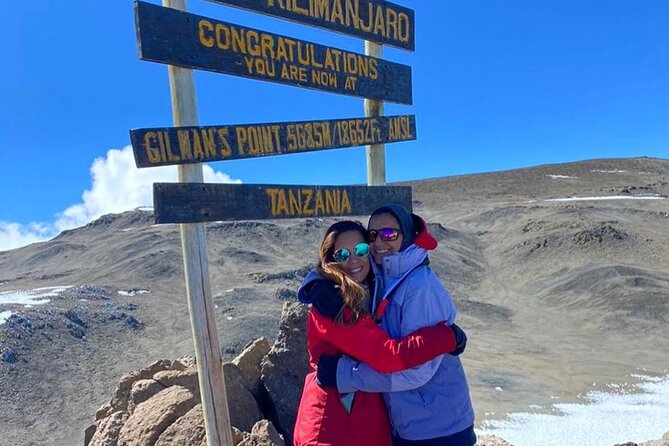
Day six is short in distance but important in preparation. From Third Cave Camp at about 3,936 meters, you climb to School Hut at 4,717 meters. The distance is approximately 4.9 kilometers, with 781 meters of elevation gain.
You should reach camp in the early or middle part of the afternoon. That early arrival is valuable because the summit departure comes around 11 p.m. to midnight. You need to eat, organize your gear, and sleep as soon as possible.
School Hut is the highest overnight camp on the route. At this height, sleep may be poor and appetite may fade. Try to eat anyway. You will need the energy for the long night ahead, and the staff wake you for meals rather than leaving you to manage everything yourself.
Pack your summit essentials before lying down. Keep warm clothing, water, headlamp, gloves, and any personal items you need close at hand. A midnight start is hard enough without rummaging through bags in the cold.
Day 7: Hans Meyer Cave, Gilman’s Point, and Uhuru Peak
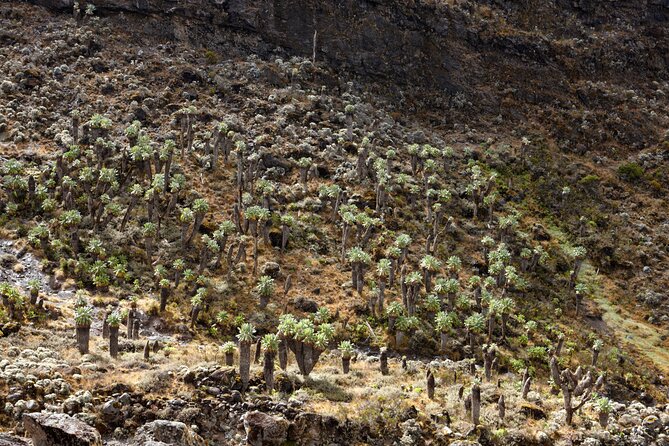
Summit night begins around midnight. From School Hut, you climb toward Hans Meyer Cave at about 5,259 meters, then continue to Gilman’s Point on the crater rim at approximately 5,719 meters. From there, you go on toward Uhuru Peak at 5,895 meters.
This is the hardest part of the climb. The final 550 meters are especially demanding, and the combination of darkness, cold, thin air, and steep ground can test your commitment. Progress may feel slow. That is normal. Keep your steps small and listen closely to your guide.
Gilman’s Point is one of Kilimanjaro’s three summit points. Reaching it means you have gained the crater rim, and you receive a certificate for making it there. Uhuru Peak is farther along the rim and marks the highest point in Africa.
At Uhuru, your guide will decide how long you should stay based on your condition, timing, and weather. The summit stop is listed as about 30 minutes, but conditions matter more than a fixed schedule. Take your photographs, enjoy the moment, and do not linger if your guide tells you to move.
The descent to Barafu Camp covers about 4.86 kilometers and is much quicker than the climb up. You stop for breakfast and about an hour of rest, then continue down another 6.6 kilometers toward the lower camp. This is a punishingly long day, around 15 hours in total.
The mountain does not become easy after the summit. Your legs are tired, and the descent can be rough on knees and toes. Reaching the top is the headline, but getting down safely is part of the achievement.
Day 8: Mweka Trail and the return to Arusha
After breakfast, you descend through the Mweka Trail to Mweka Gate at about 1,633 meters. The final walking section takes around four hours.
At the gate, climbers who reached Uhuru Peak or Gilman’s Point collect their certificates. A car then takes you back to your hotel and onward to Arusha. After a week on the mountain, a hot shower and a cold drink will feel like luxury.
The final day is not glamorous, but it is efficient. You finish on a different route from the one used to climb, which completes the Northern Circuit’s full-mountain design.
Food, camp comfort, and the private format
The listed meals are eight lunches, seven breakfasts, and seven dinners. That covers the main food schedule for the trek, though you should ask Duma Explorer for a full menu and details about snacks, drinking water, and special diets before booking.
Food quality matters more than many first-time climbers expect. At altitude, you may not feel hungry, yet you need fuel. One past climb specifically praised the food and noted that vegetarian meals were accommodated. A birthday cake was also prepared on one trip, a cheerful touch in a place where most luxuries disappear.
The tent system also helps. Staff erect your tent before you arrive at camp, and they wake you for meals on the summit night. Guides, porters, and camp staff are part of the experience, not background extras. Past trips singled out Emmanuel, Imran, Humphrey, and Colman as guides, along with Dickson and Mariam among the support crew.
Duma Explorer has also been a partner of the Kilimanjaro Porters Assistance Project and was one of its founding partners. That detail matters if you want your booking to support more responsible porter treatment. Still, ask what porter welfare standards apply to your specific departure and what tipping guidance you will receive.
Because this is a private climb, only your group participates. That can make a big difference. You may be able to keep a pace that suits your group, communicate more easily with your guides, and manage rest stops without fitting into a large party’s schedule.
Is $2,999 a fair price?
At $2,999 per person, this is not a bargain trek. It is an eight-day private climb with a long route, meals, camp support, and a pickup option. The extra days and lower-traffic approach add real value for anyone who wants a better acclimatization schedule and more varied scenery.
The price is harder to judge without a complete inclusion list. The information supplied lists breakfast, lunch, and dinner, while the trip also describes camp setup, guides, porters, and transport from the gate area. Before paying, ask if park fees, airport or hotel transfers, sleeping equipment, drinking water, emergency support, and guide and porter tips are included.
The value is strongest if you are already committed to Kilimanjaro and want a private, slower-paced route. It is weaker if you are comparing only the number of days or looking for a simple hiking holiday. This is a major mountain trip, and the cost should be weighed against crew support, route quality, and safety planning rather than against a basic per-day figure.
Who should choose this climb?
I would recommend it to a fit adult who wants time for altitude adjustment and prefers quieter trails. It suits people who care about seeing the mountain from several sides, not just standing at the summit.
It is also a good match for couples, families, or friends who want their own group and have enough time for an eight-day schedule. Past departures included a couple, families traveling together, and small private groups.
You should think twice if you dislike camping, struggle with long uphill days, or want a relaxed holiday. The itinerary requires strong physical fitness. The summit night alone lasts about 15 hours from departure through the extended descent.
Small details that make planning easier
Pickup is offered, and the listed start time is 9:00 a.m. Confirmation is received at booking, and the experience uses a mobile ticket. Since the route starts with a drive from Arusha toward Londorossi Gate, allow flexibility on the first morning.
Free cancellation is available if you cancel at least 24 hours before the local start time. Cancellations or changes made inside that window are not accepted for a refund.
Pack for a wide range of conditions, but use the exact gear list supplied by Duma Explorer. The trek moves from forest to high, exposed ground, and temperatures and comfort needs will change sharply as you climb.
Should you book the Northern Circuit climb?
Book this trip if you want the quietest major route, a full circuit of Kilimanjaro, and eight days to give altitude a fair chance. The route is scenic, varied, and better paced than a short summit program.
I would not book it simply because the price promises a summit. No operator can remove the effects of altitude, and the final night is genuinely hard. Book it because you are ready for a demanding mountain journey, you value a private crew, and you want to see Kibo from more than one angle. Before confirming, get the full price breakdown and gear requirements in writing. That small step will tell you if the $2,999 package fits your plans.
FAQ
Where does the Kilimanjaro climb begin?
The climb begins with a drive to Londorossi Gate in Tanzania, followed by registration and a further drive to the Lemosho starting point.
How long is the climb?
The experience lasts approximately eight days.
What time does the experience start?
The listed start time is 9:00 a.m.
Is this a private tour?
Yes. Only your group participates in the activity.
Which route does the climb use?
The route begins in the west, follows the Northern Circuit around the mountain, reaches the summit from the east, and descends via the Mweka route on the south.
How high is Uhuru Peak?
Uhuru Peak is 5,895 meters above sea level.
What is Gilman’s Point?
Gilman’s Point is one of Kilimanjaro’s three summits, located on the crater rim at approximately 5,719 meters. Climbers who reach it receive a certificate.
Where do you sleep before the summit attempt?
You spend the sixth night at School Hut, located at about 4,717 meters. The summit departure begins around 11 p.m. to midnight.
What meals are included?
The listed meals include eight lunches, seven breakfasts, and seven dinners.
Can you cancel for a full refund?
Yes, if you cancel at least 24 hours before the experience’s local start time. Cancellations or changes made less than 24 hours before the start are not accepted for a refund.
More Northern Circuit Safaris
- 5 Days Best of Tanzania Luxury Safari Northern Circuit
★ 5.0 · 174 reviews - 5 Days Safari Northern Circuit of Tanzania
★ 5.0 · 37 reviews - From Arusha: 7 Days Classic Safari Central Northern Circuit
★ 5.0 · 21 reviews - Northern-circuit Adventure
★ 4.5 · 15 reviews
Just added around Arusha
- 5 Days Safari Tarangire, Serengeti, and Ngorongoro Crater★ 5.0 · 3 reviews
- Love lives in Africa★ 5.0 · 3 reviews
- 5 Days of Safari, Culture & Hot Springs – Tour from Arusha★ 5.0 · 3 reviews
- Arusha National Park Safari by Jeep★ 4.5 · 3 reviews
- 5Days Family _Group Tour Lodging Mid-Range in the Jungle★ 5.0 · 3 reviews
- Serengeti & Ngorongoro 3 Days Budget Safari★ 5.0 · 3 reviews
- 2 Days Tarangire and Ngorongoro Crater Tour★ 5.0 · 3 reviews
- 7 Days PRIVATE Best of Tanzania Safari *Departing everyday*★ 5.0 · 3 reviews
Northern Circuit Safaris, compared.
5 Days Best of Tanzania Luxury Safari Northern Circuit
Read our review →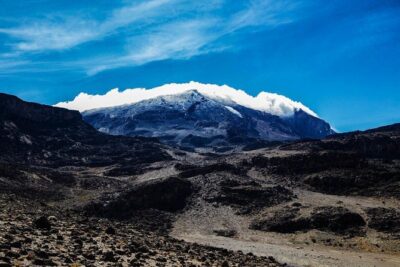
Kilimanjaro climb, Northern Circuit route (8-day)
Read our review →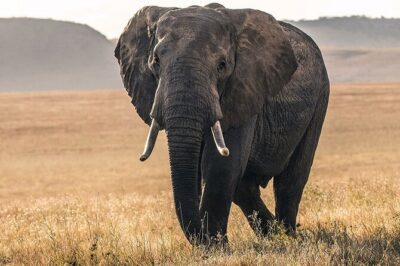
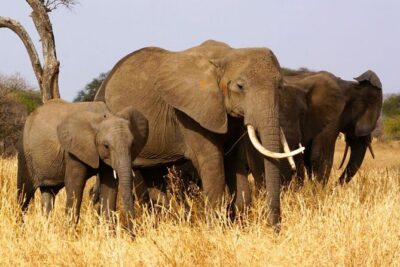
Private 4-Days Northern Circuit National Parks in Tanzania
Read our review →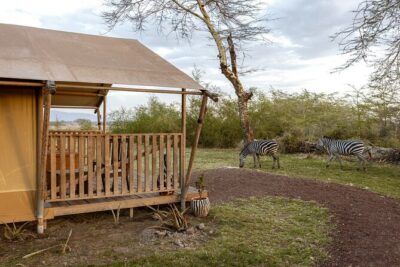
7 Days Classic Safari Central Northern Circuit
Read our review →
5 Days Best of Northern Circuit Budget Safari in Tanzania
Read our review →
6 Days Luxury Northern Circuit Safari – A Glimpse of Tanzania Adventure
Read our review →Browse the lists this tour appears in