
Reviewed · KILIMANJARO TREKS
7-Day Machame Kilimanjaro Summit Tour from Arusha
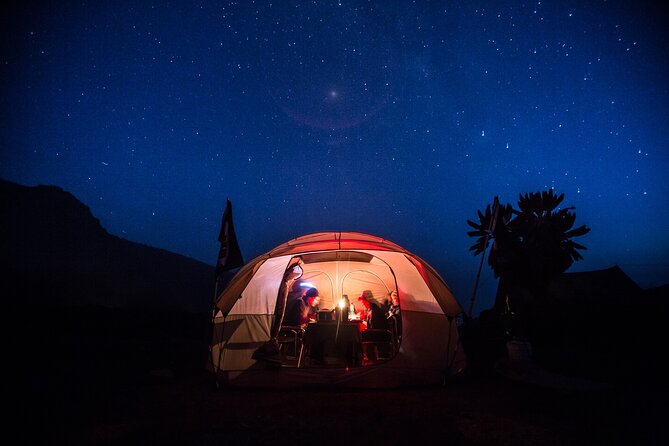
Africa rewards slow steps. This seven-day Kilimanjaro climb follows the Machame route from Arusha through rainforest, moorland, alpine desert, and the high summit zone. I like the small maximum group of six, which should give your guide time to watch your pace and condition. I also like that park fees, camping equipment, meals, and hotel transfers are included.
The main caution is simple: this is not a gentle mountain walk. Machame is tougher than the Marangu route, and summit night demands a midnight start, steep scree, cold, and a long descent. You need strong fitness, patience, and a willingness to walk slowly when your body wants to hurry.
In This Review
- The Kilimanjaro details that matter most
- What you are buying for $2,695
- Day 1: From Machame Gate into the rainforest
- Day 2: Heather, rocky ridges, and Shira Camp
- Day 3: Lava Tower high point and the descent to Barranco
- Day 4: The Barranco Wall and Karanga Valley
- Day 5: Kosovo Camp and the last preparation
- Day 6: Stella Point, Uhuru Peak, and the long descent
- Day 7: Mweka Gate and the first hot shower
- Camping, meals, equipment, and daily comfort
- Who should choose this Machame climb?
- Booking, cancellation, and practical checks
- FAQ
- Where does the Kilimanjaro tour start?
- What time does the tour begin?
- How many people can join the group?
- Is this route suitable for beginners?
- What is included in the price?
- How high is Uhuru Peak?
- How long is the summit day?
- Should you book this Kilimanjaro tour?
The Kilimanjaro details that matter most
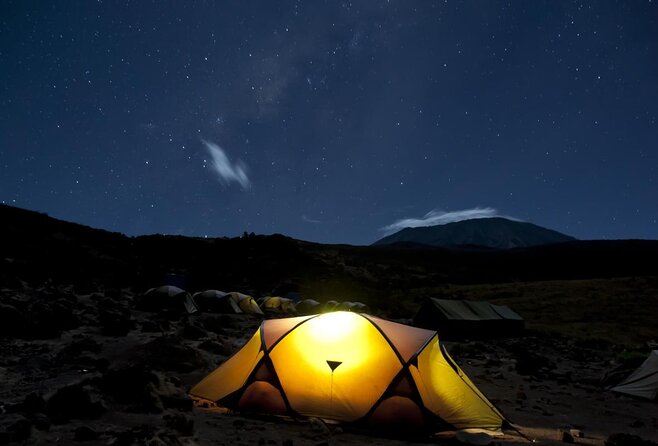
- The route crosses several climate zones, from muddy rainforest to the high arctic summit area.
- The Lava Tower day helps with acclimatization, taking you high before descending to Barranco Camp.
- The summit attempt starts around midnight, with roughly 6 to 7 hours to Stella Point and another hour to Uhuru Peak.
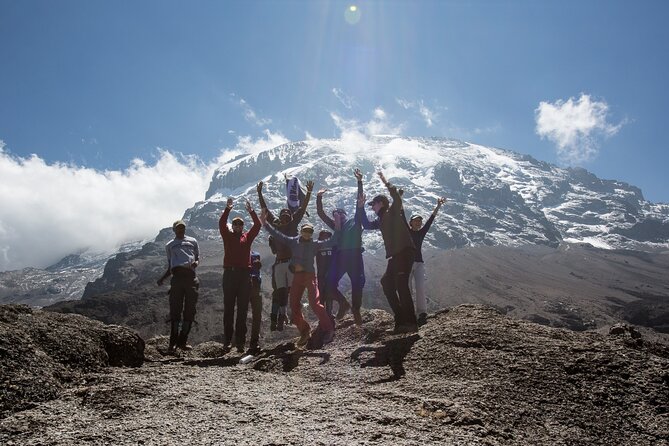
- A group of no more than six climbers allows closer attention from the guide team.
- Camping, meals, park fees, and equipment are included, reducing the number of arrangements you must make yourself.
- Guides receive strong praise for care and safety, with Herment Mosha, Godlove, Florian, Steve, James, Daniel, Manny, and Singer among the names highlighted in past trip feedback.
What you are buying for $2,695
The price is $2,695 per person. That is a serious sum, but Kilimanjaro is not a simple guided day hike. Your fee covers the mountain permits, camping setup, meals, crew support, and round-trip transport from your Arusha hotel. Those items carry real value because arranging them separately would be awkward and risky.
You also receive pickup and return transportation, with the listed meeting point at Summit Lodge in the Sakina Raskazone area of Arusha. The stated start time is 8:00 a.m. The trip ends back at the meeting point after your return from the mountain.
The small group size matters more than it might on an ordinary sightseeing tour. On Kilimanjaro, guides must watch how you walk, eat, sleep, and respond to altitude. A six-person maximum does not guarantee a private climb, but it should make conversation and personal attention easier.
One cost question remains: hotel quality. Past feedback praises the arrangements but includes a clear complaint that the pre- and post-climb hotels did not feel as good as expected for the price. Ask exactly which hotels are included before you pay, especially if comfort before and after the climb matters to you.
More Kilimanjaro routes and climbs:
- 8-Day Small-group Lemosho Kilimanjaro Summit Trekking
★ 5.0 · 186 reviews - Mountain Kilimanjaro Day Hike
★ 5.0 · 102 reviews - Private Full Day Hiking Experience to Marangu Route
★ 5.0 · 61 reviews
Day 1: From Machame Gate into the rainforest
Your first morning begins with breakfast, a meeting with the guide and mountain crew, and a transfer from Arusha to Machame Gate. The drive gets you from town life to the trailhead, where entry procedures and park formalities begin.
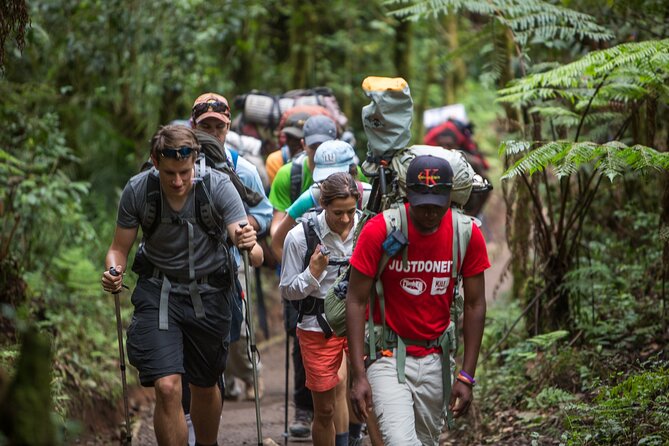
The walk rises through Kilimanjaro’s rainforest zone toward Machame Camp. The trail winds along a ridge, and lower sections can become muddy and slippery. This is where gaiters and trekking poles earn their place in your pack.
The listed distance is about 6.8 miles, or 11 kilometers, with roughly 5 to 7 hours of walking. The day’s elevation is approximately 9,400 feet, or 2,865 meters.
Do not treat this as a warm-up stroll. You are carrying your own day essentials, walking uphill for hours, and beginning the altitude change. The reward is the forest itself, with a dramatic shift from ordinary roads and fields into a cooler, more enclosed mountain world.
At Machame Camp, your tent should already be arranged, and dinner follows. That setup is one of the practical strengths of a supported climb. You walk, eat, and rest rather than spend the evening sorting out camp.
Day 2: Heather, rocky ridges, and Shira Camp
After breakfast, the route leaves the thick forest and enters moorland. Heather covers the slopes, and the trail crosses a small valley before climbing a steep, rocky ridge.
This section feels more open than Day 1. You gain wider views, but you also lose the shelter of the trees. The path turns west toward a dry river gorge before reaching Shira Camp at about 12,500 feet, or 3,810 meters.
The distance is short by mountain standards, only about 2.8 miles, or 5 kilometers, but the walk takes around 4 to 6 hours because the trail keeps rising. Kilimanjaro often teaches you that distance tells only half the story. A few miles at altitude can take much longer than a flat walk at home.
Shira is a useful early test of how your body handles height. Eat even if your appetite fades, drink regularly, and tell the guide about headaches, nausea, unusual fatigue, or trouble sleeping. The point is not to prove toughness. The point is to give the crew information early enough to respond.
Day 3: Lava Tower high point and the descent to Barranco
Day 3 is the key acclimatization day. The route climbs toward Lava Tower, listed at about 15,000 feet, or 4,500 meters, before dropping to Barranco Camp at roughly 13,000 feet, or 3,962 meters.
This climb high, sleep lower pattern is valuable. You spend time at a greater height without making that higher camp your overnight base. It is also one of the hardest days to understand on paper because the schedule includes different distance and time figures, including a longer version of the Shira to Barranco section. Expect a full mountain day, not a quick transfer between camps.
Lava Tower gives the route a stark, high-altitude feel. After resting there, the path descends through a giant Senecio forest, with a waterfall before Barranco Camp. The camp sits beneath the Barranco Wall, and clouds can drift up from the valley.
This day may feel strange. You work hard to gain height, then lose some of it. That is not wasted effort. It is built into the route’s altitude plan, and it gives your body a better chance to adjust before summit night.
A few more trips of this kind worth comparing:
- Tanzania Classic – 7 Days
★ 5.0 · 1,151 reviews - 7-Day Premium Luxury Tanzania Safari All-Inclusive
★ 5.0 · 426 reviews - Group Safari 7 Days in Tanzania’s Main Parks
★ 5.0 · 240 reviews - 7 Days Tanganyika Wilderness Safari
★ 5.0 · 159 reviews
Day 4: The Barranco Wall and Karanga Valley
Day 4 begins with the Barranco Wall, one of the most memorable sections of the Machame route. It is steep and adventurous, but it is described as non-technical hiking rather than climbing that requires ropes or specialist mountaineering skills.
You move into the high alpine and arctic zones, where the surroundings become more exposed and severe. The route then follows the South Circuit toward Karanga Valley and Karanga Camp, at about 13,100 feet, or 3,992 meters.
The day covers only around 2.2 miles, or 3.2 kilometers, and takes about 4 to 5 hours. That short distance is deceptive. The Barranco Wall requires careful foot placement, steady movement, and attention to the guide. You will likely appreciate the small group here, since a guide can help keep the pace calm rather than turning the climb into a scramble.
Karanga is another acclimatization stop. You are still working toward the summit, but the schedule gives you time to rest and prepare for the higher camps. This is a good day to check your clothing, socks, water system, headlamp, and summit-night layers.
Day 5: Kosovo Camp and the last preparation
The route continues at a slow pace toward Kosovo Camp, around 16,000 feet, or 4,876 meters. You pass Barafu Camp and get views toward Kibo and Mawenzi, the two major volcanic peaks associated with Kilimanjaro.
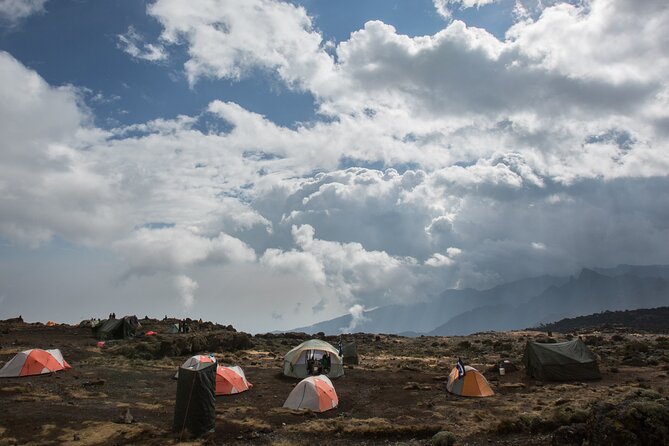
This is not a day for speed. The route covers about 2.6 miles, or 3.5 kilometers, over 5 to 6 hours. Kosovo Camp sits on an exposed ridge, so you should become familiar with the area before dark.
The main purpose is preparation. Rest, eat, organize your summit clothing, and listen carefully to the guide’s instructions. The midnight start comes soon, and small delays matter when you are trying to reach Stella Point near sunrise.
The exposed camp may feel basic. That is part of the tradeoff. You are high on the mountain, close to the summit route, and far from comfort. If you expect a cozy base camp, reset that expectation now.
Day 6: Stella Point, Uhuru Peak, and the long descent
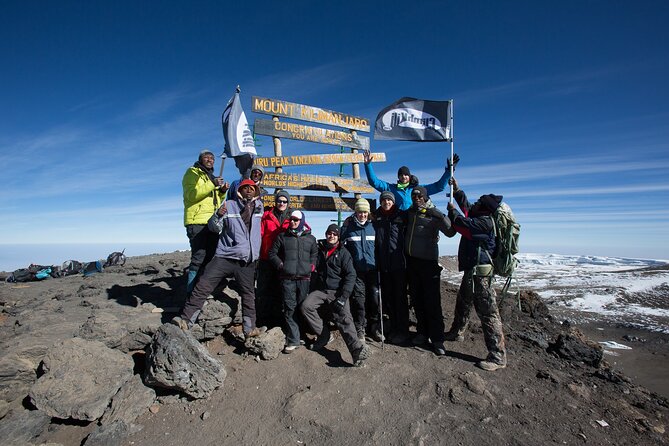
Summit night begins around midnight. The stated summit elevation is 19,340 feet, or 5,895 meters. You climb through the darkness toward Stella Point on the crater rim, a section that can take 6 to 7 hours.
The route is steep and covered in heavy scree. Each step can slide backward, which makes the climb mentally tiring as well as physically demanding. The guide’s pace matters here. The best speed is usually the one you can sustain, not the one that looks impressive during the first hour.
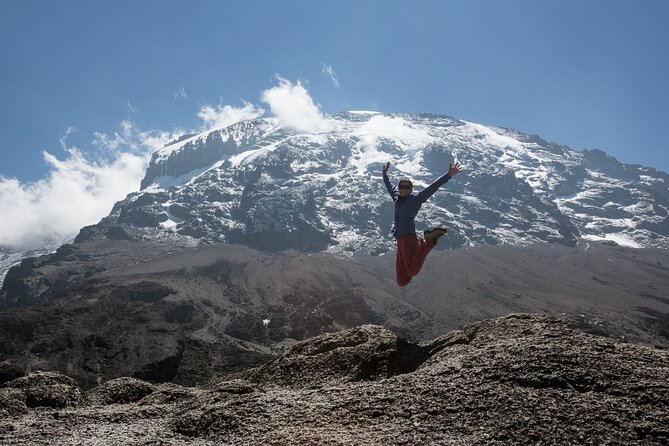
At Stella Point, you reach the crater rim and see Uhuru Peak ahead. The final stretch is listed as about one hour. If you reach the summit, you are standing at the highest point in Africa, with the crater and glaciers nearby.
The numbers deserve careful reading. The day lists about 13 miles, or 21 kilometers, including approximately 5 kilometers of ascent and 12 kilometers of descent. The schedule gives 6 to 7 hours for the ascent and 4 to 6 hours for the descent, while the total day is listed at about 11 hours. In real terms, this is the most demanding day of the trip, and exact timing will depend on the group, weather, pace, and time spent at the summit.
After Uhuru Peak, you descend to Mweka Camp for dinner and celebration. The descent is not an easy afterthought. Your legs are tired, and loose ground can punish your knees. Trekking poles are especially useful here.
The strong praise for the guiding team focuses on safety, encouragement, and close monitoring. Names such as Herment Mosha, Florian, Godlove, and Steve appear often in positive accounts of the company’s support. That matters most on this day, when a calm guide and an attentive crew can help you make sensible choices.
Day 7: Mweka Gate and the first hot shower
The final morning takes you from Mweka Camp to Mweka Gate. The walk is about 6.4 miles, or 10.3 kilometers, and takes approximately 3 to 4 hours. You are back in a lower zone at roughly 5,400 feet, or 1,645 meters.
At the gate, the company vehicle transfers you back to your Arusha hotel. The listed ending point is the original meeting point, so the return is straightforward.
This last walk can feel longer than expected. Your body has just completed the summit push, and the excitement has worn off. Still, the gradual descent gives you time to absorb what you have done before the practical pleasures of a shower, clean clothes, and a proper bed.
Camping, meals, equipment, and daily comfort
Camping equipment, park fees, and meals are included. That is a major convenience, since you do not need to arrange camp or carry a full kitchen for seven days.
The information does not specify the exact tent style, menu, sleeping bag arrangement, or toilet facilities. Ask those questions before departure. You should also confirm what personal equipment is supplied and what you must bring yourself.
The crew structure is a real part of the experience. Guides, porters, and cooks support the climb, and past feedback gives special credit to the wider team rather than only to the lead guide. You should budget a suitable tip separately if tipping is customary for your booking and crew, but the supplied details do not state a required amount.
Who should choose this Machame climb?
I would choose this trip if you already enjoy long day hikes and want a structured route with strong camp support. It suits people who prefer a small group, want the major costs bundled together, and value guides who pay close attention to health and pace.
I would think twice if you are new to strenuous hiking, dislike camping, or want a relaxed holiday with flexible mornings. Machame is harder than the Marangu route, and summit day is a genuine endurance test.
The seven-day schedule offers more time than a rushed climb, including the Lava Tower acclimatization day and several nights that help you adjust. Still, no itinerary can remove altitude risk. Your fitness helps, but it does not guarantee a summit.
Booking, cancellation, and practical checks
Confirmation is sent within 48 hours of booking, subject to availability. Free cancellation is available if you cancel at least 24 hours before the local start time. Changes or cancellations inside that period are not accepted for a refund.
Before booking, confirm the hotel name, gear list, meal plan, airport or hotel transfer details, and the exact guide-to-climber ratio for your departure. The listed maximum is six climbers, but the total mountain crew will be larger.
FAQ
Where does the Kilimanjaro tour start?
The listed meeting point is Summit Lodge in Sakina Raskazone, Arusha, Tanzania. Pickup from your Arusha hotel is offered.
What time does the tour begin?
The stated start time is 8:00 a.m. on the first day.
How many people can join the group?
The activity has a maximum of six travelers.
Is this route suitable for beginners?
The route is described as suitable for people with previous hiking experience. It is tougher than the Marangu route, and strong physical fitness is required.
What is included in the price?
The price includes round-trip hotel transfers, camping equipment, park fees, and meals.
How high is Uhuru Peak?
The summit is listed at 19,340 feet, or 5,895 meters.
How long is the summit day?
The summit day begins around midnight. The listed walking time is about 6 to 7 hours for the ascent and 4 to 6 hours for the descent, with the day totaling about 13 miles, or 21 kilometers.
Should you book this Kilimanjaro tour?
Book it if you want a guided, small-group Machame climb with the major mountain costs handled for you. The strongest reason to choose it is the combination of a seven-day schedule, an acclimatization day at Lava Tower, and a crew praised for care, encouragement, and safety.
Do not book it simply because the summit looks good in photographs. You need previous hiking experience, strong fitness, and comfort with basic camping. If that sounds like your kind of challenge, this is a well-supported way to take on Kilimanjaro, with enough structure to let you focus on the trail and the mountain ahead.
Just added around Arusha
- 5 Days Safari Tarangire, Serengeti, and Ngorongoro Crater★ 5.0 · 3 reviews
- Love lives in Africa★ 5.0 · 3 reviews
- 5 Days of Safari, Culture & Hot Springs – Tour from Arusha★ 5.0 · 3 reviews
- Arusha National Park Safari by Jeep★ 4.5 · 3 reviews
- 5Days Family _Group Tour Lodging Mid-Range in the Jungle★ 5.0 · 3 reviews
- Serengeti & Ngorongoro 3 Days Budget Safari★ 5.0 · 3 reviews
- 2 Days Tarangire and Ngorongoro Crater Tour★ 5.0 · 3 reviews
- 7 Days PRIVATE Best of Tanzania Safari *Departing everyday*★ 5.0 · 3 reviews
Kilimanjaro Treks, compared.



8-Day Small-group Lemosho Kilimanjaro Summit Trekking
Read our review →


Climbing Kilimanjaro through 7 days Machame Route
Read our review →

Browse the lists this tour appears in