
Reviewed · STONE TOWN TOURS
Zanzibar: Stone Town Tour with Slave Market Ticket
Stone Town tells Zanzibar’s story in tight streets. I like the way this tour joins the former Slave Market with everyday places such as Darajani Market, and I also like having a guide explain the mix of Swahili, Arab, Indian, European, and Portuguese influences. The main concern is reliability: the overall score is 3.5 out of 5, with reports of one very late guide, one poorly organized tour, and one experience lasting only an hour.
At $29 per person, the tour is a fair buy if it runs for the full three hours and your guide is strong. Mbwana received especially warm praise for his history explanations, answers, shopping help, and restaurant suggestions. The ticket to the former Slave Market and bottled water are included, but the Freddie Mercury Museum costs about $8 extra, and hotel transfers outside Stone Town need to be arranged separately.
In This Review
- Key points to know before booking
- Starting at the Former Slave Market
- Darajani Market and Everyday Zanzibar
- Narrow Streets and Zanzibar Coffee House
- Sultan’s Palace and the Story of the Sultans
- Forodhani Gardens and Zanzibar Pizza
- House of Wonders and the Old Portuguese Fort
- Freddie Mercury’s Childhood Home
- Notre Dame of Zanzibar and the Last Shopping Walk
- What $29 Buys You
- Languages, Timing, and Who Will Enjoy It
- My Booking Advice
- FAQ
- How long does the Stone Town tour last?
- What is included in the $29 price?
- Is the Freddie Mercury Museum ticket included?
- Does the tour visit Freddie Mercury’s childhood home?
- Is hotel pickup included?
- Which languages are available?
- How much walking is involved?
- Does the tour include food or coffee?
- Can I cancel for a full refund?
- Can I reserve now and pay later?
Key points to know before booking
- The former Slave Market ticket is included: You begin at the site now occupied by the Anglican Cathedral, with a guided look at Zanzibar’s role in the East African slave trade.
- It is a serious walking tour: Expect three hours on foot through narrow Stone Town lanes, markets, historic buildings, and shopping streets.
- Mbwana is a guide worth requesting: His clear history talks and practical help earned particularly strong praise.
- Darajani Market is the most sensory stop: Fruit, vegetables, fish, meat, spices, and local foods bring daily Zanzibar life close.
- Freddie Mercury’s museum costs extra: You can see his childhood home from outside, but museum admission is not part of the $29 price.
- The tour needs dependable timing: Some bookings went well, but one guide arrived 40 minutes late and another tour was reported to last only an hour.
Starting at the Former Slave Market
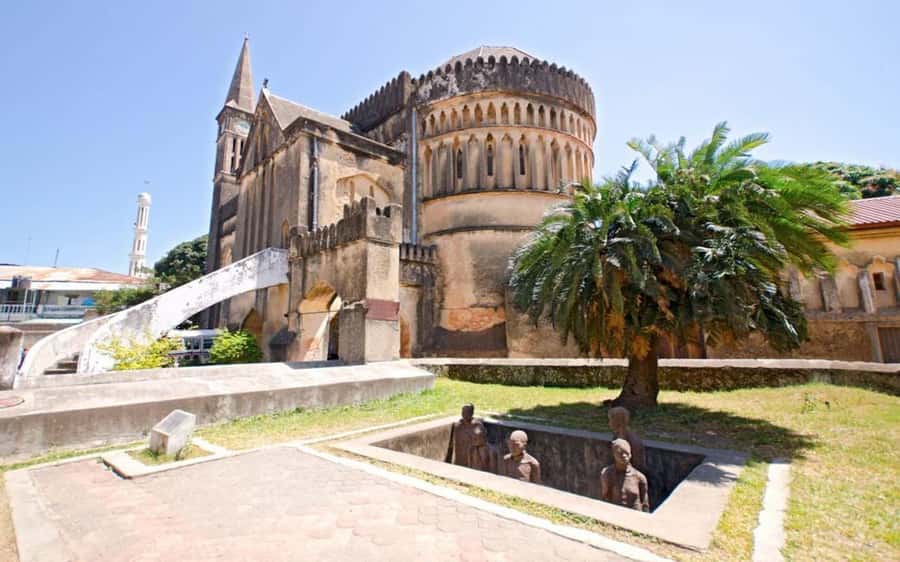
Beginning at the former East Africa Slave Market gives the walk weight from the first minutes. The site is now home to the Anglican Cathedral, linking the painful story of human trafficking with the later work of missionaries.
Your guide explains the trade routes that connected East Africa with the wider Indian Ocean world. You also hear about Dr. David Livingstone and other missionaries who worked against the slave trade. This is not a light sightseeing stop, but it helps you understand why Stone Town became so important and why its attractive old buildings cannot be separated from difficult subjects.
The admission ticket is included, which matters because one booking reported having to pay the $5 entrance fee again. I would confirm at the start that your guide has the ticket covered and keep any receipt if you pay for something unexpectedly.
Allow yourself time to listen here. The tour covers many places in three hours, so the quality of the explanation matters more than the number of photographs you take. Mbwana was praised for giving clear background on Zanzibar and Stone Town, making him a particularly good fit if you want more than a quick name-and-photo stop.
More ways to see Stone Town:
- Zanzibar: Stone Town, Spice Tour, Prison Island with Lunch
★ 4.4 · 1,219 reviews - Zanzibar: Prison Island, Stone Town, & Spice Farm Tour
★ 4.5 · 579 reviews - Zanzibar; Prison Island, Nakupenda, StoneTown Tour with BBQ
★ 4.3 · 457 reviews
Darajani Market and Everyday Zanzibar
From the church, the route moves to Darajani Market, a city market established in 1904. This is one of the best parts of the walk because it shifts the focus from grand buildings to food, trade, and ordinary city life.
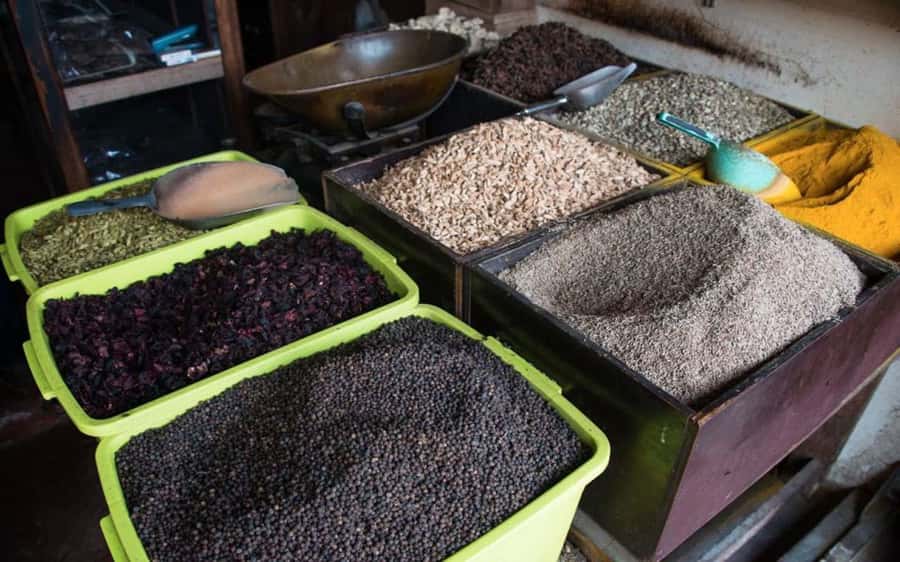
You find displays of fresh fruit, vegetables, meat, fish, and spices. The market is a place to take photographs, sample local food, and watch people shop for daily meals. You might find the atmosphere intense, especially around fish and meat stalls, but that is part of the point. A market tour should show a working market, not a polished food hall.
I like this stop for its connection to Swahili culture. Swahili life grew from African roots and long contact with Arab, Indian, Persian, and European traders. At Darajani, those connections feel practical rather than academic, expressed through ingredients, commerce, and the movement of people.
Ask before photographing individuals or market activity. You can also ask your guide about spices and local dishes, though the tour does not promise a full tasting session. Personal purchases are not included, so carry money for anything you decide to buy.
Narrow Streets and Zanzibar Coffee House
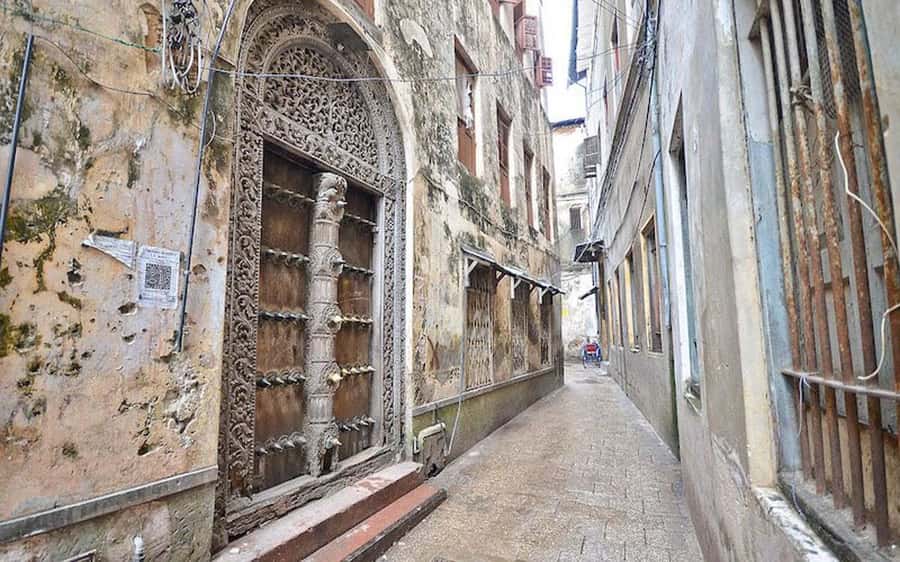
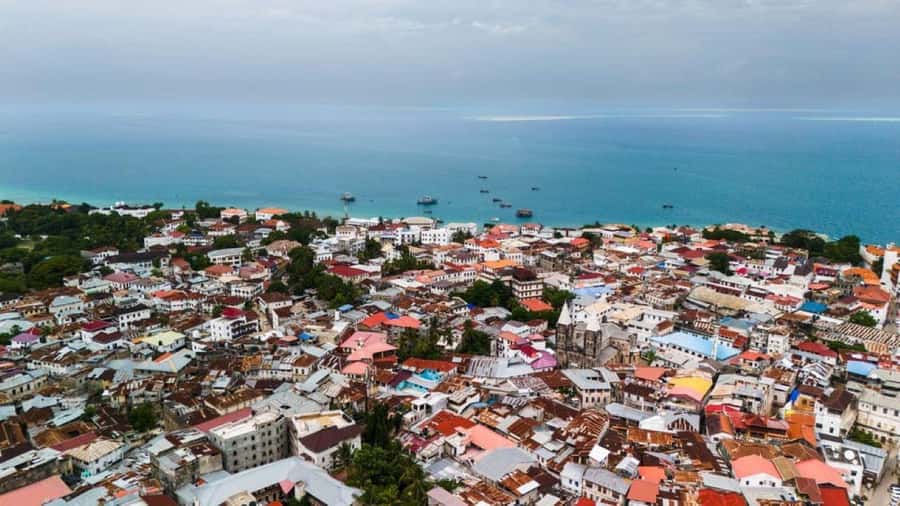
Stone Town is best understood on foot. Its narrow lanes turn the walk into a sequence of small discoveries: carved doors, balconies, old walls, shops, and glimpses of courtyards.
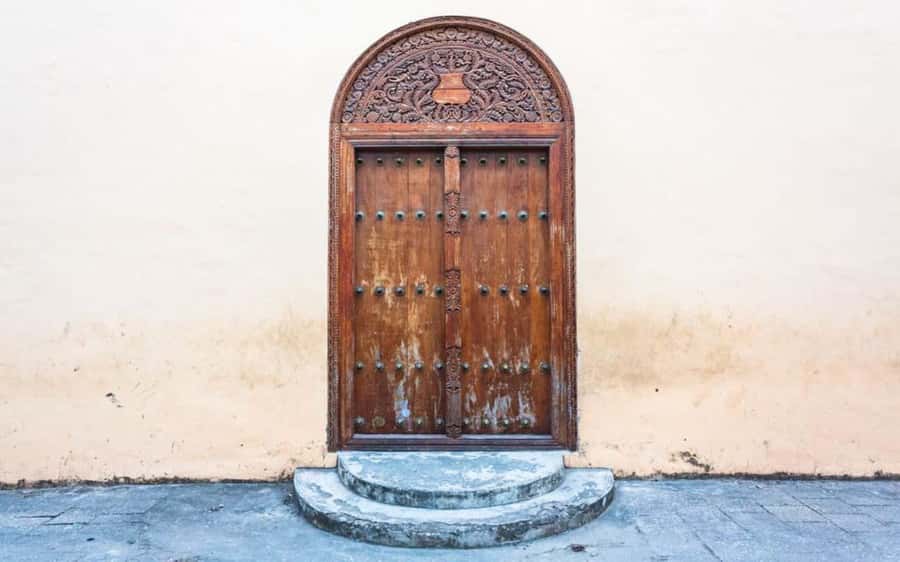
The architecture shows several cultures sharing one compact city. Zanzibar doors are especially striking, with detailed carving and large proportions that signal the wealth and identity of former owners. Balconies and façades add Arabian and Indian touches, while the older fortifications and church buildings point to Portuguese and European periods.
The tight streets are also the main physical challenge. This is a three-hour walking tour, not a drive between monuments. Wear comfortable shoes, expect frequent pauses, and plan for a warm, active outing. Hotel pickup is included from a Stone Town hotel, but the return is described as going back to your pickup point or hotel. A transfer from another area is available only on request.
The route includes a stop at Zanzibar Coffee House, where you can pause for a cup of local coffee. This gives your feet a break and adds a small taste of island life without turning the tour into a formal food experience. Coffee is mentioned as a pause point, but the supplied price does not state that the drink is included, so budget for it as a personal expense.
Sultan’s Palace and the Story of the Sultans
The Sultan’s Palace offers a change of scale after the lanes and market. Here, the focus turns to the sultanate and the ruling families who shaped Zanzibar’s political and commercial life.
The palace helps explain why Stone Town contains such grand buildings in such a compact area. You see how royal power, trade, and overseas connections shaped the city. The visit is valuable even if you are not interested in palace interiors because it gives the surrounding streets a clearer political setting.
The tour description does not specify a separate admission charge for the Sultan’s Palace. I would ask your guide which locations you are entering and which ones you are viewing from outside. That small check helps prevent confusion over additional fees.
A few more trips of this kind worth comparing:
- Stone Town Guided Tour: Culture, Slave Market & Spice Market
★ 4.8 · 44 reviews - Spice , Prison Island ,Stone Town and Slave Market Site Tour
★ 5.0 · 24 reviews - Stone Town Private Tour with Slave Market Tickets
★ 5.0 · 13 reviews - Zanzibar:Stone town Street food market walking tour,transfer
★ 4.5 · 9 reviews
Forodhani Gardens and Zanzibar Pizza
Forodhani Gardens is presented as a popular evening gathering place, known for seafood, barbecues, sugarcane juice, and Zanzibar pizza. It is a useful stop for understanding how Stone Town becomes a social food center after the day cools.
If your tour runs during the day, you may see the setting without the full evening food scene. The description points to the gardens and their well-known dishes, but it does not promise a meal or tasting. Treat this as an introduction to local food rather than a prepaid food tour.
Zanzibar pizza is a local specialty worth asking about. Despite the name, it is not simply an Italian-style slice. The tour information does not specify the filling or preparation, so let your guide explain what is available when you visit. Sugarcane juice and grilled seafood are also named, but any purchase comes from your own pocket.
This is a good place to ask for a restaurant recommendation for later. Mbwana was praised for suggesting restaurants and activities for the rest of the island visit, which adds real value to a short orientation tour.
House of Wonders and the Old Portuguese Fort
The House of Wonders, also called Beit el-Ajaib, is one of Stone Town’s signature buildings. It is described as the tallest building in East Africa and is tied to ceremonial life, public display, and stories that have given it a strong place in the city’s imagination.
You should check the condition of the building on the day of your visit, since the tour information does not promise interior access or a particular exhibition. Even from outside, the stop helps you understand the ambition of the sultanate and the importance of Stone Town as a regional center.
The Old Fort brings the story back to defense and conflict. It once served as a battleground and later had other uses, including a primitive railway station. That changing role makes it more interesting than a single-purpose monument.
The fort is also a useful reference point for the city. From here, the tour moves toward the Freddie Mercury site and the Catholic cathedral, showing how military, royal, religious, and popular culture sit close together in Stone Town.
Freddie Mercury’s Childhood Home
The Freddie Mercury stop adds a modern, personal note to a tour otherwise focused on older buildings and colonial-era history. You visit the home associated with the Queen frontman’s childhood and have a chance to take photographs nearby.
The Freddie Mercury Museum is not included. Admission is approximately $8 per person, so you need to decide if the extra visit fits your interests and budget. The $29 tour price covers the former Slave Market ticket, guided service, and bottled water, but not this museum entry.
If you are a serious fan, ask before the walk whether the museum visit can fit comfortably into the three-hour schedule. The listed tour includes many other sites, and the description does not say how much time is reserved for the museum. You may prefer to see the exterior with the group and return independently if you want a longer visit.
Notre Dame of Zanzibar and the Last Shopping Walk
The French Catholic Cathedral, Notre Dame of Zanzibar, is another reminder that Stone Town’s identity is not limited to one culture or faith. Its sculpted design gives the route a strong visual finish after the market, palace, fort, and royal buildings.
The cathedral sits in the heart of Stone Town, making it easy to connect with the surrounding lanes. Your guide can place the building within the city’s larger mix of religious and cultural influences. The supplied information does not state whether the tour includes interior access, so listen for instructions about appropriate clothing and visiting rules.
The final part is a slower walk through souvenir shops and boutiques. This is useful if you want to buy something before returning to your hotel, and a guide can help with local shopping. Mbwana was specifically praised for helping with a purchase, a practical advantage when you are unsure about prices or what to choose.
Keep your shopping expectations realistic. Personal expenses are not included, and the tour does not promise a set amount of free time. If you want a long, relaxed shopping session, you may need to return to the lanes after the guided walk.
What $29 Buys You
The price makes sense when you consider what is included. For $29, you get a three-hour guided walk, the former Slave Market admission, bottled water, and pickup from a Stone Town hotel. You also get context that can be hard to gather while walking alone, especially at the cathedral, palace, fort, and former slave market.
The value depends heavily on the guide and the full length of the outing. A strong guide can connect the sites into one story, answer questions, help with shopping, and suggest places to eat later. A weak or late guide can turn the same route into a hurried walk with little explanation.
The record is mixed. Mbwana received high praise for his explanations and help, while one booking reported an English-speaking guide who was difficult to understand and a tour that lacked structure. Another booking reported a guide arriving 40 minutes late after the original guide failed to appear. A separate booking reported only one hour of touring and an extra charge for the Slave Market ticket.
Those problems do not make the tour a bad buy, but they do make confirmation important. At pickup, confirm the guide’s name, the approximate route, the included ticket, and the expected three-hour duration. If the tour starts late, ask how the lost time will be handled.
Languages, Timing, and Who Will Enjoy It
Live guiding is offered in English, French, German, and Italian. The guide’s actual ability matters more than the language list, so state your preferred language when booking and confirm it at the start.
The tour is best for you if you want a quick orientation to Stone Town rather than a slow museum day. It suits first-time visitors, people interested in Swahili culture and the slave trade, and anyone who wants help finding the market, palace, fort, cathedral, and shopping lanes.
It may be less suitable if you dislike walking, want a private and highly detailed architectural tour, or hope to spend a long time inside every museum. The route covers many landmarks, so some stops may be brief or viewed from outside.
The tour offers free cancellation up to 24 hours before departure and a reserve-now, pay-later option. Those terms are useful if your Zanzibar plans may shift, but they do not solve the main concern: making sure the guide arrives and delivers the advertised duration.
My Booking Advice
I would book this tour if I wanted a low-cost first look at Stone Town and could confirm the guide and timing in advance. The included Slave Market ticket, market visit, coffee pause, and broad mix of historic sites give you a useful three-hour framework.
I would be especially interested in requesting Mbwana, whose help with history, questions, shopping, restaurants, and later activities adds the kind of local guidance that makes a short city walk worthwhile. I would also carry cash for coffee, food, souvenirs, and the roughly $8 Freddie Mercury Museum admission.
Book it for orientation, context, and a well-chosen route. Skip it if you need guaranteed museum time, a slow pace, or perfect operational consistency. At this price, the tour can be good value, but your experience will depend on the guide showing up prepared and giving you the full three hours.
FAQ
How long does the Stone Town tour last?
The advertised duration is three hours. It is a walking tour through Stone Town’s narrow streets, markets, historic buildings, and shopping areas.
What is included in the $29 price?
The price includes guided tour services, bottled water, and admission to the Former East Africa Slave Market.
Is the Freddie Mercury Museum ticket included?
No. Admission to the Freddie Mercury Museum costs approximately $8 per person and is not included.
Does the tour visit Freddie Mercury’s childhood home?
Yes. The route includes a visit to the home associated with Freddie Mercury, where you can learn about his history and take photographs nearby.
Is hotel pickup included?
Pickup is included from a Stone Town hotel. A hotel transfer can be arranged on request, but the supplied information does not state that transfers from every part of Zanzibar are included.
Which languages are available?
Live tour guides are listed for English, French, German, and Italian.
How much walking is involved?
The experience involves a three-hour walking tour through Stone Town’s narrow streets and shopping areas.
Does the tour include food or coffee?
No food or coffee is listed as included. The route visits Zanzibar Coffee House and points such as Forodhani Gardens, where you can buy coffee, seafood, sugarcane juice, or Zanzibar pizza as personal expenses.
Can I cancel for a full refund?
Yes. You can cancel up to 24 hours in advance for a full refund.
Can I reserve now and pay later?
Yes. The activity offers a reserve-now, pay-later option, so you do not need to pay at the time of booking.
More Shopping Tours
- Zanzibar: Stone Town Heritage & Slave Market Tour
★ 4.4 · 7 reviews - Stone Town walking tour, shopping, history and culture
★ 5.0 · 6 reviews - Arusha: Traditional Tanzania Cooking Class & Food Market Tour
★ 5.0 · 34 reviews - Arusha: Traditional Tanzania Cooking class& Food Market Tour
★ 4.9 · 12 reviews
Just added around Zanzibar
- Spice Tour of Zanzibar★ 4.5 · 3 reviews
- Zanzibar : Stone Town Tour,history without transport★ 4.8 · 3 reviews
- Zanzibar: 3-Day Northern Safari with Flights Included★ 4.8 · 3 reviews
- Jozani Forest, kuza cave and mtende beach★ 5.0 · 3 reviews
- Starfish Beach; The Rock; Kuza Cave; Paje Beach; Salaam Cave Tour★ 4.5 · 3 reviews
- ZANZIBAR: Stone Town and Jozani Forest Guided Tour★ 4.0 · 3 reviews
- Zanzibar: African Sunset Boat Party in Zanzibar Music, Views★ 4.3 · 3 reviews
- Joazani forest & Spice farm with lunch★ 5.0 · 3 reviews
Stone Town Tours, compared.

Stone Town, Spice Tour, Prison Island with Lunch
Read our review →

Prison Island, Nakupenda, StoneTown Tour with BBQ
Read our review →Stone Town, Spice tour & Prison Island with Lunch
Read our review →

3 Hours Private Stone Town walking Tour with Guide
Read our review →
Full-Day Private Stone Town +Spice Farm and Prison Island Tour
Read our review →
Stone Town Historical Cultural Walking Guided Tour
Read our review →Browse the lists this tour appears in