
Reviewed · COOKING CLASSES
Arusha: Traditional Tanzania Cooking Class & Food Market Tour
Come hungry, leave with a new recipe.
This four-hour Arusha experience connects market shopping with a local cooking lesson, so you see where ingredients come from before they reach your plate. I like the chance to choose two Tanzanian dishes to prepare, and I also like that the food you cook becomes your meal. The main consideration is comfort: the cooking takes place in a basic local kitchen, not a polished studio.
The $42 price includes hotel pickup and drop-off near Arusha’s city center, market ingredients, local transport, the cooking class, and lunch or dinner. Drinks cost extra, and the listed maximum group size of 200 means you should confirm the expected group size if a personal class matters to you.
In This Review
- Key points to know before booking
- Starting at Arusha’s central food market
- Choosing two Tanzanian dishes
- Riding from the market to Sanawari
- Cooking in a real local kitchen
- Eating what you have prepared
- The guides make a real difference
- What the $42 price really covers
- Timing, weather, and practical comfort
- Who will enjoy this Arusha food experience?
- Should you book the cooking class?
- FAQ
- How long does the Arusha cooking class and market tour last?
- What is included in the $42 price?
- Are drinks included?
- Do I choose the dishes I cook?
- Where does the cooking class take place?
- Can I cancel for a full refund?
Key points to know before booking
- The tour begins at Arusha’s central food market: Expect about 30 minutes among fresh produce, meat, and other everyday foods sold to local families.
- You choose two dishes to cook: The guide explains the available local foods, then helps you select two options for the lesson.
- The cooking happens in Sanawari: The setting uses a traditional local kitchen with charcoal burners, a gas burner, low tables, tubs, and basic cooking tools.
- You use ordinary local transport: The journey from the market to Sanawari can include a popular public transport option used by local people.
- Your cooked meal is included: You eat what you prepare for lunch or dinner, with takeaway food also available as an option.
- The guide shapes the experience: Guides named in feedback include Israel, Jack, James, Lameck, Magret, and Bariki, with praise focused on their friendliness, explanations, and enthusiasm.
Starting at Arusha’s central food market
Pickup is offered from hotels near Arusha’s city center. After meeting your guide, you head to the central food market, where the tour begins with roughly 30 minutes of walking and explanation.
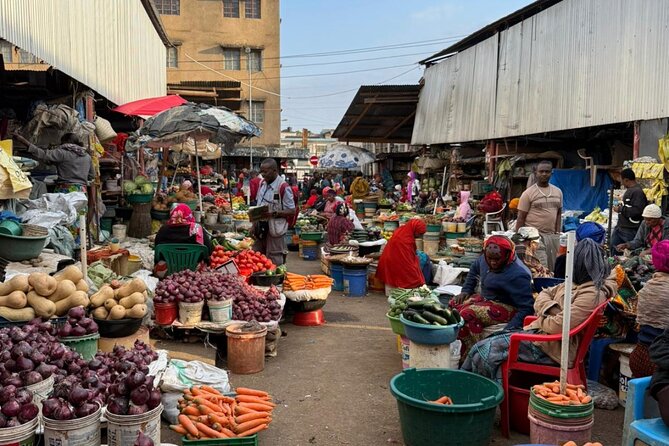
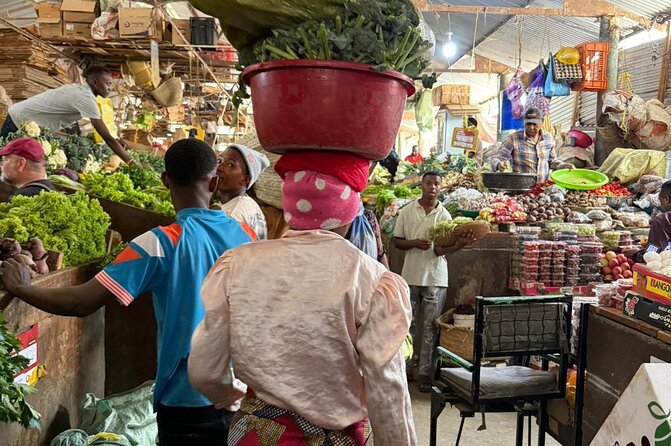
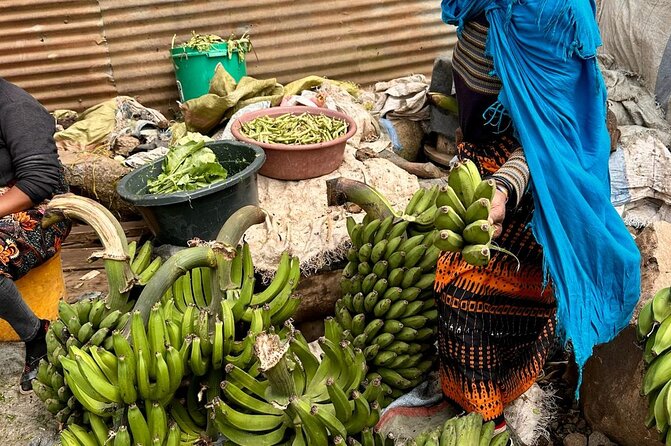
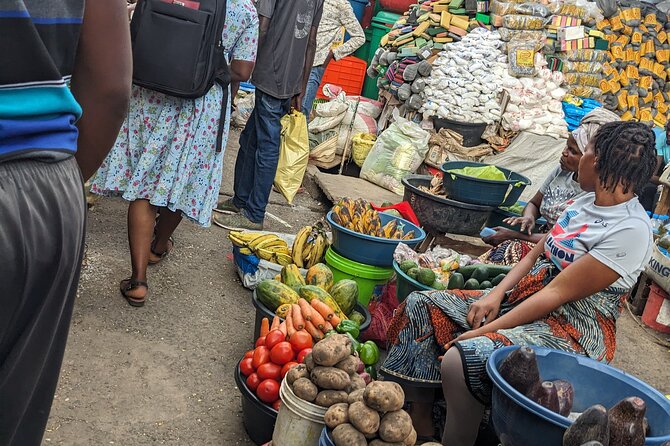
This is not a quick photo stop. The point is to see the ingredients in their everyday setting. You might find fresh produce, meat, and other local foods arranged for ordinary shopping. Much of what is sold is produced in Tanzania, although some items come from outside the country.
I like this first stop because it gives the cooking lesson a clear sense of place. Instead of beginning with a recipe on a printed card, you first see the raw materials and learn how local people use them. Your guide can explain different foods, their traditional uses, and how they fit into Tanzanian cooking.
The market also gives you a short look at daily life in Arusha. The people are described as friendly and welcoming, but remember that this is a working market rather than a display built only for sightseeing. Keep your belongings close, ask before taking photographs, and follow your guide through the busier sections.
Thirty minutes is enough for an introduction, but it is not a long market tour. If you want an extended food-shopping experience, this activity may feel brief. Its strength is the connection between the market and the cooking class that follows.
More cooking classes:
- NGO Lifted Strong – Traditional Tanzanian Cooking Class
★ 5.0 · 39 reviews - Cooking and Sewing & Jewelry Workshops in Arusha
★ 5.0 · 14 reviews - Arusha: Traditional Tanzania Cooking class& Food Market Tour
★ 4.9 · 12 reviews
Choosing two Tanzanian dishes
After your guide explains the available foods, you select two dishes for the cooking lesson. The exact choices depend on what is offered on the day, so do not book this expecting a fixed menu.
The feedback specifically refers to dishes such as ugali and ndizi. Ugali is a staple made from maize flour, while ndizi refers to bananas used in cooking. The experience may include other local dishes, but the supplied details do not promise a particular pair.
That flexibility is useful. You can ask questions about unfamiliar foods and choose according to your interests. If you are curious about staples rather than restaurant-style dishes, ask your guide which options are most common in local homes.
There is also a practical advantage to selecting two dishes. You are not simply watching a chef prepare a meal. You take part in decisions about what gets bought, prepared, and cooked. That makes the final plate easier to understand and recreate later, at least in spirit.
Ingredients are purchased fresh from the market and included in the price. Spices from the market are not included, however, so budget separately if you want to buy spices to take home.
Riding from the market to Sanawari
The cooking class takes place in Sanawari, an area some distance from the central market. The journey is part of the cultural lesson, since the experience uses ordinary local transport that people commonly use for shopping and getting around.
This is a small but meaningful feature. Private vehicles keep tours simple, but local transport gives you a closer look at how movement through Arusha works in daily life. It also means you should expect a less controlled ride than you would get in a private car.
The exact transport arrangement may depend on the group and the day. The tour description says you get the chance to use a popular public transport option, not that every section of the transfer follows one fixed method. If you need private transportation, ask before booking.
Pickup and return are included near the city center. That takes away one of the usual hassles of arranging transport across Arusha, though hotels farther out may not fall within the stated pickup area.
Cooking in a real local kitchen
Sanawari is where the experience becomes hands-on. You meet the local chef and prepare the two dishes you selected earlier.
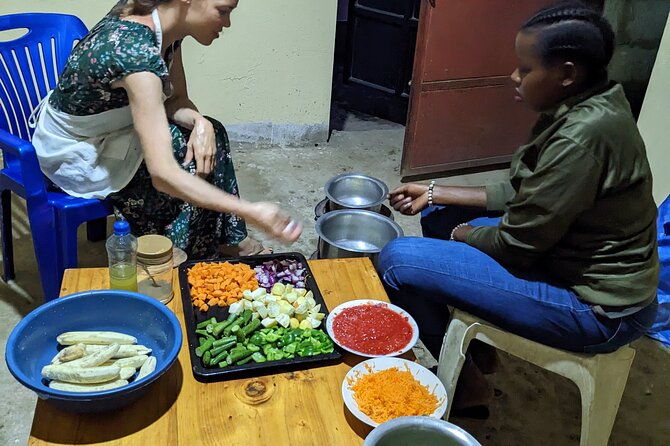
Set your expectations correctly. This is not a modern teaching kitchen with high counters, polished sinks, or a row of professional burners. One detailed account describes a low table, two charcoal burners, a gas burner, large tubs, and basic implements.
That setup is central to the experience, not a flaw to be hidden. You get a practical look at how food may be prepared in a home-style Tanzanian setting. You also see the extra work involved when cooking without the equipment many visitors use at home.
The tradeoff is comfort and convenience. A low work surface may be awkward for some people, and charcoal cooking can feel slower and less tidy than a familiar kitchen. The available details do not specify accessibility arrangements, so anyone with mobility concerns should ask the operator before paying.
The class lasts about one and a half hours according to the itinerary. That should give you time to prepare and cook, but the full activity lasts approximately four hours once pickup, market time, transport, eating, and return are included.
The best part is the shared work. You are not only handed a plate at the end. You help turn market ingredients into food, then sit down to eat what you made. That simple arc gives the activity more meaning than a standard restaurant meal.
A few more trips of this kind worth comparing:
- Organic Coffee Tour and Local Food Experience in Arusha
★ 5.0 · 29 reviews - Street Food and Community Walking Tour
★ 5.0 · 12 reviews - Waterfalls, Coffee, Hotsprings, Food Cuisine, & Serval Wildlife
★ 5.0 · 6 reviews - Mama Aziz Food Court
★ 5.0 · 3 reviews
Eating what you have prepared
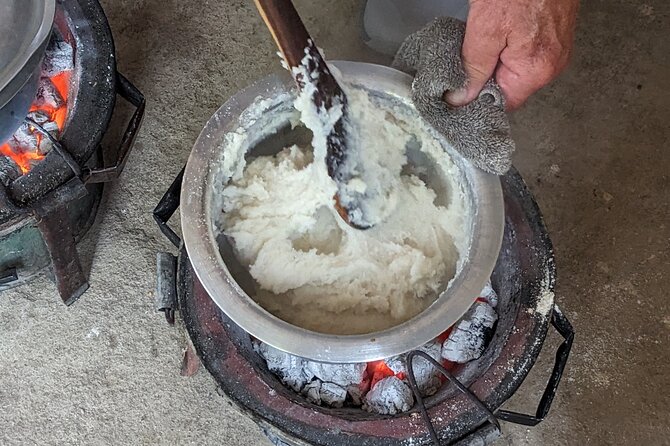
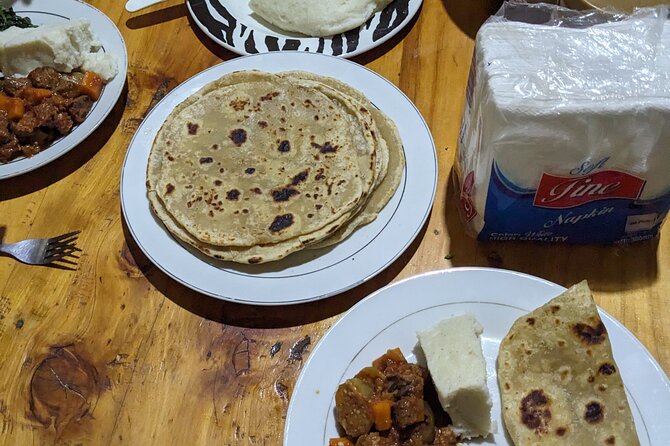
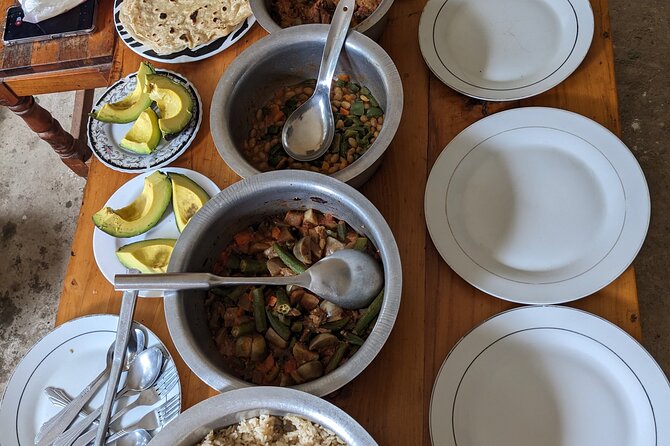
Lunch or dinner after the cooking lesson is included. The meal is made from the dishes prepared during the class, so the reward arrives at the end of the work.
Go with an open mind and a reasonable appetite. Some people choose this experience precisely because it offers an everyday taste of Tanzania rather than a highly adapted menu. You may find familiar ingredients used in ways that feel new to you.
The activity also gives you the chance to ask questions while the food is being prepared. Ask about the role of each ingredient, how the dish is normally served, and which part of the cooking method matters most. A good guide can connect the meal to local customs and daily routines.
Takeaway food may be available after the meal. The details do not say exactly what quantity or packaging is offered, so treat it as an option rather than a guaranteed extra meal.
Drinks are not included. You can buy water, soda, or beer along the way, so bring some Tanzanian shillings or another accepted payment method for refreshments. Tips are optional and should reflect your satisfaction with the guide and chef.
The guides make a real difference
The strongest praise centers on the people leading the experience. Names connected with the activity include Israel, Jack, James, Lameck, Magret, and Bariki.
Israel is repeatedly described as positive, enthusiastic, and good at explaining Tanzanian food and culture. Magret received praise for holding attention during the class, while Jack was described as warm and able to explain local life. Lameck was noted for a polite welcome and kindness, and James was praised for his interest in sharing his heritage.
The guide is important here because the market itself can be difficult to read without context. A pile of unfamiliar produce is interesting for a few seconds. An explanation of how it is cooked, who buys it, and why it matters turns that pile into part of a food culture.
Guide assignments can change, so you should not book on the assumption that one named guide will lead your tour. Still, the range of positive comments suggests that the human side of the activity is one of its main strengths.
What the $42 price really covers
At $42 per person, this is a good value if you want several linked activities in one outing. The fee covers a guided market visit, ingredients, a cooking class, a meal, local transport, and hotel pickup and drop-off near central Arusha.
A market visit alone would cost less, and a restaurant meal might also be cheaper. But those alternatives do not include the instruction, shopping decisions, and preparation that give this activity its appeal.
The value is strongest for people who want cultural contact and participation. If you only want to taste Tanzanian food, a meal at a local restaurant may be simpler. If you want to understand how the meal begins at the market and reaches the cooking pot, $42 is easier to justify.
The potential weakness is group size. The stated maximum is 200 people, which is unusually high for a cooking activity. That may be only a booking-capacity figure rather than the size of every class, but you should ask how many people are scheduled for your date. A large group could reduce your time with the chef and make a small kitchen feel crowded.
The tour is booked, on average, 23 days ahead. That suggests planning early, especially if you are visiting Arusha during a busy safari season.
Timing, weather, and practical comfort
The experience lasts about four hours, but the stated stop times add up to two hours. The remaining time covers pickup, travel, shopping, preparation, eating, and return. Do not schedule a tight afternoon transfer immediately afterward.
The activity requires good weather. If poor weather causes cancellation, you are offered another date or a full refund. For your own protection, cancel at least 24 hours before the start time if your plans change. Cancellations made less than 24 hours ahead are not refunded, and changes inside that period are not accepted.
Wear clothing that can handle food preparation and a little mess. The setting is basic, and charcoal burners are part of the cooking equipment. The supplied information does not mention a dress code or special equipment, so ask the provider if you have concerns about heat, smoke, or mobility.
Most people can participate, and the area is near public transportation. Still, participation is not the same as a fully accessible cooking studio. The low table and basic kitchen arrangement deserve attention if standing, bending, or working near the floor is difficult for you.
Who will enjoy this Arusha food experience?
I would choose this activity if you want to meet local people, see an everyday market, and learn through doing. It suits food and culture enthusiasts, curious first-time visitors, and anyone who prefers a practical activity to another sightseeing stop.
It is also a strong choice for people with a free half-day before or after a safari. The pickup, meal, and return transfer make it fairly easy to fit into an Arusha stay.
Families and mixed-age groups may enjoy choosing dishes together, although the low kitchen setup may not suit everyone. Ask about the group size if you want close instruction or are booking for a private-feeling occasion.
I would think twice if you expect a polished culinary school, a fixed menu, or a long market tour. You should also reconsider if you dislike public transport, basic facilities, or flexible plans. The value comes from the local setting, and that setting includes inconvenience.
Should you book the cooking class?
Book it if you want to see Arusha through food rather than simply eat in it. The market, local transport, Sanawari kitchen, and shared meal form a useful chain from ingredient to plate.
The most important step is to confirm the expected group size and ask which dishes are likely to be available. Also plan for extra money for drinks and possible spices, and leave enough time around the four-hour activity.
For a $42 half-day, this offers a lot: a guided market visit, fresh ingredients, instruction, a meal, and hotel transport. It is not polished, and that is precisely why it can feel more connected to daily life. If you can accept a low table and a charcoal burner, this is one of the better ways to make your time in Arusha active, social, and delicious.
FAQ
How long does the Arusha cooking class and market tour last?
The experience lasts approximately four hours. The central market visit takes about 30 minutes, and the cooking lesson in Sanawari takes about one hour and 30 minutes, with the remaining time used for transport, pickup, eating, and return.
What is included in the $42 price?
The price includes a guided central food market tour, the cooking lesson, market ingredients, local transport, a meal after cooking, and pickup and drop-off at hotels near Arusha’s city center.
Are drinks included?
No. Water, soda, and beer are not included, but you can buy drinks along the way.
Do I choose the dishes I cook?
Yes. After the guide explains the local foods available, you select two dishes for the cooking lesson. The exact choices depend on what is available on the day.
Where does the cooking class take place?
The lesson takes place in Sanawari, after the market visit in central Arusha. The class uses a traditional local kitchen with basic tools, low tables, charcoal burners, and a gas burner.
Can I cancel for a full refund?
Yes, if you cancel at least 24 hours before the experience start time. Cancellations or changes made less than 24 hours in advance are not refunded or accepted. If poor weather causes the operator to cancel, you are offered a different date or a full refund.
More Markets
- 24 Hours in Arusha—Arusha Museum, Cultural Heritage, Maasai Market, Shanga
★ 5.0 · 4 reviews - Stone Town Guided Tour: Culture, Slave Market & Spice Market
★ 4.8 · 44 reviews - Spice , Prison Island ,Stone Town and Slave Market Site Tour
★ 5.0 · 24 reviews - Stone Town Private Tour with Slave Market Tickets
★ 5.0 · 13 reviews
More Food Tours
- Stonetown: Food Markets and Street Food Walking Tour
★ 4.7 · 151 reviews - Authentic Street Food Tours in Stone Town, Zanzibar
★ 5.0 · 46 reviews - Stone Town Evening Walk Tour With Visit Food Markets
★ 4.5 · 28 reviews - Stone Town Foodie Walk
★ 5.0 · 14 reviews
Just added around Arusha
- 5 Days Safari Tarangire, Serengeti, and Ngorongoro Crater★ 5.0 · 3 reviews
- Love lives in Africa★ 5.0 · 3 reviews
- 5 Days of Safari, Culture & Hot Springs – Tour from Arusha★ 5.0 · 3 reviews
- Arusha National Park Safari by Jeep★ 4.5 · 3 reviews
- 5Days Family _Group Tour Lodging Mid-Range in the Jungle★ 5.0 · 3 reviews
- Serengeti & Ngorongoro 3 Days Budget Safari★ 5.0 · 3 reviews
- 2 Days Tarangire and Ngorongoro Crater Tour★ 5.0 · 3 reviews
- 7 Days PRIVATE Best of Tanzania Safari *Departing everyday*★ 5.0 · 3 reviews
Cooking Classes, compared.
Half-Day Kuza Cave Swimming Adventure and Cooking Class
Read our review →
NGO Lifted Strong – Traditional Tanzanian Cooking Class
Read our review →

Cooking and Sewing & Jewelry Workshops in Arusha
Read our review →
Mnemba Dolphin Tour, Clear Kayak, Cooking Class, Horse Riding
Read our review →
Traditional Zanzibar Cooking Class including Spice Tour
Read our review →Browse the lists this tour appears in