
Reviewed · 3-DAY EXPERIENCES
3 Days Tanzania Safari
Three parks, three very different safari moods. This three-day trip packs Lake Manyara, Ngorongoro Crater, and Tarangire National Park into a short Northern Circuit safari, with pickup and drop-off service, a professional guide, and a maximum group size of six.
I like the variety here. You get Lake Manyara’s soda lake and tree-climbing lions, the dramatic wildlife-filled Ngorongoro Crater, and Tarangire’s baobabs and large elephant herds. I also like the small group size and the practical safari vehicles described by past guests, including pop-up roofs, coolers, phone chargers, and Wi-Fi.
The catch is simple: three parks in three days is a brisk schedule. You will spend a good deal of time on the road, and each park receives only a short visit. If you want a slow safari with long dawn and late-afternoon game drives, choose a longer trip.
In This Review
- Key points before you book
- Starting at 7:30 a.m. in Arusha
- Day 1: Lake Manyara’s lake, escarpment, and tree-climbing lions
- Day 2: Descending 600 meters into Ngorongoro Crater
- Day 3: Tarangire’s elephants, river, and baobabs
- What the guide and vehicle add to the experience
- Is $780 per person good value?
- Who should choose this safari?
- Timing, cancellation, and practical planning
- Should you book this three-day safari?
- FAQ
- Where does the safari start?
- What time does the safari start?
- How long is the safari?
- Which national parks are included?
- Is airport pickup available?
- How many people can join the safari?
- Is a guide included?
- What happens on the first day?
- How deep is the descent into Ngorongoro Crater?
- Can I cancel for a full refund?
Key points before you book
- Lake Manyara begins the wildlife story: Expect a park shaped by the Great Rift Valley escarpment, a shallow soda lake, flamingos, elephants, and the chance of seeing lions in trees.
- Ngorongoro Crater is the main event: A 600-meter descent leads to a concentrated wildlife area with an estimated 30,000 animals and a chance of seeing black rhino.
- Tarangire brings elephants and baobabs: The Tarangire River and southern swamps draw animals, especially in the dry season.
- The group is capped at six people: That matters in a safari vehicle, where window space and roof views make a real difference.
- Guides are a major strength: Guides named in the supplied experiences include Saluu, Salu, Jonas, Jeff, Joseph, Mike, and Supat.
- The price is $780 per person: For three national parks with guiding, transport, airport transfers, and accommodation arrangements included in the overall safari service, this can be good value, but confirm exactly what is covered before paying.
Starting at 7:30 a.m. in Arusha
The safari starts at Mvuli Hotel on Kundayo Road in Arusha at 7:30 a.m. You meet the guide and driver there for a short briefing before setting out toward Lake Manyara National Park.
That early start is useful. The first day includes the drive to the park, arrival for lunch at the lodge, and an afternoon game drive. You should treat the morning as a travel period rather than expecting a full day among animals.
Airport pickup and drop-off are offered, and several accounts describe airport transfers as part of a well-organized service. Still, confirm your exact pickup location in advance. The listed meeting point is Mvuli Hotel, while airport transfers may require separate timing arrangements.
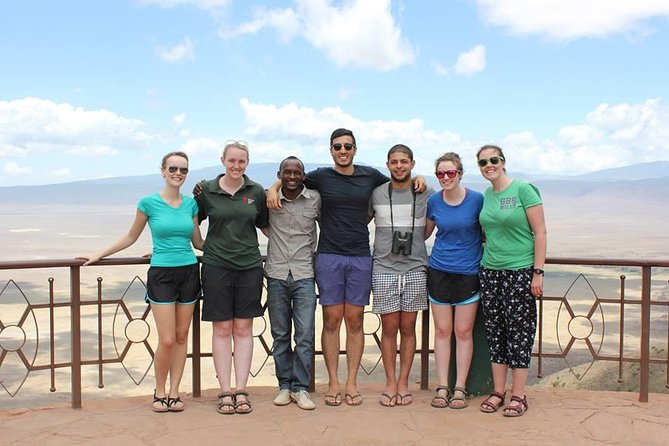
The maximum group size is six. That is not the same as a private safari, but it is small enough to make the vehicle less crowded than a large group tour. It also gives you a better chance at a clear view through the pop-up roof.
More Safaris in Arusha
- Serengeti Balloon Safari and authentic bush breakfast
★ 5.0 · 2,480 reviews - Balloon Safari & Bush Breakfast in Serengeti – Miracle Experience
★ 5.0 · 1,646 reviews - 4 Days Group Camping Safari
★ 5.0 · 1,101 reviews
Day 1: Lake Manyara’s lake, escarpment, and tree-climbing lions
After the briefing in Arusha, you travel to Lake Manyara National Park. The plan is to arrive at the lodge in time for lunch, then head into the park for an afternoon game drive.
Lake Manyara is a fine first stop because it offers a quick change of scenery. The park sits below the western escarpment of the Great Rift Valley, with the shallow soda lake covering about two-thirds of the park. The views are a big part of the appeal. You are not simply driving through open grassland. The setting combines water, woodland, cliffs, and wildlife in a relatively compact area.
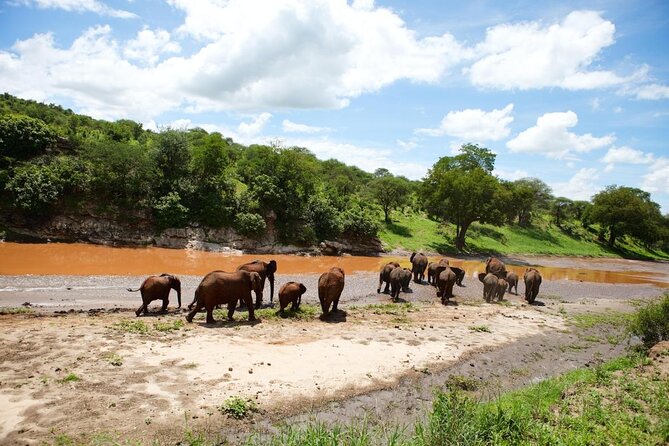
The park is known for one of Tanzania’s largest concentrations of elephants. That makes it a worthwhile stop even if you have already seen animals elsewhere. Elephants moving through woodland can provide some of the safari’s best close-range viewing, though sightings are never guaranteed.
Lake Manyara is also associated with tree-climbing lions. This is one of the park’s signature possibilities, but you should keep expectations sensible. The lions may be resting in branches, and finding them can depend on your guide’s experience and the information shared between vehicles.
Flamingos are another special feature. Algae in the soda lake attracts large flocks, although the number you see can vary. The lake itself is often as memorable as the animals. Bring binoculars if you have them, since birds and distant wildlife may be easier to appreciate that way.
The main limitation is timing. With lunch before the afternoon drive, you will not get a full day in the park. That is the trade-off for fitting three parks into a short trip. I would view Lake Manyara as an atmospheric introduction rather than a complete safari day.
Day 2: Descending 600 meters into Ngorongoro Crater
Day two begins after breakfast with the descent into Ngorongoro Crater. The crater floor sits about 600 meters below the rim, and the change in elevation gives the day a real sense of occasion.
Ngorongoro is famous for its concentration of wildlife. The crater has a year-round water supply and grazing areas, which help support an estimated 30,000 animals. You may see wildebeest, zebra, buffalo, eland, warthog, hippo, and elephants during the morning game drive.
This is also the park most likely to feel like a wildlife showcase. Lions, hyenas, jackals, and cheetahs are among the predators found here. Leopards are possible too, but they are elusive and require a sharp-eyed guide and plenty of luck.
The chance to see one of Tanzania’s remaining black rhinos adds real value. A sighting is not guaranteed, and you should not judge the day by a single animal. The crater is special because many habitats and species appear within one large enclosed setting.
The planned visit is a morning, half-day game drive, followed by a picnic lunch in the crater. That picnic setting is one of the trip’s memorable details, although you should expect a practical outdoor meal rather than a leisurely restaurant lunch.
After lunch, you travel onward to Tarangire National Park. This makes day two the busiest day of the trip. You get the crater’s best wildlife period, eat lunch in the crater, and then relocate for the next park. If you are sensitive to long road days, this is the point to consider adding another night.
Day 3: Tarangire’s elephants, river, and baobabs
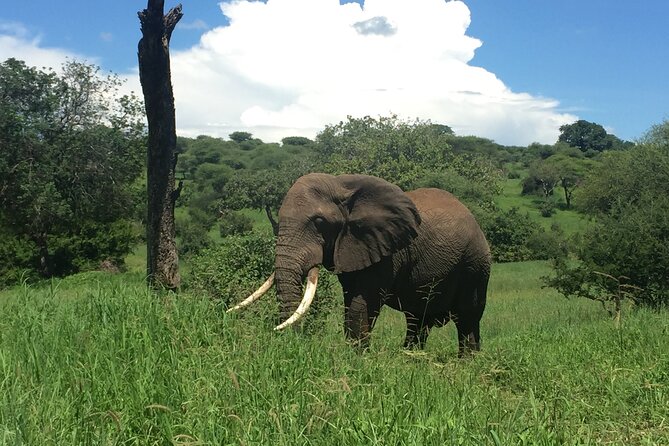
After breakfast on day three, you enter Tarangire National Park for a morning game drive. The park follows the Tarangire River and includes low hills, acacia woodland, giant baobab trees, and large swamp areas in the south.
Tarangire has a different character from both Lake Manyara and Ngorongoro. The baobabs give the park a strong visual identity, while the river and swamps help draw wildlife, especially during the dry season. If you enjoy scenery as much as animal sightings, this park gives the safari a satisfying final chapter.
Tarangire is known for some of Africa’s largest elephant herds. The sight of elephants near the river or among the trees can be a highlight, but the park offers more than elephants. The rare species listed for the park include greater kudu, fringed-eared oryx, and Ashy starlings.
You return to the lodge for lunch after the morning drive. The available description ends after that point, so confirm your final drop-off time and location before booking. The service offers airport pickup and drop-off, but you should not assume the exact return arrangement without checking it against your flight schedule.
A morning drive is a sensible choice for a short safari. It gives you a cooler period for wildlife viewing and leaves time for the return journey. The drawback is that Tarangire does not get a full day. If this park is your main interest, a longer itinerary would give it more room.
More safaris to compare:
- 5 Days Group Camping Safari
★ 5.0 · 730 reviews - 3 Days Serengeti & Ngorongoro Group Camping Safari
★ 5.0 · 574 reviews - 7-Day Premium Luxury Tanzania Safari All-Inclusive
★ 5.0 · 426 reviews - 3-Day Classic Serengeti Safari
★ 5.0 · 263 reviews
What the guide and vehicle add to the experience
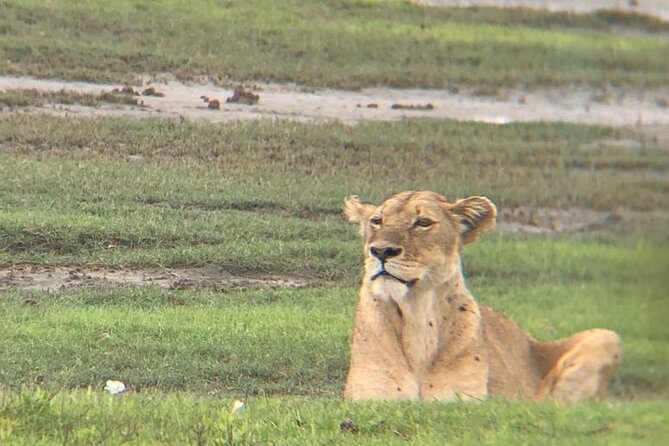
A safari rises or falls on the guide. The route itself is excellent, but a guide determines how much you notice, how well you understand animal behavior, and how efficiently you move between sightings.
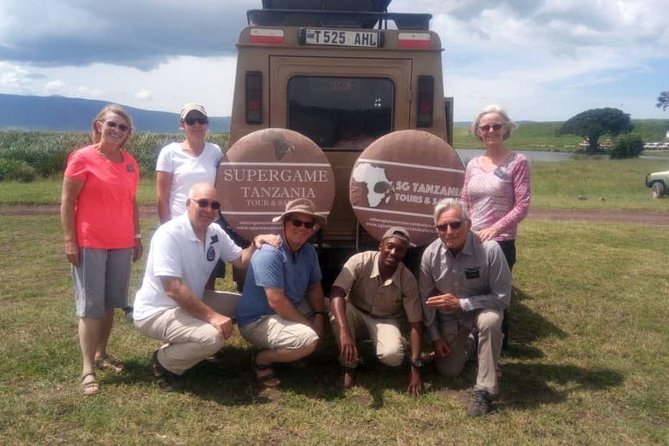
Several guides are named in the available accounts, including Saluu, Salu, Jonas, Jeff, Joseph, Mike, and Supat. Saluu receives especially warm praise for his driving, care, and ability to explain what you are seeing. Jonas is also noted for teaching guests about the animals.
You may not receive one of these specific guides, so treat the names as useful examples rather than a promise. Ask who will lead your trip and what language support is available if that matters to you.
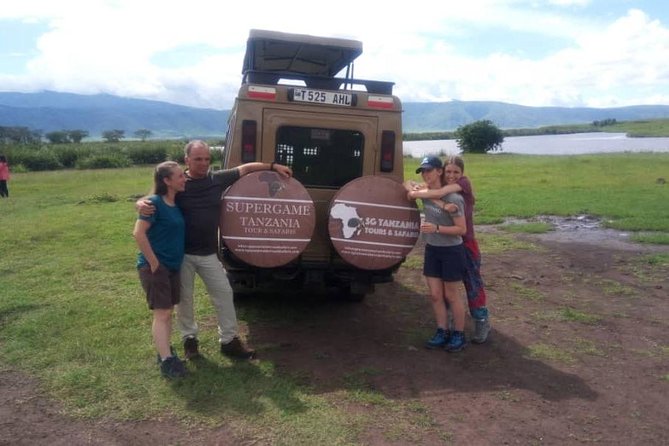
The vehicle details are encouraging. One described safari jeep had a pop-up roof, cooler, chargers, Wi-Fi, and comfortable seating. Those features are not flashy extras. A pop-up roof gives you a better standing view, while chargers help keep phones and cameras working during long days.
Wi-Fi can be useful, but do not plan your safari around a constant connection. Coverage may vary, and the point of the trip is to watch the bush, not refresh a screen. The cooler is more practical, particularly during warm game drives.
Is $780 per person good value?
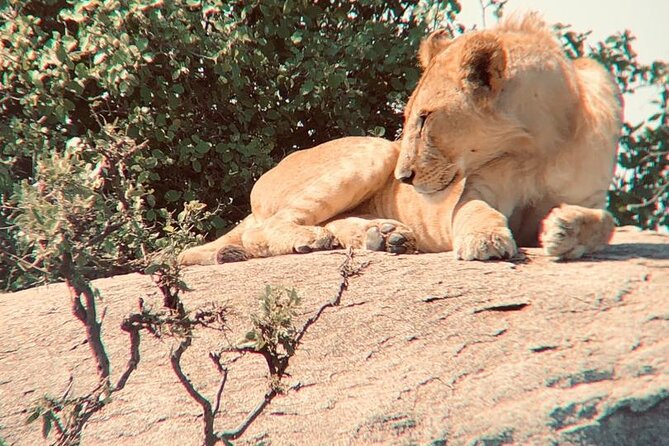
The price is $780 per person. That is not a budget day trip, but a three-day safari includes substantial transport between Arusha and the parks, national park visits, guiding, game drives, lodge arrangements, and airport transfer service.
The value is strongest if you want a compact introduction to Tanzania and do not have time for a longer Northern Circuit route. You see three major parks, each with a distinct setting and wildlife profile. The small group limit also helps justify the price.
The value is weaker if you expect long, unhurried drives in every park. A short schedule means some of your money pays for moving between parks rather than spending extra hours watching animals.
Before booking, ask for a written list of inclusions. The supplied information confirms pickup, drop-off, a guide, and the three-park route, but it does not spell out every accommodation, meal, park fee, or transfer detail. A clear quote prevents awkward surprises.
Who should choose this safari?
I would recommend this trip to a first-time safari visitor with only three days available. It gives you a useful sample of the Northern Circuit without requiring a week away from work or a long extension to your holiday.
It also suits couples, families, and small groups who value organized transport and a guide. The maximum of six people is particularly helpful for anyone who wants a more personal feel without paying for a fully private vehicle.
This is less suitable for serious wildlife photographers who need repeated visits to the same area. It is also not ideal if your main goal is the Serengeti, since the route here focuses on Lake Manyara, Ngorongoro, and Tarangire.
The physical demands appear manageable for most people. The tour information says most people can participate, but it does not provide detailed accessibility information. If you need specific assistance, ask before booking.
Timing, cancellation, and practical planning
The experience is generally booked about nine days ahead, so you do not necessarily need to plan many months in advance. I would still reserve early if your dates are fixed, particularly if airport transfers are important.
Free cancellation is available up to 24 hours before the start time for a full refund. Changes or cancellations made inside that 24-hour period are not accepted or refunded. The cut-off uses local Tanzanian time.
The experience requires a minimum number of participants. If that minimum is not reached and the safari is canceled, you are offered another date or experience, or a full refund.
Pack for changing conditions, bring a camera with spare power, and keep binoculars handy. Most importantly, leave room for the schedule to breathe. Wildlife viewing is not a checklist, and the best moments may come from stopping quietly beside an ordinary-looking stretch of woodland.
Should you book this three-day safari?
Book it if you want maximum variety in a short stay. Lake Manyara gives you water and woodland, Ngorongoro brings the densest wildlife setting, and Tarangire adds elephants, baobabs, and river country. The guide support, airport transfers, and six-person limit make the package practical.
I would book it after confirming the accommodation, meal plan, final drop-off details, and the specific guide or vehicle assigned. If you can add extra days, do so. If you cannot, this is a well-focused way to see three of Tanzania’s best-known parks without wasting your limited time on a complicated arrangement.
FAQ
Where does the safari start?
It starts at Mvuli Hotel on Kundayo Road in Arusha, Tanzania.
What time does the safari start?
The listed start time is 7:30 a.m.
How long is the safari?
The safari lasts approximately three days.
Which national parks are included?
The route includes Lake Manyara National Park, Ngorongoro Crater, and Tarangire National Park.
Is airport pickup available?
Yes. Airport pickup and drop-off are offered.
How many people can join the safari?
The maximum group size is six travelers.
Is a guide included?
Yes. You are accompanied by an experienced safari guide and driver.
What happens on the first day?
You meet the guide in Arusha, receive a short briefing, travel to Lake Manyara, have lunch at the lodge, and then take an afternoon game drive.
How deep is the descent into Ngorongoro Crater?
The route descends approximately 600 meters into the crater for a morning, half-day game drive.
Can I cancel for a full refund?
Yes. You can cancel at least 24 hours before the start time for a full refund. Cancellations or changes made less than 24 hours before the start time are not accepted or refunded.
More Three-Day Trips
- 3 Day Serengeti National Park & Ngorongoro Crater Camping Safari
★ 5.0 · 142 reviews - 3 Days Tarangire, Ngorongoro & Lake Manyara Group Camping Safari
★ 5.0 · 102 reviews - 3 Days Private Safari – manyara, Ngorongoro & Tarangire
★ 5.0 · 94 reviews - 3 Days Small Group Safari to Serengeti NP and Ngorongoro Crater Tour in Tanzania
★ 5.0 · 77 reviews
Just added around Arusha
- 5 Days Safari Tarangire, Serengeti, and Ngorongoro Crater★ 5.0 · 3 reviews
- Love lives in Africa★ 5.0 · 3 reviews
- 5 Days of Safari, Culture & Hot Springs – Tour from Arusha★ 5.0 · 3 reviews
- Arusha National Park Safari by Jeep★ 4.5 · 3 reviews
- 5Days Family _Group Tour Lodging Mid-Range in the Jungle★ 5.0 · 3 reviews
- Serengeti & Ngorongoro 3 Days Budget Safari★ 5.0 · 3 reviews
- 2 Days Tarangire and Ngorongoro Crater Tour★ 5.0 · 3 reviews
- 7 Days PRIVATE Best of Tanzania Safari *Departing everyday*★ 5.0 · 3 reviews
3-Day Experiences, compared.

3 Days Serengeti & Ngorongoro Group Camping Safari
Read our review →
3 Day Serengeti National Park & Ngorongoro Crater Camping Safari
Read our review →
3 Days Tarangire, Ngorongoro & Lake Manyara Group Camping Safari
Read our review →
3 Days Private Safari – manyara, Ngorongoro & Tarangire
Read our review →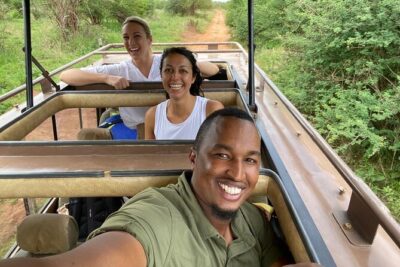
3 Days Small Group Safari to Serengeti NP and Ngorongoro Crater Tour in Tanzania
Read our review →3 Days Safari to Tarangire, Ngorongoro & Lake Manyara parks
Read our review →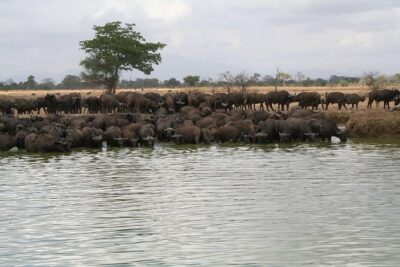
Browse the lists this tour appears in