
Reviewed · MOUNT MERU TREKS
4 Days Mount Meru Trekking
Mountain wildlife comes before the summit. This four-day Mount Meru trek gives you a rare mix of African safari country and serious high-altitude hiking. You start among open grasslands where giraffes and buffaloes may appear, then climb through rainforest, heather, moorland, volcanic rock, and crater rim terrain before reaching Socialist Peak at 4,566 meters.
I like the small maximum group of four, which should allow the guide to set a sensible pace and give attention where it matters. I also like the clear pricing: park fees, meals, an Arusha hotel transfer, huts, and an armed park ranger are included. The main caution is the summit day. It begins at night, lasts several hours uphill, and can feel demanding even for fit hikers. The basic huts, limited summit breakfast, and unclear tipping expectations also deserve a little planning.
In This Review
- Key points to know before you book
- Why Mount Meru makes a strong four-day climb
- Day one: Arusha to Miriakamba Hut through wildlife country
- Day two: Rainforest, Elephant Back, and Saddle Hut
- Day three: The pre-dawn climb to Socialist Peak
- Day four: A shorter route back to Momella Gate
- Guides, ranger support, and the human side of the trek
- How difficult is the four-day route?
- What to pack and what to clarify
- Is the $1,000 price good value?
- Should you book this Mount Meru trek?
- FAQ
- Where does the Mount Meru trek begin?
- What time is pickup?
- How long does the trek last?
- What is the summit height?
- Is a park ranger included?
- What accommodation is used?
- Are meals and park fees included?
- How many people can join the trek?
- Can the trek be canceled because of weather?
Key points to know before you book
- Wildlife can appear on the first and last hiking days: Giraffes, buffaloes, elephants, and black and white colobus monkeys may be seen along the routes.
- The summit is 4,566 meters high: The climb to Socialist Peak is the hardest part, with volcanic ash, loose gravel, rocks, and occasional scrambling.
- You sleep in mountain huts: Miriakamba Hut and Saddle Hut provide basic accommodation, so do not expect lodge comfort.
- An armed park ranger joins the walk: This is required protection in an area where large animals may be present.
- Little Meru is a useful acclimatization hike: The optional climb reaches 3,820 meters before the summit attempt.
- The $1,000 price covers major costs: Meals, park fees, and hotel pickup are included, though you should clarify tipping and summit-day food before departure.
Why Mount Meru makes a strong four-day climb
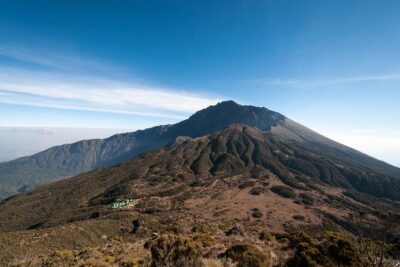
Mount Meru is Tanzania’s second-highest peak, but it offers more than a straightforward mountain ascent. The lower trail passes through Arusha National Park, so your walk begins in a setting where wildlife is part of the experience. That changes the feel of the trek. You are not simply walking uphill from a trailhead. You are moving from safari country into a high volcanic mountain environment.
I like this contrast because each day feels different. The first day brings grassland and forest. Day two climbs into cooler, thinner air. Day three follows the crater rim before sunrise. The final day returns you to the park, where elephants, giraffes, buffaloes, and colobus monkeys may again appear.
The four-day schedule is aimed at active people who want a proper summit attempt without taking a longer route. It is not a casual nature walk. The first and fourth days are shorter and more manageable, but the third day requires an early night, a midnight or pre-dawn departure, and several hours of climbing in darkness.
The listed price is $1,000 per person. That is a substantial amount, but it includes costs that can otherwise add up quickly: park entry, meals, transport from your Arusha hotel, accommodation in the mountain huts, guiding, and ranger support. The small group size also matters. With a maximum of four people, you are not likely to be swallowed into a large hiking procession.
Before paying, I would ask for a written breakdown of what is included, especially the hotel night at the Aquiline Hotel after the descent, equipment loans, drinks, and tips. The supplied information confirms meals and park fees, but not every personal expense.
More Mount Meru climbs:
- 4 Days Mount Meru Climbing | Hiking | Trekking Tour
★ 5.0 · 13 reviews - 3 Days Mount Meru trekking
★ 4.5 · 7 reviews - Mount Meru Arusha: Napuru Waterfall Hike by Kingstone Asilia
★ 5.0 · 5 reviews
Day one: Arusha to Miriakamba Hut through wildlife country
Pickup is scheduled for 9:00 a.m. from your hotel in Arusha. The drive takes you through Arusha National Park toward Momella Gate, where registration and park formalities are completed before the hike begins.
The first walking section crosses open grassland. This is one of the most unusual features of the trek, since you may see giraffes and buffaloes while walking toward a mountain hut. The armed park ranger is important here. This is not simply a scenic escort. The ranger provides protection in an area where large animals may be nearby.
After about two hours, the trail reaches Maio Falls. This is planned as a resting point and picnic stop, giving you a chance to eat, drink, and settle into the steady rhythm of the climb. The route then continues toward the well-known fig tree arch, a natural feature that gives the day a memorable landmark.
After another roughly two hours, you arrive at Miriakamba Hut in time for afternoon tea and snacks. The listed walking time is about four hours, though the actual day includes transport, gate procedures, breaks, and changes in pace.
Miriakamba is a practical overnight stop rather than a luxury stay. Mountain huts can be cold, dark, and basic. Pack warm layers, a headlamp, and whatever small comfort items help you sleep. The first day is not technically extreme, but you still need to treat it as the beginning of a high-altitude climb, not a warm-up stroll.
Day two: Rainforest, Elephant Back, and Saddle Hut
Day two begins on a steep track with wooden steps. The climb is more direct than day one, but the cooler air and forest shade can make the walking feel more pleasant. Clouds often hang low in the rainforest, giving this section a quiet, misty character.
After about two hours uphill, you reach Mgongo wa Tembo, known as Elephant Back, at approximately 3,200 meters. This is a useful rest point and a clear sign that the mountain environment is changing. The trail leaves the thick rainforest and enters heather and moorland, with more open views and less dense vegetation.
Saddle Hut sits at about 3,550 meters, and the itinerary expects you to reach it around midday. The early arrival is helpful because it gives you time to rest before the next day’s summit attempt.
You can also hike to Little Meru in the afternoon. At 3,820 meters, this optional walk gives you extra height and a chance to see how your body responds before the main summit push. It is not merely an add-on for the view. For many hikers, it is a useful test of pace, breathing, and comfort at altitude.
Still, you should not feel pressured to do it if you are tired or unwell. The following night is the hardest part of the trek, and saving energy can matter more than adding another summit to your list.
Saddle Hut is basic, and this is where you should organize your gear for the night departure. Keep your headlamp, warm clothing, water, snacks, gloves, and essential personal items easy to reach. Ask your guide about the exact wake-up and departure time, as well as the food provided before the climb.
Day three: The pre-dawn climb to Socialist Peak
Summit day begins in the dark. After tea and a small snack, you follow the trail by headlamp through bushland toward Rhino Point at about 3,821 meters.
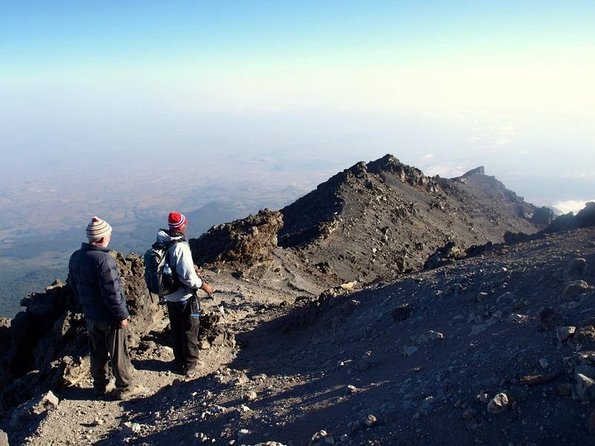
From Rhino Point, the route becomes more difficult. You may need to use your hands in places, and the surface changes to volcanic ash, loose gravel, and rock. The trail follows the crater rim, with a steep and demanding feel that is very different from the forest walking below.
The climb to Socialist Peak takes about four to five hours from this section. Your guide should keep the pace slow and steady. This is where the small group format can be valuable, since one person’s breathing, altitude response, or confidence may determine the pace for everyone.
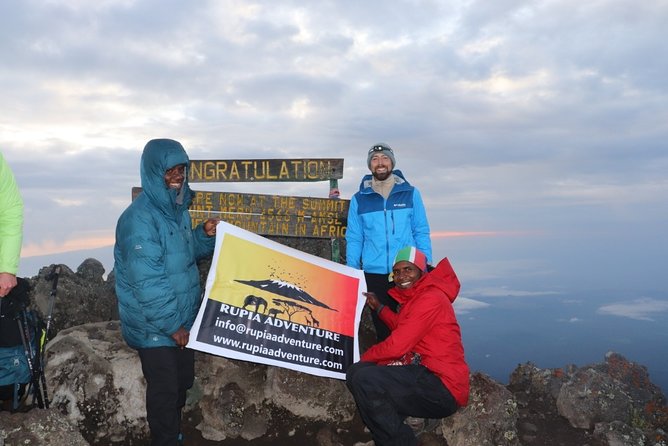
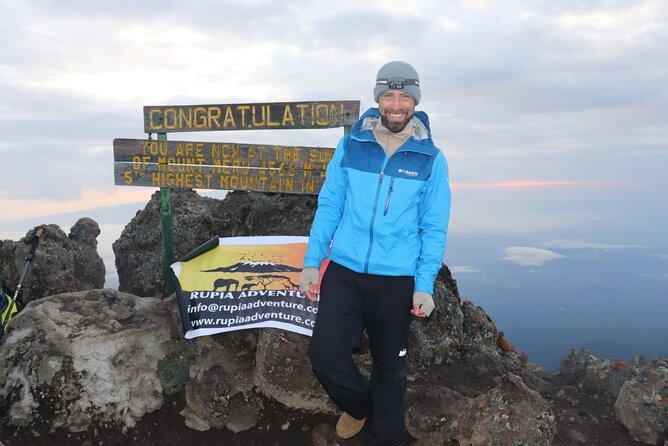
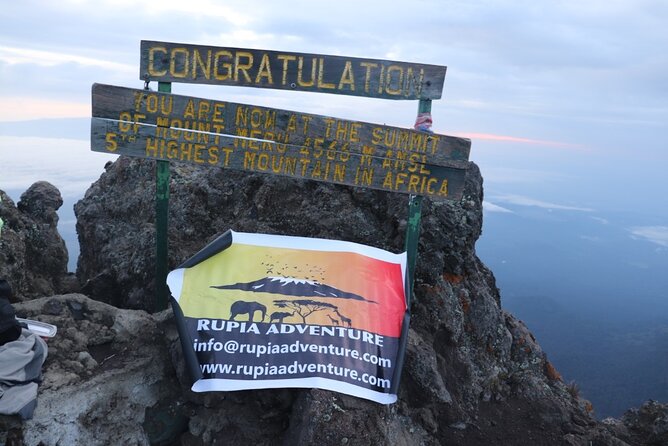
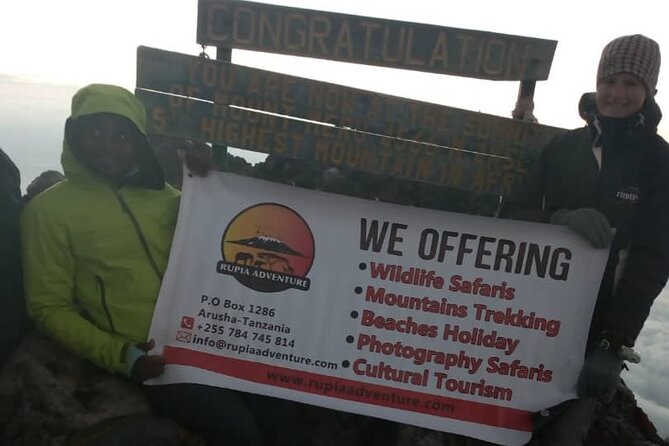
At 4,566 meters, Socialist Peak gives you a major reward for the effort. If the weather cooperates, sunrise appears above Mount Kilimanjaro, and you can look into Mount Meru’s crater with its steep inner sides and central ash cone. These are the views that make the difficult night climb worthwhile.
Weather is a real factor. Cloud, wind, and poor visibility can reduce the views, and the entire experience requires suitable conditions. You should be mentally ready for a summit day that feels cold, tiring, and less polished than a standard sightseeing excursion.
The descent follows the same route back to Saddle Hut. Going down loose volcanic material can be hard on your knees and ankles, even after the main objective is complete. You then rest and recover before continuing according to the guide’s schedule. The supplied itinerary cuts off part of the afternoon description, so confirm the exact day-three plan before setting out.
One practical point deserves attention: the breakfast or pre-climb food has been described as limited by at least one participant. I would bring approved personal snacks, such as energy bars or dried fruit, and ask in advance what meals are planned. Special diets have been accommodated, including vegetarian and gluten-free requests, but tell the company before departure.
A few more trips of this kind worth comparing:
- 8-Day Small-group Lemosho Kilimanjaro Summit Trekking
★ 5.0 · 186 reviews - Mountain Kilimanjaro Day Hike
★ 5.0 · 102 reviews - Private Full Day Hiking Experience to Marangu Route
★ 5.0 · 61 reviews - 4 days Best experience Kilimanjaro Hike, Serengeti &Ngorongoro
★ 5.0 · 54 reviews
Day four: A shorter route back to Momella Gate
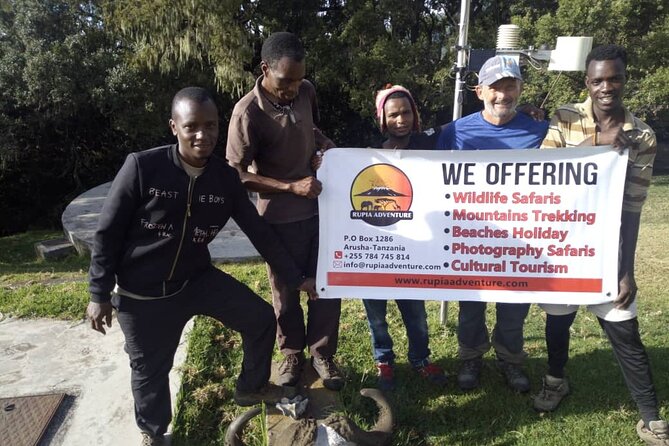
After breakfast, you take the northern route toward Momella Gate. This descent takes about two to three hours and is shorter than the route used on the way up.
The final walk may bring you back into wildlife country. Elephants, buffaloes, giraffes, and black and white colobus monkeys are all possible sightings. The return is therefore more than a simple exit from the mountain. It reconnects the summit experience with the park below.
At the gate, you say goodbye to the hiking crew and meet your driver. The transfer returns you to the Aquiline Hotel, where you celebrate the climb and spend the night. That final hotel stay is a welcome detail after several nights in basic huts, although you should confirm whether it is included in your particular booking since the pricing information clearly confirms the transfer but is less specific about every hotel arrangement.
Guides, ranger support, and the human side of the trek
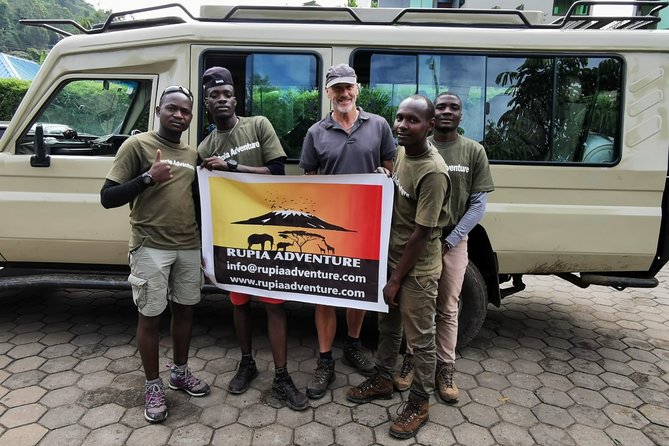
The strongest praise goes to the guiding and support crew. Guides named in the supplied comments include Gideon, Emmanuel, Laurent, Maziku, Frank, Victor, and Matt. Their roles appear to vary by departure, so you should not assume a particular guide will lead your group.
The most useful qualities to look for are patience, first-aid ability, mountain experience, and a willingness to adjust the walking speed. Gideon was specifically praised for professional first-aid skills, while Laurent, Emmanuel, Maziku, Frank, and Victor were described as caring and dependable in different departures.
Food is another repeated strength. Cooks named Samual, Samuel, David, and Samora received praise for generous or tasty meals, including vegetarian and gluten-free requests. One especially memorable arrangement involved a cake at Socialist Peak for a honeymooning couple. That is not a promised feature, but it shows the crew can add a personal touch when arrangements are made.
Porters also form part of the support team, though the details of baggage limits and porter welfare are not supplied here. I would ask how much personal luggage is carried, what weight limits apply, and how tipping is organized.
Tipping needs a clear conversation before you leave. Some participants felt that suggested amounts were presented too directly or too late. Ask for the company’s written guidance, decide what you can afford, and separate any official charge from a voluntary tip. That avoids an awkward conversation on the final day.
Communication has generally been described as easy, including contact through WhatsApp, but one account raised concerns about English communication and money-focused advice. This is a good reason to ask detailed questions before booking rather than relying on a quick message exchange.
How difficult is the four-day route?
The first two days and the last day range from easy to moderate for people who regularly walk or hike. The summit day is much harder. It combines altitude, darkness, loose ground, cold conditions, and a long ascent followed by a descent.
You do not need to be a professional mountaineer, but you should be comfortable with several hours of uphill walking and uneven terrain. The route includes wooden steps, steep tracks, ash, gravel, rocks, and sections where climbing with your hands may be needed.
Altitude affects people differently. A person who manages day one easily may feel very different at Saddle Hut or during the summit attempt. The optional Little Meru hike can help you judge your condition, but it should not become a test of pride. Tell your guide if you feel unwell, unusually weak, confused, or unable to keep a steady pace.
Some families have completed the trek with children as young as 11, including twin daughters on one departure. That does not make the climb easy for every child. A young participant needs good fitness, adult support, and a careful discussion with the operator about suitability.
What to pack and what to clarify
The provided information does not include a full equipment list, so ask the operator for one before arrival. At a minimum, you should expect to need warm clothing, rain protection, sturdy hiking shoes, a headlamp, water, personal medication, and high-energy snacks.
Keep warm layers accessible rather than buried in a bag. The lower trail can feel warm, while the upper mountain and night departure can be cold. A headlamp is especially important because the summit climb begins before daylight.
Ask these practical questions before you commit:
- Is the Aquiline Hotel night included in the $1,000 price?
- What food is served before the summit departure?
- Can you bring extra personal snacks?
- What equipment can the company provide?
- What is the luggage or porter weight limit?
- How are tips explained and distributed?
- What happens if you stop before Socialist Peak?
- Who is the assigned guide and what first-aid training do they have?
The experience is rated 4.8 out of 5, with 95 percent recommending it, and it is often reserved about 55 days ahead. That booking pattern suggests you should not leave planning until the last minute, especially if your dates are fixed.
Free cancellation is available when you cancel at least 24 hours before the local start time. Cancellations inside that period are not refunded, and changes are not accepted within 24 hours. Poor weather or failure to reach the minimum number of participants can lead to a different date, another experience, or a full refund.
Is the $1,000 price good value?
For a four-day mountain trip, $1,000 is not a bargain in the everyday sense. But the price includes several costly pieces: national park fees, meals, hotel pickup, transport to the trail, mountain accommodation, guiding, and an armed ranger.
I see the best value in the combination of wildlife and summit access. A standard mountain trek might give you the peak but not the chance to walk through open grassland with giraffes and buffaloes. Here, the route offers both, plus a small group capped at four people.
The value depends on the level of service you expect. If you want private rooms, polished cabins, large breakfasts, and a hotel-style mountain experience, this will feel basic. If you want a supported climb with meals, transport, a guide, a cook, porters, and ranger protection included, the price is easier to justify.
Should you book this Mount Meru trek?
I would book this trek if you want a serious but achievable four-day climb with wildlife, varied scenery, and a real summit goal. It suits active people who can handle a demanding pre-dawn ascent and who do not mind basic huts.
I would think twice if you need comfortable accommodation, dislike cold night walking, or want a relaxed sightseeing schedule. Before booking, get the equipment list, summit food plan, hotel details, and tipping policy in writing.
For the right person, Mount Meru offers a fine balance: safari country at the bottom, volcanic mountain terrain at the top, and a small guiding team to help you connect the two.
FAQ
Where does the Mount Meru trek begin?
The experience begins with pickup from your hotel in Arusha, followed by a drive through Arusha National Park to Momella Gate.
What time is pickup?
The listed start time is 9:00 a.m.
How long does the trek last?
The trek lasts approximately four days.
What is the summit height?
Socialist Peak, the summit of Mount Meru, reaches 4,566 meters.
Is a park ranger included?
Yes. An armed park ranger accompanies the trek for protection in the park.
What accommodation is used?
You spend nights at Miriakamba Hut and Saddle Hut. The accommodation is basic mountain-hut lodging.
Are meals and park fees included?
Yes. Meals and park fees are included in the listed price of $1,000 per person.
How many people can join the trek?
The experience has a maximum of four participants.
Can the trek be canceled because of weather?
Yes. If poor weather causes cancellation, you will be offered a different date or a full refund.
More 4-Day Experiences
- 4 Days Group Camping Safari
★ 5.0 · 1,101 reviews - 4 Days Join Group tour Tarangire Serengeti and Ngorongoro crater
★ 5.0 · 219 reviews - 4-Day Safari from Arusha: Tarangire, Serengeti and Ngorongoro
★ 5.0 · 173 reviews - 4 Days safari Tour Tanzania
★ 5.0 · 159 reviews
Just added around Arusha
- 5 Days Safari Tarangire, Serengeti, and Ngorongoro Crater★ 5.0 · 3 reviews
- Love lives in Africa★ 5.0 · 3 reviews
- 5 Days of Safari, Culture & Hot Springs – Tour from Arusha★ 5.0 · 3 reviews
- Arusha National Park Safari by Jeep★ 4.5 · 3 reviews
- 5Days Family _Group Tour Lodging Mid-Range in the Jungle★ 5.0 · 3 reviews
- Serengeti & Ngorongoro 3 Days Budget Safari★ 5.0 · 3 reviews
- 2 Days Tarangire and Ngorongoro Crater Tour★ 5.0 · 3 reviews
- 7 Days PRIVATE Best of Tanzania Safari *Departing everyday*★ 5.0 · 3 reviews
Mount Meru Treks, compared.
4 Days Mount Meru Climbing | Hiking | Trekking Tour
Read our review →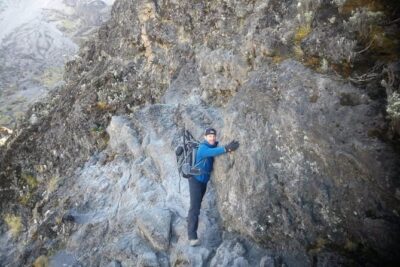
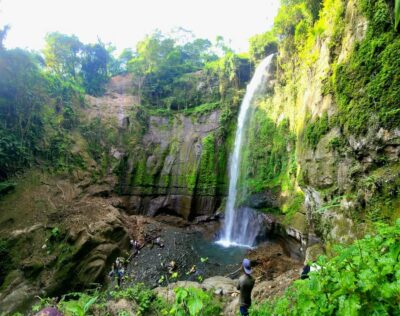
Mount Meru Arusha: Napuru Waterfall Hike by Kingstone Asilia
Read our review →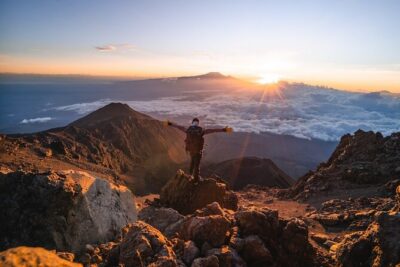
6-Day Mount Meru Climb through Momella Route Guided Tour
Read our review →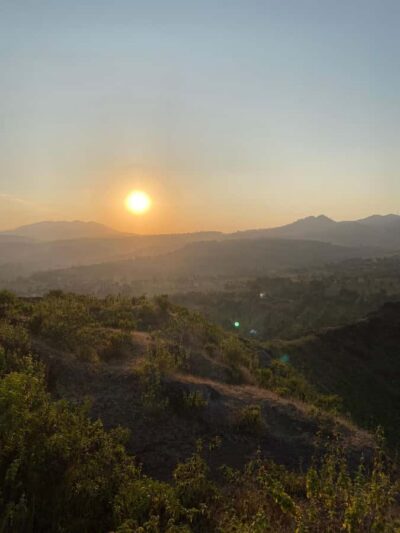
Golden Hour Walk & Sunset Viewpoint Over Mount Meru
Read our review →
Browse the lists this tour appears in