
Reviewed · CAMPING SAFARIS
5 Days Group Camping Safari
The wildlife comes thick and fast. This five-day camping safari packs Tarangire, Lake Manyara, Serengeti, and Ngorongoro Crater into one busy route from Arusha. I like the small group limit of six and the fact that park fees, meals, camping, water, a 4×4 vehicle, and an English-speaking guide are included.
I also like the range of scenery: baobab country in Tarangire, the forest and lake at Manyara, open plains in the Serengeti, and the enclosed wildlife haven of Ngorongoro. The main thing to consider is the pace. You cover a lot of ground in five days, so this suits you if variety matters more than long, slow stays in one park.
The strongest part of the experience appears to be the guiding. Aleksandra credited her guide with finding the Big Five and many other species more than once, while Gilmar singled out Emanuel for spotting a rare black rhino and a pair of lions. The camping is part of the appeal, but this is still a compact safari with early starts and several transfers.
In This Review
- Key Points To Know Before Booking
- Why This Five-Day Route Works
- Day One: Elephants and Baobabs in Tarangire
- Day Two: Lake Manyara’s Forest and Flamingos
- Day Three: The Serengeti’s Open Plains
- Day Four: A Final Serengeti Drive and the Road to Ngorongoro
- Day Five: Wildlife Concentrated Inside Ngorongoro Crater
- What the $1,350 Price Covers
- The Guide Can Make or Break the Safari
- Camping, Food, and Daily Comfort
- Who Will Enjoy This Safari Most?
- Should You Book the Five-Day Camping Safari?
- FAQ
- How long is the safari?
- Which national parks are included?
- Where does the safari begin and end?
- How large is the group?
- Is pickup included?
- What language does the guide speak?
- What does the $1,350 price include?
- What is not included?
- How much luggage can I bring?
- What clothing and equipment should I pack?
Key Points To Know Before Booking
- Four famous parks in five days: You visit Tarangire, Lake Manyara, Serengeti, and Ngorongoro Crater on one tightly planned route.
- A maximum of six people: The small group can make wildlife viewing and guide interaction more personal than a large vehicle tour.
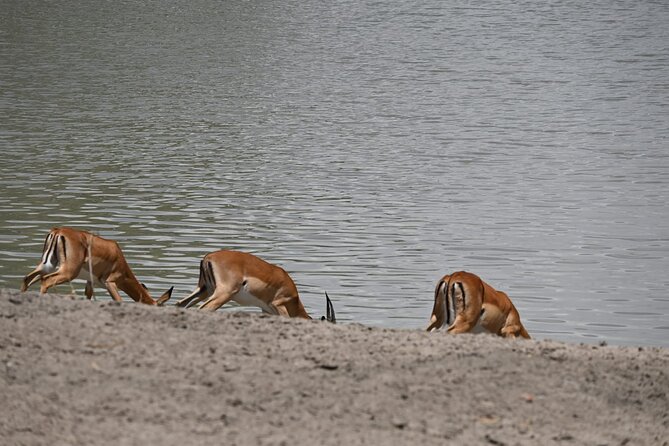
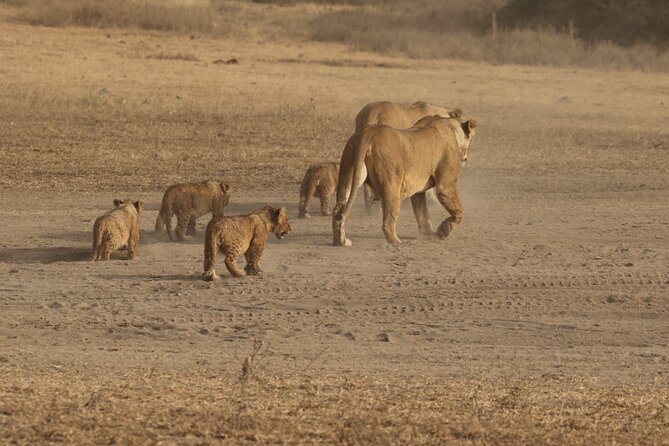
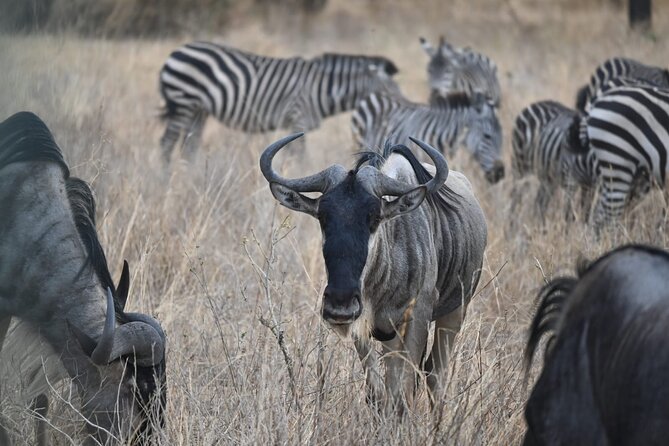
- A strong record for wildlife spotting: Reported sightings include the Big Five, a black rhino, elephants, lions, giraffes, zebras, wildebeests, and flamingos.
- Camping under cold night skies: Temperatures can fall to about 5°C, so a warm sweater, socks, and jacket matter.
- $1,350 includes the main safari costs: Park entry, transport, guide, meals, accommodation, and mineral water are covered.
- Pack light: The luggage limit is 10 kilograms per person, with duffel bags recommended.
Why This Five-Day Route Works
A safari is a balancing act. You want several parks, but every change of park takes time. This itinerary gives you a broad sample of northern Tanzania in just five days, which is useful if you have limited holiday time or plan to add other activities before or after the safari.
You begin with Tarangire, then Lake Manyara, Serengeti, and Ngorongoro. That order gives you a varied run of habitats rather than five similar game drives. You get elephants and baobabs, lake and forest scenery, open plains, and a crater floor packed with animals.
I would view this as an introduction to northern Tanzania rather than a slow, specialist safari. You should expect a full schedule, morning game drives, camp changes, and road time between parks. The reward is variety. The tradeoff is that you will not have several uninterrupted days in the Serengeti.
The group limit of six is important. A vehicle with fewer people gives you a better chance to ask questions, discuss sightings, and avoid the feeling of being one face in a crowd. It also makes shared camping and meals easier socially. Denise especially valued meeting other people and described the food and guides warmly.
More Safaris in Arusha
- Serengeti Balloon Safari and authentic bush breakfast
★ 5.0 · 2,480 reviews - Balloon Safari & Bush Breakfast in Serengeti – Miracle Experience
★ 5.0 · 1,646 reviews - 4 Days Group Camping Safari
★ 5.0 · 1,101 reviews
Day One: Elephants and Baobabs in Tarangire
Tarangire opens the trip with some of Tanzania’s most recognizable scenery. The park is known for large elephant herds and ancient baobab trees, so you begin with wildlife and a strong sense of place.
During the game drive, you may see lions, giraffes, zebras, and wildebeests among the park’s dry woodland and open areas. The baobabs give Tarangire a look that differs sharply from the Serengeti’s broad grasslands. If you enjoy photography, this first day should offer plenty of contrast, with large trees, elephants, and changing views around the vehicle.
A full day in the park gives the guide time to look beyond the first obvious sighting. That matters because wildlife is not arranged for your convenience. The guide’s driving skill and sharp eye can make a real difference, especially when an animal is partly hidden or far from the road.
At day’s end, you return to camp in the bush. Camping here is not just a cheaper sleep option. It keeps you close to the sounds and atmosphere of the park, though you should be ready for a basic outdoor setting rather than a hotel-style night.
Day Two: Lake Manyara’s Forest and Flamingos
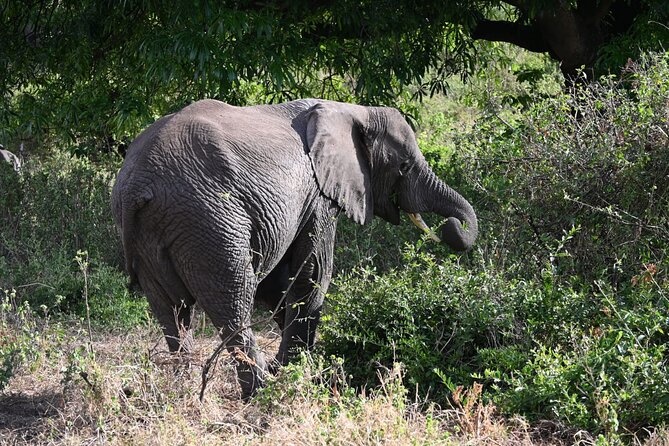
Lake Manyara brings a different mood. The park is known for dramatic scenery, elephants, flamingos, and the famous tree-climbing lions. That last sight is never guaranteed, but the possibility adds a special purpose to the drive.
Manyara is valuable because it changes the rhythm of the safari. After Tarangire’s baobabs and elephant country, you move into a setting shaped by woodland, lake views, and varied animal habitats. You can watch for birdlife around the water and larger mammals in the park’s other areas.
The park is visited on a game drive before you settle at a designated campsite. I would keep expectations sensible: a short safari cannot promise a particular animal behavior, and tree-climbing lions are a bonus, not a scheduled performance. Still, the mix of birds, elephants, and lake scenery makes Manyara worthwhile even if the lions stay on the ground.
This is also a good point to remember the clothing advice. Neutral colors such as beige, green, and white are recommended, while bright colors are not allowed. A high-mint mosquito repellent is specifically advised, and a towel and toilet paper should be in your day bag.
Day Three: The Serengeti’s Open Plains
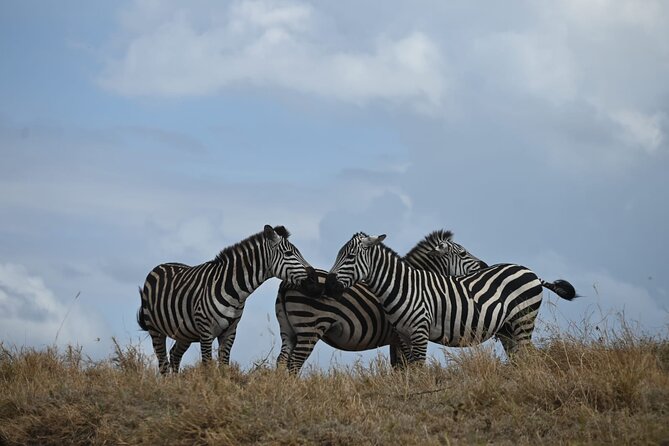
The Serengeti is the headline park for many people, and this itinerary gives you a full day there after the transfer. The park is associated with the Great Migration, but timing matters. If your visit falls during the right season and in the right area, you might witness part of that movement. At other times, the Serengeti still offers major wildlife viewing and immense open plains.
You can look for lions and other members of the Big Five, along with the species seen across the park’s grasslands. Aleksandra reported seeing every member of the Big Five, with many sightings repeated. Gilmar also described spotting a rare black rhino, which shows why patience and a good guide matter in a place this large.
The Serengeti is not a wildlife zoo. Its scale means that some drives may produce several memorable sightings, while other stretches are about reading the country and watching for movement. That uncertainty is part of the experience, though it can test your patience if you expect constant action.
You spend the night at one of the Serengeti’s private campsites. Sleeping under the African sky is one of the trip’s defining features, but nights can be cold. Pack the warm sweater, jacket, and socks recommended by the operator. At around 5°C, a thin travel layer will not feel like enough.
More camping safaris:
- 5 Days Group Camping Safari
★ 5.0 · 730 reviews - 3 Days Serengeti & Ngorongoro Group Camping Safari
★ 5.0 · 574 reviews - 5 Days Camping Tarangire, Serengeti & Ngorongoro crater & Visiting Maasai
★ 5.0 · 229 reviews - 2 Days Tarangire and Ngorongoro Group Camping Safari
★ 5.0 · 146 reviews
Day Four: A Final Serengeti Drive and the Road to Ngorongoro
The fourth day begins early with a morning game drive in the Serengeti. An early start gives you one more chance to see animals before leaving the park. It also keeps the route moving toward the Ngorongoro Conservation Area.
The drive through the highlands provides a change from the open Serengeti. You get scenic views along the route, with the crater area forming a dramatic setting for the night ahead. The exact feel of this transfer will depend on road conditions, wildlife stops, and the group’s timing, so do not treat this as a relaxed hotel-to-hotel travel day.
This is one of the itinerary’s busier sections. You have a morning drive, a park transfer, and a camp setup in the same day. The benefit is that you wake near Ngorongoro for the final game drive. The cost is less free time at camp.
I like the logic of this arrangement. Ngorongoro is one of the trip’s major prizes, and camping nearby helps place the crater drive at the end rather than forcing you to rush there from Arusha in the morning.
Day Five: Wildlife Concentrated Inside Ngorongoro Crater
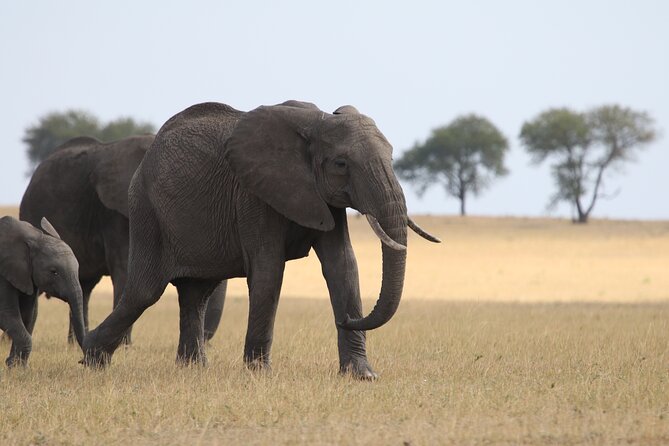
The final game drive takes place in Ngorongoro Crater, a place known for its high concentration of wildlife. The crater floor supports lions, elephants, buffalo, and the rare black rhino, among many other animals.
The enclosed setting changes the viewing experience. Animals are easier to look for in a compact area than across the wide Serengeti, although sightings are never guaranteed. Gilmar’s report of seeing a black rhino gives you an idea of what may be possible, but you should treat that as good fortune supported by skilled spotting, not a promise.
After the drive, you have a picnic lunch before returning to Arusha. This final stretch closes a demanding safari day, so it is worth keeping your expectations practical. You will have seen four parks in five days, but you may arrive tired and dusty. That is a fair trade for the amount of ground covered.
What the $1,350 Price Covers
At $1,350 per person, the price is easier to judge when you look at what is included. You receive 4×4 safari transportation, an English-speaking professional guide, park entrance fees, mineral water, accommodation, and meals during the safari.
Park fees alone can make a northern Tanzania safari expensive. Adding transport, fuel, guiding, food, and camping makes this package more useful than a simple headline price suggests. You are also not paying extra for each of the four parks once the safari begins, based on the inclusions provided.
The value is strongest for you if you want a ready-made package. You do not need to arrange four separate park visits, locate a vehicle, or plan camp meals yourself. The small group size adds value too, especially if the vehicle is limited to six participants.
The price does not include visas, international or domestic flights, or travel insurance. Those costs can change your total budget substantially. I would also keep some money aside for personal needs, although the safari includes mineral water and meals.
The 4.7 rating from three verified bookings is encouraging, but the sample is small. The detailed praise is consistent around guides, food, organization, vehicle comfort, and wildlife spotting. Aleksandra described the trip as carefully organized from start to finish, while Denise praised the food and social side. Gilmar praised guide Emanuel, the vehicle, and the structure of the route.
The Guide Can Make or Break the Safari
Your guide is central to the experience. A safari guide does more than drive. The guide helps you understand animal behavior, chooses where to search, handles the daily schedule, and keeps the group focused when an animal is difficult to spot.
The strongest feedback here concerns guiding and driving. Aleksandra credited her guide with finding a remarkable number of species, including the Big Five. Gilmar specifically named Emanuel as patient, observant, and excellent at spotting animals, including the black rhino.
The tour operates in English, so you should be comfortable receiving explanations and instructions in that language. If you have a particular interest, such as birds, big cats, photography, or plant life, tell the guide early. The group size should make that conversation easier.
Camping, Food, and Daily Comfort
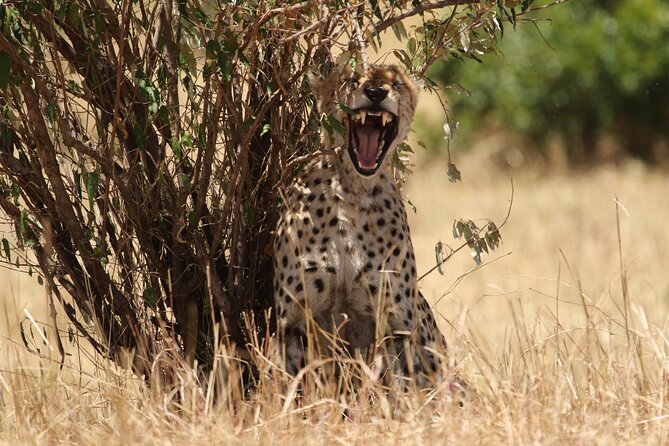
Camping adds closeness to the setting and keeps the trip within a competitive price. It also means you should prepare for simple conditions, cool nights, and practical routines. Bring the towel and toilet paper requested, and keep warm layers accessible rather than buried in your bag.
Meals are included, and food received strong praise. That matters more than it may sound. On a busy safari, a reliable meal gives you energy for early starts and long game drives. You should not expect a restaurant menu, but the available feedback suggests that meal quality is one of the pleasant parts of the trip.
Pack no more than 10 kilograms per person. Duffel bags are recommended, and extra luggage can be kept in a hotel storage room. A soft bag is easier to handle than a hard suitcase when space in a safari vehicle and camp area is limited.
Bring binoculars if you have them. The guide will have one pair available to share in the vehicle, but your own binoculars mean you do not have to wait when a distant animal appears. Neutral clothing, warm layers, mosquito repellent, socks, and a jacket should be treated as essentials.
Do not feed or touch animals, and avoid bright clothing. These rules protect both you and the wildlife. The guidance is simple: watch quietly, keep your hands to yourself, and let the animals set the distance.
Who Will Enjoy This Safari Most?
This trip suits you if you want a first taste of Tanzania’s best-known northern parks in a short period. It is especially useful if your holiday schedule is tight and you want wildlife variety rather than one long stay in one park.
It also fits people who value a small shared group and do not mind camping. The social side can be a plus, with Denise describing the chance to meet people as part of the fun. Solo participants may find the group format more welcoming than booking a private vehicle alone.
You should think twice if you have back problems. The experience is not suitable for wheelchair users, babies under one year, or people over 95. The operator also sets a 10-kilogram luggage limit, which may be inconvenient if you are carrying equipment for a longer Tanzania trip.
The five-day pace may not suit you if you want late mornings, long camp stays, or time to wait quietly in one area. This is a practical route with a lot packed into a short span.
Should You Book the Five-Day Camping Safari?
I would book this safari if you want four major parks, a small group, and a clear price that includes the main costs. The strongest reasons are the route, the guide-led wildlife search, the included park fees, and the chance to sleep under African skies.
I would choose a longer or more private safari if you have extra time and want to reduce transfers or spend more days in the Serengeti. For everyone else, $1,350 offers a substantial northern Tanzania experience, provided you are ready for early starts, cool nights, light luggage, and a busy schedule.
The practical call is simple: pack warm, use a duffel bag, bring binoculars, and ask for the guide’s name and daily plan at the start. If you accept the camping and pace, Suricata Safaris gives you a strong way to see four famous parks without arranging the pieces yourself.
FAQ
How long is the safari?
The safari lasts five days.
Which national parks are included?
The route includes Tarangire National Park, Lake Manyara National Park, Serengeti National Park, and Ngorongoro Crater.
Where does the safari begin and end?
The safari begins in Arusha and returns to Arusha on the final day.
How large is the group?
The group is limited to six participants.
Is pickup included?
Yes. A company representative waits at the reception with a sign or board showing your name and provides a meet and greet with a brief introduction.
What language does the guide speak?
The live tour guide speaks English.
What does the $1,350 price include?
It includes 4×4 safari transportation, a professional English-speaking guide, park entrance fees, mineral water, accommodation, and meals during the safari.
What is not included?
Visas, international and domestic flights, and travel insurance are not included.
How much luggage can I bring?
The luggage limit is 10 kilograms per person. Duffel bags are recommended, and extra luggage can be stored in the hotel’s storage room.
What clothing and equipment should I pack?
Pack neutral-colored clothing such as white, beige, and green, along with a warm sweater, socks, and a jacket. You should also bring high-mint mosquito repellent, binoculars if available, a towel, and toilet paper.
More 5-Day Experiences
- 5-Day Highlights mid-Range Crater, Serengeti, Tarangire
★ 5.0 · 296 reviews - Tanzania Simba Safari – 5 Days
★ 5.0 · 217 reviews - 5 Days Budget Private Safari, Tanzania
★ 5.0 · 191 reviews - 5-Day Private Northern Tanzania Safari from Arusha
★ 5.0 · 182 reviews
More Safaris
- 7-Day Premium Luxury Tanzania Safari All-Inclusive
★ 5.0 · 426 reviews - 3-Day Classic Serengeti Safari
★ 5.0 · 263 reviews - 8 Days Great Wildebeest Calving Migration Safari from Arusha
★ 5.0 · 254 reviews - Group Safari 7 Days in Tanzania’s Main Parks
★ 5.0 · 240 reviews
Just added around Arusha
- 5 Days Safari Tarangire, Serengeti, and Ngorongoro Crater★ 5.0 · 3 reviews
- 5 Days of Safari, Culture & Hot Springs – Tour from Arusha★ 5.0 · 3 reviews
- Love lives in Africa★ 5.0 · 3 reviews
- Arusha National Park Safari by Jeep★ 4.5 · 3 reviews
- 5Days Family _Group Tour Lodging Mid-Range in the Jungle★ 5.0 · 3 reviews
- Serengeti & Ngorongoro 3 Days Budget Safari★ 5.0 · 3 reviews
- 2 Days Tarangire and Ngorongoro Crater Tour★ 5.0 · 3 reviews
- 7 Days PRIVATE Best of Tanzania Safari *Departing everyday*★ 5.0 · 3 reviews
Camping Safaris, compared.



3 Days Serengeti & Ngorongoro Group Camping Safari
Read our review →
5 Days Camping Tarangire, Serengeti & Ngorongoro crater & Visiting Maasai
Read our review →
2 Days Tarangire and Ngorongoro Group Camping Safari
Read our review →
3 Day Serengeti National Park & Ngorongoro Crater Camping Safari
Read our review →
3 Days Tarangire, Ngorongoro & Lake Manyara Group Camping Safari
Read our review →Browse the lists this tour appears in