
Reviewed · SERENGETI SAFARIS
6 Day Serengeti wildebeest migration Camping Safari
The wildebeest are only part of the story. This six-day safari links Tarangire, the Rift Valley, the Serengeti, and Ngorongoro in one fast-moving northern Tanzania route. I like the small group of up to six people and the chance to combine huge elephant herds, flamingos, Maasai culture, and major predator country. I also like that a cook, camping gear, park fees, meals, water, and a 4×4 vehicle are built into the package. The main drawback is the price: at $15,000 per person, this is a very costly camping safari, so you should confirm exactly what that figure covers before paying.
The strongest praise centers on the staff. Guides named Godfrey, Gody, David, Monika, and Calvin received warm personal approval, with special mention of careful animal spotting, bird knowledge, food, vehicle comfort, and smooth organization. Calvin supplied books for identifying animals and birds, while Gody was praised for allowing plenty of time in each area. Those details matter because six days in a safari vehicle can feel rushed if your guide treats every sighting like a quick photo stop.
In This Review
- Five things to know before booking
- How this six-day route fits together
- Day one: Tarangire’s elephants and baobab country
- Day two: Mto wa Mbu, Ngare Sero, and the Rift Valley
- Days three and four: reaching the Serengeti
- Day five: from Serengeti predators to the Ngorongoro rim
- Day six: a daybreak descent into Ngorongoro Crater
- Camping, meals, and comfort in the vehicle
- Is $15,000 good value?
- Who should book this safari?
- FAQ
- How long is the safari?
- Which parks and areas are included?
- Is the wildebeest migration guaranteed?
- How many people can join the safari?
- What is included in the price?
- What is not included?
- Should you book it?
Five things to know before booking
- Four major wildlife areas in six days: You visit Tarangire, the Lake Manyara and Rift Valley area, the Serengeti, and Ngorongoro.
- The migration is seasonal: Herd locations change with rainfall, so no operator can promise a particular river crossing or herd position.
- Camping means real safari camping: Safari tents, sleeping mats, chairs, tables, a cook, and basic camp equipment are included.
- The group is capped at six: That gives you a better chance of having a window seat and a quieter vehicle than a large coach tour.
- Ngorongoro offers a dramatic finale: You camp on the crater edge, then descend at daybreak for a concentrated wildlife drive.
- The price needs careful checking: $15,000 is a major outlay for a camping trip, even with transport, meals, staff, and park fees included.
How this six-day route fits together
This is not a slow, single-park safari. It is a broad sampler of northern Tanzania, with several long drives and a lot of ground covered. In exchange, you see very different settings: baobab country and elephant herds in Tarangire, an alkaline lake and Maasai village near the Rift Valley, open Serengeti grassland, and the compact wildlife bowl of Ngorongoro.
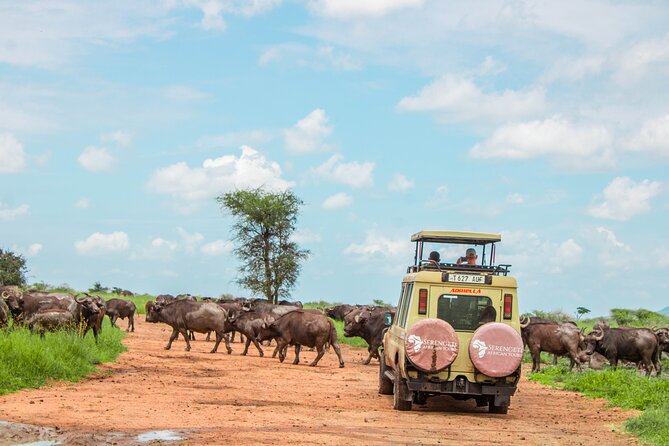
You travel in a 4×4 safari vehicle with an English-speaking guide. A professional English-speaking cook handles the camp meals, and the package includes safari tents, sleeping mats, chairs, tables, mineral water, and the listed meals. The group size is limited to six, which is one of the most useful features here.
One point needs clarification before booking. The day-two description is headed Lake Manyara, but the actual plan describes Mto wa Mbu, the Rift Valley Escarpment, Lake Natron views, Ngare Sero, and a waterfall walk. It does not clearly describe a game drive inside Lake Manyara National Park. If visiting Lake Manyara itself is important to you, ask the operator to confirm the exact route.
The stated meeting time is 12:00 am, which is not clear enough to plan around. Confirm the pickup time and location in Arusha in writing. Pickup is offered, and confirmation is provided at booking.
More Migration Safaris in Arusha
- 8 Days Great Wildebeest Calving Migration Safari from Arusha
★ 5.0 · 254 reviews - 10-Day Serengeti Wildebeest Migration Safari from Arusha
★ 5.0 · 218 reviews - 8 Day Spectacular Migration Serengeti mid -Range Tanzania Safari
★ 5.0 · 161 reviews
Day one: Tarangire’s elephants and baobab country
The safari begins with a short morning briefing before the drive toward Tarangire National Park. This is an excellent opening park because its scenery differs from the endless grasslands you will see later. Baobab trees, seasonal swamps, lagoons, and the Tarangire River create a more varied setting.
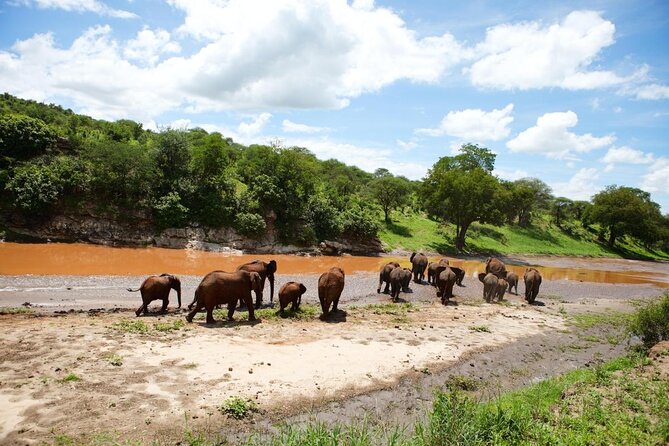
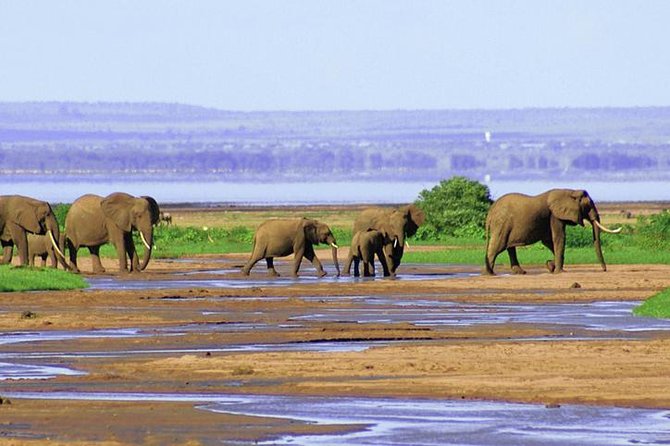
The river is the main attraction. During dry periods, animals gather near dependable water, giving you a good chance to see elephants in large groups. Giraffes, bushbucks, hartebeests, gerenuks, fringe-eared oryx, buffaloes, zebras, and wildebeests are all listed as possible sightings.
Lions often follow the herbivores. Leopards appear from time to time, while cheetahs are rare in this park. That distinction is useful. You should enjoy Tarangire for its elephants and unusual antelope rather than arrive expecting a guaranteed cheetah sighting.
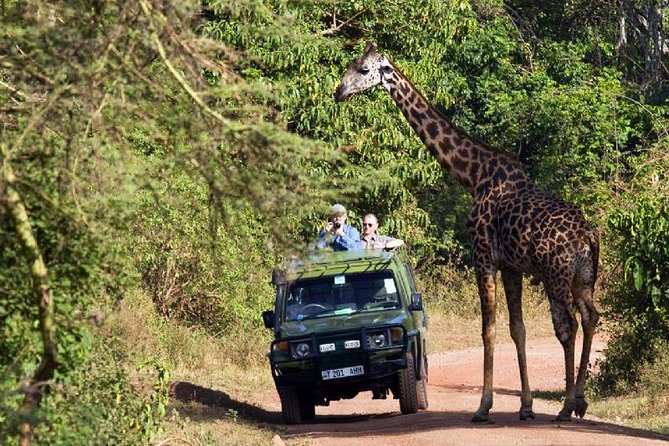
The open roof of the safari vehicle lets you watch the trees and animals without a solid roof blocking your view. It also means sun protection matters. Bring a hat and use sunscreen, since game drives expose you to strong light for hours.
Day one is a full introduction to safari conditions: early starts, uneven roads, long periods in the vehicle, and short bursts of excitement when an animal appears. The package lists admission as free for this stop, while overall national park fees are included in the safari.
Day two: Mto wa Mbu, Ngare Sero, and the Rift Valley
After breakfast, you leave Tarangire and pass through Mto wa Mbu, a multicultural village near the park. The route then follows a rough gravel road along the Rift Valley Escarpment. The scenery is described as spectacular, but the road is also specifically described as very bumpy. That is not a minor detail. If you dislike jolting drives, this may be the hardest transfer of the trip.
You may see Ol Doinyo Lengai in the distance, the holy mountain of the Maasai. The day ends near the Maasai village of Ngare Sero, described as an oasis in the hot, dusty Rift Valley.
Lake Natron provides one of the day’s most unusual sights. From a distance, thousands of flamingos can create a pink glow as they feed and breed on algae in the alkaline lake. You should treat this as a scenic viewpoint rather than assume you will walk right up to the birds or spend a full day at the lake. The schedule does not promise that.
In the afternoon, a Maasai guide leads a walk to a nearby waterfall. This is a welcome change after the first day’s vehicle time. It adds a human and local element to the safari, though the information provided does not specify the walk’s distance or difficulty. Ask about that if mobility is a concern.
Breakfast, lunch, and dinner are included. You camp overnight near Ngare Sero. The combination of village, mountain, flamingos, and waterfall makes this one of the more distinctive days, but it is also the least straightforward part of the route. Confirm whether this day includes Lake Manyara National Park or only the surrounding Rift Valley and Lake Natron region.
Days three and four: reaching the Serengeti
Day three starts early. You travel over adventurous dirt tracks, climbing out of the Rift Valley toward the Serengeti. The route reaches the grassy plains around midday, and the first view of open savannah stretching toward the horizon is likely to be one of the trip’s strongest visual moments.
The Maasai name Serengeti means endless plains, and the description fits. This is the core of the safari, especially if your main goal is the wildebeest migration. You spend the night at a campsite in the northern or central part of the park.
Do not judge this day by the number of animals seen during the first hour. Much of the value comes from entering a huge ecosystem where the scenery itself keeps changing. Your guide’s knowledge of current animal locations matters greatly because the migrating herds are not fixed to one place.
Day four is devoted to a full Serengeti game drive. The route depends on where the herds are moving, and predators often trail behind them. You may see wildebeests and zebras in large numbers, along with lions, leopards, and cheetahs.
The timing of the migration is governed by rain. During the short rainy season in November and December, herds move from northern hills toward southern plains. During the longer rainy season from April to June, they return north. These are broad patterns, not a timetable. Rainfall can shift the action from one year to the next, and you should not book this trip expecting a guaranteed river crossing or a specific herd encounter.
The overnight location is in the Seronera area. That is useful because day four is the main wildlife day, and a nearby camp reduces the need to spend the entire evening on a long transfer. Still, the itinerary says the camp may be in the northern or central Serengeti on day three, so ask how much time will be spent driving between camp and game areas.
The warm comments about guides are especially relevant here. Godfrey was praised for helping one party see everything it hoped to see. Gody was praised for giving enough time to explore each area. That is the kind of guide behavior you want in the Serengeti, where waiting quietly beside one sighting can be better than racing toward the next.
More Safaris in Arusha
- Serengeti Balloon Safari and authentic bush breakfast
★ 5.0 · 2,480 reviews - Balloon Safari & Bush Breakfast in Serengeti – Miracle Experience
★ 5.0 · 1,646 reviews - 4 Days Group Camping Safari
★ 5.0 · 1,101 reviews - 5 Days Group Camping Safari
★ 5.0 · 730 reviews
Day five: from Serengeti predators to the Ngorongoro rim
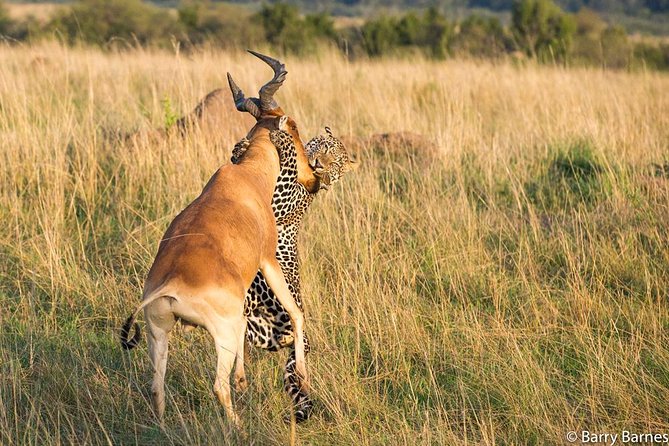
The morning begins with another Serengeti game drive. This gives you one more chance to find animals missed earlier, including members of the Big Five: lion, elephant, buffalo, rhino, and leopard.
The Big Five label can make a safari sound like a checklist, but it is best treated as a bonus. Rhinos and leopards are not guaranteed, and the migration itself remains dependent on weather. Your guide can improve your chances, but no honest safari company can promise all five.
After a picnic lunch, you drive toward Ngorongoro. The reward comes at the crater rim, where the caldera opens below you. The crater is about 20 kilometers wide and supports more than 25,000 animals, making it one of Tanzania’s most concentrated wildlife areas.
You spend the night at a campsite directly on the crater edge. The views are a major reason to accept the camping format here. A rim campsite also makes the next morning’s descent practical, since the game drive begins after breakfast at daybreak.
The change from Serengeti to Ngorongoro is striking. The Serengeti spreads outward, while Ngorongoro gathers wildlife within a defined natural bowl. If you want a safari with varied scenery rather than six days of similar grassland, this contrast adds real value.
Day six: a daybreak descent into Ngorongoro Crater
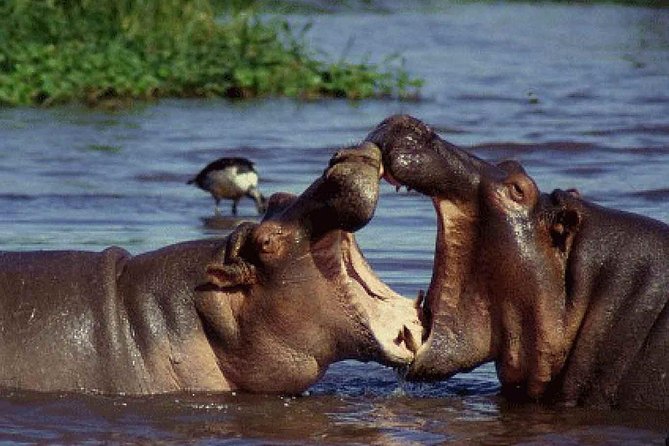
After breakfast, you drive down into the crater for an intensive game drive. The caldera supports a broad mix of wildlife, including black rhinos, Grant’s and Thomson’s gazelles, lions, leopards, elephants, and mountain reedbucks in forested areas on the slopes.
You may also see buffaloes, spotted hyenas, rare wild dogs, and more than 500 bird species in the wider area. The variety is impressive, but the wording is important: these are possible sightings, not promises. Black rhinos and wild dogs are especially best treated as fortunate encounters.
The day includes a picnic lunch before you leave the crater in the afternoon. You then return to Arusha, arriving in the early evening. That arrival time is approximate, so do not schedule a flight or a fixed evening connection without leaving plenty of room.
The final day is long, but the early start makes sense. Wildlife is often most active around daybreak, and the crater offers a compact setting where you can make good use of several hours. After four nights of camping and repeated drives, you may be tired by the time you reach Arusha.
Camping, meals, and comfort in the vehicle
This is a camping safari, not a lodge circuit. You sleep in safari tents on sleeping mats, with chairs and tables supplied for camp life. A professional cook prepares the included meals, and mineral water is provided.
That setup gives you a closer connection to the parks and keeps the route flexible. It also means you should be realistic about comfort. The supplied information does not promise private bathrooms, electricity, showers, thick mattresses, or luxury camp facilities. Ask what the tents and washing arrangements include before booking.
The vehicle is described as comfortable in one particularly positive account. Another guide, Calvin, was praised for his interest in birds and for providing books to help identify species. That detail suggests the safari can suit you if you enjoy more than the headline animals. Birdlife, flamingos, and smaller antelope can turn a quiet drive into a good one.
The food also receives strong praise. Four dinners, five breakfasts, and five lunches are listed, matching a six-day schedule that begins without breakfast and ends without dinner. If you have allergies or dietary needs, tell the operator before departure because the supplied information does not explain how special diets are handled.
Is $15,000 good value?
At $15,000 per person, this is an expensive trip. The price can make more sense if it includes everything promised: a private or near-private 4×4 arrangement, a professional guide and cook, camping equipment, park fees, meals, water, and transport across four major areas.
The group limit of six is valuable. A smaller vehicle group usually makes it easier to hear the guide, share sightings, and position yourself for photographs. It also gives the trip a more personal feel than a large bus-based safari.
Still, the price is high enough that you should request a written breakdown. Confirm whether the amount is per person for a private departure or for a shared group, whether airport transfers are included, and exactly which activities are covered. Flights, visas, tips, optional activities, souvenirs, and personal spending are excluded.
The company has received strong marks for organization, staff, food, vehicle comfort, and guiding. One account described a six-person group that was put together harmoniously, which is encouraging for a shared safari. Even so, a good value judgment depends on the exact camp standard and whether the stated price includes all taxes and fees.
Who should book this safari?
I would recommend it to you if you want a broad Tanzania experience in a short period and prefer camping to a string of lodges. It suits people who value wildlife variety, are comfortable with early mornings and rough roads, and want a guide-led trip rather than handling park logistics alone.
It is also a good match if you care about the migration but understand that nature sets the schedule. The Serengeti days give you the best chance of seeing moving herds and predators, but rainfall can change the picture.
You may want a different trip if comfort is your top priority, if you need a slow pace, or if $15,000 feels too high for camping. You should also ask for a revised route if a game drive in Lake Manyara National Park is essential to your plans.
The warmest praise goes to the human side of the trip. Godfrey, Gody, David, Monika, and Calvin are singled out for good guiding, patience, animal spotting, bird knowledge, and care. That is encouraging, but guide assignment can change. Ask whether a named guide is guaranteed or simply an example of the company’s staff.
FAQ
How long is the safari?
The safari lasts approximately six days, beginning in Arusha and returning there in the early evening on day six.
Which parks and areas are included?
The route includes Tarangire National Park, the Lake Manyara and Rift Valley area, Serengeti National Park, and the Ngorongoro Conservation Area. The day-two description focuses on Mto wa Mbu, Ngare Sero, Lake Natron views, and a waterfall walk, so confirm whether Lake Manyara National Park itself is included.
Is the wildebeest migration guaranteed?
No. The herds move according to rainfall, and their location changes from year to year. The itinerary describes broad seasonal movement between northern and southern areas, but it does not guarantee a particular sighting.
How many people can join the safari?
The maximum group size is six people.
What is included in the price?
The package includes transport in a 4×4 safari vehicle, an English-speaking guide, an English-speaking cook, safari tents, sleeping mats, chairs, tables, camping equipment, listed meals, mineral water, activities in the schedule, and national park fees.
What is not included?
Flights, optional activities, visa fees, tips, souvenirs, and personal spending money are not included. The cancellation policy allows a full refund if you cancel at least 24 hours before the start time. Changes or cancellations within 24 hours are not accepted for a refund.
Should you book it?
Book this safari if you want maximum northern Tanzania variety in six days, a small group, and a camping setup supported by a cook and guide. Tarangire’s elephants, the flamingos near Lake Natron, two substantial Serengeti days, and the Ngorongoro crater make a strong route.
Before paying $15,000, get clear answers about the day-two park visit, the exact pickup time, camp facilities, group arrangement, and what the price includes. If those details check out, this can be a memorable and well-supported safari. If you want luxury or a slower schedule, spend the same money on fewer parks and better accommodation instead.
More Migration Safaris
- 9-Day Serengeti Migration Footsteps Tanzania Safari
★ 5.0 · 96 reviews - 7 days great migration safari
★ 5.0 · 77 reviews - Private 6-Day Great Migration Ndutu Serengeti Safari Tour
★ 5.0 · 47 reviews - 4 Day Great Migration Safari Serengeti & Ngorongoro Crater
★ 5.0 · 33 reviews
More Serengeti Safaris
- 3 Days Serengeti & Ngorongoro Group Camping Safari
★ 5.0 · 574 reviews - 5-Day Highlights mid-Range Crater, Serengeti, Tarangire
★ 5.0 · 296 reviews - 3-Day Classic Serengeti Safari
★ 5.0 · 263 reviews - Private 6-Day Tarangire Manyara Crater and Serengeti with Mid-Range Lodges
★ 5.0 · 238 reviews
Just added around Arusha
- 5 Days Safari Tarangire, Serengeti, and Ngorongoro Crater★ 5.0 · 3 reviews
- Love lives in Africa★ 5.0 · 3 reviews
- 5 Days of Safari, Culture & Hot Springs – Tour from Arusha★ 5.0 · 3 reviews
- Arusha National Park Safari by Jeep★ 4.5 · 3 reviews
- 5Days Family _Group Tour Lodging Mid-Range in the Jungle★ 5.0 · 3 reviews
- Serengeti & Ngorongoro 3 Days Budget Safari★ 5.0 · 3 reviews
- 2 Days Tarangire and Ngorongoro Crater Tour★ 5.0 · 3 reviews
- 7 Days PRIVATE Best of Tanzania Safari *Departing everyday*★ 5.0 · 3 reviews
Serengeti Safaris, compared.

Serengeti Balloon Safari and authentic bush breakfast
Read our review →
Balloon Safari & Bush Breakfast in Serengeti – Miracle Experience
Read our review →
3 Days Serengeti & Ngorongoro Group Camping Safari
Read our review →
5-Day Highlights mid-Range Crater, Serengeti, Tarangire
Read our review →


Private 6-Day Tarangire Manyara Crater and Serengeti with Mid-Range Lodges
Read our review →
5 Days Camping Tarangire, Serengeti & Ngorongoro crater & Visiting Maasai
Read our review →Browse the lists this tour appears in