
Reviewed · SAFARIS IN MOSHI
7 Day Grand Tanzania Safari
Big animals, big skies, and long drives. This seven-day Tanzania safari packs four famous wildlife areas into one carefully routed trip, beginning near Kilimanjaro and ending in Arusha. I like the variety: Tarangire brings close elephant viewing, Lake Manyara adds flamingos and dramatic Rift Valley scenery, and the Serengeti provides two full days for wildlife watching.
I also like that meals, lodging, transport, and park visits are arranged together, which removes much of the planning work. The guides, including names such as Godlove, Amos, Martin, and Idi, receive especially warm praise for safety, flexibility, and wildlife knowledge. The main drawback is the pace. You spend long hours on rough roads, and lunch quality may not always match the excitement of the safari.
In This Review
- The safari at a glance
- Starting at Kilimanjaro Airport
- Day 1: Elephants and baobabs in Tarangire
- Day 2: Lake Manyara beneath the Rift Valley escarpment
- Days 3 and 4: Giving the Serengeti proper time
- Day 5: Serengeti sunrise, balloon option, and Maasai culture
- Day 6: The Ngorongoro Crater wildlife circuit
- Day 7: Returning to Arusha
- What the $2,800 price really covers
- The rough-road reality
- Who will enjoy this safari most
- Booking and cancellation details
- Should you book the 7 Day Grand Tanzania Safari?
- FAQ
- Where does the safari begin?
- What time does the safari start?
- Where does the safari end?
- How long is the experience?
- Which national parks and protected areas are included?
- Is pickup offered?
- Is this a private tour?
- Is the hot-air balloon flight included?
- Are meals included?
- Can I cancel for a full refund?
The safari at a glance
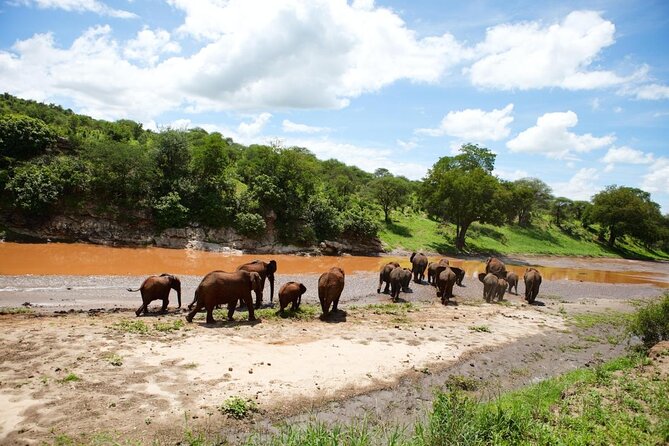
- Elephants in Tarangire: Giant baobabs, seasonal marshes, and large herds make this an excellent opening park.
- Four major wildlife areas: The route includes Tarangire, Lake Manyara, Serengeti National Park, and the Ngorongoro Conservation Area.
- Two Serengeti days: This gives you more time to search for predators and watch the open plains without rushing through in a single game drive.
- Optional balloon flight: A hot-air balloon over the Serengeti is available at an extra cost by prior arrangement.
- Private group experience: Only your own group participates, with pickup offered from Kilimanjaro International Airport.
- Strong value at $2,800: Seven days of meals, lodging, transport, and safari access can make the price reasonable, especially for first-time safari visitors.
Starting at Kilimanjaro Airport
The safari begins at 8:00 a.m. at Kilimanjaro International Airport. Pickup is offered, a helpful touch if you are arriving specifically for this trip or connecting it with a Kilimanjaro climb.
After a morning briefing, you drive for about two hours toward Tarangire. That first road journey is useful for getting settled, but it also sets the pattern for the week. This is an active safari, not a short park visit with plenty of free time between stops.
The experience is private, so your group controls the pace to some extent. You can discuss wildlife interests and daily preferences with your guide, though the route itself is fairly full. The people who had guides such as Godlove, Amos, Martin, and Idi found them attentive and willing to adjust when possible. Amos was praised for going beyond the basic job, while Godlove was singled out for safety and his ability to explain what you were seeing.
That guide relationship matters in Tanzania. An animal may be far away, partly hidden, or visible for only a few seconds. A careful guide can help you notice movement, behavior, and smaller details that you might miss on your own.
More Safaris in Moshi
- Great Migration Safari In Tanzania
★ 5.0 · 71 reviews - 6 Days Tanzania Classic Safari
★ 5.0 · 52 reviews - 4 Days Tanzania Private Safari | Serengeti , Ngorongoro & Tarangire Safari
★ 5.0 · 16 reviews
Day 1: Elephants and baobabs in Tarangire
Tarangire National Park is a strong first stop because it offers scenery that feels immediately different from the parks later in the route. Giant baobab trees rise above bush savannah, while seasonal marshes draw wildlife when water is scarce elsewhere.
The park is especially known for elephants, and the open-roof safari vehicle gives you a clear view of the animals and the surrounding country. You may also see buffaloes, zebras, and wildebeests. Lions often follow these grazing animals, creating the possibility of predator sightings as well.
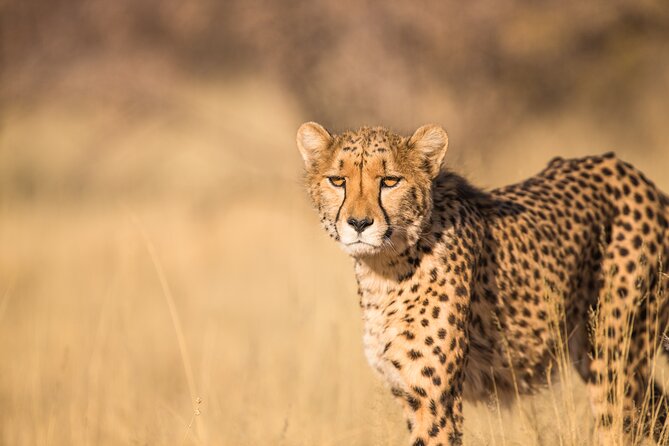
The wildlife list needs a little honesty. Leopards appear now and then, but cheetahs are rarely seen here. The promise of seeing all of Africa’s Big Five is appealing, yet no safari can guarantee every animal. Elephants, buffaloes, and lions are more realistic expectations than a leopard or rhino.
The park portion lasts about six hours. Afterward, you leave Tarangire and continue to Eileen’s Tree Inn for the night. That overnight stop keeps the route moving toward Lake Manyara and avoids trying to squeeze too much into the first evening.
Day 2: Lake Manyara beneath the Rift Valley escarpment
Lake Manyara National Park is compact but visually dramatic. A shallow soda lake covers about two-thirds of the park, sitting below the western escarpment of the Great Rift Valley. The contrast between water, cliffs, woodland, and open areas gives this day a different feel from Tarangire.
The park is home to large numbers of elephants, and flamingos gather around the lake when conditions suit them. Their presence depends on water and algae, so treat flamingos as a possibility rather than a promise.
Manyara is also famous for tree-climbing lions. Seeing one would be a memorable moment, though the name should not lead you to expect lions in trees at every turn. Wildlife sightings depend on the season, the animals’ movements, and plain luck.
The planned park time is about six hours. That is enough for a useful look at the area, but the day is still part of a larger point-to-point journey. You should be comfortable sitting in a safari vehicle for much of the day, often on uneven roads.
Days 3 and 4: Giving the Serengeti proper time
On Day 3, you leave after an early breakfast and head toward Serengeti National Park. The route climbs through the Rift Valley before opening onto the broad Serengeti plains. That transition is one of the pleasures of the trip. The scenery changes gradually, and the sense of space grows with every mile.
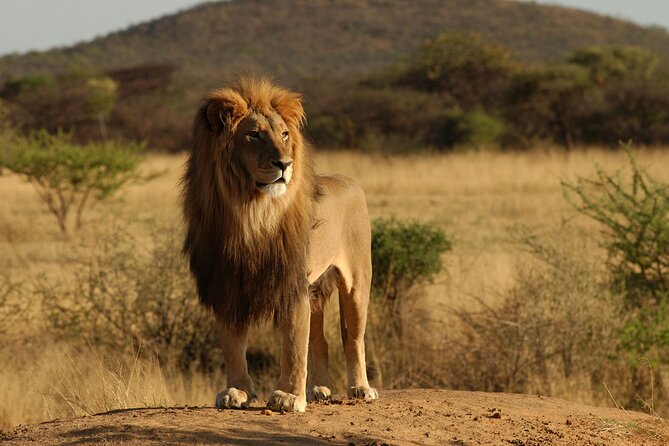
The Serengeti was founded in 1951 and forms part of a vast migration system linking Tanzania’s Serengeti, the Ngorongoro Conservation Area, and Kenya’s Maasai Mara. More than 1.4 million wildebeests, along with large numbers of Thomson’s gazelles and zebras, move through this wider region each year. The exact location of the animals changes, so the timing of your safari matters if migration is a main goal.
Day 3 is not simply a transfer. You have about six hours for the Serengeti experience, with opportunities to spot wildlife along the route. The park is famous for open plains, but it is not only about herds. Lions, hyenas, and other predators may be nearby, following the movement of grazing animals.
Day 4 begins with an early-morning game drive. The early start is worth accepting because animals are often active during the cooler part of the day. You then return to camp for breakfast before heading out again toward the central Serengeti and the Seronera area.
This two-part schedule is one of the best features of the itinerary. A single Serengeti day can feel rushed, especially after the drive from Manyara. Two days let you search more patiently and give your guide time to respond to recent sightings.
The tradeoff is simple: early starts and long hours in the vehicle. You should not expect a leisurely lodge holiday. The appeal is being out in the park when the animals are moving, not sleeping late beside a pool.
More safaris to compare:
- 6 Days Big Five Tanzania Safari
★ 5.0 · 15 reviews - 6 Days 5 Nights lodge safari Tarangire, Manyara, Serengeti & Ngorongoro Crater
★ 4.5 · 10 reviews - 4 Days Tanzania Luxury Safari Serengeti and Ngorongoro Crater
★ 5.0 · 9 reviews - Tanzania Classic Safari 3 Days / 2 Nights
★ 4.5 · 9 reviews
Day 5: Serengeti sunrise, balloon option, and Maasai culture
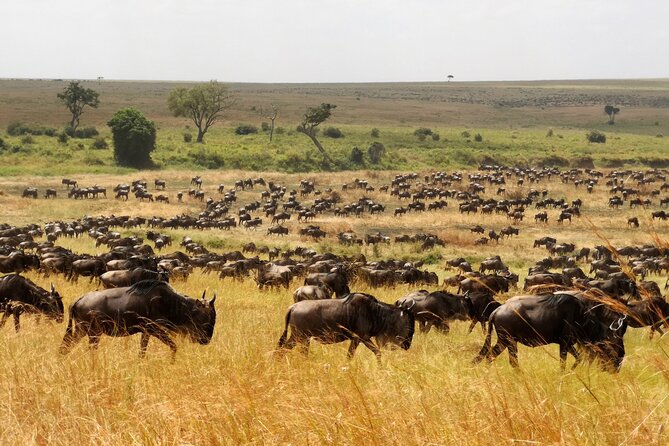
Day 5 offers the most distinctive choice in the program. By prior arrangement and at an additional cost, you can take a hot-air balloon over the Serengeti Plains. The flight is scheduled around dawn, when the bush is waking and the light is soft.
From above, you may spot wildlife, rivers, and small villages while moving quietly across the area. It is a special add-on, but it is not included in the $2,800 price. If you choose it, confirm the cost and arrangements before departure.
If you skip the balloon, you leave early for a sunrise game drive. After breakfast, you continue driving until lunch, then head toward Ngorongoro for the overnight stop in the Karatu area.
The route also includes a chance to encounter Maasai traditional life within the Ngorongoro Conservation Area. The wording suggests a short cultural experience rather than a full-day community visit, so keep your expectations focused. It adds human context to a trip otherwise centered on wildlife.
This is another demanding day. You get a final Serengeti outing, a long transfer, and a cultural element before reaching your accommodation. The reward is that the route keeps moving in a logical loop rather than sending you back over the same roads.
Day 6: The Ngorongoro Crater wildlife circuit
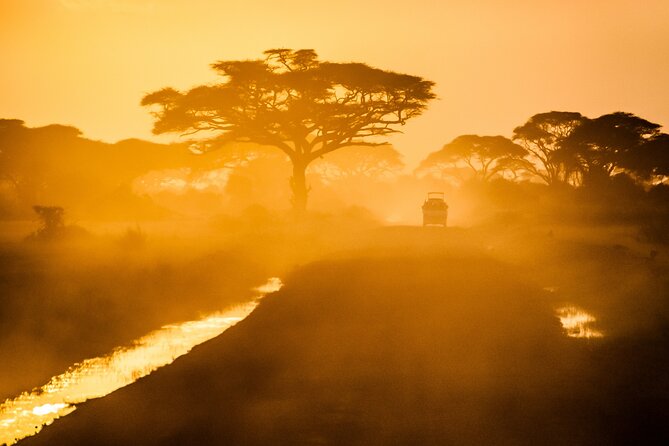
Ngorongoro is the dramatic finale. After breakfast at daybreak, you enter the conservation area and descend into the crater for an extensive game drive.
The crater formed when a large volcano collapsed. Its enclosed setting supports more than 25,000 mammals, including the Big Five: lion, elephant, buffalo, rhino, and leopard. You may also see spotted hyenas, and the area contains more than 500 bird species.
This is the best opportunity on the route to look for rhino, although a sighting is never certain. The crater’s concentration of animals makes it a sensible place to search, but wildlife remains unpredictable.
A picnic lunch is included during the crater visit. Afterward, you leave the caldera in the afternoon and return to your lodge for dinner and the final overnight stay.
The crater can feel busier than the more open Serengeti, but it offers a different kind of wildlife viewing. Animals are concentrated within a contained natural bowl, while the steep walls frame the experience. For many people, this is the day that ties the whole safari together.
Day 7: Returning to Arusha
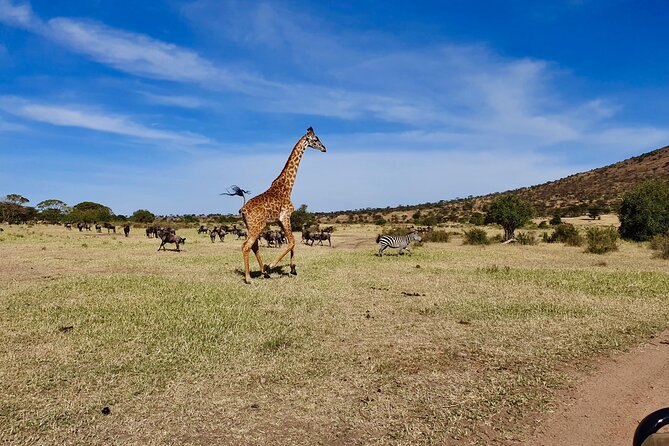
The final morning is deliberately easy. After breakfast, you travel back to Arusha, arriving around midday. Drop-off is available in the city center or at the airport.
That timing is useful if you are continuing to another part of Tanzania, arranging a flight, or finishing a Kilimanjaro-related trip. Still, I would avoid booking a tight same-day connection unless you have confirmed the timing carefully. The return drive is listed at about two hours, but road conditions and final arrangements can affect the schedule.
What the $2,800 price really covers
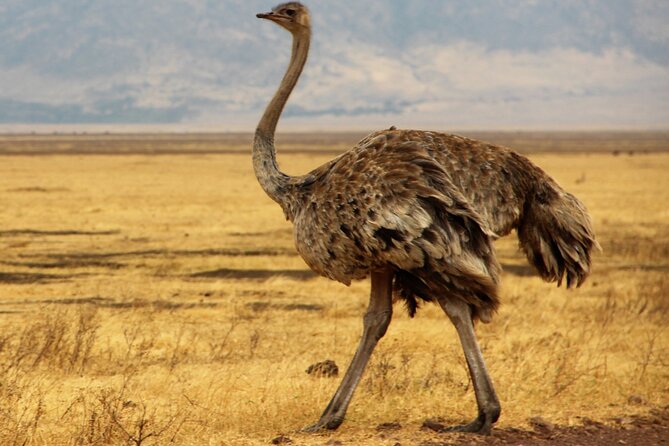
At $2,800 per person, this is not a bargain-basement safari, but the value is fairly strong for a seven-day private itinerary. Breakfast is included all seven days, lunch is included all seven days, and dinner is included on six nights. Lodging and transport are handled as part of the trip, and park admission is included at the listed stops.
That package saves you from arranging separate transfers, park entries, accommodation, and meals. It also gives you a guide and safari vehicle for a full week, which is a major part of the cost.
The main question is what kind of comfort you want. The itinerary refers to camps and an inn, and one account found the camps better than expected. This is not presented as a luxury lodge safari, so you should confirm the exact accommodation standard before paying if room quality is important to you.
Food deserves attention. The included meals make the trip easier, but one account found the lunches disappointing after long, bumpy drives, with a carrot sandwich receiving particularly poor marks. I would ask about packed lunches and tell the operator about dietary needs in advance.
The rough-road reality
A Tanzania safari is not a sightseeing bus with smooth pavement all the way. The route includes long transfers and about six hours of activity at many stops. Roads inside and between parks can be bumpy, and that affects your comfort, especially on the Serengeti transfers.
The open-roof vehicle is a major advantage for viewing and photography. You get a clear view above the sides and a better sense of the sky and scenery. The same openness means sun, dust, and changing temperatures are part of the day.
Bring practical clothing, sun protection, and patience. You will appreciate having water, a camera with spare power, and something warm for early starts. These are sensible preparations for any safari, not special promises about what the operator supplies.
Who will enjoy this safari most
I would recommend this trip to a first-time safari visitor who wants Tanzania’s main parks in one week. It suits you if your priority is wildlife variety, especially elephants, lions, buffaloes, zebras, wildebeests, birds, and the chance to search for the full Big Five.
It also works well after a Kilimanjaro climb. One person booked the safari as motivation for summiting the mountain, making it a natural second act to a demanding trek.
The itinerary is less suitable if you dislike early mornings, rough roads, long drives, or changing accommodation. It is also not ideal if you want several unplanned rest days. The route is full, and that is both its strength and its limitation.
The private format helps. You are not sharing the vehicle with an unknown group, and guides appear to take requests seriously. Still, private does not mean slow-paced. The parks are spread across a large part of northern Tanzania, so covering them requires mileage.
Booking and cancellation details
The experience is typically booked about 32 days ahead, though that is an average rather than a required deadline. Confirmation is provided at booking, and most people can participate.
Pickup begins at Kilimanjaro International Airport at 8:00 a.m. The activity requires a minimum number of participants, despite being private for your own group. If that minimum is not reached and the trip is canceled, you are offered another date or experience, or a full refund.
You can cancel for a full refund up to 24 hours before the local start time. Changes or cancellations inside that 24-hour window are not accepted or refunded.
Should you book the 7 Day Grand Tanzania Safari?
I would book it if you want a well-filled week with Tanzania’s best-known wildlife areas and prefer one company to arrange the moving parts. The combination of Tarangire elephants, Manyara’s lake and flamingos, two Serengeti days, and the Ngorongoro Crater gives you an impressive range of habitats.
Go in with realistic expectations. The Big Five are possible, not guaranteed. Lunch may be basic, roads may be rough, and the early starts are part of the deal. If you accept those limits, the $2,800 price offers solid value for a private, meal-inclusive safari with guides who have earned strong praise for care, flexibility, and wildlife spotting.
FAQ
Where does the safari begin?
The safari begins at Kilimanjaro International Airport, on Kilimanjaro Airport Road in Tanzania.
What time does the safari start?
The stated start time is 8:00 a.m.
Where does the safari end?
The final day returns you to Arusha around midday. Drop-off is available in the city center or at the airport.
How long is the experience?
The safari lasts approximately seven days.
Which national parks and protected areas are included?
The route includes Tarangire National Park, Lake Manyara National Park, Serengeti National Park, and the Ngorongoro Conservation Area.
Is pickup offered?
Yes. Pickup is offered, with the listed meeting point at Kilimanjaro International Airport.
Is this a private tour?
Yes. Only your own group participates in the activity.
Is the hot-air balloon flight included?
No. The Serengeti hot-air balloon flight is optional, costs extra, and must be arranged in advance.
Are meals included?
Yes. Breakfast is included for all seven days, lunch is included for all seven days, and dinner is included for six nights.
Can I cancel for a full refund?
Yes. You can cancel at least 24 hours before the local start time for a full refund. Cancellations made less than 24 hours before the start time are not refunded.
More 7-Day Experiences
- 7 Days Kilimanjaro via Machame route affordable price
★ 5.0 · 110 reviews - 7-Day Machame Route Kilimajaro
★ 5.0 · 28 reviews - 7 Days Highlight of Tanzania Mid-Range Standard
★ 5.0 · 22 reviews - 7 Days Wildebeest Migration – Ndutu Calving Season
★ 5.0 · 18 reviews
Just added around Kilimanjaro
- 5 days Serengeti Wildebeest Migration Safari★ 5.0 · 3 reviews
- Tanzania Safari and Kilimanjaro Climb Multi-Day Experience★ 5.0 · 3 reviews
- 9 Days – Best of Tanzania Safari★ 5.0 · 4 reviews
- 7 Days Mountain Kilimanjaro climb Machame Route★ 5.0 · 4 reviews
- 8-Day Tanzania Migration Footsteps – Midrange★ 5.0 · 4 reviews
- 4 Days Lake Manyara National Park, Ngorongoro Crater , Serengeti National Park.★ 4.0 · 4 reviews
- 6 Days Mara River Crossing – The Great Migration★ 5.0 · 5 reviews
- 6- Day Adventure Lodge safari to see Migration★ 4.5 · 5 reviews
Safaris in Moshi, compared.

Unforgettable Tanzania Safari And Zanzibar Beach
Read our review →
Serengeti, Ngorongoro and Tarangire 4 Days Safari
Read our review →
7-Day Magical Tanzania Safari -Premium High End Package
Read our review →Browse the lists this tour appears in