
Reviewed · KILIMANJARO TREKS
7-Day Machame Route Kilimajaro
The mountain saves its biggest test for midnight. This seven-day Machame Route trek gives you a gradual approach to Uhuru Peak, with guides, porters, and a cook handling the hard work behind the scenes. I like the careful acclimatization plan, especially the Lava Tower ascent followed by a descent to Barranco Camp. I also like that pickup, transport, meals, accommodation, and rescue fees are included, which removes much of the trip planning.
The main caution is simple: this is an advanced mountain hike, not a casual walking holiday. The summit day begins around midnight, reaches 5,895 meters, and includes several hours on steep scree. Camps can be cold and exposed, the Barafu night is short, and the maximum group size of 50 may feel large if your ideal trek is quiet and intimate.
In This Review
- Key points before you book
- What the seven-day Machame Route feels like
- Day 1: Machame Gate and the forest route
- Day 2: Moorland and the open Shira Plateau
- Day 3: Lava Tower, then down to Barranco
- Day 4: Climbing the Barranco Wall
- Day 5: Barafu Camp and the final preparation
- Day 6: Stella Point, Uhuru Peak, and a long descent
- Day 7: Mweka Gate and the return to Moshi
- Guides, porters, food, and organization
- Is $2,550 a fair price?
- Who should choose this trek?
- Should you book the 7-Day Machame Route?
- FAQ
- How long is the Machame Route experience?
- Where does the trek begin?
- Is hotel or airport pickup available?
- What meals are included?
- What is the highest point reached?
- When does summit day begin?
- Are tips included in the price?
- Can I cancel for a full refund?
Key points before you book
- Machame Gate begins in rainforest: The first day brings dense forest, coffee plantations, colobus monkeys, and brightly colored birds before you reach Machame Camp.
- The route uses smart altitude practice: You climb to Lava Tower, then sleep lower at Barranco, a useful high-and-low pattern for acclimatization.
- Summit night starts around midnight: Expect a steep 4 to 5-hour climb to Stella Point, followed by another hour to Uhuru Peak.
- A full support crew is included: Guides lead the hike, porters carry equipment, and a cook prepares the included meals.
- The price covers the main mountain costs: At $2,550 per person, the package includes transport, accommodation, food, taxes, and a rescue fee.
- The return is quicker but still tiring: After Uhuru Peak, you descend through Barafu and continue toward Mweka or Millennium Camp before the final forest walk.
What the seven-day Machame Route feels like
Machame is often chosen for its changing scenery and its useful acclimatization pattern. You begin in the lower forest, move through moorland and semi-desert, pass volcanic rock and glacial valleys, then reach the high alpine desert around Barafu. The setting changes almost daily, so the climb never feels like one long uphill road.
The schedule also gives you time to adjust before summit night. Day three is especially important. You climb high to Lava Tower, then drop into the Barranco Valley at roughly the same elevation where you began. That climb high, sleep lower rhythm is one of the best features of this seven-day plan.
You should still take the altitude seriously. The itinerary notes that some hikers may begin to feel symptoms around Lava Tower. Your guide will be part of the safety system, but your own pace, hydration, rest, and willingness to report symptoms matter just as much.
The support setup makes this a practical choice if you do not want to organize food, tents, park charges, and mountain transport yourself. You hike with a guide team and porters, while a cook prepares breakfast, lunch, and dinner during the climb. Tips for the crew are not included, so budget for those separately.
More Kilimanjaro routes and climbs:
- 7 Days Kilimanjaro via Machame route affordable price
★ 5.0 · 110 reviews - Kilimanjaro Airport taxi to/from Moshi town/Arusha town
★ 5.0 · 60 reviews - 6 Days Climbing Mount Kilimanjaro Machame Route
★ 5.0 · 40 reviews
Day 1: Machame Gate and the forest route
After breakfast, pickup from your hostel or hotel in Moshi takes about 45 minutes. Airport pickup is also offered, which helps if your arrival connects directly with the trek. At Machame Gate, you register before walking into Kilimanjaro National Park.
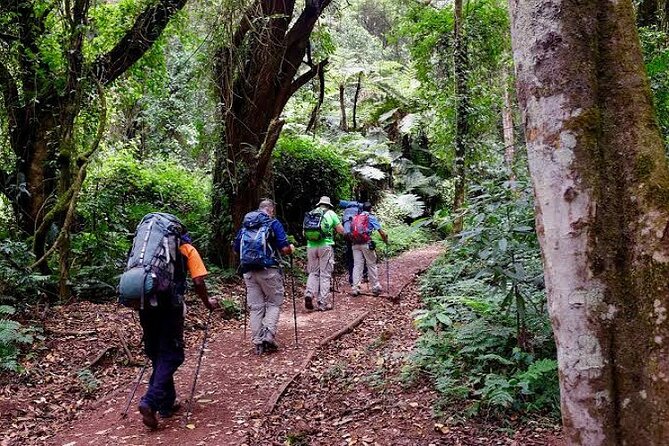
The first trail passes through montane forest and coffee-growing areas. The incline is steady rather than brutally steep, giving you a gentle introduction to the rhythm of the mountain. Your guide can point out local plants and animals, and this is the best day for forest wildlife.
Keep an eye out for black-and-white colobus monkeys and colorful bird species. These details give the first day a sense of place that you will not find higher up, where vegetation becomes sparse and the air feels much colder.
The walk takes about six hours, ending at Machame Camp on the edge of the rainforest. The practical issue is mud or damp forest conditions, depending on the weather. You will want boots with good grip and a waterproof layer close at hand.
Day 2: Moorland and the open Shira Plateau
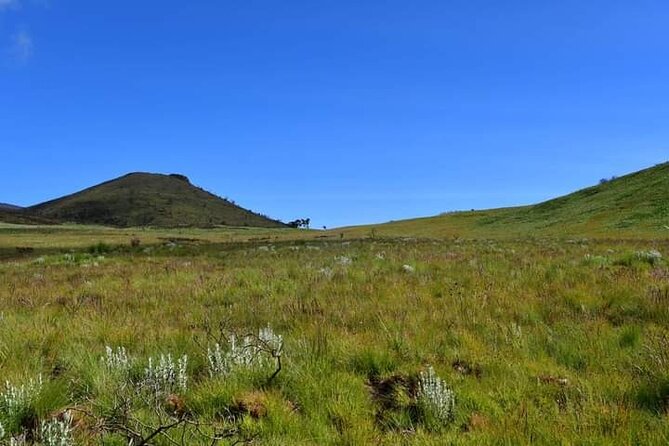
You rise early for breakfast and leave the forest behind. The trail steepens as you enter the moorland zone, where the trees thin out and the mountain begins to feel more exposed.
This is the day when Kibo, Kilimanjaro’s summit cone, starts to dominate the view. You climb along a rocky ridge toward the Shira Plateau, a collapsed volcanic crater and one of the mountain’s three former volcanic cones.
The walking time is about five to six hours, with an elevation gain of approximately 840 meters, or 2,800 feet. Once you reach the plateau, the path becomes easier as you continue to Shira Camp.
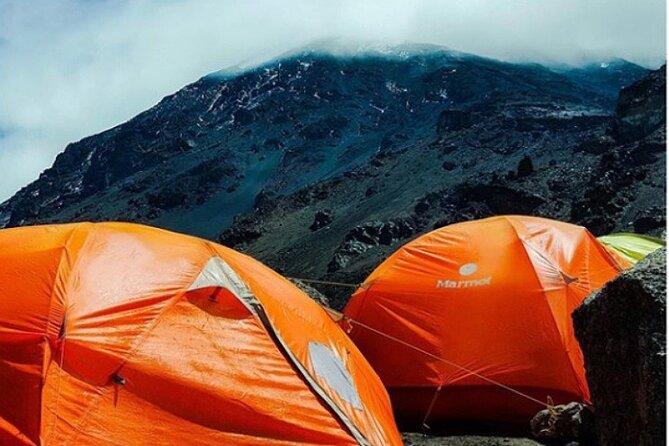
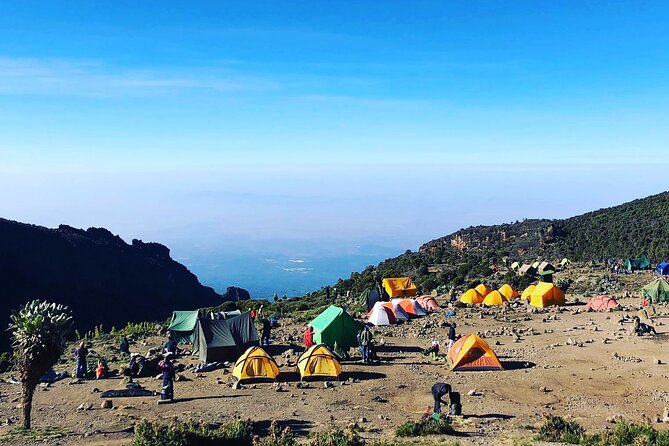
The open position brings wide views on a clear day, but Shira Camp can feel cold and windy. Temperatures may fall below freezing, so do not judge the night by the warm conditions in Moshi. At this stage, you will appreciate having a cook prepare hot food and a support team manage the camp routine.
Day 3: Lava Tower, then down to Barranco
Day three is the route’s key acclimatization day. You walk into a semi-desert zone of rock and volcanic scree, heading toward Lava Tower, a striking volcanic formation about 300 feet high.
The climb to Lava Tower can feel tough because you gain height through increasingly thin air. The reward is a broad view across the high slopes, but the real value comes after the stop. You descend steeply into Barranco Valley and finish at nearly the same elevation where you started.
This seven-hour day may be the hardest before the summit attempt. The itinerary notes that altitude symptoms often begin around this point, so you should move slowly and tell your guide if you feel unwell. A headache, nausea, unusual fatigue, or poor coordination should not be brushed aside.
Barranco Camp sits below the Barranco Wall in a sheltered valley. After the exposed conditions at Shira, this feels like a welcome change. The rocky setting is dramatic, but you should expect a demanding day with little spare energy by the time camp arrives.
A few more trips of this kind worth comparing:
- 7 Days Highlight of Tanzania Mid-Range Standard
★ 5.0 · 22 reviews - 7 Days Wildebeest Migration – Ndutu Calving Season
★ 5.0 · 18 reviews - 7 Day Grand Tanzania Safari
★ 5.0 · 13 reviews - 7 Day Safari in Tanzania National Parks
★ 5.0 · 5 reviews
Day 4: Climbing the Barranco Wall
The route gives you a shorter day for acclimatization, with about four to five hours of walking. After breakfast, you climb the Barranco Wall and cross a series of hills and valleys before reaching Karanga Valley.
The wall can look more intimidating than it is. You will use your hands in places and take a slower, careful line, but the route description presents it as manageable rather than technical climbing. This is a good day to focus on steady movement and listen closely to your guide.
The elevation gain is about 145 meters, or 456 feet. That modest number can be misleading because the trail rises and falls several times. You still need energy for the next day, so the shorter schedule is valuable.
Karanga Camp sits in the alpine desert zone. You have time to rest before dinner, which makes this one of the more forgiving days in the program. If your legs are tired, use the afternoon for eating, drinking, organizing your summit clothing, and sleeping.
Day 5: Barafu Camp and the final preparation
You leave Karanga after breakfast and follow the rocky ridge toward the junction with the Mweka Trail. The climb to Barafu Camp takes about three to four hours and gains roughly 605 meters, or 1,994 feet.
Barafu means ice, and the camp’s name suits its high, cold position. The tents are pitched along a narrow, rocky ridge with strong winds. You should take a few minutes to learn where everything is before dark, because the terrain around camp is uneven and the midnight departure comes quickly.
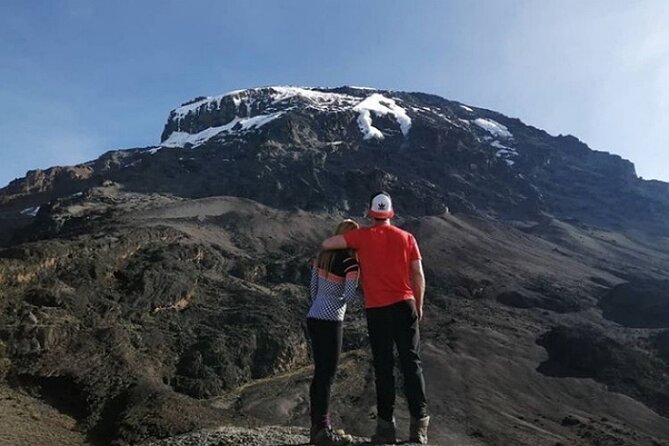
The views toward Kilimanjaro’s summit are impressive from Barafu, but this is not a sightseeing afternoon. You need to eat, rest, check your headlamp and warm layers, and keep your summit pack simple. The strongest advantage of the seven-day plan is that you arrive here after several days of adjustment rather than rushing straight from lower elevations.
The drawback is comfort. Barafu is exposed, cold, and not designed for a long, relaxed evening. You may get only a short sleep before the summit push.
Day 6: Stella Point, Uhuru Peak, and a long descent
Summit day begins at about midnight. You climb steeply over scree for four to five hours, gaining a great deal of height over a short distance. The pace is slow by design, and the darkness hides much of the slope ahead.
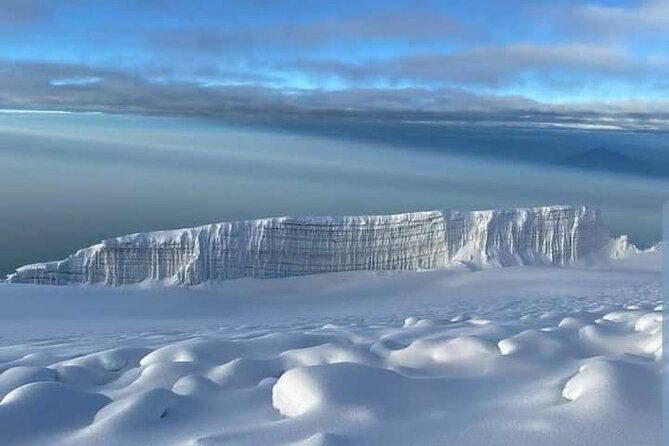
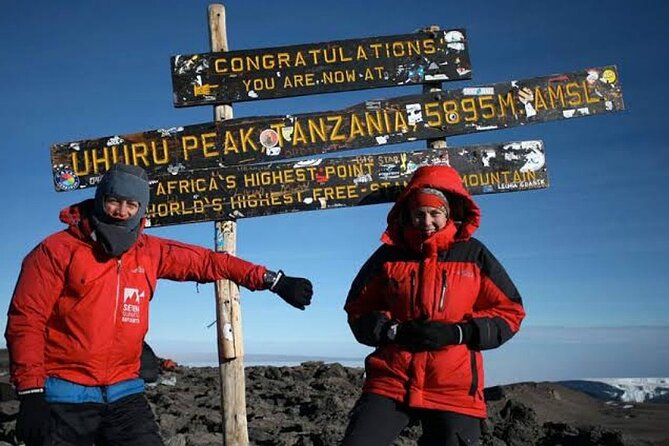
The goal is Stella Point on the crater rim at 5,739 meters. Reaching it around sunrise can bring views of ice cliffs inside the crater and Mawenzi Peak beyond. From Stella Point, you walk for about another hour to Uhuru Peak, the highest point on Kilimanjaro at 5,895 meters.
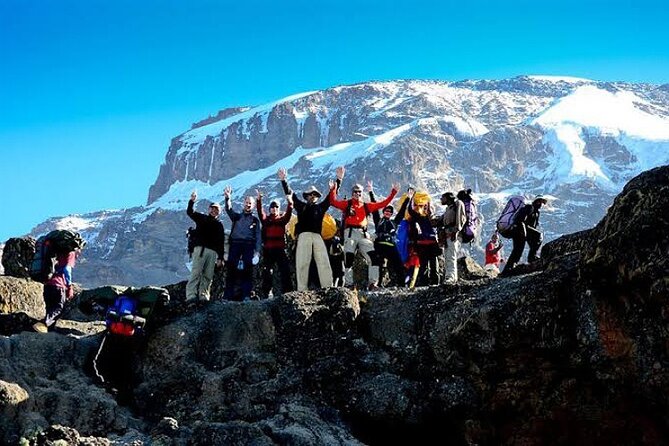
This is the emotional center of the trek, but it is also the most physically serious section. Cold, altitude, steep ground, and lack of sleep arrive at once. You need to accept that the guide may adjust the pace or turn you around if your condition becomes unsafe. Reaching Stella Point is itself a major achievement, and the itinerary says successful hikers reaching Stella Point and Uhuru Peak receive certificates at Mweka Gate the following day.
After the summit, you return to Stella Point and descend the scree to Barafu Camp for breakfast. Then you continue down toward Millennium or Mweka Camp for a long rest. The day is listed at about seven hours, but the combination of summit climbing and descent makes it feel like a full endurance test.
Day 7: Mweka Gate and the return to Moshi
The final morning is the easiest part of the mountain route, though tired legs may disagree. After breakfast, you descend through forest to Mweka Gate, with about three to four hours of hiking and an elevation loss of approximately 1,280 meters, or 4,220 feet.
At the gate, hikers who reached Stella Point and Uhuru Peak receive certificates. After that, private transport takes you back to your hotel in Moshi for a shower, dinner, and a Kilimanjaro beer.
The forest return is a pleasant contrast to the stark high-altitude camps. It also gives you a clear sense of how much ground you covered in one week. Bring patience for the final descent, since downhill walking can be hard on knees after summit day.
Guides, porters, food, and organization
The strongest praise connected with this operator centers on organization and the mountain crew. Specific guides named in the feedback include Leonard and Tom, with Leonard described as professional and decent, and Tom praised for his support and leadership. William, the company director, is also singled out for prompt communication and careful planning.
Those comments matter because a Kilimanjaro trek depends on more than a scenic route. You want a guide who watches the group, explains the pace, and reacts sensibly when altitude becomes a problem. You also want porters treated properly and a cook who can keep meals coming when you are tired and cold.
All seven breakfasts, lunches, and dinners are included during the climb, along with accommodation. The package also covers park fees and taxes, private transportation, and a rescue fee. Drinks and meals at your Moshi hotel before and after the climb are extra, as are flights, travel insurance, and tips for the guide, porters, and cook.
The maximum group size is 50. That is a significant number, even if the group is divided into smaller walking units. Ask how many people are expected on your departure and how the guide team handles different hiking speeds before you commit.
Is $2,550 a fair price?
At $2,550 per person, this is not a budget walk. Still, the value is easier to judge when you count what is bundled into the price: airport or hotel pickup, private transport, national park costs, rescue fees, mountain accommodation, three daily meals, a guide team, porters, and a cook.
You will still have extra costs. Travel insurance is essential to arrange independently, and you need money for crew tips, hotel meals, drinks, flights, and any personal equipment needs. The price also does not tell you the exact accommodation standard before or after the mountain.
I see the package as good value for someone who wants a managed climb with the major mountain expenses settled in advance. It is less compelling if you prefer a very small group, want to control every detail yourself, or are comparing it only by headline price.
The operator also offers free cancellation when you cancel at least 24 hours before the experience start time. Changes or cancellations made inside that window are not accepted for a refund.
Who should choose this trek?
This route suits you if you have a moderate level of fitness and are ready for long uphill and downhill days. You do not need to be a technical climber based on the information provided, but you must be comfortable with steep walking, cold camps, and a midnight summit start.
It is a good fit for people who want varied scenery, a structured schedule, and a full support crew. It also works well if you are combining Kilimanjaro with a safari, something the operator has arranged for some clients.
I would think twice if you dislike exposed camps, large groups, or uncertain sleep. The Barranco Wall, Lava Tower, and summit scree are manageable only when you pace yourself. You should also have travel insurance, since it is not included.
Should you book the 7-Day Machame Route?
Book it if you want a well-supported Kilimanjaro climb with a useful acclimatization schedule and clear cost coverage. The Lava Tower descent, the extra day before Barafu, and the professional crew feedback all support the choice.
Before paying, confirm the expected group size, the exact accommodation arrangements, the tipping expectations, and how pickup will work from your hotel or airport. If you are fit, patient, and ready for a hard summit night, this seven-day Machame itinerary offers a sensible route to Uhuru Peak without asking you to manage the mountain operation alone.
FAQ
How long is the Machame Route experience?
The experience lasts approximately seven days, including pickup, six days of climbing and descent, and the return to Moshi.
Where does the trek begin?
The trek begins at Machame Gate in Kilimanjaro National Park, reached by about a 45-minute drive from a hostel or hotel in Moshi.
Is hotel or airport pickup available?
Yes. Pickup is offered from your hotel or airport.
What meals are included?
Breakfast, lunch, and dinner are included during the mountain trek. Meals and drinks at your hotel before and after the climb are not included.
What is the highest point reached?
The summit is Uhuru Peak at 5,895 meters. The route also reaches Stella Point on the crater rim at 5,739 meters.
When does summit day begin?
The summit attempt starts at around midnight on day six.
Are tips included in the price?
No. Tips for the guides, porters, and cook are not included.
Can I cancel for a full refund?
Yes, if you cancel at least 24 hours before the experience start time. Cancellations made less than 24 hours before the start are not refunded.
Just added around Kilimanjaro
- 5 days Serengeti Wildebeest Migration Safari★ 5.0 · 3 reviews
- Tanzania Safari and Kilimanjaro Climb Multi-Day Experience★ 5.0 · 3 reviews
- 9 Days – Best of Tanzania Safari★ 5.0 · 4 reviews
- 7 Days Mountain Kilimanjaro climb Machame Route★ 5.0 · 4 reviews
- 8-Day Tanzania Migration Footsteps – Midrange★ 5.0 · 4 reviews
- 4 Days Lake Manyara National Park, Ngorongoro Crater , Serengeti National Park.★ 4.0 · 4 reviews
- 6 Days Mara River Crossing – The Great Migration★ 5.0 · 5 reviews
- 6- Day Adventure Lodge safari to see Migration★ 4.5 · 5 reviews
Kilimanjaro Treks, compared.



8-Day Small-group Lemosho Kilimanjaro Summit Trekking
Read our review →


Climbing Kilimanjaro through 7 days Machame Route
Read our review →

Browse the lists this tour appears in