
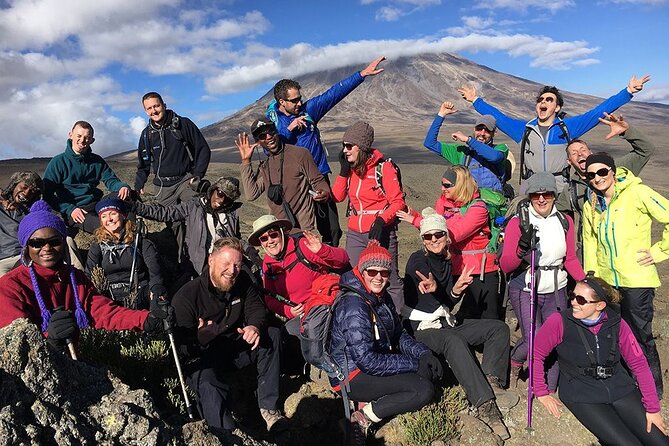
Reviewed · KILIMANJARO TREKS
7 Days Kilimanjaro via Machame route affordable price
Kilimanjaro rewards patience more than bravado. This Machame Route trek appeals to me because it gives you spectacular scenery and a private group setting, while the guide and crew handle meals, camps, permits, and transport. I also like the built-in acclimatization day, which takes you high toward Lava Tower before bringing you down to Barranco Camp.
The main caution is the schedule. It is sold as a seven-day experience, but the mountain itinerary shown here covers six days, with the final lodge night included after the descent. Summit day is also a serious physical test, not a casual hike, and the high altitude can make even simple walking feel slow.
In This Review
- Key points to know before booking
- Why the Machame Route is worth your time
- Day 1: Machame Gate to the rainforest
- Day 2: Leaving the forest for Shira Camp
- Day 3: Lava Tower and the Barranco descent
- Day 4: The Barranco Wall and Barafu Camp
- Day 5: Uhuru Peak and the long descent
- Day 6: Mweka Gate and the return to Moshi
- What the $2,400 price really covers
- How the company performs on the human side
- Who should book this Machame climb?
- Should you book Chief’s Tours for this route?
- FAQ
- How long does the Kilimanjaro experience last?
- What route does the climb use?
- How high is the summit?
- Is transportation included?
- Are meals included?
- Is this a private climb?
- What is not included in the price?
Key points to know before booking
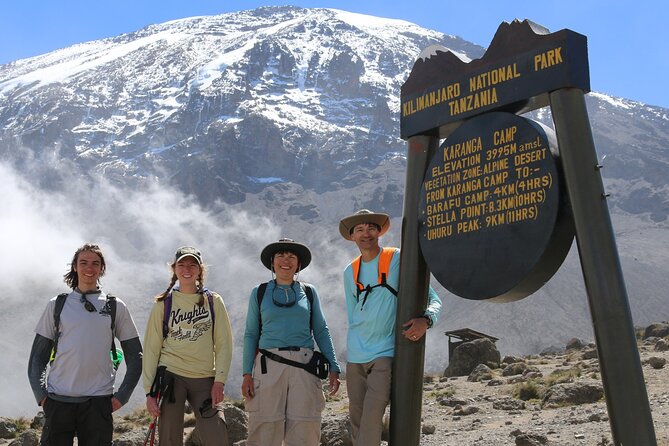
- The route reaches Uhuru Peak at 5,895 meters: You start the summit attempt around midnight to 2 a.m. and aim for sunrise near Stella Point.
- Machame offers changing scenery: The trail moves from muddy rainforest to open high country, volcanic ridges, scree, glaciers, and the Barranco Wall.
- The itinerary uses altitude wisely: Day 3 climbs toward Lava Tower at about 4,650 meters before descending to Barranco Camp.
- The experience is private: Only your group participates, so the guide can focus on your pace and needs.
- The $2,400 price covers major essentials: Meals, camping equipment, crew wages, park fees, transfers, a guide, and an oxygen cylinder are included.
- Expect a demanding summit night: You gain 1,233 meters from Barafu Camp to the summit, then descend almost 2,800 meters the same day.
Why the Machame Route is worth your time
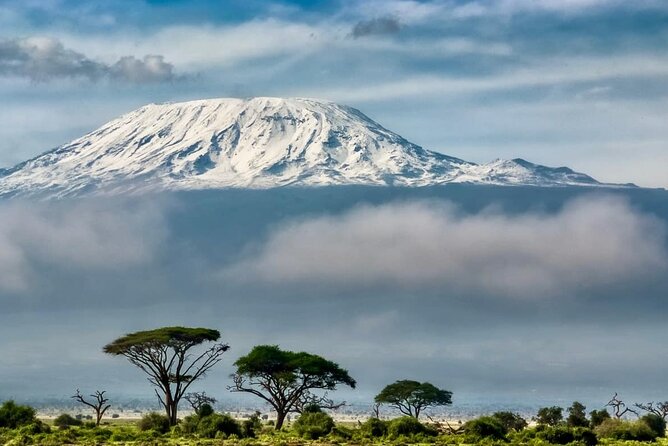
Machame is often chosen for its scenery, and that is the clearest reason to consider this trip. You do not simply walk uphill through the same setting for a week. The vegetation and weather change as you gain height, giving each day a different feel.
The lower trail passes through rainforest, where mud and slippery ground are common. Higher up, the forest thins into open volcanic country. By the time you reach the Shira Plateau, the air is cooler and the views are broader. The route then makes a useful acclimatization climb toward Lava Tower before dropping to Barranco.
I like this pattern because you spend time at altitude without sleeping at your highest point too early. That does not make the climb easy, but it gives your body a better chance to adjust. The slow pace also fits the central rule of Kilimanjaro: conserve energy early, because summit night asks for everything you have left.
This is a private climb, so you are not placed into a large mixed group. That matters on a route where everyone may walk at a different pace. You can ask questions, stop when needed, and communicate directly with your guide. The company has received especially strong praise for its guides, including Washington and Nicholas, and for quick communication with owner Adidas.
More Kilimanjaro routes and climbs:
- Kilimanjaro Airport taxi to/from Moshi town/Arusha town
★ 5.0 · 60 reviews - 6 Days Climbing Mount Kilimanjaro Machame Route
★ 5.0 · 40 reviews - 8 Days Kilimanjaro Hike via Lemosho Route
★ 5.0 · 39 reviews
Day 1: Machame Gate to the rainforest
Your day begins with a roughly 45-minute drive from Moshi through Machame village to the Kilimanjaro National Park gate. The included transport removes an annoying bit of planning, especially if you have arrived tired or are carrying a full pack.
At the gate, permits are arranged while crews prepare supplies and equipment. This waiting period is part of the mountain routine. It can feel slow, but it lets you see the organized work behind a Kilimanjaro climb before you enter the forest.
The trail rises from 1,811 meters to 3,021 meters. The walk takes about six hours, depending on conditions and pace. The rainforest is attractive, with thick vegetation, winding paths, and information from the guide about local plants, animals, and the surrounding environment.
The practical problem is mud. Lower sections can be wet, muddy, and slippery, so gaiters are not a fussy extra here. Trekking poles are also useful for balance. Wear boots you trust, keep rain protection accessible, and do not bury your warm layer at the bottom of your bag.
Day 2: Leaving the forest for Shira Camp
Day 2 covers about four hours and climbs from 3,021 meters to 3,839 meters. The rainforest gives way to more open ground, and the route crosses a valley before following a steep, rocky ridge.
This shorter day is welcome after the first long walk. You continue ascending, but you have more time to settle into the rhythm of walking, eating, drinking, and resting. The route turns west toward a river gorge before reaching Shira Camp.
At 3,839 meters, the temperature begins to drop. You will want warm layers ready for camp, along with a hat and gloves if you tend to feel cold. The itinerary includes breakfast, lunch, and dinner, so you are not left to manage food on your own after a tiring day.
One strength of this setup is the attention to food. Several past customers specifically praised the meals, and that is valuable on a climb where appetite and energy can become difficult to manage. The exact menu is not specified, so pack any personal snacks you know you can eat at altitude.
Day 3: Lava Tower and the Barranco descent
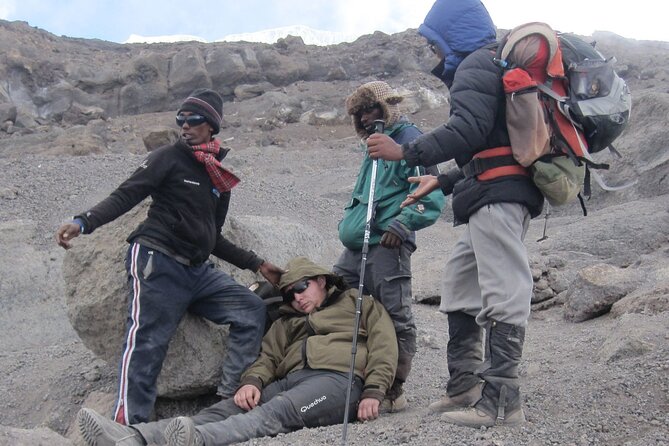
Day 3 is the route’s key acclimatization day. You begin at Shira Camp, around 3,839 meters, climb toward Lava Tower at approximately 4,650 meters, then descend to sleep at Barranco Camp, about 3,986 meters.
The walking time is about six hours. The route crosses the Shira Plateau, heads east along a ridge, and passes a junction leading toward Kibo, the mountain’s main summit cone. You then continue southeast toward Lava Tower, also called the Shark’s Tooth.
This is a memorable section because the terrain becomes more severe and exposed. The climb toward Lava Tower may feel tough, even though the day ends only slightly higher than it began. That is the point. You spend time high, then sleep lower.
After Lava Tower, the route passes another junction toward Arrow Glacier before descending to Barranco. The descent can feel like a gift after the climb, though loose or uneven ground still demands care. Keep your pace steady and listen to the guide’s instructions.
Barranco Camp gives you a dramatic view of the Barranco Wall, which you will tackle the next morning. The day’s design is one of the strongest parts of this itinerary, since it adds useful time at altitude without rushing directly toward the summit.
A few more trips of this kind worth comparing:
- 7-Day Machame Route Kilimajaro
★ 5.0 · 28 reviews - 7 Days Highlight of Tanzania Mid-Range Standard
★ 5.0 · 22 reviews - 7 Days Wildebeest Migration – Ndutu Calving Season
★ 5.0 · 18 reviews - 7 Day Grand Tanzania Safari
★ 5.0 · 13 reviews
Day 4: The Barranco Wall and Barafu Camp
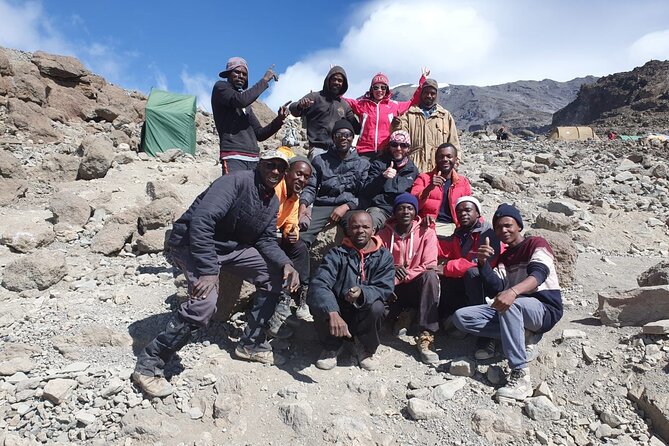
Day 4 covers around six hours and begins with the Barranco Wall. Do not mistake the word wall for a technical climbing pitch. It is a steep, adventurous section that requires careful movement and confidence, but the route continues on foot.
The crew’s experience is easy to notice here. Guides and porters move across the section with impressive speed, while you should take your time and use your hands when needed. This is one place where a private group helps. You are not pressured to match a stranger’s pace.
After Barranco, you continue to the Karanga Valley and pass the junction connecting with the Mweka Trail. The route then climbs toward Barafu Camp at approximately 4,662 meters. Reaching Barafu means you have completed the Southern Circuit, with the summit visible from several angles along the way.
The scenery is dramatic, but the mood changes here. This is no longer a normal hiking camp. You have an early dinner, rest, and prepare for the summit attempt. Keep your headlamp, water, warm clothing, gloves, and summit snacks close at hand. The schedule may require you to wake between midnight and 2 a.m., so organization matters.
Day 5: Uhuru Peak and the long descent
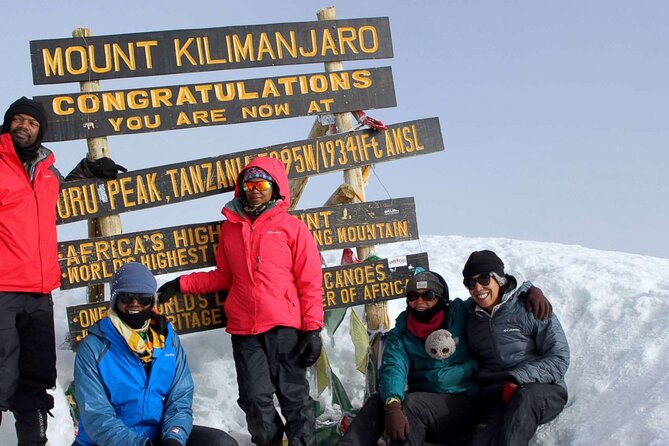
Day 5 is the hardest day by a wide margin. You leave Barafu Camp at 4,662 meters and climb to Uhuru Peak at 5,895 meters, or 19,341 feet. You then descend to around 3,106 meters, losing nearly 2,800 meters in one day.
The summit walk begins in darkness. The route heads between the Rebmann and Ratzel glaciers, then follows switchbacks through heavy scree toward Stella Point on the crater rim. This is a slow, mental test. The cold, darkness, thin air, and steep ground can make each step feel larger than it should.
At Stella Point, you may be rewarded with sunrise. The timing depends on pace and conditions, but sunrise from the crater rim is the defining moment of the climb. From there, the route continues around the crater rim to Uhuru Peak, the highest point in Africa.
The supplied schedule gives only about five hours for this section, but actual timing can vary with conditions, rest stops, and individual pace. Do not treat that number as a promise. Summit day combines the largest climb with the biggest descent, so success depends as much on energy management as determination.
After reaching the summit, you return to Barafu Camp and continue down toward the lower camp area. The descent may seem easier, but tired legs and loose ground can create their own problems. Drink, eat, and move carefully rather than rushing because the uphill work is over.
Day 6: Mweka Gate and the return to Moshi
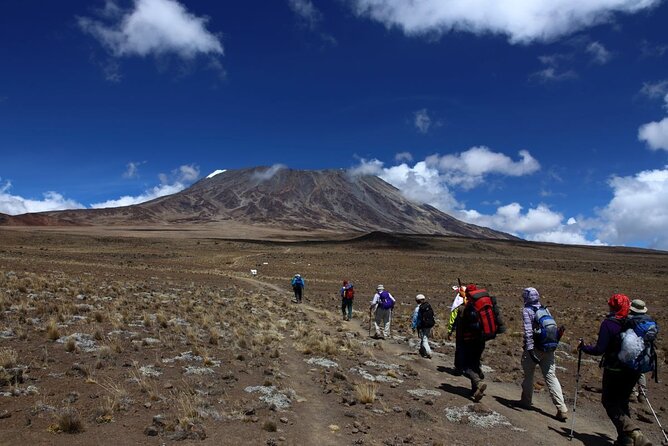
The final mountain section descends from about 3,106 meters to 1,633 meters. It takes roughly three hours, though the trail can be wet, muddy, and steep.
The lower elevation brings warmer weather and a different trail feel. Gaiters and trekking poles are useful again, especially if rain has affected the path. Your knees may appreciate slow, controlled steps more than speed.
At Mweka Park Gate, you receive summit certificates after completing the descent. A vehicle then meets you at Mweka village for the approximately 30-minute drive back to your Moshi hotel.
The evening is intentionally simple: a hot shower, dinner, and time to celebrate. The package includes dinner on this day, and the itinerary lists an overnight at Kilele Lodge with bed and breakfast before your onward journey, safari, or time in Zanzibar.
There is a small scheduling point to clarify before you pay. The experience is described as seven days, while the mountain plan has six numbered days. Ask exactly which night is counted as day seven and confirm the lodge arrangements that apply to your dates.
What the $2,400 price really covers
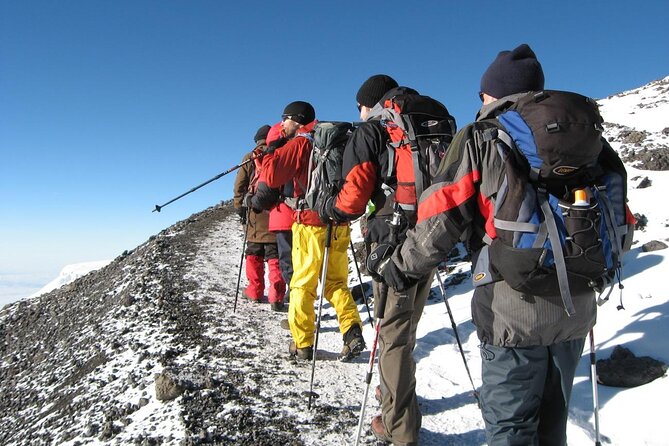
At $2,400 per person, this is not a bare-bones park entry followed by a guide with a map. The price includes private transport, park fees and taxes, a professional guide, camping equipment, meals, gate transfers, airport transfers, and an oxygen cylinder.
It also includes stated fair and sustainable salary payments for the crew. That is important. Kilimanjaro depends on a large support team, and the price should be judged partly by how responsibly that team is treated, not only by how cheaply you can reach the summit.
The six lunches, five breakfasts, and six dinners cover the mountain schedule shown. Camping equipment is included, but personal climbing gear rental is listed separately. That can affect your final cost if you need boots, a sleeping bag, warm layers, or other equipment.
You should also budget for tips, visa fees, personal expenses, and international travel insurance. Those exclusions are normal for an international mountain trip, but they can add up. Ask for a current equipment list before departure so you know what you own, what you need to rent, and what the company supplies.
The package becomes better value if you need airport pickup, hotel transfers, camping equipment, and a private group. It may be less attractive if you already own every item and prefer a larger shared departure at a lower rate.
How the company performs on the human side
The strongest praise centers on care and communication. Adidas, the owner, is described as quick to answer questions and helpful during planning. That matters when you are arranging flights, airport pickups, gear, a mountain climb, and perhaps a safari in the same country.
The crew has also been praised for checking equipment before departure and helping people who arrived without a complete kit. That does not mean you should arrive unprepared, but it suggests the pre-climb gear check is taken seriously.
Past climbs also describe support for solo participants and airport transfers at very early hours. The company has been used for both Kilimanjaro and safari trips, making it possible to combine the mountain with another Tanzanian experience if your schedule allows.
The public record is very positive, with a 99 percent recommendation rate and 110 five-star ratings shown. Still, praise should not replace practical questions. Ask who your lead guide will be, how many crew members are assigned to your group, what equipment is included, and how the seven-day timing works.
Who should book this Machame climb?
I would consider this trip a good fit if you want the scenery of Machame, a private group, included meals, and help with the many moving parts around Kilimanjaro. It also suits a solo climber who prefers direct support rather than joining an unknown group.
You need moderate physical fitness, and you should be comfortable walking for several hours on steep, uneven trails. The summit night is the real test, with a midnight start, cold conditions, scree, and a major descent after reaching the top.
This may not suit you if you want a relaxed holiday with a little mountain walking added. Kilimanjaro is a serious high-altitude trek, even when the daily distances look manageable. The route is scenic, but it asks for patience, warm clothing, sensible pacing, and a willingness to follow the guide’s rhythm.
Free cancellation is available up to 24 hours before the experience start time. Cancellations or changes made inside that window are not accepted for a refund, so check the local cut-off time before finalizing your plans.
Should you book Chief’s Tours for this route?
I would book this trek if the company confirms the day count, equipment package, crew arrangements, and airport transfers in writing. The combination of Machame’s scenery, a private group, included meals, camping support, and strong praise for the guides gives the $2,400 price a solid case.
I would pause if you are comparing only headline prices. Add gear rental, tips, visas, insurance, and personal costs before deciding. Also remember that the most important feature is not the word affordable. It is the quality and treatment of the crew carrying the operation up the mountain.
For a first Kilimanjaro climb, this is a practical choice for someone who wants help without giving up the challenge. Go slowly, prepare for wet lower trails and freezing summit hours, and confirm the seven-day schedule before you book.
FAQ
How long does the Kilimanjaro experience last?
The mountain itinerary is organized across six numbered days, while the experience is promoted as seven days. The final lodge night at Kilele Lodge appears to account for part of the additional time, so confirm the exact schedule before booking.
What route does the climb use?
The climb uses the Machame Route, beginning at Machame village and continuing through rainforest, Shira Camp, Lava Tower, Barranco Camp, Barafu Camp, Uhuru Peak, and the Mweka descent.
How high is the summit?
Uhuru Peak is listed at 5,895 meters, or 19,341 feet.
Is transportation included?
Yes. Private transportation, gate transfers, airport transfers, and pickup from a Moshi hotel are included.
Are meals included?
Yes. The package includes six lunches, five breakfasts, and six dinners.
Is this a private climb?
Yes. Only your group participates in the activity.
What is not included in the price?
Personal expenses, tips for the guide and crew, visa fees, international travel insurance, and renting climbing gear are not included.
Just added around Kilimanjaro
- 5 days Serengeti Wildebeest Migration Safari★ 5.0 · 3 reviews
- Tanzania Safari and Kilimanjaro Climb Multi-Day Experience★ 5.0 · 3 reviews
- 9 Days – Best of Tanzania Safari★ 5.0 · 4 reviews
- 7 Days Mountain Kilimanjaro climb Machame Route★ 5.0 · 4 reviews
- 8-Day Tanzania Migration Footsteps – Midrange★ 5.0 · 4 reviews
- 4 Days Lake Manyara National Park, Ngorongoro Crater , Serengeti National Park.★ 4.0 · 4 reviews
- 6 Days Mara River Crossing – The Great Migration★ 5.0 · 5 reviews
- 6- Day Adventure Lodge safari to see Migration★ 4.5 · 5 reviews
Kilimanjaro Treks, compared.



8-Day Small-group Lemosho Kilimanjaro Summit Trekking
Read our review →


Climbing Kilimanjaro through 7 days Machame Route
Read our review →

Browse the lists this tour appears in