
Reviewed · WALKING TOURS
Private Walking Tour with Giraffes
Giraffes at walking height change the whole safari mood. Outside Arusha, this private visit combines a close encounter with giraffes, a guided walk, and a serious look at wildlife protection, land regeneration, and farming. I like the personal format, since you can ask questions freely, and I like that the visit treats conservation as a community issue rather than only an animal attraction.
I also appreciate the flexible morning or afternoon departure. The main consideration is that the visit is short, lasting about 1 hour 20 minutes, and the approach to the center may feel rough or surprising. You should also expect to walk outdoors and have a moderate level of fitness.
In This Review
- Key points to know before you go
- Reaching the Arusha Giraffe Centre
- The education center explains the bigger picture
- Walking with giraffes in a natural setting
- Why a private tour makes a difference
- A conservation project with a human side
- What the $55 price includes
- Choosing morning or afternoon
- Who will enjoy this experience most
- Booking and cancellation details to keep in mind
- Should you book the Arusha giraffe walk?
- FAQ
- Where does the private giraffe walking tour begin?
- Where does the activity end?
- How long does the tour last?
- How much does the tour cost?
- Is the tour private?
- Can I choose a morning or afternoon visit?
- What does the tour include?
- What fitness level is required?
- What happens if bad weather cancels the tour?
Key points to know before you go
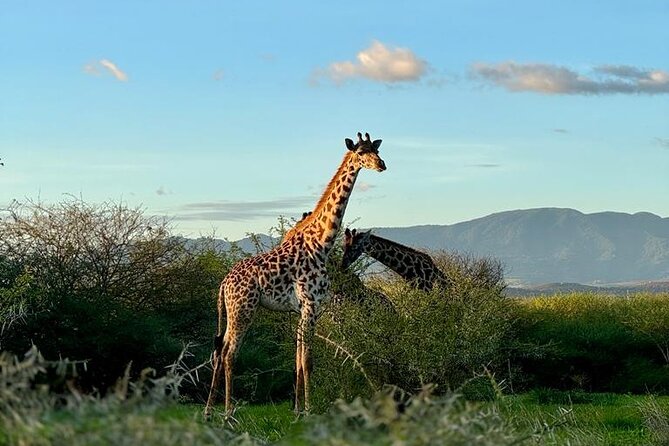
- You may walk within about five feet of giraffes: The close distance is the main draw, but the encounter takes place in a natural setting rather than a staged photo area.
- The private guide makes the visit personal: Only your group participates, giving you room to ask detailed questions about giraffes, wildlife, farming, and conservation.
- The education comes before the giraffe walk: The center explains its work with Wildlife, Environment, and Community, then introduces its Eco-Ag approach.
- The visit connects giraffe protection with farming: You learn how unsustainable agriculture can reduce habitat and how regenerative methods may help restore land.
- Morning and afternoon times offer useful flexibility: You can fit the experience around other plans in Arusha.
- The $55 price pays for more than a wildlife photo: It supports a private guided visit and an education project focused on giraffes, local children, and community action.
Reaching the Arusha Giraffe Centre
The meeting point is the Arusha Giraffe Centre at 21 Giraffe Centre Road in Moita, outside Arusha. The activity begins and ends there, so you need to arrange your own way to the meeting point unless your booking separately includes transportation.
The drive may be part of the adventure. One account describes passing Maasai families along the way, and another warns that the road may surprise you because sections are rough or all-terrain. I would allow extra time for the approach and avoid assuming that the final stretch feels like a smooth city road.
That practical detail matters. This is not an attraction in central Arusha where you simply step out of a vehicle and enter a polished facility. The setting is connected to the bush and the rural communities around it, which helps explain the center’s focus on land, farming, and habitat.
The center is best approached with sensible outdoor clothing and shoes that can handle an uneven walk. The supplied information does not specify a dress code, footwear rules, or transport service, so confirm those points when booking if they affect your plans.
More Private Tours in Arusha
- Private 6-Day Tarangire Manyara Crater and Serengeti with Mid-Range Lodges
★ 5.0 · 238 reviews - 5 Days Budget Private Safari, Tanzania
★ 5.0 · 191 reviews - 5-Day Private Northern Tanzania Safari from Arusha
★ 5.0 · 182 reviews
The education center explains the bigger picture
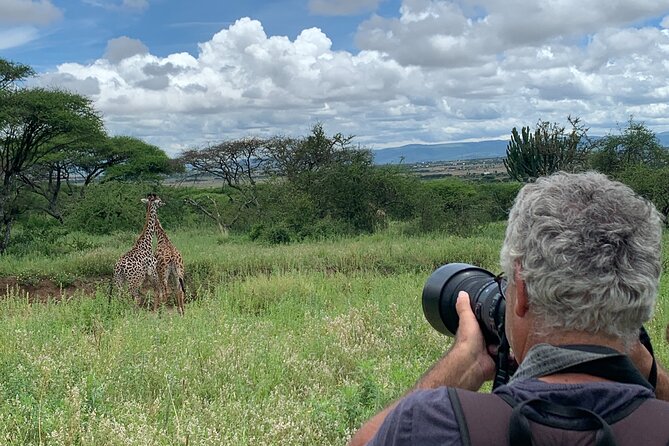
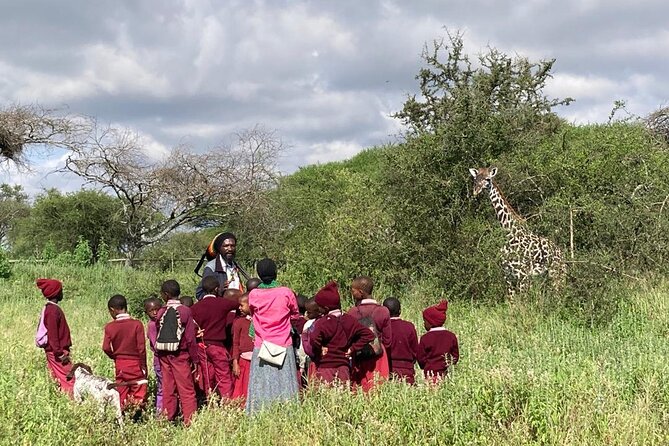
Your visit begins with a guided tour through the education center. This part gives the giraffe encounter a useful frame. Instead of treating the animals as an isolated attraction, the presentation looks at three linked concerns: Wildlife, Environment, and Community.
The center then explains its Eco-Ag solution. The idea, as presented here, is that conservation cannot work for long if local agriculture continues to damage the land or reduce animal habitat. Giraffe protection is therefore tied to how people grow food, care for soil, and make a living.
I find this especially worthwhile for anyone already planning a safari. A game drive can show you animals in a protected area. This visit asks a harder question: what happens beyond the reserve, where farms, communities, and wildlife share limited space?
The education segment may be the most important part for some people, though it may not suit anyone looking only for a quick animal photo. Guides such as Nic, Nick, Jerome, and others have been praised for explaining the work with enthusiasm and strong wildlife or agricultural backgrounds. Your guide may vary, but the private format gives you a better chance to shape the conversation around your interests.
The center also places attention on children and education. That focus matters because local children will grow into the people who make future decisions about farming, wildlife, and land use. I would listen carefully here, even if your main goal is simply to see giraffes close up.
Walking with giraffes in a natural setting
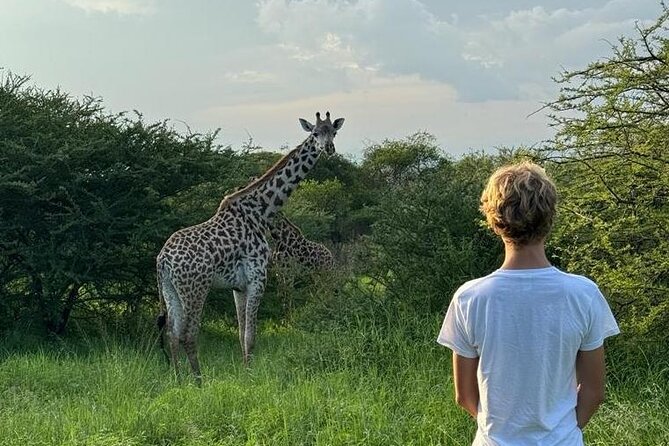
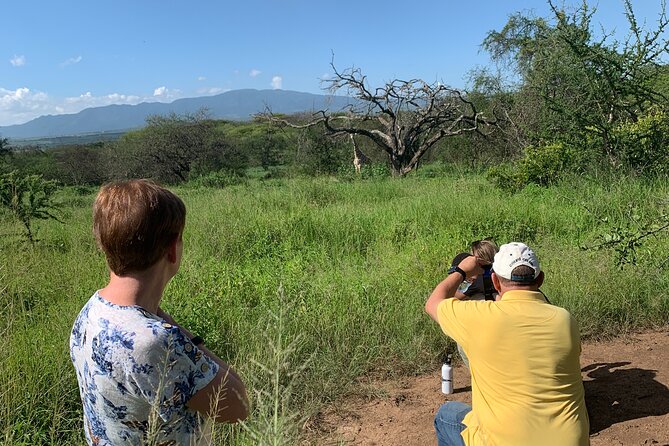
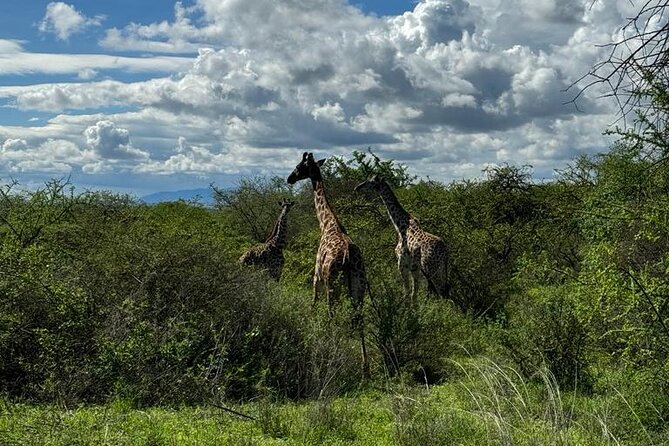
After the educational introduction, you head outside for the walking portion. The giraffes are seen around the center’s natural area, and the encounter can bring you within roughly five feet of these tall, calm animals.
That distance is close enough to notice the details that disappear during a typical vehicle safari. You can study the giraffes’ height, patterned coats, long necks, and careful movements without viewing them only through a windshield. The scale of the animals becomes much clearer when you are standing on the same ground.
Still, this is wildlife, not a petting zoo. The description emphasizes respectful contact and giraffes in their natural habitat. You should follow the guide’s instructions, remain calm, and avoid treating the animals like photo props. The most rewarding moments may come when you simply watch the giraffes move and feed around you.
The walk takes place outdoors, so conditions can affect the visit. During the rainy season, the area may be especially green and attractive. Poor weather can also lead to cancellation, in which case you can choose another date or receive a full refund.
The tour information gives a duration of about 1 hour 20 minutes, while the center visit itself is listed at about 1 hour 15 minutes. In practical terms, plan for a compact experience rather than a half-day outing. Some people have described their visit as a half-day trip from Arusha, likely when travel time is included, but the guided activity itself is much shorter.
Why a private tour makes a difference
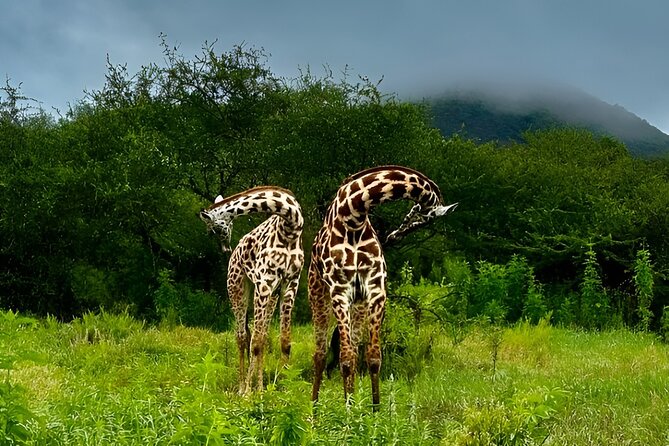
A private group is useful here because the subject is not limited to giraffe facts. You can ask about feeding, breeding, habitat, rewilding, land restoration, and local farming without waiting for a large group to move along.
The guides have been praised for explaining both animals and agriculture. One guide, Jerome, was singled out for his dedication to land regeneration and giraffe care. Another guide was described as a former teacher with a bachelor’s degree in wildlife studies. Nic was also praised for explaining the project with enthusiasm.
Those details suggest a visit led by people who care about teaching, not only escorting you from one stop to the next. I would use the private setting to ask direct questions: How are giraffes prepared for life outside the center? What makes a habitat suitable for them? How does Eco-Ag reduce pressure on wildlife areas? Which community projects matter most?
The private format also helps families. A child who is fascinated by giraffes can ask simple questions, while an adult can explore the conservation side in more depth. One family described the experience as especially good with children, but the moderate fitness requirement still matters for anyone who may struggle with walking outdoors.
More Walking Tours in Arusha
- Arusha Guided Walking City Tour, Culture, Lifestyle & History
★ 5.0 · 150 reviews - 7-Day Private Tanzania Safari with Sunset Walking on the Crater Rim and Maasai
★ 5.0 · 40 reviews - 4 Days lodge safari Tarangire , Ngorongoro crater & Walking
★ 5.0 · 39 reviews - Tanzania – Arusha NP – Private Guided 4×4 Safari – Game Drive & Walking
★ 5.0 · 30 reviews
A conservation project with a human side
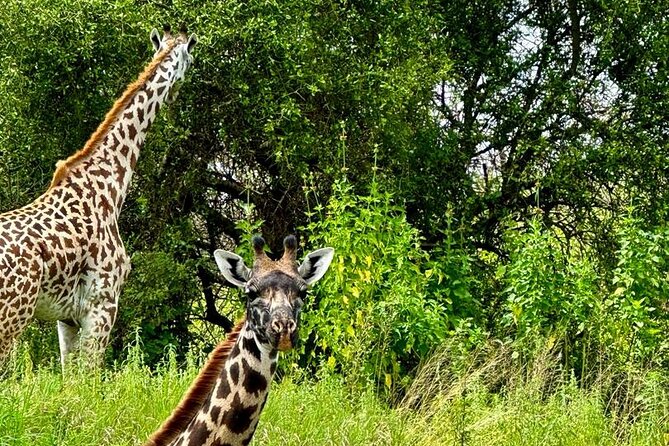
The center’s work is presented as more than giraffe breeding or close animal encounters. It also involves land regeneration and community education. The project has been developed over many years, and the people running it are described as deeply committed to caring for giraffes and restoring nature.
That long-term approach gives the visit more weight. You are not simply paying for a few minutes near an attractive animal. Your fee helps support a place that explains how wildlife, soil, farming, and local people affect one another.
The agricultural message may be unfamiliar to some safari visitors. Giraffes need habitat, but habitat can be lost when land is farmed in ways that exhaust the soil or spread into wildlife areas. The center’s Eco-Ag work aims to show how farming can be part of the solution rather than only part of the problem.
I would keep your expectations measured. The supplied information does not provide detailed figures about the giraffe population, the number of animals at the center, or the exact methods used in Eco-Ag. You will receive an introduction to the approach, but this is not presented as a full agricultural course or a long conservation workshop.
What the $55 price includes
At $55 per person, this is not the cheapest way to see an animal in Tanzania. It is also not priced like a full safari, and that comparison is important. You are paying for a private guided visit, admission to the education center, the walking encounter, and direct access to a guide.
I think the price is fair if you value close contact and learning. A standard wildlife drive can offer more species and a longer outing, but it may not bring you close to giraffes on foot or explain the connection between habitat loss and agriculture in this direct way.
The value improves for couples, families, and small groups who want their own guide. You are not sharing the visit with strangers, and you can use the time efficiently. If your only aim is to take one photograph beside a giraffe, the price may feel high for an activity lasting just over an hour.
I would also consider the project itself. The center’s work with giraffes, regeneration, and local education gives the admission a purpose beyond entertainment. For me, that makes this a stronger choice than a purely commercial animal encounter, provided you are interested in the conservation message as well as the animals.
Choosing morning or afternoon
You can choose a morning or afternoon visit. That flexibility is useful if you are staying in Arusha and arranging several activities close to town.
A morning slot may suit you if you prefer to start with an outdoor activity and keep the rest of the day open. An afternoon visit could work well after another Arusha attraction. One visitor specifically suggested pairing the center with the cultural center for a fuller day nearby, though the supplied information does not give exact travel times between the two.
I would choose based on your wider schedule rather than assuming one period is always better. Weather can change, and the center requires suitable conditions. If rain is forecast, keep some flexibility in your plans and remember that the operator may offer another date or a refund if poor weather cancels the activity.
Who will enjoy this experience most
I would recommend this tour to people who want a close, respectful giraffe encounter with a clear educational purpose. It is a good fit for couples, families, and small private groups who prefer questions and conversation over a fixed group presentation.
It also suits safari visitors with a spare morning or afternoon in Arusha. The activity is short enough to fit around other plans, but the drive and outdoor setting mean you should not treat it as a five-minute stop.
Children can enjoy the giraffes, while adults may find the farming and regeneration discussion more meaningful. Anyone with a moderate fitness level should be able to take part according to the stated requirements, but the information does not promise a fully accessible route or describe the walking surface in detail.
I would be more cautious if you want a long safari, many animal species, or guaranteed dry weather. This is focused on giraffes and education. Its strength is focus, not variety.
Booking and cancellation details to keep in mind
Confirmation is provided when you book, and the tour uses a mobile ticket. You can cancel free of charge up to 24 hours before the local start time for a full refund.
Cancellations or changes made less than 24 hours before the start are not accepted for a refund. Since the activity depends on good weather, a cancellation caused by poor conditions gives you the choice of another date or a full refund.
The activity is private, but it is not described as wheelchair accessible. Anyone can join in principle, while a moderate fitness level is requested. If you have mobility concerns, ask for specific information about the path before paying.
Should you book the Arusha giraffe walk?
Book it if you want more than a wildlife photograph. The chance to walk within about five feet of giraffes is memorable, but the visit earns its price through the conservation education, private guiding, and connection between giraffe habitat and farming.
I would especially choose it for a free morning or afternoon in Arusha, a family trip, or a safari itinerary that needs a thoughtful local activity. I would skip it if you are searching for a full wildlife safari or have no interest in the education center.
For most visitors who value personal guiding and responsible wildlife experiences, this is a strong addition to time in Arusha. Just plan for the rough approach, outdoor walking, a compact schedule, and weather that may not always cooperate.
FAQ
Where does the private giraffe walking tour begin?
It begins at the Arusha Giraffe Centre, located at 21 Giraffe Centre Road, Moita, Tanzania.
Where does the activity end?
The activity ends back at the Arusha Giraffe Centre meeting point.
How long does the tour last?
The experience lasts approximately 1 hour 20 minutes. The guided center visit is described as about 1 hour 15 minutes.
How much does the tour cost?
The listed price is $55 per person.
Is the tour private?
Yes. Only your group participates in the private activity.
Can I choose a morning or afternoon visit?
Yes. Morning and afternoon tour times are available.
What does the tour include?
It includes admission to the Arusha Giraffe Centre, a guided education-center visit, and a walking giraffe safari around the sanctuary area.
What fitness level is required?
A moderate level of physical fitness is recommended. The information also states that anyone can join.
What happens if bad weather cancels the tour?
If poor weather causes cancellation, you can choose a different date or receive a full refund. You can also cancel at least 24 hours before the local start time for a full refund.
More Walking Tours
- Street Food and Community Walking Tour
★ 5.0 · 12 reviews - Arusha: City Walking Tour Historic and Modern Highlights
★ 4.5 · 12 reviews - Coffee walk day trip
★ 5.0 · 10 reviews - Arusha City Culture and Historical Walking Tour
★ 5.0 · 8 reviews
Just added around Arusha
- 5 Days Safari Tarangire, Serengeti, and Ngorongoro Crater★ 5.0 · 3 reviews
- Love lives in Africa★ 5.0 · 3 reviews
- 5 Days of Safari, Culture & Hot Springs – Tour from Arusha★ 5.0 · 3 reviews
- Arusha National Park Safari by Jeep★ 4.5 · 3 reviews
- 5Days Family _Group Tour Lodging Mid-Range in the Jungle★ 5.0 · 3 reviews
- 2 Days Tarangire and Ngorongoro Crater Tour★ 5.0 · 3 reviews
- Serengeti & Ngorongoro 3 Days Budget Safari★ 5.0 · 3 reviews
- 7 Days PRIVATE Best of Tanzania Safari *Departing everyday*★ 5.0 · 3 reviews
Walking Tours, compared.


3 Hours Private Stone Town walking Tour with Guide
Read our review →
Stone Town Historical Cultural Walking Guided Tour
Read our review →
Stonetown: Food Markets and Street Food Walking Tour
Read our review →
Arusha Guided Walking City Tour, Culture, Lifestyle & History
Read our review →

Browse the lists this tour appears in