
Reviewed · KILIMANJARO TREKS
Explore the 360° of Kilimanjaro
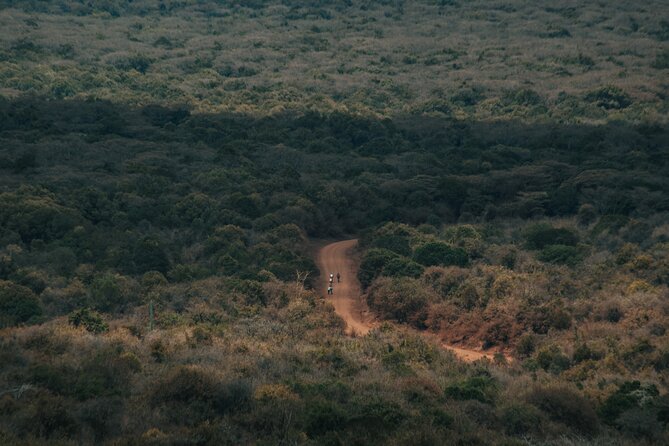
Kilimanjaro looks different from every side. This six-day cycling route covers about 370 kilometers around Africa’s highest mountain, moving from coffee plantations and rainforest to dry acacia plains, Maasai country, crater lakes, and Chagga villages. I especially like the close contact with local life and the way the route mixes dirt tracks with paved roads. The support vehicle, cook, bike mechanic, and guide also make a serious ride far more manageable.
The main caution is the physical demand. You need moderate fitness, and several days run six to eight hours, with rough tracks, steep climbs, and long descents. Camping, a sleeping bag you must bring or rent, and changing conditions around the mountain may not suit everyone.
In This Review
- Key points before you book
- What this Kilimanjaro bike route is really like
- Day 1: Bike fitting and a gentle introduction near Moshi
- Day 2: From coffee farms to Maasai country
- Day 3: Elephants and open plains in Enduimet
- Day 4: The long ride to Rongai forest
- Day 5: A downhill ride to Lake Chala
- Day 6: Climbing through Marangu to Ndoro Waterfall
- Day 7: Final climbs, Moshi, and a proper toast
- Guides, support, meals, and the price
- Who should book this cycling adventure
- Should you book Explore the 360° of Kilimanjaro?
- FAQ
- How long is the cycling tour?
- Where does the tour start?
- Is airport pickup included?
- What type of roads will I cycle on?
- Is camping included?
- Are meals included?
- Do I need to be physically fit?
- Is the tour private?
Key points before you book
- About 370 kilometers on two wheels: The route uses dusty off-road tracks, rocky sections, village roads, and some asphalt.
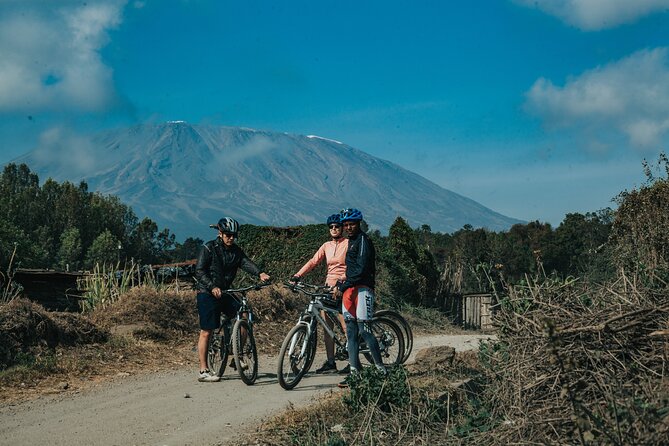
- A full circle around Kilimanjaro: You see the mountain from southern, western, northern, northeastern, and eastern approaches.
- Maasai culture and wildlife country: One night is spent at Olpopongi Maasai Cultural Village, with time for local customs, songs, and food.
- Support is built into the price: A support vehicle, guide, mechanic, driver, cook, snacks, fruit, water, camping equipment, and meals are included.
- Scenery changes every day: Expect coffee and banana farms, dry savannah, acacia woodland, wheat fields, forest, Lake Chala, and waterfalls.
- Private touring: Only your group takes part, so the pace and daily rhythm can be more personal than on a large group departure.
What this Kilimanjaro bike route is really like
This is not a mountain summit trip. You do not cycle to Kilimanjaro’s upper slopes or attempt the climb to the top. Instead, you circle the base, following a broad arc through villages, farms, wildlife areas, forest edges, and dry plains.
That distinction matters. The reward is variety rather than altitude. You get to see how the mountain shapes the lives of the Chagga and Maasai people, how farmland gives way to open country, and how the same snow-capped peaks can look completely different from one side to the next.
The route covers around 370 kilometers over six cycling days, with arrival and departure time wrapped into a seven-day program. The daily rides are not equal. Day 3 is listed at about four hours, while Day 4 reaches about eight hours. Day 6 is shorter but includes a demanding climb, and the final day combines steep rises and falls with a gradual ride back toward Moshi.
You should expect a real cycling holiday, not a sightseeing tour with a bicycle attached. The tracks are mainly dusty and sometimes rocky. A few paved roads help break things up, but you will still need to handle uneven surfaces and long periods in the saddle.
More Kilimanjaro routes and climbs:
- Kilimanjaro climb by Lemosho Route (7-day)
★ 5.0 · 651 reviews - Kilimanjaro climb, Machame Route (7-day)
★ 5.0 · 262 reviews - Kilimanjaro Climbing Lemosho Route 8 Days.
★ 5.0 · 186 reviews
Day 1: Bike fitting and a gentle introduction near Moshi
Your airport pickup begins at Kilimanjaro International Airport. From there, you are transferred to Keys Hotel near Moshi, where the mountain forms the backdrop to your first evening.
You meet the guide and complete the bike fitting. This is an important step, especially before several long days. Take the time to point out any discomfort, test the brakes, and make sure the saddle position feels right. A short test ride through nearby coffee plantations and villages may be available if your flight arrives in the morning or afternoon.
I like this first day because it gives you a useful adjustment period. You are not thrown straight onto a rough track after a long international flight. The listed duration is about five hours, but much of that is connected with arrival, transfer, briefing, and preparation.
Accommodation is provided before and after the cycling trip. The details describe Keys Hotel as the base near Moshi, while the middle nights use camps and other lodgings along the route.
Day 2: From coffee farms to Maasai country
The first major ride heads west from the greener southern side of Kilimanjaro. You begin among coffee and banana plantations, where cultivation is supported by the mountain’s fertile lower slopes.
As you continue, the scenery becomes drier. Farms give way to open plains and acacia woodland, with broad views toward Kilimanjaro. This change is one of the strongest features of the route. In a single day, you move from intensely farmed country into a setting associated with Maasai pastoral life and wildlife.
The destination is Olpopongi Maasai Cultural Village and Museum. Spending the night here gives the cultural visit more weight than a quick roadside stop. You have time to learn about customs, songs, and dishes, while seeing how Maasai life connects with the surrounding plains.
Keep your expectations sensible. This is a hosted cultural experience, not a substitute for living independently in a Maasai community. Its value comes from the chance to meet people in a setting built around cultural interpretation, rather than simply passing through a village on a bike.
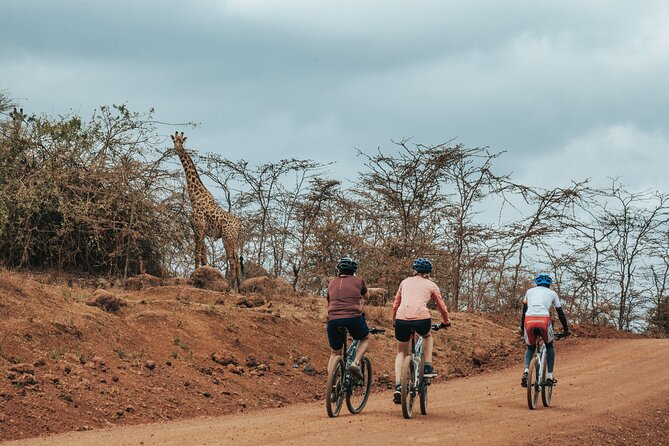
The ride lasts about seven hours, so the cultural program follows a substantial day in the saddle. The area also supports wildlife, though sightings are not guaranteed. You should treat animals as a possible bonus, not the main purpose of the cycling day.
Day 3: Elephants and open plains in Enduimet
Day 3 takes you into the Enduimet Wildlife Management Area, near the border of Amboseli National Park. This region is an important movement route for wildlife, including African elephants.
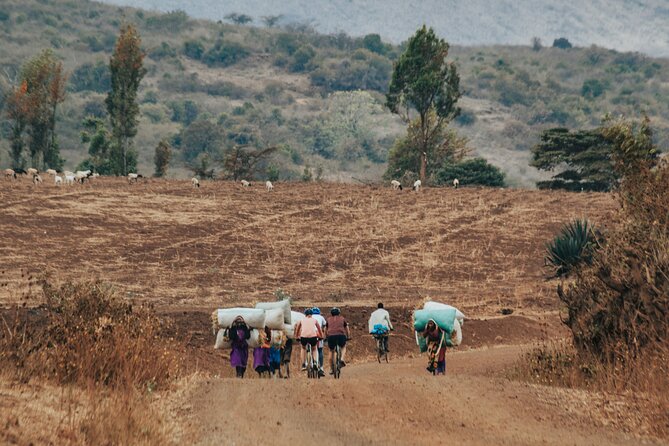
The opening section crosses open country dotted with acacia trees. As you approach the lower slopes of Kilimanjaro, the surroundings become greener and more cultivated. The route also passes through an area shared by Maasai, Chagga, Meru, and Pare communities, giving you another look at the human variety around the mountain.
At about four hours, this is one of the shorter cycling days. That does not mean it is effortless. Dirt surfaces and heat can make a moderate distance feel harder than the clock suggests. Still, the shorter schedule offers useful breathing room after the long ride to Olpopongi.
The day ends at Simba Farm, above broad wheat and barley fields overlooking the western plains. This setting gives you a different view of Kilimanjaro, with cultivated land spreading below the mountain rather than forest or smallholder plots close around you.
The support vehicle is especially valuable on a day like this. It carries supplies and provides a safety net if the heat, road conditions, or fatigue become too much. The tour also includes a guide equipped with a pulse oximeter and a first-aid kit for emergencies. Those items do not remove the need for personal responsibility, but they are sensible safeguards on a remote cycling route.
A few more trips of this kind worth comparing:
- Safari Serengeti And Ngorongoro
★ 5.0 · 288 reviews - Climbing Kilimanjaro – Machame Route
★ 5.0 · 170 reviews - Climbing Kilimanjaro through 7 days Machame Route
★ 5.0 · 151 reviews - Kilimanjaro climb, Lemosho Route (8-day)
★ 5.0 · 148 reviews
Day 4: The long ride to Rongai forest
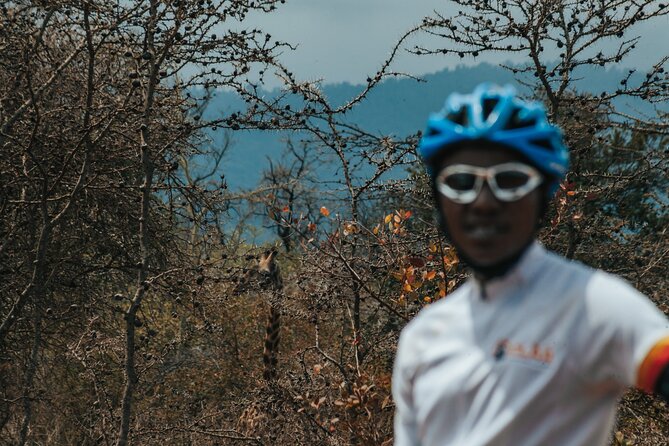
Day 4 is the longest listed ride, at about eight hours. You cycle northeast toward Nalemoru village near the Kenyan border, the starting point for the Rongai route up Kilimanjaro.
The route crosses open farmland, with the western plains behind you. You pass through several towns as the road rises toward the mountain’s foothills and the Rongai forest. This is a day of gradual change rather than one dramatic attraction. Farmland, settlements, forest, and mountain views unfold in sequence.
On a clear day, you may see both Kibo and Mawenzi, Kilimanjaro’s two most recognizable peaks. Clouds often gather around the mountain, so a clear view is never something to count on. That uncertainty is part of mountain travel, but it is worth remembering when you picture the trip from promotional photographs.
The night is spent at Snowcap Cottages near the forest edge. Compared with a fully camp-based route, this provides a different kind of pause. Even so, the overall trip remains outdoors-focused, and you should be comfortable with basic accommodation and an active schedule.
This is the day I would use to judge your fitness honestly. Eight hours on mixed surfaces can be a lot, especially if you are not used to back-to-back rides. The private format may help because your group is not tied to a large public departure, but the route still has fixed distances and terrain.
Day 5: A downhill ride to Lake Chala
After the exertion of Day 4, the route turns downhill toward Lake Chala. The lake sits on the border between Tanzania and Kenya in a volcanic caldera, with water supplied by underground springs from Kilimanjaro.
The ride takes about six hours. The attraction here is not only the cycling. Lake Chala gives you a calm natural setting where you can slow down, enjoy the volcanic surroundings, and recover from the harder sections of the circuit.
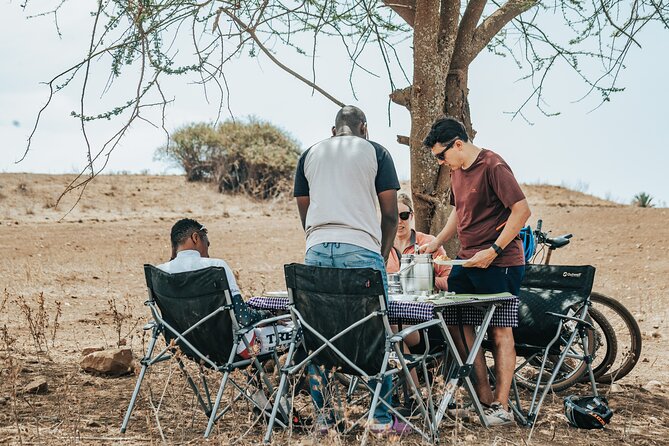
The camp is beside the lake, against a dramatic volcanic backdrop. You should expect a night close to nature rather than a conventional hotel stay. Camping equipment such as tents, sleeping mats, chairs, and tables is supplied, but a sleeping bag is not included. You can rent one in Moshi if needed.
Water is also covered, with three liters of mineral water provided per cyclist. That is helpful, but you should still take hydration seriously on long, warm rides. Snacks and fruit are included as well, along with the day’s meals.
Day 6: Climbing through Marangu to Ndoro Waterfall
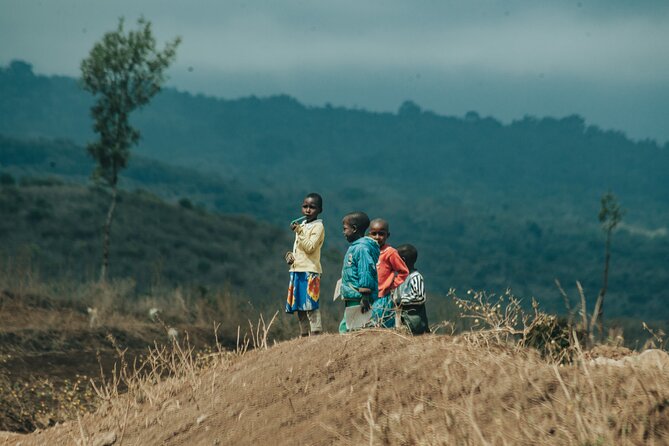
Day 6 is described as a short but challenging ride toward Marangu village. The route passes through banana and coffee plantations on the mountain’s lower slopes, where Chagga communities live.
The climbing is the point. A shorter distance does not necessarily mean an easy day, and this section asks you to work uphill before the waterfall stop. Local people may greet you as you pass through the village, adding a friendly human touch to the ride without turning it into a staged performance.
The detour to Ndoro Waterfall gives you a chance to leave the saddle and walk to the base. A local Chagga guide explains the area, Chagga traditions and customs, the caves, and the legend connected with the falls. This is a useful addition because it connects the scenery with the people who live around it.
The listed duration is about seven hours, including cycling and the waterfall visit. Wear footwear suitable for walking as well as riding. The information provided does not specify the exact trail conditions, so you should expect uneven ground near the falls rather than a polished walkway.
Day 7: Final climbs, Moshi, and a proper toast
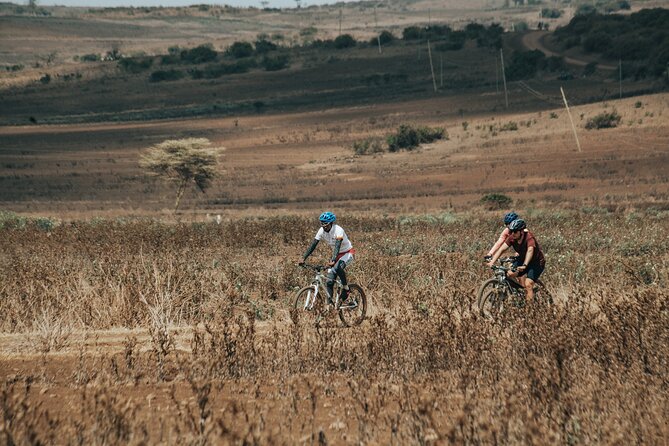
The last cycling day takes you through villages and plantations on Kilimanjaro’s slopes before returning to Moshi. The first half includes several steep climbs and descents. Later, the route becomes a gradual downhill ride toward town.
You finish by using back roads through Moshi’s suburbs and outskirts, ending at Keys Hotel. This is a satisfying way to close the circuit. You do not simply load the bicycles onto a vehicle and call it finished. You ride into the town that served as your starting point.
The program ends with a celebratory dinner and sparkling wine. After six days and roughly 370 kilometers, that small ritual makes sense. You will have earned a quiet evening, even if the final downhill section feels easier than the earlier climbs.
The listed duration is about seven hours, so do not plan a tight same-day flight connection. The exact end time can depend on riding speed, stops, and road conditions.
Guides, support, meals, and the price
The price is $2,100 per person. That is a serious sum, but it includes much more than a bicycle and a route map.
Your package includes airport pickup, accommodation before and after the trip, camping equipment, breakfast, lunch, dinner, snacks, fruit, and three liters of mineral water per cyclist. It also includes a support vehicle, guide or guides, bike mechanic, driver, cook, taxes, and attraction fees.
That support changes the value of the trip. On a long remote route, transporting food, water, tents, and repair equipment is a major practical job. Having a mechanic and support vehicle also means a puncture or mechanical problem does not automatically ruin the day.
The team receives strong praise for personal care. Octavian is specifically described as attentive to details and kind, while George and Rashid are praised for reliability and for looking after a solo participant during a longer combined trip. Another family group, including children aged 10 and 11, appreciated the punctual pickup and the way the guide, cook, and driver worked together.
Those details suggest a company that puts effort into the human side of the trip. Still, the included list contains a small wording oddity around lunch, so I would confirm the final meal schedule before paying. Tips for the guide, mechanic, driver, and cook are listed as compulsory, but no amount is stated. Ask the operator how much to budget.
The price does not include a Tanzania visa, personal medicine, health requirements, personal items, a sleeping bag, or travel and medical insurance. Insurance is optional in the package description but strongly recommended. For an active trip far from town, I would treat it as essential.
Who should book this cycling adventure
I would recommend this trip to fit cyclists who want more than a standard safari or a Kilimanjaro summit attempt. You get scenery, local culture, wildlife country, and physical challenge in one route.
It can also suit families with older children if everyone is accustomed to long rides and the group discusses the demands honestly. The successful family outing with children aged 10 and 11 is encouraging, but the eight-hour day and rough tracks still deserve careful thought.
I would not choose it if you want luxury lodges, short daily outings, or guaranteed wildlife sightings. I would also hesitate if you dislike camping, heat, dust, steep climbs, or changing road surfaces.
The tour is private, which is a major advantage for couples, families, and small groups. You are not joining strangers, and the pace may feel more personal. However, private does not mean effortless. The route still requires stamina.
Booking comes with free cancellation if you cancel at least 24 hours before the start time. Changes or cancellations inside that window are not refunded, based on local time. Pickup is offered, and the stated start time is 7:00 a.m.
Should you book Explore the 360° of Kilimanjaro?
Book it if you want to experience Kilimanjaro from ground level, one changing region at a time. The strongest parts are the range of scenery, the overnight Maasai cultural visit, the contact with Chagga communities, and the practical support that keeps a demanding route under control.
Before committing, make three checks: confirm the bicycle and fitting arrangements, arrange a sleeping bag, and ask for the expected tipping amount. If you are comfortable with long rides and basic camping, the $2,100 price offers solid value for a supported private adventure around one of Africa’s great mountains.
FAQ
How long is the cycling tour?
The program lasts about seven days, with six days of cycling. The total cycling distance is approximately 370 kilometers.
Where does the tour start?
You are picked up at Kilimanjaro International Airport and transferred to Keys Hotel near Moshi. The listed meeting start time is 7:00 a.m.
Is airport pickup included?
Yes. Pickup from Kilimanjaro International Airport is included.
What type of roads will I cycle on?
The route uses off-road and paved roads. Expect dusty tracks, some rocky sections, and a few asphalt roads.
Is camping included?
Camping equipment is included. The package provides tents, sleeping mats, chairs, and tables. A sleeping bag is not included, but you can rent one in Moshi.
Are meals included?
Yes. Breakfast, lunch, and dinner are included, along with snacks and fruit. Three liters of mineral water are provided for each cyclist.
Do I need to be physically fit?
Yes. The tour requires a moderate level of physical fitness. Daily rides last about four to eight hours, and some sections include steep climbs and uneven tracks.
Is the tour private?
Yes. Only your group participates in the activity.
Just added around Moshi
- Moshi: Lake Chala Tour: Hiking &/or Kayaking★ 4.5 · 3 reviews
- 3 Days Tanga Exclusive Beach Holiday★ 5.0 · 3 reviews
- Serengeti Wildebeest Migration.★ 5.0 · 3 reviews
- Chemka Hotpsrings E-Bike Day Trip★ 5.0 · 3 reviews
- Explore 1 day Ngorongoro Crater Budget Group Safari from Arusha★ 5.0 · 3 reviews
- Affordable Short Tanzania Safari (2 Days Camping Safari)★ 5.0 · 3 reviews
- Rongai Route 7 Days★ 5.0 · 3 reviews
- 6 Days Kilimanjaro climb – Marangu route★ 4.5 · 3 reviews
Kilimanjaro Treks, compared.



8-Day Small-group Lemosho Kilimanjaro Summit Trekking
Read our review →


Climbing Kilimanjaro through 7 days Machame Route
Read our review →

Browse the lists this tour appears in