
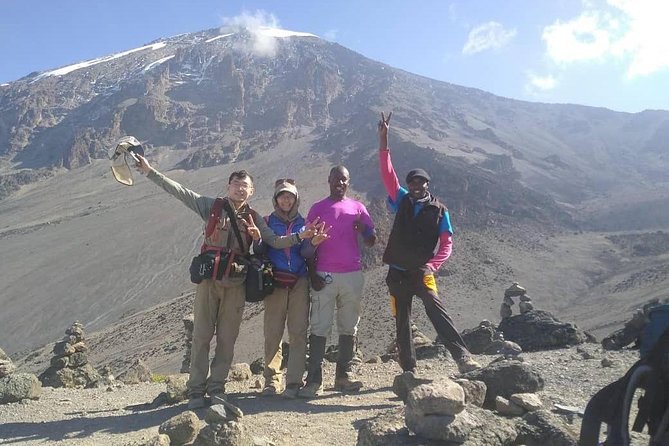
Reviewed · KILIMANJARO TREKS
Rongai Route 7 Days
The quiet side of Kilimanjaro has its rewards. This seven-day Rongai Route climb approaches Africa’s highest mountain from the north, close to Kenya, and offers lighter crowds than the better-known Marangu Route. I like the gradual ascent, which gives you more time to adjust to altitude, and I like the route’s long stretches of genuine wilderness. The main drawback is that the scenery is less varied than on some western routes.
This is a serious mountain trip, not a casual week of sightseeing. You need a strong level of physical fitness, and summit day lasts up to 15 hours. Still, the private format, professional guides, chef, porters, camping equipment, and careful logistics make this a solid choice for climbers who want a quieter route without taking on the steepest possible approach.
In This Review
- The Rongai Route at a Glance
- Why Choose Kilimanjaro’s Northern Side?
- Day 1: Nale Moru Gate to Simba Camp
- Day 2: Simba Camp to Second Cave Camp
- Day 3: Second Cave to Kikelewa Camp
- Day 4: Kikelewa to Mawenzi Tarn Hut
- Day 5: Mawenzi Tarn to Kibo Hut
- Day 6: Kibo Hut to Uhuru Peak and Horombo Hut
- Day 7: Horombo Hut to Marangu Gate
- Camping, Food, and Mountain Support
- Is $2,923.08 Good Value?
- Who Should Book This Climb?
- Final Verdict: A Strong Choice for a Quieter Summit
- FAQ
- Where does the Rongai Route begin?
- How long is the Rongai Route experience?
- What time does the experience start?
- Is this a private climb?
- Are meals included?
- Are sleeping bags and walking poles provided?
- What happens if bad weather cancels the climb?
The Rongai Route at a Glance
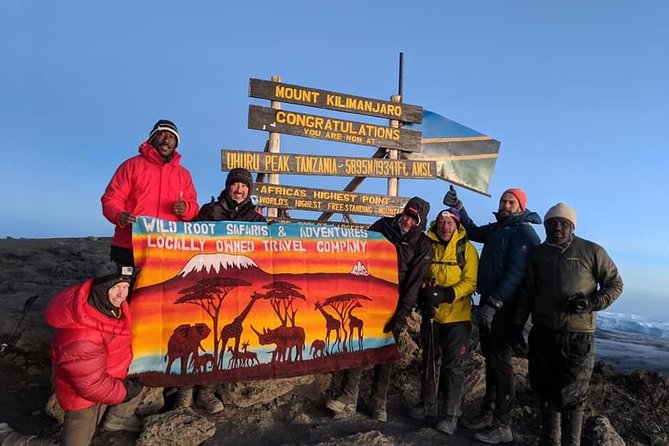
- Northern approach: Rongai is the only Kilimanjaro route that begins on the mountain’s northern side, near the Kenyan border.
- Gradual early ascent: The first several days gain height at a measured pace, which can help with acclimatization.
- Remote setting: Much of the route passes through wilderness with relatively few other groups.
- High summit push: You climb from Kibo Hut at 4,700 meters to Uhuru Peak at 5,895 meters, then descend to Horombo Hut in one demanding day.
- Private group format: Only your group takes part, with guides, a chef, porters, mess tents, and private sleeping tents provided.
- Price and duration: The trip costs $2,923.08 per person and lasts about seven days, including pickup and drop-off arrangements.
Why Choose Kilimanjaro’s Northern Side?
Most people picture Kilimanjaro from its southern or western routes. Rongai gives you a different introduction. You begin at Nale Moru Gate, near the Kenyan border, and walk through farmland and pine forest before reaching the open moorland.
That northern position has a practical benefit during the rainy season. The north side receives less precipitation than much of the mountain, so Rongai can be a sensible option when wetter conditions make other routes less appealing. This does not guarantee dry weather, and the trip still requires suitable mountain clothing, but the route has a useful natural advantage.
I also like the sense of space. Rongai has become more popular, but it still generally feels less crowded than Marangu. You will not spend the entire climb walking in a long line of groups. For anyone who values silence, open views, and a more remote feel, that matters.
The tradeoff is visual variety. Western routes are known for more dramatic changes in scenery. Rongai offers pine forest, moorland, high desert, and the Mawenzi area, but some sections feel broad and spare rather than constantly changing.
More Kilimanjaro routes and climbs:
- Kilimanjaro climb by Lemosho Route (7-day)
★ 5.0 · 651 reviews - Kilimanjaro climb, Machame Route (7-day)
★ 5.0 · 262 reviews - Kilimanjaro Climbing Lemosho Route 8 Days.
★ 5.0 · 186 reviews
Day 1: Nale Moru Gate to Simba Camp
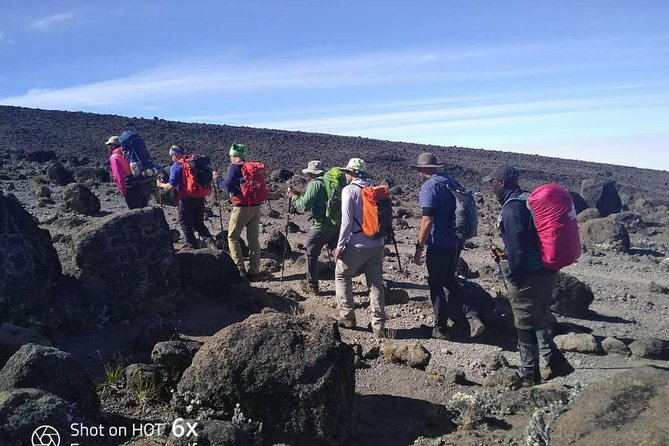
Your morning begins with a drive from the Moshi area to Nale Moru village and the route’s starting point. The first walking stage covers about 8 kilometers and takes roughly 4 to 5 hours.
The trail passes through farmland and pine forest. You might see colobus monkeys, and there is also a chance of spotting elephants or buffalo along the way. Wildlife sightings are never promised, so enjoy them as an extra rather than a reason to choose the route.
Simba Camp sits at 2,625 meters, at the edge of the moorland zone. This is a useful first night because you gain height without starting with an overly punishing walk. The route feels like a proper mountain trail by the end of the day, but you are not yet dealing with the severe cold or thin air found higher up.
Breakfast, lunch, and dinner are included. A chef is part of the mountain team, and a mess tent with a table and chairs is provided. That setup gives you a proper place to eat and rest, rather than forcing you to spend every evening inside your sleeping tent.
Day 2: Simba Camp to Second Cave Camp
Day two is shorter, with about 5 kilometers of walking over 3 to 4 hours. The trail climbs steadily to Second Cave Camp at 3,480 meters.
The route now moves fully into the moorland zone. One of the best features is the view toward Kibo, the main volcanic cone, and its eastern ice fields. The climbing remains moderate, but the altitude begins to matter. You may notice that the same effort feels harder than it did on day one.
This is where the gradual character of Rongai helps. You are not racing from low elevation to a very high camp in a single jump. The walk is still an ascent, but the itinerary allows your body more time to adjust.
Second Cave is not a sightseeing stop with a long list of activities. Its value is its position on the route and its altitude for the night. Use the time to eat, drink, organize your kit, and sleep. The next days take you higher and closer to the summit zone.
Day 3: Second Cave to Kikelewa Camp
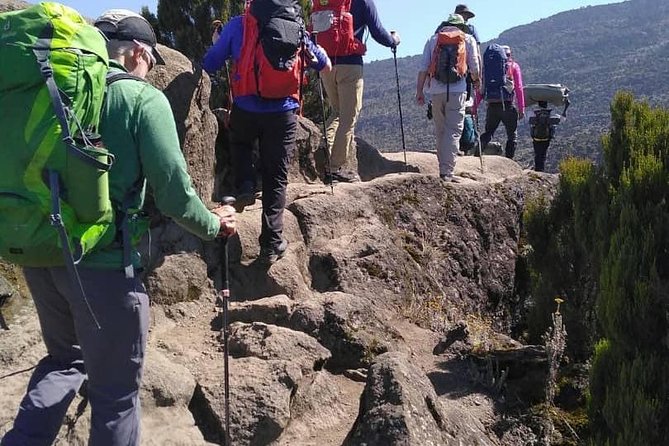
The third day covers about 5 kilometers and takes roughly 3 hours. You leave the pine forest behind and continue through moorland toward Kikelewa Camp at 3,630 meters.
The trail leaves the main route and follows a smaller path toward Mawenzi, Kilimanjaro’s second major volcanic cone. This change gives the day a more remote feel. You have superb views toward Kibo’s eastern ice fields, while the jagged outline of Mawenzi becomes a stronger presence.
The short walking time can be deceptive. At more than 3,500 meters, you should not treat this as an easy afternoon hike. The body is working harder at altitude, and a slow pace is useful. Keep your water close and follow the guides’ rhythm.
Kikelewa is an important transition point. The forest and lower moorland are behind you, and the route ahead becomes more exposed and severe. You are moving from a mountain hike into a high-altitude expedition.
A few more trips of this kind worth comparing:
- Climbing Kilimanjaro through 7 days Machame Route
★ 5.0 · 151 reviews - 7 Days Kilimanjaro via Machame route affordable price
★ 5.0 · 110 reviews - Private Kilimanjaro Hike 7 Day Lemosho Route
★ 5.0 · 60 reviews - 7-Day Magical Tanzania Safari -Premium High End Package
★ 5.0 · 53 reviews
Day 4: Kikelewa to Mawenzi Tarn Hut
Day four is short in distance but more demanding in shape. You climb about 8 kilometers over 4 to 5 hours, reaching Mawenzi Tarn Hut at 4,310 meters.
The morning begins with a brief but steep ascent over grassy slopes. The effort pays off with views toward the Kenyan plains to the north. Soon, vegetation fades and you reach the dramatic setting below Mawenzi’s cliffs.
Mawenzi Tarn Hut is one of the route’s most memorable camps. The camp sits directly below the towering volcanic formation, and the surrounding area gives you a chance to rest or take a short acclimatization walk. That extra time is valuable. You are now sleeping above 4,000 meters, so the best plan is to keep activity gentle and avoid wasting energy.
The altitude may affect your appetite, sleep, or breathing. You should report problems to the mountain staff early. A strong guide team is not just there to show you the route. It also helps monitor how you are coping with the climb.
Day 5: Mawenzi Tarn to Kibo Hut
The fifth day crosses the saddle between Mawenzi and Kibo. This is an 8-kilometer walk of about 5 to 6 hours across a lunar-looking high desert.
There is little vegetation here, and the scale of the area can make you feel very small. You can see Kibo ahead, with the route to the high camp laid out in front of you. It is an impressive view, but it also makes the next stage feel real.
Kibo Hut sits at 4,700 meters. Once you arrive, the plan is simple: eat, rest, prepare your summit clothing, and go to bed early. The final ascent begins around midnight, so this is not a day for extra exploration.
This night can be difficult even before the summit attempt begins. High altitude can make sleep poor, and excitement does not help. Set out your headlamp, warm layers, gloves, water, and any personal items before lying down. Small preparations save energy in the cold hours ahead.
Day 6: Kibo Hut to Uhuru Peak and Horombo Hut
This is the hardest day by far. You walk about 22 kilometers and may be on the move for 12 to 15 hours.
The summit attempt begins around midnight. The trail climbs slowly past Hans Meyer Cave at 5,220 meters and continues toward Gillman’s Point at 5,681 meters. Reaching the crater rim around sunrise gives the day a natural turning point. After another 1 to 2 hours, you reach Uhuru Peak at 5,895 meters, the highest point in Africa.
The summit section is demanding because of the altitude, cold, darkness, and long duration. You need patience more than speed. The route may feel like a slow series of small steps, and that is normal. The guides’ pacing and encouragement are especially important here.
After the summit, you return to Kibo Hut for a warm meal and a break of about 1 to 2 hours. Then you continue down to Horombo Hut at 3,700 meters. That second descent is tiring, but dropping nearly 1,000 meters makes the air feel easier.
You should understand this day clearly before booking. Uhuru Peak is not simply the final hour of a pleasant hike. You spend the night climbing, reach the summit in the morning, descend to eat, and then walk farther to Horombo. The seven-day schedule provides a gradual approach, but it cannot make summit day easy.
Day 7: Horombo Hut to Marangu Gate
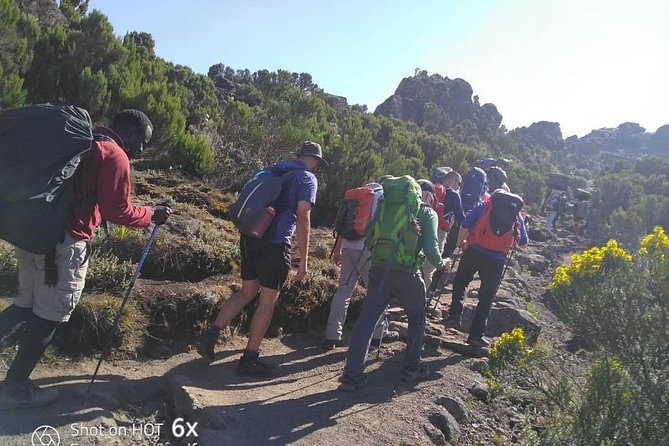
The final day covers about 20.8 kilometers and takes around 8 hours. You descend through the heath and moor zones toward Mandara Hut at 2,700 meters, where lunch is planned.
From there, the trail returns to tropical rainforest. The change in air, vegetation, and temperature is welcome after the high camps. By the time you reach Marangu Gate at 1,860 meters, you have completed the traverse from the northern approach to the southern descent.
After saying goodbye to the mountain guides, a short transfer takes you back to your hotel in Arusha. A warm shower and a celebration are very much part of the appeal at this point. The trip ends with a useful contrast: you enter Kilimanjaro through a quieter northern route and leave through the more established Marangu side.
Camping, Food, and Mountain Support
The equipment package is one of the strongest parts of the price. You receive waterproof, four-season private sleeping tents, plus quality mess tents with tables and chairs. That is more comfortable than a basic camping arrangement and gives the group a proper shelter for meals.
A professional mountain guide team, chef, and porters are included, along with allowances for the mountain staff. Dinner is included for seven nights, and the daily itinerary also specifies breakfast, lunch, and dinner. Airport pickup and drop-off are included, as are first and last accommodation.
You still need to budget for sleeping bags and walking poles. Tanzania visa costs, gratuities, and personal expenses such as laundry, phone use, and drinks are also outside the quoted price. Ask for a clear explanation of the first and last accommodation before booking, since the supplied details do not name the hotels or specify room arrangements.
The service record is encouraging. A family group of 12 had an itinerary planned around its needs by Mathew from Wild Root Safaris. Another group praised the good food, organization, helpful staff, and attention to safety. A 2018 Kilimanjaro group led by Khoo Swee Chiow also described the logistics as excellent and the mountain staff as consistently obliging.
Those details point to the provider’s main strength: practical organization. On a mountain climb, transport, meals, tents, porters, and timing matter just as much as scenery. Good logistics reduce the number of problems you need to solve while tired.
Is $2,923.08 Good Value?
At $2,923.08 per person, this is a major purchase. The value depends on what you want included and how much independent planning you would otherwise handle.
You are paying for a full seven-day climb, professional guides, a chef, porters, private mountain tents, mess facilities, meals, airport transfers, and accommodation at the beginning and end. You also get a private activity, meaning only your own group participates. For a first Kilimanjaro climb, that level of support can justify the cost.
The price is less attractive if you already own none of the required personal gear and fail to allow for the extras. A sleeping bag, walking poles, visa, tips, drinks, phone use, and laundry can add to your final budget. Clarify porter arrangements, staff tipping expectations, and the exact accommodation before paying.
I would also compare what other operators include at the same price. Look closely at guide-to-climber ratios, rescue procedures, park fees, hotel nights, meal coverage, and tent quality. The supplied information gives a strong list of inclusions, but it does not state the guide ratio or summit success rate.
Who Should Book This Climb?
Rongai suits you if you want a quieter Kilimanjaro route and prefer a gradual ascent. It is also a sensible choice for people with less backpacking experience, provided they have strong fitness and understand the altitude challenge.
The route is especially appealing during the rainy season because the northern side receives less precipitation. It can also work well for private groups, families with suitable fitness, or friends who want the schedule and group dynamic kept to themselves.
You should think twice if you want constantly changing scenery, short summit day, or a simple camping holiday. This is still a demanding climb. The 22-kilometer summit day and 20.8-kilometer descent day require stamina, and no route eliminates the risks of high altitude.
The mobile ticket and offered pickup make arrival easier, but the scheduled start time is 8:00 a.m. Confirm the exact pickup location and hotel details before the trip. Booking confirmation is normally sent at once, though bookings made within 12 hours of departure are subject to availability.
Free cancellation is available if you cancel at least 24 hours before the local start time. Late cancellations and changes are not accepted, and poor weather may lead to a new date or a full refund.
Final Verdict: A Strong Choice for a Quieter Summit
I would recommend the Rongai Route if your priorities are lower crowds, a gradual approach, and solid support on the mountain. The route does not offer the greatest variety of scenery, but its northern wilderness, views toward Mawenzi, and crossing of the saddle give it a distinct character.
Book it if you are fit, patient, and ready for one very long summit day. Before committing, confirm the hotel nights, personal gear rental options, staff tipping guidance, and exact transport plan. If those details suit your budget, this is a well-supported way to reach Uhuru Peak without following Kilimanjaro’s busiest path.
FAQ
Where does the Rongai Route begin?
The climb begins at Nale Moru Gate, near the village of Nale Moru on Kilimanjaro’s northern side, close to the Kenyan border.
How long is the Rongai Route experience?
The scheduled duration is approximately seven days.
What time does the experience start?
The stated start time is 8:00 a.m.
Is this a private climb?
Yes. Only your group participates in the activity.
Are meals included?
Yes. Breakfast, lunch, and dinner are specified throughout the itinerary, and seven dinners are included in the package details.
Are sleeping bags and walking poles provided?
No. Sleeping bags and walking poles are not included, so you need to bring them or arrange them separately.
What happens if bad weather cancels the climb?
If poor weather causes cancellation, you are offered a different date or a full refund. For a full refund under the regular cancellation policy, you must cancel at least 24 hours before the experience start time.
Just added around Moshi
- Moshi: Lake Chala Tour: Hiking &/or Kayaking★ 4.5 · 3 reviews
- 3 Days Tanga Exclusive Beach Holiday★ 5.0 · 3 reviews
- Serengeti Wildebeest Migration.★ 5.0 · 3 reviews
- Chemka Hotpsrings E-Bike Day Trip★ 5.0 · 3 reviews
- Explore 1 day Ngorongoro Crater Budget Group Safari from Arusha★ 5.0 · 3 reviews
- Explore the 360° of Kilimanjaro★ 5.0 · 3 reviews
- Affordable Short Tanzania Safari (2 Days Camping Safari)★ 5.0 · 3 reviews
- 6 Days Kilimanjaro climb – Marangu route★ 4.5 · 3 reviews
Kilimanjaro Treks, compared.



8-Day Small-group Lemosho Kilimanjaro Summit Trekking
Read our review →


Climbing Kilimanjaro through 7 days Machame Route
Read our review →

Browse the lists this tour appears in