
Reviewed · KILIMANJARO TREKS
Top 6 Days Mt. Kilimanjaro Bike trek Tour by Marangu-Kilema Route
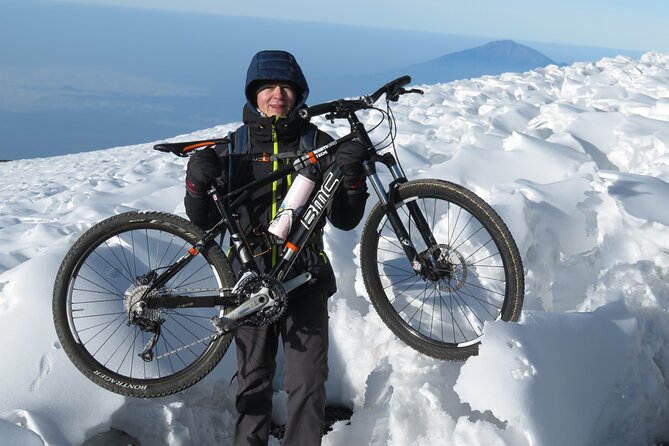
Kilimanjaro has a two-wheel route.
This six-day trip gives you a rare way to tackle Africa’s highest mountain: cycling the Kilema Route, sleeping in mountain huts, crossing alpine desert, and carrying your bike to the summit path before riding near Uhuru Peak. I especially like the all-inclusive structure, with transfers, meals, porters, crew wages, and park costs arranged in advance. I also like the mix of riding and hiking, since this is not simply a long bicycle trip on a smooth trail.
The main caution is simple: this is an extremely demanding high-altitude climb, not a relaxed mountain-bike holiday. Some sections are too rocky to ride, and the summit attempt involves a cold, oxygen-poor night ascent. You should also confirm exactly which bike, support plan, and summit riding sections are included before paying, since bike rental and personal gear are extra.
In This Review
- Five things to know before booking
- What this six-day Kilimanjaro bike trek really is
- Day 1: From Marangu Gate to Horombo Hut at 3,705 meters
- Day 2: Alpine desert riding around Mawenzi Hut
- Day 3: Across the Saddle to Kibo Hut
- Day 4: Rest, orientation, and preparation at Kibo
- Day 5: Gilman’s Point, Uhuru Peak, and the long ride down
- Day 6: From alpine country through rainforest to Moshi
- Scenery that changes with every climb
- What the $3,668 price covers
- Crew support, equipment, and practical concerns
- Who should book this mountain adventure?
- Booking advice and final verdict
- FAQ
- How long is the Kilimanjaro bike trek?
- Where does the tour start?
- What route does the bike trek use?
- Is the entire route ridden by bicycle?
- Are meals included?
- Is mountain-bike rental included?
- Are personal trekking clothes and equipment included?
- Can I cancel for a full refund?
Five things to know before booking
- Kilema is Kilimanjaro’s bike-accessible route: You can ride much of the approach, though steep, eroded, and stony sections require walking.
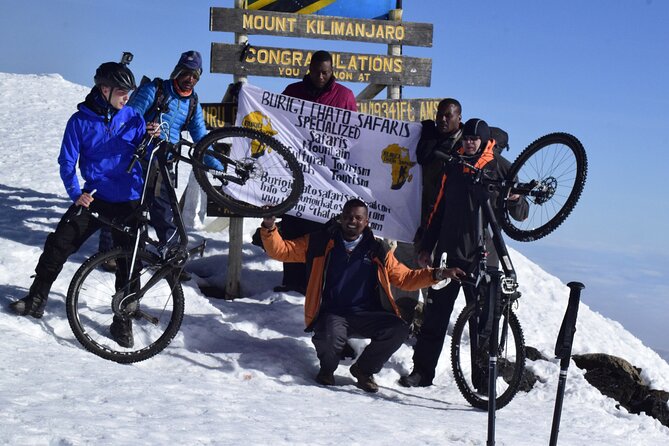
- The summit is partly a hike: Porters carry your bike toward the upper mountain, and you ride selected sections around Uhuru Peak and on the descent.
- Horombo Hut is your first mountain base: The opening day covers about 16 kilometers from Kilema Gate at 1,950 meters to Horombo Hut at 3,705 meters.
- The scenery changes quickly: You pass rainforest, alpine vegetation, rocky desert, ice fields, and glacier views as you climb.
- The $3,668 price covers the core climb: Transfers, crew, meals, taxes, and porter support are included, but bike hire, flights, visa costs, tips, and personal equipment are not.
- Preparation matters more than speed: Good fitness, confident mountain-bike skills, hydration, warm clothing, spare batteries, and careful altitude management all matter here.
What this six-day Kilimanjaro bike trek really is
At first glance, the trip sounds like a bicycle ride to the top of Kilimanjaro. The reality is more interesting, and harder. You cycle the lower and middle sections where the trail allows it, then walk or push the bike across rougher ground. Near the summit, the thin air and loose surface make riding difficult, so your bike may be carried before you take it onto selected summit sections.
That combination gives the trip its character. You get the physical satisfaction of climbing under your own power, but you also experience the mountain as a climber does. The bike adds a little speed and fun to the descent, not a magic shortcut to the summit.
The route begins at the Marangu side of Kilimanjaro National Park, then transfers to Kilema Gate. From there, the trail climbs toward Horombo and Kibo huts. The route includes mountain huts rather than tent camping, and porters support the group with equipment and supplies.
The operator lists a maximum group size of 200 people. That is a very large possible maximum for a demanding mountain trip, so I would ask how many people are normally placed in one cycling group and how many guides ride with you. A smaller operating group can make bike repairs, pacing, and altitude checks much easier.
More Bike Tours in Moshi
- 1-Day Moshi Villages bike tour
★ 5.0 · 59 reviews - Chagga Villages in Mount Kilimanjaro Cycling Day Trip
★ 5.0 · 42 reviews - Moshi city bike day trip
★ 5.0 · 17 reviews
Day 1: From Marangu Gate to Horombo Hut at 3,705 meters
Your morning begins at 9:00 a.m., with pickup and a roughly 45-minute transfer to Marangu Gate. At the park office, you register before continuing by vehicle to Kilema Gate. This administrative step can feel slow, but it is part of entering a protected national park and gives the crew time to confirm your permits and equipment.
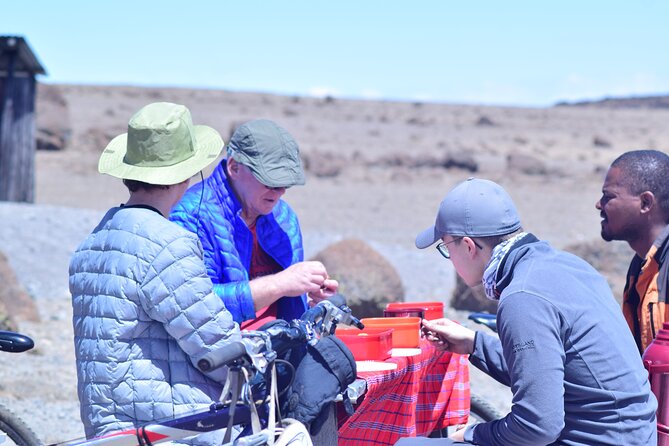
At Kilema Gate, check your daypack carefully. It should hold drinking water, your lunch pack, and extra clothing. This is also the right moment to inspect your bike, brakes, tires, gears, and any bags or straps. If something feels wrong at the trailhead, it is far better to fix it there than beside a steep mountain track.
The first cycling section covers about 16 kilometers, rising from 1,950 meters to Horombo Hut at 3,705 meters. The guide rides with you on a mountain bike. The route passes through forest-like lower vegetation before reaching more open high-altitude country.
The stated riding time is about six hours, but the pace will depend on road conditions, fitness, and how much of the route you can ride. Strong riders with solid mountain-bike skills may pedal much of it. Others will push the bike on rough sections. That is not failure. The point is to reach camp in good condition, since altitude affects you more than distance alone.
Horombo is an important stop because it gives you your first night at serious elevation. Eat well, drink steadily, and resist the temptation to treat the first day like a race.
Day 2: Alpine desert riding around Mawenzi Hut
After breakfast, you ride through alpine desert vegetation. The planned cycling distance is about 10 kilometers, with much of the day spent near Mawenzi Hut before returning to Horombo Hut.
The itinerary describes this as about 90 percent riding, though some sections include small stones. That makes this a useful technical day. You can settle into the bike, test your balance on uneven ground, and learn how your body responds to altitude without carrying on to a new sleeping point.
The schedule lists up to 12 hours, which is a long day for only 10 kilometers. That suggests the day is designed around acclimatization, stops, slow riding, and time in the high zone rather than speed. Ask the guide how much time you will actually spend riding and how much is used for rest and altitude adjustment.
Mawenzi gives you a striking counterpoint to the main summit cone. You see the rugged Mawenzi side of Kilimanjaro and the broad saddle between Mawenzi and Kibo. The open alpine setting has little shelter, so sun protection, warm layers, water, and wind protection belong in your daypack.
Returning to Horombo may feel repetitive, but it serves a purpose. Sleeping at the same hut lets you gain altitude during the day and return to a familiar base at night.
Day 3: Across the Saddle to Kibo Hut
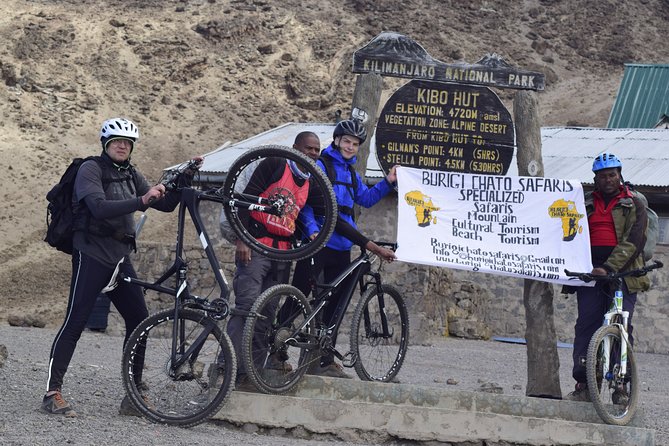
Day three takes you toward Kibo Hut through the alpine desert. The first three kilometers are described as very rocky, stony, and eroded. Cycling here will be difficult, and you may spend much of the opening section walking beside or behind your bike.
After that rough start, the trail improves. The Saddle, the broad area between Mawenzi and Kibo, is relatively flat, making the next stretch more manageable. This is probably the most visually unusual riding day, with a wide, spare setting and few signs of ordinary life.
The final seven kilometers toward Kibo Hut are much tougher. Oxygen levels are lower, temperatures drop, and the route gradually becomes a test of patience. The last kilometer is especially strenuous. The basic advice from the crew is exactly right: slow down and drink water even when you do not feel thirsty.
This is where a mountain bike can become extra work. You are not only moving yourself uphill, but also managing a machine, clothing, water, and equipment. Keep your effort controlled. A strong rider who burns too much energy here may struggle during the summit attempt.
The stated day lasts about eight hours. At Kibo Hut, you need to eat, organize your equipment, and rest. Avoid wandering around unnecessarily. The summit night begins soon.
More Kilimanjaro routes and climbs:
- Kilimanjaro climb by Lemosho Route (7-day)
★ 5.0 · 651 reviews - Kilimanjaro climb, Machame Route (7-day)
★ 5.0 · 262 reviews - Kilimanjaro Climbing Lemosho Route 8 Days.
★ 5.0 · 186 reviews - Climbing Kilimanjaro – Machame Route
★ 5.0 · 170 reviews
Day 4: Rest, orientation, and preparation at Kibo
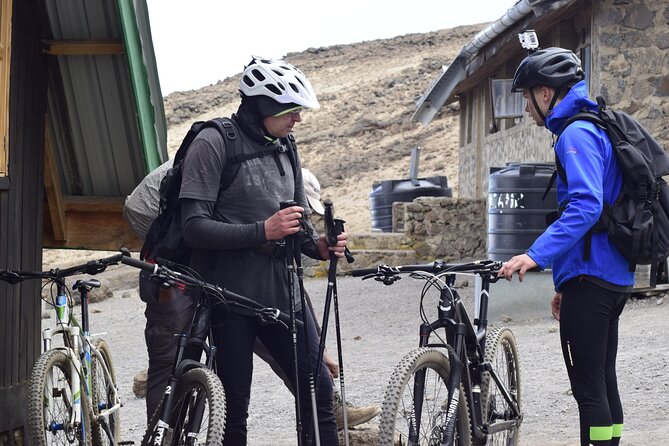
The supplied schedule contains some overlap between days three and four. Day three describes reaching Kibo Hut, while day four says you head back up to Kibo Hut and rest before the summit attempt. Confirm the exact arrangement with Burigi Chato Safaris before departure.
The practical purpose of this day is clear: prepare for the summit. You pack your duffel bags, check thermal clothing, organize your headlamp, and replace camera and headlamp batteries. Carry a spare battery set because cold temperatures can drain batteries quickly.
After lunch, the plan is to rest. Around 4:00 p.m., depending on how you feel, you may hike partway up the summit route to get your bearings. This short orientation can help you understand the first section of the night climb, but it should not become an exhausting extra excursion.
The summit sits another 1,195 meters above Kibo Hut. That figure looks manageable on paper. At night, in the cold and with reduced oxygen, it is a serious climb. Keep your clothing system simple and warm, with anything you may need during the ascent easy to reach.
One useful lesson from the trip feedback is to protect your water from freezing. A hydration bladder reportedly froze during a summit night, leaving the rider thirsty. Carry water in a bottle that can be insulated, and ask the crew how they recommend handling hydration in subzero conditions.
Day 5: Gilman’s Point, Uhuru Peak, and the long ride down
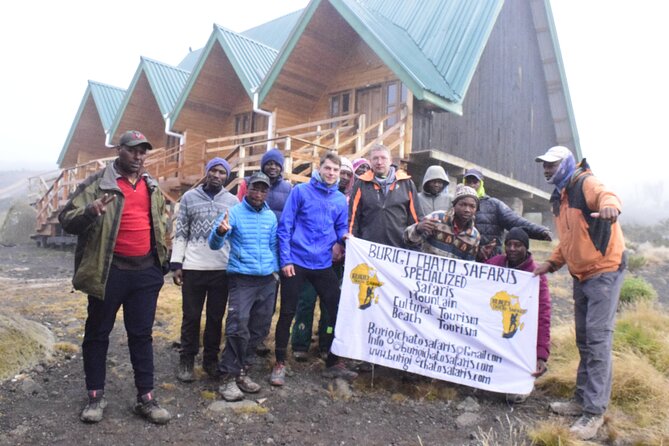
The summit day begins around 4:00 a.m. You climb a zigzag trail up a long scree slope. After roughly two hours, you reach Hans Meyer’s Cave, where the gradient becomes steeper. From there, the climb continues for about three hours toward Gilman’s Point.
This is primarily a hike, not a ride. Your bike is carried by porters toward the upper route. At Gilman’s Point, the plan is to take the bike and ride toward Uhuru Peak. The details of how much riding is possible will depend on ice, rocks, weather, and your physical condition. Do not treat the summit bike section as guaranteed downhill-style cycling.
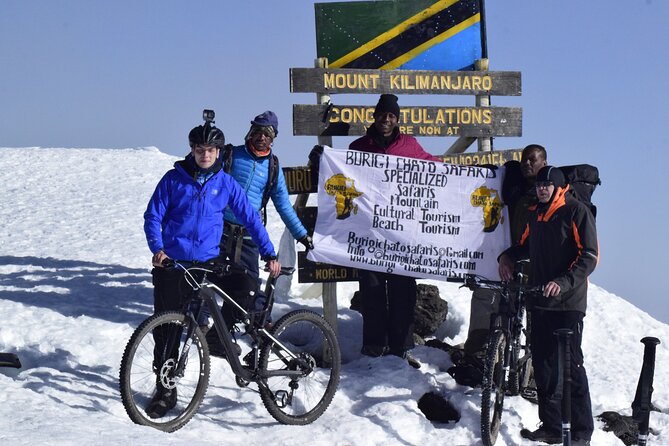
At Uhuru Peak, you have time for photographs before riding back toward Stella Point. The moment is likely to feel more like a mountaineering achievement than a cycling finish. You may have spent hours walking, using the bike only for selected portions.
The day’s cycling description lists roughly 15 percent to 20 percent alpine desert and icecap vegetation between Kibo and Uhuru, then a descent toward Horombo through alpine desert and ice fields. The wording is a little imprecise, but the key point is that the upper mountain is cold, exposed, and largely without plant cover.
After lunch, you ride down toward Horombo Hut. This is where the bike becomes a real reward. Descending the mountain after the summit attempt adds speed and play to an otherwise exhausting day, but fatigue can make rough trails dangerous. Keep your brakes controlled, watch for loose rock, and do not chase speed simply because the route points downhill.
The day is listed at about eight hours, though summit days often feel longer than the clock suggests. If you reach Horombo tired, that is normal.
Day 6: From alpine country through rainforest to Moshi
After breakfast, you make the final ride down to Kilema Gate. The route crosses alpine and rainforest zones, giving you one last rapid change in vegetation and temperature.
This descent is likely to be one of the most enjoyable parts of the trip. Your body has done the hard climbing, and lower altitude brings thicker air and a warmer feel. The route eventually returns to Kilema Gate, where you transfer to Marangu Gate for checkout and then continue to your hotel in Moshi.
The listed riding time is only about two hours, but allow extra time for the gate process and vehicle transfer. The tour includes round-trip transfers from Moshi, and airport pickup and drop-off are also listed. Confirm whether airport transfers fit your flight schedule, especially if you are arriving or departing on the same day.
Scenery that changes with every climb
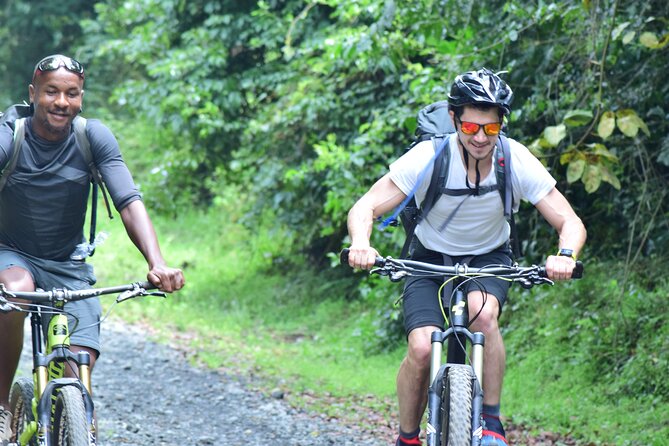
Kilimanjaro is worth seeing on foot, but the bike route gives the changing vegetation a particular rhythm. You begin in forest-like country, reach open alpine vegetation, cross the dry Saddle, and enter the near-bare upper mountain.
You also pass areas described as ice fields and glaciers. Conditions on Kilimanjaro can change, so do not assume the same amount of visible ice on every departure. The mountain view itself remains the central prize, but the contrast between lower forest and upper desert makes the route memorable.
The Saddle is especially important. It creates a broad, open transition between Mawenzi and Kibo, with easier trail grades but harder altitude. You may find the terrain less technically difficult there, yet still feel the height in your breathing and pace.
What the $3,668 price covers
At $3,668 per person, this is not a budget bike tour. It is priced as a supported mountain expedition, and the value depends on how much assistance you want.
Included items are private transportation, crew wages, park fees and taxes, gate transfers, airport pickup and drop-off, porter support, meals, and accommodation before and after the trek if arranged through the operator. Dinner is listed for six days, lunch for six days, and breakfast for five days.
The price does not include international or domestic flights, visa costs, crew tips, mountain-bike hire, or personal mountain gear. Those exclusions can add a significant amount. You should ask for the current bike rental price and the exact equipment supplied before booking.
I see the strongest value in the logistics. Park entry, transport, food, huts, porters, and a mountain crew are difficult to arrange independently. The price is easier to justify if you want one company to manage the climb rather than assemble each part yourself.
Crew support, equipment, and practical concerns
The strongest praise for this operator centers on organization, supportive crews, and porter assistance. One account describes porters arriving at camp with tents already set up on another route, while another credits the crew with maintaining motivation and providing first aid when altitude sickness symptoms appeared.
That is encouraging, but you should still ask direct safety questions. Find out how altitude sickness is monitored, what happens if you cannot continue, and how the bike is transported during the summit section.
Equipment deserves equal attention. Some riders describe bikes as new and well maintained on Moshi cycling trips, but one account describes a guide’s bicycle breaking and a delay while another was found. That does not prove the Kilimanjaro bike fleet is unreliable, but it is a good reason to request a pre-trip bike inspection and confirm that spare parts and a replacement bike are available.
Bring your own personal mountain clothing unless the operator confirms otherwise. Warm layers, gloves, waterproof protection, headlamp batteries, and a reliable hydration setup are especially important. The trip does not include personal trekking gear.
Who should book this mountain adventure?
This tour suits a fit mountain biker who is comfortable walking with a bike and understands that altitude matters more than ordinary cycling fitness. You should be able to handle rough surfaces, long days, cold conditions, and a possible change from riding to hiking without losing patience.
It is not a good choice if you want continuous downhill riding, gentle sightseeing, or a predictable summit schedule. You also need to accept that weather may change plans and that the summit attempt can be physically demanding.
The company offers non-summit itineraries, which may suit you if you want the Kilema riding experience without attempting Uhuru Peak. Ask about those options if your main goal is mountain scenery and trail riding rather than reaching the summit.
Booking advice and final verdict
I would book this trip if the unusual idea of cycling Kilimanjaro excites you more than the comfort of a standard hiking route. The combination of hut stays, porter support, changing vegetation, and a summit descent offers something genuinely different.
Before committing, get written answers about the exact day-four schedule, bike rental, replacement-bike policy, group size, altitude procedures, and how much riding is expected near Uhuru Peak. Also budget for tips, gear, visas, flights, and any hotel nights not included in your arrangement.
The tour earns its price through support and access, not luxury. Book it if you are fit, flexible, and ready for a hard climb with a bicycle. Skip it if you mainly want an easy cycling holiday.
FAQ
How long is the Kilimanjaro bike trek?
The tour lasts approximately six days, including the approach to Kilimanjaro, the summit attempt, the descent to Kilema Gate, and the return transfer to Moshi.
Where does the tour start?
The experience starts with pickup in Moshi at 9:00 a.m. You are transferred first to Marangu Gate for registration, then driven to Kilema Gate to begin cycling.
What route does the bike trek use?
The cycling portion uses the Kilema Route, reached through the Marangu side of Kilimanjaro National Park. It is described as the only route on Kilimanjaro accessible to mountain bikes.
Is the entire route ridden by bicycle?
No. Rocky, eroded sections near the upper mountain can be too difficult to ride. During the summit attempt, porters carry the bike toward the upper route, and you ride selected sections near Uhuru Peak and on the descent.
Are meals included?
Yes. The package lists six dinners, six lunches, and five breakfasts. Confirm the final meal schedule with the operator because the itinerary runs across six days.
Is mountain-bike rental included?
No. Trekking mountain-bike hire is specifically excluded. Ask Burigi Chato Safaris about rental availability, bike specifications, and replacement support before booking.
Are personal trekking clothes and equipment included?
No. Personal mountain trekking gear is not included. You need to arrange your own personal equipment and should confirm the recommended packing list with the operator.
Can I cancel for a full refund?
You can cancel at least 24 hours before the experience start time for a full refund. Cancellations or changes made less than 24 hours before the start time are not accepted for a refund, and poor weather may result in a different date or a full refund.
More Bike Tours
- Kilimanjaro bike park safari
★ 5.0 · 16 reviews - Rau Forest Bike tour
★ 5.0 · 12 reviews - Cycling through the TPC plantations
★ 5.0 · 10 reviews - Cycling from Kilimanjaro to Ngorongoro Crater
★ 5.0 · 10 reviews
More Hiking & Trekking
- Private Kilimanjaro Hike 7 Day Lemosho Route
★ 5.0 · 60 reviews - Best Kilimanjaro hiking day trip tour with Kilinge Adventures
★ 4.5 · 54 reviews - #1. Best Kilimanjaro Day hike Tour-Machame Route-ISMANI
★ 4.2 · 47 reviews - Best Kilimanjaro Adventure 7 days Machame route Trekking
★ 5.0 · 42 reviews
Just added around Moshi
- Moshi: Lake Chala Tour: Hiking &/or Kayaking★ 4.5 · 3 reviews
- 3 Days Tanga Exclusive Beach Holiday★ 5.0 · 3 reviews
- Serengeti Wildebeest Migration.★ 5.0 · 3 reviews
- Chemka Hotpsrings E-Bike Day Trip★ 5.0 · 3 reviews
- Explore 1 day Ngorongoro Crater Budget Group Safari from Arusha★ 5.0 · 3 reviews
- Explore the 360° of Kilimanjaro★ 5.0 · 3 reviews
- Affordable Short Tanzania Safari (2 Days Camping Safari)★ 5.0 · 3 reviews
- Rongai Route 7 Days★ 5.0 · 3 reviews
Kilimanjaro Treks, compared.



8-Day Small-group Lemosho Kilimanjaro Summit Trekking
Read our review →


Climbing Kilimanjaro through 7 days Machame Route
Read our review →

Browse the lists this tour appears in