
Reviewed · SERENGETI SAFARIS
4 Day Mid-range Serengeti Safari
Wild Africa arrives quickly here. This four-day safari packs Tarangire, Serengeti, and Ngorongoro into one well-priced route, giving you elephants, big cats, open plains, and crater scenery without the cost of a luxury expedition. I like the mix of park types, and I like that the package includes transport, meals, water, lodging, guides, and park fees.
The main tradeoff is time. You cover long distances in only four days, so some days involve early starts and plenty of driving. The lodging is described as mid-range, not high-end, and the listed airport start time of 12:00 am is unusually vague, so confirm your actual pickup time before you go.
In This Review
- Key Points At A Glance
- What This Four-Day Safari Is Really Offering
- Day One: Tarangire’s Elephants And Baobabs
- Day Two: Crossing To The Serengeti And Seronera
- Day Three: A Morning Game Drive And Olduvai Gorge
- Day Four: Descending Into Ngorongoro Crater
- The Vehicle, Guide, Food, And Lodging
- The $1,800 Price And Who Gets Good Value
- Practical Details To Confirm Before You Pay
- Should You Book This Safari?
- FAQ
- How long is the safari?
- Where does the safari start?
- Which national parks and conservation areas are included?
- Is transportation included?
- Are meals included?
- Is accommodation included?
- What is not included in the price?
Key Points At A Glance
- Three major wildlife areas: See Tarangire National Park, the Serengeti, and Ngorongoro Crater in one compact itinerary.
- Excellent elephant country: Tarangire is known for its large elephant population and distinctive baobab trees.
- Serengeti focus: The route reaches the Seronera area, a prime wildlife zone around the Seronera River.
- Comfort without luxury pricing: Lodges and tented camps, meals, park fees, water, and a pop-up-roof 4×4 are included.
- Strong guide and office support: Names praised in past trip accounts include guides Praise and Ombeni, with Lucas, Linah, and Safina helping arrange trips.
- A demanding schedule: This is a good fit if you want the classic northern Tanzania circuit and accept long road days.
What This Four-Day Safari Is Really Offering
At $1,800 per person, this is not a bare-bones camping trip. You receive a 4×4 safari vehicle with a pop-up roof, an English-speaking guide, all national park fees, meals, bottled mineral water, and three nights of safari accommodation.
That bundle matters in Tanzania. Park fees alone can add a large amount to a safari bill, and food, fuel, and long-distance transport are not small costs. Since the price also covers both lodges and tented camp accommodation, I see this as a fair mid-range package, particularly if you want the major northern parks without arranging each part yourself.
The route is tightly planned. You start near Moshi, with pickup offered from Kilimanjaro International Airport, then travel toward Arusha and Tarangire. From there, you cross the Karatu highlands and Ngorongoro Conservation Area to reach the Serengeti, before returning to Ngorongoro for the final crater visit.
You will spend a good deal of time on the road. That is the price of seeing three famous areas in four days, but the changing scenery helps. Farmland gives way to open savanna, volcanic highlands, woodland, and the wide Serengeti plain.
More Safaris in Moshi
- Safari Serengeti And Ngorongoro
★ 5.0 · 288 reviews - Big Five Safari In Tanzania
★ 5.0 · 99 reviews - Unforgettable Tanzania Safari And Zanzibar Beach
★ 5.0 · 97 reviews
Day One: Tarangire’s Elephants And Baobabs
The safari begins after breakfast, with a stop in Arusha for last-minute purchases. This is useful if you need snacks, personal items, or anything you forgot before leaving town. I would handle as much shopping as possible here, since the itinerary becomes focused on the parks after this point.
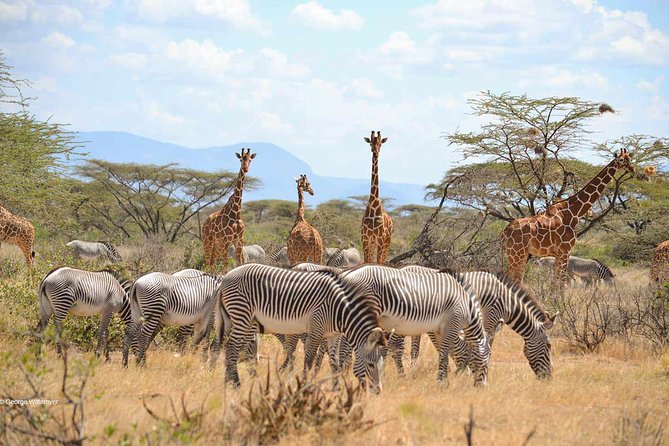
Tarangire National Park is the first major stop. The park is especially known for elephants and baobab trees, a pairing that gives the first game drive a very different feel from the Serengeti. Tarangire also forms part of a large seasonal wildlife cycle involving elephants, wildebeest, and zebra.
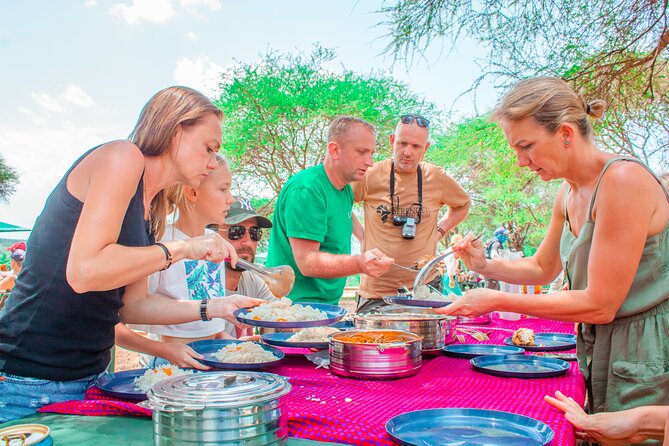
A picnic lunch is planned inside the park. That saves you from leaving the wildlife area during the middle of the day, and it keeps the day moving. You can expect the usual safari rhythm: watching from the vehicle, pausing when animals appear, and scanning the trees and open ground for movement.
Tarangire is a smart first park because it gives you a strong wildlife introduction without trying to imitate the Serengeti. The baobabs create memorable photo subjects, while elephants provide much of the visual drama. If you have never been on safari, this first day should quickly teach you why the pop-up roof matters. You can sit or stand under cover and look out across the park with a wide view.
Dinner and overnight accommodation are planned at Farm Dream Lodge. The package calls the accommodation mid-range, which means you should expect a comfortable base rather than a luxury resort. The precise room setup is not specified, so confirm whether your booking uses the lodge’s standard rooms or another available category.
Day Two: Crossing To The Serengeti And Seronera
Day two is the biggest transfer day. After breakfast, you travel through the high farmland around Karatu and the Ngorongoro Conservation Area before reaching the Serengeti.
This change in scenery is part of the experience. The highlands feel settled and cultivated, while the Serengeti opens into enormous stretches of grassland. The first sight of those wide plains can be more powerful than any single animal sighting because you suddenly understand the scale of the park.
The destination is the central Serengeti, specifically the Seronera area. This is an important detail. The Seronera River provides water, which helps draw animals to the area and supports a broad range of species. Your afternoon game drive takes place here after lunch.
The timing gives you a useful first look at the Serengeti, but it also limits your time compared with a longer safari. You will not have several full days to follow wildlife patterns across different sections of the park. Instead, the guide must make the most of the afternoon and choose routes based on current conditions and animal sightings.
This is where guide quality matters. Past trip accounts praise guides such as Praise and Ombeni for explaining animals and answering questions, while David and Abbu also received strong personal praise. A good guide can turn a distant animal into a meaningful sighting by explaining behavior, habitat, and what to watch for next.
Dinner and overnight accommodation are planned at Domel Wilderness Tented Camp. The tented camp adds a more traditional safari feel than a standard lodge. Still, the description does not specify the exact facilities, so ask about bathrooms, electricity, and dining arrangements if those details matter to you.
Day Three: A Morning Game Drive And Olduvai Gorge
Day three begins with an early morning game drive in the Serengeti. This is one of the most valuable parts of the schedule because the early hours give you another chance to see wildlife before the long transfer toward Ngorongoro.
The itinerary does not promise particular animals, and no safari can honestly do that. Still, the route passes through areas known for a broad range of species, and the company’s feedback repeatedly praises sightings of the Big Five. Treat that as a hopeful possibility, not a guarantee.
After the morning drive, you leave for the Ngorongoro Conservation Area. The stop at Olduvai Gorge adds a human history component to a trip otherwise focused on wildlife. The Leakeys found important early human fossils here, including discoveries associated with Nutcracker Man and Handy Man.
Olduvai is worthwhile because it changes the scale of the journey. You are not only looking at animals and scenery. You are also visiting a place tied to the study of human evolution. The information provided does not say how long the stop lasts or whether a museum visit is included, so ask for the exact plan if this is a major interest.
Later in the afternoon, you transfer to Ngorongoro Wildlife Lodge for dinner and overnight accommodation. The lodge’s setting is likely to be one of the memorable parts of the stay, but the supplied details do not specify room views or amenities. The key practical point is that you sleep near the crater before the final descent, rather than making a long return trip from the Serengeti on the same day.
This day may feel rushed. You have an early wildlife outing, a substantial transfer, a cultural and scientific stop, and a lodge arrival. I would see it as a useful bridge between the Serengeti and crater, not as a relaxed day.
More Serengeti safaris to compare:
- Serengeti, Ngorongoro and Tarangire 4 Days Safari
★ 5.0 · 59 reviews - 5 Days Camping Tarangire, Serengeti & Ngorongoro crater & Visiting Maasai
★ 5.0 · 58 reviews - 4 Days Group Joining Camping Safari to Tarangire Serengeti Ngorongoro Crater
★ 5.0 · 50 reviews - 4 Day Private Tour Throughout Tarangire, Serengeti and Ngorongoro
★ 5.0 · 42 reviews
Day Four: Descending Into Ngorongoro Crater
After an early breakfast, you descend more than 600 meters into Ngorongoro Crater for the final wildlife drive. The crater is a dramatic setting because steep walls surround a broad floor with water and grazing areas.
The crater supports wildebeest, zebra, buffalo, eland, warthog, hippo, and African elephants. It also has a strong reputation for predator sightings, with lions, hyenas, jackals, cheetahs, and the occasional leopard among the possibilities.
You will also visit Lake Magadi, a large, shallow alkaline lake in the southwestern part of the crater. It is one of the crater’s main features and can add birdlife and a striking change of color to the drive. The itinerary text ends abruptly while describing this stop, so do not assume that every possible crater activity is included beyond the listed game drive and Lake Magadi visit.
Ngorongoro is a fitting final day because the wildlife is concentrated within a clearly defined area. You are not crossing a vast park looking for the next sighting. The crater gives the day a contained shape, though that does not mean sightings are automatic. Leopards, especially, may require patience and a sharp eye.
The early start is important. It allows you to spend more of the day in the crater, but you should be comfortable with early breakfasts and a full schedule. Families have found the route rewarding, particularly when children were excited to see elephants and lions, but parents should prepare younger children for long drives and early mornings.
The Vehicle, Guide, Food, And Lodging
The safari uses a 4×4 vehicle with a pop-up roof. That is the standard practical advantage you want on a game drive: protection from sun and rain, a higher viewing position, and room to look in several directions. The tour does not specify the number of passengers in each vehicle.
The maximum group size is listed as 50 people. That figure may refer to the overall activity rather than one vehicle, but you should ask directly how many people will share your vehicle. A smaller vehicle group usually makes it easier to hear the guide, share sightings, and position the vehicle without confusion.
The guide is central to the quality of this trip. Several named guides, including Praise, Ombeni, David, and Abbu, have been praised for animal knowledge, calm driving, and clear explanations. The office team also receives strong praise for communication. Linah is noted for answering questions and planning trips, while Lucas and Safina are named for helping arrange details.
Meals are included according to the plan, with four breakfasts, four lunches, and three dinners listed. Mineral water is included as well. Alcoholic drinks, soft drinks, and personal purchases are not covered, so budget separately for those.
The accommodation combines safari lodges and a tented camp. That is appropriate for a mid-range trip and gives you a taste of different safari styles. The provided information does not promise air conditioning, Wi-Fi, laundry, or specific room facilities, so confirm those points if comfort details affect your decision.
The $1,800 Price And Who Gets Good Value
The $1,800 price is easiest to judge by what it removes from your planning list. You are paying for park entry, transport, guide services, accommodation, food, and water across four days. That is a substantial package for the three major parks.
I would not choose this trip if your main goal is a slow, luxury safari with long stays in one region. Four days means you spend part of the holiday moving between areas. You may also have less freedom to linger at a single sighting than you would on a private, custom itinerary.
I would choose it if you want a classic northern Tanzania sampler and have limited time. The route gives you three distinct experiences: Tarangire’s elephants and baobabs, Serengeti’s open plains and Seronera wildlife, and Ngorongoro’s crater floor.
The package also appears suitable for families, couples, and first-time safari visitors. The feedback includes a honeymoon trip, family trips with children, and group departures. The company is also described as flexible in organizing tours, which may help if you have questions before paying.
Practical Details To Confirm Before You Pay
Pickup is offered, and the listed starting point is Kilimanjaro Airport in Kilimanjaro National Park, Tanzania. The stated start time is 12:00 am, which may be a placeholder rather than your real collection time. Confirm the date, airport meeting point, and pickup hour in writing.
Confirmation is provided at booking. The activity is near public transportation, and most people can participate, though the itinerary includes long drives, early mornings, and uneven outdoor conditions.
The cancellation terms are simple: cancel at least 24 hours before the local start time for a full refund. Cancellations or changes made within 24 hours are not accepted for a refund.
Bring practical safari clothing, sun protection, and personal spending money. The tour includes mineral water, but it does not include alcoholic drinks, soft drinks, visa fees, tips, or souvenirs. Accommodation in Arusha can be arranged on request if you need a night before or after the safari.
Should You Book This Safari?
I would book this four-day safari if you want the major northern Tanzania parks in one efficient package and value having the main costs handled in advance. The mix of Tarangire, Serengeti, and Ngorongoro is excellent, and the repeated praise for guides, food, communication, and vehicle quality adds confidence.
I would hesitate only if you dislike long transfers, need a guaranteed relaxed pace, or expect luxury accommodation. Ask about the vehicle group size, exact pickup time, room facilities, and the final day’s return arrangements before booking.
For a first safari, a family trip, or a short visit based around Moshi, this is a strong mid-range choice. You get the famous parks, a real variety of scenery, and a fair amount of wildlife in four demanding but rewarding days.
FAQ
How long is the safari?
The experience lasts approximately four days.
Where does the safari start?
Pickup is offered, and the listed starting point is Kilimanjaro Airport in Tanzania.
Which national parks and conservation areas are included?
The route includes Tarangire National Park, Serengeti National Park, the Ngorongoro Conservation Area, and Ngorongoro Crater.
Is transportation included?
Yes. Transportation is provided in a 4×4 safari vehicle with a pop-up roof.
Are meals included?
Yes. The package includes four breakfasts, four lunches, and three dinners according to the travel plan.
Is accommodation included?
Yes. Overnight stays in safari lodges and tented camps are included.
What is not included in the price?
Alcoholic drinks, soft drinks, visa fees, tips, personal spending, and souvenirs are not included. Accommodation in Arusha can be arranged separately upon request.
More 4-Day Experiences
- 4-day Tanzania Safari
★ 5.0 · 53 reviews - 4 days adventure camping safari
★ 5.0 · 44 reviews - 4-Day Private Guided Tanzania Safari Tarangire, Serengeti, Manyara
★ 5.0 · 28 reviews - 4 Days Tanzania Budget Safari
★ 5.0 · 26 reviews
More Safaris
- 8-Day Essence of Tanzania Safari – Luxury
★ 5.0 · 72 reviews - Great Migration Safari In Tanzania
★ 5.0 · 71 reviews - 6 Days 5 Night Safari
★ 5.0 · 57 reviews - 7-Day Magical Tanzania Safari -Premium High End Package
★ 5.0 · 53 reviews
Just added around Moshi
- Moshi: Lake Chala Tour: Hiking &/or Kayaking★ 4.5 · 3 reviews
- 3 Days Tanga Exclusive Beach Holiday★ 5.0 · 3 reviews
- Serengeti Wildebeest Migration.★ 5.0 · 3 reviews
- Chemka Hotpsrings E-Bike Day Trip★ 5.0 · 3 reviews
- Explore 1 day Ngorongoro Crater Budget Group Safari from Arusha★ 5.0 · 3 reviews
- Explore the 360° of Kilimanjaro★ 5.0 · 3 reviews
- Affordable Short Tanzania Safari (2 Days Camping Safari)★ 5.0 · 3 reviews
- Rongai Route 7 Days★ 5.0 · 3 reviews
Serengeti Safaris, compared.

Serengeti Balloon Safari and authentic bush breakfast
Read our review →
Balloon Safari & Bush Breakfast in Serengeti – Miracle Experience
Read our review →
3 Days Serengeti & Ngorongoro Group Camping Safari
Read our review →
5-Day Highlights mid-Range Crater, Serengeti, Tarangire
Read our review →


Private 6-Day Tarangire Manyara Crater and Serengeti with Mid-Range Lodges
Read our review →
5 Days Camping Tarangire, Serengeti & Ngorongoro crater & Visiting Maasai
Read our review →Browse the lists this tour appears in