
Reviewed · CAMPING SAFARIS
4 days adventure camping safari
Wild Africa rewards early starts. This four-day safari from Moshi packs Tarangire, Serengeti, and Ngorongoro Crater into a fast-moving camping adventure, with a 4×4 safari vehicle, supplied tents, meals, bottled water, and a professional guide included. You spend your days searching for wildlife and your nights at campsites, close enough to hear the African bush rather than retreating to a polished lodge.
I especially like the chance to see the parks at different times of day, including an early Serengeti game drive and sunset viewing near Seronera. I also like the practical value: the fee covers camping gear, park-related costs, food, water, and a safari jeep with a pop-up roof, cooler, and charging ports.
The main consideration is the pace. You cover long distances and spend up to 12 hours on some safari days, often on rough roads. The optional Maasai village visit costs an extra $20, and you should confirm in advance whether your departure will be private or shared, since both arrangements appear in the available trip details.
In This Review
- Five things to know before you book
- What the $1,650 price buys you
- Day 1: Tarangire’s elephants and open bush
- Day 2: Ngorongoro views, Maasai culture, and the Seronera sunset
- Day 3: Early Serengeti wildlife and the road toward Simba
- Day 4: Inside Ngorongoro Crater and back toward town
- Wildlife chances, guides, and the human side of the trip
- Camping comfort and the rough-it question
- Practical details that affect your decision
- Should you book this safari?
- FAQ
- How long is the safari?
- Which national parks are included?
- Is camping equipment provided?
- Are meals included?
- Is the Maasai village visit included?
- What is the cancellation policy?
Five things to know before you book
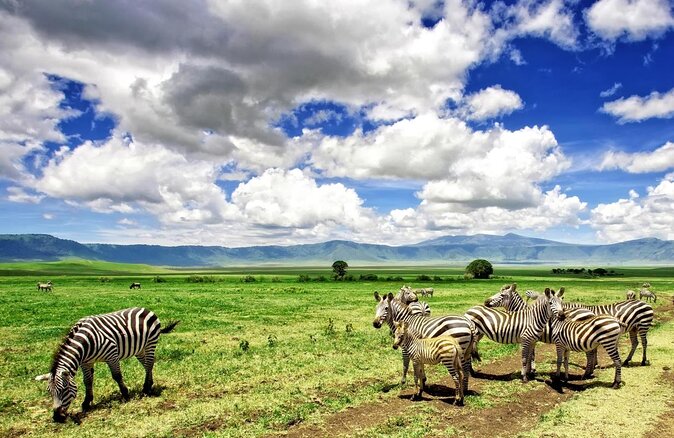
- The route covers three major parks: You visit Tarangire, spend substantial time in the Serengeti, and finish with a crater game drive in Ngorongoro.
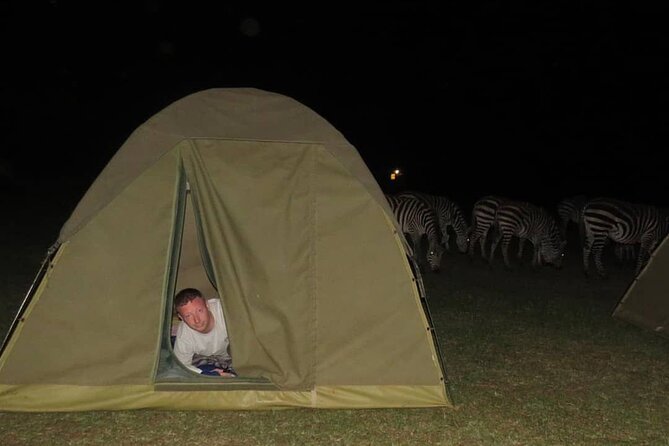
- Camping is part of the adventure: Tents and camping equipment are supplied, with three breakfasts, four lunches, and three dinners included.
- Serengeti gets the most time: Day 2 reaches the Seronera area in the afternoon, while Day 3 begins with another early game drive before you leave the park.
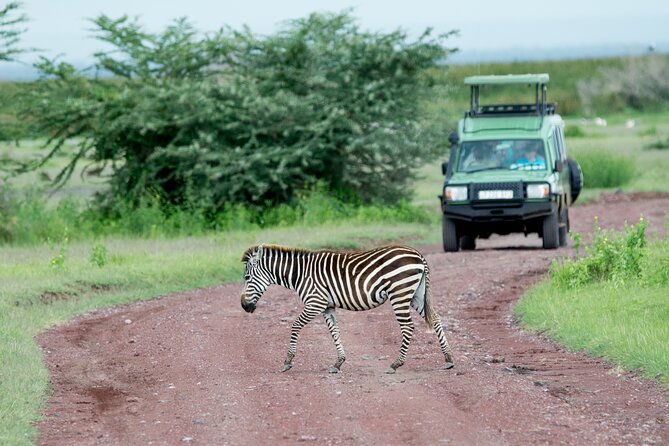
- The 4×4 is set up for safari: A pop-up roof gives you a better viewing angle, while the cooler and charging ports make long drives easier.
- Guides and cooks matter here: Guides named in the trip feedback include Simon, Jeff, Chedy, and Chadi. Cooks Action and Geoffrey also received warm praise for the meals.
- The price reflects bundled costs: At $1,650 per person, you are paying for more than park entry. Gear, food, water, vehicle, guide, and taxes are included, though tips and the Maasai village fee are not.
What the $1,650 price buys you
A four-day safari at $1,650 per person is not the cheapest way to see northern Tanzania, but it is easier to judge when you look at what is bundled into the price. You get camping equipment, a professional guide, a 4×4 safari jeep, bottled water, meals, and all fees and taxes listed as included.
That matters because safari costs can rise quickly once you add park charges, vehicle use, food, and equipment. Here, you do not need to bring a tent or arrange separate meals. The vehicle also has a pop-up roof, cooler fridge, and charging ports, useful features when you spend most of the day on the road.
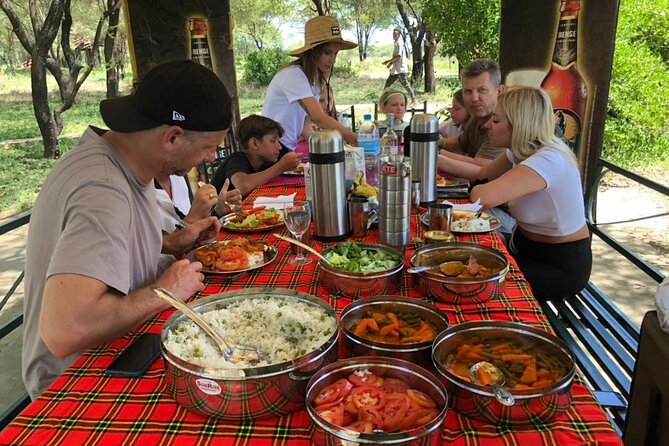
The food seems to be one of the stronger parts of the experience. Action and Geoffrey are named as cooks, and the food receives repeated praise for being plentiful and well prepared. Do not expect a restaurant or lodge dining room, but camping does not mean you are left to fend for yourself.
The package includes three dinners, four lunches, and three breakfasts. Bottled water is included throughout the trip. Tips are not included, so carry some local currency or ask the operator for current tipping guidance before you leave.
One extra cost is clear: the Maasai village visit requires a $20 entrance fee. The visit is optional, so you can skip it if you prefer to spend more time on the route or keep the budget tight.
More Camping Safaris in Moshi
- 5 Days Camping Tarangire, Serengeti & Ngorongoro crater & Visiting Maasai
★ 5.0 · 58 reviews - 4 Days Group Joining Camping Safari to Tarangire Serengeti Ngorongoro Crater
★ 5.0 · 50 reviews - 6 Days Tanzania Budget Camping Safari with Migration
★ 5.0 · 31 reviews
Day 1: Tarangire’s elephants and open bush
The first day is devoted to Tarangire National Park, with about nine hours set aside for a full game drive. That is a strong opening because Tarangire offers a different feel from the Serengeti. The day focuses on finding both predators and large groups of herbivores.
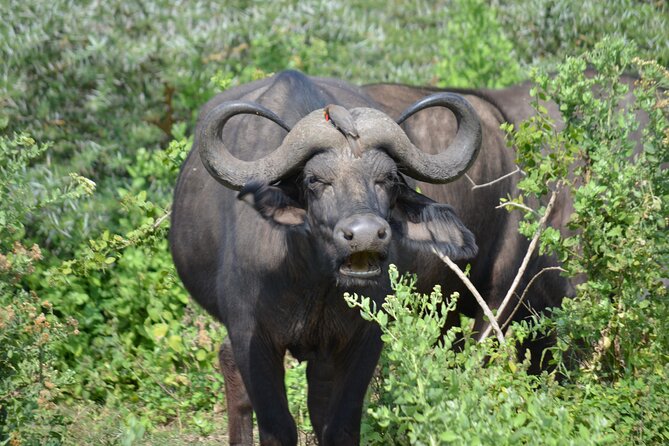
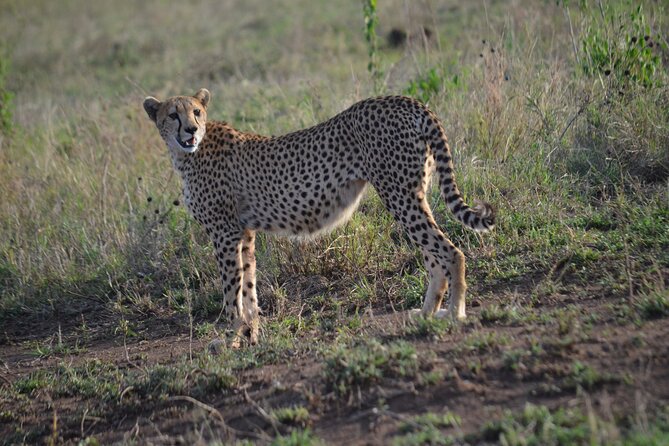
You may see lions, cheetahs, and leopards, along with elephants, wildebeest, buffaloes, zebras, and gazelles. The plan is to seek out productive areas rather than simply cross the park, and the long driving time gives your guide room to adjust the route as animal sightings develop.
This is also the first test of your camping-safari rhythm. You should be ready for a full day in the vehicle, changing conditions, and plenty of time watching rather than moving. Wildlife does not follow a schedule, so patience is part of the price of admission.
I like that Tarangire comes first. It gives you an immediate wildlife day without waiting for the more famous Serengeti, and it introduces a broad mix of animals. The drawback is that nine hours in a safari vehicle can feel long if you are not used to rough roads or extended observation stops.
A good guide makes a major difference here. Simon is praised for explaining animals, Maasai culture, and Tanzania, while Chedy and Chadi are described as friendly, funny, and attentive to the group. Those qualities are not decoration. They help turn a long drive into a lesson in how to read animal behavior and the bush around you.
Day 2: Ngorongoro views, Maasai culture, and the Seronera sunset
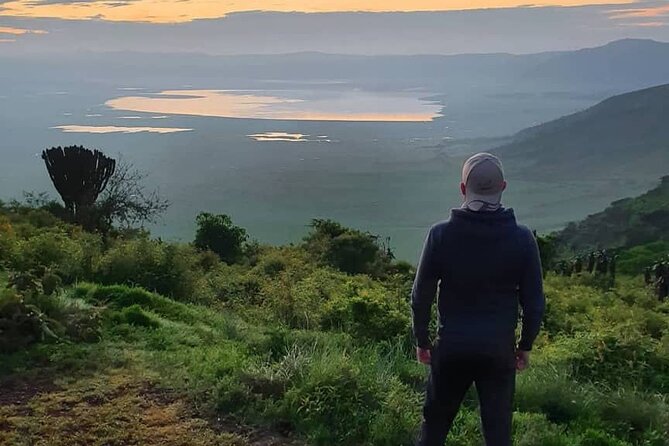
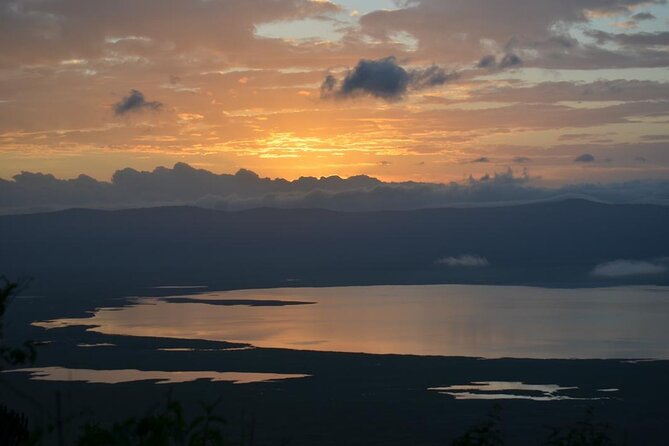
Day 2 combines three very different experiences. First comes a short stop at the Ngorongoro viewpoint, where you look across the enormous caldera from above. The stop lasts about 20 minutes, but the scale of the view makes it worth protecting in the schedule.
The viewpoint is not the crater game drive itself. You are seeing the caldera from the rim, with the crater floor spread below. The description promises a surreal view, and that is fair. It is one of those stops where a short visit can still leave a strong impression.
Next comes an optional Maasai village visit lasting about 45 minutes. The extra fee is $20, and the purpose is cultural rather than wildlife focused. You can learn about Maasai traditions, including warrior culture and older practices connected with hunting and animal blood. The information makes clear that some traditions have changed, although drinking blood is still noted as an exception.
Approach this stop with respect and curiosity. It is not simply a photo break. You are being offered a brief introduction to a living community and its customs. Since the visit costs extra and is optional, decide ahead of time if that fits your interests and budget.
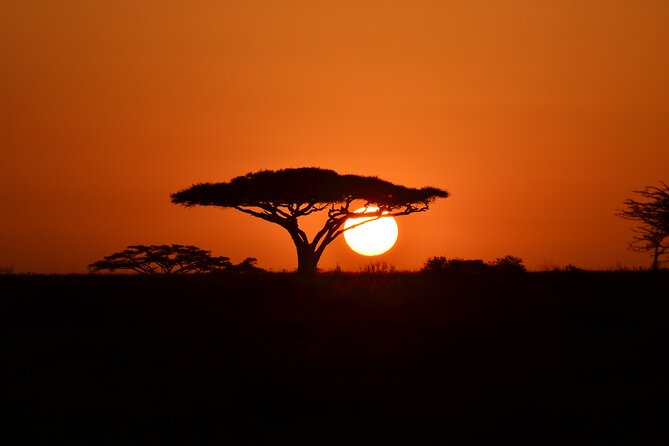
Afterward, the route continues toward Serengeti National Park. You arrive in the afternoon and drive through the Seronera area, the central part of the Serengeti, until late evening. This is one of the most appealing sections of the trip because the timing adds a sunset backdrop to the wildlife search.
You might see predators hunting or feeding, though no safari can promise a particular sighting. The plan allows for hyenas and other animals near the campsite as well, with active rangers providing protection. That does not mean the campsite is a place to wander freely at night. Listen to your guide and camp staff, and treat nearby wildlife seriously.
The day can run for about 12 hours. It is exciting, but it is also demanding. You should expect an early start, long road time, and a late arrival at camp. The reward is a day that moves from crater rim scenery to cultural contact and then into the Serengeti at one of the best times for changing light.
Day 3: Early Serengeti wildlife and the road toward Simba
Day 3 begins with an early breakfast and an early game drive. This is the right schedule for a safari. Animals are often easier to find when the day is cool, and the morning light gives the Serengeti a softer, more dramatic feel.
The drive continues until the afternoon, when you return to camp for lunch. After the break, you resume the game drive while leaving the Serengeti and head toward Simba campsite. The day is again listed at about 12 hours, so you should not think of this as a relaxed transfer day.
The strength of this schedule is time. You get a second substantial chance to search the Serengeti instead of treating it as a quick pass-through. The central Seronera area is particularly important in this plan because you visit it on arrival and again during the early drive.
The weakness is that some of the day is spent exiting the park. If you are hoping for nonstop animal sightings, the final hours may feel less exciting than the morning. Still, a safari route must connect the parks, and the exit drive remains part of the wider experience.
Animals can also appear near campsites. Hyenas are specifically noted around the Seronera camp, and animals may be seen near Simba as well. That is a reminder that the park does not end when the vehicle stops. At the same time, camping near wildlife requires discipline: keep to the guidance of the rangers and safari crew.
The camping setup suits people who want the bush to remain part of the experience after the game drive. You are not sealing yourself away in a distant hotel. You are staying at designated camps with supplied equipment and ranger protection, which gives you a closer connection to the setting while still providing organized support.
More Safaris in Moshi
- Safari Serengeti And Ngorongoro
★ 5.0 · 288 reviews - Big Five Safari In Tanzania
★ 5.0 · 99 reviews - Unforgettable Tanzania Safari And Zanzibar Beach
★ 5.0 · 97 reviews - 8-Day Essence of Tanzania Safari – Luxury
★ 5.0 · 72 reviews
Day 4: Inside Ngorongoro Crater and back toward town
The final morning starts with an early breakfast before you descend into Ngorongoro Crater. The main goal is to look for black rhinos, described as among the hardest animals to spot in the crater.
Ngorongoro offers a useful contrast with the Serengeti. The crater floor concentrates many animals in a contained setting, and the plan notes that wildlife can be easier to find there. That does not make sightings automatic, especially for rhinos, but the setting gives your guide a focused area to search.
You have about seven hours for the crater visit, including a game drive, lunch, and the ascent. That is enough time for a serious final wildlife session without pretending that a one-day crater visit can cover every corner.
After lunch, you continue the game drive and then climb out of the crater. Back at camp, you pack your equipment for the journey toward Arusha. The tour is based in Moshi, but the stated return point is Arusha town, so confirm your final drop-off when booking if you need to return to Moshi or connect with an airport transfer.
The last day is practical and scenic, but it may feel compressed after three demanding days. You should plan any onward travel with room to spare rather than scheduling a tight same-day connection.
Wildlife chances, guides, and the human side of the trip
The route gives you several chances at the Big Five: lion, leopard, elephant, buffalo, and rhinoceros. The provided experience specifically highlights possible sightings of lions, cheetahs, leopards, elephants, buffaloes, and black rhinos, and some past groups managed to see all five in one day.
That is exciting, but you should treat it as luck rather than a promise. Wildlife is wild, and even an expert guide cannot order a leopard onto the road. The best advantage this trip gives you is time in the parks, especially the two substantial Serengeti days and the focused Ngorongoro drive.
Guides are repeatedly praised for their personalities as well as their field skills. Simon is described as a good driver, teacher, and funny companion. Jeff is praised for adding a local perspective to the time in the remote Serengeti. Chedy and Chadi are both described as friendly and good at explaining animals without rushing the group.
One useful caution appears in the feedback: one person felt the agreed timing could have been followed more closely. That is worth remembering on a safari, where animal sightings can change the day, but clear communication still matters. Ask your guide about the day’s target schedule each morning, especially if you have a transfer or other plans afterward.
The company is locally run, which can add something valuable to the experience. You are not simply being moved between famous parks by an anonymous transport service. The guide and cook can shape how much you learn about Tanzania, local culture, food, and the practical realities of safari work.
Camping comfort and the rough-it question
This is an adventure camping safari, not a lodge holiday. Tents and camping equipment are supplied, but the phrase rough it should guide your expectations. The main appeal is sleeping at campsites under the stars and remaining close to the sounds of the bush.
The setup is best for you if you value access and atmosphere over private-lodge comfort. You will spend more time outdoors, meet other safari-minded people if the departure is shared, and keep the trip price below many higher-end lodge packages.
There is an important detail to clarify before paying: the experience is described as a private activity in one place, while several trip accounts describe joined or shared groups. Group discounts are offered as well. Ask whether your exact departure is private, shared, or subject to a minimum number of participants.
Most people can participate according to the supplied information. Still, the long game drives, early breakfasts, camping conditions, and rough roads make this a better match for active people who are comfortable with a demanding schedule.
Practical details that affect your decision
Pickup is offered, and the booking receives confirmation at the time of reservation. The vehicle includes a pop-up roof, cooler fridge, and charging ports, all useful on long drives between parks.
The cancellation policy is generous if your plans are still shifting: you can cancel at least 24 hours before the local start time for a full refund. Changes or cancellations inside that window are not accepted for a refund. The trip also requires a minimum number of participants, so if that minimum is not met, you are offered another date or experience, or a full refund.
Pack for changeable conditions and long days, but do not assume you need to bring camping gear. The equipment is supplied. You should focus on personal essentials, sun protection, suitable clothing, and anything you need for comfort during long stretches in the vehicle.
Most of all, keep your schedule flexible. A leopard sighting, a pride of lions, or a rare rhino search can shift the timing. That is part of the appeal, but it is also why you should avoid booking a tight onward connection on the final day.
Should you book this safari?
Book this safari if you want a high-value, wildlife-heavy route through northern Tanzania and you are happy to camp. The combination of Tarangire, two substantial Serengeti periods, and Ngorongoro gives you three distinct settings in only four days.
It is a good fit for couples, friends, families with older children, and solo visitors who enjoy meeting people in a shared camp setting. A family of three with children aged 12 and 14 completed the trip, and the supplied details say most people can participate.
I would choose it for the well-equipped vehicle, included meals and camping gear, strong guide feedback, and the amount of Serengeti time. I would look elsewhere if you want slow mornings, lodge comfort, guaranteed privacy, or short drives.
Before booking, confirm three things: the exact departure style, the final drop-off point, and whether you want the optional Maasai village visit. If you accept the early starts and long road days, $1,650 can be a sensible way to experience Tanzania’s Northern Circuit without assembling every costly part yourself.
FAQ
How long is the safari?
The experience lasts approximately four days and includes three nights of camping.
Which national parks are included?
The route includes Tarangire National Park, Serengeti National Park, and Ngorongoro Crater.
Is camping equipment provided?
Yes. Camping equipment is included in the trip price.
Are meals included?
Yes. The package includes three breakfasts, four lunches, and three dinners. Bottled water is also included throughout the trip.
Is the Maasai village visit included?
No. The visit is optional and requires a separate $20 entrance fee.
What is the cancellation policy?
You can cancel at least 24 hours before the experience start time for a full refund. Cancellations or changes made less than 24 hours before the start time are not accepted for a refund.
More Safaris
- Great Migration Safari In Tanzania
★ 5.0 · 71 reviews - Serengeti, Ngorongoro and Tarangire 4 Days Safari
★ 5.0 · 59 reviews - 6 Days 5 Night Safari
★ 5.0 · 57 reviews - 7-Day Magical Tanzania Safari -Premium High End Package
★ 5.0 · 53 reviews
More Camping Safaris
- 5 days Tanzania Camping Safari
★ 5.0 · 29 reviews - 6 Days: Classic Camping( Tarangire, Manyara, Serengeti And Ngorongoro).
★ 5.0 · 26 reviews - Mt Kilimanjaro 360° Trek with Once-in-a-Lifetime Crater Camping
★ 5.0 · 8 reviews - 3 Days Camping Safari Tarangire, Lake Manyara and Ngorongoro Crater
★ 4.5 · 6 reviews
Just added around Moshi
- Moshi: Lake Chala Tour: Hiking &/or Kayaking★ 4.5 · 3 reviews
- 3 Days Tanga Exclusive Beach Holiday★ 5.0 · 3 reviews
- Serengeti Wildebeest Migration.★ 5.0 · 3 reviews
- Chemka Hotpsrings E-Bike Day Trip★ 5.0 · 3 reviews
- Explore 1 day Ngorongoro Crater Budget Group Safari from Arusha★ 5.0 · 3 reviews
- Explore the 360° of Kilimanjaro★ 5.0 · 3 reviews
- Affordable Short Tanzania Safari (2 Days Camping Safari)★ 5.0 · 3 reviews
- Rongai Route 7 Days★ 5.0 · 3 reviews
Camping Safaris, compared.



3 Days Serengeti & Ngorongoro Group Camping Safari
Read our review →
5 Days Camping Tarangire, Serengeti & Ngorongoro crater & Visiting Maasai
Read our review →
2 Days Tarangire and Ngorongoro Group Camping Safari
Read our review →
3 Day Serengeti National Park & Ngorongoro Crater Camping Safari
Read our review →
3 Days Tarangire, Ngorongoro & Lake Manyara Group Camping Safari
Read our review →Browse the lists this tour appears in