
Reviewed · CAMPING SAFARIS
4 Days Group Joining Camping Tanzania safari
The wild heart of Tanzania fits into four busy days. This group safari takes you from Arusha to Tarangire, Serengeti, and Ngorongoro Crater, combining open-sided 4×4 game drives with camping and simple tented accommodation. I like the strong mix of habitats, from elephant country and acacia trees to Serengeti grasslands and a collapsed volcanic crater. I also like the human side of the trip: guides such as Salim, Joel, Bryson, Frankie, Jordan, Juma, and Mo are praised for their animal knowledge, good humor, and care.
The main tradeoff is time. You cover a lot of ground, and the drive into the Serengeti takes much of Day 2. This is a smart budget safari for seeing the Northern Circuit highlights, but it is not a slow, luxurious wilderness retreat. The group can reach 15 people, so your enjoyment will partly depend on the mix of people sharing the vehicle.
In This Review
- Four details that shape the experience
- What you are really buying for $1,333.34
- Day 1: Tarangire and the country of elephants
- Day 2: The long road into Serengeti National Park
- Day 3: Predators at sunrise and the crater rim at sunset
- Day 4: Down into Ngorongoro Crater
- Why the guide and cook matter so much
- Camping, vehicles, and the group dynamic
- What the high rating tells you, and what it does not
- Who should book this safari?
- Practical details before you reserve
- Should you book it?
- FAQ
- Where does the safari start and finish?
- How long does the experience last?
- Which national parks and wildlife areas are included?
- What meals are included?
- Is camping equipment provided?
- How large can the group be?
- What is not included in the price?
Four details that shape the experience
- Three major parks in four days: You visit Tarangire National Park, Serengeti National Park, and Ngorongoro Crater.
- Camping with meals included: Tents, sleeping mats, chairs, tables, breakfast, lunch, and dinner are covered according to the schedule.
- A guide makes the difference: Named guides including Salim, Joel, Bryson, Frankie, Jordan, Juma, and Mo receive praise for wildlife spotting, driving, and friendly service.
- A genuine budget option: At $1,333.34 per person, the price includes park fees, transport, camping gear, guide service, and meals.
- A small chance at the Big Five: The parks support lion, leopard, elephant, buffalo, and rhino, though wildlife sightings can never be promised.
- Early starts and long drives: Pickup is around 6:30 or 7:30 a.m., depending on the stated booking details, so confirm your exact departure time.
What you are really buying for $1,333.34
The price is easiest to judge by looking at what it covers. You receive all fees and taxes, transport in a 4×4 safari vehicle, an English-speaking professional guide, camping equipment, three dinners, four lunches, and three breakfasts. That removes several large costs that can quickly add up on an African safari.
You are not paying only for a vehicle and a park ticket. You are also paying for the practical framework of a multi-day trip: moving between parks, setting up camp, carrying equipment, preparing meals, and getting back to Arusha. For a four-day visit, the route gives you three of northern Tanzania’s best-known wildlife areas without requiring you to arrange separate transfers.
The price is particularly attractive for solo visitors or people who do not want to hire a private vehicle. A group safari lets you share the cost of the guide, vehicle, fuel, and camping operation. The maximum group size is 15, though the actual number on your departure may be smaller.
There are limits. International flights, a Tanzanian visa, travel insurance, tips, laundry, and communication costs are not included. You also need to be comfortable with camping rather than expecting a full-service lodge every night. Ask for the exact accommodation plan before paying, since the description refers to both lodges and tented camps while the inclusions focus on camping equipment.
More Safaris in Arusha
- Serengeti Balloon Safari and authentic bush breakfast
★ 5.0 · 2,480 reviews - Balloon Safari & Bush Breakfast in Serengeti – Miracle Experience
★ 5.0 · 1,646 reviews - 4 Days Group Camping Safari
★ 5.0 · 1,101 reviews
Day 1: Tarangire and the country of elephants
The day begins with pickup from your hotel in Arusha at about 6:30 a.m., followed by a 120-kilometer drive on tarmac roads to Tarangire National Park. The stated meeting time is also shown as 7:30 a.m., so confirm the precise pickup time with Kipok Africa Adventures before the morning arrives.
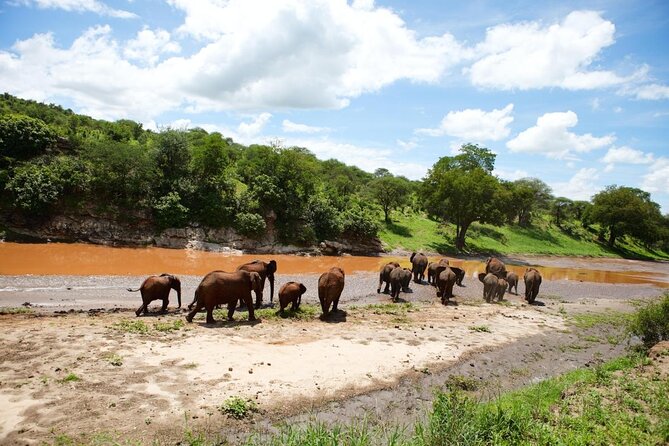
Tarangire covers about 2,850 square kilometers and is known for a high concentration of wildlife outside the Serengeti system. The park’s swamps stay green through much of the year, drawing animals toward dependable water and feeding areas. That makes the first day a strong introduction to safari life, especially if you want elephants and large herds early in the trip.
The animal list is broad. You might see lion, leopard, elephant, buffalo, python, zebra, oryx, and impala. Tarangire also rewards people who watch the smaller details. The park supports around 550 bird varieties, including the kori bustard, the heaviest flying bird, ostrich, and ground hornbills.
After lunch, you continue with afternoon game viewing before leaving the park. The day lasts about seven hours, not counting every transfer detail, so you should expect a full day in the vehicle. The reward is variety. The drawback is that Tarangire is only the opening chapter, and you still need energy for the long road to the Serengeti on Day 2.
Day 2: The long road into Serengeti National Park
After breakfast near Mto wa Mbu, you travel through the cooler highland region toward Serengeti National Park. This is the longest day, listed at about nine hours, and it is important to understand what that means before booking. The Serengeti is not a quick hop from Arusha. Reaching its open plains takes time.
The route changes in character as you go. The Serengeti includes broad grass plains, dry savannah, marshy areas, and wooded sections. That range of ground supports both grazing animals and the predators that follow them. Depending on the season, you might also encounter part of the great wildebeest and zebra movement.
The migration follows a seasonal pattern. Herds move toward the southern plains during the short rains in November and December, then later head north again. Your exact wildlife experience depends on the month, recent rain, and where the herds are located. A four-day safari can offer a taste of this event, but it cannot guarantee that you will be beside the main herds.
This is also your first proper sense of the Serengeti’s scale. The park is home to more than three million animals, and its open spaces can make even a busy game-drive day feel vast. The same openness can make some animals harder to spot, so your guide’s eyesight, patience, and knowledge of animal behavior matter greatly.
The published schedule gives Day 2 about nine hours. That includes a substantial drive, so bring water, sun protection, and patience. The reward is access to one of Africa’s great wildlife areas. The cost is less time resting at camp.
Day 3: Predators at sunrise and the crater rim at sunset
Day 3 begins with an early game drive across the Serengeti. Morning is a sensible time to search for predators, since lions, cheetahs, and leopards depend on the large numbers of prey animals spread across the park.
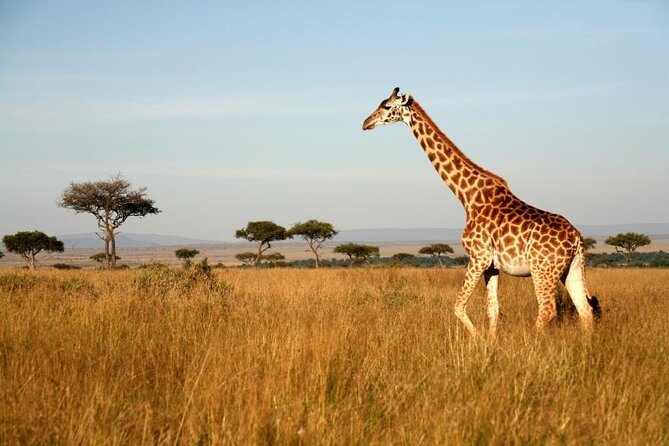
The Serengeti supports one of Africa’s largest lion populations, along with gazelles, impalas, and other prey species. You may see lions resting after a hunt, cheetahs scanning the plains, or leopards hidden in trees. Nothing is guaranteed, but the range of animals gives your guide good possibilities.
After the morning drive, you return to camp for breakfast, then leave the Serengeti and drive toward Ngorongoro. The contrast is one of the trip’s best features. You move from enormous, open plains to the high rim of a volcanic caldera.
The crater is about 600 meters deep. From the rim, the floor opens below with springs and broad areas where wildlife gathers. You spend the night at a campsite on the crater’s edge, with sunset views across the caldera. This is one of the most memorable settings on the route, though camping at the rim can feel cool and exposed compared with lower, warmer areas.
The day is listed at about eight hours and includes breakfast, lunch, and dinner. You should expect another substantial stretch in the vehicle, but the change in scenery keeps it interesting. If your guide is as helpful as the strongest reports suggest, this is a good time to ask about the crater’s geology, wildlife patterns, and the differences between the Serengeti and Ngorongoro.
More camping safaris:
- 5 Days Group Camping Safari
★ 5.0 · 730 reviews - 3 Days Serengeti & Ngorongoro Group Camping Safari
★ 5.0 · 574 reviews - 5 Days Camping Tarangire, Serengeti & Ngorongoro crater & Visiting Maasai
★ 5.0 · 229 reviews - 2 Days Tarangire and Ngorongoro Group Camping Safari
★ 5.0 · 146 reviews
Day 4: Down into Ngorongoro Crater
After an early breakfast, you descend by a narrow, steep road to the crater floor. The drive itself is part of the experience, but it also explains why this morning starts early. The road is not described as an easy urban transfer, and you should be ready for a winding descent.
The crater supports an impressive concentration of animals. You might see zebra, hippo, hyena, wildebeest, and warthog. It is also one of the best places on this route to look for the Big Five: buffalo, rhino, lion, elephant, and leopard.
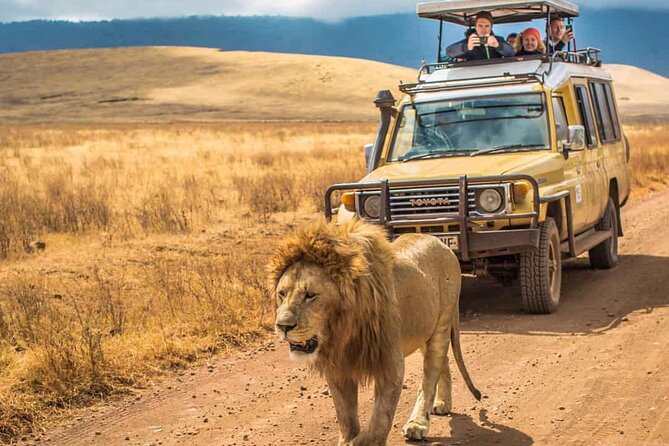
A close lion sighting was especially memorable for one visitor, with the animal reportedly about one meter from the vehicle. That kind of encounter is possible in a protected park, but it is never a promise. Wildlife chooses the distance, and good guides follow park rules while positioning the vehicle safely.
After extensive game viewing, you stop for lunch at a picnic spot, then leave the crater and travel back to Arusha. The final day is listed at about six hours, with breakfast and lunch included. You arrive in the late afternoon, though road conditions and time spent watching animals can affect the exact arrival time.
This final day delivers a strong finish, but it is not a leisurely one. If you have a flight or onward connection from Arusha, leave a generous buffer. The stated end point is back at the meeting point in Arusha, and pickup is offered.
Why the guide and cook matter so much
On a camping safari, staff shape your comfort and your chances of seeing wildlife. The strongest praise goes to the guides. Salim is described as an experienced guide who knows good animal-viewing areas. Joel receives credit for identifying animals and birds while staying friendly and welcoming. Bryson is praised for safe driving, lively game drives, and clear explanations.
Frankie is singled out for sharing interesting facts about Tanzania and its animals. Jordan is described as wonderful and part of a well-planned, good-value trip. Juma is praised for teaching visitors about what they saw, while Mo is remembered as caring and fun.
These details matter because a safari is not just about reaching a park. You spend hours looking through the vehicle, waiting for movement in tall grass, and trying to tell a leopard from a shadow. A guide who explains what you are seeing makes quiet moments worthwhile. A guide who drives safely matters even more.
The cook also has a large role. John receives strong praise for tasty meals served after long days in the sun, and Prosper is credited with generous food and extra effort. The included meals mean you do not need to solve every breakfast, lunch, and dinner on the road. Still, ask about dietary needs in advance, since the supplied information does not spell out special-diet arrangements.
Camping, vehicles, and the group dynamic
The camping setup includes tents, sleeping mats, chairs, and tables. That tells you to expect a practical safari camp, not a private luxury tent with hotel-style service. The mix of camping equipment and lodge or tented accommodation means the exact night-by-night arrangement deserves confirmation.
The 4×4 safari vehicle is the main viewing platform and your transport between parks. You will spend plenty of time inside it, especially on the nine-hour Serengeti transfer. Comfortable clothing, sun protection, and a small day bag will make those hours easier.
The maximum group size is 15. A group this size can keep the cost down and create a social atmosphere, but it may also mean more opinions about where to stop and how long to watch an animal. Several solo visitors apparently found that the group fit together well, which is encouraging, but no operator can guarantee group chemistry.
The best approach is to treat the shared format as part of the bargain. You pay less than you would for a private safari, and you may meet people who add fun to the trip. In return, you give up some control over the pace.
What the high rating tells you, and what it does not
The experience carries a 4.9 rating from 15 ratings, with 100 percent recommending it. The praise is consistent in a few areas: organization, guide service, food, value, and the chance to see a large range of animals.
Several named guides receive personal compliments, which is more useful than a vague promise of professional service. The operation also earns credit for help with pickup and drop-off arrangements. One account describes the company organizing the trip from pickup through a final airport transfer, although airport transfer is not listed as a standard inclusion, so confirm that service before relying on it.
The good feedback does not erase the basic compromise. One visitor felt the parks were less impressive than Kruger National Park in South Africa, while still saying the major sights should be seen. That is a useful reminder that safari preferences differ. The Northern Circuit offers famous parks and a strong chance of varied wildlife, but it also involves long drives and busy viewing areas in some places.
The rating suggests a solid budget operation, not a guarantee of perfect weather, private sightings, or a luxury camp. Go for the parks, the guide, and the value. Do not book it expecting every day to feel effortless.
Who should book this safari?
I would point this trip toward you if you want to see several famous Tanzanian parks in a short period and you are comfortable with camping. It also suits solo visitors who want a shared vehicle, people watching their budget, and first-time safari guests who want a clear route through the Northern Circuit.
It may not suit you if you dislike early mornings, long drives, basic camping, or shared decisions. A private safari with more nights in the Serengeti would give you greater flexibility, but it would cost more.
You also need to accept that wildlife sightings change with season and luck. The Big Five may appear, as they did for some people on this route, but the safari should still feel worthwhile if your best moments are elephants among acacias, birds around the Tarangire swamps, lions on the Serengeti, or the view down into Ngorongoro Crater.
Practical details before you reserve
Pickup is offered in Arusha, and the activity ends back at the meeting point. Confirmation is provided at booking, and the experience is near public transportation. Most people can participate, according to the supplied details.
The cancellation rule is simple: cancel at least 24 hours before the local start time for a full refund. Cancellations or changes made less than 24 hours before the start are not accepted for a refund.
Bring realistic expectations about costs outside the package. You still need to arrange international flights, a Tanzanian visa, travel insurance, tips, laundry, and communication. The price includes four lunches, three breakfasts, and three dinners, but the schedule itself lists meals by day, so check the final meal plan with the operator.
Should you book it?
Book this safari if your priority is maximum wildlife variety in four days at a controlled price. Tarangire, Serengeti, and Ngorongoro give you three very different settings, and the repeated praise for guides such as Salim, Joel, Bryson, Frankie, and others is a strong reason to consider Kipok Africa Adventures.
Skip it if you want slow travel, high-end lodging, or complete control over every stop. For a first Tanzanian safari, though, this is a practical route with an impressive amount packed into four days. Just confirm the pickup time, exact camping arrangements, and any airport transfer before you go.
FAQ
Where does the safari start and finish?
The safari starts in Arusha, Tanzania, with pickup offered. It ends back at the meeting point in Arusha.
How long does the experience last?
The safari lasts approximately four days.
Which national parks and wildlife areas are included?
The route includes Tarangire National Park, Serengeti National Park, and Ngorongoro Crater.
What meals are included?
The package includes three breakfasts, four lunches, and three dinners. The daily schedule lists breakfast, lunch, and dinner on Day 3, plus breakfast and lunch on Day 4.
Is camping equipment provided?
Yes. The included equipment covers tents, sleeping mats, chairs, tables, and other camping equipment according to the supplied details.
How large can the group be?
The maximum group size is 15 people.
What is not included in the price?
International flights, a Tanzanian visa, travel insurance, tips, and personal expenses such as laundry and communication are not included.
More 4-Day Experiences
- 4 Days Join Group tour Tarangire Serengeti and Ngorongoro crater
★ 5.0 · 219 reviews - 4-Day Safari from Arusha: Tarangire, Serengeti and Ngorongoro
★ 5.0 · 173 reviews - 4 Days safari Tour Tanzania
★ 5.0 · 159 reviews - 4 Days Tarangire Serengeti Ngorongoro Crater
★ 5.0 · 117 reviews
More Safaris
- 7-Day Premium Luxury Tanzania Safari All-Inclusive
★ 5.0 · 426 reviews - 3-Day Classic Serengeti Safari
★ 5.0 · 263 reviews - 8 Days Great Wildebeest Calving Migration Safari from Arusha
★ 5.0 · 254 reviews - Group Safari 7 Days in Tanzania’s Main Parks
★ 5.0 · 240 reviews
Just added around Arusha
- 5 Days Safari Tarangire, Serengeti, and Ngorongoro Crater★ 5.0 · 3 reviews
- Love lives in Africa★ 5.0 · 3 reviews
- 5 Days of Safari, Culture & Hot Springs – Tour from Arusha★ 5.0 · 3 reviews
- Arusha National Park Safari by Jeep★ 4.5 · 3 reviews
- 5Days Family _Group Tour Lodging Mid-Range in the Jungle★ 5.0 · 3 reviews
- Serengeti & Ngorongoro 3 Days Budget Safari★ 5.0 · 3 reviews
- 2 Days Tarangire and Ngorongoro Crater Tour★ 5.0 · 3 reviews
- 7 Days PRIVATE Best of Tanzania Safari *Departing everyday*★ 5.0 · 3 reviews
Camping Safaris, compared.



3 Days Serengeti & Ngorongoro Group Camping Safari
Read our review →
5 Days Camping Tarangire, Serengeti & Ngorongoro crater & Visiting Maasai
Read our review →
2 Days Tarangire and Ngorongoro Group Camping Safari
Read our review →
3 Day Serengeti National Park & Ngorongoro Crater Camping Safari
Read our review →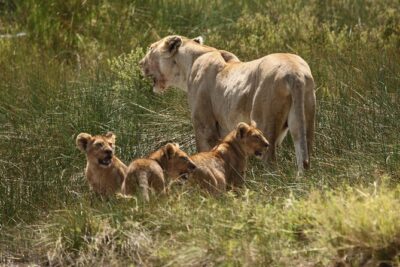
3 Days Tarangire, Ngorongoro & Lake Manyara Group Camping Safari
Read our review →Browse the lists this tour appears in